Marketing the Wrong Element of Your Book

Marketing Images

THEMES & TOPICS

The big challenge of book marketing is finding what works for you.

It’s often not just what you do, but how you do it.

The difference between a successful or unsuccessful marketing technique may lie in something incredibly simple.

Like which element of your book you mention.

You do mention your book in all your marketing.

Online, at the very least, you show the title of your book or a picture of the cover.

In person, you also mention the title of your book.

Online, you include a link to your product page.

In person, you pass out a business card—or even better, a bookmark.

But the title of the book may not be enough to really show potential readers if your book really is a good fit for them.

And a lengthy description is too much to give in passing.

What you need is very brief clarification.

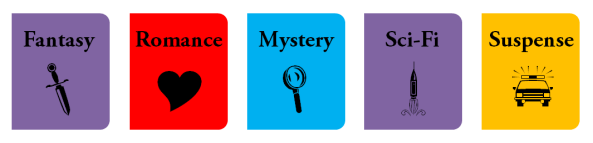
But not the genre. That’s not enough.

You say something like, “It’s a mystery.”

No, that’s not enough.

But your description won’t work either. That’s way too long. (Until they finally arrive at your product page.)

I know, every newbie author would be thinking, “I want every mystery lover to read my book.”

Or, more realistically, “I don’t want to lose out on a possible sale from any mystery lovers.”

You don’t want to clarify that it’s set in Brooklyn in the 1800’s because anyone who doesn’t care for Brooklyn or the 1800’s will pass it up.

Newsflash: Once they check out the Look Inside, if they really don’t like Brooklyn or the 1800’s, it’s not going to matter that you got the customer all the way to your product page.

Instead, you’re losing traffic from your specific target audience—those mystery readers (and non-mystery readers) who really would like to read a book set in Brooklyn in the 1800’s.

Those readers hear, “It’s a mystery,” and think to themselves, “So are thousands of other books.”

If instead they hear, “It’s a mystery set in Brooklyn in the 1800’s,” those who would like such a book think, “Hey, that’s a mystery that I might really enjoy.”

Think through the various elements of your book. Talk it out with others who are familiar with your book.

Which aspects of your book may attract specific target audiences?

It could be the theme (a historical novel that takes place in the Civil War), topic (a spy novel about submarines), setting (a city that many people have visited or would like to imagine living in), an era (a time period like the Renaissance), character traits (a protagonist dealing with a particular medical condition), or a number of other qualities.

What can people relate to? What might draw interest in your book? What could serve as a helpful conversation piece?

Check out the following article on Just Publishing, which describes this and nine other common book marketing mistakes:

https://justpublishingadvice.com/11-mistakes-new-self-published-authors-make/

Chris McMullen

Copyright © 2014 Chris McMullen, Author of A Detailed Guide to Self-Publishing with Amazon and Other Online Booksellers

  • Volume 1 on formatting and publishing
  • Volume 2 on marketability and marketing
  • Boxed set (of 4 books) now available for Kindle pre-order

Follow me at WordPress, find my author page on Facebook, or connect with me through Twitter.

Comments

Click here to jump to the comments section:

https://chrismcmullen.wordpress.com/2014/11/16/read-more/#comments

Read More

Read More

READ MORE

Reading more is a good thing, of course. I highly recommend it. But that’s not the focus of my post.

Every writer would love to have more readers. They are so hard to come by.

Yet those Read More links and buttons are spurious.

  • Open your WordPress reader. Some articles show in full within the reader. Others include a teaser and require clicking 460 more words to read the remainder of the article. (Tip: Click the More Words link without first opening the article within the reader to save this extra click.)
  • Read a lengthy description on an Amazon product page. Only the beginning will show, followed by a Read More link. The Author Central biography has a similar Show More link.
  • View news stories on Yahoo or read sports news on your team’s official website. Very often, midway through the article it is interrupted and it’s necessary to click something to read the remainder.

However, anyone in online advertising who knows about click-through rates knows that every extra click costs a significant percentage of traffic.

So all those Read More links lose valuable readers.

What do you gain by withholding the remainder of your article? Is it enough to compensate what you lose by introducing the extra click?

At WordPress, open your Dashboard, go into Settings, choose Reading, and you can toggle between Full Text and Summary next to “For each article in a feed, show…”

Some bloggers show the full text, while others include only a summary.

There are two things to consider:

  • People who already follow you who are viewing your post in the WordPress Reader.
  • People visiting your home page who are seeing your recent posts.

I enjoy reading the posts in my Reader. There are hundreds of posts in there each day. Unfortunately, I can’t read all of them, so I quickly browse through my Reader and select those which most interest me. Many other WordPress users use their Readers this way, too.

A few will click the More Words link without first opening the post within the reader, allowing them to view the full article on your website with a single click. However, many people don’t realize that they can do this. Others know about it, but don’t do it because it takes much more time to load each post on the original site than it does to read it within the Reader. That extra loading time cuts into the number of posts that we can read at one sitting.

Therefore, many people (who might not care to publicly admit it) only read posts that show the full article within the Reader, except for an occasional article that is super compelling.

But why do you need people who are reading articles in the WordPress Reader to visit your site? Ordinarily, you don’t! These are your followers. They’ve been to your site before. They know about any products or services that you offer. You don’t really need for them to visit your site every time they read one of your articles. (You still get the View, Like, Comments, and Reblog option in the Reader, so what are you losing?)

If your site has changed recently and you wish to show this to your followers, just mention it in a separate post and many will make the special trip to check it out (and if they don’t, well, I guess they really didn’t want to, so why make them?).

Here’s what some followers may do if they must use the More Words link to view your full article:

  • Close your post without reading the remainder of the article.
  • Not open your other posts in the future, once they memorize that it takes two clicks to get to your site (since many won’t think to use the ‘trick’ to visit your site in one click, which also takes extra loading time).
  • Like your post to show support without actually reading 90% of the article, simply because reading more would have required an additional click (and extra load time).

Now how about people who happen to come across your home page. Some of these won’t click a More Words link to read the full post. They’re already on your site, so whatever you have on your header and sidebar is already visible to them. Why do they need to visit the actual page to read the full post? They don’t.

If your blog becomes an effective content-rich website, it will pull in people from your target audience through search engine traffic. These people will already go directly to one of your posts on your website, and they won’t be inconvenienced by the More Words link (unless you add an additional interruption using the Insert Read More Tag).

So the only people who are getting inconvenienced by your More Words link are the wonderful people who already follow your blog (and therefore have already been to your site and have seen any products or services that you may offer), or people who are already on your blog’s home page and therefore already see all the goodies on your header and sidebar.

Or is there another advantage of that More Words link that I haven’t considered—a big benefit that compensates for the readers who get lost on the way whenever an extra click is involved?

Just to be clear, I’m not saying that your loyal followers shouldn’t periodically visit your site. I’m just saying, why force them to visit to read the full text? You can always invite them once in a blue moon to see how things have improved.

And when you read posts in your Reader, you should occasionally read the post on the original site, even if the post shows in full in the Reader. Check out the sites of those bloggers you follow.

The Read More link serves a different purpose at Amazon.

Amazon knows that most customers won’t read a lengthy description. So Amazon only shows up front the amount of text that a typical customer may actually read.

Authors should visit their product pages and check out the portion of the description that customers can see without the extra click. Move any pertinent information into that portion of the product description.

Read Tuesday

Imagine a Black Friday type of event just for book lovers.

You don’t have to imagine it. It’s called Read Tuesday, and it’s free: www.readtuesday.com.

Please support the Read Tuesday Thunderclap. This will help spread awareness on the morning of Read Tuesday (December 9, 2014). It’s easy to help:

  • Visit http://thndr.it/1CkO2Bg.
  • Click Facebook, Twitter, or Tumblr and sign in.
  • Customize the message. (Optional.)
  • Agree to the terms. All that will happen is that the Thunderclap post about Read Tuesday will go out the morning of December 9.
  • (The warning message simply means that Facebook, Twitter, or Tumblr need your permission to post the Thunderclap message on December 9. This is the only post that Thunderclap will make.)

Chris McMullen

Copyright © 2014 Chris McMullen, Author of A Detailed Guide to Self-Publishing with Amazon and Other Online Booksellers

  • Volume 1 on formatting and publishing
  • Volume 2 on marketability and marketing
  • Boxed set (of 4 books) now available for Kindle pre-order

Follow me at WordPress, find my author page on Facebook, or connect with me through Twitter.

Comments

Click here to jump to the comments section:

https://chrismcmullen.wordpress.com/2014/11/16/read-more/#comments

Kindle Unlimited Trends

KU Trends

KINDLE UNLIMITED

Historically, Amazon Prime borrows paid around $2 per borrow through KDP Select until the introduction of Kindle Unlimited.

The KOLL global fund has paid less for Amazon Prime borrows and Kindle Unlimited downloads read to 10% since the debut of Kindle Unlimited in July, 2014.

The most recent KOLL payout of $1.33 for October, 2014 shows a significant downward trend:

  • $2.00 or thereabouts prior to July, 2014
  • $1.81 for July, 2014
  • $1.54 for August, 2014
  • $1.52 for September, 2014
  • $1.33 for October, 2014
  • Added: $1.39 for November, 2014
  • Added: $1.43 for December, 2014

$1.33 is a significant drop for KOLL payments.

Books with a list price of $2.99 or higher earn royalties of $2 and up for sales (using the 70% royalty option, assuming a negligible delivery cost).

In the past, KOLL borrows have paid close to the royalty for the purchase of a $2.99 book.

But $1.33 is 33% less than the 70% royalty on a $2.99 book. That’s quite significant.

READERSHIP

There is another important trend to factor into this analysis.

While the KDP Select payments for Amazon Prime borrows and Kindle Unlimited downloads read to 10% has diminished, another important measure has increased.

The KOLL Global Fund has improved tremendously:

  • $1 to $2 million prior to July, 2014.
  • $2.875 million for July, 2014.
  • $4.7 million for August, 2014.
  • $5.0 for September, 2014.
  • $5.5 million for October, 2014.

This reveals a significant increase in KDP Select readership.

In October, 2014, Amazon paid a total of $5.5 million for borrows and downloads, yet this translated to just $1.33 per qualifying KDP Select borrow.

What does this mean?

It means there are very many Kindle Unlimited customers and that many of them are actively downloading KDP Select books and reading them to 10%.

It also means that many KDP Select books are thriving in the program.

Of course, it doesn’t mean that every KDP Select book is thriving under Kindle Unlimited.

For some, sales and/or borrows have dwindled.

But for many, sales and/or borrows have improved.

My Kindle sales had steadily declined all year, but steadily improved each month with the introduction of Kindle Unlimited, while the borrows have improved tremendously since July, 2014.

However, I’ve met authors whose numbers have dropped. Every book is different.

A $5.5 million dollar payout with a $1.33 KDP Select payment shows that there are very many Kindle Unlimited customers and qualifying borrows.

The Kindle Unlimited readership is significant and the potential is there.

Every active customer in Kindle Unlimited is, in general, one less customer who would otherwise purchase a book.

DECISIONS

Some authors are starting to question the wisdom of enrolling in KDP Select.

Those whose sales or borrows have improved significantly probably aren’t questioning it at all. If it’s working out for you (like it is for me), it makes sense to stick with it.

But authors whose sales or borrows are declining now wonder what it’s like on the other side of the fence.

The million-dollar question is: Would it be better to opt out of KDP Select?

There are a few points to consider:

  • Many customers who previously purchased indie books through Kindle or elsewhere are now in Kindle Unlimited. There are still many who aren’t in Kindle Unlimited, but not as many as before. (Of course, some books are thriving on all markets, including markets outside of Kindle. There are apt to be exceptions to any rule. But $5.5 million and $1.33—these numbers show that many customers have migrated to Kindle Unlimited.)
  • Are customers satisfied with Kindle Unlimited? It’s a renewable subscription and customers who aren’t happy with it may opt out. The general tendency is for customers to keep their subscriptions once they sign up. It will take significant dissatisfaction to move many customers out (and others will be joining as others opt out). If more high-profile books and authors opt out of Select, this might have a small impact. But look at KDP Select All-Stars. Amazon is paying huge bonuses to the top KDP Select authors to encourage them to remain in the program. Plus, Amazon persuaded smaller traditional publishers to include 100,000 books in Kindle Unlimited. If a few top indie authors do opt out of Select, it probably won’t make much difference. It will take a huge content change, and as long as 100,000 traditional books remain in the mix, that will be hard to change.
  • The main drawback of KDP Select is the exclusivity clause. This is only a drawback for books that would sell significant quantities through other outlets, like Smashwords, Kobo, or Nook. Some customers can still purchase Kindle e-books for other devices, like iPhones and iPads, so exclusivity doesn’t really impact those markets. How do you know if your book would sell well on other markets? Unfortunately, the only way to find out is to experiment. Each book is unique.
  • If you opt out of KDP Select and publish elsewhere, it can be a royal pain trying to unpublish elsewhere and get back into Select. You’re likely to receive emails from Amazon indicating that your book is available for sale elsewhere until it completely disappears, which can take longer than you might realize. So what if Amazon comes up with some new feature to make KDP Select seem suddenly more enticing? It’s a risk that you take. Whether or not that risk is worthwhile is hard to say, and it will be different for each book. Does Amazon have a marketing surprise coming for the holiday season to make Kindle Unlimited even more worthwhile? Who knows? They do have a new line of Kindles out, hoping to attract new customers this holiday season, and many of those customers will be looking for Kindle books after Christmas.
  • Marketing is another factor. It’s possible to market the benefits of Kindle Unlimited in such a way as to help you get more KDP Select downloads. It’s even possible to market specifically to Kindle Unlimited customers. It may not be easy—when is book marketing ever easy?—but the potential is there. If you opt out of KDP Select, then you should be thinking of how to reach customers outside of Kindle through your marketing endeavors—another challenging task.
  • Then there is the issue of prediction. There is a current downward trend in KDP Select payments. Will it continue to decrease? Will it level off now? Will it climb back up? Any of these are possible, and any analysis at this early stage is really “precision guesswork.” If you can figure it out you should also be making a killing off the stock market. 🙂

99 CENTERS

Another issue is 99-cent books in KDP Select.

Imagine setting a list price of 99 cents and earning $1.33 for a book that was read to 10%. That’s fantasy land.

Meanwhile, an author has a 1,000-page book selling for $9.99 and receives the same KOLL payment of $1.33, over $6 less than the royalty for a sale.

We all knew signing up for KDP Select that KOLL payments would be the same regardless of list price, so it’s really no surprise.

However, most of us were hoping for the KOLL payments to remain around $2, like they were with Amazon Prime prior to Kindle Unlimited.

At least then the payments were comparable to the royalty on a $2.99 book.

Many authors presently wish that KDP Select would make a lower payment for 99-cent books, which would help to elevate the KOLL payment for books priced $2.99 and up.

It seems like it would be reasonable. Even if KDP Select paid 40 cents per borrow for 99-cent books, those books would be making a higher royalty than for a sale.

Maybe it wouldn’t have a significant impact on the KOLL payment for other books, but it would at least alleviate a little frustration that some authors are expressing.

There is a general feeling that Kindle Unlimited favors lower-priced, shorter books. With a separate payout for 99-cent books, Amazon could easily demonstrate that this isn’t the case.

But presently all books receive the same share of the KDP Select Global Fund regardless of list price.

Read Tuesday

Imagine a Black Friday type of event just for book lovers.

You don’t have to imagine it. It’s called Read Tuesday, and it’s free: www.readtuesday.com.

Please support the Read Tuesday Thunderclap. This will help spread awareness on the morning of Read Tuesday (December 9, 2014). It’s easy to help:

  • Visit http://thndr.it/1CkO2Bg.
  • Click Facebook, Twitter, or Tumblr and sign in.
  • Customize the message. (Optional.)
  • Agree to the terms. All that will happen is that the Thunderclap post about Read Tuesday will go out the morning of December 9.
  • (The warning message simply means that Facebook, Twitter, or Tumblr need your permission to post the Thunderclap message on December 9. This is the only post that Thunderclap will make.)

Chris McMullen

Copyright © 2014 Chris McMullen, Author of A Detailed Guide to Self-Publishing with Amazon and Other Online Booksellers

  • Volume 1 on formatting and publishing
  • Volume 2 on marketability and marketing
  • Boxed set (of 4 books) now available for Kindle pre-order

Follow me at WordPress, find my author page on Facebook, or connect with me through Twitter.

Comments

Click here to jump to the comments section:

https://chrismcmullen.wordpress.com/2014/11/15/kindle-unlimited-trends/#comments

Nook’s new POD service

No distribution. But the hardcover option may be handy for author copies. Here is a post that explores the details of this new service.

Tom Alan Brosz's avatarTomAlanBrosz

Nook Press has come out with a Print-On-Demand (POD) service.

Note that this isn’t like Amazon’s Createspace — Barnes and Noble isn’t going to put your paperback up for sale online or in stores. It’s more like an alternative to Lulu.

I fed Castle Falcon into the system to see what I would get. Like Lulu and Createspace, you upload PDF files for interiors and covers.

The purchase price is lower than for Lulu books. My hardcover dust jacket version would cost me $16.42 at Nook versus $22.55 for the Lulu version. A Nook casewrap version is $14.92 versus $19.55 at Lulu. A Nook Press 9×6 paperback is about $10.00, compared to $6.80 if I order a copy of my Createspace version, so they don’t beat Amazon’s price for author orders. They barely beat Amazon’s $11.69 retail price. There don’t seem to be any quantity discounts.

I don’t know what the binding…

View original post 219 more words

Authors: Don’t Be Afraid to Strike Out

Strike Out

AUTHOR SUCCESS

Sometimes, the only difference between an author who becomes highly successful and thousands who struggle to get discovered is this:

The author who became highly successful wasn’t afraid to strike out swinging.

Many authors don’t try to find an agent or traditional publisher. They’re afraid to strike out.

Many authors who do try to find an agent or traditional publisher give up after a few rejections. Having struck out a few times, they’d rather not strike out again.

Many authors don’t try to get their books stocked in local bookstores. They might strike out.

Many authors don’t try to get the press to cover their stories. The answer could be NO.

Many authors give up after self-publishing a couple of books. Striking out is no fun.

Many authors are afraid to seek advice from successful authors.

Many authors ignore big opportunities and focus only on the smallest ones.

But you can’t hit a grand slam if you don’t step up to the plate.

Chances are that you will strike out a lot.

But the solution isn’t to give up.

If you don’t like striking out, work on your approach so that the next time you have a better shot.

It may not be as simple as asking.

There is a little more to it than that.

You have to learn to ask the right way.

For example, there are better and worse ways to prepare a press release kit or a query letter.

Keep working on your story idea and pitch until you nail them.

And experience is a big factor.

You have to strike out several times to gain that experience.

Do your research, as that helps much, too.

You can learn much from others who’ve stepped to the plate many times and finally learned how to get on base.

Work hard to improve as an author.

Work hard writing as that hard work can go a long way.

That hard work and experience give you a solid foundation to stand on.

Build connections.

Seek advice.

Start with small things to build confidence, but don’t stop with the small things.

Visualize the successful outcome you wish to achieve and work toward it.

Remind yourself that you CAN do it.

Odds are in your favor when you play the long game.

ASK FOR IT

A little over a year ago, I had this idea for a Black Friday just for books.

I mentioned it on my blog and received much initial support, but it was just an idea and there were only a couple of months to the big event.

I asked for help.

Authors generously helped spread the word and signed up.

I sought help with a press release and publicity and received much support.

I took a few chances, asking for really BIG opportunities for exposure or help.

One of these came through this year.

The simple fact is that if you don’t ask, you don’t receive.

I’ve had the chance to meet and interact with hundreds (surely, thousands) of self-published authors.

A surprising number of those I’ve met have achieved some nice levels of success.

Most of the highly successful authors whom I’ve met are not afraid to strike out.

They’ve gone to the plate many times and struck out many times, but finally learned how to make contact.

Don’t be afraid to strike out.

Read Tuesday

Imagine a Black Friday type of event just for book lovers.

You don’t have to imagine it. It’s called Read Tuesday, and it’s free: www.readtuesday.com.

Please support the Read Tuesday Thunderclap. This will help spread awareness on the morning of Read Tuesday (December 9, 2014). It’s easy to help:

  • Visit http://thndr.it/1CkO2Bg.
  • Click Facebook, Twitter, or Tumblr and sign in.
  • Customize the message. (Optional.)
  • Agree to the terms. All that will happen is that the Thunderclap post about Read Tuesday will go out the morning of December 9.
  • (The warning message simply means that Facebook, Twitter, or Tumblr need your permission to post the Thunderclap message on December 9. This is the only post that Thunderclap will make.)

Chris McMullen

Copyright © 2014 Chris McMullen, Author of A Detailed Guide to Self-Publishing with Amazon and Other Online Booksellers

  • Volume 1 on formatting and publishing
  • Volume 2 on marketability and marketing
  • Boxed set (of 4 books) now available for Kindle pre-order

Follow me at WordPress, find my author page on Facebook, or connect with me through Twitter.

Comments

Click here to jump to the comments section:

https://chrismcmullen.wordpress.com/2014/11/10/authors-dont-be-afraid-to-strike-out/#comments

Forget selling. Focus on #writing.

Definitely worth a read. 🙂

M T McGuire's avatarM T McGuire Authorholic

A while back, I read this post, on Chuck Wendig’s blog and it got me thinking.

The basic gist is that there are gatekeepers for every writer. While, with indie publishing, it’s fairly easy to get your book out there, it gets much harder after publication than it is for trad published authors because most of the gates indies must go through turn up after the book is published.  So you get things like review sites that won’t touch anything self published; different gate, different place in the process but it’s still there. He explains how completely saturated the market is and links to an article from a fellow who has 150 books each day sent to his review magazine from trad publishers alone – which is why it only accepts trad pubbed books.

The message of Chuck’s article is, basically: there are gatekeepers in any part of the…

View original post 1,278 more words

Do Beautiful Authors Have an Advantage?

Bag

AUTHOR PHOTOS

Customers don’t just see your books—they see you, too.

  • You have your author photo right on your Amazon product page. (If you don’t, it’s noticeably missing.)
  • Your face also appears on your blog, Goodreads page, and other online pages.
  • You appear in the book on the about the author page.
  • Your photo is also part of your press release kit.
  • You may also show up on promotional and marketing materials.
  • Your image may appear alongside any articles that you publish.
  • YOU are most certainly seen in all of your personal marketing endeavors, which can be some of the most effective marketing that you do. (Good luck hiding there. Or if you ignore these opportunities, even worse.)

You want to be seen.

Really, you do. Your author photo on your Amazon detail page offers proof of your humanity. It can help convince customers that you are

  • professional
  • humble
  • confident
  • thoughtful
  • playful
  • family-oriented
  • ALIVE!

When you add yourself to the shopping experience, whether in a photo or in the flesh, you make the reading experience more personal.

PHOTOGENIC

Not all authors feel that they are photogenic.

Some authors are intimidated by how they perceive society’s evident standard of what it means to be beautiful.

Many authors tend to be shy.

There are authors who feel that their images would detract from sales more than they might help.

Lucky authors who happen to not fall far from cover model status—do they have a distinct advantage over the other end of the spectrum?

Or maybe they don’t have to look like cover models, but just have to fit into some idea of how an author should look—or how the author of a certain kind of book should look. Does that provide a marked advantage?

Is it about the LOOK?

Or is it about the BOOK?

The look or the book: Come on, now, the book is far more important, right?

Yet that look sure can come into play.

NOT A DATE

Readers, hopefully, are looking for a good book—not a good date.

It’s the content of the book that matters most.

You buy a book and read it because the words show potential.

Not because the author’s picture shows potential.

Because the story shows potential.

Not because the storyteller has the right look.

You’re not dating the person. You’re dating the book.

READERS

But don’t readers already realize this?

They are readers. This isn’t the whole of society. Avid readers are just a slice of society.

Of all society, wouldn’t it make sense for the people who love and crave books to most appreciate and look for inner beauty, versus outer beauty?

Wouldn’t readers favor the words over the look?

Wouldn’t they explore the biography more than the author photo?

Wouldn’t they check out the author’s social sites to help judge character, rather than appearance?

COVER MODELS

Unfortunately, look may matter to readers.

One thing we know is that many customers do judge books by their covers.

Fantastic covers help to attract attention.

Lousy covers receive less attention.

Does this mean that the LOOK trumps the BOOK?

PRECIOUS WORDS

Or maybe these are apples and oranges.

A good-looking cover may be a sign that the author wanted to perfect all the details.

That the content inside the book was worthy of extra effort on the cover.

That the words and story inside eagerly need to be shared.

The reader will carry this book around, too. The cover has to meet some standards.

But the reader won’t carry the author photo around (unless, of course, it appears on the cover).

Maybe the same customers who judge book covers don’t also judge author photos.

OPINIONS

What do you think?

Do you think the author’s appearance matters to readers?

Is beauty an asset for authors?

WORD

I have a little word of the day for you.

Pulchritudinous—physical beauty (of a person).

What do you think? Not such a beautiful word?

Read Tuesday

Imagine a Black Friday type of event just for book lovers.

You don’t have to imagine it. It’s called Read Tuesday, and it’s free: www.readtuesday.com.

Please support the Read Tuesday Thunderclap. This will help spread awareness on the morning of Read Tuesday (December 9, 2014). It’s easy to help:

  • Visit http://thndr.it/1CkO2Bg.
  • Click Facebook, Twitter, or Tumblr and sign in.
  • Customize the message. (Optional.)
  • Agree to the terms. All that will happen is that the Thunderclap post about Read Tuesday will go out the morning of December 9.
  • (The warning message simply means that Facebook, Twitter, or Tumblr need your permission to post the Thunderclap message on December 9. This is the only post that Thunderclap will make.)

Chris McMullen

Copyright © 2014 Chris McMullen, Author of A Detailed Guide to Self-Publishing with Amazon and Other Online Booksellers

  • Volume 1 on formatting and publishing
  • Volume 2 on marketability and marketing
  • Boxed set (of 4 books) now available for Kindle pre-order

Follow me at WordPress, find my author page on Facebook, or connect with me through Twitter.

Comments

Click here to jump to the comments section:

https://chrismcmullen.wordpress.com/2014/11/07/do-beautiful-authors-have-an-advantage/#comments

My books on the Fourth Dimension—now on Kindle

The Visual Guide to Extra Dimensions

EXTRA DIMENSIONS

I published the first volume of The Visual Guide to Extra Dimensions in August, 2008.

It’s taken six years to put this on Kindle.

Well, these books include numerous images, equations, and a few tables, which made the formatting rather complex. (I wasn’t planning to convert these (or have them converted) to Kindle any time soon, until I had the opportunity to interact with the Kindle educational team. But that’s a story for another day.)

These two books are quite sentimental to me.

I had put years of effort into perfecting Volume 1 and was shopping it around to academic publishers without being able to persuade them to look further than my curriculum vita, when I discovered CreateSpace.

For the first six months, I had sold just a few copies per month. At the beginning of 2009, I had really begun to doubt my decision to self-publish. But I continued to edit and format Volume 2, thinking that I needed to perfect it whether I continued the self-publishing route or went on another hunt for a publisher.

In March, 2009, I published Volume 2, and suddenly both volumes took off with a bang. Both volumes were ranked around 5000 overall for much of March.

These have long ceased to be my better selling books, but the success of these two volumes gave me the confidence to publish my Improve Your Math Fluency series and other books. I’ve now had several books sell quite well at one time or another, and some books that have held pretty steady.

I no longer question my decision to self-publish.

Instead, I look back, thinking how close I had come to abandoning my self-publishing dream, very glad that I didn’t.

These are the books that made the difference. (Click the image above if you wish to check them out. I like how they look on an actual device best.)

Read Tuesday

Imagine a Black Friday type of event just for book lovers.

You don’t have to imagine it. It’s called Read Tuesday, and it’s free: www.readtuesday.com.

Please support the Read Tuesday Thunderclap. This will help spread awareness on the morning of Read Tuesday (December 9, 2014). It’s easy to help:

  • Visit http://thndr.it/1CkO2Bg.
  • Click Facebook, Twitter, or Tumblr and sign in.
  • Customize the message. (Optional.)
  • Agree to the terms. All that will happen is that the Thunderclap post about Read Tuesday will go out the morning of December 9.
  • (The warning message simply means that Facebook, Twitter, or Tumblr need your permission to post the Thunderclap message on December 9. This is the only post that Thunderclap will make.)

Chris McMullen

Copyright © 2014 Chris McMullen, Author of A Detailed Guide to Self-Publishing with Amazon and Other Online Booksellers

  • Volume 1 on formatting and publishing
  • Volume 2 on marketability and marketing
  • Boxed set (of 4 books) now available for Kindle pre-order

Follow me at WordPress, find my author page on Facebook, or connect with me through Twitter.

Comments

Click here to jump to the comments section:

https://chrismcmullen.wordpress.com/2014/11/04/my-books-fourth-dimension-kindle/#comments

Free Holiday Promotional Opportunity for Authors (Read Tuesday Sale)

Check out my Read Tuesday post at the Story Reading Ape’s world-famous blog.

The Indie Advantage

Genre Pics

SELF-PUBLISHING BENEFITS

In many ways, self-published authors have an advantage.

The benefits of self-publishing are there for the taking. Not everyone is taking them. And just because they are there, it doesn’t mean they can be taken without much effort.

If you elect to self-publish, you need to understand the benefits—and the drawbacks—in order to take full advantage of what it has to offer.

BUZZ BUZZ

The success of many traditionally published books hinges upon building great buzz and launching the book with a bang. This may entail going on book tours, sending out advance review copies, paid advertisements, stimulating pre-order sales, book signings, readings, or book launch parties, for example. The buzz-building promotional plan itself goes beyond just getting early sales momentum: It can affect bookstore and library orders (and placement within the stores), coverage in high-profile reviews, and prospects for high-profile appearances. Traditional publishers print thousands of copies up front, so success depends strongly on selling printed copies quickly.

Indie authors tend to publish print-on-demand paperbacks and e-books, neither of which requires predicting how many books will sell and investing a large sum of money to meet this expectation. Thus, success doesn’t necessarily hinge upon generating a great many sales early on.

Rather, an indie author’s best chance of success is to adopt a long-term publishing and marketing strategy.

It’s okay to implement some of the strategies that traditionally published authors employ to help build buzz. In fact, generating many early sales helps to give a book more exposure and accelerate word-of-mouth recommendations. It’s just not as critical to indie authors. Some of these strategies—especially, paid advertisements—tend to be more effective for indie authors after they’ve established a fan base and delivered several quality books to the market.

BUILD ROME

But don’t try to build it in one day. Think long-term.

When you finish your first book, focus on writing more quality books. Get started with marketing and test out various strategies to start building a following and gain valuable experience, but put most of your time into producing quality content. Directing traffic to a blog or Facebook author page and including a sign-up for an occasional email newsletter can pay great dividends years down the line. In the beginning, you just need some basic blog or author page to accumulate likes and follows, or a basic occasional email newsletter to build a valuable database. You also want to establish helpful connections with other authors, editors, designers, etc., and you want to learn more about formatting, publishing, and marketing.

As you publish more books, you want to grow your author platform and your marketing, and you want to draw increasing benefit from your growing fan base. By posting regular content to your blog that would draw in your target audience, what begins as a simple blog can slowly transform into a content-rich website. One of the most meaningful blog stats is the number of daily visitors coming from search engines. If your blog draws in search engine traffic and you can increase the frequency of this traffic over time, your content-rich website has much potential to become a highly effective marketing tool.

Once you’ve built a following—especially, one that consists largely of actual fans—you have great prospects for launching your future books with buzz. Things can start out very slow, but they can also accelerate greatly at some magical point. Your author platform can reach a point where you suddenly look more professional and more popular. Word-of-mouth sales can reach a point where you draw in regular sales just from this—and these kinds of sales can offset bad reviews and other issues that are beyond your control.

But the keys are to deliver quality content to the market and to present it with packaging that appeals to your target audience. You’re not going to get those valuable word-of-mouth sales without the former, and you’ll lose out on many sales to new customers who discover your books without the latter.

CONTROL

When self-publishing, authors have full control over their work. This gives the author great freedom—sometimes, perhaps, it’s too much freedom. The choices we make when we self-publish—and there are many: cover design, editing, style, looking things up when unsure, researching conventions, choosing to go against the conventions, and many more—can have a significant impact on sales.

Go ahead and do whatever you want. Doesn’t mean that you’ll find readers who want what you wanted to do.

You must balance freedom of design with how many readers you’d like to attract.

Many self-published authors feel, “I don’t mind sacrificing my readership to do what I prefer,” yet may change their mind when they see how few readers they have. (Could be zero!)

It pays to get feedback, especially an assortment of brutally honest opinions from the target audience. Most authors are reluctant to do this, and either wind up publishing material that could have better attracted and pleased an audience, or finally get this valuable feedback in customer reviews (sometimes, it would have been nice to learn this before publishing).

In the traditional route, you get feedback from agents and editors. At least you have an editor or agent who believes that your work has enough of a shot that it’s worth investing in. So, if nothing else, you have some direction. Then you may also get an editor (or team) to help with some of the decisions. The publisher may take the cover design decision off your hands completely.

One problem with self-publishing is that you can do it without any feedback of any kind. Don’t like to socialize? Well, no feedback seems appealing. But this is one of the biggest pitfalls. It’s a trap, as it lures you to do the wrong thing. Seek feedback. You need it more than you realize.

In the end, you can’t please everyone and you will need to make several publishing decisions. But make an informed decision; don’t go it alone.

QUICK TO MARKET

There are scarcely any production delays when self-publishing. This is most advantageous when publishing time-sensitive material, such as a current event or nonfiction information that relates to a new trend.

If you’re not benefiting from one of these situations, there is no reason to rush.

But most self-published authors do rush.

This sacrifices quality, editing, formatting, feedback, and even content or storyline.

The author might feel that it’s good enough.

But the reader who paid money and invested many hours in the book may feel that it should have been better.

The same author wants a good review. The same author wants customers to recommend the book to others. So why rush the book to market when a little more work would give the book its best chances of success?

Don’t settle. Unless you only want to attract readers willing to settle. There are millions of books to choose from if you’re a reader willing to settle for less. Give readers a reason to choose yours.

Well, one way that delivering content quickly to the market can help all authors is by publishing several similar books, which often helps with marketing. But don’t rush it. Quality content makes the difference.

CARVE A NICHE

You don’t have to write for mass appeal to self-publish successfully.

You can cater to a smaller audience. You can try out something new.

You’re not restricted to what an agent or publisher believes will have enough appeal.

But that doesn’t mean that you’ll instantly attract a niche audience.

While you can write what you want, there won’t necessarily be a market for it. So it pays to get feedback.

If there is a niche audience for your book, this audience won’t necessarily find your book. So you need to learn how to market to a niche audience, or to build your own audience.

It is possible to write to and attract a niche audience. The trick is to learn how to do this effectively so that you can take advantage of this opportunity.

NOT ALONE

It’s only self-publishing if you insist on the word “self.”

It’s really indie publishing, meaning independent.

What’s the difference? The difference is that you can indie publish and get as much help as you’d like along the way.

There are tons of free resources (even here on my blog, but if you need more, just try Google).

You can ask questions when you want help or advice, and it’s amazing how often good tips and suggestions are given. Try asking on the KDP or CreateSpace community forums.

There is a helpful, interactive community of indie authors. For example, look no farther than WordPress. There are many helpful publishing and marketing posts here, where authors often reveal valuable tips, and most are happy to provide help in the comments section.

Sometimes you need actual help, rather than advice. If you shop around wisely, you can find an affordable yet quality proofreader or cover designer, for example.

Get advice and help as you need it.

You’re in charge. That gives you great freedom. You also have a responsibility to your readers (who can easily choose not to buy your book if it doesn’t meet their standards).

PRICE

Another thing that you control is price, and by choosing the price you also control your own royalty.

Since traditional publishers’ prices aren’t coming down noticeably, you have the opportunity to give readers an affordable alternative—a reason to save money and take a chance on an unknown, self-published author instead of going with a popular, traditionally published author.

But you don’t need to dive for the bottom, either. Many customers feel that you get what you pay for and so shop in the $3.99 to $5.99 price range for Kindle books or $9.99 to $19.99 for many print books. Of course, it depends on the quantity and quality of the content, and also varies by genre or subject.

You have the freedom to experiment with price, if you don’t feel sure about the best choice.

You also have the opportunity to create a short-term promotional price. But one thing you may learn is that price doesn’t sell books. Price can be helpful for marketing when you advertise a short-term promotion. Free and low-cost advertising tend to be most effective for books, and there are many free ways to gain exposure.

MARKETING

Many self-published authors who are thriving in the new age of publishing are doing so through effective marketing.

Numerous self-published books aren’t selling at all because of no or poor marketing. Realize that even the cover, blurb, and Look Inside are part of the marketing.

You can earn a high royalty—e.g. 30% on a print book or 70% on a Kindle e-book—depending on the list price that you set (hey, if you sell yourself short and give yourself a low royalty, that’s your choice).

Traditionally published authors often earn 15% or less (it may be much less).

I’m much more motivated to market a book knowing that I’m earning a nice royalty on every book I sell. If I published traditionally, I wouldn’t be so motivated to market my books. If 70% doesn’t motivate you to market your Kindle e-books, I guess you’re not too interested in earning money for the hard work you did to write your book.

I see some self-published authors who are very motivated to market their books. Higher royalties can be a strong motivator.

There are authors with exceptional marketing skills. These authors should self-publish. They know they’re going to sell books. Why not make a higher royalty for the effort?

Not motivated by money? There are other reasons to market. Market your book so that you can share your passion for writing with others.

I became motivated to market my books when I realized that it could be done without salesmanship and advertising. I started looking for other ways to approach marketing. I discovered that it can be fun to try out new marketing strategies and see how they work.

A nonfiction author, for example, who enjoys helping others can market in the spirit of providing help. It could be free help on a blog, or free help at a seminar, for example (though some people will pay money to attend a workshop).

There is ample free information about marketing available, and there are so many different ways to approach it that you can find things that work for you.

Marketing can start out very slow. Get the ball rolling and eventually it can grow.

DYNAMIC

When self-publishing, it’s easy to make revisions.

You can change the cover, blurb, even the content itself anytime you wish.

When you receive valuable feedback after publishing (of course, before publishing would have been best), it’s not too late to incorporate that feedback.

When you publish traditionally, it’s very hard to make revisions.

In nonfiction, it’s often necessary to make updates to the content to keep the book relevant. This is a huge advantage. You can respond to changes in the industry almost immediately.

It helps with marketing, too. When you write a new book, you can go back into your old books and promote it right there on a list of the author’s other books. You can even put a sample chapter in your other books.

Read Tuesday

Imagine a Black Friday type of event just for book lovers.

You don’t have to imagine it. It’s called Read Tuesday, and it’s free: www.readtuesday.com.

Please support the Read Tuesday Thunderclap. This will help spread awareness on the morning of Read Tuesday (December 9, 2014). It’s easy to help:

  • Visit http://thndr.it/1CkO2Bg.
  • Click Facebook, Twitter, or Tumblr and sign in.
  • Customize the message. (Optional.)
  • Agree to the terms. All that will happen is that the Thunderclap post about Read Tuesday will go out the morning of December 9.
  • (The warning message simply means that Facebook, Twitter, or Tumblr need your permission to post the Thunderclap message on December 9. This is the only post that Thunderclap will make.)

Chris McMullen

Copyright © 2014 Chris McMullen, Author of A Detailed Guide to Self-Publishing with Amazon and Other Online Booksellers

  • Volume 1 on formatting and publishing
  • Volume 2 on marketability and marketing
  • Boxed set (of 4 books) now available for Kindle pre-order

Follow me at WordPress, find my author page on Facebook, or connect with me through Twitter.

Comments

Click here to jump to the comments section:

https://chrismcmullen.wordpress.com/2014/11/01/the-indie-advantage/#comments