How to Cook the Look of Your Book

Total IndieChoosing Your Book’s Style

Consider a few things you know about style and perception:

  • A suit makes a more professional impression, right? Yet many consumers are more apt to trust a t.v. model in blue jeans and a t-shirt.
  • Worn clothes with holes reflect poor quality, yes? But have you ever seen anyone pay extra money for designer jeans that look worn and feature holes? And there is a famous tale where Ed McMahon sat down during a sales pitch, when the clients spotted a hole in the sole of his shoe and things began turn around favorably for him.
  • Would anyone be caught dead wearing outdated fashions? Yes! It happens all the time. Not everyone thinks the same way.

Now think about some things you may have heard regarding self-publishing:

  • Don’t include the word ‘by’ on the cover or the words THE END on the last page.
  • Justify full. Don’t use ragged right.
  • Times New Roman looks amateurish.
  • Show more, tell less.
  • We could make a really long list. Some designers are very picky.

There are reasons for these perceptions:

  • There are beautifully designed books that are recognized as top brands, like a Mercedes of books.
  • Some of the perceptions reflect what is typical of many traditionally published books.
  • Book designers want to sell their services, so they want authors to believe that they can’t design books well enough on their own.
  • Publishers, agents, and traditionally published authors want consumers to prefer traditionally published books, so they want to market the perception that their books are better.

Is It Really Better, or Is It a Matter of Style?

Here’s the funny thing.

Many readers may actually prefer to buy books that look a little self-published.

Who is your target audience?

  • If you expect to receive a lot of support from the millions of indie supporters—which include indie authors and their friends, family, acquaintances, coworkers, fan base— then you should design your book around people who will support self-publishing. They expect your book to look a little self-published. They expect your book to list CreateSpace Independent Publishing Platform as the publisher; heck, many indie supporters specifically search for CreateSpace on Amazon, since they know they are supporting indie authors when they buy CreateSpace books (or when they buy Kindle e-books for which the paperback is a CreateSpace book).
  • Most readers who prefer model books buy traditionally published books. Starting your own imprint that nobody’s ever heard of isn’t likely to drive those readers away from the Big 5 publishers. (Though it is possible to come out with dozens of professional looking books and establish a significant small publisher label. If that’s your long-term goal, keep that in mind as you read this article, as things may be somewhat different for you.)
  • If your book is an apple, maybe you’ll have more success by making it look like a delicious apple, instead of trying to make it look like an orange. Even if you do persuade people to buy your orange, as soon as it tastes like an apple, your marketing will backfire. That is, dress your indie book up as an indie book and play the indie card; trying to make it look like something it’s not may actually backfire.

There are several reasons that indie supporters might prefer their books to look a little self-published.

  • If it reads a little self-published, it might be easier for indie supporters to read. Much of this audience isn’t looking for Pulitzer-Prize-winning fiction. Rather, they’re looking for easy reading, easy comprehension, vocabulary they can make sense of, and grammar that makes sense to them. Sometimes, the rules of grammar seem like they’re wrong when they’re right. For example, it’s correct to say, “It is I,” and incorrect to say, “It is me,” because conjugations of the verb “to be” take a subject instead of an object. But if you know and follow this rule, it might upset much of the indie support system.
  • Not everyone has the same style. People who favor the style of traditionally published books are more likely to favor those books. People hoping for something different are more likely to support indie books.
  • If your Look Inside appears too professional, it might seem that you’re already successful. Some readers are hoping to find a diamond in the rough—i.e. one that doesn’t look like a diamond, but turns out to be. They’d like to support someone who could use a boost.
  • If your Look Inside appears too good, it might be confused for a published book. Not by people looking for published books; they know the real thing when they see it. But by people looking to support books that appear to be self-published; they might get confused by the difference. (Naturally, there will be some exceptions.)
  • If your book has a bunch of five-star reviews early on, it may deter indie support. Traditionally published books are expected to have a lot of five-star reviews, and they send out hundreds of advance review copies to get them; their customers expect it. Indie supporters expect to see some criticism, and know that reviews are hard to come by (and that’s OK). While many readers will support indie authors, many change their attitude where they suspect abuse of the review system (keep in mind they are suspicious of critical reviews, too). Many stellar reviews, with no bad ones, without a sales rank (relative to the publication date) to suggest many sales, arouses customer suspicion.
  • If your book has a bunch of review quotes, you’re playing the same game as traditionally published authors. Readers of traditionally published books know those quotes will be there, but tolerate it. A great thing about indie books is that you often don’t have to put up with that. Talk about hand-picking just the best reviews, this common game among traditional publishers takes that to an extreme.

Notice what I didn’t say. I didn’t say that you could make your book very self-published. I didn’t say that editing, cover design, formatting, and such aren’t important.

I’m saying it’s okay to be different in some ways, but there are some ways where being different can really kill your sales. It’s important to learn the difference.

Don’t Take This the Wrong Way

There are, of course, very important exceptions:

  • The cover is vital. When I say it’s okay to look a little self-published, I mean in every way except for the actual ‘look.’ The cover absolutely has to please your target audience. It doesn’t need to be a cover cliché—like a hunk on a romance cover—but it does need to appeal to the style of your potential readers. Cover appeal is critical. Not everyone wears the same kind of clothing, but everyone has a sense of style and wears clothes that appeal to them. Design a cover that appeals to nobody and you’ll sell books to… nobody. (But you can get away with more in nonfiction. For example, it’s very important for the keywords of nonfiction books to stand out well, and this can make up for otherwise looking a little self-published. For fiction, visual appeal can be everything.)
  • Consistency is key. The most important factor in the design and writing of your book is consistency. Whether you use justified or ragged right isn’t as important as consistent formatting. If some paragraphs are justified, while others are ragged right, that book won’t appeal to anyone. Your book needs to have a definite style.
  • Editing does matter. It’s not so much about having perfect grammar, as it is about (A) having consistency, (B) knowing which rules you can or can’t break, and (C) not having many obvious mistakes. If you’re a writer, everyone who knows the difference between “your” and “you’re,” for example, will expect you to know such basic rules, too. The subtle rules you can get away with to some extent. Occasional mistakes are okay; frequent mistakes can be a disaster. And often the mistakes are far more frequent than the author realizes.
  • Bookstores are different. If getting bookstores to stock your book is important to you, then it’s very important to bring a highly professional looking book with you.
  • Image is everything. You’re trying to gain publicity, so you must be careful not to get negative publicity. For example, one of the big no-no’s is commenting on reviews. Reacting emotionally in the comments section can destroy your reputation even among indie supporters. You don’t have a free license to do whatever you want, if you wish to sell books successfully.

There are some highly popular self-published books (I won’t name names, but I bet you can think of a few) that gained their success while looking a bit self-published. There are some highly professional looking self-published books that are struggling to get by. Just making the book look professional isn’t, by itself, a sales magnet. Just like a salesman with a hole on the sole of his shoe, sometimes it might be best to look a little self-published. Not a lot. Just a little. In the right places.

Be Proud of Who You Are

  • I’m an indie, and I know it.
  • I’m proud to be an indie.
  • I wear the indie badge.
  • See my name. It’s right there.
  • I wear the name proudly, but I wear it well, too.
  • I work hard at it. I’m not lazy.
  • I strive to do my best. I learn more each day.
  • But I have my own style. And that’s okay.
  • I don’t go overboard.
  • I don’t try to be what I’m not.
  • I simply carry out my own style as best I can.
  • It’s not a solo act.
  • We indies are a team.
  • We support one another. Scrupulously, of course.
  • We hear your criticism. It motivates us to do even better.
  • Go, indies!

Badge

Chris McMullen

Copyright © 2014 Chris McMullen, Author of A Detailed Guide to Self-Publishing with Amazon and Other Online Booksellers

  • Volume 1 on formatting and publishing
  • Volume 2 on marketability and marketing

Follow me at WordPress, find my author page on Facebook, or connect with me through Twitter.

Comments

Click here to jump to the comments section:

https://chrismcmullen.wordpress.com/2014/07/28/how-to-cook-the-look-of-your-book/#comments

#Free #ebook w/ #KindleUnlimited (**New** Twitter Amazon Hashtags for Kindle Unlimited) #AmazonCart

Kindle Unlimited Hashtags

Amazon recently launched Kindle Unlimited, a subscription service where customers can access 600,000 titles (including all 500,000 KDP Select tiles plus 100,000 more from small presses, with some popular series like Harry Potter in the mix) for $9.99 per month. A customer can borrow up to 10 books on the device (which doesn’t have to be a Kindle) before needing to return one to make room for another. Authors receive a royalty in the form of a KDP Select borrow for each Kindle Unlimited download after the customer passes the 10% mark. You can read more about Kindle Unlimited by clicking here.

Like it or hate it, neither praising nor complaining are marketing strategies. If you enroll in KDP Select, you want to find marketing strategies that help you benefit from the program; if you opt out of KDP Select, the presence of Kindle Unlimited still impacts how to market your book effectively. Adapting to change and finding effective marketing strategies are proactive ways to reap benefits while others idly watch, wait, and remark.

For example, you could be using hashtags to help with your Twitter marketing. If you have already built a large fan base and release a new book, Twitter can help with that, but some authors use Twitter effectively to do far more than that. For one, you can use hashtags effectively. For another, if you become an active, appreciated member of a Twitter network, you can garner much support for your occasional promotions in the form of retweets, for example.

Here are some hashtags that you might be using to market your KDP Select e-books in the Kindle Unlimited era:

  • Hashtag #KindleUnlimited. Make it easy for Kindle Unlimited customers to see that they can get your Kindle e-book for free.
  • Hashtag #Free. Like the example I made with the title of this article, you can combine these hashtags (#Free with #Kindle Unlimited). You might also include Reg. $5.99 (or whatever the list price is).
  • Hashtag #AmazonCart. This new feature helps Twitter customers quickly add your Kindle e-book to their carts to buy later, and offers you the ability to monitor the effectiveness of your promotional tweets. Click here to learn more.

You don’t want to spam your followers to death, but if you learn to use Twitter effectively, build a following, and become a respected member of your network, it is possible to use Twitter effectively to promote your e-book.

Chris McMullen

Copyright © 2014 Chris McMullen, Author of A Detailed Guide to Self-Publishing with Amazon and Other Online Booksellers

  • Volume 1 on formatting and publishing
  • Volume 2 on marketability and marketing

Follow me at WordPress, find my author page on Facebook, or connect with me through Twitter.

Comments

Click here to jump to the comments section:

https://chrismcmullen.wordpress.com/2014/07/23/free-ebook-w-kindleunlimited-new-twitter-amazon-hashtags-for-kindle-unlimited/#comments

Marketing Children’s Books with Kindle Unlimited

Childrens Reading

Marketing Opportunity for Children’s Authors

Children’s authors—and to some extent, even tween and teen authors—have the potential to use Kindle Unlimited as a marketing opportunity.

There are many parents, teachers, educators, and librarians who would love kids to READ much more.

Kindle Unlimited is an incredible value for parents:

  • Bedtime stories. Kindle Unlimited gives access to a huge collection of children’s stories, far more than can be stored on a bookshelf. Some of those children’s book are pretty expensive, too, but Kindle Unlimited offers an amazing selection for $9.99 per month. Kids will love the opportunity to read along on a Kindle Fire (or another device) as the parent operates the device.
  • Reading fluency. From elementary school to young adults, access to tens of thousands of children’s, tween, and teen stories for $9.99 per month is a great opportunity to encourage kids to develop a love for reading by finding books that interest them. Get a book they didn’t like? No problem: Find another! The more they read, the more fluent they will become (it helps not only improve English, but also writing and vocabulary—years of practice will be valuable on standardized exams), and the more they will want to read as they get older. Help make reading a habit.
  • Educational resource. Need homework help? Need more practice? Want to learn more about a topic that caught your interest in school? Kindle Unlimited provides access to numerous Kindle educational titles that can help with learning, study aids, and nonfiction reading. Parents can learn more, too, or discover books that help them teach particular skills. All that at your fingertips for $9.99 per month.
  • Access to a library on your fingertips. Would you rather have your child searching on the internet—where they can find lord knows what—for school help, or would you rather have access to a huge library of published e-books for $9.99 per month? You can check out up to 10 titles at a time. Then simply return one title to check out another.

If every parent takes full advantage of Kindle Unlimited there would be an astronomical amount of downloads (thereby diminishing the KDP Select download royalty). But many parents won’t realize the full potential, and there are many people subscribing to Kindle Unlimited who aren’t parents or who aren’t subscribing for the benefit of their kids. There also is a Restrictions paragraph in the terms of use. Amazon didn’t specify a number, but if you go overboard downloading books, that paragraph might become applicable.

But Kindle Unlimited is an amazing resource for parents. I’m certainly subscribing.

Authors of children’s, tween, and even teen books can take advantage of this. Show parents what a value this is for their children, with examples of how they can use it well. Emphasize how it can help with reading and learning.

The more parents who use Kindle Unlimited to help build reading fluency or improve learning, the more children’s authors in KDP Select who will be benefiting from more downloads through Kindle Unlimited.

You have the opportunity to gain visibility among parents while advertising the educational benefits of Kindle Unlimited. Surely, many parents will check out your children’s books for helping them see the benefits.

All authors enrolled in KDP Select need to be thinking about possible benefits of Kindle Unlimited for their books, and striving to find marketing strategies to help realize these benefits. For example, if you’re a flash fiction author, you want to advertise to flash fiction readers how they can get a great value from Kindle Unlimited.

It’s not just KDP Select books or just indie books. There are 100,000 books from various (mostly small publishers) in addition to 500,000 books from KDP Select. Harry Potter and many other books that your kids may want to read are in the mix.

Chris McMullen

Copyright © 2014 Chris McMullen, Author of A Detailed Guide to Self-Publishing with Amazon and Other Online Booksellers

  • Volume 1 on formatting and publishing
  • Volume 2 on marketability and marketing

Follow me at WordPress, find my author page on Facebook, or connect with me through Twitter.

Comments

Click here to jump to the comments section:

https://chrismcmullen.wordpress.com/2014/07/22/marketing-childrens-books-with-kindle-unlimited/#comments

Kindle Unlimited & Marketing Strategies (for A-L-L Authors)

Unlimited Books

Kindle Unlimited Affects Every Author

Whether or not your books participate in Kindle Unlimited, this new Amazon program impacts how you should market your books.

Kindle Unlimited allows Amazon customers to read an unlimited number of books—with 600,000 to choose from—for a monthly fee of $9.99. You can learn more about Kindle Unlimited by clicking here.

Some authors are for it; others are against it. Either way, it changes the effectiveness of traditional marketing strategies, and will bring about new marketing opportunities.

Complaining doesn’t help. Cheering only helps a little. Realizing how this impacts marketing, planning for it, and making the most of it right out of the box—that can give you a marked advantage.

When a new and big program comes out, there are always some authors who take advantage of it. Months later, you hear success stories. Then many other authors try those things, but it doesn’t work quite as well.

It isn’t months later yet (unless you happen to be reading this post many months after it was written). Here is your opportunity.

Changes to Marketing Strategies

Part of your potential readership will be in Kindle Unlimited, but part won’t be. That’s why every author will be affected by this.

Some marketing strategies that used to be effective may become less effective now.

Here are some book marketing strategies that may lose their effectiveness:

  • Promotional prices. Whether it’s a Kindle freebie, permanent free price-match, Kindle Countdown Deal, MatchBook offer, temporary price change, or a Smashwords discount code, it won’t look attractive to thousands of readers who have access to Kindle Unlimited. Even if you aren’t in Kindle Unlimited, some of your potential readership is. Thus, Kindle Unlimited may dampen the effectiveness of promotional pricing.
  • Omnibus. A boxed set won’t have the same value to a customer with a subscription for unlimited reading. Kindle Unlimited authors should remove the omnibus from KDP Select; it only has value to readers who aren’t in the program. Again, since thousands of your potential customers are now in Kindle Unlimited, it will impact the effectiveness of the boxed set.
  • Series. Many series authors make the first book free or 99 cents. That’s not such a good value in the Kindle Unlimited program. If the series isn’t in Kindle Unlimited, a low price of the first book won’t appeal to as many readers as it has in the past. If the series is in Kindle Unlimited, a higher price may seem like a better value to those customers.
  • Low prices. Many 99-cent, $1.99, and $2.99 books have appealed to readers through low prices. They’re cheap, so it’s easier to take a chance on them. But in Kindle Unlimited, higher price-points may be more attractive, as more expensive books won’t cost customers more money; they want to get a better value. Some of your potential readers are in Kindle Unlimited, others aren’t. Fewer customers overall will now be attracted to lower prices.
  • Advertising. In the past, you could advertise a promotional price effectively through BookBub, E-reader News Today, and many other paid and free advertising services. These may lose their effectiveness with many customers moving to subscription pricing. Higher prices may be perceived as a greater value, without the added cost, to Kindle Unlimited customers. There will be fewer customers attracted to promotional pricing.
  • Sales rank. Books in the Kindle Unlimited program that are receiving downloads will benefit in terms of sales rank. This gives books that thrive in the Kindle Unlimited program an advantage over books that aren’t in the program.
  • Reviews. You might think that Kindle Unlimited customers will tend to be more satisfied, since a book that doesn’t suit their needs won’t be a waste of money—just go out and get another book. However, like KDP Select freebies, many customers will stop reading the blurbs and Look Insides and just download books without knowing what to expect, and, unfortunately, Kindle Unlimited books will occasionally receive some crazy reviews from these customers. Every book eventually gets some crazy reviews; maybe reviews where the customer clearly didn’t pay attention are better than some other critical reviews. And once a bad review is posted, it sometimes deters other would-be reviewers from piling it on.
  • Traffic. Kindle Unlimited books may take away traffic from books that aren’t in the program, in addition to helping to boost the sales ranks of books that are in the program. Books that aren’t in Kindle Unlimited need to become more effective at reaching customers who aren’t in Kindle Unlimited.
  • Print books. Customers who prefer print books are less likely to subscribe to Kindle Unlimited. Authors who aren’t in KDP Select may now want to market their print books somewhat more.

Kindle Unlimited Marketing Opportunities

Once you understand how marketing strategies are impacted by Kindle Unlimited, you can take this into consideration with your planning.

Here are some suggestions for how to market books enrolled in KDP Select in the Kindle Unlimited era:

  • New groups. Start a new group on Facebook in your genre specifically for Kindle Unlimited readers and/or authors. Or join a new group. There is a new Kindle Unlimited target audience. You want to find ways to reach this audience. Be among the first to do this effectively and it will be a sweet advantage for you.
  • Advertising. Look for new clubs and advertising services specifically geared toward Kindle Unlimited. It won’t be about sale prices, it will be about matching books to readers. It might be a new release email newsletter for Kindle Unlimited customers. Perhaps editors selectively screen submissions for quality content. There are many possibilities. You could even start such a service yourself (which gives you added publicity). The time is ripe.
  • Children’s books. Children’s authors should be marketing the potential of Kindle Unlimited to parents and teachers. Parents may not have realized how easy it would be to read a different bedtime story every night from a huge collection for just $9.99 per month. That’s a steal. Since kids’ books tend to be short (but not cheap), parents and children (and teachers) can really get their money’s worth out of Kindle Unlimited. Parents are likely to read books by authors who help them realize what a value this is.
  • Holiday gifting. This is one promotion that will still appeal to Kindle Unlimited customers. Since they still have to buy gifts for friends and family, promotional pricing for gifts will entice all readers. So you can still market promotional pricing toward gifts. Be sure to mention the gift part in your promotions. Kindle Unlimited subscribers will see the promotional price and think, “No big deal,” until the gift part reminds them, “Oh, yeah, that will cost me money.” Check out Read Tuesday, a Black Friday type of event just for books. This will be a great opportunity to gift e-books for the holidays.
  • Pricing. Consider raising your price. It won’t deter Kindle Unlimited customers; it may help establish higher value. However, keep in mind that if the price seems higher than the book is worth, customers (even in Kindle Unlimited) are more likely to feel dissatisfied (i.e. they didn’t receive the expected value), perhaps leaving a critical review. Rather, if your book is currently priced lower than it’s value based on how the market has been prior to Kindle Unlimited, you may want to reconsider this. Remember that you will still have readers who aren’t in Kindle Unlimited. Also, any downloads you get through Kindle Unlimited will help your sales rank, so you may not have to sweat your sales rank with a higher list price. There are a lot of things to consider regarding price (you can always try out a price change temporarily to see how it works). You might keep your UK and other countries’ prices low, since Kindle Unlimited is presently only available to US customers.
  • Paperbacks. A higher Kindle price may make your paperback look somewhat more enticing, too. Previously, a low Kindle price versus a high paperback price made the Kindle edition seem like a better deal—and it still will to customers who aren’t in the program—but the lower price won’t attract Kindle Unlimited customers. For some books, this might be a good time to push more paperback sales to customers who aren’t in Kindle Unlimited. In fact, some of the readers who won’t be joining Kindle Unlimited are those who prefer print books.
  • Opportunity. Kindle Unlimited is new. There are many opportunities to creatively market your book specifically to these customers. My list may help you get started, but surely I haven’t thought of everything. Put your thinking cap on and you may be among the first to try out and effectively use a new book marketing strategy.

Chris McMullen

Copyright © 2014 Chris McMullen, Author of A Detailed Guide to Self-Publishing with Amazon and Other Online Booksellers

  • Volume 1 on formatting and publishing
  • Volume 2 on marketability and marketing

Follow me at WordPress, find my author page on Facebook, or connect with me through Twitter.

Comments

Click here to jump to the comments section:

https://chrismcmullen.wordpress.com/2014/07/20/kindle-unlimited-marketing-strategies-for-a-l-l-authors/#comments

Get the Most out of Kindle MatchBook

Matchbook 2

Cover design by Melissa Stevens at http://www.theillustratedauthor.net.

Is Kindle MatchBook Working for You?

Note: As of October, 2019, the Matchbook program has been canceled.

If you have a print edition (e.g. through CreateSpace) and Kindle edition for the same book, you may be eligible to participate in the Kindle MatchBook program. (Scroll down to learn more about what MatchBook is and how to participate.)

Authors who are eligible almost always check the box to enroll in the MatchBook program. Why not? Nothing really to lose, but you might generate a few extra sales.

But many authors aren’t getting as much out of this valuable marketing tool as they could be.

If the only thing you do with MatchBook is check that box to participate and select a MatchBook price, you probably won’t get much out of the program.

Why not? Because most people aren’t going to see the offer, and many who do won’t fully realize how beneficial it can be.

  • You can’t see the offer from the Kindle e-book’s product page (unless you’ve already bought the paperback edition). So if the customer was shopping for the Kindle edition, the customer will just buy the Kindle edition without even realizing that MatchBook was a possibility.
  • It’s not very visible on the paperback product page. There’s a little note about it on the right-hand side a ways down, overlooked by most customers.
  • You can only see the MatchBook offer on Kindle e-book’s product page in the following circumstances: (1) the book is participating in the MatchBook program (2) the customer has already bought the print edition from Amazon (3) the customer is presently logged in, using the same account used to purchase the print edition (4) the MatchBook offer is the lowest available price to the customer (e.g. if your book happens to be free or on sale for a price lower than the MatchBook price, then the MatchBook offer won’t be shown).

Among those few customers who do see the MatchBook offer, many won’t realize on their own how they could really benefit from it.

This doesn’t mean that Kindle MatchBook is of little importance and can only add on rare sales.

Rather, it means, just like almost everything else about selling books, you have to learn and apply effective marketing strategies to get the most out of the tool. (The same is true, by the way, regarding freebies and Countdown Deals: Effective promotional strategies help to get the most out of these tools; simply running the promotion might turn out to be a dud, but effective marketing can yield significant results.)

Let me first back up and give an overview of what the Kindle MatchBook program is, then I’ll provide some concrete suggestions for how to take advantage of this promotional opportunity.

What Is Kindle MatchBook?

Kindle MatchBook is a promotional tool available to authors who have both print and Kindle editions of the same book.

The author or publisher can then choose to enroll the Kindle edition in the MatchBook program. A promotional price is set for the MatchBook offer.

When a customer buys the print edition of the book from Amazon, that customer becomes eligible for the MatchBook offer. The customer can then buy the Kindle edition at a special price.

Essentially, the MatchBook program provides an incentive to customers to buy both print and Kindle editions of the same book: Buy both editions and save.

If you would like to learn more about Kindle MatchBook, follow this link to the Kindle Direct Publishing (KDP) help page for MatchBook:

https://kdp.amazon.com/help?topicId=AVJCUBZXDNUM4

How to Get the Most out of Kindle MatchBook

One way to inspire more MatchBook sales is to learn some effective techniques to sell more paperback books. The more paperback books you well, the greater the chances of customers discovering and taking advantage of the MatchBook offer. I sell 8 to 15 times as many paperback books as e-books, and every month some of my Kindle purchases are through MatchBook.

Obviously, some types of books tend to sell better in paperback than others. Many kinds of nonfiction books, for example, tend to sell better in print; many fictional works sell much better as e-books.

But even with books that tend to sell better as e-books, there are still many customers who prefer printed books to e-books. There is a market for print books. You just need to find ways to tap into this market.

Here are some ideas to help you think of ways to market your paperback books:

  • When you include a link to your book, do you only link to the Kindle edition? Well, try including two links, one marked ‘Kindle’ and the other marked ‘paperback.’
  • Or include just the link to the paperback. Yeah, it’s the higher price. Think about it. The customer is considering buying a $13.25 paperback. Then they see there is a Kindle edition for $3.99. Having just seen and considered a $13.25 paperback, your $3.99 e-book looks like great savings.
  • Do a book signing. Gee, customers will need to buy some print editions in order to get their autographs. You make a higher royalty when you sell author copies. Customers who buy author copies aren’t eligible for MatchBook, but these paperback sales may help inspire more sales (see my point about how print sales help with marketing below).
  • Get local bookstores to stock your book. Get the local library to keep a copy of your book. Again, these won’t be eligible for MatchBook, but can help inspire more paperback sales (even on Amazon, through the marketing effect of having more paperback books out there).
  • Perhaps you can find a local or online book club that uses print books to use your book. There are many ways to use your creativity to help market your books; what you really need to do is get your brain churning and focus on where to find your target audience.
  • Use MatchBook to help inspire more paperback sales. It’s an incentive to buy both editions. Buy the paperback and get a discount on the Kindle edition. You just need to let people know about it. (See below for ideas.)

You might be wondering whether or not you want to sell more paperbacks. Suppose you’re making a $4 royalty for Kindle sales and a $3 royalty for paperback sales. That Kindle sale seems better, doesn’t it? (Well, maybe you didn’t price your paperback high enough.) There are other things to consider. For example, if you sell more paperbacks, your paperback sales rank will improve. Plus, you’d ideally like to sell both paperbacks and Kindle editions together using MatchBook. Finally, there is a marketing benefit to selling more paperbacks:

  • Paperbacks are good marketing tools. Every paperback you sell can potentially be seen by a customer reading the book on a bus, or lying on a coffee table when friends come over. If you have an amazing cover, this can really pay dividends. “Hey, what’s that book you’re reading?”

The real ‘trick‘ to inspiring more MatchBook sales is to turn this into a promotional tool:

  • With all the marketing you already do, just add a brief note at the end of it to the effect of, “Get the Kindle edition for 99 cents (or whatever it is) when you buy the paperback from Amazon first.” Or you can shorten it something like, “Kindle MatchBook price: 99 cents,” then describe briefly what the customer needs to know about MatchBook in a footnote or endnote.
  • Even better, advertise an incentive for customers to buy both the paperback and Kindle edition together through MatchBook. Show customers how this can be handy. For example, you can buy the paperback edition as a gift and read the Kindle edition for yourself.
  • That’s perfect for Christmas and birthdays. Advertise this during the holiday season: “Give a great gift and keep a copy for yourself.” Mention how MatchBook allows you to gift the paperback and keep a Kindle edition for yourself at a discounted price. MatchBook is a great Christmas marketing tool.
  • This year, one way authors can participate in Read Tuesday (a holiday marketing opportunity—it’s free—that I created; it’s like a Black Friday just for books) is by making the MatchBook price free. I’ll promote the gift potential that MatchBook provides as part of the Read Tuesday marketing. Check out www.readtuesday.com. (It still has the 2013 info there, but that will update in the coming weeks. I have some new ideas for making Read Tuesday even better, and it started with a nice bang last year.)
  • Set the MatchBook price to FREE for a limited time. Run this as a promotion and spread the news: “For two weeks only, you can get the Kindle edition free through MatchBook when you buy the paperback edition.”
  • A free MatchBook offer (even if it’s temporary) can help you stimulate more paperback sales. Provided that you advertise the offer. (If you want to improve your paperback sales rank or take advantage of some of the marketing that paperback sales bring, MatchBook can help you do it.)
  • When you interact with people in your target audience (something you should be doing as part of your marketing anyway), mention how they can take advantage of MatchBook and show them why this may be useful (i.e. mention the gift idea).

MatchBook isn’t the magical tool that will do all the work for you and end your marketing woes all by itself.

But MatchBook does have amazing potential as a marketing tool. You really don’t have to do additional marketing to take advantage of MatchBook. You just need to briefly mention the MatchBook potential in the marketing you already do.

Some authors excel at making the most of the free marketing tools at their disposal. You could be one of those authors. What it really takes is the determination and motivation to succeed at it.

Check your MatchBook royalty on Page 2 of the publishing process at KDP. Make sure you’re happy with the royalty (and realize that this will be in addition to the paperback royalty.)

Chris McMullen

Copyright © 2014 Chris McMullen, Author of A Detailed Guide to Self-Publishing with Amazon and Other Online Booksellers

  • Volume 1 on formatting and publishing
  • Volume 2 on marketability and marketing

Follow me at WordPress, find my author page on Facebook, or connect with me through Twitter.

Comments

Click here to jump to the comments section:

https://chrismcmullen.wordpress.com/2014/07/17/get-the-most-out-of-kindle-matchbook/#comments

Marketing Books with QR Codes

author-2

QR Codes

Why should you care about them?

Three good reasons:

  • Humans are more likely to pursue an option that allows them to be lazy. Extra work deters sales.
  • People can easily make mistakes when typing a website address. Typos cost sales.
  • Many of your potential customers are into the latest technology. Give them an opportunity to play with their toys.

QR codes make it easy for your customers to find your Author Central page, book’s product page at Amazon, Facebook author page, Twitter page, WordPress blog, Goodreads author page, or other websites.

What Is a QR Code?

A QR code is a two-dimensional barcode. QR stands for Quick Response.

It’s very common in the consumer industry for a QR code to contain the information for a website url.

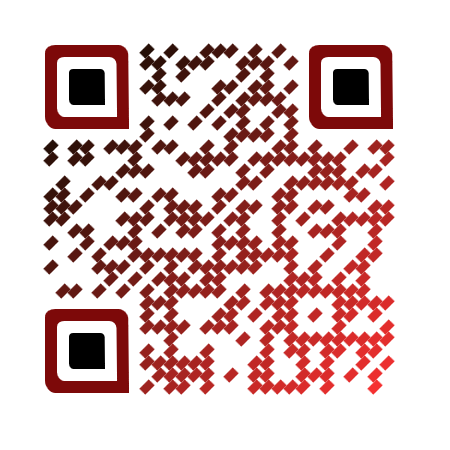
You can see a sample QR code above in the image I used for this post.

Here’s how the QR code works:

  • You visit a website that allows you to generate a QR code for your website. Some QR websites do this for free.
  • Then you download the JPEG or PNG file for your QR code.
  • Include your QR code on your book marketing materials.
  • Smartphone users can download free apps that scan QR codes.
  • The customer uses the QR scanner on his/her smartphone to scan the QR code. It’s just the phone’s camera reading the QR code.
  • When the QR code is scanned, the phone’s browser opens the website address associated with the QR code.
  • You can even track statistics associated with QR code scans, which is great for marketing.

Quick and Easy

Really, it’s incredibly easy.

If you have a smartphone, you just open the app, which opens your phone’s camera, point the camera at the QR code, and that’s it. The phone beeps, the phone’s internet browser opens, and the webpage appears on the phone.

Many smartphone owners have already installed free apps on their phones to scan QR codes. Many people recognize QR codes when they see them and scan them.

If you’ve never scanned a QR code before, what are you waiting for?

  • Get your cell phone out and search for apps.
  • Type QR code into the search query. Browse for free QR scanners.
  • I have an android phone. I tried a few. I like one called QR Droid.
  • Install the QR scanning app on your phone.
  • Test it out. You can scan the QR code above if you like (it will take you to my Amazon author page). Or the next time you buy a soft drink in a fast food restaurant, see if there is a QR code on the cup.

It’s just as easy for authors to generate free QR codes to help market their books. You just find a free website, enter your website url, and download an image file with your QR code.

Marketing with QR Codes

There are several websites that specialize in generating QR codes. Many offer free QR codes. Many allow you to track statistics.

I tried scanova.io and really liked it. I tested out Scanova and some other popular QR generators, and found Scanova most suitable for my needs.

When searching for a QR code generator, consider these features:

  • Will customers see advertisements on your website? Some of the generators require you to pay a monthly fee to avoid this.
  • Do the QR codes work reliably? Make a free one and test it out.
  • Do they offer free tracking of statistics?
  • How many trackable QR codes can you get?
  • How many trackable QR codes do you need?
  • Do they offer color or visual QR codes?
  • Is there a limit to how many QR scans customers can do per month? Some charge a fee to raise or remove this limit.
  • One of the fancy paid QR services that I explored in my research offered you the chance to create a QR code that goes to one page that shows your website, Facebook, blog, Twitter, etc. It was an all-in-one page. Of course, you could create your own free webpage somewhere and put all this together on that page, then use a free QR code to go to that page instead of paying for this special feature.

Don’t like the way QR codes look? Not a problem. Scanova and other QR code generators offer visual QR codes. You upload an image, such as a logo, and they turn it into a visual QR code.

Plain QR codes are more likely to be instantly recognized as QR codes, and it’s possible that they will be easier to read. You can test out a visual QR code and a plain one to compare them.

Book Marketing

You want customers to visit your author page, blog, social media sites, Amazon product page, etc.

So make it easy for the customer to do this. That’s what QR codes are for. Why type that url when you can just scan it.

Online, the customer would simply click on the link. That’s easy. But what about when it’s not online?

Anytime you print your url, add your QR code, too:

  • On the author page of your print book, include the QR codes to your WordPress blog, Facebook author, and Twitter pages.
  • When you print bookmarks for your book, add the QR code to the book’s product page at Amazon.
  • Add a QR code for your Amazon author page to your business cards.
  • Create flyers for a Goodreads giveaway or Rafflecopter contest. A QR code makes it easy to enter.
  • Send postcards to your client lists, notifying them (with a personal touch!) when your new book comes out—with a convenient QR code.

If you want to go overboard, you can even tattoo a QR code on your forearm or paint one on the door of your car! (Hey, you just might get the local news to make a story out of it for extra publicity.) Be sure to put a QR code on your pet’s id tag! 🙂

Really, you don’t have to do extra work to use QR codes in your book marketing. Just add a QR code to anything you’d ordinarily print, including your book, bookmarks, business cards, etc.

It’s free. It’s really not extra work. So why aren’t you using QR codes? What’s there to lose?

In addition to helping you generate additional traffic, QR codes offer tracking statistics. If you succeed in getting customers to scan QR codes that take them to your book’s product page at Amazon, you get tracking data that you wouldn’t ordinarily obtain.

Are QR Codes Dead or Alive?

I’m not saying that QR codes are so popular that everyone is scanning them, and that this is the easy solution to all your marketing woes.

What I am saying is that QR codes are easy to make, easy to use, and can help you generate additional traffic without much extra work.

Who can’t use extra traffic without extra expense and with very little work?

QR codes are in use. Many big-name fast food restaurants include QR codes on their disposable products, such as soda cups. Big retailers are keeping QR codes alive. You can take advantage of this.

There are alternatives to QR codes, but again, there are many people who recognize and use QR codes, you can make them for free, it makes it easy for customers to find your website, it offers you tracking data, and it requires almost no work to take advantage of this free marketing resource.

You

That’s right! You! 🙂

What can you do?

Install a free QR scanner on your smartphone.

The next time you come across an author’s QR code and you’re curious about the author or the author’s book, scan the QR code and check out the website.

Chris McMullen

Copyright © 2014 Chris McMullen, Author of A Detailed Guide to Self-Publishing with Amazon and Other Online Booksellers

  • Volume 1 on formatting and publishing
  • Volume 2 on marketability and marketing

Follow me at WordPress, find my author page on Facebook, or connect with me through Twitter.

Comments

Click here to jump to the comments section:

https://chrismcmullen.wordpress.com/2014/07/13/marketing-books-with-qr-codes/#comments

Eradicate Negativity: Your Marketing Depends on It

Happy Sad

Negative vs. Positive

Reading should be a positive experience, right?

You want to create a positive shopping experience and a positive reading experience.

And writing is a positive experience, right?

(If not, why on earth are you doing it?)

So should publishing and marketing be positive.

But not everything and everyone you come across will seem positive.

And you will definitely encounter people and issues that will challenge you to stay positive.

  • Don’t let ’em bring you down.
  • Don’t let it make you negative.

You want to appear positive when you interact with potential readers. Even with fans.

The best way to appear positive is to be positive.

  • It’s easy to fall into a negative mindset.
  • It’s often not easy to stay positive.

But it’s so worth consciously working toward this. You can do it. 🙂

Author Branding

You’re striving to build a positive image as an author.

A critical review will challenge you to remain positive.

Cynics will challenge you.

Failed authors will challenge you.

Many people and occasions will challenge you to stay positive.

Don’t appear negative on your blog, in person, on social media, or anywhere.

  • What will readers think if they read about you complaining about a review on your blog?
  • What will readers think if they see you behaving negatively on a discussion forum?

You’re in the public eye now. Your image is at stake.

  • What will readers think if they meet you and you appear very positive about your book?
  • What will people think if you always come across as positive, even when you’re dealing with adversity?

Win your battles to stay positive. Build a positive reputation.

Each challenge is an opportunity to shine.

It’s not just your book and image that matter.

  • If authors complain about Kindles and readers hear this, why would they want to buy one?
  • If authors complain about Amazon and readers hear this, does it make them want to shop for books?

Positive Marketing

Staying positive has its rewards:

  • Visualize a positive outcome. It helps motivate you to work toward your goals.
  • When your positive mindset is challenged, think of it as an important battle toward long-term success. Win this battle by staying positive and making positive decisions. Don’t let this battle turn you negative and impede your chances for a bright future.
  • You’re more likely to show confidence when you stay positive.
  • You’re more likely to put your best effort into something when you feel positive about the outcome.
  • When readers see your positivity, it impacts their buying decisions.

But challenged your positive mindset will be.

And in some cases, it won’t be easy. You’re likely to feel, “Come on! Not again! That’s more than enough,” but you just have to be that much more determined.

Think to yourself, “Bring it on. Is that the best you’ve got?” When you get through this battle, things will start going your way.

Negativity definitely has its disadvantages.

Interact with positive people. Add positive authors to your circles. Avoid negativity.

Chris McMullen

Copyright © 2014 Chris McMullen, Author of A Detailed Guide to Self-Publishing with Amazon and Other Online Booksellers

Follow me at WordPress, find my author page on Facebook, or connect with me through Twitter.

Comments

Click here to jump to the comments section:

https://chrismcmullen.wordpress.com/2014/06/29/eradicate-negativity-your-marketing-depends-on-it/#comments

Most Valuable Marketing Tools for Self-Published Authors

Tools

1 Word of Mouth

What it can do for you:

  • It can generate sales even when you’ve had a couple of recent unfavorable reviews. What a reader’s buddy tells them about your book carries more weight than what some random stranger writes on your Amazon product page.
  • It doesn’t rely on Amazon to sell your book through search results or customers-also-bought lists. Those can change over time. Word-of-mouth sales can yield traffic during times when Amazon’s marketing isn’t helping your book.
  • It helps your book get discovered. Instead of having to hunt your book down amongst thousands of others in that genre, your book is reaching readers’ ears directly.
  • It lends credibility to your book. Somebody that readers trust is recommending your book.
  • It gets readers interested in your book and puts them in a positive frame of mind at the outset. Readers discovering your book on Amazon often approach it with concern.
  • It can lead to a very long-term chain reaction. A few readers hear good things about your book. It may take weeks for them to buy and read your book. If each of them recommends it to their buddies, the number of readers and recommenders has grown. Many months later, what starts out small can lead to something much bigger.
  • It can build your reputation as an author. This helps not only to sell one book, but to generate interest in your full line of books.

Word-of-mouth sales can be the most valuable, but also the hardest to get.

How to earn them:

  • Your book has to have a wow-factor. When strangers pick up your book and feel impressed with the read, you really have something. Your book’s strengths need to compel readers to want more of that. Give readers more than they expect; much more.
  • Fiction books need to evoke strong emotions in readers; they need to also deliver on readers’ expectations for the genre. Nonfiction books need to fulfill the range and depth of information that readers want; they also need to be well-organized, communicate ideas clearly, and present the information at the right level.
  • You need to shore up your book’s weaknesses. Even if the storyline or characters are incredible, readers find it hard to recommend books with editing, formatting, or other issues. Their reputation is on the line, too, in the recommendation. Your book needs to earn it. You’re charging money for your book; it needs to appear professional.
  • If your book has that wow-factor, get it into the hands of readers. Run promotions, find bloggers who review books in your genre, and find and interact with your target audience. Find experts to read your book and politely request an editorial review or a quote that you can use in your book’s blurb—that’s a professional recommendation that carries weight with some customers.

When the author goes the extra mile to impress readers and produces a book worthy of word-of-mouth praise, this can have a huge impact on the long-term success of the book.

2 The Horse’s Mouth

What’s the next best thing to hearing positive things about a book from a trusted source?

Interacting directly with the author, of course.

Even in today’s world where millions of authors are getting books out there, it’s still a treat to meet and interact with the author.

Why does it matter? This personal interaction can do things that your product page can’t:

  • Show your passion and enthusiasm for your book.
  • Make the reader feel special. Don’t just draw interest in your book. Get interested in your readers, too.
  • There is greater potential to establish credibility as an author.
  • Answer any questions that the reader has.

Of the most common ways for books to sell, personal interactions with the target audience is the one big factor that is most accessible to self-published authors. (The other big factors include shopping the bestseller list, shopping by the name of an established author, browsing through the gigantic haystack of books on Amazon, professional book reviews, and bookstore recommendations.) When you aren’t dealt a good hand, you better play the one good card you do have. If you do play your cards right, you can eventually benefit from the other popular ways that books sell, too.

Think long and hard about where to find your target audience. Go out and interact with them. Charm your potential readers.

While you can reach greater numbers online, interactions in person are more likely to result in sales and reviews.

3 Flash It

Your book needs attention.

Shoppers will be browsing through hundreds of thumbnails in search results. Others will see your cover when they come across your marketing efforts.

Your cover needs to stand out.

It also needs to look the part. If it looks like a mystery, but it’s really a fantasy, your sales will be a bad romance.

A fantastic cover won’t provide long-term success for a lousy book.

But a fantastic cover can have a significant impact on the sales of a quality book.

For a highly marketable book (i.e. there is demand for the book and the content delivers on expectations), investing a modest amount toward a fantastic cover can pay nice dividends in the long run. And what you might lack in terms of financial investment, you can make up for in time. After all, time is money. Take the time to learn the how-to, get feedback, and get it right.

There are no guarantees in the publishing business, but most successful self-published authors credit their covers for being valuable players on their books’ sales teams.

4 Talk to Me, Baby

An effective cover grabs the attention of the target audience and brings shoppers to the product page.

Now it’s time for the only salesperson you have at the point-of-sale to close the deal.

“Who’s that,” you ask? It’s your blurb.

The description of your book isn’t a summary. It’s a sales tool.

The blurb needs to attract attention right off the bat. It needs to engage interest in the first line and hold that interest until the customer clicks to Look Inside.

Many effective blurbs are very concise, especially in fiction. Too much text there can be intimidating. If you’re exploring hundreds of books, you don’t want to read a long description for a book you might not even buy. In nonfiction, you can make important points easy to read by using bullet points (such formatting is possible through Author Central).

If the reader gets bored, it’s no sale. If the blurb doesn’t reinforce the genre depicted by the cover and title, it’s no deal.

Once the blurb generates a click to Look Inside, the Look Inside needs to wow the customer into making the purchase. Like the blurb, the Look Inside needs to engage interest immediately and keep it throughout. It must also look professional and read well.

Finally, the book must deliver on the promise made by the cover, blurb, and Look Inside. Otherwise, you get returns and frustrated readers.

5 Hunt ’em Down

Your book is out there, but who knows it?

You want to find your target audience. The word for this is marketing.

A great cover and blurb help, but first people must find your book. Recommendations are great, but first people must read your book. First, you need to get your book discovered.

Paid advertisements probably won’t be cost-effective for marketing a single book. Unless you have an amazing promotion going on and you supplement the paid advertising with much free marketing. In that case, a BookBub (click the link to learn more) or other type of promotion may come in handy.

There are many free marketing strategies, which are often more effective for books than paid marketing. Blogging, Twitter, Facebook, and other social media sites help you build a following and interact with your target audience. The key words here are target audience, which means posting content that will be relevant for them, using appropriate hash tags, and finding relevant Facebook groups.

Social media is a slow process. Now you go from just getting your book discovered to getting your social media pages discovered. You can do this through months of effective posts, interacting with people in your target audience, and directing readers to your social media pages in an About the Author section in your book. Then you’re kind of going in circles. But your social media helps two ways: You want people to discover you and your book, and you also want to attract fans so you can tell them about your next book when it comes out.

Don’t forget old-fashioned media: newspapers, magazines, television, and radio. Local papers often have column inches to fill and local radio stations may have minutes of air time to fill. Think about what can make you interesting to their audience. You’re selling yourself to sell your book. Learn how to prepare a press release package.

Remember, personal interactions are valuable to self-published (and all) authors. See if you can put together a successful reading or signing. Visit local libraries to see if you can get a paperback copy in circulation there or volunteer to read (appropriate material) to kids or senior citizens (visit a senior citizen center, too). Try to get stocked in local bookstores, and antique and other kinds of stores that sell books, but don’t specialize in books.

You need to work hard to find your target audience. But you can also help your target audience find you. Over time, turn your blog into a content-rich website with nonfiction material (even if you write fiction) that will attract your target audience through search engines. Your goal is to get 100+ visitors daily to your site through relevant search engine queries after a year of posts. That’s a lot of people discovering you and your book. It starts out very slow, but if you do it right, it can be very effective toward long-term success.

6 Can’t Get Enough

It’s easier to market several similar books than it is to market a single book.

It’s also easier to buy a book from someone who looks like a committed writer. When readers try out new authors, they’re looking for someone with the potential to provide a lifetime of good reading. If you just have a couple of books out, there isn’t much potential reward even if the book turns out to be good (i.e. comparing a reader who likes your book to a reader who likes a book by an author who has a dozen books out, this second reader will be enjoying many more books).

You also look like a professional writer when you have several books out.

And then each book that you sell helps to sell your other similar books. A hot promotion on one book helps to sell all your other books. More books, more readers, more recommendations, multi-book sales… If you’re looking to grow your sales, you need to publish a full line of books.

Don’t try to build Rome in a day. Take your time and get your books right. Just look ahead to the future. Your long-term goal is to have several good books that all help one another. It won’t help at all to have several books out unless readers enjoy them.

Chris McMullen

Copyright © 2014 Chris McMullen, Author of A Detailed Guide to Self-Publishing with Amazon and Other Online Booksellers

Follow me at WordPress, find my author page on Facebook, or connect with me through Twitter.

Comments

Click here to jump to the comments section:

https://chrismcmullen.wordpress.com/2014/06/22/most-valuable-marketing-tools-for-self-published-authors/#comments

Children’s Categories & Marketing @ Kindle

Kindle Age

INTRODUCTION

This is a two-part post:

  1. First, I will discuss a cool new feature that Kindle Direct Publishing (KDP) just introduced to help categorize children’s Kindle books.
  2. Next, I will share an idea to help market children’s Kindle books.

AGE & GRADE LEVELS

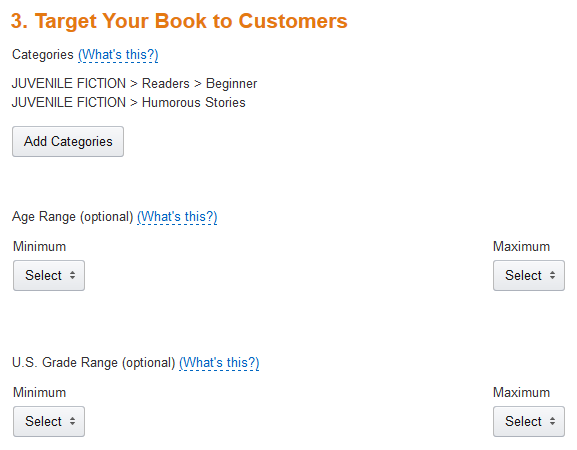
As of now, Step 3 of the KDP publishing process allows you to select an Age Range and a separate US Grade Range.

Tip: Open up your children’s, tween, and teen Kindle books on your Bookshelf and update Step 3. You’ll need to republish for this to take effect.

This will help give your juvenile book added visibility on Amazon:

  • Your book will show up when customers select one of the age group or grade level filters in Amazon search results.
  • You no longer need to waste a crucial keyword to get listed in the children’s age group categories. Tip: If you used a keyword to accomplish this in the past, you can now change that keyword to something else, if you wish.
  • These age group and grade level settings apply to the Schools and Teaching store.
  • These settings are supposed to apply to the Children’s Kindle Book stores for both Amazon.com and Amazon.co.uk.

What about CreateSpace paperbacks? Well, it wouldn’t hurt our chances if several authors suddenly made this request. Hint, hint.

KDP has a table with suggestions for the different age groups: Click here to view it.

I love these new age group and grade level options at Kindle. I’ve been hoping for this for years, and I’m probably one of many authors who’ve requested it in my interactions with KDP. It’s a great opportunity for children’s e-book authors.

MARKETING IDEA

As you may know if you follow my blog, I had the opportunity to talk to members of the Kindle Educational Team a few weeks ago.

They are hoping to see more educators and authors who would like to educate via books publish helpful educational content on Kindle. They have recently reached out to authors to hear our perspective from the publishing end. These new age group and grade level options are one step toward accomplishing this.

So here is my idea:

Education covers many topics. One subject relates to most juvenile fiction stories: English. This includes reading, reading comprehension, writing, vocabulary, grammar, and so on.

Suppose you have a collection of short stories, poems, novellas, novel, or other children’s fictional work for children, tweens, or teens. If so, there is a simple way to improve the marketability of your children’s book:

  • Create some teacher- or parent-oriented resources for your book. I’ll list a few examples below to get your brain churning.
  • You could include these in your book, or you could add a page to your book describing free educational resources available on your blog or website, which parents or teachers could use to get educational value out of your stories. The latter option has the advantage of giving readers a reason to visit your blog and follow you (plus it doesn’t make your book resemble a textbook for kids just looking to enjoy fiction).
  • Your stories are still marketable as stories, but now they are also marketable as educational resources to parents, teachers, homeschool instructors, libraries, and other educators. The free resources become an added marketing tool.

Here are a few ideas for creating educational resources to go along with your story:

  • Add vocabulary definitions and exercises relating to your content.
  • Write questions that assess reading comprehension for your story.
  • Come up with essay questions relating to your book.
  • Make creative writing questions stemming from your story or characters.
  • Create a grammar worksheet to go along with your content.
  • For historical novels, you may be able to add history lessons and exercises.
  • For science fiction novels, you might be able to come up with related science questions and exercises.
  • If your protagonist is bilingual, there is an opportunity for language lessons.
  • If you can find ways that your book relates to one or more school subjects, this gives you more opportunities.

READ TUESDAY

You may be aware that I launched an event in 2013 called Read Tuesday, which debuted in December. You can check out the website here: readtuesday.com.

Read Tuesday is a Black Friday event just for books. One big goal of the event is to help inspire reading.

In 2014, I would like to add a special page highlighting juvenile books that include educational resources (either in the book itself, or free resources that readers can find on the author’s blog or website). So if you have such a book and you’re willing to participate in Read Tuesday 2014 (which requires having your book on sale that day), in addition to listing your book in the Read Tuesday catalog, there will be a special page to showcase juvenile books with free educational resources available. I think this may be a good way for Read Tuesday to help promote reading.

Chris McMullen

Author of A Detailed Guide to Self-Publishing with Amazon and Other Online Booksellers

  • Volume 1 on formatting and publishing
  • Volume 2 on marketability and marketing

Follow me at WordPress, find my author page on Facebook, or connect with me through Twitter.

Comments

Click here to jump to the comments section:

https://chrismcmullen.wordpress.com/2014/06/03/childrens-categories-marketing-kindle/#comments

Review of Disney’s Maleficent (no Spoilers) plus Marketing Notes

Loved It

Disney’s Maleficent

I saw Maleficent with my daughter (six years old) last night. We saw it in 3D.

We both loved it. I’ll try to explain why without any spoilers (though if you read the comments below this post, I can’t guarantee that a spoiler won’t appear there).

I saw the animated Sleeping Beauty in theatres many years ago. Usually, I prefer a classic to its remake, but this time I enjoyed Maleficent much more than any other sleeping beauty story.

First, the story for Maleficent is different from any other Sleeping Beauty story that you might know. I enjoyed Maleficent‘s unique storyline. I actually like this storyline better than Disney’s animated Sleeping Beauty. It’s not just the story and characterization that has changed; even the perspective is different.

We loved the characters, especially Maleficent. Angelina Jolie pulled it off very well, in my opinion. I don’t believe you need to be an Angelina Jolie fan to enjoy this movie.

The imagery was amazing. Whether it was scenery, special effects, costumes, or motion, I enjoyed it thoroughly.

My daughter loves fairies and princesses, so the story turned out to be a real treat for her.

Sometimes I don’t like the 3D movies, but I really enjoyed this in 3D. It wouldn’t have been the same in 2D, and definitely wouldn’t have been the same in my living room.

Marketing Notes

You can learn a lot about marketing by studying what some of the professional marketers do effectively. In this case:

  • A single word in the title makes it easy to remember. This particular word is memorable, in that it’s not overused. It also fits the content to a tee. Even if you aren’t familiar with the word maleficent, you probably assume it’s similar to other words like malevolent, and so have some idea of what to expect. As a plus, the main character’s name happens to be the same, and a star actress is playing the role. The title is very important in marketing. It’s worth getting it right.
  • A striking marketing image. It follows the three-color rule with white, black, and a touch of red. There is very little red (just the lips), but it sure stands out effectively. The unique horns make it a very memorable appearance, and reinforce the title word. They didn’t make the mistake of adding red letters on black background, which would be hard to read. They didn’t make the mistake of using red text at all, which would detract from the red lips. That little touch of red is so effective by itself.
  • The previews I saw really built up my interest without giving too much away. I hate it when the preview gives too much away, and especially hate it when the only good parts of the movie are in the preview. A book’s blurb is very similar to a movie’s preview. You want to create interest without giving anything away. One of my favorite movie trailers was for Scooby Doo. That trailer looked like a preview for Batman, but wound up showing Scooby Doo as a surprise at the end of the preview. That trailer didn’t give anything away, but aroused my curiosity.
  • Of course, Disney could afford to market Maleficent on a grand scale. Spending money is easy when you have it; getting a good return on your investment isn’t. There are millions of people who have squandered money on advertising, only to discover how hard it is for advertising to pay dividends. Fortunately, Disney is also a well-established brand. But that also comes with high expectations, and the movie must deliver on those expectations or it can be squashed before it takes off. One of the great things I saw in the way of advertising was a billboard in Southern California with those distinct horns protruding out of the billboard. That sure stood out and caught attention.

Chris McMullen

Author of A Detailed Guide to Self-Publishing with Amazon and Other Online Booksellers

  • Volume 1 on formatting and publishing
  • Volume 2 on marketability and marketing

Follow me at WordPress, find my author page on Facebook, or connect with me through Twitter.

Comments

Click here to jump to the comments section:

https://chrismcmullen.wordpress.com/2014/06/02/review-of-disneys-maleficent-no-spoilers-plus-marketing-notes/#comments