My #Book #Marketing Secret by #Indie #Author Nicholas Rossis

Simple and effective, with three main points unlike the common “strategies.” Definitely worth checking out. 🙂

Chris The Story Reading Ape's avatarChris The Story Reading Ape's Blog

From the blog of Nicholas C. Rossis, author of science fiction, the Pearseus epic fantasy series and children's books I made this on Quozio.com

My marketing strategy is really simple. In fact, it can be summed up as follows:

  • Be real,
  • be fun,
  • be helpful.

If you do that, people will buy your books simply because they will like you and will want to support you. In other words, “if people like what you’re saying, they’ll like what you’re selling.”

I have read many marketing guides, but have come to realize that it all boils down to how people perceive you. In marketing speech, your brand.

Having a consistent author brand is liberating. It allows you to publish pretty much anything you like, irrespective of genre. People will read your books because you have written them – and they trust you to offer them a good time.

That’s great. How about some real tips now?

The other day, a visitor to my blog asked me for…

View original post 748 more words

Which FONT Should You Use for Your BOOK? #pubtips

Images from ShutterStock

Mock covers created using ShutterStock images.

FONT SELECTION

Whether designing a book or just the book cover, the choice of font is a very important design element.

  • The right font on the book cover helps to attract the specific target audience.
  • The wrong font anywhere on the book can be a sales deterrent.
  • Overused fonts, like Times New Roman, Arial, Papyrus, Algerian, etc. can make an unfavorable impression with those who recognize them.

Fonts come in many different shapes, from rectangular to curvy. They can be simple or complex. They can be serif or sans serif (the little decorations that you see on the ends of letters). They can be thin or thick, light or bold.

So which font should you use for your book or book cover? That’s the million-dollar question. It’s worth taking time to consider it carefully.

It’s not hard to find a free or low-cost font that allows commercial use. It just takes a little knowing what you’re looking for and investing the time to do a thorough search.

CONTENTS

I will begin with a discussion of font use in book design, both inside and on the cover, including font tips.

Then I will focus on genre-specific fonts, including:

  • sci-fi fonts
  • fantasy fonts
  • romance fonts
  • horror fonts
  • western fonts
  • and other fonts

In addition, I will illustrate this with several examples of genre-specific fonts.

BOOK FONTS

Different fonts are used in different parts of the book design:

  • The cover font may be different for the title, subtitle, author name, and back cover blurb. The title keywords and the author name should be abundantly clear in the thumbnail. The title may use a fancy font to convey the genre, but not at the cost of inhibiting readability. The other fonts should be simple, so as not to clash or detract from the main font. All the fonts need to go together. Avoid using more than three fonts on the front cover (two may be better, in general).
  • The body font used inside a print book needs to be clear and easy on the eyes. Don’t use a fancy font for the body text. It may be worth going with a popular novel font like Garamond or Minion, rather than a genre-specific font, since the main feature of the body font is easy reading.
  • Inside the book, you may also have a different font for headings and drop caps, for example. The drop cap is typically fancier, but should fit the genre, yet still needs to be clear. Especially, any drop caps in the Look Inside must be very legible. Focus more on clarity than fanciness for the headings.
  • It may be best not to embed a font for the body text of an e-book, as readers are accustomed to having the freedom to choose a font of their liking.

FONT TIPS

  • Study the covers and interiors of top-selling books, including self-published books, in your specific subgenre. This will help give you a feel for how the font style should look on the cover, drop caps, headings, and body text.
  • Black fonts on white backgrounds are probably easiest to read (but you have to choose the font color that’s appropriate to the visual element and background). Keywords in the title really need to stand out in the thumbnail. Red text on black often doesn’t come out clear enough (and it’s a common mistake because red, black, and white make for a good three-color rule, just not with red text on a black background).
  • Some fonts require kerning. This refers to the space between letters. An extreme example is the Papyrus font, which is not only overused, but very difficult to kern properly. Kerning is most important for your cover fonts and heading fonts. There is an option to kern fonts in PhotoShop or InDesign, for example. Even Microsoft Word has kerning options. Place your cursor between two letters, click on the funny-looking arrow-like icon in the bottom right corner of the Font group on the Home tab, select the Advanced tab, change Spacing to Expanded or Condensed, and play with the point value. Some letter combinations are more extreme than others, such as the WA in WATER.
  • Don’t rely on the font selection to convey the genre all on its own. Phrase your title so that the genre is clear from the wording. Then the right font helps to reinforce this signal. (A subtitle can help, when necessary.)
  • Take the time to research cover fonts and drop cap fonts that suit your genre. Google things like, “perfect font for a romance novel,” and variations like that. Also, see below for some tips on selecting fonts for a few popular genres. Check the font license to ensure that commercial use is permitted (in some cases, you can purchase a license directly from the font designer or from a website that sells fonts; there are also many fonts that allow free commercial use). You do need good anti-virus software and caution when downloading any fonts.
  • Title keywords are even more important for nonfiction books. These need to be large so as to be clear in the thumbnail. Readability is most important.
  • Emphasize the right words. Essential keywords should be larger (or at least no smaller) than unimportant words like “to,” “the,” “and.”

FONT MISTAKES

  • Don’t use a cover font that signifies the wrong genre. That makes it difficult for your book cover to attract people who may actually be interested in your book.
  • Avoid overused fonts like Times New Roman, Arial, Papyrus, Algerian, etc. Though the much bigger mistake is an inappropriate font or using a font that’s too extreme, fancy, or unreadable.
  • Make sure that your fonts are clear and readable. The body text font should be very clear and easy on the eyes.
  • Keep fanciness to a minimum. Readability is more important. If a font is too fancy, you might use it just for one keyword, or one letter (but the corresponding fonts better be a great match).
  • Avoid arranging text vertically, diagonally, and in ways that impair easy reading.

SCIENCE FICTION FONTS

Sci-fi fonts need to look futuristic in some way. A common way is for the letters to be made up of mostly straight lines, i.e. no curves (or only subtle curves).

Think like a rocket. The sides of a rocket are straight, like most of the letters of sci-fi fonts. If there are curves, they need to feel spacey, perhaps like the smooth arch of the rocket’s apex. A metallic feel for the color may help (but not necessarily).

You wouldn’t want to use a sci-fi font for an entire novel (unless it’s subtle enough that it’s very clear and readable), but a good sci-fi font can help the cover send a harmonious signal.

The following Space Age font illustrates the spirit, though note that not all of the letters are clear. Avoid this font for non-obvious words, or when many of the letters of a word happen to be hard to read. (This particular font doesn’t allow free commercial use, though the cost may be affordable. You can find out here: mickeyavenue.com/fonts/spaceage/license.php. I have no connections with the font licenser; I simply found this font during my research. Personal use is free, however.)

Font Sci Fi Space AgeThe Space Marine font below is bolder and easier to read, though not quite as suggestive.

Font Sci Fi Space Marine

The following Orbitron font has sci-fi character, and is still fairly easy to make out.

Font Sci Fi Orbitron

My last example of a sci-fi font is Mashine, but don’t simply pick one of the few examples I used. There are dozens of others to choose from.

Font Sci Fi Mashine

FANTASY FONTS

Unlike sci-fi, fantasy fonts tend to be curvier, but not as much as romance fonts. This gets a bit more complicated with paranormal romance, for example. Remember that the color scheme can help a little with the differentiation (red, for example, is common in romance, though it may be the image that’s red, not the font).

A fantasy font may have a magical or other-worldly feel to it.

You have to be careful with the most extreme fantasy fonts, which can be harder to read.

There are different kinds of fantasy books, so the specific font you choose needs not just to be a good fit for fantasy, but for your specific content.

My first example of a fantasy font is Auriol (which is not free, by the way, but I purchased a commercial license for $30):

Font Fantasy Auriol

The Endor font shown below has some extreme touches. It’s more readable with some words than with others, so use it wisely.

Font Fantasy Endor

This Merienda font illustrates how the shape of the font can look more like fantasy than like romance. The strokes themselves are indicative of some romance fonts, but the shape makes it fantasy instead.

Font Fantasy Merienda

My last example of a fantasy font has some straight edges typical of sci-fi, yet the shapes of the letters look more ancient than futuristic, which makes it fantasy. Remember, there are many other kinds of fantasy fonts than just the brief sample shown here.

Font Fantasy Becker

ROMANCE FONTS

Romance fonts tend to be curvy, sometimes in a script, but not always. Beware that the script fonts are often harder to read and aren’t always available with a bold stroke.

Another consideration is that teen romance, paranormal romance, contemporary romance, historical romance, etc. are different subgenres, which may require different title fonts on their covers. It’s worth researching the top-selling books, especially those that are self-published, in your specific subgenre.

The Lust Script font below illustrates some of the curviness of romance fonts, along with some of the touches that you often see on capital letters and the ends of some letters like r’s and v’s. This font won’t come out well in all caps, by the way (though there is a non-script variation).
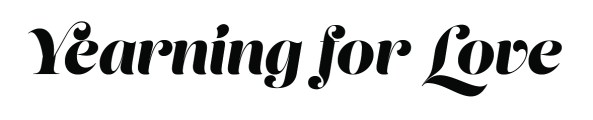
Font Romance Lust Script

Here, I used the same Lust Script font for the first letters and combined it with Lust (the non-script companion) at a reduced size. The result serves as a good reminder that you need to manually kern the title fonts (compare the large gap between the NA of Naughty and the RO of Romance).

Font Romance Lust and Script

The following Pollen font is more subtle. You may not want to use an extreme romance font for the title, subtitle, and author name. You need to do some research to find combinations that work well together.

Font Romance Pollen

There are many, many romance fonts to choose from, and some fonts work better in some romance subgenres than others. It’s worth doing some research to see what your options are. Script is not uncommon, but place emphasis on readability and ensuring that all your cover fonts work well together.

I made the following fancier option using pictures from ShutterStock (artist Augusto Cabral). You wouldn’t want to make much text fancy like this, but one short keyword that is easy to read might work.
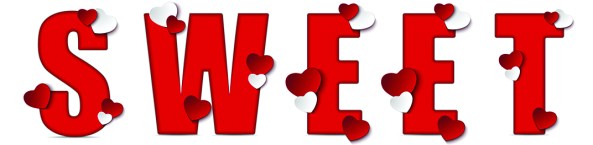
Font Romance ShutterStock

Of course, you could do the same in other genres, too. But you really have to be careful not to go overboard. Using images or very fancy fonts can be hard to read, and they can detract from the main visual element of the cover. Keeping the cover fonts simple, but relevant, is a good philosophy.

But let me illustrate one more example of using imagery within the font itself. The following image is also from ShutterStock (artist Mr. High Sky).

Font Romance ShutterStock 2

WESTERN FONTS

Western fonts should look like something you’d see in a wanted poster or in a western movie, for example.

They should have a more rugged feel. The color scheme might look more like a desert or the sun (red, orange, yellow), though that doesn’t mean to make the font one of these colors. Search for some authentic western posters, books, movies, etc. to see what is common.

The following Rosewood font has some familiar western character.

Font Western Rosewood

So does this Smokum font.

Font Western Smokum

There are a variety of other kinds of fonts that clearly have a western style. Do some research to find the best one for your needs. But beware of a few that go overboard (like being entirely made out of rope).

HORROR FONTS

One way to illustrate horror is a small degree of fading. Too much fading renders the font unreadable.

Another way is to add dripping blood, but it’s not easy for that blood to look right.

Fortunately, there are many bloody, faded, and other chilling fonts to choose from, so you can find the font that fits your book perfectly with a little research. Filter out the ones that are overdone or which don’t quite pull the effect off correctly.

This Misproject font illustrates a small amount of fading away. It’s still readable.

Font Horror Misproject

Here is one more example of a horror font. This is American Shopworn.

Font Horror HWT American

While the Chiller font installed on your computer might seem convenient, it may be worth taking time to find something more appropriate. Again, don’t just limit yourself to one of the two examples that I provided to help illustrate the horror genre: Explore your options thoroughly, and also browse top sellers in your subgenre.

BODY TEXT

The body text needs to be very clear and easy to read.

Times New Roman may be overused.

Garamond, shown below, is a popular alternative.

Font General Garamond

There are other good fonts for body text, like Minion, which follows. Look at the ‘a’ and the ‘e’ to see the difference. Both of these are serif fonts, which have little marks at some letter ends to help aid in the reading.


Font General Minion

Georgia is a bolder font than Garamond, but is sometimes confused with Times New Roman.

OTHER GENRES

Another consideration, besides the genre, is the book’s era and setting. For historical fiction, it may help to signify the period more than the subgenre. For example, you might find a good font to represent the Victorian era for a Victorian novel.

The distinction between mystery, thriller, and suspense can get a little tricky. For mystery, you may be able to find a few icons to help serve as a guide, especially if your novel is similar. For example, check out the fonts used in the Murder She Wrote t.v. series or Agatha Christie’s mysteries. Whatever your genre is, you want to browse the covers of top sellers to get a feel for what the font is trying to convey and how they pull it off. Use my examples as a guide to get you thinking (e.g. sci-fi is futuristic, western is rugged, fantasy is magical or other-worldly).

For nonfiction, a very clear light serif or sans serif font is common on the cover. Clearly conveying the keywords in the thumbnail can be a valuable marketing tool for many nonfiction books.

There are many places to browse for fonts, but it may be best to start with a variety of genre-specific inquiries with Google, and remember to browse the covers of top sellers in your subgenre. Be careful where you download material from the internet. There are many sites, like Font Squirrel, Da Fonts, and fonts.com, offering free or low-cost fonts for commercial use, or you can buy font collections. Even Adobe offers a selection of fonts through TypeKit (Creative Cloud users can use TypeKit for free).

Chris McMullen

Note that I made up the names of the sample titles used to illustrate fonts. Any resemblance to any covers of books that actually use these titles or similar ones is purely coincidental.

Chris McMullen, Author of A Detailed Guide to Self-Publishing with Amazon and Other Online Booksellers

  • Volume 1 on formatting and publishing
  • Volume 2 on marketability and marketing
  • 4-in-1 Boxed set now available for Kindle and in print

KINDLE UNLIMITED

Kindle Image

Background image from ShutterStock


KINDLE UNLIMITED

Toward the end of July, 2014, Amazon introduced a new subscription service called Kindle Unlimited, which allows customers to read unlimited books for $9.99 (US price) per month.

  • This includes 100,000 traditionally published books in addition to 600,000 KDP Select books.
  • Most of the traditionally published books are from smaller publishers, but include some popular books such as Harry Potter.
  • Customers can borrow up to 10 different books at a time (whereas Amazon Prime allows just one borrow per month).
  • Kindle Unlimited only pays a royalty when a customer reaches 10% of the book’s length.
  • All Kindle Unlimited downloads affect sales rank, regardless of whether or not the customer reaches the 10% mark.
  • Royalties for Kindle Unlimited borrows have been as low as $1.30, down considerably from around $2 prior to Kindle Unlimited.
  • Many books receive numerous Kindle Unlimited borrows, while borrows were much more scarce when it had been only Amazon Prime.
  • The KDP Select Global Fund has increased dramatically, from around $1 million to around $5 million per month.
  • Self-publishers must enroll in KDP Select in order to participate in Kindle Unlimited. The trade-off is exclusivity: You can’t publish your e-book elsewhere while your book is enrolled in the program (and you can only opt out when your 90-day enrollment period is about to renew; you must deselect the auto-renewal first).

PUBLISHING IMPACT

Remember the early days of self-publishing?

  • The naysayers claimed that it would ruin literacy, that it would be impossible to find quality books, that it would devalue books, that customers wouldn’t support it.
  • Traditional publishers and their advocates either ignored it or marketed against it, highlighting its faults and the benefits of traditional publishing.
  • Thousands of authors who had heard successful self-publishing stories sought to get rich quickly with little effort. They soon realized it wasn’t as easy as it seemed, that you really have to produce quality content for a target audience and package and market the book well, and the worst tend to fall to the bottom where they don’t get in the way.
  • But millions of readers continue to support self-published books, it’s not too hard to find good books with a little shopping wisdom, and self-publishing now takes up a significant share of the publishing industry.

History is repeating itself with Kindle Unlimited.

  • Some authors see the low payout (around $1.30) and the 10% threshold and feel that Kindle Unlimited favors shorter books. But those authors who plan to use Kindle Unlimited to get rich quickly with less effort will find, just as with self-publishing in general, that you still need to produce quality content that pleases and attracts a target audience. Nothing is easy, and there is much competition. Just turning out crud isn’t likely to be rewarded.
  • Naysayers continue to complain about literacy being ruined and books being devalued, especially now that you can read books for a low monthly subscription. But really, this works out to $120 per year, which isn’t cheap in the long-term. Kindle Unlimited may actually encourage more reading than ever before, as you need to read more books to feel like you’re getting your money’s worth.
  • Traditional publishers and their advocates aren’t sure what to make of Kindle Unlimited. Hoping it will go away doesn’t appear to be a viable solution. Some self-publishing books landed on bestseller lists when Kindle Unlimited launched.
  • There is a significant audience for Kindle Unlimited. Just compare the $5 million or so global fund to the $1.30 or so payout. There are very many books being read through Kindle Unlimited.

NEW AUDIENCE

What Kindle Unlimited really does for the publishing industry is divide the digital audience into two distinct groups:

  • Customers who purchase e-books.
  • Customers who borrow e-books through Kindle Unlimited.

Both audiences are significant.

A Kindle Unlimited subscriber isn’t likely to purchase an e-book. Not when you can get 600,000 for free. For the most part, a borrowed book isn’t a lost sale. It’s in addition to sales.

The real question for authors is this: Would you sell enough e-books through Nook, Kobo, and elsewhere (keeping in mind that Apple customers can use the Kindle app) to compensate for the borrows that you would get through Kindle Unlimited?

For new, self-published authors trying to establish themselves, it may be wise to start out with Kindle Unlimited. Many feel that Kindle Unlimited customers are more likely to give their books a shot, since there is nothing to lose. If you’re not happy with Kindle Unlimited, you can always opt out when the 90-day enrollment period ends (but you have to uncheck the auto-renew box).

I’ve read a few articles about various ‘problems’ with Kindle Unlimited. To me, these articles are ‘validating’ Kindle Unlimited more than anything else, even when they highlight drawbacks.

Chris McMullen

Copyright © 2015 Chris McMullen, Author of A Detailed Guide to Self-Publishing with Amazon and Other Online Booksellers

  • Volume 1 on formatting and publishing
  • Volume 2 on marketability and marketing
  • 4-in-1 Boxed set now available for Kindle and in print
Follow me at WordPress, find my author page on Facebook, or connect with me through Twitter.

Comments

Click here to jump to the comments section:

https://chrismcmullen.wordpress.com/2015/01/03/kindle-unlimited/#comments

!!!!!Happy New Year 2015!!!!!

Individual images from ShutterStock. (But the resulting mess is all my fault.)

Individual images and background image are from ShutterStock.
(But the resulting mess is all my fault.)

HAPPY 2015

May you enjoy a fantastic 2015.

Follow Amazon

Follow the Leader

Images from Shutterstock (human icons are modified images from artist Orla).


FOLLOW AMAZON

When I first began using Twitter, I found Amazon on Twitter. I followed Amazon. And received a pleasant surprise. Amazon followed me back! (I’m not special. Thousands of others have received the same pleasant surprise.)

Obviously, when Amazon follows you back on Twitter, you shouldn’t expect this to be an active member of your audience, reading and enjoying your tweets, interested in any products or services that you offer. But it’s still cool.

If you’re a writer, you also want to follow KDP Amazon.

TIP: You can find a good variety of free writing and publishing tips on KDP Amazon’s Facebook or Twitter pages. (Note that following KDP Amazon is different from following Amazon.) KDP Amazon makes effective use of social media, so KDP Amazon’s posts provide good examples of how to tweet or Facebook effectively.

KDP Amazon surprised me with a wonderful social media Christmas present a few days ago. I received an email notification from Twitter that KDP Amazon had mentioned me in a post.

So I immediately searched for KDP Amazon on Twitter. There I found a beautiful image, a link to one of my WordPress posts with a cover design checklist, and a relevant hashtag, #pubtip.

Next, I received an email notification from WordPress that my stats were booming. I average about 10 views per hour, but when KDP Amazon mentioned my cover design checklist, I was averaging 100 views per hour.

I noticed that most of my traffic was coming from Facebook. So I found KDP Amazon’s Facebook page, where I saw a similar mention of my cover design checklist. And a host of other valuable references for writers.

Amazon discovers many KDP and CreateSpace indie authors. Once in a while Amazon reaches out to an author. Other times they discover helpful writing or publishing tips and link to them from their social media pages. Several authors are recognized through success stories in the KDP newsletter, CreateSpace newsletter, or even on Amazon’s homepage.

Obviously, you can’t expect Amazon to reach out to every author, or to feature you if you simply contact them with a request. But you can see that Amazon does find some authors who are finding success on Amazon or who are supporting Amazon writing and publishing opportunities.

Following are some Amazon social media pages that all writers should follow.

AMAZON TWITTER

@amazon

@AmazonKDP

AMAZON FACEBOOK

https://www.facebook.com/Amazon

https://www.facebook.com/KindleDirectPublishing

AMAZON EMAILS

Follow Amazon’s Success Stories. Many of these are inspirational. Also, if you check out these successful authors, you might learn some valuable tips. Click http://www.amazon.com/gp/gss > Success Stories

Subscribe to the KDP email newsletter: http://www.amazon.com/gp/gss/detail/13778590. The monthly newsletter often contains helpful tips and highlights success stories.

There is also an occasional email newsletter from Amazon called Newsletter Highlights: http://www.amazon.com/gp/gss/detail/162110.

Amazon’s new publishing program, Kindle Scout, has a subscription newsletter, too: http://www.amazon.com/gp/gss/detail/29134490.

Chris McMullen

Copyright © 2014 Chris McMullen, Author of A Detailed Guide to Self-Publishing with Amazon and Other Online Booksellers

  • Volume 1 on formatting and publishing
  • Volume 2 on marketability and marketing
  • 4-in-1 Boxed set now available for Kindle and in print (both at special introductory prices)

Follow me at WordPress, find my author page on Facebook, or connect with me through Twitter.

Comments

Click here to jump to the comments section:

https://chrismcmullen.wordpress.com/2014/12/29/follow-amazon/#comments

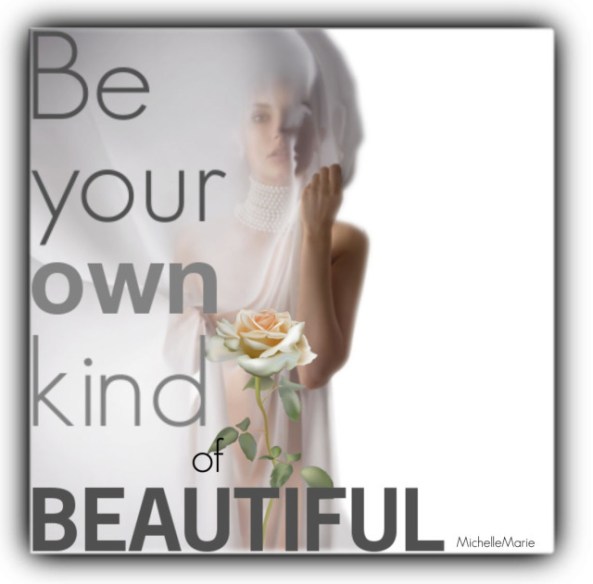
BE your own kind of BEAUTIFUL

Splendid advice. 🙂

MichelleMarie's avatarTell Me About It

Art by MIchelleMarie Art by MichelleMarie

BE your own kind of BEAUTIFUL

View original post

Book Marketing Karma

Karma

KARMA

Wouldn’t you love it if you had anonymous advocates for your book?

People who read your book and enjoyed it so much that they are telling people they know and meet about your book. They might even recommend your book on Facebook or Goodreads, without ever having interacted with the author. They did so because they loved the book and wanted to share it, not because they were asked to promote it.

Such word-of-mouth support would just be golden.

Guess what.

You could be the anonymous supporter for wonderful books that you’ve read.

If they are, in fact, wonderful books, they very much deserve your support. If also you paid very little for said book, while deriving much enjoyment from it, your support would be a great way of leaving a little tip for all the time and effort that must have been put into making that book wonderful.

Who knows?

The positive things you do just for the sake of doing good (for those things that are worthy of your support) may return something positive to you some day.

Or at least you’ll be in a more positive mindset, knowing that you’ve done good deeds, so that you’re more likely to see the good things in your own future, rather than focusing on the negatives.

Or maybe a few of the people who see all the good you’re doing will feel the urge to do something nice for you.

Don’t perform good deeds for the mere hope that good deeds may come back to you. Rather, do them because you see the value in doing the good deed itself.

And for those who are slamming the competition or playing unfair, they are probably shooting themselves in the feet. But they are also inviting bad karma to someday repay them the favor.

Or at least they’ll be in a more negative mindset, perhaps worried about possible bad karma, more likely to see the bad things in their future, taking anything positive for granted.

Or maybe people who see all the bad they’re dishing out will be more reluctant to do nice things for them.

There is another reason to support good books.

It helps to create a better brand for the book industry, which helps everyone.

Show what positive wonders there are in the book world. Show the best examples of great stories and great writing.

This helps to attract more readers overall.

Show examples of great self-published books, and that helps to recruit more support for self-publishing.

Show examples of great Kindle Unlimited books, and that helps to recruit more subscribers for Kindle Unlimited.

But focus on the poor features of the worst books, and that hurts these brands, deterring readers.

After all, books are competing against videos, movies, games, and other media.

Chris McMullen

Copyright © 2014 Chris McMullen, Author of A Detailed Guide to Self-Publishing with Amazon and Other Online Booksellers

  • Volume 1 on formatting and publishing
  • Volume 2 on marketability and marketing
  • 4-in-1 Boxed set now available for Kindle and in print (both at special introductory prices)
Follow me at WordPress, find my author page on Facebook, or connect with me through Twitter.

Comments

Click here to jump to the comments section:

https://chrismcmullen.wordpress.com/2014/12/19/book-marketing-karma/#comments

Shutterstock and other Stock Photo Collections

Background image licensed through Shutterstock.com

Background image licensed through Shutterstock.com. You may not reuse, share, or download this image to your computer. If you wish to use this image, visit Shutterstock and license the image through them. 🙂

STOCK PHOTOS

If you design book covers, or even if you need images for the interior of the book, you either need to:

  • make your own images (illustrations or photographs)
  • find stock images to use
  • hire an artist to make images for you

If you make your own images, you can potentially customize your cover exactly as you want it… with the limitation of your ability to draw illustrations, take photographs, and use image-editing software. There is an art to photography, e.g. eliminating red-eye, getting the lighting and shadows just right, capturing the right facial expression, etc. It’s not as simple as it might seem.

If you hire an artist, you still need to question where the images come from. If the artist is using stock photos, for example, you want to know that they are properly licensed.

If you find your own stock images, here is what this entails:

  • other books may be using the same images (some very popular images appear on many self-published covers)
  • you still need to be able to incorporate them into a good design (it shouldn’t look like a simple cut-and-paste or a bulletin board layout, beware that filters may do more harm than good, multiple images must work well together, you have to find the ‘right’ image, and the font is important, too)
  • take time to search thoroughly; try various keywords and keyword phrases to help filter the results
  • a large image may work well by simply adding text, but then another cover that uses the same image will look very similar to yours; combining multiple images gives you a better chance for a unique design (even if the image is used on another book, the layout may be different), but it’s more challenging to combine separate images well
  • you need to read the licensing agreement thoroughly and carefully so that you understand the restrictions (you need stock photos that may be used for commercial purposes, specifically for e-books or print-on-demand books if you self-publish)
  • check the DPI of the image (300 DPI is desired; 96 or 72 DPI is likely to appear noticeably blurry and pixelated); also check the overall pixel dimensions for an e-book (and compare with your target screen size) and the size in inches for a print book (if you must enlarge the image for your intended use, that will greatly lower the resolution)
  • if you need just the central image, life will be simpler if the background is plain white; you need some photo-editing skills to remove an image from a background, especially a complicated background (well, all you really need to do is Google how to do this in PhotoShop and follow the instructions)

Don’t just use any image that you find on the internet; it’s probably protected by image use guidelines. Also, most of what you find on websites has very limited resolution (under 100 DPI).

What you really want is to find a collection of stock photos, which clearly spells out the licensing agreement so that you know if you can (or can’t) use the image for your intended purpose.

There are free stock photo collections, but you may be more likely to find quality images that fit your needs well with high enough resolution from low-cost stock image providers.

A couple of popular sites include Shutterstock and iStockphoto, but you can find more via Google.

http://www.shutterstock.com

http://www.istockphoto.com

Here are a few examples of relevant notes in licensing agreements. The numbers below correspond to Shutterstock’s licensing agreement (but you should read the actual and complete terms on any stock image provider’s website before using their images):

  • 2.b. In e-books and print-on-demand books. (Though if it’s primarily a photo book consisting of stock photos, one of the restrictions may apply.)
  • 2.b. Up to 250,000 reproductions. (If you’re planning to sell more books, you can consider the extended license, or maybe you can afford a custom cover from a top designer.)
  • You can use images on a website according to 2.a., but the use appears to be restricted in 6, 7, 8, and 10. For example, if you simply put the image as-is on your website, others would be able to download and use the image without paying for it (and you can be sure the company wants to prevent this possibility).

Most of the stock photo companies wish to prevent cover designers from displaying pre-made covers using their stock photos. Their fear is that some designers may then sell the same covers to multiple authors. Read the restrictions carefully. It may also be wise to contact the company for a written decision on the matter.

Be sure to read all of the restrictions to see if any apply to you. (I’m not an attorney and I can’t offer legal advice. If you wish to seek legal advice, consult with an attorney.)

I’ve been using ShutterStock recently. The images I’ve been browsing through are amazing. They often have 50 to 200 pages of the images that I’m searching for, and all of the images are impressive. Still, it takes careful and thorough searching to find the right image to meet your needs.

At ShutterStock, for example, you can either buy images on demand or sign up for a subscription. Buying 5 images for $49 works out to a reasonable cost (about $10 per image). You have 365 days to download all 5 images (note that you also need to use the image within 1 year of downloading it). Thus, it’s very easy to design a cover for under $100; it can be as little as $9.80 if you only need one image. Choose your images wisely. (And make sure that you don’t have the brand of the stock photo supplier on your image; if so, you either didn’t pay for the standard license for that image or you didn’t download the image properly.)

MORE STOCK PHOTO TIPS

If you plan to use stock photos, the following article has some very handy tips, like how to find out if the same image is available cheaper from another site.

http://mmjayewrites.com/2014/11/21/time-saving-tips-for-using-stockphoto-sites-plus-casting-for-fate-accompli

Chris McMullen

Copyright © 2014 Chris McMullen, Author of A Detailed Guide to Self-Publishing with Amazon and Other Online Booksellers

  • Volume 1 on formatting and publishing
  • Volume 2 on marketability and marketing
  • 4-in-1 Boxed set now available for Kindle and in print (both at special introductory prices)

Follow me at WordPress, find my author page on Facebook, or connect with me through Twitter.

Comments

Click here to jump to the comments section:

https://chrismcmullen.wordpress.com/2014/12/18/shutterstock-and-other-stock-photo-collections/#comments

Guest Post by Yohana Petrovic: The Best Free Tools to Improve your Writing

A great post for writers… just in time for New Year’s resolutions. 🙂

Nicholas C. Rossis's avatarNicholas C. Rossis

Freelance writer and blogger, Yohana Petrovic contacted me with an idea for a post describing four tools that can help you become a better writer. Enjoy!

The best free tools to improve your writing skills!

The art of writing is a combination of language, technical skills and creativity. The language and technical aspects of your writing include elements such as grammar and proofreading. However, grammar is an area from which you can learn every day. The command over grammar is like the electricity powering your computer: you will need that power every day to create polished content.

The creativity aspect of your writing includes the major element, which is your uniqueness – ‘your style of writing’. Hence, there are categories such as fiction writer, resume writer, copywriter, content writer and so on.

If you have just begun your writing career, then give it a minimum of 3-6 months to understand…

View original post 1,027 more words

Why Should You Publish in Ebook Format?

Even if this isn’t an issue for you, it’s worth checking out these numbers. 🙂

Nicholas C. Rossis's avatarNicholas C. Rossis

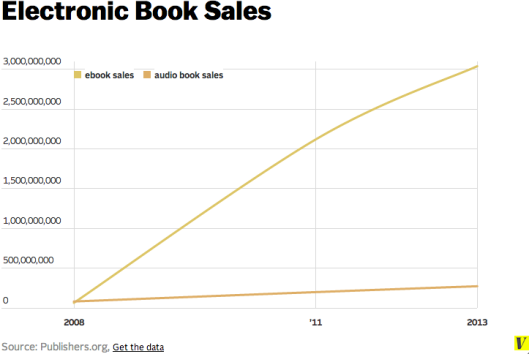
Frankly, I’m surprised this is even asked anymore. And yet, I did encounter the question a few days ago. I consulted Author Marketing Ideas,  Vox.com and, of course, Author Earnings for some interesting statistics on ebooks.

EBooks are on the rise right now. Having an eBook allows you to offer your audience a new way of reading your book. Nowadays it seems just about everyone owns a tablet or some kind of eReader and prefer to read on these devices.

From the blog of Nicholas C. Rossis, author of science fiction, the Pearseus epic fantasy series and children's books from vox.com

The healthy state of the book market owes a lot to ebooks, as the trendlines are negative for print. The data about e-book sales and print sales are never fully clear, but we do know that total book sales in 2013 was almost $15 billion, according to the Associations of American Publishers. That’s a 14% increase since 2008. E-books accounted for $3 billion. If we took…

View original post 356 more words