What Authors Need to Succeed

Confidence Pic

Here is a riddle for you:

What is a factor common among all sorts of authors, which can have a huge impact on success?

It’s something that all authors need, any author can have, but which can’t be bought.

Ponder this for a moment.

It’s not the drive to write; most authors have a natural inclination toward this.

It’s not a fantastic plot; most fiction writers can come up with a storyline, and it’s easy to research what kinds of plots attract readers. A good, complete storyline does matter, but it’s not a part of all writing.

It’s not great characterization; this can be developed over the course of time, along with a writing style that helps portray it. It is quite important in fiction, but not common to all authors.

It’s not the writing skills; the ideas themselves are more valuable than the technique, and there is editing help or writing development available, where needed.

It’s not an incredible cover; this is very important for many books, though not all, and there is cover design help available for authors.

It’s not a business plan; although researching a book beforehand, proper packaging, and ideas for how to sell the book can greatly enhance sales, authors need something else in order to carry this out. Much writing is also highly creative and artistic, where the best reading doesn’t come from words written in a business fashion.

It’s not an innate knack for marketing; this definitely helps, but marketing can also be learned, and there is an abundance of free advice to read up on.

It’s not money; there are many free marketing ideas to choose from, some of which can be implemented effectively.

It’s not good looks; readers are looking for stories or information, not buying a book hoping to date the author.

It’s not celebrity status; this is not realistic for everyone to have, at least when starting out.

It’s much simpler than that.

It’s often overlooked.

It’s incredibly important.

It’s something that comes from within, at least it can.

Give up?

Ready or not, here it comes…

Okay, I’ll hide the answer at the end of this paragraph, in case you weren’t ready to see it yet. It’s confidence.

That’s it!

There are two parts to this: Why is it so important for authors, and how can every author attain this?

(1) Why is it so important for authors?

Actually, it’s not just for authors. It’s many things in life.

For example, I see it all the time among physics students. When learning new concepts that seem strange or intimidating, many students proceed tentatively. They sometimes give up when they were proceeding in the right direction; they just lacked the confidence to keep going. They sometimes give up when they get the wrong answer, assuming that they solved the problem incorrectly, when all they did was make a simple mistake; they just lacked the confidence that the solution was correct to check it carefully. When you doubt your solution, you wonder if it’s worthwhile to check it over.

The top students tend to be much more confident. They carry out their solutions fully because they’re sure they’re solving the problems correctly. Instead of doubting their solutions, when they get the wrong answer, they check their solutions carefully. Confidence makes a big difference.

Are you more likely to give a good speech if you approach the podium timidly or confidently?

Do you want to hit a long drive down a tight fairway, sink a critical putt, strikeout a tough hitter, hit a homerun, or serve an ace? Confidence and positive visualization play a significant role in this.

Have you ever tried to do something mechanically, like turn a crank, pull a handle, or push a button on a device that’s new to you? If you’re tentative about it, sometimes it doesn’t work, and later when you ask for help, someone else does the exact same thing that you did, but it works. Why? You didn’t try hard enough because you approached it uncertainly. The other person was simply more confident.

There is also the danger of being overconfident, and breaking the device because what you did is wrong. The line between confident and overconfident is just as important as the line between tentative and confident.

Here are ways that confidence benefits authors:

  • You’re more likely to fully invest your time, effort, thought, and resources into a project if you have full confidence in it. If you’re going to do it, go for it. Don’t make finding a good cover or seeking editing help conditional upon success; strive for success in the first place, else it may be very hard coming.
  • The author who is confident in the book is more apt to market diligently and to learn effective marketing strategies. The author who is uncertain about the book worries that marketing may be a waste of time, and just pokes around at it, hoping, usually without much success.
  • Uncertainty shows up in the marketing itself. Speaking to others about your book, you must look both confident and passionate about your work. If you can’t sell your book to yourself, how do you expect to convince others to read it? Your confidence impacts others when it shows.
  • It takes confidence to do effective premarketing over the course of months, to strive to build buzz for your book, and to get neutral feedback. Premarketing can make a big difference.
  • You must be confident to exercise the patience needed to market successfully. It can take a year or more for effective marketing efforts to reach their full effect. It takes time for people to discover your book, to buy your book, to start reading your book, to finish reading your book, to recommend your book to others, to write a review, etc. And only a fraction who discover it will buy it, who buy it will read it, who read it will finish it, who finish it will like it, who like it will recommend it. It takes a lot of sales and a lot of time. You must be very confident to market diligently over such a long period of time, especially if you don’t see instant results.
  • At a reading or signing, the confident author charms everyone and looks the part. The tentative author is nervous and doesn’t quite seem to belong there. It’s your event, you need to own the place and function as a proper host. Nervousness versus confidence will even show in your speech and mannerism.
  • Positive visualization helps. It helps you maintain a positive outlook. You’re more motivated when you’re optimistic. You work more diligently toward the positive outcome when you are able visualize it. Positive visualization even helps you subconsciously; it’s subconscious to you, but you’re doing things that others can perceive through your behavior (e.g. nervousness may show up as being fidgety).
  • Authors tend to make a lot of mistakes (such as unprofessional behavior) when they behave out of fear. Confidence leads to more professional behavior, which is important for long-term success and positive branding.

But overconfidence is a problem for authors.

People are more likely to buy your book if you look like you believe in it; that’s confidence. People are less likely to buy your book if you come across as arrogant or if you brag about your book; that’s overconfidence.

The confident author will let people discover his or her book and then talk about it passionately until the subject naturally changes. The author who introduces his or her book to someone who isn’t expecting this is overconfident that anyone who hears about it in any context will buy it. People are more likely to show interest in things they discover than things that are advertised.

Be confident enough in your book to market it effectively, but try not to be overconfident.

We also tend to make more mistakes when we feel overconfident. If we feel too confident, we may not practice as much as we should or we may not give the matter enough attention.

(2) How can every author attain this?

It’s not easy for everyone to show confidence; some people have more trouble with this than others. But everyone can become confident.

It’s not just a matter of saying you’re confident. There’s much more to it than this.

Suppose you don’t know a word of Russian and suddenly wander down the streets of Moscow telling yourself you’re confident you can easily pick up on the language. Not gonna happen. (Maybe someone will speak English, but you’re not going to instantly pick up Russian no matter how confident you are.)

You can become confident through experience.

Again, this doesn’t just apply to authors. I see it with my students. The student who hasn’t practiced or studied enough definitely lacks confidence. The top students know they have practiced plenty and studied hard, so they show confidence. Then there are good students who worked and studied hard, but don’t show confidence; instead, they show much anxiety and make nervous mistakes. These students didn’t first convince themselves that because they’ve worked and studied so hard, they do know how to solve the problems. They had every reason to be confident. Maybe they have done poorly on tests in the past, and this prevented them from showing the needed confidence.

There is a way for students to overcome exam anxiety. One step at a time. Try to solve one small problem by yourself. Then work your way up to exam conditions. Start with self-check exercises, try practice quizzes, make a practice exam. Put yourself in positions where you experience exam anxiety, where it starts out easy and becomes progressively more challenging. It takes a will to find the way.

Authors can take a similar approach:

  • You become confident in your writing when you receive positive feedback. You might find friends, other authors, and family members to help give you this initial support. The next jump is feedback from neutral readers. If you discover that there is an audience who appreciates your writing, this lends you some needed confidence.
  • You have to learn to deal with criticism. When you receive neutral feedback, you may encounter this. If not, when you publish, you might receive it from reviews. You have to realize that no book pleases everyone. After a couple of days, examine the criticism for anything useful that may help you grow as a writer. If you make any changes that help you improve as a writer, this should give you confidence that your writing has improved. It will, if you just look at it this way. Once you overcome the emotions involved in criticism, this should give you the confidence that you can handle more criticism in the future. It’s very important to work toward this because fear of criticism creates all the problems of being uncertain. You can achieve this in small steps, if necessary. Find ways to confront criticism little by little, starting with friendlier situations.
  • If you need more confidence in your writing, try to learn the craft better. Reading classics can help you master the language. Sometimes reading good writing is better than working on mechanics because you’re not bored in the lesson – it just occurs naturally – and it also conveys a sense of style. Reading grammar and punctuation guides can help, too, even if just a little here and there. Practice writing in a journal every week, working on something specific. If you feel that your writing is improving, it will lend you confidence.
  • Get a good support group. Authors can feed off one another’s confidence and help one another overcome problems that arise. Emotional support can be quite valuable, too.
  • Learn about editing, formatting, cover design, marketing, or anything else that you wish you could be more confident about. The more knowledgeable you become, the more confident you become. If you feel tentative about marketing, for example, research it.
  • Research similar books. Read the top sellers in the genre. See what is common among their storylines and characterization. Research those authors to see what they’re doing to become successful. Learn what readers expect in the genre. The results of your research can help you become more confident in your own book.
  • In addition to learning more about marketing, take one step at a time. Start out with something simple that you feel comfortable doing, get it started, and see how that goes. Then try something new. Eventually, you will develop a following and feel that you’re making a concerted marketing effort.
  • Study the covers and blurbs of top selling books in the genre to learn the art of proper packaging. This will help you become confident that your book will attract the interest of your target audience. Also read up on cover design and blurb writing.
  • Exercise, eat right, and sleep well – all those things the doctors say you should be doing for better health. What? This can affect your ability to show confidence, too? And maybe some confidence will help you get a better night’s sleep.

You can do it if you work at it. Make it a priority to develop and show the confidence you need, while avoiding overconfidence. It is that important. 🙂

¯ A little bit of confidence is all you need,

To give people something that’s sweet to read. ¯

Chris McMullen, self-published author of A Detailed Guide to Self-Publishing with Amazon and Other Online Booksellers
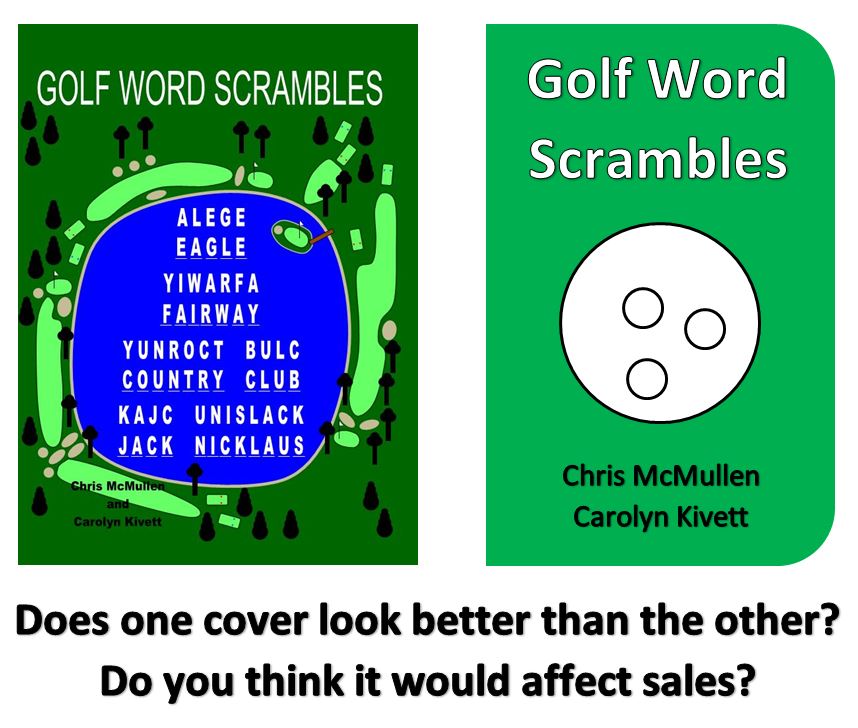
The Benefits of a Fantastic Cover: Worth the Cost?

Other Benefits of a Fantastic Cover Pic

Which is more important – the content or the cover?

Yeah, yeah, you’d rather read a great book with a lousy cover than a lousy book with an incredible cover.

But that’s not the choice buyers face.

Buyers see tens of millions of books to choose from. Tens of thousands of them are good books with fantastic covers.

If nobody discovers your book, the content won’t matter at all.

Maybe you think the content is so good that once a few people read it, word will spread. Then you have another problem to consider. There are thousands of excellent books, and many of them have fantastic covers. Why should your book sell as well as those other excellent books that also have great covers?

Credibility, for one. If it doesn’t look like much time and effort were put into the cover, why should readers expect that such time and effort were put into the content? Reviews might suggest that the book is good, but the cover might reflect a lack of effort. A poor cover casts doubt in the buyer’s mind.

Recommendations, for another. Many people are more likely to recommend a book that looks good.

And a host of other reasons (see below).

I’m happy to help other authors strive to improve their books. When new authors approach me for help, the most common question I receive is, “How can I improve my book?” Most of the time, my answer involves revising the cover.

Not all of my own covers are perfect. It’s easier to criticize a cover than it is to perfect a cover; there are numerous pitfalls to avoid during cover design. And it’s not always worth investing in a great cover.

There is also the issue of cost versus benefit. Let’s first examine the benefits, and then return to the issue of cost.

There are many possible benefits that can be derived from a fantastic cover:

  • Grabbing attention. People can’t read books that they don’t discover. Your thumbnail is one of dozens on pages of search results. Get your book noticed with a great cover.
  • Shows effort. Customers believe that a book is more likely to be professional inside when the cover looks professional.
  • Proper packaging. The cover has to look like it belongs in that genre. Otherwise, the people attracted to the cover aren’t buying the book, which means no sales. This is one of the most common sales deterrents among self-published books.
  • Fashion is important. The reader wants a book that he or she can see him- or herself holding in his or her hands. Does your cover appeal to your target audience? People don’t wear shirts that don’t appeal to them, and they also tend not to buy books that don’t appeal to their sense of style.
  • Credibility. Customers often don’t realize that books are self-published when the cover looks amazing. (Even if you use an imprint, if the cover doesn’t look professional, customers will suspect that it was self-published.)
  • Review potential. Blog reviewers, newspapers, etc. are more likely to show interest in reviewing your book, interviewing you, or announcing promotions or events if the book looks professional. They certainly don’t want to feature a lousy cover on their websites, in their papers, etc.
  • Recommendations. People are more likely to recommend your book to others – by word of mouth or otherwise – if the cover looks splendid. If the story is good, but the cover is so-so, they are less likely to recommend it. But if the cover is awesome, they might just say, “Check out this incredible cover.”
  • Visual reminder. Once people buy your book, it might just sit on a table, shelf, or Kindle for a while. Every time they see your book, a great cover helps to renew their interest in reading it. This improves the chances that it will get read, and may help to speed things up a bit. The more people who read your book, the better the prospects for reviews, referrals, etc.
  • Branding. The image of your book is a vital part of an author’s branding. A fantastic cover makes a huge difference. If the cover follows the three-color rule, features just one image, and clearly signifies the genre and content, this helps people recall the image – so they recognize your book from your previous marketing efforts the next time they see it. (If the cover is lousy, instead they think, “Ugh,” every time they see it, and the branding detracts from the book’s potential.)
  • Art. It’s not just the content that matters. People also love art for art’s sake. People buy prints of artwork or photos that they like. If your cover art is appealing, the cover has its own merit. Coffee table books are decorative and also make for conversation pieces. A great cover serves a similar purpose when people are reading your book in public, like on a bus ride.
  • Judgment. Maybe people shouldn’t judge books by their covers, but people do. A great cover is sample of what to expect. It’s a small demonstration of what kind of effort the author (or publisher) is capable of expending.
  • Mood. A fantastic cover helps put the reader in a good frame of mind when beginning your book. A reader who starts out with a positive outlook is more likely to enjoy the book. A reader who is doubtful that the book will turn out to be good is constantly looking for details to criticize. This way, a cover can actually influence reviews, on average.
  • You. The cover isn’t just to help sales and fit the reader. It’s also about you. You need to be happy with your cover. It’s your book, so you should love your own cover. Put a great cover on the book for you. It has to suit your style. The cover, including how professional it looks, reflects on the author.

Although a great cover carries many potential benefits, it may not be cost-effective.

A fantastic cover doesn’t guarantee a single sale. But a lousy cover definitely deters sales.

You must weigh the benefits against the costs.

Some authors are able to buy nice covers for $100 or less. But you can also find covers for $1000 and up. You have to shop around and shop wisely to get a great cover at an affordable price.

There is no guarantee that spending money will result in a great cover. Unfortunately, some authors invest money in covers and the result is poor. And sometimes the author and cover designer don’t realize what’s wrong. Sometimes, the problem is subtle, but a big sales deterrent. There are many possible pitfalls that one must avoid in cover design.

Spending $1000 on a cover may not result in a better cover than spending $300. It may, and it may not. You have to shop wisely to improve your chances. You also have to decide what you can afford, assess your book’s prospects for recovering the investment, and spend time shopping for help in your price range.

A premade cover isn’t likely to be a good fit for your book.

You may be able to design a good cover yourself, but then you must single-handedly avoid those aforementioned pitfalls. (I’ll outline these in a separate post, and I also have a post coming in the future regarding how to find a capable cover designer.) You can find stock images, yet it’s still a challenge to put everything together professionally. If you have experience with graphic design, Photoshop, or visual marketing, these may help.

A major problem is the author who gets an idea for a cover and insists on sticking to this idea no matter how poorly the result turns out. Wise cover designers scrap the ideas that don’t pan out well, and start over with something else.

Once you determine what it would cost to make a great cover, you must weigh that against the benefits.

Here are some reasons for which it may not be worthwhile to invest in a cover:

  • There isn’t an audience for your book. You have to research this beforehand.
  • The book isn’t good. This will show in critical reviews, affect word-of-mouth referrals, etc. How much do you believe in your book? Have you received feedback from neutral members of your target audience?
  • Your book doesn’t fit into an existing category. Effective marketing can help people find your book. But if they don’t find your book, the cover isn’t going to help.
  • You don’t plan to do any marketing and you have a book that will only get discovered through marketing. Most of the books out there require marketing in order to sell fairly well. There are a few exceptions, such as technical nonfiction. Are you willing to learn about marketing and work hard at it? (For the rare author who has a gift for marketing, investing in a great cover is a no-brainer.)
  • The book will sell because it provides nonfiction expertise that people are looking for. If, for example, the book says Calculus Workbook in large letters in the thumbnail, the cover doesn’t have to be fancy to be effective. But, on second thought, there are also many calculus workbooks on the market. If two technical books are otherwise equal in merit, the one with the better cover will win.
  • You expect to sell most of the books in person following presentations, and almost none otherwise. If you tour the country giving seminars, for example, this could be the case. Still, the cover has to appeal to the customer when you put the book in his or her hands. This can impact the impulsive decision to buy it now. And if people might also buy your book online, the cover becomes more important.
  • It’s not the first book in a series. The first book is the most important; that’s the one that hooks the reader. But the second book also has to appeal to the reader, so the cover is still important. And the covers all need to match. So it might still be worth the investment.

It really comes down to how much you believe in your book.

If you have a lousy cover, you’ll always wonder how well it might have sold with a great cover. If you have a great cover, you’ll have the satisfaction of knowing that you gave your book the best chance of success (at least, as far as cover choices are concerned).

A good book with a fantastic cover and killer blurb has very good potential for at least mild success. Especially, if there is an audience for it who will be able to discover it.

But a fantastic cover isn’t going to achieve long-term success for a lousy book.

If you believe you have a good book, take a chance on it. You are anyway, just by getting it out there, so why not go all out and give it a great cover, too?

My own covers may not be the best examples. What I mean by this is that my better selling books have relatively plain covers, and the books with the better covers that I’m most fond of aren’t among my better sellers.

But there is a reason for this. First, I write nonfiction. There is a need for my math and science books, and many sell for my expertise. It’s much easier to make an ‘image’ for an algebra workbook, for example, than for a science fiction novel, and the image (just an equation, in my case) is far less important for the algebra workbook. If you write technical nonfiction, putting together a satisfactory cover is easier to do yourself, and can be much less critical.

Covers 1

My nicer covers are not on books for which there is as much need (and I didn’t compensate with loads of marketing; I do marketing, just not for all of my books). Well, some seasons the need is greater than others. Workbooks tends to sell better in January and June, for example, while it’s always interesting to sell a Christmas book in July.

Covers 2

I have sought cover design help recently. I enjoy designing my own covers, but I have also realized that the right designer can produce eye-catching visual effects that I wouldn’t have been able to create on my own. It’s worth seeing what you can achieve by yourself to help you see if a potential designer is improving on what you can do, and to what extent. It’s also worth shopping around even if you’re set on doing it yourself, to see and understand any limitations that your own design skills may have.

Covers tend to be very important for fictional works. Not all fictional works, but especially novels where there is an audience that can discover it (zombies, romance, mystery – sure, some genres have more competition among books, but this is compensated for by having more readers), and where the book is pretty good. A great cover can’t compensate for a lousy book, but it can really help a great, complete, well-written (and formatted), and nicely characterized story.

I recommend exploring the covers of top selling books in your genre. Ask yourself questions such as these:

  • Do these covers look like they belong in this genre?
  • Do they follow the ‘rules’ of cover design?
  • Do you find them appealing?
  • Are there any top sellers that don’t have big-name authors or publishers? If so, a little research might give you ideas that they used to become successful.
  • Can you spot important distinctions between different types of books? Like teen romance, clean romance, not-so-clean romance, historical romance, and erotica. If you can see these differences, that will help you design a book that attracts your specific target audience. If you fail to achieve such specific packaging, it can be a huge sales deterrent.

Studying the covers of top sellers in your genre will help you understand what your prospective readers tend to expect when browsing for thumbnails.

Chris McMullen, self-published author of A Detailed Guide to Self-Publishing with Amazon and Other Online Booksellers

Comparing Commercial Marketing to Book Marketing: What Can We Learn?

Commercial Marketing Pic

We’re exposed to marketing every day.

So when authors realize that they must market their books to sell them, it’s not like they have no experience with marketing at all.

We all have experience with marketing.

It’s not that marketing is new. It’s just that marketing books is different.

Some of the strategies that we see every day can be applied to books. However, some strategies that work for other products don’t tend to work well for books, or work differently for books.

(1) Advertising.

If you saw a commercial right now advertising a new brand of laundry detergent, would you run to the store immediately and buy it?

  • I’m guessing not. But if your answer is yes, I’d like to pay you some money to watch commercials for half an hour. 🙂

If you saw a commercial right now asking you to run to the store to try a new brand of potato chips, would you do it? What if the commercial asked nicely? Pretty please? What if the commercial tells you instead of asks? Go there now! Or threatens you? Or else you’ll be the only person on earth to never experience this wonderful new taste.

  • People usually don’t like being told what to do, or being asked to do something that seems quite inconvenient for no other reason than to give others profit.

If you saw a commercial right now telling you about a new brand of shoes that’s the best ever, would you believe it? Suppose instead that the commercial describes what makes the shoes better. Would this strategy have a different effect?

  • Just hearing that a product is good doesn’t tell a customer how the product will help him or her. But knowing something specific that the product does might accomplish this.

When you go shopping, what you probably remember is which brand names sound familiar. People are more likely to buy products they’ve heard of before. This is the idea behind branding.

Advertisements help to establish brand recognition.

When you’re shopping, you might also remember something about the brand. For example, you might associate a particular brand name with luxury (like Cadillac) or trust (like Sears when they branded their image of Satisfaction Guaranteed), or you might recall a slogan or logo.

One strong goal of marketing books is developing a brand. The author can be the brand. Or it can be the name of a series (like Dummies) or a distinguished character (like Sherlock Holmes).

Branding occurs through repetition. You can brand a name, an image, a sound (think Jeopardy), and even a smell (with free samples of perfume).

Paid advertisements may not be cost-effective for most books. Although millions of people read books, there are 20 million books to choose from. There aren’t 20 million brands of paper towels, so advertising is cost-effective for large-scale paper towel manufacturers.

But there are many ways to brand an image through free marketing.

The key is to get the target audience to see the same name and image in a positive context a few times. Not so many times that it become annoying (then people think, “Oh, not that book! It drives me crazy!”). Not in a way that it seems intrusive, yet gets noticed by the target audience.

One way is to offer content that attracts your target audience, and allow your book to be discovered by an interested party (rather than shoved in front of their face).

When having conversations with people in your target audience (and natural conversations with anyone, but it’s your target audience who are most likely to buy your book), it’s natural to be asked, “So what have you done lately?” They’re more likely to be interested in your book when they asked you than when you come out and say, “I just published a book last month.”

You can get discovered through your blog, social media, a website for your book, personal interactions, book readings, book signings, attending workshops or conferences, giving presentations, doing community service, and many other ways.

But there are three things that you need for this to be effective:

  1. Traffic. (But note that you can interact with a much smaller group in person and have a higher yield than when marketing to a large group online. Personal interactions can have a powerful effect, if you can charm your readers conversationally. To some extent, you can also provide some charm online when interacting with people individually. I’m not saying to flirt with your readers; but maybe make them feel special for a moment – obviously, it’s far better if you really mean it.)
  2. Relevance. If you wrote a mystery and 70% of the traffic reads mysteries on a regular basis, then your marketing is highly relevant to the audience. But if only 2% of the traffic reads mystery, your marketing effort is being wasted.
  3. Value. People don’t like advertisements. If you can brand your image while providing something of value to your target audience, you’re marketing efforts are more likely to be noticed. You can provide nonfiction information that relates to your target audience, or you can provide a nice bookmark that doesn’t just look like an advertisement, or you can provide a service to your community, etc. Ideally, you want to give the reader something he or she is likely to want, where your brand gets recognized unobtrusively.

People aren’t going to remember a paragraph. They might recall a picture that has one central image (this gives covers that have multiple images a disadvantage). They might remember a few key words (so shorter titles without strange names have an advantage). They might remember a logo. The might remember a catchy phrase about the book. But definitely not a long sentence.

(2) Packaging.

Your intuition might tell you that the product is far more important than the packaging. If so, let me try to convince you how wrong this is.

If you thoroughly analyze product A and product B, and determine that product A suits you better than product B, then you would definitely prefer to have product A regardless of the packaging. Unfortunately, shopping isn’t so easy.

It’s often not easy to tell which product is best. Packaging has a very significant impact on buying decisions. We almost always look at the packaging to help determine which product suits us best.

Here is another important point: Nobody will ever know how good your product is if the packaging doesn’t attract their attention.

You can’t buy a product if you don’t discover it first.

Suppose you’re hungry for a candy bar, and one of the candy bars is packaged to look like sticks of gum. Would you even notice the candy that looked like gum? If you were shopping for gum and picked it up, would you buy it when you realized that it was candy?

Packaging helps people find the specific product that they’re looking for. If the packaging doesn’t fit the product, it will be highly ineffective. Good packaging attracts the target audience.

Poor packaging – and even average packaging – sends a message that the product wasn’t good enough to warrant better packaging (alternatively, perhaps they invested as little effort in the product as they did in the packaging).

Effective packaging does three things:

  1. Grabs attention. (In a positive way.)
  2. Attracts the specific target audience. (It should also look appealing and professional.)
  3. From a distance, it sends a short message (not necessarily in words) about what to expect from the product. (There may be more details in print upon closer inspection, but it’s the distant message that determines whether or not the consumer will ever inspect the packaging closely.)

Book packaging includes the cover, title, and blurb.

A good book with a fantastic cover and a killer blurb can make the difference between consistent sales and dwindling to the depths of millions of books.

It’s very important that authors realize this: The cover isn’t just part of the packaging, it’s also a permanent part of the book.

The cover is fashion. Just like clothing.

The reader has to feel comfortable holding the book. It must suit the target audience well. Better yet, it should attract them. If the shopper visualizes himself or herself holding the book in his or her hands and enjoys this feeling, then the buyer will be begging for the blurb and Look Inside to give him or her a reason to click Buy Now.

The cover is that important.

At least, if you’re hoping for many sales to come from people who discover your book. If you plan to sell most of your books in person after presentations or because you’re providing expertise that people will crave, then the cover may not be as important. Although it’s still important for similar reasons then, too (especially, if there are other expert books similar to yours).

The blurb and Look Inside are your only salesmen at the point-of-sale. The blurb has to draw the reader’s interest (without making empty promises, as that will affect reviews and word-of-mouth sales).

The cover, blurb, and Look Inside need to send a unified message. They must make it instantly (shoppers might look at your thumbnail for two seconds to decide whether or not to check the book out) clear what type of book it is. Precisely what type (e.g. contemporary romance, not teen romance; or does the cover look a little naughty, when the romance is light and clean?).

If the book cover doesn’t clearly suit the genre, it’s like packaging candy to look like gum.

Look at the covers and blurbs of top-selling books similar to yours to help get a sense of what readers expect.

(3) Promotions.

Everybody loves a discount.

Not quite true.

Everybody loves a discount on something they want to have.

Getting a discount on something you don’t need isn’t helpful at all.

Just discounting your book probably won’t help sales much. Amazon discounts books, and sales don’t always improve with the discount. People give books away free, and sometimes few are given away and almost none are read.

So if you offer a temporary discount, make the first book of your series free to help hook an audience, give away free bookmarks, or offer any other type of promotion, you have to realize that the promotion itself probably isn’t enough.

People don’t buy prices. People buy products. A discount is only effective if the target audience discovers the product and realizes the value of the discount.

So you have to market your promotion. A sale isn’t a substitute for marketing. A promotion can help your marketing efforts, but won’t work in place of them.

If sales are too frequent, word will get around and people will wait for the sales. This means that your sales rank might climb considerably in between sales.

Stores can put the same products on sale at the same time every year (like Black Friday). And some people will wait for the sale, but many won’t. But stores sell many products. And often you can’t wait for Black Friday. And not everyone likes to shop on the busiest days.

But books are different. You only buy the same book once, unlike many products that you need to buy every week, month, or few years. Many books, you can wait for if you know they will go on sale in the coming weeks.

(4) Mailing list.

Businesses strive to get customers to sign up for catalogs, email notifications, focus groups, etc.

Authors can have fan mail, book websites with supplemental material, preview readers, etc.

If you primarily use such things to send out advertisements, they probably won’t be effective. But if you provide significant content (like supplemental material), they can be effective. Content helps to attract your target audience. Then you can occasionally (10% or less of the time) announce a promotion, give a cover reveal, solicit input on a title, etc. (The cover reveal and asking for input on a title are ways that you can help to build buzz for an upcoming book.)

Banner

Think about the different forms of marketing that you’re exposed to every day. Consider what is and isn’t effective with you. For those things that are effective, see if you can find a way to achieve a similar effect with your book marketing.

Chris McMullen, self-published author of A Detailed Guide to Self-Publishing with Amazon and Other Online Booksellers

Marketing: Why Should People Buy Your Book?

Marketing Ideas Pic

Before you can expect to sell books, you must answer two important questions:

  1. Why should people buy your book?
  2. How are people going to learn why they should buy your book?

If you can’t sell the book to yourself, it’s not reasonable to expect to sell it to others.

(A) Because your book is good? Lousy answer.

Why? Because that answer won’t help you sell your books. It’s too general. You need something more specific to work with.

If you hope to advertise that your book is the best thing since ____ (fill in the blank with something fantastic), then most people won’t buy your book because it sounds unbelievable and those who do buy your book may be frustrated if it doesn’t live up to those lofty expectations (which can deter word-of-mouth sales, for example).

More importantly, hearing that your book is good doesn’t attract a specific audience. People are more likely to become interested in your book if they learn something specific about it that appeals to them.

If you offer nothing specific, there is a good chance you won’t be attracting any attention at all. When you do offer something specific, some people will think it’s not for them, but that’s okay because if they aren’t the target audience, they aren’t likely to buy it no matter what (and they are less likely to appreciate it). But if they are the target audience, the specific information will help to attract their interest.

(B) Because there is something unique that will appeal to them.

What distinguishes your book from others like it?

You want this distinction to be conveyed through your marketing efforts.

But don’t make the mistake of saying what’s great about your book while at the same time saying what’s bad about other books.

There is a good chance that people in your target audience love those other books. So if you say anything bad about those other books, this is likely to deter sales.

You’re not trying to show that your book is better. You’re trying to show that your book is different and how. This distinction will be appealing to some people in your target audience.

That distinction might be a clean romance, a protagonist who doesn’t fit the genre’s stereotypes, a plot that will help teens deal with difficult situations, a sci-fi novel specifically for computer geeks, or a textbook with a built-in workbook.

(C) Because you were able to interact with your target audience and show them what makes your book special.

Nobody knows your book better than you do. And that’s the problem! You want others to learn what makes your book special.

So what makes your book special? And how will you get the word out to your target audience?

Identify your target audience. Find your target audience. And when you market, you don’t just want people to discover that you wrote a book. You want them to see what makes your book special. This distinction needs to stand out in your marketing.

(D) Because people who enjoyed your book are telling others what makes it special.

Word-of-mouth sales are invaluable, especially when people don’t just mention that a book is good, but take a moment to explain why it’s good.

The first step is to make your book very good, with some aspect that sets it apart. It has to be worthy of a recommendation by a complete stranger.

The second step is to get your book read. You need to market your book effectively to your target audience.

There are a few things you can do to try to encourage word-of-mouth sales. You can search for bloggers who occasionally review books similar to yours and politely request a book review or interview on their blog (and then wait very patiently). You can contact a small local paper with a press release kit. You can let people discover you’re writing a book and what the special feature will be, do cover reveals, etc.

Chris McMullen, self-published author of A Detailed Guide to Self-Publishing with Amazon and Other Online Booksellers

The Person Behind the Words

Person Words Pic

The author wrote the book, but exactly who is the person behind those words?

There are a few different ways that this information is useful:

  • Potential customers might have a more enjoyable reading experience if they check out the author page and blog to learn more about the writer before buying the book.
  • Fans can learn more about the author.
  • Authors can reveal something about themselves through marketing in order to help match their books to their target audience and to make their marketing efforts more personal.

You can learn more about the person behind the words by checking out the author page, author’s blog, author’s social media pages, and more.

As a reader, the author’s blog provide an additional writing sample, which may not have been edited as well as the Look Inside. This extra writing sample can help demonstrate the book’s potential for being well-written throughout (not just in the beginning of the book, which may receive more attention) for those readers who strongly value this.

Checking out an author’s other writing (e.g. the blog) gives an indication of the author’s personality, character, and possible motivation for writing the book. Occasionally, blogs and social media pages consist mostly of requests to please buy the book now. Sometimes, they are packed with useful information. If there is supplemental material that may interest fans, this may be a reward for reading the book. Does the author mostly blog about himself or herself? Does the author seem genuinely concerned about others? Are the author’s websites up-to-date or outdated? Are the posts too rare, too frequent, or just right for you? Is the material of interest to you?

You also get a sense of the author’s visual style, writing style, and thinking style. Some writing and thinking styles may conflict with yours, so you may have a more enjoyable reading experience by taking a few moments to avoid possible conflicts. You don’t necessarily need to find writing and thinking styles that match yours; we’re often attracted to different ways of thinking. What you want is to sample whether or not you find it agreeable.

From the author’s perspective, author pages, blogs, and social media are opportunities to make your marketing efforts more personal, attract your target audience with information that is useful for them, show your personality, demonstrate good character and values (in the eyes of your target audience), and show that you care.

Are you an author? If so, you’re not just an author. Exactly, who is the person behind those words?

Chris McMullen, self-published author of A Detailed Guide to Self-Publishing with Amazon and Other Online Booksellers

Visual Branding for Small Businesses and Authors

Visual Branding Pic

  • When you see a large brown delivery truck, does UPS come to mind?
  • Do you recognize the Mercedes symbol when you see it?
  • Which brands of shoes can you identify when you see people wearing them, even when the brand name and logo aren’t visible?
  • Have you ever been on a road trip hoping to see a pair of golden arches in the shape of an M?

These are businesses that have succeeded in visual branding.

And even though these are huge companies, they didn’t achieve their visual branding through advertisements. Sure, you’ve seen their commercials. But the commercials aren’t the reason that your mind has been stamped with these visual brands:

  • There are thousands of UPS delivery trucks. They are all the same color, and it’s a unique color so it stands out from all of the other trucks making deliveries every day.
  • Every time you drive, you see other cars. Even if you just go for a walk outside, you see them. This is why you recognize many car brands by their logos.
  • If you’re really into shoes, you can distinguish between different brands that have similar styles, even if the brand names and logos are removed. You have partly been branded by your own interest in them, and by each manufacturer adopting a sense of style that defines their brand.
  • If you drive through the US, you see those yellow M’s all over the place. It’s simple and you see them frequently.

The point is that smaller businesses and artists, including writers, can also achieve similar visual branding. And they can do it without advertising.

For small businesses who may be able to afford advertising, following are a few examples of visual branding that you may be familiar with:

  • Do you recognize any insurance or real estate agents whom you’ve never met? It may be because you’ve repeatedly seen their faces on billboards or in brochures.
  • Have you ever seen a car fully decorated to match the theme of the business? A dog grooming service might have a car that looks very much like a dog, or a flower delivery truck might have flowers painted all over its surface. Such vehicles grab your attention and clearly reveal the nature of their business.
  • Can you think of any local businesses where the employees wear very distinctive uniforms?
  • Would you recognize the logos from any local businesses?

Here are a few examples of visual branding among books:

  • Can you tell that a book is part of the Dummies series when you catch a glimpse from a distance?
  • Do you recognize Waldo from the Where’s Waldo? books?
  • Would you know if a book is part of the Dr. Seuss collection if the title and author were covered up? The cat is distinctive.

Visual branding occurs even in the world of self-publishing:

  • If you’re not already familiar with them, check out Aaron Shepard’s books. He features a similar drawing of himself on every cover. Not everyone is fond of holding a book with that image, but it works: You see that picture and immediately recognize it as one of his books. He may not have been famous when he did that with his first book, but this consistent branding and unique style have helped create fame.
  • Search for Fifty Shades of Gray at Amazon and look at the covers. The style is distinctive and it’s carried over into other books in the series.

Whether you have a small business or you’re an artist or writer, here are the keys to visual branding:

  • Frequency. You need people to see your visual brand repeatedly. Not several times per day, but here and there over weeks and months; you want the message to be pleasing and the frequency not to be annoying (or your image will be branded the wrong way). Marketing isn’t just about what you say; it’s also very much about what you show. If people forget what you said or wrote, they might remember what they saw.
  • Consistency. Show the same image consistently; don’t show different images in each marketing effort. Choose your visual brand wisely from the beginning and stick with it. Select one image that you want people to remember.
  • Distinctive. If brown delivery trucks were common, would you associate this color with UPS? If every author had their picture on their cover, would you recognize Aaron Shepard?
  • Unity. Sending a unified message may be more important than being distinctive when it comes to visual branding memory. When the image relates to the nature of the business, this makes it easier to remember. A car decorated to look like a dog helps people remember if the business relates to dogs. Those golden arches that make the M are French fries, fitting for a restaurant.
  • Appealing. The image should attract the target audience. It needs to look good, else the audience thinks, “Ugh,” every time it is seen.
  • Deliver. The product or service needs some feature that stands out to associate with the visual branding. It might be luxury, or it could be cheap. It could be fast, or it could be quality. Visual branding is enhanced when the brand has some aspect that makes it worth remembering.

Authors have a choice of what image to brand. How do you want to be remembered? What will be distinctive for you? Pick one image and have it visible in all of your marketing efforts. Potential customers may see your image on your book covers, social media banners, online profiles, author pages, author blogs and websites, business cards, bookmarks, etc. The more your target audience sees the same image, the better. Here is what can be branded visually:

  • A logo for a publishing imprint.
  • A style consistent throughout a series.
  • A protagonist (like James Bond) or a children’s character (like Winnie the Pooh).
  • An author’s photo.
  • A distinctive visual feature common to all of the author’s books. It could be a distinctive font that the author developed that really stands out and grabs attention. It could be a unique way of arranging objects on the cover. It could be a design layout used on every color. It could be a particular image.
  • Even a blog can be branded visually by having a consistent style for the main image used with each post. Do you ever see posts in your reader and immediately recognize the blogger from the image? Those bloggers have succeeded in creating visual brands for their blogs.

Chris McMullen, self-published author of A Detailed Guide to Self-Publishing with Amazon and Other Online Booksellers

Authors: You’re not Selling Books

Selling Books Pic

If you aren’t selling enough books, maybe part of the problem is your mindset: You shouldn’t be trying to sell books.

Huh?

There are tens of millions of books to choose from. If someone just wants to buy a book, how are they ever going to find yours, and why would that be the one they choose?

You’re not a bookstore. You’re not selling a book.

What you have is more than a book. That’s what you need to realize. What you provide that’s more than a mere book is what can help your book get discovered and why customers might choose your book.

If you’re not selling a book, then what are you selling?

You can find some examples below. Your book is unique. Figure out what you should be selling and how to orient your marketing efforts toward this.

Use it to help you brand an image. Sell this image, not the book.

You don’t have to be a salesman to sell an image. You market an image. You make people aware of the image. You make them want the image. Crave the image.

The image is free. Once the image is sold, the books well sell along with it.

(And maybe some add-ons. If they really want the image, they might want to get it in the form of t-shirts, bookmarks, collector’s editions, etc.)

(1) Are you selling a better place?

Did you create a fantasy world that is better than our universe?

Then don’t sell the book. Don’t sell the story.

Sell the experience of living in a better world.

Brand your book as a better reality. Brand yourself as a creator of other worlds. Brand the fantasy world itself by name so that others want to go there.

Like Hogwarts. Imagine how many schoolchildren wish they could go to Hogwarts. They recognize this better place by name.

(2) Are you selling something exotic?

Is the book set in Paris, Tokyo, or someplace people dream of traveling to?

Does your book have exotic creatures?

Then you can offer the same wonders that a travel agent can offer, except that your ticket will cost much, much less.

Focus on the features that make your book exotic, not the book itself. Sell the experience of traveling.

Remember the movie Gremlins? It wasn’t just a movie. It was an experience with a really exotic pet.

(3) Are you selling passion?

Does your book offer a romantic escape from a mundane reality?

Sell the opportunity to experience romance.

Make your audience crave the romance, without giving any of the story away. It’s not just a romance novel. It’s so much passion it’s dripping off the pages.

The Blue Lagoon was a movie with a boy and girl trapped on a deserted island. But it didn’t sell because the description simply stated this. (Okay, maybe the movie stars – e.g. Brooke Shields – helped attract their own attention.) Imagine the previews for this movie. They weren’t selling romance or adventure. They were selling something much deeper than that. That’s what people crave.

Note: Make sure that your book is an excellent fit for what you are selling. Don’t oversell it such that it makes your book sound far better than it is. Disappointment leads to bad reviews.

Do make your book as good as you can, and then find a creative way to sell something that fits your book perfectly, in a way that it won’t disappoint anyone who buys into what you’re selling.

(4) Are you selling excitement?

Did you write a non-stop, action-packed adventure?

Sell the adventure.

Focus on taking a safari through the jungle, not a book about a safari.

Jumanji wasn’t just a safari, either. It was a movie that brought the jungle to you.

(5) Are you selling entertainment?

Is your book very humorous? Sell the laughs.

Is your book super scary? Sell the fright.

Focus on being scared out of your shoes. Create a video on YouTube that will frighten and intrigue, without giving any of your story away.

Check out this book trailer (I discovered this when the author shared it on CreateSpace; I don’t know the author) for a book called Nothing Men: http://www.youtube.com/watch?v=s2zImBzQC50

(6) Are you selling self-help?

Does your book help others lead better, healthier lives.

Sell the prospects for a positive future.

Suppose your book provides a ten-step plan to overcoming depression. Sell the idea of seeking happiness in ten easy steps. Use this phrase when you interact with others. Brand the image of seeking happiness. Provide help for others through a blog, on community forums, through community service, etc. Focus on selling happiness, not on your book; but make it easy for others to discover your book. Brand yourself as someone who cares about others and can help others find happiness.

Men Are From Mars, Women Are From Venus is selling a much better relationship.

(7) Are you selling information?

Did you write textbook, how-to book, or workbook?

Sell the knowledge. Sell the skills.

Focus on learning something new or improving what people know already.

You’re not selling a grammar book. You’re selling the benefits of improved grammar. You’re selling not having a resume thrown in the garbage and writing letters that get results.

Think about what people can gain from your book. That’s far more important than the book itself.

Use this in your marketing. Your blog, seminars, and all of your personal and online interactions should brand you as a helpful, knowledgeable person who is selling the knowledge or skills that people need.

Suze Orman isn’t just selling financial advice. She’s offering the keys to wealth.

Banner

There are a host of other things that you can be selling: creativity, fun, morals, wisdom, beauty, etc.

Differentiate what you’re selling from what others are selling. There are thousands of mystery novels, for example. They can’t all succeed in selling the experience of feeling like a detective. Find a way to make what you’re selling unique.

Remember not to oversell; you don’t want bad reviews from disappointment. The better your book lives up the hype, the more you may receive good reviews and valuable word-of-mouth sales. Make your book as good as you can, then build the hype to match it perfectly.

Live what you’re selling. Your personality and lifestyle – your image – need to send a unified message with what you sell. You must look luxurious if you want to sell luxury. You must seem happy if you’re selling happiness. You must sound adventurous if you’re selling adventure.

Who is your target audience? Where will you find your target audience? You want to market this image specifically to your target audience. Let them discover what it is you’re offering (not a book!). Brand your image. Make them crave the brand – i.e. the concept that you’re offering. Then they can ask you (or check out your online profile) to learn about your book.

Package your book to match the image that you’re selling. The cover has to fit this image well. The title has to fit, too. The blurb needs to sell this image (not the book!). The blurb is the only salesman at the point-of-sale. Don’t oversell, but do show the reader that there is more than just a book in your book. The Look Inside has to seal the deal; it has to provide the content that endorses the hype. The rest of the book must also achieve this, as this makes the difference between a satisfied customer who is ready to share this image with others or a disappointed reader who may show frustration in a bad review.

It’s easy to hype a book. For the hype to work, the book has to also walk the walk. Perfect the product, perfect the packaging, and market the image (not the book!).

There is something more that you can offer.

You can offer the personal touch. You can interact with your target audience in person and show that you care, show that you’re passionate about the image that you’re marketing, show that you’re human, show your personality.

You’re not just selling a book.

You should be selling much more.

One last example (in the line below):

Chris McMullen, self-published author of A Detailed Guide to Self-Publishing with Amazon and Other Online Booksellers tour guide for your self-publishing journey

What Makes People Buy Books?

Buying Books Pic

It’s awfully silly to start marketing your book until you first devote some time to a couple of basic questions:

  1. What causes people to buy books? (Equally important: What tends to deter sales?)
  2. Who is your specific target audience?

Knowing the answers to these questions can significantly affect your marketing strategies. In this article, we’ll focus on Question #1.

(1) Browsing for books on the top 100 bestseller lists.

More than any other method, customers buy books by shopping the top 100 bestseller lists. There are New York Times bestseller lists, there is a special bestseller section in most bookstores, and Amazon lists their top 100 sellers in any browse category. You can even search for the top 100 authors.

Evidently, these books were good enough that many other people read them. Many of these books are traditionally published and were written by popular authors. But more and more indie authors are starting to break through, especially on Amazon.

Bestselling books sell dozens or hundreds of copies per day (of course, it depends whether we’re talking overall or just in a particular category or subcategory, and the precise number can be sensitive to a number of factors). So bestsellers account for a huge percentage of book sales.

You might not like the fact that many customers look to see what’s popular and shop for books based on this. But that’s irrelevant. Unless you have an idea to change the way millions of people shop for books. It’s just something to consider.

If you can succeed in earning a spot on any of the top 100 lists, this amazing exposure can lead to wonderful things. Provided that your book runs with it; some books get onto the list and fall right off.

There are tens of thousands of authors doing all the right things (and others doing wrong things) to try to get their books onto these coveted lists, and you’re competing against popular authors and traditional publishers. But you’ll find some indie authors there, too (studying what they’ve done right may prove to be valuable research).

If you feel strongly that you have a book with the potential to get onto these bestseller lists, go for it!

  • You need a book idea that has a large preexisting audience. Find a genre that you’re a good fit to write in and research what this audience expects. Develop your writing and storytelling toward this end. Become familiar with the rules of the genre, and understand why these rules exist.
  • Develop a fantastic story and memorable characterization for fiction, or valuable content for nonfiction. Write in a way that your audience will enjoy the read in terms of both making the words flow (or not, when the occasion arises) and use of grammar blended with style. Perfect the book cover to cover in terms of front matter, back matter, editing, and formatting. You don’t want anything to detract from the read. Give people reasons to leave positive reviews and recommend the book to others, and avoid giving reasons to say anything negative (it’s unavoidable, but strive to minimize this).
  • You need initial sales to get things going. A history of poor sales rank is a challenge to overcome. So build buzz for your book with cover reveals, letting people discover that you’re writing a book, interacting with people who ask how your book is coming along, getting feedback on various aspects of your book (cover, title, blurb, first chapter, draft) on different occasions from different groups of people in person and online. Focus groups, contests, promotions, etc. can help you get people excited about your coming book.
  • Don’t underestimate the importance of packaging. The book has to absolutely look like it belongs in its genre. If you want a top seller, on top of everything else, the cover has to quickly register as being the kind of book that the customer is looking for. If the cover attracts the wrong audience, there won’t be any sales. Research the covers of bestsellers in the genre. Design a professional-looking cover that will attract customers who are accustomed to seeing those covers. The title, cover, and blurb need to send a unified message and grab the target audience’s attention. Craft a killer blurb that will entice interest without giving too much away. The Look Inside needs to close the deal.
  • Do premarketing. Don’t wait until your book is published. Look for bloggers in your genre who occasionally review books well in advance of publishing, since they may already have numerous requests and reading takes time. Make a professional press release package. Contact local media. Try giveaways on Goodreads. Arrange signings and readings. Have a book launch party. Why wait until your book is already available and not selling well to do all the things you should be doing? If you’re going to market your book anyway (and you’ll discover the hard way that you need to), do it right and help your book take off with a bang in the first place. Even if you don’t think the 100 bestseller list is realistic, doing your best to get your book on this list gives you the best prospects for success.
  • Believe in your book. Visualize success. Not just you sitting on a pile of money receiving praise from everyone you meet. Visualize the path to your success that makes this vision realistic and work diligently to get there. If you don’t show belief in your own book, how can you expect others to believe in your book? Your lack of confidence can deter sales. But don’t get overconfident as bragging tends to deter sales.

(2) Shopping for books by their favorite authors.

When customers like books, they sometimes search for other books written by the same author. Indeed, books are frequently sold this way.

This affects all authors who’ve written more than one book (well, unless you write one children’s book and one book that’s not for children, for example).

Write two or more related books. Or better yet, write a series of books. Then you can benefit from such sales.

Ah, but there’s a catch. The first book they read has to be good enough to make many readers want more. The book has to be seem like a good value (and the subsequent books can’t seem like a rip-off), and should provide a sense of satisfaction by itself.

  • Memorable characters give readers a reason to continue the series.
  • A great storyline in one book creates high expectations for more of the same.
  • Editing, writing, formatting, and storyline mistakes discourage future sales.
  • The subsequent volumes need to live up to expectations in order to merit good reviews and recommendations; if they don’t live up to this, there may be negative referrals (e.g. “Stay away from that series”).

Discounting book one, making book one free, creating an omnibus, promoting temporary discounts, contests, etc. can help generate sales. The more people who read one of your books and love it, the more of your other books you are likely to sell. Plus this improves your sales rank, chances of getting reviews, and prospects for word-of-mouth sales.

(3) Recommendations from trustworthy sources.

An editorial review from a highly reputed source, like the New York Times, can have a very positive impact. This isn’t realistic for most indie authors (or even many traditionally published authors), but there are many ways that every author can benefit from recommendations.

The most accessible is word-of-mouth sales. If the book is good enough – see the points from (2) above – for a percentage of the customers to recommend it to others, this can generate valuable sales. If a thousand people read a book initially, and a hundred recommend it to their friends, family, coworkers, and acquaintances who read similar books, and then a fraction of those people recommend it to others, and so on, sales can really grow in the long-term.

You have to be patient. First, you need the initial batch of people to read your book. If sales are slow (a few a day), that can take a long, long time. See the points from (1) above for a few marketing ideas.

Once people buy your book, they must read your book. They might already have other books to read first. Then when they do read your book, it might just be in their spare time, which they might not have much of. As soon as they finish reading your book, they won’t go scream from the mountaintops. They might not mention your book at all. The more they love your book, the more likely they will recommend it. But then it might not be until it naturally comes up in conversations, which might not be for some time. Then those people might not buy your book right away. It can be weeks after they hear about your book before they consider buying. Not everyone who hears great things about your book will buy it.

It can take several months for word-of-mouth sales to build up. And your book has to be good enough to receive those recommendations. You can do your best to perfect your book, but you can’t control customer recommendations. All you can do is wait and hope.

If someone very social falls in love with your book, that can be quite fortunate. If people who are really connected in the social media world enjoy your book, this can potentially be big. Just imagine the buzz in social media when Twilight was coming out. Reproducing that might not be realistic, but it shows the potential. If a blogger in your genre falls in love with your book, or if a book reviewer for an online magazine loves your book, or even a customer who often reviews books on Amazon loves your book… recommendations help, especially when they come from trustworthy sources.

You can try to solicit reviews from bloggers in your genre who sometimes review books. Maintaining a blog and being active in social media might help make some valuable connections. But remember that some bloggers receive an insane number of requests and that it takes time to read books.

Put together a press release kit with advance review copies and contact local media. For indie authors, it may be easier to get an article or review if you write nonfiction, have something unique going for you (like being a triplet, but there are many other ways for the press to take interest in you), or if you have a very small local paper.

You also have your own friends, family, coworkers, and acquaintances. If you succeed in building buzz for your book – see point (1) above – then they may help stimulate sales by recommending your book to their friends, coworkers, and acquaintances.

Another trustworthy source that’s very valuable is the retailer itself.

Once a book sells a few times along with another book, it can show up on Customer Also Bought lists. The more frequently your book sells – and the more effective your marketing efforts – the more these lists can help give your sales a significant boost.

Excellent packaging boosts your chances of getting sales from Customer Also Bought lists – see point (5) below.

(4) Discounts, promotions, and contests.

People tend to love sales. But they have to know about the sale, which means that you have to promote your discount. And they have to want the product. The book has to be a good fit for them. Which means you have to find your target audience and market your promotion toward them.

A temporary discount entices customers to buy before the sale ends. If a discount is too frequent and regular, people will learn to wait for it, and sales may be much slower in the interim. Contests and giveaways can help stimulate interest, too. Like the giveaway program at Goodreads (but you need to have a hard copy, like paperback).

Amazon sometimes discounts books. They have been doing this more frequently in 2013 for indie authors, especially with CreateSpace paperbacks. There is no guarantee that a retailer will put your book on sale, and you have no control over this. (But with CreateSpace, you still get the full royalty, provided that the book sells directly through Amazon.)

(5) Searching for books by keywords or browsing for books in categories.

Shoppers do go to Amazon and other online booksellers to search for books by keywords or just browse page by page through categories (or do a search within a specific category). Browsing page by page without a search tends to put the bestsellers up front, like point (1) above. But customers do search for various keywords.

A greater percentage of books sell other ways than searching for keywords. However, there are so many customers buying books that this still represents a very large number of book sales.

The problem is that there are tens of millions of books to search for.

  1. Millions of books sell this way, but there are also millions of books. On average, most titles sell fewer than one a day through this method. Fewer than a hundred thousand titles sell multiple copies per day through online search results. (The top couple hundred thousand books on Amazon sell one or more per day, but many of these sales are not from keyword searches.)
  2. Books that show up on the first page of one or more keyword searches are much more likely to sell through keyword searches. Most books don’t show up on the first page of any search results. Only a few books show up on the first page of very popular keyword searches.

Amazon tends to reward books whose authors and publishers (scrupulously) help themselves. The better your book and the better your marketing, the greater your sales rank and the more reviews you will draw, which can help to improve your book’s visibility. It’s not just sales rank and reviews. More sales might mean you’re selling more books through keyword searches, which may have a greater effect on visibility than from sales rank along.

Once your book becomes visible in one or more keyword searches, you need for it to get noticed.

Excellent packaging can make a marked difference once your book becomes visible. It has to attract the right audience. If it looks like sci-fi, but it’s really action, then the people who click on the book won’t be the people who buy the book. Research books in the genre that sell regularly to see what customers are accustomed to seeing in search results. You want a professional-looking cover that clearly signifies the genre in order for keyword searches to work for your book. You also need a title, cover, and blurb that send a unified message about what to expect. A killer blurb that attracts interest without giving too much away can help immensely, provided that your book is getting noticed. The Look Inside needs to be good enough to seal the deal once shoppers become interested.

(6) Personal interactions with the author.

If you’re not selling books the other 5 ways, this is your best opportunity. Even authors who are selling books the other ways should be taking advantage of this. A very significant number of books sell through personal interactions with the author. Strive to provide the personal touch with your marketing endeavors.

It’s a treat to be able to read a book where you’ve personally interacted with the author. When people interact with you and enjoy the interaction, they are much more likely to read your book, enjoy your book (because they read it in a good frame of mind, whereas we often read critically or with skepticism), and review your book.

Especially if you make each person you interact with feel special. If they interacted with you and felt like you were a salesperson, they probably won’t feel special. If they meet you, ask what you do, discover you’re an author, and enjoy your discussion, what a difference that makes. But don’t interact with people just because you want to sell them something. Interact with them to get to know them. If you really care, this will show and can make a huge difference. Be genuine.

Charm them.

Who is your target audience? These are the people you want to interact with personally because they are many times more likely to buy your book than anyone else. If you write a romance and market it mainly to people who rarely or never read romance, your marketing will be a disaster. Think long and hard where and how to find your target audience. And then you don’t want to be there just to sell your book. You want to provide help (volunteer work), knowledge (a seminar, a blog), or entertainment (a reading), for example, to help attract your target audience, and have them discover that you wrote a book that may interest them (happen to have bookmarks to pass out?).

You can start with friends, family, acquaintances, and coworkers. If you have a large (or any size) social media following, you can tap into this to help with initial sales. (Remember, close friends and family can’t review your book on Amazon.)

You can meet people anytime. They may or may not be in your target audience. If it comes up naturally that you’re an author, even if they don’t read that genre they might have a friend who does.

But you can’t rely on luck. You have to find your target audience. In person is best, but online interactions help, too.

References

1. http://libraries.pewinternet.org/2012/06/22/part-2-where-people-discover-and-get-their-books/

2. http://www.forbes.com/sites/davidvinjamuri/2013/02/27/the-trouble-with-finding-books-online-and-a-few-solutions/

3. http://www.forbes.com/sites/suwcharmananderson/2013/02/20/half-of-amazon-book-sales-are-planned-purchases/

Chris McMullen, self-published author of A Detailed Guide to Self-Publishing with Amazon and Other Online Booksellers

The Importance of Facial Expressions for Authors

Facial Expression

There are a few ways that facial expressions are very valuable tools for authors:

  1. People pictured on the book cover.
  2. Author photos online and in the book.
  3. Interacting with people in the target audience.

Body gestures go hand-in-hand with the facial expression, even in still photos.

(1) Book Covers

A simple, subtle thing like a facial expression can make the difference between an amazing cover that attracts attention and a lousy cover that gets passed by. I’ve seen covers with eye-catching colors, amazing imagery, interesting fonts, and did everything right except for the facial expression. Unfortunately, the facial expression can be quite influential.

Would the following facial expressions compel you to buy a book that you discovered?

  • Blank expressions make prospective buyers feel dull and lifeless. Is that what the book will be like?
  • Lack of emotion makes the model seem bored. The model wasn’t too interested in the book, huh?
  • If the displayed emotion doesn’t fit the theme, it can have an adverse impact on sales.
  • If you want to design an awful cover, just photograph somebody who is yawning. (Unless perhaps you’re selling a book that relates to boredom…)

The right facial expression can put the potential reader in a good mood. Many shoppers are impulsive to the point that the right facial expression can actually help to inspire sales; whereas the wrong expression can greatly deter sales. Even an expression that usually puts people in a good mood is poorly suited if the writing is horror. Everything has to fit.

The expression has to match the content. For example, a model would have a different expression for historical romance than romantic comedy.

Remember, gestures are just as important as facial expressions. The pose has to look realistic. It shouldn’t look like the model is posing for a family picture. For an action book, it should look like an action shot; but it has to look real. The pose has to fit the genre; an action shot won’t look appropriate on many other kinds of books.

Study the facial expressions, poses, and gestures of the models on top selling books in the genre that have highly attractive covers. Get plenty of honest feedback about the cover prior to publishing.

The answer is not that three-letter word. There may be plenty of magazines and other items selling that three-letter word effectively. But if the book isn’t erotica or doesn’t include such scenes, it’s not really selling that three-letter word. Instead, this sort of appeal on the wrong book can create buyer confusion, which deters sales. Very often, it is overdone on a book where the audience really isn’t look for it, and it doesn’t have the intended effect. (There is also possible embarrassment if someone else sees what they are currently reading.)

Think about this: If a girl is dressed up like a barbarian in combat, does it look better if she is smiling flirtatiously at the audience or if she looks like she is focused on the battle? Should she have bright red lipstick on her lips and a clean face, or should she appear battle-scarred?

(2) Author Photos

Many authors include their photos on their books’ Amazon detail pages. They may also appear on their blogs, social media sites, and an About the Author section inside the book itself.

Just like front cover characters, the facial expression and gestures are important on the author’s photo. These help convey whether or not the author should be taken seriously, and seems like someone who could write such a book. A professional looking author photo helps to send the message that the author is, in fact, professional. The photo can convey a sense of personality, but only if it fits the kind of writing that the author sells.

Would you feel compelled to buy a book from an author who looks bored or disinterested?

(3) Personal Interaction

Potential readers can meet authors at book readings and signings. Anytime authors interact with people who might read their books, their facial expressions and gestures can influence sales.

When people from the target audience sense an author’s passion, knowledgeability, devotion, preparation, and genuine interest in them (i.e. they feel special), such things impact sales.

Just like great characters can sell books, authors’ personalities can also help to encourage or discourage sales. The personality also needs to fit the writing.

Imagine an actor or actress who is so passionate about a part that he or she is playing that it carries over to his or her interactions with friends, family, and acquaintances. Similarly, an author’s passion for his or her own book can carry over this way, showing through facial expressions and gestures.

Chris McMullen, self-published author of A Detailed Guide to Self-Publishing with Amazon and Other Online Booksellers

Book Pricing Strategies

Many authors who self-publish aren’t happy with their sales. So what do they do? Lower the price! When that doesn’t boost sales, then what? Figure out how to make the book free. If that doesn’t work, what will they try next? Surely, they won’t pay people money to read the book…

99 cents is just a price. Even free is just a price. Readers aren’t shopping for prices; they are searching for books in their favorite genres that show strong potential for engaging their interests.

A book with a lower price suggests lesser quality. Many readers who are hoping to find something professionally done and worthwhile stay away from the lower price point.

Authors instinctively expect to sell more books when they lower the price, but often discover that they sell fewer books when they try this. Fewer sales with a lower royalty for each sale – that’s not what they were expecting.

These authors are thinking about the concept of supply and demand. The problem is that there must first be a demand before the price can affect the demand. Authors who don’t market their books effectively so as to create a demand probably won’t benefit from lowering the price.

Readers know what price range is typical for the type of books they read. Anything below this price range is screaming low quality; anything above this price range will seem risky. It makes sense to research this price range among established competition (i.e. not among other self-published authors who haven’t yet achieved success) for similar books.

However, it is possible to use lower prices effectively.

For example, if the low price appears to be temporary, then customers may view it as a “sale” instead of an inferior product.

Simply lowering the price won’t give the impression that the book is on sale. If the book is normally $5.99 and the price is dropped to $1.99, Amazon will just show it as a lower list price; Amazon will not show it as regularly $5.99, now on sale for $1.99. (Amazon does sometimes put books on sale at their own discretion. For example, CreateSpace paperbacks are sometimes discounted this way, and Amazon pays the full royalty based on the list price. The author has no role in these discounts.)

Yet the author can still make a temporary discount appear as a sale. The way to achieve this is through marketing. Authors can spread the word in person, on their blogs, on their websites, and via social media (but 90% of the posts must provide useful content geared toward the target audience, otherwise the promotion is likely to be tuned out), for example.

Authors may also find other blogs and websites that match their target audience and gain a little exposure for their promotions through them.

If people see that a book is highly discounted for a limited time, then the low price appears as a good deal. An author can use a low price to increase demand in this way.

There are many ways to spin this. Authors can add “special earlybird pricing” to the top of the description when the book is first published, promoting an initial sale price with their premarketing materials. They can periodically discount the book and promote the sale. They can offer special holiday pricing.

But beware: If the sale is too frequent, word will spread. Customers will wait for the sales, and few books will sell at the regular price.

Remember that price changes may not show up immediately. It’s not easy to change the price and time it perfectly for a one-day sale, for example.

Another opportunity comes with series of books. This strategy works best for series where the reader is very likely to be drawn into the next volume, but not nearly as well when there are unrelated stand-alone books.

One way to benefit from a series is to have a discounted omnibus. If you can buy each of 4 volumes for $2.99, or the entire series for $6.99, the omnibus is a good deal. When pricing the omnibus, keep in mind that some readers will buy volume 1 by itself to try it out. With this in mind, it might be desirable if volume 1 plus the omnibus together are discounted compared to buying each volume separately.

New readers are more likely to start with volume 1; referred customers might be confident enough to head straight to the omnibus.

Putting volume 1 or the omnibus on sale and promoting the discount can help spur sales. Some authors price volume 1 very cheaply (even going to great lengths to permanently price it for free), showing confidence that it will hook the reader.

But remember that free is just a price. Free doesn’t sell books; marketing sells books.

If the book is just free, it might be perceived as worthless. If the free price is promoted effectively, then many readers may view free as a great value.

Note that the series is currently in fashion. Numerous authors are publishing series and trying this tactic. A series is a big commitment for the reader. If it’s known (through reviews, for example) that the first volume isn’t fulfilling in itself, readers may not want to take a chance on the series. Ideally, each volume will provide satisfaction for a reader who wants to walk away, but be good enough so that most readers will want to continue the series.

Chris McMullen, self-published author of A Detailed Guide to Self-Publishing with Amazon and Other Online Booksellers