Should You Self-Publish?

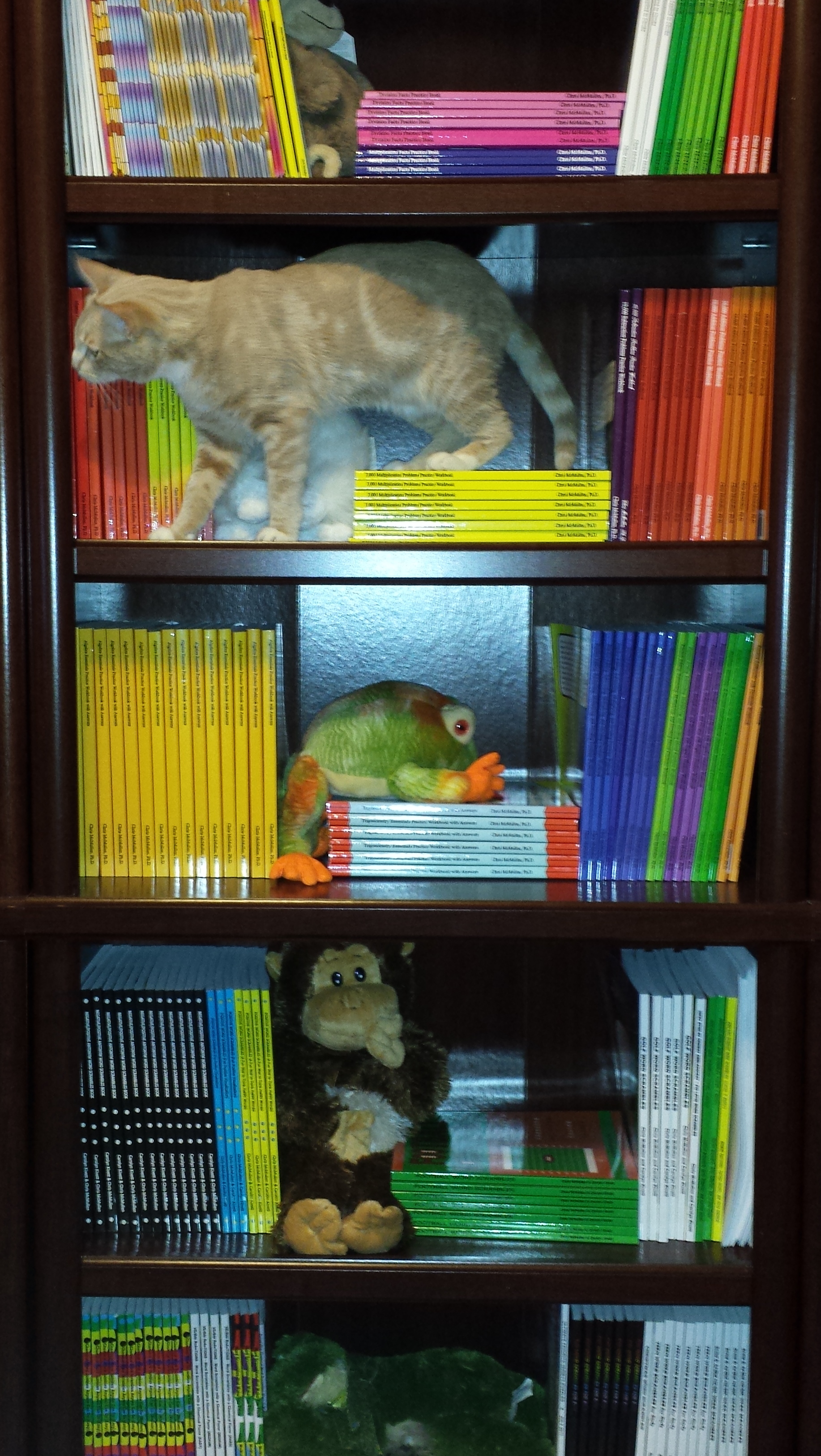
20140118_184900

For most authors, the decision of whether to self-publish or search for a traditional publisher is a tough one. I wrestled with this decision (it fought like a crocodile) in the years leading up to 2008. Even after self-publishing multiple books in 2008 (I had one completely written and the material for several others already well-prepared), I continued to wrestle the crocodile for another seven months. Then sales of two of my books erupted and later the next summer I launched a series that became popular enough that I no longer questioned my decision.

That’s what you hope for, when you’re wondering which route to take. You’re hoping that a day will come when you no longer look back over your shoulder, wondering about the other road (that road you didn’t take is such a clichéd road, it really isn’t worth any anguish).

Not an Easy Way Out

Self-publishing isn’t the easy way out. It might seem that way at first:

You don’t have to find a publisher or an agent, you don’t need to write query letters, you don’t need to put a book proposal together, you don’t need to buy Writer’s Market, you don’t need to meet the right people, you don’t need to write sample chapters for a book that might never get published, you don’t need to make marketing commitments, and you don’t need to wait years hoping to get lucky.

You also won’t have to deal with a pile of rejection letters:

Self-publishing is a sure thing, baby! (Well, at least as far as getting published is concerned; whether or not you’ll sell a copy to anyone other than your grandma, that’s another question.)

But self-publishing is still a lot of work. You’re the writer (so you still need to learn the craft), you’re the editor (which means a great deal more work once the book is written), you’re the formatter (which means learning a new art and how to use the software to pull it off), you’re the illustrator (can you draw, too?), you are your own marketing department (put Executive on your name badge), and you are your only public relations specialist (if you fail at this job, you can kill all your hard work faster than your favorite speedy cliché).

That’s a lot of work for someone who just wants to write. It might just be easier to find an agent or publisher after all.

And you don’t really escape the pain of rejection… because anybody can post a critical review right in plain sight where the whole world can see it (stock up on thread to mend your bleeding heart).

You’re not Really Alone

It really isn’t self-publishing. It’s indie publishing.

You only do it all yourself if you choose to do so:

  • There is an abundance of free information available to help authors learn writing skills, editing skills, cover design skills, marketing skills, and publishing skills.
  • The CreateSpace and Kindle Direct Publishing community forums have many knowledgeable participants to help out if you have a question.
  • You have the option of joining a writing group or organizing a focus group from within your target audience to help provide valuable feedback.
  • You can recruit extra pairs of eyes to help you proofread.
  • Services are available for editing, formatting, or cover design if you need to hire help. You may find affordable service at high quality if you do your homework well.
  • What you lack in financial resources you can make up for in time (it’s money, right?). You can choose to take your time to get it right.
  • You can find support from others, such as this wonderful WordPress community.

Changing Tides

It wasn’t long ago that self-publishing equated to hundreds of books piled in an author’s garage (though somehow I still have hundreds in my home office…).

For most authors, it was either traditional publishing, vanity publishing, or no publishing (and too often, the latter was the case).

Print-on-demand services like CreateSpace and e-readers like Kindle have revolutionized the publishing industry. Now anyone can  publish (and, believe it or not, there are even some authors who have their dogs publish, so if you hear this expression, there is a little truth to it—a photo book about dogs, surely; why shouldn’t it be written by, narrated by, and published by the dog?).

And hundreds of thousands of indie authors are publishing.

Self-publishing was ripe when it first came out. Many readers weren’t aware of the new concept in the early years. There were fewer authors and books, too. E-readers were new and quite appealing. The market was growing rapidly.

Then word started to spread about books with editing, formatting, and content problems. Many customers discovered these problems firsthand. Some review abuse from authors didn’t help the image (fortunately, Amazon has made great strides toward limiting this in the past couple of years). There were also some people (perhaps the extremists we will not label as authors) who had heard of amazing success stories, who were hoping to make a quick fortune with little effort (you can easily spot them because they have deep scars where they continue to scratch their heads).

Yet the number of indie authors and indie books continued to grow, and support for them grew with it. Take tens of thousands of authors, add their families, friends, coworkers, and acquaintances, and you can see that there is ample support for the concept of self-publishing. Many indie authors read indie books; many more people who know indie authors read indie books (and not just by authors they know). It’s not uncommon to search Amazon for “CreateSpace Independent Publishing Platform” to try to find a good self-published book to read.

Amazon and traditional publishers both did indie authors some huge favors. Amazon’s role is obvious: Thank Amazon for the beautiful red carpet. Every big traditional publisher must yearn badly for a time machine. How has indie authorship come to take so much of the current market share? Would the publishers change their e-book pricing strategies if they could dial the calendar back several years? Would they focus more of their efforts on the advantages of digital books? Would they try to get to market faster? Would they encourage their authors to utilize more marketing strategies that top indies have come to thrive on? You might sooner solve the Tootsie Roll riddle…

Traditional publishers have responded to the effects of print-on-demand and e-books. But they also have the disadvantages of being big business: especially, s.l.o.w. response time. Things continue to change, though. They are looking ahead, they have a great deal of publishing experience, and they have many resources. They haven’t disappeared; they just haven’t dominated the market like they once did. Definitely, don’t count them out.

Several bookstores, especially chains, might wish they could turn back the clock, too. So many indie books selling each year. Some bookstores have taken advantage of this opportunity; some have avoided it at all cost. It may have been silly for them to blindly stock several copies of every indie book. But there were some good opportunities to get some of this traffic.

The image of indie publishing seems to be rebounding. Customers have realized that they can filter out what’s good to read by careful study of the product page and Look Inside. Excellent content is good to read regardless of how it is published. Some indie books have exceptional covers, wonderful editing and formatting, and great stories, too. Indie authors have the freedom to provide content that traditional publishers would never have published in the past. An indie author can choose to write to a smaller audience; that smaller audience may appreciate this. Many indie authors provide personal experiences with their marketing, which helps to attract new readers. The best indie books are competing with the best traditionally published books.

Successful indie authors are opening doors for everyone else. Some are even turning down lucrative offers from traditional publishers (check out this article, recently referred to from the CreateSpace community forum). If you do sign with a traditional publisher, you risk having your digital or other rights tied up for a very long time (if you can get a little success, by that point in time you might do much better than the advance offered up front).

Success Still Isn’t Easy

Amazon and other companies are giving indie authors the opportunity to publish. But everyone won’t be striking gold. You might not even strike dirt.

There are millions of books available for sale. Only the top 200,000 or so sold one copy in the past day. Most books don’t even sell a copy per day, on average.

You put so much time into writing, editing, formatting, cover design, and marketing (what you don’t do yourself, you still put time and money into arranging). You invest months, perhaps years of hard work, and you may also invest good money along with it. But sales aren’t guaranteed.

Sales are still hard to come by.

Traditional publishers and agents do have benefits to offer (you might also wonder if they are receiving fewer submission: are your chances better now?). They may be able to help with editing and formatting. They might help a little in the way of marketing, like getting your foot in the door for television or radio interviews, hooking you up with an effective publicist, sending out advance review copies, and listing your title in their catalogs. You’ll probably still be expected to market. You might receive an advance, though it may be $5,000 or less, not the big number you’ve always dreamed about. You have better prospects for getting your book stocked in a chain bookstore (then you get to learn the reality of returnability and big discounts).

No matter how you publish, the key to success is hard work combined with marketable content.

In the end, to the customer it’s the quality of the book that you’ve produced that really matters, not how you got it published.

Option Three

It isn’t indie publishing versus traditional publishing. Both have merit, not just to authors, but to readers, too.

Some authors are choosing both.

Traditional publishers can only produce books so quickly. Some authors write books faster than they can be published. Other authors write a few books that interest big publishers, but several other books that may not. One way to publish all their books is to traditionally publish some and self-publish the rest (sometimes, with a pseudonym). More and more traditional authors are exploring self-publishing.

On the other side, many authors are starting out with self-publishing, hoping to attract traditional publishers.

This can work two ways. If you self-publish a book that scarcely sells, it will be hard to convince a publisher to take up your book. But if you grow a large following and gain frequent sales and many reviews, a publisher may be interested in publishing a subsequent book (or even republishing the same book). They’ll want to be impressed with your success and your marketing platform, and it won’t be easy, but the potential is there.

Yet if you can build a large following and earn frequent sales on your own, why would you want to sign a contract with a publisher, tie up your rights, and take a big cut in royalties (even though a large sum up front would be enticing)? If you can be self-made, why give that up? It’s easy to fantasize about receiving a lucrative offer and turning it down, but if you wind up wearing these shoes, it might not turn out to be so easy. It would sure be a nice problem to have, though, wouldn’t it?

Other authors wonder if the grass may be greener on the other side. Some authors try self-publishing, then try to find an agent or publisher when that doesn’t pan out. Some authors land a contract with a traditional publisher, but don’t make what they were expecting, and switch to self-publishing.

Conclusions

There are a lot of opinions out there on whether self-publishing or traditional publishing is better.

Personally, I think it’s the wrong question to ask.

What’s better for you may not be the same as what’s better for someone else. Other people’s lists of advantages and disadvantages can help you collect ideas for your own list, but your list of pros and cons will be unique.

I believe both options can be good, and so is “option three” (i.e. both).

Nothing beats the feeling of holding your book in your hands, knowing that you gave it your best, believing it to be done professionally. That’s what you should strive for. Whether you do this yourself, with help as an indie author, or via a traditional publisher or agent, the end result is still the same—you shared your passion with readers.

Publishing Resources

I started this blog to provide free help with writing, publishing, and marketing. You can find many free articles on publishing and marketing by clicking one of the following links:

Chris McMullen, Author of A Detailed Guide to Self-Publishing with Amazon and Other Online Booksellers

Follow me at WordPress, find my author page on Facebook, or connect with me through Twitter.
What Determines If a Book Is Good?

good

What determines if a book is good?

The answer is a 7-letter word.

Unlike many conventional puzzles, plurals ending with -s are allowed.

The answer is not E-D-I-T-O-R-S. Although they may be able to help make a book better and they might be qualified to judge writing on many levels, whether or not a book is good doesn’t ultimately depend on the opinions of editors. There are, in fact, highly successful books that many editors don’t think highly of.

The answer is not R-O-Y-A-L-T-Y. A good book doesn’t need to be widely popular; a good book can provide value to a small audience. There isn’t a magic number of sales or royalties to determine if a book is good or bad.

The answer is not R-E-V-I-E-W-S. Even the most highly esteemed books receive critical reviews. So just receiving good reviews doesn’t make a book good, and receiving bad reviews doesn’t make a book bad. The number of reviews doesn’t make it or break it, either, as this depends strongly on the number of sales. The average star rating is not a good indicator, as opinions and systems for reviewing can vary wildly from one person to the next.

The answer is not P-U-B-L-I-S-H-E-R. Aside from the fact that this word has too many letters and the reality that for decades publishers have prevented many book ideas from ever being read, publishers don’t ultimately determine whether or not a book is good. In fact, there are many popular stories of publishers who have turned down books that later turned out to be amazingly successful.

The answer is not A-U-T-H-O-R-S.  Well, this depends in part on how you want to define a ‘good’ book. The author determines whether or not the book is good enough to share with others. The author also determines whether or not the book is successful; what one author considers a success, another might deem a failure. We’re not talking success versus failure, or how the author feels about his or her own book. A ‘good’ book should provide value to more than just its author.

The answer I have in mind is R-E-A-D-E-R-S. But not in terms of the total number of reviews or the average star rating; the answer is readers, not reviews.

Publishers think in terms of sales, investment, risk, net profit, and cost-benefit analysis. They don’t determine if a book is good; they strive to determine what will make them money. And they sometimes make mistakes with their predictions.

Different editors think in terms of writing style, storyline, plot, characterization, grammar, spelling, punctuation, etc. And each editor has his or her own set of opinions, and knowledge of various ‘rules.’ It’s possible for a writer to adopt a writing style or method of storytelling, for example, that creatively blows the ordinary rules right out of the water, while also producing a really good book. Ignoring the rules certainly doesn’t make a book good; and following any usual rules or guidelines, in itself, doesn’t distinguish good books from bad ones. (However, as you know if you read my blog, I do stress the importance of editing.)

Royalties and sales reflect how wide your paying readership is and how successful your book is business-wise. But what if tens of thousands of people read a book because you’re a very popular author, but later feel strongly that it didn’t live up to their expectations? All those sales don’t necessarily imply that the book was good. And what about the book that has a really small readership, but where most of the readers loved the book. Isn’t this book good?

What I Don’t Mean

I’m not saying that bad reviews indicate that a book is bad. Most readers don’t review books at all; surely, their opinions count, too.

I’m not saying that good reviews necessarily make a book good.

Again, I mean readers, not reviews. And I don’t mean all readers. No book pleases everyone, so it’s not possible for everyone to love a book.

What I Do Mean

If complete strangers discover a book and feel that it was worth the read—that if they had time machines at their disposal, they wouldn’t choose to go back in time and not read the book—then to these readers, the book was good.

If some wish they hadn’t read the book, this doesn’t make the book bad. Every book that’s had thousands of readers has some that strongly dislike the book.

Good, Better, Best

I don’t think it’s helpful to try to rank books. It’s kind of like comparing apples to oranges. If you love apples, can you fault the orange for trying not to fit the apple mold? Even if two books fall into the same subgenre, like romantic comedy, different authors and readers vary in their perception of just what a romantic comedy should be. So two different romantic comedies aren’t two kinds of apples, one is a lemon and the other is a lime. Two different books aren’t supposed to be the same; they were intended by their authors to be different.

What I feel is more important is the notion of improvement. I’m a fan of the compare-yourself-to-your-former-self concept. If we can all achieve this, surely the world will be a better place. If an author learns ways to improve, the author can make his or her book better.

Another factor is doing your best with the time and resources you have available. Strive to do your best each time, and as you learn and grow as an author, strive to become better. If you feel strongly that you should have done something different, then your book could have been better than it was.

Bad

When the author feels that he or she should have done better, that the book really wasn’t fit to be published, the author is judging that his or her book isn’t good. When no readers will ever feel that the book is worth reading, they are judging that it wasn’t fit to publish. (If there is a narrow audience who just hasn’t discovered the book yet, that’s different.)

A books that was written for the wrong reasons, which is lacking in effort, which no reader will enjoy, had ample potential to be something much better.

Publishing Resources

I started this blog to provide free help with writing, publishing, and marketing. You can find many free articles on publishing and marketing by clicking one of the following links:

Chris McMullen, Author of A Detailed Guide to Self-Publishing with Amazon and Other Online Booksellers

Follow me at WordPress, find my author page on Facebook, or connect with me through Twitter.

Which Part of Publishing Do You Enjoy Most?

joy

Here are some choices to consider:

  • That magical feeling when you get a book idea that seems like it could be the one. What a thrill!
  • When you’re on a roll with your writing, the ideas are just sliding off your fingertips, and the manuscript feels like an extension of yourself. Go, go, go.
  • You’re stuck on the storyline and you suddenly experience an epiphany. Aha!
  • A stranger offers free help or advice when you’re incredibly stressed over some formatting or other publishing issue. Thank you!
  • You press the magic button to publish your book. Presto!
  • The first time you see your book in print. Treasure it.
  • A fan asks you to autograph your book. So cool!
  • Someone you don’t know leaves a good review. Validation.
  • You meet a stranger who not only recognizes you as an author, but thanks you for writing your book. Prepare for tears.
  • One of those milestone moments: X sales, $Y royalties, Z sales rank. Pinch me.
  • When a fan asks you when your next book is coming out. You’re in demand.
  • Just the creative process itself. This lasts much longer, too.

The bottom line is that there is much to enjoy about publishing. So when editing, formatting, writer’s block, reviews, sales, or anything else gets you down, stop focusing on that little aspect and remember several good reasons to enjoy the book you’ve published. 🙂

Publishing Resources

I started this blog to provide free help with writing, publishing, and marketing. You can find many free articles by clicking one of the following links:

Chris McMullen, Author of A Detailed Guide to Self-Publishing with Amazon and Other Online Booksellers

Follow me at WordPress, find my author page on Facebook, or connect with me through Twitter.
Read is a Four-letter Word

If you read, write, or publish and find yourself somewhat upset, perhaps you can take a little comfort in the realization that ‘read’ is a four-letter word. (And maybe the fact that reading, writing, and publishing are far more enjoyable than many other things you could be doing, even when these activities might frustrate you a bit.)

book

isbn

note

page

read

tale

text

type

word

copy

edit

find

full

left

mark

typo

view

free

give

list

sale

sell

body

line

poem

poet

bold

caps

dash

font

stop

blog

like

link

mail

post

send

stat

byte

file

HTML

open

Word

save

size

Fire

iPad

Kobo

Lulu

Nook

Sony

There are a few notable words that have more than four letters:

criticism

defects

feedback

plagiarism

rejection

returns

reviews

Copyright © 2014 Chris McMullen

What Are Your Writing Goals?

Goal

How you define success, establish expectations, and prepare a marketing plan depend on your objectives.

So as you plan the new year and make writing resolutions, take a moment to consider your objectives as an author.

Here is a sample of writing goals:

  • To master the craft of writing. Spend more time writing, of course. Also, spend time reading classics and the kind of writing you wish to master. Seek feedback from readers. Search for writing tips.
  • To share your writing with others. Post writing on your blog. Publish a book. Publish poetry, short stories, essays, or articles online or in print. Market your written works to your specific target audience.
  • To support your writing hobby financially. Research which kinds of books you are a good fit to write, where there is a significant demand. Perfect your book to improve your prospects for good reviews and recommendations. Seek a traditional publisher or design a highly marketable cover, blurb, and look inside. Learn how to market your book effectively. Look for related jobs that you may excel at, such as editing or cover design.
  • To have fun. Write in your spare time as a hobby. Enjoy it. Be creative. Devote more time to writing and less time to marketing and other related activities. Find fun and creative ways to do those other activities so you can keep the focus on enjoying your writing. Don’t get caught up in stats or reviews.
  • To leave a legacy for your children. Involve your kids with your books. Make up stories for them at bedtime. Write special stories or poems just for them and publish them privately. Encourage your kids to assemble books and publish those privately. Mention your family in the acknowledgments or dedications section of your book. Specify how royalties will be awarded and distributed in your will, and provide information that will help your heirs understand and manage your books and author platform.
  • To gain accolades. Master the craft of writing and storytelling. Focus on perfecting your book idea and the book itself. Enter contests. Learn from your experience and enter more contests. Create a fan page and include a link to it at the end of your books. Interact with your fans. Attend writing conferences. Build connections among writers, agents, and editors. Develop a very thick skin because there is much criticism on the road to praise.
  • To try out a new genre or writing style. Don’t view it as an experiment. Have fun with it, but also take it seriously. Research what you will be writing thoroughly. Motivate yourself to master the new art. Do your best, as if it’s the only way you will ever write.
  • To share your knowledge or help others. Master the material you wish to share. Master the art of explaining ideas clearly. Master the art of teaching effectively. Research your specific target audience’s learning styles and background level. Perfect your article or book. Post relevant free content on your website. Post relevant content on other websites to reach people who aren’t already in your following. This can be an online article or a YouTube video channel, for example.
  • To get published traditionally. Research books that are highly marketable which are a good fit for you to write. Master the craft of writing your book in a way that will please a specific target audience. Make connections with agents, editors, illustrators, cover designers, and publicists. Receive advice from experienced, successful publicists and agents at the outset of your project. Subscribe to magazines and newspapers that are a good fit for your writing. Read and study those articles for several months, then submit your own articles for publication. Research how to write query letters and book proposals. Find a literary agent. Post your rejection letters where you will see them every morning to fuel your motivated self-diligence. Strive to improve. Never give up.
  • To become instantly rich and popular without any effort. Don’t write at all. Get a full-time job. Be frugal. Spend every spare penny on lottery tickets. Hope. Pray. Don’t be disappointed if it doesn’t pan out.

Publishing help

I started this blog to provide free help with writing, publishing, and marketing. You can find many free articles by clicking one of the following links:

Chris McMullen, Author of A Detailed Guide to Self-Publishing with Amazon and Other Online Booksellers

Follow me at WordPress, find my author page on Facebook, or connect with me through Twitter.

The Power of a Backlist

Backlist

If you read about the success stories of indie authors, you’ll see that many of these authors benefited from a backlist.

What is a backlist?

A backlist consists of books that the author had written previously.

Authors who have been struggling to publish traditionally for several years have a backlist, which includes rough drafts and proposals for several books. Writers who have been writing for a hobby sometimes have a backlist—i.e. books that they’ve completed, but have never done anything with.

(Publishers use this term differently. For a publishing house, a backlist includes books that have already been published previously, as opposed to new releases.)

How can it help?

2008 was a great time to be an author with an extensive backlist. The indie revolution was just getting underway. CreateSpace, Kindle, and Smashwords were unlocking doors. Authors with a backlist who self-published hit the market with several books in a short period of time. Few customers were aware of self-publishing. There was much less competition. A backlist then gave indie authors a huge advantage.

A backlist can still be powerful today.

Here are some ways that a backlist can help an author:

  • With several [good] books on the market, you [can] look like a professional author who is serious about the craft of writing. Readers see that if they try your book and like it, there is much more where that came from.
  • Some customers will buy multiple books at once. Customers who like one book may try your other books. Your books appear one on another’s customers-also-bought lists. Having already written all these books when you first publish, you can mention all of them in the front or back matter of every book. In these ways, your books help to market one another.
  • You skip that long period where you’re starting out with just one or two books available, looking like a newbie author. Whatever sales you would have with just one or two books, you’ll have more with several [marketable] books. You’re not just marketing one book; you’re marketing multiple books. Anything you do in the way of marketing helps to stimulate more sales than if you just had one book. These things help to give each book a more solid sales rank when it starts out, which helps each book’s visibility.
  • Completing a few books before you start publishing, you’re a more experienced author before your books hit the market. You also have the opportunity to solicit feedback, benefit from a writer’s forum, start a blog, build a following, build buzz for the release of your books, get your social media started, learn more about publishing, etc. There are many benefits to starting out looking like a complete, professional author, compared to starting out with one book and then learning about book marketing.
  • Too many authors who publish one book make the mistake of viewing it as an experiment. If you don’t put your best effort into the book, into cover design, into formatting, into editing, into marketing, and into spreading the word about your book, the results of the experiment will be meaningless. In contrast, the author who publishes a backlist of a half dozen books that he or she has been working on for years takes publishing very seriously. This author is more confident, more determined, more motivated, more diligent, and won’t give up easily. This author will also, in general, put more effort toward the marketability of the book (i.e. perfecting the cover, blurb, editing, formatting, and writing). The author is also more likely to research which kinds of books sell and how to write a highly marketable book.

What about a series?

A fictional series might work better to release one volume at a time. As the popularity of the series grows, this helps to create buzz for the next volume. Most nonfiction series probably works best to release several books together (unless it reads more like fiction).

A set of similar books, in contrast to a series, might work better to start with several books at once.

My backlist

I started writing books, drafts of books, putting together book ideas, preparing worksheets, and drawing illustrations on the computer back in the late 1980’s. I published my first book in 2008. That gave me twenty years to prepare an extensive backlist.

I didn’t plan it that way, but I benefited from this. This huge headstart is how I have published as many books as I have.

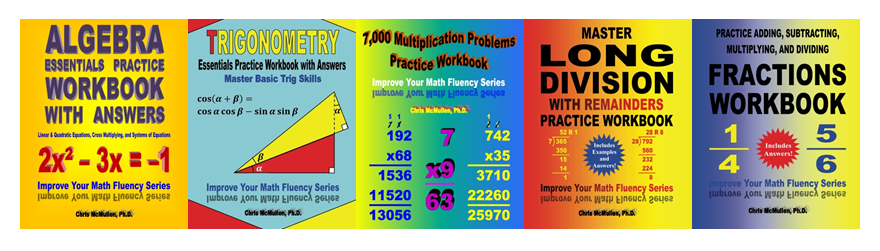
I published the Improve Your Math Fluency series of math workbooks starting in 2009. I released several titles in a short period of time. Customers didn’t view each of my math books as a book, but as part of an extensive series. This definitely helped. Also, it was very clear from my royalty reports that more customers bought several books from the series at once than bought just one book. All of the books in the series were showing on each other’s customers-also-bought lists in a short period of time.

Have times changed?

Comparing 2013 to 2008, most people know about self-publishing now, whereas few knew about it then. Yet there is much support for indie publishing now, since there are numerous indie authors plus their family, friends, and acquaintances, many of whom support the concept.

There is much more competition now. Many authors who had a backlist and published around 2008 turned into success stories that inspired many other authors to try self-publishing out. There are now millions of indie books on the market. Unfortunately, most self-published books sell fewer than once a day on average. Only the top couple hundred thousand books sell once a day or more on average. There isn’t too much more competition at the top than there had been, which provides a good opportunity for highly marketable books. A backlist of highly marketable books can help you rise toward the top.

Also, similar books tend to be more complimentary than they are competitive. Sales of similar books actually help one another. A foolish author who succeeds in deterring sales of similar books shoots him- or herself in the foot through customers-also-bought associations and other ways that similar books tend to help one another out. Customers don’t usually buy one book or the other, but over time buy several similar books. If all the similar books start selling better, it helps them all out; if any start selling worse, especially the ones with a better sales history, it can pull the similar books’ sales down, too. (So don’t be a fool.)

The most significant change recently is the role of the traditional publisher. Originally, self-publishing was more of a minor nuisance and inconvenience. People in the publishing industry either ignored it or miscalculated the effect of trying to market a lousy image for self-publishing and a great image for those exclusive authors who publish traditionally. They also kept their e-book prices high, which left the door wide open for indie authors. They went with traditional marketing, i.e. book reviews in major newspapers and televised author appearances, feeling that professional marketing gave them a big edge over indie marketing. Many successful indie authors tap into many more marketing resources and show more creativity in their marketing. One big factor is that the indie author feels a greater need and sees a more direct benefit for the marketing.

Recently, more traditional publishers have explored the effect of more affordable indie pricing. More traditional authors and publishers are starting to take advantage of the marketing opportunities that until now have mostly been sought out by indies.

Some traditional publishers are starting to adapt more effectively to the publishing revolution. This will in turn change what indies need to do to succeed in the publishing business.

Starting out by publishing a backlist is one way to potentially begin your writing career with a healthy headstart.

Should you wait to publish?

If you have one or two books in progress now, nobody is twisting your arm to publish your book at the earliest possible moment. There is no harm in waiting. In fact, there may be several benefits to exercising much patience. You could choose to spend a couple of years putting a professional online platform together, learning publishing tips, growing a following, receiving feedback, building buzz, preparing a backlist, and perfecting your books. Starting out looking like a serious, professional author with a complete author package may outweigh the benefits of getting one or two books on the market quickly.

Which will be better depends on your unique situation, and also depends on exactly what happens in the future, which, of course, isn’t entirely predictable.

It’s hard to say. But it’s something to consider. Many highly successful indie authors started out with a backlist of highly marketable books. This shows that it can be an advantage. (But it doesn’t guarantee that it will be.)

Another thing I see is a large number of tween and teen authors. I think this is great, but I also wonder if some may benefit by waiting until they are older and starting out with a backlist. (Especially, the more immature ones are more likely to make big marketing and publicity mistakes.)

When I was a teenager, I would have enjoyed reading a good book by one of my peers. It’s easier for teens to relate to teen writers. Most people who write about teen writers focus on the benefits of older writers having more wisdom and life experience. These are great points. But there are also advantages to teen authors writing to a teen audience in terms of being easy to relate, having a more hip style, being more lively and energetic, and being at that point in life where you have big dreams and wondrous curiosity, etc.

But I also know that as we grow older, we sometimes look back at our earlier writings in a different light. Some writers who publish at an early age come to regret it later.

There’s always the pen name as a back-up. It’s generally easier to market in your own name, but if you write as a teenager and regret it later, you can always start over with a pen name.

The idea of a backlist might tip the scale in the favor of waiting a couple of years until you have a half-dozen books ready.

Publishing help

I started this blog to provide free help with writing, publishing, and marketing. You can find many free articles by clicking one of the following links:

Chris McMullen, Author of A Detailed Guide to Self-Publishing with Amazon and Other Online Booksellers

Follow me at WordPress, find my author page on Facebook, or connect with me through Twitter.

“Pretty Good for Being Self-Published”—Insult?

Insult

There are many comments out there about self-publishing, both good and bad.

Let’s look at a particular back-handed compliment: “Your book is pretty good for a self-published author.”

Halfway through this remark you feel flattered. As you prepare to express a simple thank you, your cheeks turn red, your blood boils, and you think to yourself, “Hey, what are you trying to imply?”

It’s like a husband telling his wife that she did pretty good for a girl (a great line if you want an excuse to sleep on the sofa).

On the one hand, a self-published author is challenged with many tasks: writing, editing, formatting, cover design, marketing, etc. It’s no easy task for one person to master all of this, or even to perfect a complete book after paying for some services. An indie book that’s well-written and has a good storyline, but has a few extra typos and good-though-not-perfect formatting is a pretty good book. If one of the big publishers had picked this book up, it might have only a couple of typos and perfect formatting. So wouldn’t it be fair to say that it’s pretty good for being self-published?

Now we switch hands. If you read a book, it’s either pretty good or it isn’t. A customer shouldn’t expect to make allowances and settle for something less. If the customer sees an issue and deems it to be minor, it’s still a pretty good book; if the customer sees an issue and views it as a problem, it’s not a pretty good book. Ultimately, it’s each customer’s opinion that matters. After investing money on a product plus the time to use it, you have expectations for what to receive in exchange for your investment. The value of the product depends on the quality of the product in relation to the investment. (Making allowances for where the product came from is purely psychological on the part of the customer. If you try two colas blindfolded, you might be surprised at which one you prefer.)

Of course, it would have been less hostile to say, “I really enjoyed your book. Would you mind if I offered a minor suggestion?”

You can see the cup as half full: “It’s a pretty good book.”

Or you can see the cup as half empty: “For being self-published.”

Really, the choice is yours.

By the nature of the statement, the person is obviously biased toward traditional publishing. If you get someone who favors traditional publishing to call your self-published book “pretty good,” maybe you should smile about this instead of getting frustrated about it.

Another thing you can do is use it as motivation. If you already have a pretty good book, some extra motivation might lead to a really nice future. 🙂

The last thing you want to do is look unprofessional. Don’t let a remark like this lure you into looking amateurish. Building a reputation takes time and patience, but it can be lost as quickly as losing your temper.

There is plenty of negativity out there. Find the good in it. Find some motivation in it. Learn to cope with it. Learn to stay away from it as much as you can.

There is plenty of positivity out there, too. Seek this. It’s easy to find, especially if you look for it.

* * *

Follow me at WordPress, like my author page on Facebook, or connect with me through Twitter.

I started this blog to provide free help with writing, publishing, and marketing. You can find many free articles by clicking one of the following links:

Chris McMullen, author of A Detailed Guide to Self-Publishing with Amazon and Other Online Booksellers

Updating a Book at CreateSpace or Kindle Direct Publishing

Update

Today I will share my experience of updating books at Amazon. I recently updated Volume 1 of A Detailed Guide to Self-Publishing with Amazon and Other Online Booksellers at CreateSpace and Kindle Direct Publishing (KDP). The paperback now includes a comprehensive 18-page index, and both the paperback and eBook include minor updates (such as mention of recent changes at CreateSpace, Amazon, and Kindle and correcting a few minor typos).

If you need to revise your interior or cover file at CreateSpace, first study your sales rank history (you want to know the time of the sales, not the time that the royalties report) to help choose the time where you’re least likely to sell books. Your book will be unavailable for sale while the new file is being reviewed, so you don’t want it to interfere with sales (unless your revision is more urgent, then you just have to do it immediately).

It takes approximately 12 hours for your files to be reviewed. The biggest concern is how Murphy’s law will get you:

  • One way is for CreateSpace to make changes to your cover, even when you didn’t change the cover file and it had been perfect. The best thing to do is resubmit your files for review and hope the next reviewer doesn’t make changes to your cover. This is another 12 hours. But if you call, they put in a request to research the problem, and this can take a couple of days (and may not even resolve the problem). There is, unfortunately, a worst-case scenario where your book is offline for several days. You just have to cross your fingers and hope it doesn’t happen to you. Let me add that this rarely happens, so most likely it won’t be an issue. I didn’t mean to scare you. Just prepare for the worst, then if something does happen, you won’t be surprised by it.
  • Another way is for you to make a minor revision, which winds up causing major changes to the layout of your book. You see, revising a phrase on page 3 could cause a crazy page break on page 8. Take the time to scroll page by page through your book in the Digital Proofer to ensure that there aren’t any crazy layout problems and you might be able to avoid this problem.
  • Then there is conservation of typos, whereby you introduce a new typo in the process of correcting others.
  • Finally, there is the Doh! moment when you click Approve Proof and suddenly remember something else that you should have done.

Very often, your book is again available for sale in 12 to 24 hours after uploading the revised file.

A crazy thing is that you can actually order the paperback directly from Amazon after the revision and receive the older version. This evidently happens when they already have your older version stocked in their warehouse (e.g. if there was a returned copy to resell or if they had ordered some in advance to stock up).

What I like about KDP is that your previous edition remains available for sale while your new eBook is in the process of publishing. This way you don’t miss out on any sales in the meantime.

I put a note on the copyright page indicating when the eBook was last updated. This way, when I viewed the Look Inside at Amazon, I knew I was looking at the updated version.

I like the way the Look Inside turned out. The Look Inside when viewing on a PC is the greatest formatting challenge. I went into the HTML in my effort to perfect this. The indents look large on the PC, but that’s because I set them to a percentage instead of a value in inches. That way, the indents will look fairly reasonable from a cell phone to an iPad.

Another thing to consider is updating the description. I updated the paperback description from CreateSpace, using the basic HTML that’s allowed to create linebreaks, boldface, italics, and bullets. I used Author Central to do this for the eBook. The paperback description begins with a note about the new index that has been added.

The paperback was ranked around 14,000 on Amazon, but has now dropped down to 45,000. It’s amazing what a 16-hour window of no availability can do to sales rank. On the other hand, the eBook edition jumped up to 40,000 from the 100,000’s. I guess when the paperback wasn’t available, people decided to go with the eBook (ordinarily, I sell many paperbacks for each eBook that sells).

For those who may have purchased the original paperback without the index, there is a free index available in PDF format online: https://chrismcmullen.wordpress.com/index-for-a-detailed-guide/

Now I need to work on an index for Volume 2.

Volume 1 eBook: http://amzn.com/B00AA5CJ7C

Volume 1 paperback: http://amzn.com/1480250201

Volume 2 eBook: http://amzn.com/B00CSDUP66

Volume 2 paperback: http://amzn.com/1484037243

Chris McMullen, author of A Detailed Guide to Self-Publishing with Amazon and Other Online Booksellers, Vol. 1 (formatting/publishing) and Vol. 2 (packaging/marketing), Facebook page, Twitter

Check out Read Tuesday (a Black Friday event just for books): website, Facebook page, Twitter

Publishing a Book Is Like Applying for a Job

Want Ads

In many ways, publishing a book is like applying for a job:

  • You scour the want ads searching for a job opening, and you scour the Writer’s Market and other lists searching for agents and publishers.
  • Self-publishing is like starting your own business. Writing is a business, if your books are for sale.
  • A prospective employer first looks at your resume and cover letter before deciding whether or not to contact you. A prospective agent or publisher first looks at your query letter and book proposal. A prospective reader first looks at your cover, title, description, and sample.
  • Contacts and social media can help you meet employers, find head hunters, discover training opportunities, get resume help, be referred, and become part of a support network. In the writing world, contacts and social media can help you meet other writers, connect with editors and designers, learn publishing and marketing tips, discover agents and publishing opportunities, get writing help, and give and receive valuable support.
  • Referrals from contacts, supervisors, and previous employers can be quite valuable. For authors, word-of-mouth referrals, book reviews, and recommendations are golden.
  • A product or service needs to be highly marketable and effectively marketed in order for the business to succeed. Books similarly must be marketable and effectively marketed.
  • Ultimately, valuable skills sets and experience are necessary for any job. Writing and storytelling skills and experiences thus serve authors. The writer is a craftsman.
  • At a job, customers pay the employees’ salaries; without the customers, the company would go out of business. In the publishing world, readers pay the authors’ and publishers’ salaries.

Chris McMullen, author of A Detailed Guide to Self-Publishing with Amazon and Other Online Booksellers, Vol. 1 (formatting/publishing) and Vol. 2 (packaging/marketing), Facebook page, Twitter

The Multi-Book Strategy

Math

There are several potential benefits to publishing multiple titles, especially if the titles are similar:

  • When customers see that the author has written several different books, it creates the perception that the author is a serious, dedicated writer. When the author only has one book available, the perception is that this is a new author.
  • Customers who enjoy one of your books are likely to try more of your books. There is a big IF involved here—i.e. how likely are customers to enjoy your books? If so, having multiple titles out can earn you repeat business.
  • The books that have been out the longest are likely to have more reviews, which can help lend credibility to your newer books even when they don’t have reviews yet.
  • You can build a fan base among your prior customers and utilize this to help create buzz and initial sales for your new books.
  • When shopping for print books, customers often buy a few books at a time. One reason is that customers may qualify for free shipping this way; but even without this incentive, multi-book shopping is still common for print books. The more books you have available in print, the more customers are likely to buy a few of your books at the same time, especially if you have similar titles. (If you have an omnibus for a series, you can discount it to offer an incentive to buying the entire set up front.)
  • Your own books are likely to show upon on each other’s Customer Also Bought lists. This way, sales of your own books help to inspire same-day or future sales of your other books.
  • If the titles form a series, the further along you are in the series, the less risk readers will see in the time they will invest. When only the first volume is out, there is a greater chance that the series won’t be completed. (If you have two different series out, but neither is finished, this may be a deterrent. Readers may wonder if you don’t tend to finish what you start.)
  • The more books you publish, the more experience you gain, which gives each new book potential for improvement.
  • Working on your next book will keep you from checking your stats too frequently, take your mind off reviews, and give you an incentive not to waste your time.

More and more authors are becoming aware of possible benefits of the multi-book strategy.

This news leads to a few common mistakes:

  • The temptation to hurry. Rushing the writing and rushing to get the books out there, with the hope of multi-book success, may backfire. Delivering quality content is much more likely to earn referrals and good reviews. A lack of quality due to a rushed delivery is much more likely to earn bad reviews and no future business. (You can revise a book to improve it, but you only get one chance to make a good first impression, your reputation is at stake, and bad reviews are there to stay with print books.)
  • The temptation not to market. Authors may hope that the benefits of having multiple books will make up for a lack of marketing. There are two ways to look at this. First, consider that if the books aren’t selling, the lack of reviews and dismal sales ranks will discourage sales even more so. Second, consider that every customer you attract through marketing may buy multiple books in the long run. Therefore, if you plan to write multiple books, you should be more motivated to market because there is more potential gain in the long run.
  • The temptation to create a larger number of shorter works. The problem here is that customers want a good value for their hard-earned money. If customers feel that the content isn’t a good value, they are less likely to provide referrals, repeat business, or good reviews. If they feel that it’s a poor value, bad reviews are more likely. (This is on top of being less likely to buy the book in the first place because it doesn’t seem like a good value, let alone try out a new author.) Just to be clear, I’m not saying you should price your book cheap (most books should avoid the minimum price point—here is another common mistake, but that’s for another day). Rather, I’m saying that providing full-length books may be better than a series of short stories.

The first books you publish help to establish your reputation. You want to start out with a good reputation as a professional author who delivers quality content. You want to give your first books the best possible chance of earning referrals, repeat business, and good reviews.

Satisfying customers is the key to long-term success.

If you have the motivation and diligence to write and publish several books, then you’re obviously interested in long-term success. So take the time now to give your future its best possible chance of success.

If you have the motivation and diligence to write and publish several books, market your books avidly from the beginning in order to derive the greatest possible benefit from your efforts. You have more to gain from marketing in the long run than an author who only writes one book, so you should be more motivated to do this.

On the other hand, there comes a point where the book is excellent, but if you’re too much of a perfectionist, your book may never get finished. The temptation to rush is much more common than to continually delay because there is always something else that could be improved. However, if you’re one of the perfectionists who may take forever to get your book out there, then you have the opposite problem of needing to say that enough is enough, it’s already very, very good. It helps to have pre-readers who can help you judge this (since thinking it’s very good when it’s not good can be a major problem, while thinking it’s not good when it’s already excellent may be an unnecessary delay); however, getting honest feedback is another issue, too.

Chris McMullen, author of A Detailed Guide to Self-Publishing with Amazon and Other Online Booksellers, Vol. 1 (formatting/publishing) and Vol. 2 (packaging/marketing)