Cover Fonts

Bloody

Plasma Drip font from Font Squirrel at http://www.fontsquirrel.com

The right font is an important ingredient for successful cover design. It can also be one of the more challenging elements to perfect.

What to look for

  • The cover text should fit the genre or subject matter.
  • It should look like the font belongs on the cover.
  • The font should inspire interest in the book.
  • It shouldn’t be a distraction.
  • The text should be easy to read. Any uncommon words should be immediately clear.
  • Key words should stand out in the thumbnail.
  • Pixelation, stray marks, blurriness, and other issues will detract from the cover.
  • Too many different fonts on the cover is a problem. Two different fonts must work well together.

Examples

We’ll look at a movie and t.v. show. Although these aren’t books, the font is equally important—more so, if you count the money invested.

Check out the font for Disney’s Frozen: movies.disney.com/frozen. It fits the content perfectly.

Another example is Nick’s The Haunted Hathaways: www.nick.com/shows/haunted-hathaways.

Getting it right

The font and cover as a whole must look right to your eye. Well, not your eye. What really matters is your specific target audience.

That’s why feedback is so important. Some people have a good eye for font style. If you can get their opinions, that will help. You can also solicit feedback from your target audience, helping you build a little buzz while also perfecting your cover.

Finding the font

You need to go on the Great Font Scavenger Hunt. But it’s worth it.

If you’re using the font on your book cover, you’ll need a font that permits commercial use. There are many fonts online that allow free commercial use, along with many more with reasonable prices. For example, check out Font Squirrel. Google free fonts to find a host of other sites. You can also find many font collections for sale.

Read the license agreement carefully to learn whether or not commercial use is permitted. While some free fonts allow commercial use, beware that some paid fonts don’t. Check the license to be sure.

Note that paid font collections often exaggerate the total number of fonts. If the same font comes in normal, bold, italics, condensed, and expanded, for example, that single font might count as 9 different fonts (since condensed bold italic is different from condensed bold, for example).

Another issue is browsing through the fonts and testing it out with your specific text. A paid collection might come with a booklet that shows just the first 7 letters of thousands of fonts, which really makes it challenging to find the right one. An advantage of browsing online is that you often see larger fonts, spaced out better, and you can search and filter to better find what you’re looking for.

Once you have the fonts of interest installed on your computer, you can open up Microsoft Word, type the text, highlight the text, then scroll through the various fonts to see how it looks using the up/down arrows on the keyboard. This is pretty convenient. (If the font window blocks the text, you can move the text over by changing its alignment to right, for example.)

Don’t ignore it

If you did a survey among avid readers who know nothing about cover design, they might tell you that font style isn’t important to them. But that’s only because they don’t realize it.

Online, before you see the book’s product page, you see the thumbnail for the cover. Usually, the thumbnail is on a page with a dozen or more other covers. Very often, a shopper is scrolling through several pages of thumbnails to find a book. In a bookstore, you see the spines of hundreds of books.

The cover that best attracts the target audience gets the most attention. The font style does have a significant impact on cover appeal, even if we don’t realize it.

A successful cover signifies the genre and attracts the specific target audience in three seconds. The right font helps to pull this off.

Cover Design

I started this blog to provide free help with writing, publishing, and marketing. You can find many free articles, including cover design, by clicking one of the following links:

Chris McMullen, Author of A Detailed Guide to Self-Publishing with Amazon and Other Online Booksellers

Follow me at WordPress, find my author page on Facebook, or connect with me through Twitter.
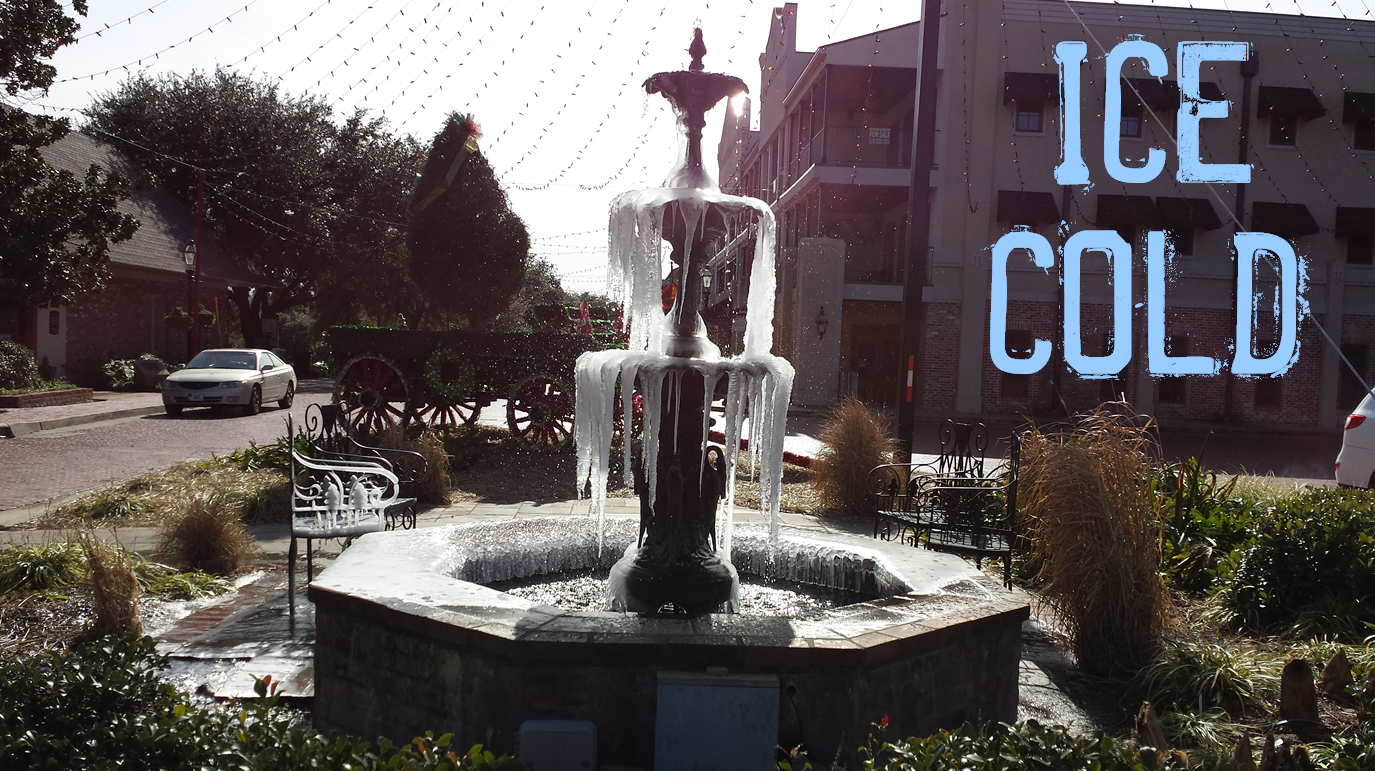
Freezing Cold

Ice Cold 2

It’s hard to believe that I took this picture shortly after noon in Louisiana.

I found the font at Font Squirrel. It’s called Misproject from Misprinted type.

Burrr…

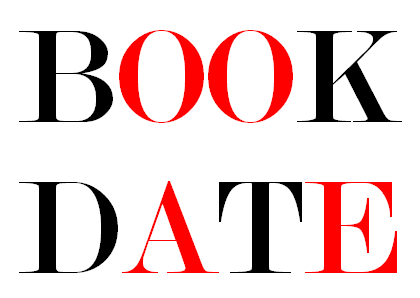
Marketing a Book Is Like Dating

Date

The Bar

Authors dress their books up with covers and blurbs, and mingle with readers through marketing. Readers are searching for good books, checking out those covers and blurbs, looking for a good catch to take home and bundle up with.

The Pick-up Line

Trying to stand out, authors try to design fantastic covers, promote their books with special deals, or catch interest with a clever strapline. Readers want to be impressed; they won’t fall for a common one-liner. If the line does impress them, they will play hard to get.

The Blind Date

A reader who enjoyed a book sets the book up with a friend. The friend is nervous. If the book doesn’t turn out to be good, he will feel obligated to grind through it so he doesn’t let his friend down. He’s also worried that the book may be too good for him, with more vocabulary and complexity than he’s prepared to handle.

The Courtship

Authors interact with their target audience in person and online through readings, signings, seminars, presentations, blogs, fan pages, podcasts, and interviews. They brand their images over a period of months, hoping to show readers that they are serious about the relationship.

The Kiss

Finally, after weeks of branding, the reader has clicked link to view the book’s product page, read the blurb, and—oh, here it comes, the moment we’ve been waiting for—KISS!—the reader is viewing the Look Inside. It better be a good kiss. If you like it, there are hundreds of more pages where that came from. Come on, kiss this book like you’ve never kissed a book before.

The Commitment

It was a good kiss. The reader invited the book home for the evening. This is the best night ever, a moment the book will treasure for the rest of its life. It’s a dream come true.

The One-Night Stand

What happened? It started with a good kiss. The book went home with the reader. They had a great time. The next thing the book knows, it was returned. The reader is gone. How could this be?

The Dump

Once the reader got home, it discovered that while the book had a handsome face, it was really a scoundrel of a character. Beyond the Look Inside, the book turned into something awful. The book is promptly dumped, confined to sit on a shelf, watch the reader pass by a few times each day, and bear the agony of seeing the reader sit by the fireplace with other books, smiling and laughing gleefully. Life is just unbearable.

The Climax

Just what every book and reader were hoping for, the book was good enough to please the reader, who finally reached the climax of the book. The feeling is just wonderful. For a few minutes. Then the book realizes that this is the end. Well, it was good while it lasted. At least the reader left some change on the nightstand.

The Marriage

Every author dreams about the marriage: Readers who enjoy the first book so much they propose to marry the whole series. It will be a grand wedding.

The Affair

While conversing with a fan, an author learns that she is reading a book in the same genre by a popular author. How could she do a thing like that? What will people think?

The Divorce

It’s that tragic moment when the reader gives up on a series. It was a match made in Heaven. What could possibly have gone wrong?

The Proposal

I started this blog to provide free help with writing, publishing, and marketing. You can find many free articles by clicking one of the following links:

Chris McMullen, Author of A Detailed Guide to Self-Publishing with Amazon and Other Online Booksellers

Follow me at WordPress, find my author page on Facebook, or connect with me through Twitter.
Read is a Four-letter Word

If you read, write, or publish and find yourself somewhat upset, perhaps you can take a little comfort in the realization that ‘read’ is a four-letter word. (And maybe the fact that reading, writing, and publishing are far more enjoyable than many other things you could be doing, even when these activities might frustrate you a bit.)

book

isbn

note

page

read

tale

text

type

word

copy

edit

find

full

left

mark

typo

view

free

give

list

sale

sell

body

line

poem

poet

bold

caps

dash

font

stop

blog

like

link

mail

post

send

stat

byte

file

HTML

open

Word

save

size

Fire

iPad

Kobo

Lulu

Nook

Sony

There are a few notable words that have more than four letters:

criticism

defects

feedback

plagiarism

rejection

returns

reviews

Copyright © 2014 Chris McMullen

Selfless Promotion

Selfless

With millions of books to choose from, it’s necessary for most authors to promote their books in order to help readers in their target audience discover them.

We sometimes see blatant self-promotion, like going to external websites and posting, “I just published my new book, Whip It Out There. Buy it today.” You should mention your book occasionally on your own site; after all, it is your site. At other sites, this behavior is often strongly discouraged, if not against the rules.

Many of the people who come to your site already know about your book. What you really want to do is find your target audience at external sites, where nobody knows about your book. And this is exactly what you should do, only at most sites you need to let people discover your book by checking out your profile or mentioning your book in the proper context, where this is allowed and acceptable. Some sites allow a brief signature, where you can include a link to your book; where it’s common to post with a signature, you can blend in nicely, and if you make a good impression, people may check your book out.

A milder form of self-promotion is mentioning your book in context. Instead of saying, “Check out my book, In Your Face,” try to find something else you can post where mention of your book is relevant. For example, asking for opinions about your blurb gets you a little attention and helpful feedback while not coming across as a salesperson. Obviously, you can’t ask about your blurb three times a day all year. Use the creativity that you obviously have as a writer and find relevant ways to mention your book. Study the ambiance of each site first and be sure not to behave in a way that may be frowned upon.

“Self, how would I feel if I were just chillin’ with my pals online and some other author posted that?”

Before you post it, think about how it looks from the other side.

Most marketing isn’t about instant sales. When you see an advertisement on t.v., do you run right out to the store and buy the product immediately? “Sorry, dear. I know it’s 3 a.m. Saturday morning, but I just saw an advertisement for honey and I really need to get some. Could you please watch the kids?”

It’s about branding. You learn about a product enough times that you recognize it. But you don’t want to be branded as annoying. Strive to find less obtrusive ways to get discovered. Come across as a professional. Make a good impression. Brand a positive image as an author to help get your target audience interested in your book over a long period of time.

The best exposure you can get is selfless promotion—i.e. when others market on your behalf. One way you can do this is to seek honest online book reviews or arrange a blogger to interview you. However, most of this is beyond your direct control.

Imagine a reader who discovered your book online, enjoyed your book, and posted a good review for your book online without your even knowing about it. Or imagine a reader who loved your book and told all of his or her friends about it. Recommendations and word-of-mouth sales are golden. They’re also very hard to come by. If a book is truly exceptional in some way, or if the book elicits strong emotions, this is more likely. The first step is to perfect your book from cover to cover and include some wow-factors in your writing. This is quite challenging, but ask yourself this: “Will people recommend a book if it’s just so-so?”

What good books have you read lately? What are you doing to help spread the word about those amazing books? Don’t just review and recommend books because you’re hoping for the same in return. Do it because you discovered a great book and believe others would enjoy it, too. Definitely, don’t recommend books that you don’t honestly believe to be worth recommending. There are many good books out there, and they can use your support.

I see plenty of selfless promotion in the form of reviews and recommendations. It’s a great sight to see. You might notice that I recently added a couple of pages to my blog, highlighting a few books by other authors. It’s a short list, presently, but it will grow.

Brace Yourself, Here Comes the Self-Promotion

I started this blog to provide free help with writing, publishing, and marketing. You can find many free articles by clicking one of the following links:

Chris McMullen, Author of A Detailed Guide to Self-Publishing with Amazon and Other Online Booksellers

Follow me at WordPress, find my author page on Facebook, or connect with me through Twitter.

Self-Publishing Experiments

Experiment

With millions of books to choose from, why would anyone choose to buy an experiment?

If the author treats a book like it’s an experiment, the quality of the content, packaging, and marketing will reflect this. Customers will see it.

  • It’s not worth putting a fantastic cover on a book that’s an experiment.
  • It’s not worth perfecting the editing or formatting for an experiment.
  • It’s not worth crafting a most wonderful story for an experiment.
  • It’s not worth marketing an experiment.
  • The author won’t be confident in or passionate about an experiment.

So why bother making an experiment?

If you just want to know if your writing appeals to others, simply share drafts of it or join writing groups.

It’s not Necessary to Experiment First!

Why not? Because there are already millions of books on the market. Researching those, especially successful indie books, will prove far more valuable than any experiment you might do yourself.

  • Sales ranks and reviews can help you gauge which kinds of books are or aren’t popular.
  • Repeated comments in a subgenre can help you learn specific things that many readers do or don’t like.
  • Writing samples in the Look Insides can help you see what kind of writing appeals to readers.
  • Covers of bestselling indie books can help you learn how to attract your target audience and signify your subgenre.
  • Look Insides of bestselling traditionally published books can show you what a nicely formatted book should look like.
  • Product pages of bestsellers can show you how to make the most of your book’s detail page.
  • Author pages and websites of top indie authors can show you a variety of marketing possibilities.
  • A ton of free and low-cost publishing and marketing resources can help you perfect your book.

Study books that have succeeded. That’s experimental data that you have right at your fingertips.

It’s a Mistake to Experiment First!

Why? Because your first impression is very important. A big part of marketing is the author’s brand. It takes time to build credibility as an author.

If your first effort is an experiment, many shoppers who come across your book and were interested in it may remember your book or name in the future. The next time they see one of your books, even though it may be much better, they may pass on it simply from their first experience.

Success in the publishing business is difficult to come by, so start out by putting your best foot forward.

About My Blog

I started this blog to provide free help with writing, publishing, and marketing. You can find many free articles by clicking one of the following links:

Chris McMullen, Author of A Detailed Guide to Self-Publishing with Amazon and Other Online Booksellers

Follow me at WordPress, find my author page on Facebook, or connect with me through Twitter.

Happy Today! :-)

Happy Today

Why should we wait for holidays, birthdays, and special days to wish everyone a happy day? We shouldn’t.

Every day should be special. We should be happy every day.

So here’s a wish for a Happy Today.

It’s not just good for today. It’s good for every day.

Have a very Happy Today.

Because it will always be today. Even when today becomes tomorrow, you will still think it’s ‘today.’

So have a Happy Today that never ends.

Smile! 🙂

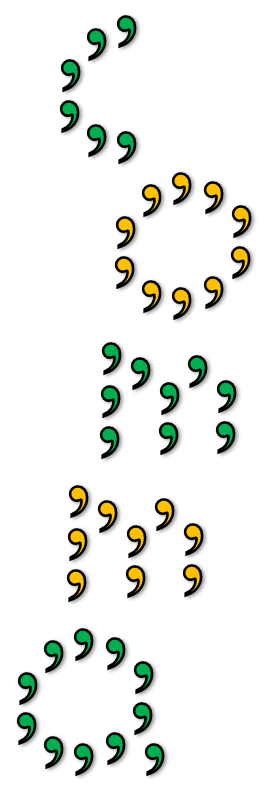
Comma Chameleon

Comma

Comma, comma, comma, chameleon.

Such a subtle separator can disguise meaning.

“Let’s eat, everyone,” sounds rather inviting.

“Let’s eat everyone,” sounds cannibalistic.

, , , , ,

Comma, comma, comma, chameleon.

Such a subtle mark can affect the pace.

“The rabbit with broken legs limped home,” sounds quick.

“The rabbit, with broken legs, limped home,” sounds slow.

, , , , ,

Comma, comma, comma, chameleon.

Such a subtle mark can hold so much power.

“My mom said her husband is crazy,” means one thing.

“My mom, said her husband, is crazy,” means another.

, , , , ,

Copyright © 2014 Chris McMullen

, , , , ,

Related articles:

Riddle: What Does Every Writer Need to Succeed?

Question

It’s not a pen because you could use a pencil or a computer.

It’s not a medium on which to write because the writing could simply exist in a bard’s mind.

It’s not a brain because that doesn’t distinguish a writer from any other art form.

It’s not lucky underwear because this job is clothing-optional.

It’s not a dictionary or thesaurus; although these come in handy, they aren’t always needed.

It’s not an audience because it is possible to define a new genre and gather a new audience.

It’s not money, as a writer can start out empty-handed and become successful.

It’s not writing instruction; while it does help to be well-versed, it is possible to become fluent through avid reading, for example.

It’s not praise, since although most writers would like it, the road to success is often paved with much criticism.

It’s not criticism because it’s already spurious and not everyone benefits from it.

It’s not an agent or great connection, which may help, as some writers have succeeded without this.

It’s not research, though it can be a big asset, since it can be compensated or trumped by a huge imagination.

It’s not imagination because many writers succeed with small changes to what’s already out there.

It’s not a pet squirrel, yet it’s highly recommended.

It’s simpler than all that, and everyone can have it. It’s passion.

Writing without passion. Is it worth reading? Was it worth writing?

Copyright © 2014 Chris McMullen

Authors, Don’t Write Books; Create a Whole New World

Image of Mars from NASA.

Image of Mars from NASA.

People don’t buy books. People buy the experience that a story provides.

So authors shouldn’t write books, and they shouldn’t market books. Authors should create a whole new world, and they should market the experience of visiting that world.

Don’t think of your book as a book. Think of the story as one part of the world that you created.

Don’t think of how to market your book. Think of how to get people interested in your world.

The world you create is far more than a mere book. It’s the world, not the book, which people want.

How do you do this?

  • Give your world life before your book is published. Spread the word about the world you are creating. Create buzz for it. Reveal the cover, blurb, and sample chapter in advance.
  • Design striking, relevant images for your cover, blog, social media pages, website, bookmarks, business cards, brochures, PR kit, all your online activity, and all your printed materials. These materials come in different sizes, so you need a flexible design. All the products should fit together. They don’t all have to be exactly the same, but it should be immediately obvious that they match. Everything prospective shoppers, readers, and fans see are a visual representation of your book.
  • Supplement your book with additional material. Post free bonus content on your website or an email newsletter to give fans an incentive to stay in touch. This might include maps, character sketches, or short stories or poems, for example. Not everything has to be free. For example, you can sell a short story that relates to your book.
  • The great thing about a series is that the world can last well beyond just one book. It also helps you create anticipation for each book in the series and steadily grow a following. You can make the first e-book permanently free or 99 cents to help lure readers into your world. An omnibus with significant savings can entice readers to buy the whole world all in one shot.
  • Sell, give away, or hold contests for additional products like bookmarks, special editions, t-shirts, buttons, or maps.
  • Create a highly marketable world and it will help attract visitors to your world. Some ideas are more marketable than others. Some writing is more pleasing than others. The packaging—cover, blurb, and Look Inside—are also very important in attracting attention to your world.
  • Find your target audience—especially, people who aren’t already in your following—in person and online, interact with them, and show them the benefits that your world has to offer. You’re not selling a book, but a roundtrip ticket to paradise. Introduce people to your world. Create a video trailer that depicts your world visually.

Self-publishing world

I started this blog to provide free help with writing, publishing, and marketing. You can find many free articles by clicking one of the following links:

Chris McMullen, Author of A Detailed Guide to Self-Publishing with Amazon and Other Online Booksellers

Follow me at WordPress, find my author page on Facebook, or connect with me through Twitter.