Can a Book have too Many Buying Options?

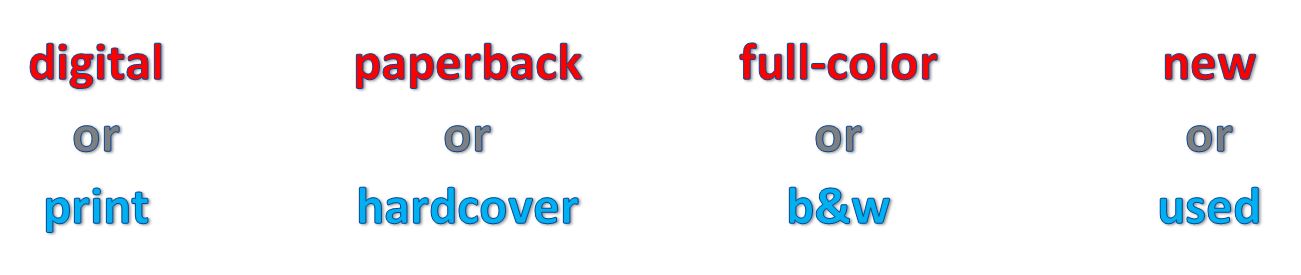
Options Pic

Once you decide to buy a book, you have several decisions to make:

  • online or in store
  • which bookseller
  • digital or print
  • if print: paperback, hardcover, spiralbound, etc.
  • if print: color vs. black and white
  • new or used
  • if new: direct from the bookseller or from a third party
  • if third-party: which third-party seller to choose from
  • if third-party: signed by the author or not
  • if used: collectible or not
  • which edition to buy
  • if out of stock: whether to order it or not
  • if in-store: whether to add a bookmark
  • if online: whether to add other books
  • cash, check, credit card, or debit card
  • if card: credit or debit
  • if credit: Visa, Mastercard, Discover, American Express, etc.
  • if credit or debit card: which bank
  • “Would you like to open a new credit card for this purchase?”
  • At least you usually don’t have to decide between paper and plastic anymore. 🙂

Options are a good thing, right? The more options there are, the better chance you have of getting what you want.

But from a selling perspective, having more options available presents a problem.

The benefit is that additional options may bring additional customers, since some customers may not buy the product at all if the option they want isn’t there.

The disadvantage is that additional options increase the chances of buyer indecision. Some customers walk away from a sale because of buyer indecision.

Suppose, for example, that you’re buying shoes. If there is only one type of shoe that you like and you can only pay cash, you will either take it or leave it. If you like the shoe enough and have the cash on hand, you won’t be worried about other options.

But what if the shoe comes in two colors – pink and blue? Maybe you like them both, but insist on only buying one pair. Now you must decide which one you like better. You might do something else in the meantime, giving yourself time to think it over – while also giving the impulse to shop time to cool off, so you might not buy any shoes at all. Or maybe you decide you like pink best, only to discover that pink is out of stock, but you refuse to buy blue because your heart was set on pink.

Back to books, the question the author or publisher has to ask is whether or not additional options will improve sales by attracting extra customers more than they will deter sales through buyer indecision.

Impulse shopping also plays into this. Extra buying decisions increase the duration of the buying process. The longer it takes, the more likely the sale will be interrupted and the more likely the impulse to buy will wear off before the sale is over.

The option to make both paperback and e-book is probably worthwhile for most books that can be formatted well both ways. For a book that sells predominantly as an e-book, the presence of the paperback still presents many benefits:

  • The e-book price shows as a discount off the paperback list price.
  • You can catch some mistakes when editing a paperback that you miss when editing an e-book.
  • You’re eligible for Kindle’s new MatchBook program.
  • Paperbacks come in handy for readings, signings, review copies, etc.
  • It helps to convince some people that you’re a ‘real’ author.

Some other options, however, may not be worth doing.

Suppose your book would look great in color. When you go to publish the paperback, you may find that the book would be much cheaper in black and white. This tempts you to publish the book both in color and in black and white editions. The problem with this is that the buyer is faced with a decision: Save money with black and white, or enjoy the book in color.

If the book really needs to be in color, don’t make a black and white edition; but if it would be just fine in black and white, don’t make a color edition. Or if you do make a color edition, make it a special edition that you sell directly or give away in a contest; but don’t add it to your product page. (I have the experience of publishing a book both ways, and if I could do it over, I would just choose one way.)

You face a similar dilemma with hardcover and paperback.

There are two more important points about creating different editions of a book. One is sales rank. Each edition of the book has a separate sales rank. When the book is only available in one edition, every purchase helps the same sales rank.

The other point has to do with customer books reviews. If one edition is more likely to generate negative reviews, that option can adversely affect the other editions – if the different editions are all linked together on the same product page.

Chris McMullen, author of A Detailed Guide to Self-Publishing with Amazon and Other Online Booksellers, Vol. 1 (formatting/publishing) and Vol. 2 (packaging/marketing)
Creativity: Good or Bad for Books?

Imagination is a good thing, right? I believe so.

It’s good to be creative as a writer, isn’t it? No argument from me there.

So books should show originality, don’t you think? Got my vote.

Nonetheless, here comes a great big BUT!

(Those who can spell realize I’m not talking about anatomy.)

Just to be clear, I’m not going to argue against creativity. I’m in favor of it.

Consider this: Does the bookselling industry discourage certain types of creative storytelling, rather than rewarding it?

Here are some examples of what I mean:

  • Suppose you write something so different that you’re breaking ground with a brand new genre. It doesn’t stand a chance of getting browse category visibility. How will readers discover it? The book is inherently disadvantaged.
  • Readers have an expectation for what to expect in terms of storyline, characterization, etc. in any given genre. The author who deviates from these expectations risks negative reviews for being creative.
  • How do romance readers react when the ending doesn’t turn out to be happy? Is there a significant readership for specific types of unhappy endings in this genre? There are some types of originality that many readers aren’t willing to support.
  • Even creativity in cover design has a significant potential downside. Many readers judge their interest in a book based on a cover. They are familiar with how the books they tend to read tend to look. If a book doesn’t look like it belongs to their genre, they might not check it out.

Do readers want to read the same types of books every time? I don’t.

First, I’m not saying that all forms of creativity pose problems. Some don’t, but others do.

If you want to write a romance, for example, there are already a variety of popular ways to go about it. First, there are subgenres, like contemporary or historical. If you choose a subgenre, there is plenty of room to follow a model while still being very creative. You don’t even necessarily need to follow a particular model. Yet there are some features that are high-risk to change – like taking away the happy ending, or giving the protagonist certain types of flaws.

The point is that while there are endless possibilities that do work, there are limits to it – i.e. there are some features that can hinder sales significantly if changed.

And something completely different is especially challenging to sell.

The problem of a new category is tough for the author or publisher to work around. But it can be done. We have genres now that we didn’t have in the past. So it is possible to breakthrough with something quite unique. Statistically, however, there have been many people with ideas for new types of books, but the ideas that actually opened the door for a new genre have been very rare in comparison.

It would be easy to solve this problem. Suppose, for example, that Amazon created a new book category called “Fresh and Exciting” or “Out of this World.” Don’t you think readers would check it out? Wouldn’t it also attract authors? It could be a very popular category. It has potential.

(Sure, there would be some not-so-good books in there. But you can find such books in all categories. When they don’t sell, they fall to the bottom, out of the way, where they aren’t harming anyone. And some of the books at the bottom are fairly good, but just not selling for whatever reason, and some readers will be happy to find them.)

Right now, the closest thing is “Other.” The name is important. It’s just not the same. “Other” suggests that the book just doesn’t belong.

But as it is, the bookselling industry seems to discourage, rather than reward, such innovation on the part of the author.

Writing a book that’s appealing to readers is important for sales. With the modern self-publishing revolution, every author has ample room to exercise creativity. However, if readers don’t respond well to the originality, the book won’t sell.

Even if many readers do appreciate the originality, some readers who don’t may inhibit sales through negative reviews.

So it’s not just the booksellers, like Amazon or Barnes & Noble. It’s the readers, too. Even if the book does have significant appeal, those readers who don’t like the change can influence sales through reviews.

Then there are agents and editors, who are looking for books that are highly marketable. They may be reluctant to take a chance on too much novelty. It would seem easier for a big publisher to attract readers with something fresh; but it’s also a risk.

Shouldn’t the system encourage innovation, particularly if the book is very well done?

How about you? Do you search for highly original books? Have you read anything that’s really clever and different lately? Do you reward originality in your reviews, or criticize the author for the deviation? Do you help spread the word when you find something very creative and also enjoyable to read?

(I have: For example, Reapers, Inc. by Dave Hunter. I thought the concept was cool; even the cover seemed different in a good way.)

We read books. We are part of the readership. From our end, the best we can do is help to promote original thought and encourage it through positive reviews.

Imagine H.G. Wells writing The Invisible Man, Jonathan Swift writing Gulliver’s Travels, or Mary Shelley writing Frankenstein. Or imagine trying to write realism when romanticism was popular.

We have a very healthy variety of books today. Yet what are your prospects for setting the trend with something totally new?

If you haven’t already seen it, you should check out Misha Burnett’s clever idea for a new writing software package (his irony should be obvious, but I’ll mention it, just in case):

http://mishaburnett.wordpress.com/2013/09/16/new-software/

Chris McMullen, author of A Detailed Guide to Self-Publishing with Amazon and Other Online Booksellers, Vol. 1 (formatting/publishing) and Vol. 2 (packaging/marketing)

You Might Be a Stat Junkie If…

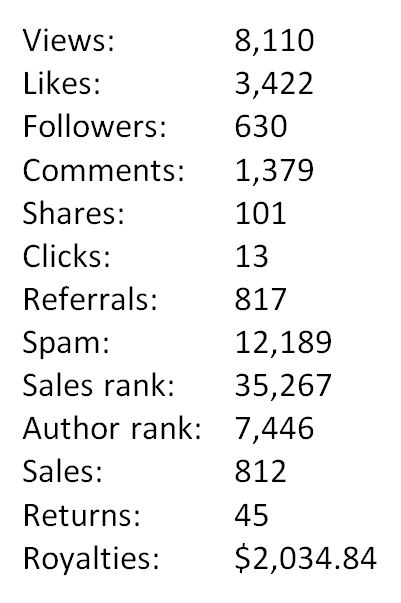
Stats Pic

How often do you check your stats?

You might be a stat junkie if…

  • You bought a cell phone mainly to check your stats away from home.
  • You check a different device when nothing has changed just in case that might be the problem.
  • You can’t resist the temptation to check your stats during a movie. Especially, a good movie.
  • You actually spend more time during the day checking your stats than doing anything else.
  • Your spouse calls from the room, “Honey, are you checking your stats again?” And your spouse is right.
  • You checked your stats when you saw this post. Hey, they might have changed.
  • You experience withdrawal symptoms when the internet is down, when your cell phone doesn’t work, when the site needs maintenance, when the phone line is out, or when you otherwise can’t check your stats for few minutes.
  • You’re a member of Stat Checking Anonymous. Or, if having heard the name of this organization, you feel the need to join it, until you realize that it’s fictitious. Even worse, you feel like founding such a program because it should exist.
  • You hardly get any writing done because you spend so much time checking your stats.
  • You check your stats every time even the smallest thing doesn’t go your way, hoping the stats will make you happier.
  • You get out a calculator to see how many sales you’ve averaged per day, or to figure out how many more you need to get back on track.
  • You wish that you could receive an email every time a sale is made.
  • Your stats control your mood.
  • Your muse doesn’t come around anymore because you’re too busy checking your stats.
  • You’ve ever checked your stats twice in a row (or more) because you forgot what the number was as soon as you logged out.
  • You’ve ever cried because your stats disappointed you.
  • You’ve ever walked into a wall, tripped, or otherwise mis-stepped because you were checking your stats while walking.
  • You’ve ever bought your own product just to see the stats change. Then repeatedly became upset that haven’t changed yet.
  • You can’t go to sleep until you finally get that one last sale. And when it doesn’t come for many hours, you start begging for it. Out loud.

Related Posts:

1. I got this idea from Victoria Grefer’s recent post: http://crimsonleague.com/2013/09/15/bloggers-why-you-shouldnt-be-a-stat-junkie/

2. If you missed my previous clockwatcher post, you might enjoy this: https://chrismcmullen.wordpress.com/2013/06/29/authors-are-you-clockwatchers/

Chris McMullen, author of A Detailed Guide to Self-Publishing with Amazon and Other Online Booksellers, Vol. 1 (formatting/publishing) and Vol. 2 (packaging/marketing)

An Index of Cover Design, Blurb, Editing/Formatting, Marketing, Writing, and Publishing Posts

Having seen a few followers hunting through old posts, I thought it might be handy to make an index for potentially useful posts on my blog.

The index page is divided into 6 parts:

  1. Cover Design
  2. Blurb
  3. Editing/Formatting
  4. Marketing
  5. Writing
  6. Publishing

(I haven’t yet included my poetry and related posts.)

You should be able to find the index page over to the right (on the sidebar). If you have any trouble finding it please let me know. It includes a date so you will know when it was last updated. If you know anyone who you believe would find some of these posts helpful, please feel free to direct them to the index.

If you check it out, please share any comments, feedback, or suggestions. The index is for anyone who might find those posts useful; especially, you. So if you have any requests, please share them. 🙂

Kindly,

Chris


Target Your Audience

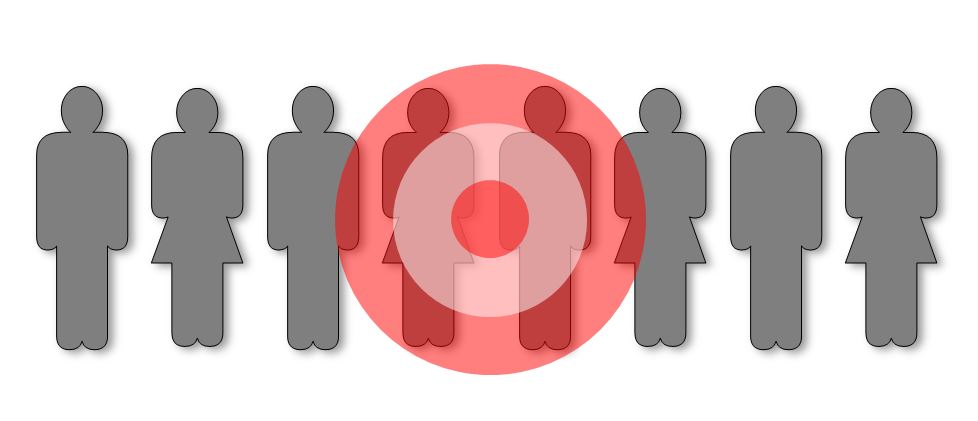
Target Pic

Yeah, I know. As a consumer, the feeling that businesses may be targeting you may not be the most wonderful feeling; and the picture probably doesn’t help with this. Yet the phrase is useful to anyone who is selling a product or service, to remind them of the importance of marketing the product or service to the people who are most likely to want it.

Think of it this way: Businesses are trying to help people discover products and services which may be a good fit for their individual preferences. This is accomplished by marketing toward a specific target audience – perhaps not the friendliest phrase for a specific group of people who share common interests, like dirt bike riders or Trekkies.

Imagine standing outside of a football stadium trying to sell used golf balls to fans who are buying tickets. Sure, some of the football players will be golfers. But don’t you think you’d have better luck selling golf balls at a golf course? Even if you meet a football fan who plays golf, his mind will surely be on football, and he will probably be irritated to have you try to switch his mindset so he can discuss golf business with you right before the big game.

Even if the marketing is free, it still costs time and effort. And there are many more things that one can do to market a product than any human being can do in a single day. So you must choose wisely.

Marketing is much more likely to be effective when it’s geared toward a specific target audience, which is a good fit for the product.

Recall the football fan who might be irritated to discuss golf when his mind is on football. This point is important for customer satisfaction.

Suppose you succeed in selling a product to many people who fall outside of the target audience. These customers are less likely to be pleased with the product, which can affect reviews, referrals, and recommendations – i.e. it can lead to a little negative marketing. These customers don’t understand the nature of the product as well as the target audience, and therefore may not have realistic expectations for what the product should actually do.

As an example, this is often the case with free e-books. Readers outside the genre are tempted to buy the book because it looks like a good deal. Since the e-book is free, they may not feel the need to invest time and effort reading the blurb or checking out the Look Inside. These readers are less likely to know what is typical of the genre. They might also be trying the genre out, only to discover that they really don’t like it. Therefore, these readers from outside the genre are more likely to be disappointed with the book, which could lead to bad reviews.

When the author invests in the time or money to promote the freebie to the specific target audience, then many of the free e-books also go to members of the target audience, which helps to balance the freebies downloaded by other readers.

So if you just market a product to a general audience, thinking that the audience is so large that even a tiny percentage is significant, there may be possible negative effects to take into consideration.

Whenever possible, market the product toward the specific target audience. This can have a big impact on the cost-benefit analysis.

The first step is to identify the specific target audience. Think about who is most likely to use the product. Is there a gender preference? Which age group? What common interests will they share?

The common interests are especially important. Be as specific as possible – e.g. baseball is more specific than sports, and contemporary romance is more precise than romance which isn’t as vague as fiction.

Avoid being hypothetical like, “Chess players might be interested in graphic arts.” They might be, but you’re more likely to reach chess players through their interest in chess, since many won’t be in the market for graphic arts.

The goal isn’t to widen the audience as much as possible. Targeting an audience that is far wider than the people who are most likely to use the product makes marketing less efficient. Many companies, such as small book publishers, achieve success with a narrow audience – such as niche marketing. A very narrow audience can lead to good results if you succeed in reaching a large percentage of the audience. Marketing efficiency is very important, especially if you don’t have a huge supply of money to invest – like many indie authors and musicians.

Sometimes, you can widen the audience. For example, suppose that you wrote a mystery that strongly relates to basketball. In this case, you can target mystery readers and basketball players, as both may have a strong interest in the book.

In contrast, if a book is partly mystery and partly fantasy, trying to reach both mystery and fantasy readers may backfire: The mystery readers might not like the fantasy, and vice-versa. It’s better to market the book one way or the other, focus on the primary component, and try not to sell the secondary component. Some genres do mix well, like romantic suspense, which is already an established category.

Once you establish who the target audience consists of, the challenge is to reach them. Base this on the commonalities that they share.

  • Where are they likely to shop – both physical stores and online? Which departments?
  • Where will their common interests take them? Hobbies, sports, activities, entertainment, vacations, clubs, organizations, etc.
  • What do they read? What do they do online? Magazines, newspapers, websites, etc.

The more you know about the specific target audience, the better your chances of marketing success.

Start out by thinking about it and discussing your ideas with others. Focus groups can help, and so can customer surveys (but be careful what you ask, and show tact). Meeting and interacting with customers gives you firsthand information.

As you consider various marketing strategies, think about how each strategy may or may not be able to reach the specific target audience effectively. Following are some examples. You just have to think long and hard about this, as every situation is unique.

  • If you’re selling something instructive (how-to guide, software, nonfiction, learning resources, etc.), you could write and publish helpful articles, develop a blog, provide help in an online forum, give a workshop or seminar, etc. But focus on attracting the specific target audience.
  • Common interests among the target audience can help you meet them at clubs, organizations, presentations, etc.
  • Send a press release kit to local papers, radio stations, and television networks that have sections or shows which are a good fit for your target audience. Look for magazines and websites that match your target audience and try to get visibility there.
  • Research how to use social media to target a specific audience. For example, on Twitter, use relevant hashtags.
  • Develop a website (or blog, or both) with content that is likely to attract the target audience.
  • Build relationships with potentially useful contacts, with your target audience in mind.

Remember that most people don’t like advertisements. Advertising works better for companies with much money to invest, which can sell a large number of products, and where there aren’t too many competitors. Free marketing tends to be much more effective for smaller businesses or individuals, and this is even more important when there are thousands of competitors – which is the case for authors, for example. Low-cost advertising in products that may actually be used by the target audience – like pens or bookmarks – can benefit those with fewer resources.

In the latter case, provide helpful content that attracts the specific target audience, try to be visible yet unobtrusive, and make it easy for the audience to discover your product without looking like an advertisement.

An important aspect of marketing is branding – getting the target audience to recognize the name of the product or business, and perhaps associate it with some quality (like luxury, creativity, or inexpensive). Advertising that does work does so through the branding effect. But marketing that isn’t advertising can also be highly successful at branding – perhaps even more so, since it doesn’t intrude like an advertisement.

Individuals and small businesses can benefit by interacting with the target audience in person – online, too, but in person can be highly effective. It can be a treat to meet the owner, author, or inventor, for example, in person. This is a valuable resource available to the “small guy.” Start locally and work your way outward. Take advantage of the fact that local newspapers, radio stations, and television networks are looking for local stories.

Chris McMullen, author of A Detailed Guide to Self-Publishing with Amazon and Other Online Booksellers, Vol. 1 (formatting/publishing) and Vol. 2 (packaging/marketing)

Carrying a Book’s Theme Too Far?

Imagine that you are shopping for a Halloween book – ghost stories or puzzles with a Halloween theme, for example. You find a book that catches your interest and pull up the blurb. How would you react if the blurb reads with a Halloween theme? For example, the description may include phrases of the sort, “will chill you to the bone,” “great for entertaining vampires,” or “ghosts may or may not be included with purchase.”

When you explore the Look Inside, the copyright statement might include a remark like, “If you copy any portion of this book without the author’s express written consent, you will be cursed for thirteen years.”

Or maybe you’re buying a romantic nonfiction relationship book, where the copyright statement includes a statement like, “If you abide by the terms of this copyright agreement, the author will love and cherish you always and forever.”

An author of a Christmas-related book might include “Ho! Ho! Ho! Merry Christmas!” and other holiday remarks on all online posts in the fourth quarter, and wear a Santa hat for personal marketing endeavors.

The end of a humorous book might suggest that if readers leave any reviews, to please consider trying to make their reviews funny. Or if they tell any friends about the book, try to do so in a funny way. That is, the author may even try to carry the theme into the fans. Why not? Look at the Trekkies.

What if a zombie apocalypse novelist uses make-up to look the part at a signing or reading? Or for a vampire book, just imagine the author being wheeled onto the stage, riding in a coffin.

Is this going too far? Does it convey the author’s passion? If an author can make boring statements on the copyright page enjoyable to read, does that bode well for the rest of the book? Are such samples of creativity good?

What do you think?

Chris McMullen, author of A Detailed Guide to Self-Publishing with Amazon and Other Online Booksellers, Vol. 1 (formatting/publishing) and Vol. 2 (packaging/marketing)

Book Marketing: The Power of Perception

Perception is a very powerful marketing tool. Are you using it to your advantage?

Think about a moment where you’ve just heard about a new product. Perhaps a friend told you about it. Maybe you heard about it on the radio. You might have seen it in a store.

You probably didn’t use the product first and then form an opinion of it. Nope. Most likely, you developed an immediate perception about the product. You might investigate the product further before making the purchase, but that first impression is very important. If you had a poor impression, you may not even consider the product again. If it made an excellent impression, you tend to look for things that reinforce this – i.e. you see it in a better light.

Don’t just try to brand the book’s title or your name. Strive to brand a perception about your book.

The first step is to think about how you want your book to be perceived. It must be something that most readers will agree with once they read the book; otherwise, marketing the perception will be ineffective in the long run. In what way is your book distinguished, which will appeal to readers?

Here are some dos:

  • Keep it simple. People can remember a few words; a long sentence will likely be forgotten. One to three words that paint the perception can be branded effectively.
  • The perception should be highly relevant to the target audience. This way, the branding helps to attract the readers who are most likely to want the book.
  • Think about the selling points of your book, but just pick one. What distinguishing feature might appeal to customers?
  • If a popular book helps to paint the perception efficiently, you may be able to do this in a positive, tactful way – e.g. “like Harry Potter in space” (notice that it doesn’t say anything negative about the other book). Only try this if there is another book that’s a great fit to help you quickly paint the proper perception, and if the book is also well-known.

Now for a few don’ts:

  • The perception must be accurate, otherwise it will backfire. You don’t want readers expecting one thing, when in fact they will get another.
  • It can’t be “the best book ever.” This doesn’t say anything specific about the book, so it won’t attract the target audience. It also tends to generate the negative reaction, “Yeah, right!”
  • Don’t try to top popular books or movies, like “better than Star Wars,” or “the best mystery ever.” If the expectations don’t seem reasonable, buyers won’t invest in the book. Definitely, don’t put anyone’s favorite books or movies down. If you try to advertise that your book is better, it will create a mindset among some readers to try to prove you wrong.
  • Limit yourself to one quick phrase. Don’t try to market two or more perceptions. It’s much easier to brand one simple perception.

There are many possibilities: audience specific (a clean romance), a distinguished character (Gollum or Darth Vader), an attractive idea (a children’s series that teaches decision-making skills), a unique feature (like the twist-a-plot idea), a cool concept (imagine what it would be like to…), an improvement (a workbook and textbook integrated into one), or even exceptional preparation (“Judy spent three years doing the research for this book,” or “Bob had three different editors work on the manuscript” – but note that these two examples don’t attract a specific audience)… and the list goes on.

How do you paint the perception?

  • It helps if a glance at the cover reinforces the perception that you’re trying to paint.
  • Similarly, the title, blurb, and Look Inside need to reinforce this perception.
  • Mention it with your title on all of your online and offline marketing materials: end of posts, just after your book link, social media, bookmarks, advertising, press release kit, etc.
  • Use your phrase (it’s a strapline) in your personal marketing endeavors – mention it at readings, signings, interviews, blog tours, conversations, presentations, and whenever you have the opportunity to discuss your book.
  • Strive to paint this perception when trying to generate buzz for an upcoming book.
  • When you enlist others to help with your marketing – e.g. to create buzz or to help spread the word for a promotion – see if this perception can be included.

Perception is a difficult thing for a lone author to judge. External input is valuable for trying to make such predictions. Ask people what they perceive about your book? Run the perception that you’d like to paint by them and see how they react to it.

Some things are beyond your control. This includes reviews, recommendations, and referrals – which can be good or bad. You can get lucky and a complete stranger who enjoys your book may spread the word to many others, and you can get unlucky and someone can strive to paint a negative perception. You can’t control this. But there are a couple of things that you can do:

  • The better your book and the more effective your marketing, the more reviews, referrals, and recommendations you will get. The more you receive, the less effect the negatives will have and the more likely you are to have some helpful advocates among your fans.
  • Be wise, courteous, respectful, and professional in your interactions with readers, blog reviewers, sending out advance review copies, and all of your public relations.

Chris McMullen, author of A Detailed Guide to Self-Publishing with Amazon and Other Online Booksellers, Vol. 1 (formatting/publishing) and Vol. 2 (packaging/marketing)

What Writers Can Learn from Reading

Reading is a valuable hobby for the writer, as it provides numerous benefits:

  • Periodic reading of classics can help improve writing skills. Grammar, proper word choice, structure, and word flow tend to come a little more naturally. The current read may unconsciously influence the writer’s style a little, but the pros probably outweigh the cons. My dad (with a literature degree) knew someone who couldn’t pass an English test. After my dad recommended that he read some classics, instead of study guides, he actually passed the test next time. This may be an exceptional case, but there are many who advocate the benefits that reading classics has to offer.
  • Reading top sellers in the genre can be a valuable form of research. Think about how the book became popular – especially, if the author didn’t have a big name when the book was first published. Study the storyline, characterization, writing style, organization, and anything that might attract readers. Strive to find out what made the book successful. Don’t copy the same ideas; readers may not respond well to this. Rather, try to find general ideas that can be applied to your own writing, without doing exactly the same thing. For example, don’t create similar characters; instead, discover how the author made those characters so memorable, and learn how to apply it to make your own unique characters just as memorable. Consider what the book doesn’t do. This is important because some of the things that top sellers don’t do may have a tendency to deter sales. Each genre has some unspoken rules that can significantly affect sales and reviews.
  • A writer can see what the latest trends are, especially in the author’s genre. Following the trends may or may not be the best thing, but it’s important to be aware of what’s going on. The expectations of the target audience always merit consideration. If a new release is significantly different than most other new releases, for example, it might be desirable to make this clear in the blurb; maybe it will be a good thing, and maybe not, but readers are more likely not to be upset this way. If for no other reason, a fan might ask an author why he or she didn’t follow a popular trend. The author will look a little foolish if he or she is unaware of the trend.
  • Practice thinking from the reader’s perspective. An author writes a book from his or her own perspective. However, the reader’s perspective (more precisely, the general reaction from the target audience) is ultimately much more valuable to the book’s marketability than the writer’s perspective. Think about what’s important to you when you’re buying and reading books. Try to wear your reading shoes when you analyze your story, writing, characterization, style, formatting, cover, blurb, and even your marketing. The more you read, the more you can relate to this perspective, and the better your chances of looking at your own book critically. It’s no substitute for the valuable resource of external opinions, but it will prove valuable, since ultimately you have to make decisions about your book even if you do receive input or help.
  • See first-hand that even the most popular authors receive criticism. No book pleases every reader. Books with hundreds of reviews have some awful ones, even if the average star rating is very high. Seeing this for yourself may help you better learn to deal with criticism.
  • Become more familiar with the buying process. This can help you with your own marketing. How do you buy books? What keywords do you use in online searches? Do you browse thumbnails? Do covers play an important role when you shop? What effect does the blurb have on you? What kinds of covers appeal to you? Study the blurbs that sell books to you to learn what they did successfully. Do you check out the Look Inside? If so, what do you look for? What price range do you look for? Which reviews tend to influence you? Do you review books? What kinds of marketing tend to influence you? Explore the author’s marketing pages and try to learn some tricks of the trade. There is much that can be learned from the buying process.

Chris McMullen, author of A Detailed Guide to Self-Publishing with Amazon and Other Online Booksellers, Vol. 1 (formatting/publishing) and Vol. 2 (packaging/marketing)

Which Part of the Book Is Best?

Book Play Pic

COVER: I’m the best. Without me, they wouldn’t even check the book out.

STORY: Cover, you’re just the good looks. I’m the brains.

BLURB: Nobody will see your brains until I convince them to look inside.

PRICE: They won’t see how the story turns out until I show them what a great value the book is.

FORMATTING: My excellent design is what makes it such a great value.

CHARACTERIZATION: The memorable characters generate future sales through reviews, recommendations, and referrals. I draw out the reader’s emotions.

EDITING: Those would be bad reviews if not for me!

MARKETING: I created the buzz for this book, and I generated sales and reviews.

COPYRIGHT: You’re all wrong. I’m best.

BLURB: How the deuce are you best? Nobody even reads the stinkin’ copyright page.

Everyone but Copyright laughs.

COPYRIGHT: If not for my copyright statement, everyone would be getting this book for free. And if not for my fictional works disclaimer, we’d be getting our rear ends sued. That’s how!

STORY and CHARACTERIZATION: Get rid of us, and nobody would want the book for free. You wouldn’t be able to pay people to take the book.

CHARACTERIZATION: Besides, there isn’t anyone – living or not – fantastic enough to be confused with a character in this book.

EDITING: You weren’t so fantastic in the first draft.

COVER: I could have sold that first draft.

MARKETING: No, I could have sold it.

STORY: Only because the story is so amazing.

COVER: Who’s going to read the story if nobody checks out the book? Huh? Answer me that.

MARKETING: Not to worry. I have it covered.

COVER: Really? What if I were the ugliest cover anyone ever laid eyes on? Or what if I looked like a perfect cover for a completely different genre? Would you still sell me then? Huh?

STORY: Readers would rather have a great story than a great cover.

COVER: But they will judge how good the story will be based on how great I look. The truth hurts, doesn’t it?

BLURB: Even if the cover is amazing, they won’t check out the book until I capture their interest.

FORMATTING and EDITING: And they would shut the book quickly if not for us.

STORY: Or if I didn’t engage the reader right off the bat. Look, Cover and Blurb, you only have to engage the reader’s interest for a few seconds. I have to entertain the reader for several hours straight.

VOICE: I have you all beat.

PRICE: Who are you?

AUTHOR PAGE: I’m the about the author section.

Everybody but Author Page laughs.

STORY: Nobody even gets to the about the author section until the book is finished. How can you be the best?

AUTHOR PAGE: Because without the author, this book wouldn’t even exist in the first place.

FORMATTING: You’re not the author. You’re just a page about the author.

AUTHOR PAGE: I also generate future sales by sending fans to the blog, social media pages, and fan page.

MARKETING: You can thank yours truly for those pages.

COVER: Much of that marketing features a picture of me. My image makes the book marketable. I’m the brand.

CLIMAX: Excuse me.

BLURB: Yes…?

CLIMAX: I’m what every reader wants. They yearn for me. They read hundreds of pages just to get me. The closer they get, the more they want it. I give them everything their hearts desire. Any reader will tell you that I’m the best part of the book.

STORY: You!? You’re not even a whole page. They read me for several hours, and you just for a few seconds. Why, if not for me, they would never reach the climax.

ENDING: It’s not the climax they’re after. It’s the ending. They want happiness. They want all the loose ends to be tied. I make the readers happy. I make them come back for more in the sequel. I make them recommend the book to others.

COVER: Look! Someone’s coming.

BLURB: Places, everyone!

INTRODUCTION: It’s so nice to meet you.

Chris McMullen, author of A Detailed Guide to Self-Publishing with Amazon and Other Online Booksellers, Vol. 1 (formatting/publishing) and Vol. 2 (packaging/marketing)

The Writer’s Enemy

Authors share a common enemy.

This evil entity can affect every aspect of a book, from the writing to the marketing.

It starts out as just a tiny presence, seemingly innocuous.

Then it grows gradually.

Before the writer realizes it, this enemy becomes ominous.

It creates delays in the writing… hinders investment in cover design and editing… and destroys marketing effectiveness.

What is this evil monster?

It’s doubt.

When you doubt that readers will enjoy the story, it’s really hard to finish it… to put a full effort into it… to edit it well… to invest in a nice cover… to market the book diligently.

When you doubt your ability to market the book, you inhibit your own marketing efforts. Your lack of confidence shows through, creating doubt in the buyer’s mind. If you don’t believe in your book, why should customers?

Believe in your book to keep yourself motivated. Motivated to write, and motivated to market.

Become confident in your ability to write and market. Let your confidence show through. Let your passion for your writing show through in your marketing.

But don’t overdo it. Overconfidence can be a sales killer, and can make it difficult to handle criticism.

A little doubt can serve a useful purpose. But balance it with confidence so it doesn’t grow.

A little doubt can make you research the idea to see if it’s worth pursuing. A little doubt can make you consider an alternative. Make an informed decision and then be confident with it. A little doubt can make you edit yet again. A little doubt can make you compare your cover to those of top sellers. A little doubt can make you research other marketing ideas, just in case there is something better that you might be doing.

If you need to become more confident, you can try to build confidence in steps. A little feedback can help. Start with people who are likely to be supportive, and whose advice is likely to be helpful. Widen your audience, in steps, until you gain the confidence you need. Learn how to deal with criticism. Take a break after you receive it. Consider it another day. If it has merit and is something you are willing to do, implement it; if not, let it go. Be confident with your decision.

Chris McMullen, author of A Detailed Guide to Self-Publishing with Amazon and Other Online Booksellers, Vol. 1 (formatting/publishing) and Vol. 2 (packaging/marketing)