Inspiration from Alfred Hitchcock

http://www.foxsearchlight.com/hitchcock/

Last night, I watched the recent movie, Hitchcock. Don’t worry: I won’t spoil the plot for you.

In this movie, I saw many parallels with the art and business of self-publishing:

  • The name Alfred Hitchcock was very well branded. The movie, while it may have a little more Hollywood style and a little less reality, provided some insight into his character as a movie maker. You can guess how his distinctive personality and specific talents helped with his branding.
  • The silhouette of Alfred Hitchcock was also very well branded. It wasn’t just a logo. Remember how he used to walk into the position where the silhouette would form? This technique really helped brand his image.
  • The movie revealed a few marketing tactics. He was not only renowned for creating suspense, but he was even effective at utilizing suspense in his marketing tactics.
  • At a stage where he may have been expected to retire, he dared to take a new direction with his filmmaking. He didn’t have the backing of the film industry (i.e. the big money) – at least, not to exercise his creativity and pursue this new direction his own way. So he was very much like an indie filmmaker. Of course, he had financial resources of his own, but he took a huge risk.
  • He abandoned the rules of what works and pursued his own ideals. Authors have long had traditional publishers telling us what works, not wishing to deviate more than about 10% from this established path. We now have the opportunity to pursue something different on our own. There is a great risk, as very often these new paths don’t succeed. But the door is now open.
  • Back in his day, censorship was fairly heavy. We have a great deal of freedom to write as we please these days, but a few authors still push the boundaries further. There will always be critics and lawmakers strongly involved in this.
  • Hitchcock didn’t just film a movie. You could get a sense for how much editing and formatting was involved afterward, and how important this was for the movie’s success. Similarly, there is much more to selling books than just writing them. The importance of editing and formatting cannot be overlooked.
  • In making a movie, there is a large production team involved with many people working on different tasks. These days, there are many indie authors trying to do the writing, editing, formatting, cover design, marketing, and public relations all on their own. At least, collaborating with others to share skills or ideas would help a little with teamwork.
  • It wasn’t just the movie idea that led to its success. You could see how the marketing ingenuity and seemingly little things like sound effects could play a very significant role. People skills and developing contacts are important, too. The same is true with publishing books.

Chris McMullen, self-published author of A Detailed Guide to Self-Publishing with Amazon and Other Online Booksellers (Volume 2 now available)

Murphy’s Laws of Writing

Writing

(1) You are more likely to be interrupted when you’re in the middle of a very deep thought. Silencing your phone, sending the kids out, and disabling the doorbell simply inspire Murphy’s creativity.

(2) Your muse will abandon you whenever you need her the most. But don’t worry: She’ll return as soon as you become too preoccupied to write.

(3) Your best ideas are most likely to come when you don’t have anything to write with or to write on. You’re also likely to be frequently interrupted between your moment of inspiration and the moment you’re able to jot it down.

(4) Whenever you correct a set of typos, you introduce some new ones.

(5) The fewer words you write, the greater the chances that there will be a glaring typo.

(6) Your worst typos are most likely to occur in the most prominent places, such as the first paragraph of the book or the book description.

(7) It’s much easier to see somebody else’s mistakes than it is to find your own.

(8) Not checking your preview or proof is like waving a large red flag with Murphy’s name on it.

(9) If you’re not sure about something that you’re writing, but don’t take the time to check, it will probably be wrong. However, if you do take the time to check, it will probably be right.

(10) The more people who read your writing, the greater the chances that there will be an embarrassing mistake in it. Presenting it to a large audience via PowerPoint improves the odds.

(11) After submitting revisions, if you quickly thumb through your book, your eye is very likely to spot a typo.

(12) The more frequently you check your sales report, the more likely you are to be disappointed.

(13) The more frequently you check your book reviews, the more likely you are to be disappointed.

(14) You’re much more unlikely to see a sale post on your report while you’re spending money.

(15) A good review is 100 times more likely to disappear than a bad review.

(16) One stupid comment that you make in the most remote corners of the internet is far more likely to generate publicity than anything else that you do.

(17) If you only have one copy of your file, this improves the chances that the file will become corrupt. The closer the book is to completion, the greater the odds.

(18) If all of the versions of your file are stored on the same computer, this improves the chances that the hard drive will crash.

(19) If you download a program to help with your book without paying attention to where the file is saved, it will be buried in the least obvious place.

(20) If you need to revise your book, but didn’t keep track of the location and name of the most recent file, you’re more likely to reintroduce old typos when you correct new ones.

Chris McMullen, self-published author of A Detailed Guide to Self-Publishing with Amazon and Other Online Booksellers (Volume 2 now available)

Stages of Branding

A brand is a name that people in the target audience recognize. It’s not necessarily the name of the product, like Levi’s. Names of people can be branded, too, like Michael Jackson. Even an image can be branded, such as a logo or cover art.

Sometimes, branding the person’s name is more effective than branding the name of the product. This is especially true for singers, writers, and artists of all kinds. For example, it’s much easier to remember Stephen King than it is to remember the titles of all of his books.

Branding occurs when members of the target audience see or hear the name of the product or person or see the image repeatedly over a period of time.

Companies that have money to invest and products or services for which there is a wide target audience may achieve this, in part, through advertisements on television, radio, magazines, billboards, websites, etc.

Advertisements aren’t always effective for all products. For example, a book at first seems to have a wide possible audience because millions of people read. However, there are twenty million books to choose from; even in a specific genre, there are thousands of competitors. Compare this to toilet paper: There are a dozen or so brands of toilet paper in a store, not millions to choose from. Compared to artistic works like books, products like toilet paper have a much large target audience and much less competition.

Fortunately, advertising isn’t the only way to brand a name or image. There are many ways to market a name, product, or image through branding. The goal is to have the name, product, or image seen or heard among the target audience.

For artistic goods and services, such as books, cd’s, editing, and cover art design, getting discovered or providing valuable content is often far more effective than self-promotion. The idea of self-promotion is like shouting, “Here I am! Look at me!” Discovery is about getting noticed through personal interaction. For example, a potential customer may discover that a person is a singer or real estate agent when asking, “What do you do for a living?” The self-promotion equivalent is walking into a room and saying, “I just released a new album.” For online interactions, discovery can occur by posting information in an online profile, whereas self-promotion posts this information clearly out in the open.

How the information is conveyed is also important. It should relate to the target audience and make it clear what the product or service is. It should convey this in a way that the target audience will respond positively. Generally, it should generate interest, convey passion, and sound confident, but should not seem boastful.

Providing valuable content geared toward the target audience, especially for free, is another way to get discovered. Sending a press release package to local media can help with this, too. Creating buzz for a newly released product is another common tactic.

Another way for branding to occur is through reviews, such as in magazines or on websites, and word-of-mouth recommendations. Companies sometimes give away free samples or accessories, hold contests, or mail out advance review copies with the hope that some customers who appreciate the product or service will tell their friends and family members.

These are some ways that a product, name, or image can become branded. Branding occurs in various stages. It can take several months for branding efforts to achieve a full effect. First, people in the target audience must be exposed to the branding efforts. This must occur not just once, but on multiple occasions (but not so frequently that it gets tuned out) over an extended period of time. Once they buy the product or service, it may be a while before it is used, and used enough for them to judge the quality. If they are pleased with it, it takes even more time to recommend it to others.

Branding isn’t about achieving instant sales. It’s about the potential for long-term success. Branding requires patience.

Stage 1: Recognition

When people in the target audience see the name or image, they recognize it. People tend to favor products that they have heard of before.

Stage 2: Awareness

People think of the name of the brand when they consider shopping for that product or service. At this stage, people search for the product or service, rather than simply recognizing it in a store or directory.

Stage 3: Backing

People have heard good things about a product or service. This may have come from a recommendation or a review, for example. At this stage, the prospective customer feels some measure of confidence about the purchase decision.

Stage 4: Association

Potential customers associate the brand with a favorable attribute. For example, Wal-Mart is regarded for low prices and Sony is regarded for high quality. At this stage, customers have a particular expectation for a product or service. In some cases, such as high quality, customers may be willing to pay extra for this distinction.

Stage 5: Experience

Customers have used the product or service and they enjoyed it. At this stage, they are likely to invest in the same brand in the future.

Stage 6: Charm

A personal interaction with an artist, agent, or representative, for example, made the customer feel special. The personal touch can go a long way beyond just the product or service.

Publishing Resources

I started this blog to provide free help with writing, publishing, and marketing. You can find many free articles on publishing and marketing by clicking one of the following links:

Chris McMullen, Author of A Detailed Guide to Self-Publishing with Amazon and Other Online Booksellers

Follow me at WordPress, find my author page on Facebook, or connect with me through Twitter.

A Humble Little Book

Part 1

She worked from 9 to 5. It was a boring job, but it paid the bills.

From 6 to 10, she sat at her computer, typing a book. This was very fun, but just a hobby.

Several months later, her book was finished, but not yet complete. She spent a few more months reading, revising, proofreading, editing, perfecting.

Then it was time to share her work. She viewed her writing as a hobby, not as a profession. So she opted to self-publish.

Specifications. Formatting. Googling computer skills. Researching. PDF conversion. Formatting problems. Asking for help. Reformatting. Not the fun part of her hobby, but at the same time, she was growing anxious. So thrilling and nervous at the same time!

She thought about hiring an editor to help revise and format her book. She considered hiring a cover designer. But as this was just a hobby, should would settle for a humble little book. However, she did proofread it carefully again, and even sought help from friends.

The description was the hardest part to write. All in all, she wrote a dozen descriptions, and the last didn’t remotely resemble the first. It wasn’t a killer blurb, but she researched descriptions of similar books and sought advice from friends. It would suffice.

The biography was a stumper, too. Qualifications? Experience? Skills? Background? Then she realized that she wasn’t writing a resume. Writing was her hobby, not her profession. Readers might be interested in her life experience, not her writing career.

Author photo… (she was a little shy). But her writing was very personal, and she was sharing that. So she would share her photo, too. Not glamorous, but much better than the DMV.

Approve Proof. Click! Ta-da! Celebration coming on!

There it is on Amazon. Check that out. She showed her friends and family. Some pats on the back. A show of support. A little unexpected criticism.

Way down the search results. No reviews. Occasional sales. Well, she wasn’t a bestselling author; not bad for a hobby. Wrote and published a book: Quite an accomplishment!

Part 2

He saw the thumbnail. Not a Picasso. Not eye-popping. But there was something about it. So he clicked the link.

Didn’t sound like the popular books. But it was intriguing. So he looked inside.

Wasn’t fancy. But it was nice enough. And the story caught his interest. So he bought it.

Wasn’t flawless. A few typos. An occasional formatting mistake. But not enough to detract from the story. So he read it.

Wasn’t a nail-biter. Not a page-turner. Yet he enjoyed the story. So he finished it.

He even left a review and told a few friends.

Part 3

It wasn’t a bestseller. But it sold occasionally.

She didn’t market avidly. Yet many (to her) people read her book and truly enjoyed the story. She touched their minds. They shared experiences and emotions that she created. And they appreciated this.

She continued her hobby.

It was a humble little book. Yet it was a success.

Chris McMullen, self-published author of A Detailed Guide to Self-Publishing with Amazon and Other Online Booksellers (Volume 2 now available)

Fighting Word’s Picture Compression

Microsoft Word has a tendency to compress pictures down to as little as 96 dots per inch (DPI), even when the box is checked telling Word not to do this. That’s great when there is a priority on saving memory, but not desirable when printing for quality.

The first step is to disable automatic picture compression, while realizing that this step – all by itself – is not sufficient. In Word 2010, for example, click the File tab, scroll down below Help to find Options (at first hidden toward the bottom of the list), select Advanced, scroll down to Image Size and Quality, and check the box that says, “Do not compress images in file.” Do this before inserting any images into the file.

Don’t copy and paste pictures into the Word document. Instead, click Insert and then Picture.

Don’t resize or otherwise manipulate the pictures in Word. Instead, edit the images with photo-editing software that doesn’t compress them prior to inserting them into the Word document.

Don’t use Save As to convert the Word document to PDF. Instead, print the file to PDF using a Word-to-PDF converter. For self-publishing, find a PDF converter that allows fonts to be embedded in the file and transparency to be flattened.

Also, check the DPI of the pictures at the source – i.e. the software (e.g. PhotoShop) or device (e.g. camera or scanner) that created the pictures. Using 300 DPI or more produces sufficient print quality images for most applications.

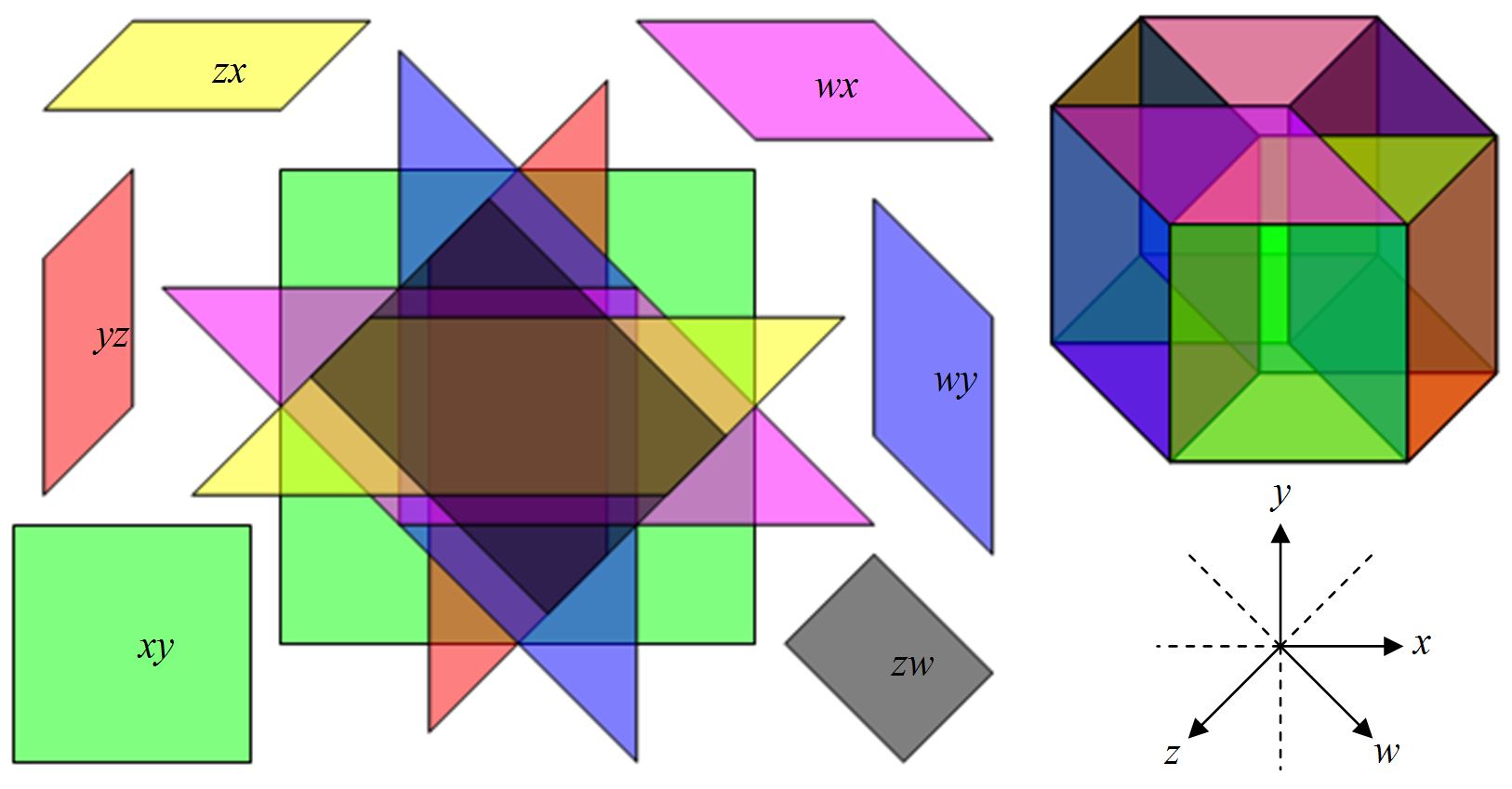
F8

As long as we’re talking about pictures, I may as well include one with a tesseract and a half-dozen planes intersecting in four-dimensional space. If anything else, it may help to make Word’s picture compression seem somewhat less complicated. 🙂

Authors of eBooks have the opposite problem. With eBooks, what counts is the number of pixels along the width and height. In this case, there is a premium on compressing the images in order to minimize the file size of the eBook. To compress the pictures in Word 2010, right-click a picture, go to the Format tab (that appears when a picture is selected), click Compress Pictures, choose 96 DPI (KDP’s recommendation for most eBooks), and uncheck the box that says, “Only to this picture.”

For eBooks, after inserting an image into Word, right-click the image, choose Size and Position, go to the Size tab (in the pop-up window), and set both the width and height to 100% scaling (Word automatically scales images down to a lower percentage when they would otherwise exceed the margin width).

May your pictures come out picture-perfect! 🙂

Copyright (c) Chris McMullen, Author of the Improve Your Math Fluency series of workbooks and self-publishing guides

An Effective Blurb: The Challenge of Writing Just a Few Words

Authors love to write. If you love to jog, running a marathon is easy. If you love to sew, knitting a blanket is fun. If you love to write, completing a novel is a breeze.

Typing tens of thousands of words comes very naturally to writers.

Writing very many words is easy. Writing just a few words is the real challenge.

That is, if you want a small number of words to be effective.

The greatest condensation challenge comes when the self-published author completes the book and must prepare the blurb. Most writers incorrectly view this as having to summarize tens of thousands of words with just a hundred words or so.

But the blurb shouldn’t be a synopsis. The function of the blurb is to entice readers to read the book.

The blurb has the best chance of persuading readers to look inside when it accomplishes the following:

  • Immediately captures the interest of the reader; it has to have a great start.
  • Engages the interest of the reader throughout; every sentence – phrase even – must intrigue the reader.
  • Sends the same message about the genre and content as the title and cover. Buyers want to know exactly what they’re getting; when they see mixed messages, they search for a different book. A target audience mismatch is a related problem: If the title and cover sound like adult romance, but the blurb sounds like teen romance, for example, the readers who are attracted to the book probably won’t buy it.
  • Arouses the reader’s curiosity. Don’t give too much information away; leave questions (implied or explicit) that require the reader to buy the book in order to find the answers.
  • Is well-written. If a hundred words or so have spelling, punctuation, grammar, and other writing mistakes, it doesn’t bode well for tens of thousands of words being well-written. Any mistakes in this short writing sample are deal-breakers.
  • Presents the information concisely. Longer blurbs are less likely to hold the reader’s interest. Bored readers don’t buy books. The longer the reader has to decide about the book, the more likely the reader will find a reason not to look inside. This is especially true in fiction. In nonfiction, there may be some books that have valuable content or features where a longer blurb may help sell the book. However, even in nonfiction, the general rule is that a shorter blurb is better.
  • Provides a clear description. Confused shoppers don’t buy books. Too many characters appearing out of the blue, information that seems ambiguous, words or phrases that don’t make sense to the readers, or anything that isn’t crystal clear to the vast majority of the target audience – these things are likely to blow the sale.
  • Creates an accurate expectation. Readers who are successfully enticed to make the purchase will return the book or provide a bad review if the book fails to live up to unrealistic expectations.
  • Looks appealing. Use block style with linespaces between paragraphs. Nonfiction blurbs that have multiple points to make can use bullets. Such formatting can be done through AuthorCentral.

That’s a tall order! A blurb, which must be short to be effective, has so much to accomplish. It’s quite a challenge to make a small number of words achieve so much.

Yet writing an effective blurb is very important. It can make the difference between very few or very many prospective customers looking inside.

There are three more challenges that fiction authors face when writing the blurb:

  • They tend to write summaries instead of blurbs.
  • They know the story, but often have trouble reading their description from the perspective of a reader who hasn’t read the book.
  • They are often partial to some information in the book which really doesn’t belong in the blurb (for a similar reason, there is often an extra out-of-place object on the cover).

Authors should place their focus elsewhere:

  • What are the main aspects of the book that make it very interesting? Stuff that doesn’t make it sound interesting shouldn’t be in the blurb.
  • What do members of the target audience who haven’t read the book think of the blurb? Feedback is very important. The most effective blurbs often undergo several major revisions.

Look back at the top of this blog article and you’ll see that it started with a few short paragraphs with space between them. When you first see the article, you only see the beginning of it, which – like a blurb – must catch and hold your attention. Evidently, it worked for you, since you reached the end. 🙂

Chris McMullen, self-published author of A Detailed Guide to Self-Publishing with Amazon and Other Online Booksellers (Volume 2 coming in mid-April)

Karma for Authors Who Self-Publish

In order to be successful, a self-published author must come up with a good book idea, develop a fine story, write well, edit the manuscript, learn how to format both a paperback and an eBook, and become adept at marketing.

That’s a tall order. Why risk all of that hard work with any possible bad karma?

If you don’t believe in karma, then don’t think karma – think branding. The image that you brand as an author can have a significant impact on sales. Don’t risk bad book karma or negative branding – whatever you prefer to call it.

What do you hope for as an author?

  • Many sales.
  • Frequent reviews.
  • Word-of-mouth referrals.
  • A nice review average.
  • Good and fair comments about your work publicly.
  • Necessary criticism privately.

Authors may not all share the exact same wish list, but these items are probably pretty high up on most writers’ lists.

Now assess your book karma:

Part 1 – You as a reader:

  • How often do you read self-published books (that you discovered yourself)?
  • Do you leave good reviews for books (written by complete strangers) that you like?
  • Which books (written by complete strangers) have you referred to friends, family, acquaintances, or colleagues?
  • What have you done that might help an author you don’t know whose book you enjoyed?
  • Have you ever (publicly) said anything bad about any other self-published books?
  • Have you ever (publicly) said anything bad about self-publishing? eBooks? Amazon? Kindle?
  • What do you say when people you know ask you about buying eBooks, whether you like your Kindle, if self-publishing is a good idea, etc.?

Part 2 – You as a writer:

  • Did you take the time to perfect the editing and formatting of your books?
  • How do you react when you receive criticism about your work (privately or publicly)?
  • Do you ever respond negatively to customer reviews?
  • In what ways have you helped other aspiring authors improve their own work?
  • Have you ever abused the customer review system, tags, likes, etc.?
  • How do you behave at online discussion forums and your other online activities?

Chris McMullen, self-published author of A Detailed Guide to Self-Publishing with Amazon and Other Online Booksellers (Volume 2 coming in mid-April)

A Negative Indie Image?

What do you perceive is the general image of indie authors? Good? Bad? Ugly?

There is certainly some loud criticism:

  • Some nefarious websites have developed large followings by criticizing indie cover art.
  • Publishers and authors (including indies!) disparage a growing “slush pile” of self-published books that lack editing, formatting, or well thought-out storylines.
  • The reputation of free-promo books is on the decline.
  • People are speaking out against shorter and shorter eBooks, including those that are just the first chapter of a book.
  • Then there are the infamous authors who have abused the system with fake reviews. Who hasn’t heard about this?

Loud voices do carry much weight. The complainers are marketing a bad image for indie authors.

There are easily a million indie authors out there. They have many friends and family. Almost everybody knows an indie author, or at the very least knows someone who does.

Complaints and disparaging remarks affect all indies. The reputation of self-publishing affects the sales of all self-published books. The reputation of eBooks, in general, affects the sales of all eBooks.

The more people blast eBooks, the more customers won’t want to purchase eReaders, which affects all eBook authors – including traditional publishers that make eBooks.

Yet there are many authors, editors, and publishers out there contributing to the negative image of eBooks. Every time they refer to the “slush pile,” disparage free-promo books, or remind us of past review abuse, it affects the image of eBooks in general, which affects everybody’s sales.

Even some indie authors participate in the complaining. All of the work these authors do to market their own books is negated by the advertising that they do to bring down the image of indie authors.

Indie authors are not powerless. There are things that every indie author can do to help restore our image. I’m not saying that we should just call an “orange” and “apple” to change the image. Part of the solution has to do with marketing, but part also has to do with product. Yet every indie author can impact both – creating a positive perception through both marketing and product improvement.

Here are some ways that all indie authors can help to improve our image:

  • Don’t disparage other indie authors or indie works. Every time you do this, you contribute to the problem. It doesn’t just affect those at the bottom; it affects everyone.
  • Don’t complain about the slush pile, free-promo books, or review abuse. When you mention things that create a negative connotation in people’s minds, it reinforces a negative image.
  • Strive to paint a positive picture for indies, rather than a negative image, when you discuss self-publishing with others in person, in your blogs, in community discussion forums, etc.
  • Bring attention to great indie covers, great indie books, and indie success stories. Anything positive you can say about indies goes a long way to establishing our overall credibility.
  • Don’t give good reviews to lousy indie books. Do give good reviews to good indie books. Be careful what you say in any bad reviews of lousy indie books – or at least the way you say it.
  • When you hear someone disparage indies, refer to the slush pile, etc., make a quick, positive, tactful, “Actually…” comment. Don’t get in a debate, don’t sound defensive, keep it short.
  • When your friends and acquaintances self-publish, give them honest feedback and help them improve their covers, blurbs, Look Inside, storyline, and writing (e.g. suggest finding an editor).
  • Do your best to perfect the covers, editing, formatting, and storylines of your own books.
  • Highlight quality indie books in your blogs and on your websites.
  • Once you have achieved mild success, occasionally lend a hand to help a newbie start out on the right foot and avoid some common mistakes.
  • When someone asks you, “Don’t you hate the effect that all of those lousy self-published books have on your image,” politely and quickly refute this without sounding defensive.
  • Take a moment to think of things that you like about being an indie author, and about other indie authors. This will help you focus on painting a positive perception.
  • Think about some good indie books that you’ve read and what you enjoyed about them. These ideas may come in handy in your interactions with others.
  • Recommend quality indie books to others.
  • When you’ve gained ample experience and have become a formatting expert, offer some advice or instruction to newbies.

With a million or more indie authors, there is potential power in numbers. If we want to improve the indie image, we need only make a few changes in what we do and encourage a few friends to do the same.

To those of you who are already doing these things, you have earned my sincere appreciation. J

Who holds the mightier pen – the critics or the authors?

Chris McMullen, self-published author of A Detailed Guide to Self-Publishing with Amazon and Other Online Booksellers

What’s the Deal with Mannequin Covers?

A growing number of indie covers are featuring mannequins. Is this good or bad?

It’s a challenge to design a great cover. Indie authors don’t have the luxury of a cover design team or much money to invest in professional help, yet covers can be very important for the success of a book. Thus, many authors who are inexperienced artists are suddenly faced with the task of putting a great image together for the thumbnail and front cover.

This is no easy task, and the cover art critics are fierce:

  • Anything hand-drawn is deemed fit for a refrigerator, but not for a book.
  • Any photo in the foreground of a nice background is deemed a photobomber.
  • Highly detailed artwork is said to make the cover too busy.
  • Deformities in fingers, hands, limbs, or faces are ridiculed.
  • When the aspect ratio is tweaked slightly to fit the cover, it’s cursed for distortion.
  • If a person happens to strike an odd pose, even this is pointed out.
  • The photos must be cleaned up and professional, else the technique will be criticized.
  • Indie authors are supposed to know to use just three colors in a ratio of 60-30-10.
  • Colors must work well together, with the title large and easy to read.
  • You also need to watch out for the font police, who can be very picky.
  • But if the images don’t relate to the content, that’s a serious violation.

Drawings pose an instant problem. Taking your own photos requires professional skill. There are many stock photos available, but not always in the pose or colors that you want. To top this off, you must find images that signify the genre and relate to the content.

So what’s the solution? Maybe this is why more indies are featuring mannequins on their covers. It’s much easier to manipulate a mannequin with a graphic arts program. They are easy to adjust, clothe, maneuver, touch up, and preserve proper shape and size. Some of these mannequin covers are very well done, so much so that I didn’t realize that they were mannequins at first.

But now I see the cover art critics blasting indie covers that feature mannequins. For example, are there mannequins on the cover because it’s a romance between mannequins?

I actually hired an illustrator to design a cover for an upcoming fictional book, for which I was completely stumped on the cover. The result looks great, but the main image does look a little like a mannequin. I’m going to keep it, for better or for worse.

What’s your opinion? I’d love to hear your take on these mannequin covers. Is it good, is it bad? If you made it to the end of this post, please feel free to take a minute to express your opinion. Your opinion is welcome (encouraged even), and won’t likely offend me or the mannequins. 🙂

Chris McMullen, self-published author of A Detailed Guide to Self-Publishing with Amazon and Other Online Booksellers
Marketing: The 4 R’s of Branding

Repetition, Recognition, Referral, Reliance

These four R’s affect most of us every week when we buy products and services. As authors, we can apply the same branding philosophy in the marketing of our books.

(1) Repetition. Every brand of soda, detergent, television, car, and so on is constantly trying to get us to notice their name, logo, slogan, and image. We see it on television, on billboards, in magazines, and even on hats and t-shirts. The more we see it, the more we’re likely to remember it. This way, we remember brand names for products that we’ve never even tried.

You want people to remember your book and the name of the author – even if they haven’t read it yet. The more often people see your cover, read the title, hear your strapline, and see your author photo, the more likely they are to remember it. You can’t afford to invest millions of dollars in advertisements and commercials, but you can afford free. Your blog, your website, social media, articles that you write, local newspapers and television, every place your book is available for sale, every edition of your book (paperback, eBook, etc.), every book review, every person you interact with and mention your book or writing hobby – anything you do online that includes your cover, title, strapline, and/or author photo (including every little Like and Follow), improves your visibility. The more often people see and read these things, they more likely they will remember them.

Strapline – a single, short sentence used to create interest in your book (kind of like a slogan).

Your title and strapline should be short and easy to remember. Bestselling books often have three words or less for this very reason. Coke. Pepsi. Sony. Levis. The Shining. Wool. The Scarlet Letter. Short, easy to remember, easy to spell. Ideally, the author name should also be short and easy to remember and spell. Your cover and author imagery should also be easy to remember. A very busy cover, or one that doesn’t have one central image, or one that doesn’t use three main colors, or one where the title doesn’t stand out, or one that doesn’t present a unifying theme and signify the genre – such a cover isn’t as easy to remember. The title, author name, and cover are actually important marketing tools.

(2) Recognition. When we shop for a printer, golf club, or laundry detergent, we often prefer a brand that we recognize to one that we’ve never heard of – even if we’ve never used any of the products before. We may recognize the brand name, the logo, or even a catchy slogan.

The same principle applies to books. People often buy a book that they remember seeing, hearing about, or reading about, or has an author they recognize. This is why visibility of the brand of both the book and author is so important – people recognize what they remember.

Don’t change the title, cover, author name, or author image. If you use a much different cover for the paperback and eBook edition, or use a different photo for your FaceBook author page and AuthorCentral, for example, this inhibits recognition. Let all of your online activities reinforce one another with a unified approach.

Create “buzz” for your book prior to and during its release. Get people talking about your book – in person and online – and this will help them recognize it when it becomes available. In the months prior to publication, ask people for input on your cover, title, and blurb – in person and online. Spread the word about your upcoming book. Highlight positive things that will create interest in your book – like spending a year doing research or working on your third revision with an editor. Don’t be a salesman, just naturally get this into conversations. “So, what have you been up to recently?”

Interact with people personally. People recognize authors they’ve actually met. They just need to naturally discover that you’re an author, then remember your face and name plus the title and strapline for your book. Short and easy to remember and spell.

(3) Referral. If a friend or acquaintance recommends a product or service, we’re much more likely to try it. The product or service must be pretty good for it to be recommended by someone who doesn’t have a financial interest in the sales.

This applies to books, too. Word-of-mouth referrals can have a major impact on sales. For this, the book has to be very good. An amazing plot, a memorable character. Great storyline and characterization helps. It also needs to meet standards for editing and formatting; people won’t recommend a product that has obvious problems.

They’re much more apt to refer your book correctly if the title is short, easy to remember, and easy to spell; or the author if the name is easy to remember and spell; or to describe a book that has a simple, memorable cover.

(4) Reliance. People believe that Sony makes great televisions. Sony has established credibility and trust, and because of this, many people prefer to buy Sony electronics.

Readers are similarly more likely to buy products from authors who establish credibility and trust. Part of this comes from creating a highly professional cover, blurb, Look Inside, and author page. Behave professionally online; misbehaving certainly loses credibility. Your author photo, biography, and behavior should give the appearance of a knowledgeable, competent, trustworthy, and credible author. Do you look and sound like someone who would write a book in this genre?

Write content for your blog, website, newspapers, or magazines (in print or online) that demonstrates your expertise. Useful information may even attract newcomers, in addition to helping build your credibility.

======================

At the bottom of your blog (and many other online activities), you can include your name and the title of one to three books. If your titles are very short, you can squeeze three into this space. As you can see below, sadly, I broke my own rule with a very long title. If you have expertise, just imagine how it would look to have your name and title show up at the bottom of an article in a high-traffic area in a magazine, newspaper, or online. Prepare an article relevant for your book and strive to get it published. You may be able to publish it locally or at a lesser traffic site, at least. It won’t go to waste because in the worst-case scenario, you can always add it to your blog.

Chris McMullen, self-published author of A Detailed Guide to Self-Publishing with Amazon and Other Online Booksellers