Promote Your Kindle Countdown Deal or Select Free Promo (or Other Book Sale)

On Sale

The writer who carves a masterpiece out of words and publishes the book faces a new challenge:

  • how to help the target audience discover the book

As there are millions of books to choose from, this is no easy task.

One way to try to help stimulate sales is to put the book on a temporary sale, e.g. through Kindle Direct Publishing (KDP).

  • Amazon has a new Countdown Deal available for books enrolled in KDP Select. This allows for a temporary reduction in price and shows customers how much they are saving and when the sale ends.
  • The older KDP Select free promo option is another alternative. (Note that you can’t mix and match Countdown Deals and free promos for the same book in a given 90-day enrollment period.)
  • Books that aren’t enrolled in KDP Select can still have a temporary price reduction by simply republishing at the new list price.

Everyone likes a sale. It’s great to save money.

But there’s a catch: The sale won’t attract buyers if customers don’t know about the sale.

You still have the problem of discovery. Just putting your book on sale through a Kindle Countdown Deal, KDP Select free promo, or other temporary price reduction isn’t enough:

  • A temporary sale, all by itself, probably won’t help much with getting your book discovered.

Nevertheless, a temporary price reduction can be effective if you succeed in spreading news about the sale:

  • Instead of just promoting your book, promoting that your book is temporarily on sale may generate more interest. That is, it can help make your marketing more effective.
  • Any promotions that you do to spread the news about your sale may be amplified by people in your target audience who become interested in your book.
  • If people develop interest in your book, the looming deadline may help to generate sales.
  • Sales that you may generate as a result of placing your book on sale can help improve your book’s visibility through sales rank, customers-also-bought associations, and customer reviews.

(Note that KDP Select free promos generate a free rank instead of a paid rank, but any subsequent sales once the free promo ends will help boost the paid rank.)

It all comes down to getting your book’s sale discovered by your target audience.

The usual marketing strategies—blogging, Twitter, Facebook, press release, building buzz, interacting with your target audience, readings, guest blogs, etc.—can help with discoverability. Instead of just promoting your book, you’ll be promoting the temporary sale of your book, which may help to generate more interest than your usual marketing.

Also, if you’ve been branding an image, prospective buyers who may have been considering your book might be sold when they see that your book is now on sale.

However, you probably want to use this golden opportunity to try and go beyond your usual marketing reach. For example, you might want to consider if a low-cost advertisement may be cost-effective.

Don’t focus solely on projections for how many people may view your advertisement. It’s also important to consider:

  • What fraction of the people who view your advertisement are in your specific target audience? They are more likely to make the purchase, appreciate your book, and leave a review.
  • How marketable is your book? Will the cover and blurb make the genre clear and appeal to your specific target audience?

If you have a highly marketable book in terms of both packaging and content—i.e. it will both attract and please a significant target audience—then it may be worth advertising at a site that can show your advertisement to your specific target audience.

One popular site is BookBub, but there are other options, like Ereader News Today, Kindle Books & Tips, Book Gorilla, Book Blast, and Pixel of Ink. You want to learn about stats to help you with your decision. For example, the BookBub pricing page provides data for subscribers by genre, average downloads, and average sales. There are also sites to help you promote seasonal events. For example, check out Read Tuesday, designed to help stimulate holiday sales.

With a Kindle Countdown Deal or temporary price reduction, you earn royalties during the sale. Your hope is that these immediate sales and a possible increase in sales following the sale will recover your investment and then some, but as with any investment, there is always a risk.

In contrast, a KDP Select free promo doesn’t yield any royalties during the sale. Here, the hope is that if you succeed in creating interest for your book during the promo, then enough people will read the book (only a percentage who download it for free will eventually read it, and some will be from outside your target audience) and recommend it to others. That’s a big IF, and it doesn’t always work out that way. A successful free promo can lead to a significant improvement in sales, but not necessarily (it was more common in the early days of KDP Select, but still happens now; a highly marketable book and an effective promotion improve your chances).

A nice feature of the new Kindle Countdown deal is that any sales made during your promotion improve your paid sales rank, whereas your sales rank slides during a KDP Select free promo.

Publishing Resources

I started this blog to provide free help with writing, publishing, and marketing. You can find many free articles on publishing and marketing by clicking one of the following links:

Chris McMullen, Author of A Detailed Guide to Self-Publishing with Amazon and Other Online Booksellers

Follow me at WordPress, find my author page on Facebook, or connect with me through Twitter.


The Publicity Paradox

Double Edged

Do you remember the days when you first applied for a job? Scouring the want ads, preparing resumes and cover letters, going to job interviews.

It seemed like everybody wanted you to have experience. The only problem was that you didn’t have any. You may have thought, “How will I ever get experience if I need experience just to get hired?”

Publicity suffers from a similar seeming paradox: You may feel that publishers, agents, publicists, editors, bookstores, reviewers, and even the media want you to have publicity before they will help you get more publicity. That’s great if you’re a celebrity.

Breaking through as a new author is a challenge. You’re an unknown. There are too many uncertainties. How will people react to your storytelling, characterization, and writing? How good is your idea? How will you handle the pressure? How effectively will your market your book? How well will you follow through with your commitments? How much help do you need? How professional or amateurish are you? How much do you need to learn about writing, editing, formatting, marketing, publicizing, social media, and making connections? And most importantly, how will you go from being a nobody to becoming an author with much publicity? Ah, if you only had that publicity (among your target audience) to begin with, that would help to make the risk so much more worthwhile.

How do you get publicity when you don’t have it to begin with?

If you had publicity, it would lend you credibility as an author; it would lend your book credibility, too.

If you credibility, it would help you gain publicity.

If you could lay an egg, you could make a chicken out of it.

If you could make a chicken, it could lay an egg for you.

It’s like you’re on a deserted island with no chickens or eggs, but you desperately need one or the other.

Baaak! Baak, baak, baaak!

I see a similar hurdle for Read Tuesday, a Black Friday type of event just for books.

If we had authors with more name recognition, it would greatly improve the publicity that we could receive from the media, internal promotions, paid advertisements, etc.

If we had more publicity, it would help us attract authors with greater name recognition.

However, Read Tuesday has a big advantage. There are many indie authors who are experiencing the challenges of marketing their books firsthand who have been very supportive of the Read Tuesday event. This has helped to give Read Tuesday much initial support, and we are fortunate to have the participation of some authors who have achieved some modest levels of success (e.g. top books in their categories at one time, or ranking at around a thousand on Amazon for a limited time in paid sales). We also have a couple of small publishers who will be participating.

(We are fortunate to have every author who has agreed to participate, no matter how big or small—everybody is vital to our success, all participation is valuable, and each author is much appreciated. I wish for every author to have a successful Read Tuesday.)

Read Tuesday also has something to offer. An author with name recognition could gain increased exposure from the Read Tuesday promotional efforts, as the Read Tuesday publicity and promotions would feature this author’s name.

On the other hand, would the author who has risen to the top want to come back down and play with the small fish? Would he or she remember his or her roots? Would he or she support his or her fellow indie authors? Surely, it’s much easier to say what you would do if you get there than it is to do it when you’re sitting at the top.

The thing is, all indies have the same advantage that Read Tuesday has. There is a very large readership that supports indie authors. Why? Because there are hundreds of thousands of indie authors and hundreds of indie publishers, and their friends, family members, acquaintances, and coworkers raise this number to the millions.

Although some people try to paint a poor image of self-publishing, there are millions of people who support it. “This book was published with CreateSpace, was it? My niece published a book through them.” The books that have serious issues aren’t hurting anyone, while the large number of very good indie books and the growing number of successful indie authors show that indie publishing has much potential.

Ultimately, what the reader wants is a professional book. Whether or not the book is traditionally or indie published is secondary. A book that looks professional, pleases the target audience, and is discovered by the target audience can gain much support.

Read Tuesday also has the opportunity to help indie authors promote their own books. The event itself is far more popular than any single participating author. By promoting Read Tuesday in addition to the author’s own book, Read Tuesday has the potential to help authors market their books.

It can be a win-win situation for any author, tiny name or big name. Every author’s participation helps to improve the credibility and success of the event, and the event can help any author promote his or her own book in conjunction with the event.

Back to the publicity paradox. What you have to do to break out of the paradox is start small, work hard, be wise, be patient, market effectively and diligently, keep writing, and spread outward.

You gradually build a following, increase your number of connections, gain a little exposure, and build a little publicity. Continue writing and you’ll have a few books out.

The better your books are from cover to cover, the more they will help you grow your following, connections, exposure, and publicity. The better your marketing efforts, the more they will help you grow your sales.

Eventually, you may achieve some small measure of credibility and publicity. Once you finally get your foot in the door, you have the chance to run with it. Once you have a little credibility, it will help you gain publicity, and once you have a little publicity (with your specific target audience), it will lend you credibility.

Chris McMullen, author of A Detailed Guide to Self-Publishing with Amazon and Other Online Booksellers, Vol. 1 (formatting/publishing) and Vol. 2 (packaging/marketing), Facebook, Twitter

Read Tuesday, Facebook, Twitter

Build an Effective Author Website + Press Release (2-in-1 Post)

Free author resources at the Build Book Buzz website: http://www.buildbookbuzz.com.

Today I will show you a highly instructive example of how to build an effective author website. It’s actually the website for a former publicist, so it’s no surprise that the website excels at attracting the target audience.

We can learn a lot about how to attract our own traffic by studying the many cool features on this website. Also, there is an abundance of free content on this website, like how to prepare and distribute a press release to create book publicity.

In this way, we’ll learn two things at once:

  • how to attract your target audience through a website
  • how to prepare and distribute a press release

The website is called Build Book Buzz. This is the website that former publicist Sandra Beckwith uses to attract her target audience—authors who need help with book publicity (both traditionally published and indies). She no longer provides book publicity services to authors, but now helps many authors save thousands of $$ by teaching them how to do it themselves.

I will describe various features of her website, showing how they help to attract her target audience. This will be instructive if you check these features out as I describe them. Try to think of ways that you might be able to utilize similar features to attract your target audience.

Here is the link to her website: http://buildbookbuzz.com. Check it out.

Tip #1: The website name is geared toward the content, not the author. You know what the content is about instantly.

Tip #2: The homepage identifies the target audience and attracts their interest immediately. Notice how the website doesn’t mention who is offering this content (i.e. you don’t learn that it’s a former publicist’s website or who the former publicist is) until further down the page.

Tip #3: Nothing is for sale on the homepage. The homepage is geared around free content relevant for the target audience. It doesn’t look like an advertisement for a book, it doesn’t look like a fan page or biographical record, and it doesn’t look like a blog. Valuable free content that will interest the target audience is what will attract your audience to your website.

Sandra does have books and services that she sells, but none of these appear on her homepage. Think about this.

Tip #4: Visual branding. Study the images. The images aren’t the same, but most follow a similar blue, yellow/gold, and white theme, and feature a picture (not always the same) of an open book. Making the images slightly different helps you see that it’s not the same image, so you don’t ignore it. Having them all uniformly styled helps with the visual branding, and shows you that you’re clearly on the same website. Notice that they follow the three-color rule. The cover images look 3D, which helps to make a good visual impression. The information in the booklets is clear from the keywords that stand out in the title.

Tip #5: The homepage offers a free booklet. The content will interest the target audience. The offer appears first at the top to attract interest, and is repeated at the bottom so if you’re sold when you get there, you don’t have to scroll back up to the top.

Tip #6: The free booklet offer is a clever way to build an audience for an email newsletter. This helps to populate an email newsletter database (note that you must provide an unsubscribe option).

This is worth considering:

  • How do you get an audience for a newsletter? Offer a free booklet to sign up.
  • How do you get your target audience in the email list? Make a booklet that has content relevant for your target audience.
  • How do you get your audience to discover your booklet? As part of a content-rich website geared toward your target audience.

Tip #7: I recommend signing up for the email newsletter. (I did.) Why? Two reasons:

  • The emails you receive will provide a sample of how to use an email newsletter effectively. Although your content will be much different, there is much to learn here.
  • If you have a book that you’re trying to market, this content is relevant to you.

Tip #8: The website is easy to read. There isn’t a busy, distracting background. There is effective use of color with the text.

Tip #9: Free content. See the Tips page (each page can be found by clicking on the index at the top of the website). There are a variety of free PDF files of interest to the target audience. It’s a content-rich website, and much of it is free. This attracts the target audience.

Tip #10: Check out the PDF files on the Tips page. I highly recommend these in particular:

  • See the tips for writing a press release (book announcement). These are invaluable. A press release is critical for news publicity, and has a specific formula for its preparation.
  • Also see the tips for writing a tip sheet. Like the press release, this is something you need to help create news for your book.

The other tips on the Tips page are also worth exploring.

Tip #11: There is a blog on this website, but it really functions primarily as an author website, and the blog is just one of many components; it’s definitely not a website that was built around a blog. The blog, like the rest of the website, is content rich and free. You can probably find a lot of valuable information here.

Tip #12: Let’s jump ahead to the Press Room page. When you prepare the press release for the news about the publication of your book (if you haven’t already done so, you want to do this), you should add a Press Room page to your website.

Study the two press release examples on this page. They show you how to structure and format a press release. When you study the tips for how to write a press release, you should also re-read these two examples. This page also shows you how to format a Press Room page.

Tip #13: Check out Sandra Beckwith’s e-book, Get Your Book in the News. This is a detailed guide that spells out the formula for how to prepare a press release. I bought a copy, read it, and relied heavily upon it to write my press release for Read Tuesday. I recommend it.

Tip #14: Finally, check out the other pages. There are a couple of books and services offered that aren’t free. Note that there is an abundance of free content, but also some paid content. The paid content is different from the free content. Also, the free content is complete. It’s not a free sample; it’s free content.

There is ample free content, so you don’t feel disappointed or frustrated. If you don’t buy anything, you still feel that the website was highly useful.

The free content is very good. This gives you the sense of trust that you need before moving onto the paid content. The taste of the free content makes you consider the paid content. Note that the paid content also has a satisfaction guarantee.

I recommend that you take advantage of the free content on the Build Book Buzz website. There are a lot of valuable, yet free, resources there.

I was not asked to write this post. I was not asked to promote the Build Book Buzz website or any of its goods or services. I discovered this website, found much of the material useful, and thought it would be handy to share it. I did contact Sandra Beckwith to let her know that I would be writing this post.

I hope you found something useful. 🙂

Sandra Beckwith is a former national award-winning publicist who now teaches authors how to promote and publicize their books. Get free tips and subscribe to her complimentary Build Book Buzz e-zine at http://buildbookbuzz.com. Connect with her on Twitter, Google+, LinkedIn, and Facebook.

Chris McMullen, author of A Detailed Guide to Self-Publishing with Amazon and Other Online Booksellers, Vol. 1 (formatting/publishing) and Vol. 2 (packaging/marketing), Twitter, Facebook

Learn more about Read Tuesday, a Black Friday type of event just for books: website, Twitter, Facebook

Read Tuesday would Love Your Help

It’s going to be huge.

What is Read Tuesday? It’s a Black Friday type of event just for books. In 2013, it will be Tuesday, December 10, 2013.

We’re off to a good start:

  • We have an official website up and running, with content.
  • We have a healthy start in terms of followers, especially the Facebook page and Twitter.
  • We have several authors who’ve shown interest and agreed to participate.
  • We have a press release and we’re now at the stage where we will distribute it.
  • We have been advertising on various websites to let both authors and readers know about the event.

Read Tuesday could use your help. If you can help with one or more of the following, your help will be greatly appreciated:

  • We’re looking for any name recognition that may help to promote the event. We have a little to begin with; the more we can get, the better. Any authors (or even indie publishers or booksellers), for example, who have achieved some small measure of success who may be willing to participate in Read Tuesday could help to promote the event as a whole. It’s a win-win situation, as we would include your name with our press release, press release distribution, and other efforts to promote the event (including paid advertisements and social media). This would help to advertise the authors (or entities) who have a little name recognition in addition to advertising the event. This will help to promote these authors along with the event. If you know anyone with mild success, please let them know about this offer. They can contact Chris McMullen at the email in the next bullet.
  • We can always use more participation, especially books and authors added to the catalog. We’ve had many more authors say they will participate than have taken the time to add their books or names to the catalogs. I expect they will be promoting their books on December 10 and participating. It would help the event be better if we could get more books and names in the catalogs. Simply email your ASIN (for a Kindle book that will participate) or a link to your book at a website where it will be on sale to Chris McMullen at greekphysics@yahoo.com. It’s that easy.
  • Tell a friend, or several friends; tell anyone. If you like the idea of Read Tuesday, you can help make it better just by helping to spread the word. Word of mouth, email, blog, Facebook, Twitter, any way you might spread the word will be valued. 🙂

Give the gift of reading this holiday season.

Chris McMullen, founder of Read Tuesday

Follow the Read Tuesday blog: http://readtuesday.com

Like the Read Tuesday Facebook page: https://www.facebook.com/ReadTuesday

Follow Read Tuesday at Twitter (@ReadTuesday): https://twitter.com/ReadTuesday

How to Create Book Publicity

Undies

That’s one-half of what you need: publicity. The other half is having a marketable product. With this post, I’ll focus on the publicity side.

How do you get your book discovered when there are millions to choose from?

That’s the million-dollar question, and every author is trying to answer it with two cents. 🙂

Too many authors are hoping for instant publicity, or at least to have someone else create the publicity for them. Shortcuts are hard to come by and even if you do hit the lottery, this kind of short-term publicity often doesn’t bring the success that you’re hoping for.

Let me illustrate this with a specific example:

Indies in their Undies

Just imagine a dozen sexy indies promoting an event called “Indies in their Undies.” Maybe they’re wearing Victoria’s Secret undies. They’re going to do a supermodel sort of walk onto a catwalk, wearing just their sexy undies and each holding up one book during the process.

(You’re ready to sign up, aren’t you?)

Sure, this could get a lot of publicity. But it’s not going to be a magnet for publicity.

If you just go out and do this, do you think the news van is going to happen to pass by, see a group of people walking around in undies holding up books, film it, and show it on the six o’clock news?

No. You have the same problem as getting a great novel discovered. Even though it’s a newsworthy idea, it doesn’t just make the news. You have to go to the media. The media isn’t coming to you.

To make this work, you need to know how to generate publicity for the event.

You see, most authors think this through backwards. Authors intuitively think that if they do something that would intrigue the public, that this will generate publicity for them.

But that’s not how it works.

You do need something that’s newsworthy. Heck, that could just be the release of your book. Whatever the news is, what you really need to do is publicize the news. The news itself isn’t going to get you publicity all by itself.

So if you wanted to make an idea like “Indies in their Undies” work, here’s what you would really need to do:

  • Build credibility for the event.
  • Create buzz for the event.
  • Prepare a press release.
  • Distribute the press release to the media.

This will help to get you media coverage. Media can be a professional cameraman for a major newstation, a reporter for a local newspaper, or a blogger with a popular podcast watching from your laptop camera.

Regardless of the form that media takes, you need to prepare a press release and distribute it to the media. That’s the only way you’re going to get the media to help you spread the news (apart from happening to have a personal connection with someone in the media).

If you have something newsworthy, this is a way to go beyond your blog and social media platform to reach new members in your target audience—i.e. if you can get some form of media to help you publicize your news.

Again, your news could just be the release of your book. It doesn’t have to be some wild scheme like “Indies in their Undies.”

Let’s look at another problem with “Indies in their Undies.”

Target Audience

Who’s going to show up for this event? This is very important.

If the news spreads, but the vast majority of people who see, read, or hear the news aren’t in your book’s specific target audience, all this publicity (if you can get it) won’t translate into near the sales that you’re looking for.

How about the few people who watch “Indies in their Undies” who happen to be in your target audience? Do you think they’re going to take you seriously as an author? Do you think they’re interested in your book when they watch this? (Unless maybe your book is an around-the-world photo shoot of sexy writers in their undies.)

If you want your publicity to be effective, keep these things in mind:

  • Strive to gain publicity with your specific target audience.
  • Strive to be seen as a professional. If the media views you as an amateur, it will deter their interest in you. If your audience views you as an amateur, this will also deter sales.
  • Strive to get positive publicity for your book and yourself. Negative publicity isn’t a recipe for long-term success for the vast majority of authors.

What Would Be Better?

The problem isn’t creating news. You already have that. You wrote and published a book. That can be newsworthy.

What you’d really like to do is use this to help generate publicity: an article, a review, an interview, a podcast, etc. You want some entity (or several entities) with a large circulation, viewership, readership, or following to learn about your news and help spread it to your target audience.

Here is what you need to do this:

  • Create a marketable book from cover to cover. Ultimately, it’s the perception of professionalism versus amateurish that really counts. Why spread the news about something that seems amateurish (not just the cover; your entire presentation will be scrutinized, and the book, too).
  • Build credibility. Experience and qualifications are highly relevant. The more you look like the perfect fit to write the book you wrote, the more you’ll be taken seriously.
  • Be factual. If you get a job as a journalist, you’ll learn to think this way: Can this statement be verified? When the media looks at your cover letter and press release, they’re looking for anything that may be false, and anything that can’t be easily fact-checked (e.g. “better than Harry Potter”). Spend time studying how journalists write and try to think like a journalist when you prepare materials that you will submit to the media.
  • Learn how to prepare and distribute a press release. There is a specific formula to follow if you want to look professional, and you do. You want to research this formula. (I’ll provide a reference to one such formula in a coming post. It’s not my own formula, so I won’t post it on my blog, but I will help direct you to it. Sorry, you have to wait a couple days, or use a search engine to find one such formula.) In addition to the formula, you’ll want to learn how to distribute your press release to the media.

Remember, media doesn’t have to be the Times or the eight o’clock news. Bloggers are in the media, too, and some have very large followings or widely spread email newsletters.

Indies may find media coverage more challenging, though it isn’t easy for a new author who is traditionally published, either. But it’s not a dead end. In addition to the explanation that follows, see the note at the end of this post.

It’s kind of like bookstores. As an indie, you’re going to find widespread distribution with national chains nearly impossible, but small local bookstores and non-bookstores that happen to sell books tend to be more receptive. The more professional you come across and the more marketable and professional your book, the better your chances. That’s how some indies are getting stocked in big bookstores, maybe not nationally, but on a store-by-store basis in their own regions.

Similarly, the more professional you come across in your press release, cover letter, and presentation and the more marketable and professional your book appears (and qualifications and experience factor into this, too), the better your chances of getting media coverage.

Start small and work your way upward. This gives you experience and confidence as you approach the Big Boys and Girls.

Small local papers often have inches to fill. A small local radio station may have minutes available. You’re local. You have news. It may be a good fit. Check it out, but approach it professionally.

Media that coincides with your target audience may be a good fit. Explore these options.

Don’t just think television, radio, newspapers, and magazines. There are many, many online opportunities, from websites to podcasts to online magazines to bloggers and more. Getting coverage with the most visible channels will be extremely competitive. But there are so many avenues open that you can find a good fit if you have the will to find the way.

You can prepare content that attracts your target audience and the target audience of a website, for example. Instead of simply advertising or reviewing your book, this way the website has something to gain in return for giving you publicity. There are many sites with varying degrees of traffic that have a need for frequently updated content. Publishing an article is an opportunity. You can’t do it if you don’t try.

Looking beyond the release of your book, there may be something unique about you that will help you gain publicity. For example, if you’re lucky enough to be a triplet, that’s newsworthy. Think about yourself in addition to your book.

Whether your news is the release of your book or “Indies in their Undies,” you still need to build credibility, prepare a press release, and distribute it. So an idea like “Indies in their Undies” really isn’t a shortcut to publicity. Maybe it will help a lot, maybe it won’t. Either way, to get publicity for it, you still need to do all the work of publicizing it—really, you could just skip the middleman and focus on publicizing your book.

However, if you have a newsworthy event that relates to your book and would be of interest to your book’s target audience, if you’re having trouble getting media coverage of your book, you may find the media more receptive of your related news. So in this case, an event may create news that attracts the media better than your book does. “Indies in their Undies” doesn’t relate to your book and doesn’t attract the same target audience, so it’s not the best example. But if you’re struggling to get the media attention you desire for your book, another possibility is to think about how to generate news that relates to your book.

Chris McMullen, author of A Detailed Guide to Self-Publishing with Amazon and Other Online Booksellers, Vol. 1 (formatting/publishing) and Vol. 2 (packaging/marketing)

Attending a Book Fair

20131102_104248


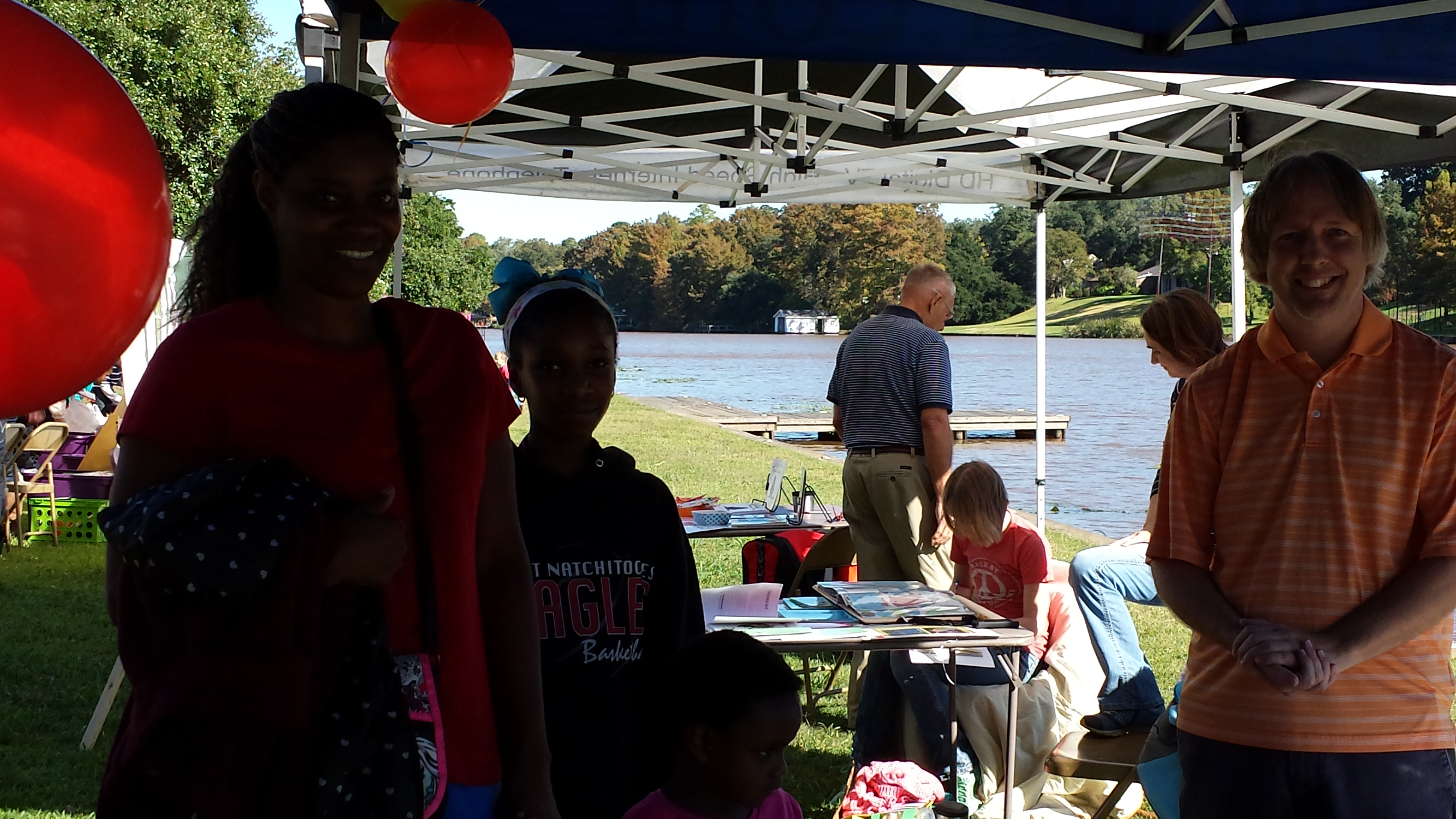
Allow me to share my own experience, while also providing a few tips for what you might do when you attend an author event.

First, let me provide a little background for the event I attended.

Reading on the River

I attended a local reading-oriented event for children today called Reading on the River. There were a couple of hundred children and their parents. They had several reading-related activities sponsored by preschools and daycare centers, a magic show on stage, and even Smokey the Bear and a D.A.R.E. lion. Authors of children’s books were also invited (even little ole me).

They had given me information and forms to fill out a few weeks ago. They set up the tent, table, chairs, and even prepared the board shown above (it was placed in front of the pole, but after it blew over from the wind, I placed it between the poles; the aesthetic problem of the pole blocking part of the sign is totally my own fault).

What to bring?

First, do a little research to learn more about the event. What will be going on? What have other authors done in the past? Who will be attending? What is attracting these people to the event? Will your target audience be in attendance? This will help you decide what to bring. Past-year average attendance numbers will also help you decide how many books to bring; too many is better than too few.

Order copies of your books well in advance. It may take a couple of weeks to print a large order. It takes more time to deliver it. Order more than you need. Plan for the possibility of needing to replace defective copies. When the order arrives, take time to go through every book. Allow for time to replace defective copies, and defective copies of those replacements. Plan for the worst-case scenario, then you won’t be in the frustrating situation of not having enough books.

In addition to books, print out nice looking informational sheets. These should include your name, your books, pictures of your covers, blurbs for your books, quotes from any editorial reviews that you have permission to use this way, where to find your books (give simple, easy-to-type url’s), the url for your author page, your blog, your website, and your Facebook and Twitter pages, for example. The sheet should visually look impressive and the text and imagery should get your target audience interested in your book.

Tip: On the profile page at AuthorCentral, use the feature to create a simple url for your author page (probably, just your name at the end of it). It will take about half an hour for this to go live. Visit the link to ensure that it works, then copy and paste this into your promotional materials. This will be much easier for people to type than the url you see at Amazon. Note that you can only create one special url like this, so choose wisely. For example, mine is http://amazon.com/author/chrismcmullen (but yours won’t be this way by default; you must create this url from your profile tab).

If you have a promotion going on they day of the event and the day after, highlight this on your informational sheet; or you can include a CreateSpace or Smashwords discount code, for example (but note that some people will prefer to buy from Amazon or Barnes & Noble, for example; if you restrict yourself to one option, you’ll lose some sales).

A bookmark that looks appealing is a great promotional tool. If it looks like a bookmark you’d pay money for, but mentions your name and book and any other pertinent information, it will likely get used, which means your name and book will be seen frequently. If it looks like an advertisement in the shape of a bookmark, it’s less likely to be used. This may be more valuable than a business card, although you should have these, too, since they easily fit inside a wallet or pocket.

Prepare a portfolio. Do you have handwritten notes or hand-drawn sketches from when you were developing characters, working out elements of your plot, or choosing names, for example? These would be cool to include in your portfolio. How about a printed page showing several editing notes? Include your final cover, and perhaps a draft or two of your cover showing how it evolved. Your portfolio will be a handy conversation piece to get people interested in talking to you about your book. It will also help convey how much hard work went into preparing your book.

Think about how to decorate your table or booth with objects that relate to your book. Browse images of book fairs, readings, and signings online and you may get some good ideas to help inspire your own creative design. Small household objects that inspire your writing may be relevant; or souvenirs that relate to your genre (but be sure you don’t mind it getting handled, and there is the possibility of items wandering off). If you know someone who is into arts and crafts, they may be willing to help you decorate your booth or table.

If the venue is outdoors, prepare for possible weather issues. Remember, wind can be very important, too, not just rain or snow. Bring a water bottle and multiple writing utensils.

What else?

It may help to prepare a related activity. Since the event I attended was promoting literacy to children, I brought a large stack of Halloween word scrambles from one page of my latest word scramble book and passed these out. A few of the kids asked me for a pencil (I’m glad that I brought several, just in case) and worked on these at my table. They really got into it. A few of the younger kids needed a couple of hints. They really seemed to enjoy receiving a hint so they could still figure it out on their own.

In addition to interacting with people, passing out materials to your target audience, and perhaps selling some books (ask for their names and then sign the books), there are a few other things you should do. Interact with your fellow authors and exchange business cards with them. It’s important to build local connections and support groups. Meeting other authors in person is a cool experience, too. Also, get photos of the event to display on your blog and author page, especially a photo of you interacting with people in your booth at a busy event.

The most popular person in the author section at Reading at the River was an illustrator, Annabel Jones (check out the illustrations and fine art on her website). She had a portfolio of illustrations that she’d made for books. Annabel is an art instructor and artist. She’s made illustrations for authors who are submitting to publishers and she has an e-book. She had her artist tools with her and was creating watercolor caricatures of children for many parents (I got one, too).

One little girl fell in love with one of my books so I let her keep it. I gave a couple of more books away at the end of the event. I passed out several word scramble sheets. I didn’t sell anything (the spirit of this event was to promote reading and literacy), but several children and parents did browse through my books. If I attend in future years, I plan to bring several more books for younger children and give them away, too. There was a book zone where every child could receive a free book or two. Kids received stickers for engaging in activities, then traded the stickers in for books at the book zone.

Chris McMullen, author of A Detailed Guide to Self-Publishing with Amazon and Other Online Booksellers, Vol. 1 (formatting/publishing) and Vol. 2 (packaging/marketing)

I have some more images of the event below, including a bookmobile (I think it looks cool with the rays of sunshine radiating just before it). 🙂

20131102_09053420131102_10434220131029_16374920131102_104423

Kindle Countdown Deals—Better than the Original KDP Select?

Countdown

Amazon’s Kindle Direct Publishing (KDP) sent out an email announcement today about the new Kindle Countdown Deals—a new promotional tool for KDP Select users.

This looks very promising. It will entice some authors who’ve left to switch back to KDP Select; and any who have been contemplating leaving KDP Select may be swayed to stay.

The drawbacks to the KDP free promo are well-known:

  • You don’t earn any royalties for your promotion.
  • The freebies affect your free rank, but not your paid rank. So your sales rank goes up while your book is free.
  • Changes in Amazon Associates’ policies have greatly discouraged sites from promoting the freebies.
  • People who loathe the KDP Select freebies can take out their frustrations by leaving one-star reviews, and they don’t even have to buy or read the book to do this and get it to show as an Amazon Verified Purchase.
  • Many customers from outside your target audience are attracted to the free price; since they aren’t familiar with your genre, they’re less likely to leave a favorable review.
  • When the book is free, many shoppers won’t bother to read the description and check out the free sample, so they are more likely to be disappointed with your book.
  • An abundance of freebies and 99-cent books makes it difficult to create the perception of value.

The new Kindle Countdown Deals solves these problems:

  • Your book won’t be free—but it will be at least $1.00 less than the list price. So you don’t have to worry about not earning royalties during your promotion.
  • You can even earn 70% if your sale price is lower than $2.99, but you do have to contend with the usual delivery fee. Your book must have the 70% option to begin with, of course, for this to apply.
  • Websites can promote your discounted book through Amazon Associates without having to worry about the penalty for linking to freebies.
  • You will have paid sales during the promotion, so this should affect your sales rank, unlike free promotions.
  • If anyone wants to slam your book, at least they’ll have to pay for it if they want it to show as an Amazon Verified Purchase.
  • Shoppers are more likely to read your description and check out the Look Inside, so they are less likely to be frustrated with a book that’s really not for them (provided that your packaging is clear).
  • Customers are more likely to be in your target audience since they actually have to pay for your book.
  • There won’t be as many free books because many authors who ordinarily use the free promotion tool will be using the countdown tool instead (you must choose one or the other for any 90-day period). Similarly, many of the books that are always 99 cents will now be $2.99 or higher for 83 out of every 90 days. Amazon has given everyone an incentive to choose a higher list price.

Here are some more notes about the new countdown tool:

  • You can use the tool for up to 7 out of every 90 days, with as many as 5 price increments.
  • You can only schedule one Countdown Deal per 90-day enrollment period. (You can schedule one in the US and another in the UK). Unlike the free promo, you can’t run two or more separate sales. The only way to use all 7 days is to use them all at once. See https://chrismcmullen.wordpress.com/2013/12/07/kindle-countdown-deal-limit-one-per-90-days/
  • The regular list price must be between $2.99 to $24.99 (or 1.99 to 14.99 pounds).
  • The promotion can be as short as one hour or as long as one week.
  • You must wait 30 days after joining KDP Select and since you last changed your regular list price.
  • It looks like you can schedule the promotion without having to republish (like you do for ordinary price changes).

Some people are infamous for complaining about too many free and 99-cent books. Some of these people are already talking about how the new countdown program will drive even more books to the bottom. But that’s crazy!

The new countdown program encourages the books at the bottom price point to move up!

The minimum regular list price must be $2.99 in order to be eligible. The books that participate in the countdown won’t be free. The books that are 99 cents through the countdown program will only be 99 cents for 7 out of every 90 days. Right now they are 99 cents for 90 out of 90 days.

Many authors are already doing special short-term promotions. Now there is a tool for this, they can earn 70% instead of 35% royalties during their promotions, and all customers will see the discount at Amazon, even if they hadn’t heard about the author’s promotion.

If you have several pictures and your book is on the 70% option, the delivery fee may be significant. What you want to determine is whether your royalty would be greater at 70% or 35% for the discounted price (because of the delivery fee, if the file size is large, it may actually be greater at 35%). Note that you can’t change the royalty plan during the promotion or for fewer than 24 hours prior to the promotion. So you must change this, if needed, 24 hours before the promotion (and then change it back afterward, if desired). This would be the case if you normally earn a greater royalty at 70%, but would earn a better royalty at 35% during the promotion. If you have several pictures, you should check into this.

You still need to promote your sale if you want the promotional tool to be effective. Just dropping the price won’t have nearly the impact as effectively marketing the promotion.

This also looks like a great tool for Read Tuesday—a Black Friday type of event just for books.

Click the following link to learn more about the new countdown tool:

https://kdp.amazon.com/self-publishing/help?topicId=201298260&ref_=pe_445910_34749920

Publishing Resources

I started this blog to provide free help with writing, publishing, and marketing. You can find many free articles on publishing and marketing by clicking one of the following links:

Chris McMullen, Author of A Detailed Guide to Self-Publishing with Amazon and Other Online Booksellers

  • Volume 1 on formatting and publishing
  • Volume 2 on marketability and marketing

Follow me at WordPress, find my author page on Facebook, or connect with me through Twitter.

The Multi-Book Strategy

Math

There are several potential benefits to publishing multiple titles, especially if the titles are similar:

  • When customers see that the author has written several different books, it creates the perception that the author is a serious, dedicated writer. When the author only has one book available, the perception is that this is a new author.
  • Customers who enjoy one of your books are likely to try more of your books. There is a big IF involved here—i.e. how likely are customers to enjoy your books? If so, having multiple titles out can earn you repeat business.
  • The books that have been out the longest are likely to have more reviews, which can help lend credibility to your newer books even when they don’t have reviews yet.
  • You can build a fan base among your prior customers and utilize this to help create buzz and initial sales for your new books.
  • When shopping for print books, customers often buy a few books at a time. One reason is that customers may qualify for free shipping this way; but even without this incentive, multi-book shopping is still common for print books. The more books you have available in print, the more customers are likely to buy a few of your books at the same time, especially if you have similar titles. (If you have an omnibus for a series, you can discount it to offer an incentive to buying the entire set up front.)
  • Your own books are likely to show upon on each other’s Customer Also Bought lists. This way, sales of your own books help to inspire same-day or future sales of your other books.
  • If the titles form a series, the further along you are in the series, the less risk readers will see in the time they will invest. When only the first volume is out, there is a greater chance that the series won’t be completed. (If you have two different series out, but neither is finished, this may be a deterrent. Readers may wonder if you don’t tend to finish what you start.)
  • The more books you publish, the more experience you gain, which gives each new book potential for improvement.
  • Working on your next book will keep you from checking your stats too frequently, take your mind off reviews, and give you an incentive not to waste your time.

More and more authors are becoming aware of possible benefits of the multi-book strategy.

This news leads to a few common mistakes:

  • The temptation to hurry. Rushing the writing and rushing to get the books out there, with the hope of multi-book success, may backfire. Delivering quality content is much more likely to earn referrals and good reviews. A lack of quality due to a rushed delivery is much more likely to earn bad reviews and no future business. (You can revise a book to improve it, but you only get one chance to make a good first impression, your reputation is at stake, and bad reviews are there to stay with print books.)
  • The temptation not to market. Authors may hope that the benefits of having multiple books will make up for a lack of marketing. There are two ways to look at this. First, consider that if the books aren’t selling, the lack of reviews and dismal sales ranks will discourage sales even more so. Second, consider that every customer you attract through marketing may buy multiple books in the long run. Therefore, if you plan to write multiple books, you should be more motivated to market because there is more potential gain in the long run.
  • The temptation to create a larger number of shorter works. The problem here is that customers want a good value for their hard-earned money. If customers feel that the content isn’t a good value, they are less likely to provide referrals, repeat business, or good reviews. If they feel that it’s a poor value, bad reviews are more likely. (This is on top of being less likely to buy the book in the first place because it doesn’t seem like a good value, let alone try out a new author.) Just to be clear, I’m not saying you should price your book cheap (most books should avoid the minimum price point—here is another common mistake, but that’s for another day). Rather, I’m saying that providing full-length books may be better than a series of short stories.

The first books you publish help to establish your reputation. You want to start out with a good reputation as a professional author who delivers quality content. You want to give your first books the best possible chance of earning referrals, repeat business, and good reviews.

Satisfying customers is the key to long-term success.

If you have the motivation and diligence to write and publish several books, then you’re obviously interested in long-term success. So take the time now to give your future its best possible chance of success.

If you have the motivation and diligence to write and publish several books, market your books avidly from the beginning in order to derive the greatest possible benefit from your efforts. You have more to gain from marketing in the long run than an author who only writes one book, so you should be more motivated to do this.

On the other hand, there comes a point where the book is excellent, but if you’re too much of a perfectionist, your book may never get finished. The temptation to rush is much more common than to continually delay because there is always something else that could be improved. However, if you’re one of the perfectionists who may take forever to get your book out there, then you have the opposite problem of needing to say that enough is enough, it’s already very, very good. It helps to have pre-readers who can help you judge this (since thinking it’s very good when it’s not good can be a major problem, while thinking it’s not good when it’s already excellent may be an unnecessary delay); however, getting honest feedback is another issue, too.

Chris McMullen, author of A Detailed Guide to Self-Publishing with Amazon and Other Online Booksellers, Vol. 1 (formatting/publishing) and Vol. 2 (packaging/marketing)

Book Proposals for Indie Authors . . . WHAT?!

Proposal

One of the advantages of self-publishing is that you can spend more time writing your book instead of investing much time and effort writing and sending query letters and book proposals.

However, it is still beneficial to indie authors to learn how to write a book proposal and apply it to their own books.

I don’t mean to actually sit down and write a detailed, lengthy proposal.

I do mean to consider the ingredients, think how you would prepare each part of the proposal, and do the research that it would entail.

Why? Because it can help you with your marketability and marketing.

When you write a book proposal, you’re trying to convince a publisher that your book is marketable. Writing a proposal will help you better understand how to improve your book’s marketability and how to market your book.

Here are some examples:

  • A book proposal requires you to identify your specific target audience. You need to pinpoint your audience, justify it, and research numbers. The publisher wants to know that the audience exists and how large it is. Why do this? When you design your cover, write your blurb, and choose categories and keywords, you will know who you are trying to sell your book to.
  • You need to make lists of current competitive and complimentary titles when you write a proposal. The publisher wants to see proof that books similar to yours can succeed, to know if your book fills a need, and to determine if the market is already saturated. Why does it matter to you? First, you should share these same concerns. Second, checking out similar titles will help you see what kinds of covers attract your target audience and show you what kinds of formatting are common in your genre.
  • Your experience and expertise are important when proposing a new book. Not only that, but you must present these in a way that will show that you’re the best person to write your book. Why bother? If your author biography is effective at convincing customers that you’re well-suited to you write your book, this can be significant.
  • A query letter must catch the editor’s or agent’s interest while also briefly describing your book. So what? Well, doesn’t a blurb basically achieve this? Your blurb shouldn’t read like a query letter; they are two different things with different objectives. However, they do both need to catch attention and briefly describe what to expect. A little practice trying to sell your book with a query letter may help you see your blurb from the perspective of marketability.
  • You must research marketing options and prepare a promotional plan as part of a book proposal. Publishers want to know what you will do to help sell your book (not what you’re willing to do, but what you will do—if you ever write a book proposal, this distinction will be important). Why worry about marketing? Because, unfortunately, books generally don’t sell themselves. It’s better to learn about marketing before you publish your book than afterward. You should do pre-marketing, such as building a following and creating buzz before you publish. You’ll want to have a concrete marketing plan in place when you do publish.
  • A proposal also requires you to prepare an outline, sample chapter, and chapter summaries. If the editor becomes interested in your book, this will help the editor see your project in more concrete terms. Why does it matter? The sample chapter of a book proposal should sell the book to an editor. Similarly, the Look Inside sample of a book must sell the book to a buyer. The outline and chapter summaries can help you see the structure of your book, make connections, and keep things in order. It can also be a useful planning tool to authors who like to plan things out before they write. Authors who write by the seat of their pants might still find it helpful afterwards.

If you go through the trouble of trying to get published and get rejected or change your mind, use the experience of writing the query letter and book proposal to help you with marketability and marketing.

Note that Candace Johnson at Change It Up Editing has a 10-step article in progress on how to write a compelling nonfiction book proposal.

Chris McMullen, author of A Detailed Guide to Self-Publishing with Amazon and Other Online Booksellers, Vol. 1 (formatting/publishing) and Vol. 2 (packaging/marketing)

An Example of Successful Nonfiction Marketability and Marketing

Pageflex Persona [document: PRS0000448_00019]

Today, instead of discussing marketing ideas in general terms, I will provide a specific example.

I think this will be quite useful. This post features a specific nonfiction book, which has many instructive marketability features, and its author, who has done some wonderful things in the way of marketing which are accessible to most authors.

The e-book is currently number #1 in Happiness at Amazon, and was in the top 1000 in paid books in the Kindle store when I checked on it last night. This is a result of the book’s marketability combined with the author’s marketing. I will try to reveal many of the instructive features that have made this book successful, with the hope that doing so may help other authors.

I plan to do a future post on a fiction book, too. I also have one in mind that features a specific website with instructive marketing and publicity features. If these work out well, I’ll consider preparing posts like these more often.

The book I selected is Happiness as a Second Language by Valerie Alexander. This book is available as a paperback, e-book, and audiobook. I happened to discover Valerie’s blog several months ago and immediately bought the book because it strongly appealed to me. (I have several books from my fellow bloggers, and you can bet I’ll be a happy shopper on Read Tuesday.)

I recommend checking out the paperback edition on Amazon. Explore the book’s detail page and the Look Inside. There are specific features that help its marketability. I’ll refer to these; if you see them for yourself, it will be more instructive. The Kindle edition has the much better sales rank presently, but the paperback edition has some nice formatting that I’ll mention in a moment.

What makes this book so marketable?

Several things:

  • The concept: Who doesn’t want to be happier? It’s a hot commodity. But it’s not just happiness: It is teaching happiness like it’s a foreign language (which correlates with experience).
  • Cover appeal: (1) Yellow is a happy color, which fits the theme. I like the ‘A,’ because it sends out good vibes. I feel happy just looking at it. (2) Three color rule: Mostly yellow, contrasting with black and red nicely. (3) Easily readable, yet the font is interesting and seems to fit the theme. A large title is common in nonfiction. (4) Grabs the attention of the target audience quickly. (5) Simple yet effective. Didn’t make the mistake of being too busy.
  • Effective blurb: It’s concise and clear. It comes right out with the best stuff. What’s really nice is that it presents ideas that seem foreign, so you feel like there is a lot of material you can learn, but it also makes everything seem like it might be easy to understand (“happy colors” isn’t technical jargon, but sounds easy to learn and apply).
  • Formatted blurb: Note the occasional use of boldface and italics, which can be done through AuthorCentral.
  • Emotion: Check out Valerie’s bio. She experienced life’s challenges and overcame them with the techniques that she explains in her book. It’s a moving success story. Notice that she just briefly mentioned her low point in her bio, instead of going into detail her. Wise decision, I think.
  • Smile: Her author pic shows a nice smile, which it must, because she’s selling happiness. The photo is appealing, which is important.
  • Professional Look Inside: This is very important. Once the cover and blurb entice the reader, the Look Inside has to close the deal. The copyright page shows that it was published by Goalkeeper Media, Inc. Look at the bottom of the copyright page where it lists people who took the author photo, designed the cover, did the cover layout, and designed the interior; you’ll find similar information in many traditionally published books.
  • Design marks: The design marks on the first page of each chapter and the page headers look professional (I’m referring to the paperback edition). Note that the page header marks are light so as not to call too much attention from the reader (and distract from the reading). If you can find any of the tables or textboxes, they are well-formatted, too (maybe try searching for “Pop Quiz” in the Search Inside feature). Professional touches make a big difference.
  • Editorial reviews: A few of these on your book’s detail page can be helpful.

The book looks professional from cover to cover. This is so important. Combine this with content that appeals to a large target audience a book will have amazing potential.

That’s what readers want. They want books that appear professional from cover to cover and on the product page, where both the content and packaging appeal to them. Isn’t that what you want when you’re shopping for a book?

What did the author do to market this book?

Note that these are all observations that I have made on my own. I did contact Valerie to get her consent before preparing this post, but I have based everything on my own observations.

Like just about everyone else reading this post, Valerie has a blog. I checked out her Speak Happiness blog and the archives date back to January, 2013. I checked her Kindle and paperback product pages, and her publication date is April 30, 2013. Therefore, I see that she started building an online following and creating buzz for her book 3-4 months before she actually published it. Premarketing is very important.

You can see from her blog site that she—like many authors—is also active on Twitter and Facebook. Her headers are effective, too. They help to brand an image from her cover.

She doesn’t just have the social media going, she’s also an active and supportive member of the community. I know this firsthand from my occasional interactions with her on both of our blogs.

Creativity can be put to good use in marketing. Check out the Reader Gallery on her blog site. You see pictures of readers holding her book up. This was a clever idea, and Valerie succeeded in getting participation.

One of the best things, in my humble opinion, that Valerie has done in the way of marketing is to get visibility among her target audience in high-traffic areas. This can be huge. She achieved this by publishing articles that relate to her book’s content. This is a very valuable resource that most authors don’t bother with. There are so many places online and offline that need relevant content that it gives you a chance to succeed in getting an article published and mentioning next to your name, Author of My Book Title.

Valerie published multiple articles with the Huffington Post. You can’t do it if you don’t try. Valerie tried and succeeded, and it greatly helps with exposure.

When I first contacted Valerie to mention that I enjoyed her book, months ago, she had asked very politely if I might be interested in doing a blog interview with her. At the time, I said no. As you know if you follow my blog, I don’t presently do book reviews or blog interviews. But it shows that she was contacting bloggers to help gain exposure. From a recent comment she made on one of my blog posts, I learned that she’s had some recent success with bloggers featuring her book. (Yes, today, months later, I have featured her book. I still don’t do interviews or book reviews so-to-speak, but I am testing out the idea of preparing posts with useful marketing ideas that feature a specific book.)

I think it’s very notable that she didn’t price her e-book at the bare minimum. Her original e-book price was $6.99. I’d say that most of the books in the 99 cent to $2.99 price range (but note that I myself have some for $2.99) should actually be in the $3.99 to $5.99 range instead. Exceptions might be the first book in a series or every book in a really long series, for example. I know some authors with marketable books whose sales actually increased when raising the price from $2.99 to $3.99. Many readers who get frustrated with a 99-cent or $2.99 e-book purchase shop in the $3.99 to $5.99 window, hoping to get what you pay for. (On the other hand, they still want value for their money. A short story can be a hard sell, but pricing a short story in the higher price range might not work out.)

You can create the perception of value. First, the price itself helps to establish this. Next, personal interactions with your target audience add value to your book. If you’re providing quality service like this and you have a marketable book, you don’t have to price at the low end of the spectrum.

Also note that a higher price may actually help your sales rank if you can succeed in generating sales at  the higher price. If a 99-cent e-book sells 100 copies per day, a $5.99 e-book that sells 50 copies per day actually makes more profit for Amazon. So Amazon should (for Amazon’s own benefit), and seems to, factor price into sales rank.

Her relatively higher e-book price also helped her achieve some recent success. Valerie placed multiple ads (BookBub, Book Gorilla, and others) for a special, one-time promotional discount of her e-book. Happiness as a Second Language is presently 99 cents, which is a huge savings. The promotion ends on Halloween, so you still have a chance to take advantage of this if the book happens to interest you. (I wasn’t asked to say this. I enjoyed the book and highly recommend it.)

Valerie is just doing one huge promotion this October, and after that her e-book will be permanently priced at $4.99 (a discount off the original price, but nothing like 99 cents). I’m fond of this strategy. She went all-out to promote the daylights out of her book’s sale. She makes it very clear that it’s a one-time deal, which provides a sense of urgency. After the sale, nobody will be thinking to wait until the next sale.

I really like that she isn’t giving her book away for free, yet she is making highly effective use of a one-time sale. She’s getting ample exposure while still drawing royalties. Unlike freebies, since people are paying for the book, they’re probably actually reading the blurb to make sure it’s something they want and they are more likely to actually read the book once they buy it.

There are a couple of marketing tools that Valerie has used, which many authors don’t. One is a book trailer and another is an audiobook (there is a significant market for audiobooks, especially among truck drivers; if your target audience is in this market, it may be helpful to do).

An important note about Valerie’s book trailer is that she shot the video on her iPhone. You don’t need access to a professional movie studio to do this. If you need a little help, try contacting the film department at the nearest university. There is a good chance that a film student would be interested in earning a little income to help you out.

When I showed Valerie a draft of this post, she mentioned that she sees her shortcomings more than what she may be doing right and compares herself to other authors who seem to be doing everything right. If you feel this way, as many authors do, there is something you can take from this. Even authors who seem to have achieved various degrees of success struggle with doubts, find faults in themselves, and see greener grass on the other side. In a way, this can be good and help to keep you humble. It may be helpful to other authors to realize that even successful authors experience these same issues.

I hope you got something useful out of this article. In the past, I haven’t done interviews or book reviews. This is as close as I’ve come. I feel like I’m providing useful marketing content while also helping another author at the same time. Please let me know how you feel about this, as feedback will help me decide whether or not to try it again in the future.

Let’s offer a big THANK YOU to Valerie for allowing me to feature her book in my post.

Chris McMullen, author of A Detailed Guide to Self-Publishing with Amazon and Other Online Booksellers, Vol. 1 (formatting/publishing) and Vol. 2 (packaging/marketing)