Which Edition Is It?

After publishing, it’s almost inevitable that at some point you’ll want to make changes:

  • You might discover a typo yourself, or have some pointed out to you.
  • The formatting of the Look Inside often doesn’t come out quite as expected (even if the book looks great on Kindle).
  • After writing another book, you may want to include a short sample of the first chapter at the end of your previous book.
  • You might want to add your website, email, or other author information to your books.
  • As you learn more about publishing, you may find good ideas or inspiration that you’d like to incorporate into your existing books.

Revising your book is fairly painless: You simply revise your files and resubmit them. (If you were wise enough to keep track of which version of the file was your latest file and where you saved it, that will be quite handy. The last thing you want to do is introduce mistakes by accidentally using the wrong file.)

Beware that a tiny change can create a domino effect, messing up the formatting on dozens of pages that follow. Take the time to inspect the formatting throughout the book, no matter how small the change is.

Where the fun begins is after your revise the book. You check out the product page, wondering if the changes have been made. If they occur in the beginning, you might be able to see them on the Look Inside. You might be wondering if you should buy your own book just to see if it has been corrected, but then you’ll be really disappointed if you invest in this just to discover that it hasn’t been.

Suppose a customer brings a paperback copy of your book to you. It might be handy for you to know which edition of the book that customer has read – i.e. did the customer buy it before or after you made the changes?

Fortunately, there is a simple solution: When you revise your interior file, simply place something that will show up in the Look Inside that will distinguish one version from another.

If the copyright page shows up in the Look Inside (it should, unless you move it to the back matter, which some authors and publishers do with eBooks in order to maximize the free sample), you could simply write Edition 4, for example. Then when you check out the Look Inside on Amazon, if you see Edition 3 instead, you know that the old Look Inside is still showing.

If you added new material and made corrections, you could write Revised and Expanded Edition instead of the edition number. You can even write a brief note like Revised to Include…

It’s not necessary to make it appear like a new edition has been made. If you only made a few small corrections, for example, you might not want to advertise that it has been updated. If you don’t want to advertise the update, but want to be able to tell yourself that it has been updated, then you just need to make some subtle change to the Look Inside that will help you tell which edition you’re seeing when you see your book.

Chris McMullen, self-published author of A Detailed Guide to Self-Publishing with Amazon

Improving Writing and Publishing Habits

In every aspect of life, we tend to pick up bad habits much more readily than good ones:

  • When we hear others complain, we tend to become complainers ourselves – even if the complaints that we heard spoiled our good moods. We applaud positive reactions to adversity, but those reactions don’t spread the way that complaints do.
  • In golf, it’s natural to lift the head up too soon, hoping to see a beautiful shot, but when the head comes up early, inevitably the shot isn’t worth watching. We must train ourselves to overcome such tendencies. The more we practice the natural tendency, the worse the bad habit becomes.
  • After hearing others swear, we tend to unconsciously curse in similar circumstances. But when someone stubs her toe and says, “Oh dear, that smarts,” this gentler reaction doesn’t spread the same way. It takes a conscious effort to develop this milder habit.
  • A common mistake in chess is to focus on what you’re trying to do, and to overlook what the opponent is trying to do. It generally takes many losses to retrain our brains to overcome this natural tendency.

The same is true with writing and publishing:

  • If you aren’t well versed in the rules of writing, the more you write without learning the rules, the more you will continue to develop poor writing habits. Even if you hire an editor, the fewer mistakes you make in the first place, the easier it will be to perfect the manuscript. And editors themselves make mistakes, so you must know the rules in order to spot the editor’s mistakes.
  • Every writer has a unique style. Some elements of style tend to work better than others, and often the natural tendency isn’t best. For example, it’s natural to tell what happened instead of show what happened, but showing is often more effective. We can become better writers by identifying our natural tendencies and determining which ones we must consciously work to overcome.
  • When we see other writers complaining – which is all too common – about sales, reviews, and so on, it spreads negativity to others. And complaining in public adversely affects the author’s image. We must strive to maintain a positive outlook and behave professionally.
  • A natural reaction to a critical review is to take it personally and respond to the review with a comment, but this often turns out to be a mistake. If you learn that it’s a mistake and understand why, and have this in mind when checking your reviews, you may be able to profit from overcoming your natural tendency.
  • Authors tend to publish their books without a plan. It takes a lack of sales to convince most authors that a marketing plan may have been necessary. If you’re aware of this, you may invest the time to put together a marketing plan prior to publishing.

In physics, inertia is the natural tendency of an object. According to Newton’s first law of motion, objects tend to maintain constant momentum. That is, once an object is set in motion, it tends to stay in motion naturally according to its inertia; that’s why it’s hard to stop a boulder that’s rolling down a hill. If instead the object is at rest, its momentum is zero, and so it tends to stay at rest. It takes a net external force to overcome an object’s inertia.

You have natural writing and publishing tendencies. You must work to identify them and overcome any that may inhibit your chances of success. Following is a sample of some things to look for:

  • Not checking spelling, vocabulary, or rules of grammar while using a word or rule that the author is unsure of (or at least take the time to write * check * to remind yourself to look into it later).
  • Not thinking through contractions, like seeing “it’s” as “it is.” This helps to avoid confusing words like “it’s” with “its,” “they’re” with “there,” etc.
  • Not checking for potential homophone mistakes, like using “their” when it should be “there,” “our” when it should be “are,” etc. (You can easily find such lists on Google, then use the find tool in Word.)
  • Not checking for consistency in tense, person, number, etc. (Of course, there may be reasons to change them. For example, you might be writing in the present tense, but need to describe an event from the past.)
  • Telling the reader what happened in a situation where showing the reader would work better.
  • Not putting enough time and effort into editing.
  • Repeating words, as in, “I wrote this this word twice.” This is especially common when one word appears at the end of one line, while the other word begins the next line. Search for “the the,” “that that,” and other common words (but without the quotes, of course) to help find some of this repetition.
  • Not joining a writer’s group or approaching it with the right attitude to make the most of it.
  • Not writing with a specific target audience in mind. It’s a very common mistake to try to write for too wide an audience (like mystery, romance, and suspense combined together) or to write a book for which an audience will be quite a challenge to find (e.g. there isn’t a browse category for it at Amazon).
  • Not realizing that writing, like singing, is an art that takes some talent as well as time and effort to develop and master.
  • Expecting everyone to compliment your work. Criticism and complaints are very common, so we must expect it, and some of the criticism helps authors grow as writers.
  • Finding faults in others, but not looking for them in ourselves. How often do we have advice for others, but not follow the same advice ourselves? And how often do we get upset with or ignore advice from others, instead of considering whether or not it may have merit? And how readily do we give advice, versus how often do we seek it?
  • Not researching similar books to learn what kinds of covers, blurbs, writing styles, storylines, and characterizations tend to attract your target audience.
  • Not researching similar books’ sales ranks to see whether or not the book idea may be worth the effort.
  • Formatting a book without using similar traditionally published books as a guide, and without learning basic formatting concepts like how to make different headers for each chapter, how to use Roman numerals for front matter and Arabic numbers afterward, and what to do about widows, orphans, and rivers.
  • Formatting an e-book without learning about common issues, like which characters are supported, how to properly size and compress pictures, and how to modify and use Word’s styles.
  • Not designing a cover and blurb that instantly identify the book’s genre to potential shoppers.
  • Not learning about marketing and how to brand a name or image.
  • Advertising the book openly, rather than working to get discovered. For example, “You should check out my new book,” versus waiting for the question, “So what have you done lately?”
  • Not contemplating where to meet and interact with your target audience.
  • Underestimating the value of meeting people in person, letting them discover that you’re a writer, and charming them with your personality.
  • Not developing a following over the course of several months prior to publishing.
  • Thinking that Facebook and Twitter provides a complete marketing campaign.
  • Not coming up with a marketing plan prior to publishing.
  • Not thinking hard about how to create buzz for your upcoming book.
  • Not making it easy for readers to contact you.
  • Complaining about sales, reviews, etc.
  • Not staying positive throughout the writing and publishing process, and beyond. Strive to not let negativity bring you down.
  • Expecting to be an instant success.
  • Expecting writing, publishing, marketing, and sales to all be easy.
  • Giving up too soon. Be patient and constantly strive to improve.

Millions of books are available.

Only the top couple hundred thousand sell at least a book per day, on average.

Most self-published books feature one or more of these natural tendencies.

Make your book stand out by identifying your natural tendencies and striving to overcome those that need improvement.

Imagine for a moment that you’re a professional tennis player instead of a writer. You come on the scene with a great serve, strong forehand, and weak backhand. What’s going to happen? Everyone will try to hit the ball to your backhand side. You can lose many matches with your weak backhand, or you can acknowledge that you have room for improvement and strive to become a better player.

Find your weak writing and publishing ‘backhand’ and work to improve it in order to become a more successful author.

Remember, bad habits are easier to get and harder to overcome than good habits.

Look for great habits that you see in others to find other great things that you could be doing. Remember that you must consciously work to overcome your natural tendencies.

Chris McMullen, self-published author of A Detailed Guide to Self-Publishing with Amazon and Other Online Booksellers

Social Media Checks

Let me start with an employment-related fact and then discuss how this relates to author branding.

More employers are doing social media background checks and are turning down candidates based on what they find.

This doesn’t mean that people should avoid social media all together. Rather, it means that social media must be treated as a sample of professionalism. Companies that specialize in social media background checks actually have access to messages that aren’t made public, comments, and more. Scary; but it is what it is.

When a social media background check reveals unprofessional conduct (e.g. signs of not getting along well with others, negative comments about former employers) or evidence that contradicts the resume, these red flags are likely to deter employers from hiring.

However, when a social media profile looks professional and displays excellent communication skills, this tends to be an asset. Creativity and a touch of personality may help, too.

Readers do various sorts of social media background checks, too.

Many shoppers will glance at the customer book reviews. If they see authors making negative comments about former readers, this falls under the “bad-mouthing former employers” category. It doesn’t look professional.

Potential customers read blogs, tweets, Facebook author pages, etc. A shopper who discovers the book on Amazon probably isn’t going to do an extensive background check, but may explore the reviews and author page. Nobody is likely to read all of an author’s social media messages.

However, many potential customers will discover the book through one of these methods. It might be a blog, could be a tweet, etc. Perceived unprofessional conduct (e.g. bad-mouthing) may deter sales. Professional posts with excellent communication skills that show creativity and a touch of personality are more apt to boost sales.

What a potential customer sees when checking one form of social media and how this customer reacts is not much different from what a prospective employer would look for in a job candidate.

Remember, although readers probably aren’t going out of their way to do background checks on authors, potential readers are discovering authors through their marketing endeavors. What the potential reader sees in this discovery process serves as a “background check.” Is it a red flag that may deter sales, or is it something that is more likely to inspire sales? Think author branding.

References:

1. http://www.worksavelive.com/turned-down-for-a-job-check-your-facebook-profile/

2. http://jobs.aol.com/articles/2012/04/18/one-in-three-employers-reject-applicants-based-on-facebook-posts/

Chris McMullen, self-published author of A Detailed Guide to Self-Publishing with Amazon and Other Online Booksellers


Creative Cursing in Fiction

Sometimes, a fictional character has a personality that includes swearing. When the character needs to swear in the dialogue, the author is faced with a dilemma: Should the author use real four-letter words, which some readers may find offensive, or find a creative way to achieve a similar effect?

The answer may depend on the audience. Some readers prefer the real word to be used instead, while some readers find the actual words offensive. For teen books, the views of their parents are important, too. The better you understand your target audience, the easier it is for you to decide which will may have a better impact on sales.

Many traditionally published books have found creative ways for characters to swear.

One way is to replace a typical curse with another expression. For example, if you want to say, “You $%#@-ing moron!” you could write, “You flaming moron!”

It has to fit the character and genre. For some personalities, it would be okay to say, “Great bazookas!” instead of, “&#$@!” However, in some cases this wouldn’t suffice.

Another option is to use a milder oath, like “Shucks!” or “Golly!” instead of “%#&@!” Don’t exercise this option if it does an injustice to the character. Many characters won’t get away with an oath like “Fiddlesticks!”

You could try making up your own words, like “Oh fuzzlewuzzles!” Both the sound and look of the word must fit the character in order to pull this off. Just imagine Bruce Willis saying that in Die Hard! (There’s an example where any substitution wouldn’t have had nearly the effect that his famous line had. Again, you really have to know your audience.)

Yet another alternative is to use an ordinary word with very similar spelling, like ‘buck’ or ‘crab.’ Beware: The first time the reader sees this (perhaps, in the Look Inside), he or she may be thinking that the author simply misspelled the word (since it’s off by only one letter) – thinking, maybe, “If you can’t even spell the four-letter words right, this must be a horribly edited book.” It will take a little repetition to convince the reader (who may give up before it repeats) that it was intentional. Also, differing only by a letter, it may be too obvious – perhaps using the real word or something more different is better.

Occasionally, a writer states something of the sort, “Insert favorite expletive here.” This can only be used rarely, and only in an exceptional context.

Arguably the best oaths ever were written by Shakespeare, who didn’t need any four-letter words at all. Those oaths were loaded with creativity, and could really make a person look bad. Again, such curses probably won’t suit most characters and genres.

Those are some examples of creative cursing. Do you have experience with this? Or can you think of other ways to do it?

Chris McMullen, self-published author of A Detailed Guide to Self-Publishing with Amazon and Other Online Booksellers

Publishing Is not a Dog-Eat-Dog Business

I debated with myself whether or not this article would be worth writing. I feel that the majority of writers already realize this, and the minority who exhibit the dog-eat-dog mentality aren’t likely to read this article – and, if they do, be influenced by it. Then I considered that it may provide a little reassurance to the majority, if nothing else. So I have written this article with this possible benefit in mind.

Unfortunately, there are a few unscrupulous authors and publishers out there who incorrectly believe that they can become more successful by making their colleagues look worse by planting negative reviews on similar titles and other unethical practices. We see it happen occasionally. Most of the one-star reviews are from actual customers who simply didn’t like the book, but a few are actually from competing authors or publishers – sometimes directly, and sometimes indirectly by persuading or even paying others to do it for them.

We know it happens from the times that that the author was caught red-handed. Reviews have been removed, accounts have been suspended, and a couple of such authors have been featured in high-profile articles.

Let me stress again that the vast majority of authors do not behave this way. Most authors – both indies and traditionally published – are much more ethical than this. Most authors support one another. I don’t mean to suggest a bad image for authors or books in any way. I hope that you will keep in mind that the vast majority of authors behave professionally and supportively and that almost all books provide much value to readers, and not let the behavior of a few bad eggs adversely affect your image of books and publishing at large.

What I really want to point out is why the dog-eat-dog approach is foolish in the publishing industry: Similar books are generally much more complementary than competitive. Buyers usually buy multiple books (if not all at once, then over a period of months or years). It’s usually not a case of, “Should I buy Book A or Book B?” but, “Where can I find more books like Book A?”

Similar titles help one another through Customer Also Bought lists, word-of-mouth referrals, etc.

If an author succeeds in hurting sales of similar titles by blasting the competition, this author is very likely shooting himself or herself in the foot. Every time a customer buys a similar title, that author’s book shows up as a suggested add-on. So hurting the sales of one book tends to hurt the sales of similar books.

Similar titles tend to feed off of each other’s successes.

Another important point is that a negative review sometimes actually helps sales, instead of hurting them. This is a second reason that the unethical dog-eating-other-dogs mentality is likely to backfire.

No author wants to receive a bad review. But sometimes they help sales rather than hurt them. First of all, every review adds to the total number of reviews. More reviews is a sign of greater popularity. Second of all, a negative review among good reviews may help to provide balance. Occasionally, a negative review does hurt sales, but many times it doesn’t.

We must also give credit to the customer. Shoppers can often tell that there is something funny about an unethical review. If they suspect that the competition has blasted a book, customers are inclined to feel supportive toward the poor author who was blasted. They might even buy the book when they otherwise wouldn’t have.

If a customer recently read the book and was about to post a negative review, upon seeing a harsh negative review already there, the customer often reconsiders this. Thus, a malicious one-star review might not result in more negative reviews, just more obviously malicious ones. When customers see a harsh negative review, sometimes they post a positive review when otherwise they wouldn’t have reviewed the book.

Of course, it takes much time for the author to see what effect, if any, a review has. Occasionally, bad reviews do deter sales. It’s just that the assumption that a bad review will always deter sales is clearly false; sometimes it does, but often it doesn’t.

The vast majority of authors who are scrupulous have a great deal of support on their side. Those few unscrupulous dog-eat-dog authors are missing out on this wonderful opportunity.

Most authors help one another in various ways:

  • We discuss ideas with other writers for writing better, marketing better, publishing better, etc.
  • We provide support through comments and emails.
  • We share recommendations for cover artists, editors, etc.
  • We reveal tricks of the trade to authors we interact with and trust.
  • We support one another emotionally.
  • We offer advice from our experience.
  • We give critical feedback when it is solicited.
  • We buy, read, and review many books.
  • And much, much more.

The self-publishing community is very supportive and resourceful. It’s an amazing team to be on. The community is far stronger than a stray dog going around eating other dogs.

Finally, a few bad authors shouldn’t be casting a bad image for dogs. When I think of dogs, I think of wonderful, furry, loving creatures, who win your love with sad eyes, slurp your face with a salivating tongue, stand up on hind legs and throw their front paws on your chest, and faithfully follow you wherever you go. We could learn a lot by studying the natural goodness exhibited by the vast majority of dogs. 🙂

Chris McMullen, self-published author of A Detailed Guide to Self-Publishing with Amazon and Other Online Booksellers

To Be Traditionally Published, or not to Be… How ‘bout Both?

Many authors debate whether or not to publish their books with a traditional publisher. The alternative, self-publishing, is becoming increasingly popular.

But you don’t have to choose one or the other. More and more authors are doing both.

Authors love to write. And write. And write and write and write.

However, there is a limit to what you can hope to get traditionally published (unless you have a big name that easily commands interest among publishers).

So if you strictly publish traditionally, some of your writing may not get published at all. If you self-publish, you can publish all of your writing (although all of it may not sell).

But you needn’t choose one or the other. Why not both? If you’re deciding which way to go, that probably means that you see benefits and disadvantages each way. Exploring both options will help keep you from wondering about the road not taken.

Choose one or two ideas that you’d like to traditionally publish, and pursue that. Self-publish your other ideas while you try to achieve this.

You’ll run into one problem right away: Should you use a pen name?

If you self-publish books in your name and try to get traditionally published in the same name, the success (or lack thereof) of your self-published books may factor into the editor’s decision. If you become highly successful with self-publishing, using the same name may be a plus; but if your book flops, it may be a red flag.

It’s easier to market a book published in your own name. You may have a following on Facebook, for example, when you first publish. You have friends and acquaintances who may support you. When you meet people and they discover that you’re a writer, they may become interested in your book.

You can build a following and market effectively using a pen name, but there are some advantages to using your own name. This is something to consider.

Personally, I love the freedom, independence, higher royalties, ease, and other advantages of self-publishing. I’m not exploring traditional publishing at this time. But there are attractive benefits of traditional publishing. There are also benefits to doing both.

Some indie authors and some traditionally published authors seem to feel that it’s ‘us against them.’ This isn’t true: We’re all authors; we all love to write. And more and more authors are fitting into both categories. There are many successful authors of both varieties, and both self-publishing and traditional publishing offer value to readers.

Chris McMullen, self-published author of A Detailed Guide to Self-Publishing with Amazon and Other Online Booksellers

How to Find and Hire a Cover Artist

This Love

Cover image copyright 2013 Melissa Stevens.

www.theillustratedauthor.net

There are many talented cover designers out there. How do you find a good one at an affordable price?

The first step is to find a variety of cover designers to choose from. One way is to simply use a search engine. Another is to browse for book covers you like; some of the professionally designed indie covers and small publisher covers will feature more affordable designers. Interact with the indie author community here at WordPress and over the course of a few months, you’ll discover a variety of cover designers.

Charles Yallowitz offered a creative suggestion: Contact a local art department. You may find an art student with graphic design experience looking for such an opportunity.

Another option is cover design help through CreateSpace or crowdSPRING, for example. Personal interaction with a single artist provides many benefits, but finding a variety of talent in one place has its own advantage.

https://www.crowdspring.com

Finding several designers is easy. The challenge is picking the right one for your book and your budget.

You can find premade covers for $10 and up, but chances are that this approach will result in a cover that doesn’t quite fit your book – and ‘not quite’ can make a significant difference. It doesn’t hurt to browse them, though; maybe you’ll get lucky. Or, if it just needs a small change to fit your cover, perhaps the designer will be willing to revise it for a small fee; it doesn’t hurt to ask.

It’s possible to find custom cover design for under $100, but many professionally designed covers run from $300 to $1500 (and up). Although I’ve made most of my covers myself, this year I have invested in a few covers at around the $300 price point.

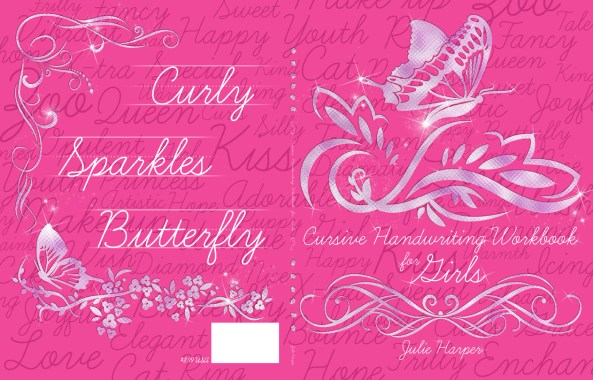
I hired Melissa Stevens to design a few covers, and was very pleased both with the process and the results.
CHWG RR

Cover image copyright 2013 Melissa Stevens.

www.theillustratedauthor.net

Here are some ideas to help you narrow your search:

  • Visit the cover designer’s website. How professional is it?
  • Explore the artist’s portfolio. Do any of the images or techniques seem to be a good fit for your cover?
  • Check the designer’s previous covers out. Do any of these grab your attention? Do they follow the ‘rules’ of cover design (a good cover may break a rule, but as the author, you need some means of judging)?
  • Find some of these covers on Amazon. If the book is new, look at the sales rank; if the book isn’t new, the reviews may be more revealing of its prior sales rank (since this can change significantly over time). How much do you feel that the cover may have stimulated sales, if at all?
  • Note that books published by top publishers usually only mention the cover designer in small print on the back cover and on the copyright page, and not on the front cover.
  • What do your friends, family, and acquaintances think about the artist’s portfolio and previous covers?

When you’re ready to contact a potential cover designer, you should be prepared to exchange a few emails. This interaction will help you gauge the artist’s character, expertise, interest in your book, patience, etc. Here are some points to consider (first check the artist’s website, which may answer some of these questions for you):

  • Inquire about the artist’s background and experience (unless this information is posted on the website).
  • What techniques does the artist use? Graphic design usually looks much more professional on a cover; even though colored pencils, chalk, or paint can look good hanging on a wall, it usually makes a cover look amateurish.
  • Ask if the artist will use any clipart or stock images, and, if so, ask about copyright issues. You’d hate to invest money in cover design and then get sued for copyright infringement over any of the images used.
  • What use of the cover design will you be granted? This should be stated on the contract. If you have multiple editions (paperback, eBook), you want to clarify this. You probably want to post your cover on your website, may want to solicit feedback about it on your blog, etc. Generally, posting your cover on your websites should be good advertising for the designer, but you want to get permission first.
  • Will the artist display the cover on the artist’s website? This may not generate sales for you, but helps your branding slightly. When the artist features your cover on his/her website, it demonstrates the artist is proud of the cover.
  • You want to know to what extent you will be involved in the process. You may have a vision; even if not, you may still want to suggest revisions throughout the design. Realize that it takes a lot of work to design a cover, and much more work to make multiple revisions. Thus, many artists place a limit on the number of changes you can make for the price paid, and charge extra for additional revisions. You want to have this clarified up front.
  • Before you sign the contract, you’d like to have some idea of what you’re going to get. Perhaps the designer can describe his/her vision for your cover. Even better, request a partial mock-up showing something.
  • How long will the design take? The wise thing is for you to provide ample time for the cover to be made. I don’t believe in rushing art. Personally, I would prefer for the artist to put the idea on hold until the perfect idea comes.
  • How will the payments be arranged? It may be a good compromise for the author to pay a deposit up front and the rest when the cover is delivered; half and half is common. This way, the artist is compensated for his/her time, work, and effort even if the author changes his/her mind (which happens). You want the contract to include a provision for opting out; probably, the deposit (which may be half) will be nonrefundable, but if you’re dissatisfied with the result, you can walk away and not pay the remainder.
  • Note that some cover designers offer contracts and expect a hefty deposit, but not all designers do. This may depend in part on the process. If the designer does much of the work by hand, he/she is more likely to present a contract and expect a hefty deposit; but if the designer works mostly with stock images, he/she may be less formal.
  • You can try to negotiate a little. An artist might take a chance that once you fall in love with one cover, you might use the same artist for many covers. Instead of price, you might ask for something else, like a matching website banner. What I recommend is asking if you can receive a few of the images from the cover to help decorate the inside of your book, or maybe getting a few simple designs to help with the interior décor; such touches can help make the interior of your book (especially, the Look Inside) make a good impression, too. However, some illustrators won’t negotiate on price; but it may not hurt to try.
  • Of course, if you have any legal questions about the contract, you should consult with an attorney.

Get feedback from family, friends, acquaintances, and especially members of your target audience at various stages of the cover design. This will help you receive valuable feedback so that you can suggest possible revisions while at the same time helping to create a little buzz for your upcoming book.

Communication is very important. The artist is trying to carry out your vision, but can’t see inside your head. You must communicate your ideas clearly with the artist. Don’t be afraid to voice your opinion. Be honest. If there is something you don’t like, say so. Don’t fear hurting the artist’s feelings. (Well, have some tact. Don’t say, “That stinks.” Try something like, “I was hoping that image could look a little more…,” or, “I’m not a big fan of that…” Also, take the time to make encouraging and supportive remarks about the elements that you do like.) Communication and honesty are the keys to helping the artist pull of your vision.

There is one more thing to keep in mind: While it’s your cover, the artist wants to be happy with the cover design, too. If the author insists on some cover design element that the artist feels makes the cover look unprofessional, the artist may not want to showcase the cover on his/her website and may not want to have his/her name mentioned as the cover designer.

Finally, behave professionally in your interactions with potential cover designers. Your author image is a very important part of your branding.

From a marketing perspective, the two most important features of your cover are:

  • The cover makes it clear which genre the book belongs to. If your cover design fails to meet this goal, then most of the people who click on your book probably won’t be buying it.
  • The cover grabs the attention of your target audience. Not just making the genre clear, but attracting the target audience’s attention.

It’s also desirable for the title font to be clear in the cover. You can find various ‘rules’ of cover design and mistakes to avoid (for example, in the link below), and see if the ‘final’ cover meets this criteria (if not, at least have a good reason for not doing so).

https://chrismcmullen.wordpress.com/2013/07/06/cover-design-checklist/

For you, the author, there is one very important feature to keep in mind:

  • Ensure that the product is better than what you could have done yourself (unless you happen to have all the skills, but just didn’t want to invest the time).

Let me credit Melissa Stevens for reading my draft of this blog post and offering a few suggestions. She mentioned the importance of honesty from the author, the idea that communication between the author and artist is the key to successful cover design, and the point about cover designers who work primarily with stock images. The cover figures in this post were used by permission of Melissa Stevens.

Chris McMullen, self-published author of A Detailed Guide to Self-Publishing with Amazon and Other Online Booksellers

A Look Inside that Sells

Copyright Design Pic

A fantastic cover grabs the attention of the target audience. A killer blurb arouses the curiosity of the target audience. But it’s the Look Inside that decides whether or not the shopper will buy now or pass on it.

There are two components to a stellar look inside:

  • Formatting, design marks, and imagery that suit the content and impress the reader, without distracting from the reading. Thus, many traditional publishers include designs in the front matter and first page of the chapter, but often have very plain pages where they want readers to focus on reading.
  • A sample, prologue, prelude, and first chapter that grab the interest of the target audience and compel them to keep reading. A slow beginning is for your existing fan base; only they will exercise patience, trusting that the best is yet to come. If you hope to attract browsers, you want to come out with your best stuff. (Of course, if there are spelling, grammatical, or other mistakes in the Look Inside, these often tend to have the opposite effect.)

Spend time studying the Look Insides of top selling books. You can get several great ideas this way. You don’t want to copy those ideas; just use them to see the possibilities and inspire your own design.

Following are a few examples.

Wool by Hugh Howey

http://amzn.com/1476733953

  • I’m looking at the specific book from the link above and checking out the Look Inside of the paperback edition. I encourage you to also check it out and follow along.
  • It starts out with quotes about how awesome the book is. You can do this to by sending out advance review copies. If other authors or book reviewers have good things to say, get permission to use their quotes (there is also a section for editorial reviews at AuthorCentral).
  • One page has just the publisher logo.
  • Note that this author succeeded very well as an indie without Simon & Schuster.
  • The pages with the white-above-black torn image provide a wow factor. The cover wasn’t so hot; but if you Look Inside, now you might be impressed.
  • The copyright page begins with the logo and publisher info.
  • Part of the copyright page comes from stating that the book is a work of fiction and that any similarity to actual people, places, or events is coincidental; and this is separate from the copyright notice and trademark notice.
  • One line specifies the edition. The printer number won’t be relevant for eBooks or print-on-demand books, though. There is also manufacturing info.
  • Most professional books do not have the cover designer mentioned on the front cover. Instead, this information is placed on the copyright page and sometimes in fine print on the back cover.
  • A couple of notices are taking advantage of a marketing opportunity, though not for book sales.
  • Of course, there is the 13-digit ISBN.
  • Note that the copyright page is filled to the brim. Compare the copyright page of a book published by any big publisher to that of the vast majority of indie authors and there is a world of difference. It’s not that people will study your copyright page; it’s that they will see it in passing and it will make an impression – professional or amateurish.

The Night Circus by Erin Morgenstern

http://amzn.com/0307744434

  • Subtle stars decorate the first two pages.
  • Check out the design on the title page.
  • The next two pages are also decorative. You have to check out the designs used in this book to appreciate their effect and to help generate your own ideas.
  • This copyright page is centered.
  • See the matching designs at the beginning of each chapter and with the page numbering.

All-American Girl by Meg Cabot

http://amzn.com/0061479896

  • A sample from the content is placed on the first page to attract the attention of the target audience. If you have a lot of front matter and want to move some good stuff to the beginning, this is one way to do it.
  • Note the font of the first line of the sample.
  • If you have other books, you also can list them in the front matter.
  • The title page matches the cover but in black and white, yet not exactly the same as the cover.
  • The first word of each chapter has a special font.
  • This book begins with a numbered list to try to grab attention.
  • Look at the stars with the chapter header, which match the cover design.

Bombshell by Catherine Coulter

http://amzn.com/0399157336

  • Note that the cover looks like a bomb blast, not a female “bombshell.”
  • I’m looking at the Kindle edition.
  • There is a second image much different from the cover, in black and white.
  • Notice the horizontal black bars for headers.
  • There are logos on the copyright page.
  • Many traditionally published books include Library of Congress info.
  • Observe the Pearson division line at end of the page on this eBook.
  • See the image at the beginning of each chapter.

You can find many other examples of ways to make a professional look inside. Little design touches can make a huge difference (but they need to fit the genre and content – e.g. you don’t want romantic swirls on a suspenseful detective story).

Border Thin JPEG

Here are a couple of other things that you can include on the copyright page, to make up for things like the printer number or Library of Congress info that an indie book may be lacking:

  • Author information, such as your website, blog, a special email that you will check (but not your main email account), social media info, etc. One advantage self-publishing has is more potential for personal interaction with the author.
  • Information and/or website for your editor, cover designer, etc.

Chris McMullen, self-published author of A Detailed Guide to Self-Publishing with Amazon and Other Online Booksellers

Should You Publish with an Imprint?

Every self-published author is faced with this decision. First, here is a little background on the imprint choice; we’ll return to the question in a moment.

The paperback author can select a free ISBN from CreateSpace or pay $10 to $100 for an ISBN from CreateSpace to publish using an Imprint. Another option is to purchase an ISBN directly from R.R. Bowker (the price becomes more affordable per ISBN if buying a block of 10 or more).

http://www.bowker.com

https://www.myidentifiers.com

The eBook author can leave the publisher field at KDP blank or enter an imprint there. Although some eReader services, like the Sony Reader, require an ISBN, you can get a free ISBN to use with your eBook if you publish through Smashwords (but you’re not supposed to use that ISBN for other eBook editions, like your Kindle edition).

Many authors publish both paperbacks and eBooks. Entering an imprint for the eBook while having the paperback publisher show as CreateSpace Independent Publishing Platform kind of defeats the purpose of using the imprint. For $10 at CreateSpace, the imprint names can match.

Back to the question: Should you publish with an imprint?

That depends; there are advantages and disadvantages both ways.

Benefits of having CreateSpace Independent Publishing Platform listed as the publisher:

  • CreateSpace is a positive name among many indie authors and their family, friends, acquaintances, and coworkers. There are so many indie authors that this number is very large.
  • People who like to support the self-publishing concept often buy CreateSpace books (or Kindle eBooks where the paperback lists CreateSpace as the publisher).
  • Readers who know your book is self-published are more likely to enjoy your book.

I entered CreateSpace Independent Publishing Platform into the search field in Books at Amazon, and pulled up 300,000 titles. So many authors are content with this.

One of these authors is Amanda Hocking. She has been extremely successful; this label has worked for her.

Amanda Hocking’s Author Page

Benefits of using an imprint:

  • Some readers avoid self-published books.
  • The indie label can be a hurdle to get your book stocked in stores, reviewed by the media, etc.

If readers buy your book thinking it was published through a traditional publisher, but it looks very amateurish after they buy it, they are more likely to be frustrated with the experience. This places a premium on professional book design (cover, editing, formatting, writing, etc.) for the author who chooses an imprint. A traditionally published book, for example, has a very detailed copyright page, which most indie books lack. A simple feature like this could give the indie book away.

Note that bookstores and reviewers can clearly see that your book is print-on-demand from the printing number on the last page whether you use an imprint or not. There is a way around this. You can find another printer (i.e. not print-on-demand) to print a small number of copies of your book. The custom order will cost more money per book if you buy a small quantity, but the overall cost may be affordable if the quantity is really small (like 10 books). This way, like many publishers, print-on-demand (POD) will merely be one of your publishing channels. You can approach bookstores and reviewers more confidently with the non-POD edition of your book.

Indie authors who are clearly self-published have succeeded in getting their books stocked in bookstores. If your book looks professional and you have a professional approach, it is possible to overcome various publishing obstacles, including the CreateSpace label; but sometimes there is a flat ‘No!’ to CreateSpace and POD. On the other hand, if you go to the trouble to use an imprint and have some non-POD copies printed, but your book looks unprofessional (cover, copyright page, formatting, typos, etc.), all of this extra work may not open up any doors.

People can also search for your imprint online. If they don’t find a website for it, or if there are just a couple of books that use the imprint, this will reflect that the imprint isn’t a serious publisher. Most shoppers aren’t going to check out the imprint. (However, they probably won’t recognize the imprint; using an imprint certainly isn’t the same as publishing with a household name.) But a wise bookstore manager or serious reviewer might do a little research before investing in your book.

Of course, you must do some research on the imprint name. You can’t enter Amazon or the name of an actual publisher like Random House (or many other publishers you’ve never heard of).

The name you choose should sound authentic. It should fit the book nicely. (It will also show up in keyword searches, but if you just make the imprint name based on keywords, there is a good chance it won’t sound authentic or fit the book.)

Before you publish using your own imprint, consider these questions:

  • Will your cover look professional?
  • Will your front matter look professional?
  • Will your formatting be professional?
  • Will your editing look professional?
  • Will you be approaching bookstores, libraries, newspapers, etc.?
  • Will you be selling copies in person at presentations, signings, readings, etc.?
  • Will you make a website for your imprint?
  • Will you be publishing other titles with this imprint?
  • Do you expect a lot of support from the self-publishing community?

Personally, I’m proud to have my books wear the CreateSpace label. CreateSpace and KDP gave me my chance, and I’m very grateful for it. I’ve also met several fantastic indie authors. I search for self-published books when I look for books to read, and I’m happy to support good indie books. I’m glad to be part of the self-publishing community. If you’re going to wear the self-publishing label, wear it proudly. 🙂

Publishing Resources

I started this blog to provide free help with writing, publishing, and marketing. You can find many free articles on publishing and marketing by clicking one of the following links:

Chris McMullen, Author of A Detailed Guide to Self-Publishing with Amazon and Other Online Booksellers

Follow me at WordPress, find my author page on Facebook, or connect with me through Twitter.

Authors: Dealing with the Downs

Adversity Pic

Sales inherently fluctuate. Even if over time sales grow, there will still be some day-to-day fluctuations. There are also seasonal effects – i.e. any given type of book tends to sell better during some months than others. The economy is a factor, too.

As long as there are some sale every week, there will be some periods where sales are slow and some periods where sales are better. There will be both.

When sales are peaking, you’re thinking, “Now that’s more like it.” But they often don’t stay that way. Even if there is long-term growth, there will be a few periods where sales decline. You can count on it.

When sales are in a valley, you’re thinking, “What happened to kill the sales?” Remember, there will be valleys even when nothing has changed. Don’t panic. Exercise patience. Sales may pick up in a few days. If it’s the end of the month, maybe sales will rebound next month. Some months are also better than others. A downturn in sales for a few days doesn’t necessarily mean that sales have stopped dead.

If sales decline and you also notice something else, like a bad review, your first thought is that the review killed your sales. But it could just be coincidence. Many times, a review doesn’t have the effect that we might predict. Be patient. Sales might just rebound in a few days.

Unfortunately, sometimes sales do decline. Sometimes, a book sells frequently for a short period after its release, and then sales decline. Sometimes, reviews do influence sales. Sometimes, there are external factors that we’re not even aware of – like a change in Customer Also Bought associations and other marketing recommendations online. (Sometimes, though, external factors boost sales, like a recommendation posted somewhere online that you weren’t even aware of; and more often than not, Customer Also Bought lists provide a sudden boost.)

But if you panic that sales are dying every time your sales go through a valley, you’re likely to be causing yourself a great deal of unnecessary anxiety. It can take a couple of weeks or more to properly project sales trends.

Similarly, don’t let each review – good or bad – determine your happiness. Try not to let other people govern your emotions. Hopefully, many of the reviews will be good. See if any critical reviews have merit that can help, then try your best to forget them.

Focus on your next book and on marketing. These activities will keep you busy. And these are the best things you can do to improve sales.

When you’re going through the downs, the worst thing you can do is react emotionally in public and ruin your image as an author – that can have a much worse effect than anything you had been worrying about. Avoid posting complaints: You don’t want customers or reviewers to see them and view this as unprofessional, and you don’t really want to bring others down by spreading negativity.

Sure, you want to receive comfort and support. Try to find private (i.e. not your blog or social media) ways to seek this, or strive to find positive ways to reach out. For example, ask for advice in a tactful way that focuses on encouraging suggestions instead of ranting about the issue. If you need to write a rant to help get it out of your system, keep it private (just as you would if writing in a diary).

Remember that all authors experience the ups and downs of sales and reviews (except for the rare author who has the ability to ignore these things).

Enjoy the ups, and ride out the downs. Keep writing and marketing, and these activities may help make the overall trend grow in the long run.

Chris McMullen, self-published author of A Detailed Guide to Self-Publishing with Amazon and Other Online Booksellers