Relevance: The Key to Advertising/Marketing

Relevance

RELEVANCE

Many advertising and marketing concepts can be understood, and then applied, by considering this one word: relevance.

And what a difference relevance can make.

Yet, very often, the advertiser or marketer hasn’t given this concept due consideration.

In your wildest dreams, your audience is anyone who has a head.

But in reality, you throw your money away with such thinking.

Unless maybe you’re selling hairbrushes.

But even then, you’re wasting money showing your advertisement to people who are bald, strongly prefer combs, or don’t care about their appearance.

Let’s look at some specific examples of how the word relevance impacts advertising and marketing. (Many of the examples are specific to self-published books, but the same principle can be generalized to the sale of other kinds of products or services.)

BOOK COVER DESIGN

Can you imagine walking into a covenant to sell a book about how to plan the perfect spring break vacation?

Well, it’s not much different when 80% of your audience glances at the cover of your sci-fi thriller and expects it to be a western.

(If you’re thinking about the movie Cowboys & Aliens right now, you’re totally missing the point!)

If it looks like a western, it probably is a western, so if you’re looking for sci-fi, why waste your time checking it out?

When there are other sci-fi books that actually look like science fiction.

The most important goal of book cover design is to create a cover that is relevant to your specific target audience.

WRITING <—> MARKETING

There are two ways to approach the combination of writing and marketing that have good prospects for success.

If you can execute your approach well.

  • You can find an existing target audience* and write a book relevant for that audience. (Where you are interested in the topic and have the right experience to write it.)
  • Or you can write what interests you (and where you have the right experience), then find the audience relevant for what you’ve written and market to that audience.†

* You don’t have to write for the most popular audience. It can be a niche audience and still be quite successful.

† The latter carries more risk. The worst-case scenario is that the audience perfect for your book doesn’t even exist. It happens…

AMAZON MARKETING SERVICES

Billboard advertising doesn’t make sense for most books. Even though many people do read, only a fraction read any particular genre, and some of those readers are biased towards certain authors or subgenres, so that the majority of the people who see the billboard advertisement result in wasted impressions. On top of that, the sale of a single book usually results in a low royalty, so you can’t afford wasted impressions.

But if you sell automotive parts and advertise on a billboard overlooking a highway, nearly 100% of your audience drives a car, so even though many prefer to get their service done by a dealer or a mechanic, the advertisement is more effective because of the greatly improved relevance.

On top of that, most advertising largely involves branding, which requires repeated impressions over a long period of time. With advertising, the importance of relevance gets compounded through this repetition.

Where should you advertise your product (or service)? Think long and hard about where it would be highly relevant to show your product.

One reason to use Amazon Marketing Services (AMS) to advertise products that you sell on Amazon has to do with relevance:

  • Customers are already there browsing for similar products.
  • You’re not trying to persuade them to stop what they’re doing, leave one site, and visit another site.

To get the most out of AMS, focus on relevance.

For example, when advertising a KDP Select self-published Kindle e-book through AMS:

  • All else being equal, Amazon is more likely to show AMS ads that generate and maintain a high click-through rate. That’s a strong indication of relevance.
  • Precise targeting makes your ad more relevant to the customers who view it.
  • A cover that conveys the precise subgenre/subcategory and content at the tiny size shown in the ads is a big plus.
  • The short marketing pitch shown with the ad can also help to convey relevance.
  • Thus, relevance can help you generate impressions without raising your bid sky high.
  • Ultimately, the blurb, the rest of your product page, and the Look Inside must also be relevant to convert clicks into sales.

CONTENT MARKETING & SEO

I use a free WordPress blog. I will soon pass 300,000 views (if I haven’t already), as I average 500 to 800 visitors per day finding my blog through search engines.

Yet I don’t employ any SEO “tactics.”

My goal has always been simple: Provide helpful content to anyone interested in self-publishing.

If the content is relevant to your audience, you have a strong organic marketing edge with much potential for long-term success.

Relevant content will naturally include the right keywords and keyphrases, lead to recommendations and referrals, generate followers, and encourage discussion.

You can blog successfully with short articles. What matters is that the content is relevant and helpful.

Trying to “fool” search engines into thinking that an article is relevant when it’s not won’t lead to long-term success.

THE DREADED BLURB

To help close the sale, the blurb needs to implicitly convince the customer (with help from the Look Inside) that the content is relevant to the buyer.

It must reinforce the subgenre/subcategory and content conveyed by the cover, title, category, and keywords.

The style of writing and storytelling must also be relevant to the customer.

It needs to be the kind of story and characters that the customer wants to read.

Without giving the story away. Because once the customer knows the story, it’s no longer relevant.

Fiction blurbs need to be short, while nonfiction blurbs should highlight important points with bullets, since the customer doesn’t want to waste time—not yet sure if reading the blurb is relevant or not.

Write happy, be happy. 🙂

Chris McMullen

Copyright © 2016

Author of A Detailed Guide to Self-Publishing with Amazon and Other Online Booksellers

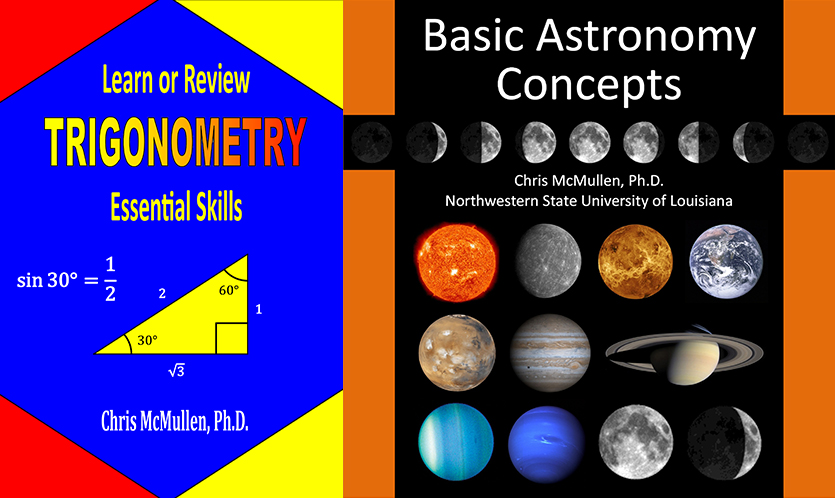
  • Volume 1 on formatting and publishing
  • Volume 2 on marketability and marketing
  • 4-in-1 Boxed set includes both volumes and more
  • Kindle Formatting Magic (now available)
What to Do about Reviews Disappearing from Amazon (Proactive Solutions)

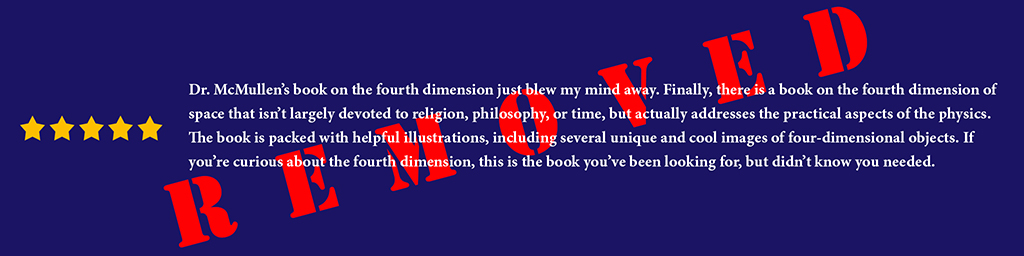
Review Removed

REVIEWS REMOVED FROM AMAZON

It’s a well-known fact: Amazon blocks and removes numerous four- and five-star reviews, but almost never removes a one- or two-star review.

You have two choices:

  • Get upset about it.
  • Find a proactive way to make the most of it.

I have proactive suggestions for:

  • Customers who have had their reviews removed.
  • Authors who have seen reviews vanish without even so much as a puff of smoke.

Suggestions for customers are first. If you’re an author, just scroll down to your section.

If you’re concerned about the WHY, I’ll address this at the end of my post.

SUGGESTIONS FOR CUSTOMERS WHOSE REVIEWS DISAPPEARED FROM AMAZON

(A few customers think that when they click the star rating at the end of a Kindle book that they are reviewing it on Amazon, when instead they are rating the book on Goodreads. A few customers think they’ve submitted a review, but what they’ve actually done is just reach the intermediate page where they check their review before submitting it. The first step is to make sure that you’ve properly and fully submitted a review.)

Why did you write the review in the first place?

  • You felt strongly about the book.
  • You felt that the book deserved recommending.
  • You wanted to help other customers make wise shopping decisions.

So, you typed up a review and submitted it to Amazon, but discovered later that the review was gone. (Wait a minute. No, wait a day or two. Sometimes, when you post a review, there is a delay of 1-2 days before it shows up.)

That doesn’t prevent you from accomplishing your original goals.

Here are some proactive suggestions:

  • Recommend the book to people you know. Word-of-mouth recommendations are like GOLD. They can be better than writing a review on Amazon. If your goal was to recommend the book, nothing is stopping you from doing so.
  • Review the book on Goodreads. It’s the next best thing to reviewing it at Amazon.
  • Contact the author. Not to complain about the missing review. Authors appreciate feedback and hearing from fans. Offer to let the author use your positive comments on his blog, in the front matter, or anywhere else the author might be able to benefit from a review snippet. Reviews have many other potential uses besides sitting on the Amazon product page.
  • Do you have a blog, Twitter account, or Facebook account? Share your review with your followers. Since Amazon DIDN’T publish your review, they can’t prohibit you from sharing it.
  • Follow the author on Amazon. Just visit one of the author’s books, scroll down to the author’s biography, visit the author’s author page at Amazon, and click the big yellow Follow button on the top left. If you liked the book, you might appreciate having Amazon send you an email the next time the author publishes a book.
  • Follow the author’s blog, social media, or email newsletter. You can be one of the author’s fans.
  • Review the book on Barnes & Noble, The Book Depository, or other retailer where the book is sold.

Although you could contact Amazon to ask why your review was removed, this really isn’t proactive. You’re probably going to get a vague response, if any. You’re probably not going to convince Amazon that they made a mistake and reinstate your review. Most likely, you will waste both your time and Amazon’s.

(If your review violated any of Amazon’s guidelines, before posting your review elsewhere, you should first read the other site’s review guidelines to ensure that you’re not violating them.)

SUGGESTIONS FOR AUTHORS WHOSE REVIEWS DISAPPEARED FROM AMAZON

Very often, the author doesn’t even know that it happened. Amazon automatically blocks many reviews, such that they are gone before the author has a chance to see them.

And if the author “knows” that a review was blocked by Amazon, chances are that the author has some connection with the reviewer and Amazon “knows” of this connection.

Here are some proactive steps that authors can take regarding customer reviews disappearing from Amazon:

  • If a customer informs you that they posted a review, but Amazon blocked or removed it, you can offer the suggestions that I listed above (like posting the review on Goodreads).
  • If the reviewer has any authority, experience, or expertise relevant to your book, you may be able to include it in the Editorial Reviews section on your Author Central page.
  • With the customer’s permission, you might be able to use a review snippet in your front matter, back matter, on your blog, etc.
  • If the reviewer is an author in a related genre, they might be willing to write a foreword, for example.
  • If you were able to see the review before it was removed, or if the customer contacted you directly, you may still benefit from the feedback.
  • Thank the customer for trying. Thank the customer for contacting you. THANK the customer if he or she does any of the alternatives that I suggested in the previous section.

Contacting Amazon to complain about it probably won’t be helpful. Amazon will only offer an explanation to the customer, not to the author, and the explanation given to the customer will probably be vague. You’re probably not going to convince Amazon that they made a mistake and get them to reinstate the review.

Arguably, the best way to get reviews is to (a) write the book as well as you can, and polish it as well as you can (b) learn how to market your book effectively. The more sales you earn through marketing, the more likely customers will leave the variety of genuine reviews typical of Amazon customers, and those are probably the best reviews that you can get. You might only get about 1 review per 100 sales, on average.

(Friend, family, and recruited reviews invite their share of problems, aside from potentially being blocked and removed by Amazon. For one, if you have a lot of reviews, but the sales rank and publication date don’t suggest many sales, this may look suspicious to wise shoppers. For another, reviews that just praise the book without offering explanations or examples tend not to carry much weight. Yet another reason is that it may seem suspicious if there doesn’t seem to be any balance to the customer reviews.)

WHY DOES AMAZON REMOVE FIVE-STAR REVIEWS

Friend and family reviews (and worse kinds of reviews) plagued Amazon several years ago. Things got so out of hand that there were prominent articles featured in the Wall Street Journal and the New York Times. This prompted Amazon to take action. It’s estimated that millions of reviews were removed, and many more have since been blocked.

It’s much better now, from the customer’s perspective, than it had been just before Amazon began blocking and removing suspected customer reviews.

Yes, there are a few casualties, i.e. reviews that shouldn’t be removed. In order to market their books effectively, indie authors must interact with customers online and offline, and those online interactions occasionally confuse Amazon into removing a review that they really shouldn’t have removed.

Another perspective comes from sales, both short-term and long-term sales.

Amazon doesn’t want recruited reviews to FOOL customers into buying BAD books, as that would cripple long-term sales.

Authors seem to think that they need more GOOD reviews to sell more books in the short-term, but this may not actually be the case. Amazon has the real DATA. Maybe, in general, Amazon not only sells more books in the long-term, but even sells more books in the short-term with their current block-and-remove suspected favorable reviews policy. We can speculate. Amazon has the actual data. And Amazon is highly effective at selling books. Amazon is highly effective at selling indie books, too.

But again, it doesn’t help to get upset about it or complain about it. Find something proactive that you can do instead.

Write happy, be happy. 🙂

Chris McMullen

Author of A Detailed Guide to Self-Publishing with Amazon and Other Online Booksellers

  • Volume 1 on formatting and publishing
  • Volume 2 on marketability and marketing
  • 4-in-1 Boxed set includes both volumes and more
  • Kindle Formatting Magic (now available)
Book + Hook = Sales (Marketing Recipe for Authors)

Book Hook

BOOK MARKETING TIPS

Is your book full of hooks?

If you don’t understand the question, don’t worry. I’ll explain it shortly.

After I ask a different question.

Why did you read this article?

I realize that you haven’t committed yet. At any moment, you could walk away.

And so could customers when they check out your book. Remember that.

The hooks make the difference:

  • Did the title or image with this post grab your attention?
  • Did it make a promise, like more book sales?
  • Obviously, the beginning held your interest long enough for you to reach here.

YOUR BOOK NEEDS HOOKS

What is a hook?

A hook is something that catches your potential reader’s attention, arouses a reader’s curiosity, or engages your reader’s interest, for example. Anything that encourages potential customers to read your book effectively serves as a hook.

Your book should have several hooks:

  • Your title can actually have three hooks. (1) One hook comes from making a catchy title, a phrase that snaps the customer out of a trance. (2) Another hook conveys what the book is about, so when the customer reads the title, the customer knows the genre or subject. Be sure to put the right bait on your hook. (3) Any keywords in your title, subtitle, or series name help to hook readers through keyword searches. But you must balance this with 1 and 2. Also, shorter titles tend to sell better in fiction.
  • Your cover is another hook. For every 1000 or so customers that see your book cover, 1 may actually check out your book. It could be 1 out of 100. Or it could be 1 out of 10,000. But the difference can be huge. A cover also has multiple hooks. (1) What kind of book is this? That’s what every customer wants to know without having to work for it. Make it so easy that a customer can tell at a glance. (2) Even subconsciously. The right color scheme and font actually impact shopping behavior. It’s worth a little research. (3) Reinforce the title by making the most important keywords stand out even on a tiny thumbnail.
  • Your blurb is all about hooks. A customer reading your blurb is not committed. Not even to the first line. (1) The first line of your blurb can send 90% of your potential customers out the door. It’s your pick-up line. Pick this book up, please. But you have to be subtle. You need to arouse curiosity. Wake the customer from a trance, but use language the customer wants to hear. Make your blurb the dream date the customer has been yearning for. (2) You need to reinforce the subgenre or subcategory. The customer isn’t sure what kind of book this is. The title and cover create expectations. Don’t forget to make this clear in the blurb. Early in the blurb. (3) Concise is your friend, especially for fiction. Short sentences. Short blurb. Yet containing all the info the customer wants to know: What subgenre (implicit, but clear)? Engaging content (show it by example). What features will sell your book? Make these features—no, make the benefits of these features—clear, but be concise. For nonfiction, bullet points help break a long description into easy to identify points. (4) Cut out the material that customers don’t need to know, so only the hooks remain. For example, does the customer really need to know the names of multiple characters when just checking the book out? (5) Whatever material remains, make it seem more engaging. Trim and engage. Repeat. (6) Don’t spoil fiction. Definitely, don’t give away the ending. But don’t give away anything if you can avoid it. You don’t want the customer to feel like he or she already knows what will happen at some stage. Not knowing can help you sell books. There are words for this: Curiosity. Suspense. They are sales tools.
  • Your Look Inside is that last hook between the customer and a sale. Or walking away. And again, it should be full of hooks. Minimize the front matter to essentials that help sell your book, so the customer can reach the “hooks” without distraction. (1) The opening line is like the first line of your blurb. Many shoppers don’t get past that first line. (2) The customer isn’t committed to your book. The beginning needs to arouse curiosity and engage interest. Come out with your best stuff. Will a non-committed shopper read a lengthy build-up? You want the beginning to be so good that the customer clicks the magic Buy Now button. (3) Send a consistent message. The title and cover create expectations for a particular subgenre or subcategory. The blurb must reinforce the same message. And the Look Inside must also make this clear. Tell the customer (implicitly), “Yes, you’re in the right place. Now please make yourself at home.” (4) What will sell your book? Suspense? Curiosity? Fascination with a character? Language that flows well? Comb through your Look Inside to remove stuff that may inhibit sales, so that what remains will hook the reader.
  • It doesn’t end there. You don’t just want a purchase. You want the reader to continue onto the next chapter. You want the book to deliver on its promise so that the customer is already hooked on your next book. So that the customer helps you hook new readers. Word-of-mouth hooks are among the best hooks in the business. And the hardest to get.
  • Even the back matter can contain a hook: A captivating sample of one of your other books.
  • Let me back up a bit. Wise choice of keywords (or keyphrases) and categories can help you throw more hooks out into the sea of readers.
  • Hooks are everywhere. If people discover your blog, you want your blog to hook new readers, right? Well, then, your blog needs to be full of hooks. All of your marketing should have hooks. Even a catchy strapline—a phrase or sentence that helps create interest in your book (and also convey the right expectations)—can be used anywhere, even in daily conversations.

PRACTICE HOOKING (!)

(I really hope you don’t take this the wrong way!!)

Practice hooking your readers.

A great place to practice is with social media.

Every blog post, tweet, or Facebook post is an opportunity to practice hooking readers.

Learn how to write a title that achieves all of its three goals.

Learn how to find images that attract the right audience.

Learn how to say a lot in a little by learning how to use tweets effectively.

Social media offers a great way to practice, experiment, and learn the art of hooking readers.

But also practice from the other side. Practice getting hooked. Practice trying not to get hooked, and find yourself getting hooked despite that.

Check out successful books. Books that don’t sell because of name recognition or preexisting fan bases. Find new indie books that grow quickly, for example. Discover books with great hooks.

That can help you learn the art of hooking readers. See what kinds of hooks other authors use to hook their readers.

MARKETING WITH BOOK HOOKS

Think of writing as fishing.

You’re just one of millions of fishermen.

  • Location matters. You want to fish in a spot where there are plenty of fish. So you want to write a book that will attract readers. So write it with the customer in mind. What does the customer want? This question impacts your choice of topic, how you begin your book, how you write your book, how you package your book, etc.
  • There are a million fishing poles out there. You need lures and bait that will attract fish to you. Your title, cover, blurb, and Look Inside need effective hooks.
  • Authors wait patiently for readers to find their books. You need readers. You need them to discover your book. You need them to want to read your book once they discover it. The hooks on your product page and the hooks in your online and offline book marketing all help readers discover your book and decide to read it.

Write happy, be happy. 🙂

Chris McMullen

Copyright © 2015

Chris McMullen, Author of A Detailed Guide to Self-Publishing with Amazon and Other Online Booksellers

Click here to view my Goodreads author page.

  • Volume 1 on formatting and publishing
  • Volume 2 on marketability and marketing
  • 4-in-1 Boxed set includes both volumes and more
  • Kindle Formatting Magic (coming soon)

Follow me at WordPress, find my author page on Facebook, or connect with me through Twitter.

Comments

Click here to jump to the comments section.

How to Motivate more Amazon Follows

Amazon Following

HOW TO GET MORE AMAZONS FOLLOWERS

Amazon just announced a new tool designed to help authors generate many more Amazon followers.

First, let me give a little background:

  • Customers can follow their favorite authors directly at Amazon.com.
  • It seems ideal for both customers and authors, EXCEPT…
  • Unfortunately, most customers don’t think to do this.
  • Customers need to visit the author page and click the button to follow the author. Few do it, presently.
  • Amazon lets you send an email to your Amazon followers after publishing a new Kindle edition. But first, you need Amazon followers.

So just imagine how awesome it would be IF…

  • Amazon offered a tool to help authors generate more Amazon follows.
  • Through this tool, Amazon motivated customers to follow authors.
  • Many customers took advantage of this opportunity to follow authors of interest.
  • Amazon follows rose from a mere dozen to hundreds or thousands for many authors.
  • When you publish your next Kindle e-book, you could send an email through Amazon to hundreds or thousands of Amazon followers.

This seems like a distinct possibility now.

Here is how it works:

  • Visit the product page for a print edition of your book. (Don’t have one? Check out CreateSpace.)
  • Update: You no longer need a print edition if you publish through KDP.
  • Scroll down to the bottom. Click on the option to list an Amazon giveaway.
  • Check the box to require contestants to follow you on Amazon. (This is new!)
  • Everyone who enters the contest now also follows you on Amazon.
  • The next time you publish via KDP, you’ll be invited to notify your Amazon followers of your latest e-book.

In the past, you could only generate Twitter followers or require contestants to watch a YouTube video.

Now, you can require contestants to simply follow you on Amazon.

Finally, Amazon came up with an idea to help authors generate more Amazon follows.

It’s a win-win-win situation:

  • Customers don’t have to hunt down the author through social media or newsletters. Follow authors right on Amazon.
  • Customers get a chance to win free print books in exchange for becoming Amazon followers.
  • Authors get exposure through the giveaway and grow their Amazon following.
  • Amazon, of course, sells more books.

MY AMAZON GIVEAWAY

Click the following link or image to enter my Amazon giveaway for a chance to win my mathematical pattern puzzles book.

When you enter the contest, you’ll become one of my Amazon followers. It will keep you updated of new books that I publish.

AMAZON GIVEAWAY TIPS

  • When your Amazon Giveaway goes live, tweet about it.
  • Click the link in the giveaway email to tweet about it through Twitter.
  • Be sure to leave the #AmazonGiveaway hashtag in the tweet. This posts your tweet to the Amazon Giveaway page.
  • I’ve had better luck not adding an image directly to the tweet. (The cover for your book will probably still show automatically.) I seem to get more exposure by not including my own image.
  • Add 1 or 2 relevant hashtags to your tweet.

Write happy, be happy. 🙂

Chris McMullen

Copyright © 2015

Chris McMullen, Author of A Detailed Guide to Self-Publishing with Amazon and Other Online Booksellers

Click here to view my Goodreads author page.

  • Volume 1 on formatting and publishing
  • Volume 2 on marketability and marketing
  • 4-in-1 Boxed set includes both volumes and more
  • Kindle Formatting Magic (coming soon)

Follow me at WordPress, find my author page on Facebook, or connect with me through Twitter.

Comments

Click here to jump to the comments section.

Amazon Improves the Integrity of the Customer Review System

Image from ShutterStock.

Image from ShutterStock.

AMAZON IMPROVES CUSTOMER REVIEWS

What makes customer reviews helpful to other customers, and thereby also helpful for sellers, businesses, authors, and even Amazon?

It’s when other customers can trust the review system. Without that trust, reviews become utterly useless.

BOOK REVIEW CHANGES IN 2012

Amazon made its first major improvement to the customer review system in late 2012.

That’s when Amazon blocked and removed countless reviews from probable friend and family members of authors.

Whatever Amazon did in 2012 was highly effective—perhaps not perfect, but definitely effective. If you watch indie community forums regularly, you know that on a weekly basis new authors complain about missing reviews, and it almost invariably turns out that the reviews were left by friends or family members.

Prior to the Great Purge of 2012, Amazon’s customer review system had been getting out of hand, with the problems publicized in the WSJ and NYT. Starting in 2013, the customer review system improved immensely. But it took much longer for word of the improvement to spread.

http://www.theguardian.com/books/2012/nov/05/amazon-removes-book-reviews

It’s now fairly well-known that customers who are friends or family members of authors generally can’t leave reviews no matter how hard they try, and Amazon is very good at discerning probable relationships. Occasionally, Amazon is a little too good, blocking or removing a review of a stranger who proceeded to interact in the author’s social circles. A casualty of war.

AMAZON SUES FAKE REVIEW SITES

Amazon has recently gone a step further toward improving the integrity of the customer review system.

Now that friend-and-family reviews are very much under control, the next major problem is the paid review.

It’s a clear violation of Amazon’s terms of service for authors to pay for reviews.

Examples of reviews that Amazon doesn’t allow.

Unfortunately, unethical authors have done this anyway, which hurts the integrity of the customer review system for everyone.

Authors often feel pressured into seeking reviews. For one, if the book isn’t selling, an author’s first thought is that maybe it’s because the book doesn’t have any reviews. For another, many popular book promotion sites require a minimum of 20 or so reviews just to receive consideration.

The reality is that the best way to get reviews is free and low-cost marketing combined with compelling content. Nothing is better than the natural variety of reviews that you get from just getting sales. Drive sales and the reviews will come with them.

But since there are authors seeking reviews, there are also services looking to fill this need.

Including unethical businesses and people looking to sell reviews. Again, this is a clear violation of Amazon’s terms of service. Both the business or person selling reviews and the author paying for reviews should fully expect to have their reviews removed, their accounts suspended, and to be at risk for a potential lawsuit from Amazon.

And that’s finally happening.

Amazon has begun the process by suing 1100 fake reviewers.

http://www.thesundaytimes.co.uk/sto/news/uk_news/Tech/article1621058.ece

Who’s at risk?

  • Companies selling paid reviews.
  • People selling paid reviews thru sites like fiverr.
  • Authors paying for reviews.

Who benefits from this?

  • Customers will be able to trust the review system more.
  • Authors who adhere to the review guidelines will benefit from this improved trust.
  • Companies selling products on Amazon benefit similarly.
  • Amazon benefits, too. It’s a win-win-win-win situation, with the sole exception of those who have been violating the review guidelines.

Write happy, be happy. 🙂

Chris McMullen

Copyright © 2015

Chris McMullen, Author of A Detailed Guide to Self-Publishing with Amazon and Other Online Booksellers

Click here to view my Goodreads author page.

  • Volume 1 on formatting and publishing
  • Volume 2 on marketability and marketing
  • 4-in-1 Boxed set includes both volumes and more
  • Kindle Formatting Magic (coming soon)

Follow me at WordPress, find my author page on Facebook, or connect with me through Twitter.

Comments

Click here to jump to the comments section.

Goodreads Giveaways: Recent Changes

Image from ShutterStock.

Image from ShutterStock.

GOODREADS GIVEAWAYS

Goodreads has recently improved their Goodreads giveaway program.

Authors who sign up with Goodreads can run Goodreads giveaways for their books.

  • It must be a print book. (CreateSpace is great for self-publishing a paperback.)
  • Goodreads sends the author a list of winners. The author ships author copies directly to the winners.
  • You can give away as little as 1 copy, so you can get some good exposure for a reasonable price.
  • If you give multiple copies away, it improves your chances of getting reviews at Goodreads (but winners are less likely to post a review on Amazon).
  • One benefit of the giveaway is that hundreds of readers are likely to add your book to their to-read list, which makes your book’s Goodreads page seem somewhat more popular.
  • The giveaway may not have a noticeable direct impact on sales. It can help with exposure and to generate some activity on your book’s Goodreads page.
  • Most of the contest traffic comes on the first and last days. However, the days in between add up, so you get the most exposure for your contest by running it for at least 30 days. You might as well generate as much exposure for it as you can.
  • Many giveaways seem to start on the 1st of the month and end at the end of the month, so if you avoid those days, you might be able to avoid the crowd somewhat. The first and last days of your contest give you the most exposure, so plan these dates wisely.

Goodreads has recently updated its giveaway program. Here are a few changes that they have made:

  • You now choose up to two categories instead of entering tags. This will make it easier for giveaway hunters to find the kinds of books they like to read (unfortunately, you still see the tag system when searching for giveaways, but it seems like this should change over soon).
  • The book no longer needs to be a new release; they have removed the 6-month restriction. When you enter the release date, you choose from a dropdown menu that goes back to the early 1900’s. However, if you run a contest for an older book, you might want to make this clear in the giveaway description so as to avoid possible confusion.
  • You must now schedule your Goodreads giveaway at least 7 days in advance, so plan ahead.
  • The terms and conditions now appear in a pop-up window. You must scroll down and click the Agree button at the bottom.

Want to enter for a chance to win a free book? Here are some sample Goodreads giveaways (these authors don’t know that I’ve given them a little exposure here on my blog, but these caught my eye when I was browsing for giveaways—though you may remember I also featured Jenny Pearson’s coloring book on my blog a couple of posts ago):

Coloring Book for Teens or Adults by Jenny Pearson

Click here to find Coloring Book for Teens or Adults on Amazon.

Chick Lit {And Other Formulas for Life} by Abby Rosmarin

Click here to find Chick Lit on Amazon.

A Bit Witchy by Danielle Fisher

Click here to find A Bit Witchy on Amazon.

The Dust in Sunlight by Christopher Rees

Click here to find The Dust in Sunlight on Amazon.

Camille’s Itchy Twitchy Eczema by Candis Butler

Click here to find Camille’s Itchy Twitchy Eczema on Amazon.

4,500 Multiplication Problems with Answers Practice Workbook by Chris McMullen, Ph.D.

Click here to find 4500 Multiplication Problems with Answers on Amazon.

More Goodreads Giveaways

Click here to see all Goodreads giveaways. If you’ve browsed for giveaways in the past, check it out to see how it’s changed.

Write happy, be happy. 🙂

Chris McMullen

Copyright © 2015

Chris McMullen, Author of A Detailed Guide to Self-Publishing with Amazon and Other Online Booksellers

Click here to view my Goodreads author page.

  • Volume 1 on formatting and publishing
  • Volume 2 on marketability and marketing
  • 4-in-1 Boxed set includes both volumes and more
  • Kindle Formatting Magic (coming soon)

Follow me at WordPress, find my author page on Facebook, or connect with me through Twitter.

Comments

Click here to jump to the comments section.

Kindle Unlimited Pages Read Rate for August, 2015

Image from ShutterStock.

Image from ShutterStock.

KINDLE UNLIMITED PAGES READ

Amazon paid $0.00514 per KENP read in August, 2015.

Compare that to the $0.005779 pages read rate in July, 2015.

That’s a drop of 11%. If you had 10,000 pages read in July, would earned $57.79, but for the same 10,000 pages read in August, you only earned $51.40.

On the one hand, an 11% drop is significant, but on the other hand, unless you had a million pages read through Kindle Unlimited and Amazon Prime, that 11% doesn’t amount to a whole lot.

And if you had a million pages read, you’re thriving in the program (compared to most authors).

But the concern really isn’t over one drop in the payout of 11%.

The concern extends beyond that. 11% is a pretty sizable change. It’s not a small fluctuation.

So one concern is stability.

If it drops 11% in August, another 11% in September, another 11% in October, and so on, that would really add up.

Since these are the early days of KENP, we don’t have much data to go on. We don’t yet have a pattern of KENP payouts established to lend us a feeling of stability.

What we really need is more data. But authors also want to make sound decisions now. And it will take a few months to get solid data.

I expected the pages read rate to drop toward $0.0050. What I didn’t expect is for it to jump straight there in one fell swoop.

And hence stability is in question.

But I think it’s premature to run for the hills.

One drop of 11% isn’t too much for me. Maybe stability will be there. I need a few months’ more data to assess this.

If it levels off around $0.0050, that will be what I had been expecting anyhow; it will just have gotten there faster than I was predicting.

If it drops even below $0.0050, the question will be how much below. What’s your magic number, where if it goes below that, you feel like KDP Select isn’t worth it? This magic number will be different for everyone, but it’s worth thinking about. We’re not near my magic number yet.

And what’s your backup plan for the worst-case scenario? It wouldn’t hurt to sketch out a backup plan and store it in a safe place. If you’re not below your magic number, I wouldn’t initiate the backup plan yet. But it’s smart to have a plan in mind, just in case.

I feel I’ve given too much attention to this lone 11% drop. Who knows what next month will bring? We don’t have enough data yet to see a pattern emerge.

POSITIVE INDICATORS

But there are other positive indicators that may help offset that 11% drop. Let’s look at a few of these.

GLOBAL FUND STABILITY

The KDP Select Global Fund is suddenly more stable than ever.

It was approximately $11M for May, June, July, and now $11.8M in August.

It’s starting at $11M for September.

They used to commit a mere $3M to the pot, and then raise it to $8M or more.

Now they commit to $11M on a regular basis.

So while the pages read rate may have dropped 11%, the KDP Select Global Fund has been very stable, more stable than ever.

KINDLE UNLIMITED IS THRIVING

KDP Select authors are earning a combined $10M per month just from KENP read.

Amazon has paid out over $100M in royalties just for KDP Select borrows in 2015.

Approximately 2 billion pages of KDP Select books are read through Kindle Unlimited and Amazon Prime per month.

That’s a huge readership. And it’s been a consistent readership (if anything, it appears to be growing).

And this readership supports indie books. Not every indie book, but the top KDP Select books are thriving in Kindle Unlimited.

Most of these readers are reluctant to buy books any other way.

AMAZON PAID MORE ROYALTIES OVERALL

Although the per-page rate dropped from $0.005779 to $0.00514, the KDP Select Global Fund rose from $11.5M to $11.8M.

Amazon paid $300,000 more in KDP Select royalties in August than they paid in July.

Overall, KDP Select authors earned more than ever.

So although they paid 11% less per page, there were more than enough additional pages read to compensate overall, enough such that Amazon actually paid more money in royalties overall.

Either there were (A) more Kindle Unlimited subscribers or (B) Kindle Unlimited customers are reading more than usual.

Either way, in general, KDP Select books benefited from this additional reading and the extra $300,000 paid in KDP Select royalties in August compared to July.

MORE BOOKS IN KINDLE UNLIMITED

Another sign that the program is thriving is that the number of books in Kindle Unlimited steadily rises.

Even through the new Kindle Unlimited 2.0.

Even through the 11% drop in the per-page rate.

The number of books in Kindle Unlimited keeps climbing.

It’s up to 1.1M presently. It was about 1M just a few months ago, but despite the new program and even the drop in the per-page rate in August, still 100,000 more books have added in the past few months than have dropped out.

127,000 books were added to Kindle Unlimited in the past 90 days. Whereas only about 27,000 have dropped out during this same time. For every book that has dropped out, 4 more were added in.

44,000 books were added just in the last 30 days. The number of books added to Kindle Unlimited each month keeps rising.

There is plenty of content for customers, and plenty of new content each month.

The top KDP Select books are thriving with millions of pages read per month, and the customers enjoying those top books want more top books to read. And those authors feel motivated to write more similar books. And other authors want to become KDP Select All-Stars, so they’re working to try to please Kindle Unlimited customers.

Many books benefited from the extra pages read and higher KDP Select Global Fund for August.

For many books, overall, this made August better than July, even though the per-page rate dropped.

WHAT IF YOUR BOOK DIDN’T BENEFIT?

If your book didn’t benefit from the extra pages read and the higher KDP Select Global Fund, there are a number of possible reasons:

  • There are many complicating factors involved in a book’s sales. Most books go through sales slumps at some time all on their own. If your book’s sales slumped in August, it’s quite possible that it had nothing to do with Kindle Unlimited. In fact, more pages were read through Kindle Unlimited than ever, and the payout was $300,000 more than in July.
  • August is typically a slow season for very many books. If your book’s sales slumped in August, it may just be a seasonal effect. The interesting thing is that more pages were read in Kindle Unlimited in August, even though sales often slump in August. Overall, this seasonal effect didn’t impact KDP Select borrows (although it surely did for some KDP Select books, overall there were more pages read in August than July).
  • Many authors changed their publishing and marketing strategies when Kindle Unlimited 2.0 rolled out. Many authors believed that Kindle Unlimited 1.0 favored short books, and now many authors believe that Kindle Unlimited 2.0 favors long books. What Kindle Unlimited 2.0 favors is reader engagement. As many other authors adjust their marketing strategies, that impacts other books.

Here are a few proactive ideas:

  • Marketing, of course. For a book that has appealing content, the trick is to get more customers to learn about your book. Learn free and low-cost marketing strategies, and try them out.
  • Marketability is another factor. Are you writing the kinds of books that appeal to Kindle Unlimited customers? Are the cover, blurb, and Look Inside helping to close sales? If so, your book is more likely to benefit from KDP Select borrows in addition to sales, and those borrows can help your sales rank.
  • Are you making the most of Kindle Countdown Deals? Just scheduling the promotion isn’t apt to be as effective as searching out websites that can help you promote the Countdown Deal.
  • Are you using AMS wisely? Most authors tend to overbid. The safer route is to bid very low, wait a few days, raise your bid only slightly if necessary, wait a few more days, and use patience and frivolity to your advantage. It may take a month or more to generate significant activity, but it’s less risky that way. Also, once you have several similar books out, with good marketability, that improves your prospects for advertising success.
  • Personal interactions can go a long way. When you interact with your target audience, a personal interaction is more likely to inspire a sale during a slow period, and it’s also more likely to lead to a review. Get a few sales in a slow period and it can help you rebound.
  • Write more books. And do some research to see what kinds of books are selling. Which are a good fit for you to write. For which customers are likely to support indie books.

THE OTHER SIDE OF THE FENCE

Is the grass greener in KDP Select or outside of it?

That’s a good question, and it may depend in part on the particular book, as well as the marketing capabilities of the author.

If you can build a strong following all on your own, you stand better prospects of growing a readership outside of KDP Select. But it’s not easy to do.

Another big factor is sales momentum.

If you start in KDP Select, once you get initial borrows and sales, you have sales momentum. Each Kindle Unlimited or Amazon Prime borrow helps your sales rank.

If you now opt out of KDP Select, you lose that benefit on sales rank. You lose your momentum.

Sales momentum is really tough to build. Once you have it, you don’t want to lose it. But you lose part of it when you switch to the other side.

Similarly, if you have sales momentum on several sites and join KDP Select, you lose it on those other sites.

Kindle Unlimited has a huge readership (2 billion pages read per month of KDP Select), which supports very many indie books (through KDP Select).

This audience can potentially benefit new authors. (But it takes a marketable book and marketing to improve your chances.)

Hence, it’s appealing to start out in KDP Select.

You can opt out after 90 days (but you must uncheck the auto-renewal box to do this successfully). But you risk losing that sales momentum.

Unless, of course, you hardly have any sales to speak of. But Kindle is the main market. If you hardly have any sales to speak of, the sales aren’t likely to be found elsewhere. But it can happen, and you might feel like there is nothing to lose in trying. (The real problem may be with the marketability of the book, or with marketing.)

One intriguing idea floating around is to write multiple series (or similar books) under multiple pen names, and rotate one (or more) of these series in and out of KDP Select. One idea behind this is diversification, and to try to reach customers on the other side of the fence.

But the risk in this strategy is that rotating a title in or out of KDP Select will hurt sales momentum.

It is wise to have a backup plan in place. But I wouldn’t do anything to risk hurting sales momentum unless and until the per-page rate goes below your magic number.

I’M STILL IN

KDP Select has been good to me.

I have pages read, but where I’ve seen the largest increases are (A) Kindle sales and (B) paperback sales.

I have no doubt that this is largely due to KDP Select.

First, all those KDP Select borrows improve my sales ranks.

Secondly, I’ve learned how to make effective use of AMS. It took a couple of months of overbidding to develop my low-bid strategy, and to refine my targeting, and it’s begun to pay dividends.

Not every one of my books has benefited (nor are they all in ‘my’ name), but overall my Kindle sales and paperback sales have improved.

Not all authors are thriving in KDP Select. But many are, and the potential is there.

Write happy, be happy. 🙂

Chris McMullen

Copyright © 2015

Chris McMullen, Author of A Detailed Guide to Self-Publishing with Amazon and Other Online Booksellers

  • Volume 1 on formatting and publishing
  • Volume 2 on marketability and marketing
  • 4-in-1 Boxed set includes both volumes and more
  • Kindle Formatting Magic (coming soon)

Follow me at WordPress, find my author page on Facebook, or connect with me through Twitter.

Comments

Click here to jump to the comments section.

Great Suggestion for Friends & Family Reviews on Amazon…?

Background image from ShutterStock.

Background image from ShutterStock.

REVIEW SUGGESTION FOR AMAZON

Friend and family reviews are a touchy subject among both authors and customers:

  • For the customer review system to be effective, customers need to be able to trust the system. This is why Amazon removes and blocks reviews suspected of being posted by the author’s friends or family members.
  • For the customer who posted the review, having it blocked or removed is time wasted, and discourages the customer from posting reviews in the future.
  • For the self-published author, an invaluable part of marketing entails creating personal relationships. Sometimes, the occasional personal interactions with a fan who didn’t previously know the author causes a book review to be blocked or removed.
  • Unlike the big publishers, self-published authors and indie presses can’t afford to send out hundreds of review copies to strangers. They can get friends to help get the ball rolling, except that friend reviews often get blocked, and they can interact with their target audience in person, although that sometimes leads to blocked reviews, too.
  • Amazon itself thrives on content engagement, one of their best marketing tools. Amazon wants to get customers (and authors) to frequently return to their website. Blocking or removing reviews discourages customers from writing future reviews, which limits their content engagement.
  • Although Amazon frequently blocks and removes 4- and 5-star reviews, Amazon almost never removes a 1- or 2-star review, which brings the average star rating down and discourages sales overall. It allows jealous authors and spiteful exes to prevent sales of books at Amazon that may otherwise sell.

Lighthouse24, a member of the CreateSpace community forum who provides frequent helpful posts, offers a great compromise. (Check out Lighthouse’s website for Helpful Links with valuable self-publishing info.)

  • Instead of blocking or removing the review, Amazon should keep the review, but clearly mark it as having detected a possible relationship with the author.
  • Let each individual customer decide how that matters to them. Some customers may see that designation and discard the review completely, a few may feel disgusted and move on, but in this way, Amazon would let the customer make the decision. Other customers won’t be put off by the designation, and may appreciate the comments. Yet other customers will approach those designated reviews cautiously. One thing we know is that every customer interprets reviews in a different way. So why not let each customer choose what to do with a potential friend or family review?
  • In addition to clearly marking such reviews as being from customers with potential relationships with the author, they could separate those reviews so they show in a slightly different area (perhaps one set above the other, or a different column) so that customers can easily tell the difference.
  • There is a precedent at Goodreads, which allows reviews from friends and family, but which clearly denotes reviews from friends. Surely, Amazon could do this, too.
  • Amazon could first give the customer the opportunity to disclose the relationship, then mark the review as a Family Review, Friend Review, or Fan Review, for example. If the customer doesn’t check one of these boxes, Amazon could then include a note that they discovered a possible relationship with the author and give that review yet another name (e.g. Reviewer May Know the Author).

This would solve a few key problems with the current customer review system:

  • Customers would see that X number of reviews were left by friends or family members. This is disclosed up front. Presently, customers assume that some reviews are from friends and family, without knowing how many, and customers don’t realize that most of those are actually blocked and removed. With full disclosure, customers will begin to realize that Amazon can often tell the difference.
  • Indie authors and small publishers won’t be so disadvantaged compared to big publishers who can send out hundreds of advance review copies. Amazon does want to give indie authors a fair chance, which is why indie authors now have pre-orders, AMS ads for KDP Select, and other new features that used to be only available for big publishers.
  • Amazon will enhance their customer engagement, i.e. have more activity on their website, which is one of their top marketing strategies. Customers won’t be discouraged by having their reviews removed, and thus will be more likely to post reviews in the future.
  • Authors who put the personal touch on their marketing, meeting new people in their target audience, won’t be penalized when Amazon discovers a possible relationship with the author, when in fact that customer had previously been a complete stranger until interacting with the author as a fan.
  • By not blocking and removing so many 4- and 5-star reviews, this would help to achieve a more balanced picture, and limit the effectiveness of jealous authors or spiteful exes striving to prevent a book from selling.

Lighthouse24 recommends that both authors and customers who like this idea should share this suggestion with Amazon. Sounds like a good plan to me.

Write happy, be happy. 🙂

Chris McMullen

Copyright © 2015

Chris McMullen, Author of A Detailed Guide to Self-Publishing with Amazon and Other Online Booksellers

  • Volume 1 on formatting and publishing
  • Volume 2 on marketability and marketing
  • 4-in-1 Boxed set includes both volumes and more
  • Kindle Formatting Magic (coming soon)

Follow me at WordPress, find my author page on Facebook, or connect with me through Twitter.

Comments

Click here to jump to the comments section.

Looking for Math & Science Books for Kindle Unlimited

Math Science

KINDLE UNLIMITED

I have published some math and science e-books which are available through Kindle Unlimited. In fact, all of my Kindle e-books can presently be borrowed for free through Kindle Unlimited.

But I’m looking for more books. I’d like to add a page to my website featuring math and science books on Kindle Unlimited, and not just my own books.

It seems like this may be helpful for Kindle Unlimited subscribers looking for math and science e-books they can borrow for free.

And it seems like it might provide a little exposure for authors of math and science books enrolled in KDP Select.

Are you an author of a math or science book that’s in Kindle Unlimited? If so, please leave a comment and include a link to your book (or at least provide the ASIN, or the title and author name, so that I can easily find it). Or you can use the Contact Me button on my blog if you prefer.

I’d love to hear from fellow math and science authors in Kindle Unlimited, and include information about your books on my website.

Write happy, be happy. 🙂

Chris McMullen

Copyright © 2015

Chris McMullen, Author of A Detailed Guide to Self-Publishing with Amazon and Other Online Booksellers

  • Volume 1 on formatting and publishing
  • Volume 2 on marketability and marketing
  • 4-in-1 Boxed set includes both volumes and more
  • Kindle Formatting Magic (coming soon)

Follow me at WordPress, find my author page on Facebook, or connect with me through Twitter.

Comments

Click here to jump to the comments section.

A Pleasant Surprise from @bookSCREAM #bookpromotion 99-cent #CountdownDeal

Image from ShutterStock.

Image from ShutterStock.

bookSCREAM

I received a pleasant surprise this morning.

I found myself mentioned in a tweet from @bookSCREAM:

@ChrisDMcMullen Another great deal! We featured HOW TO SELF-PUBLISH A BOOK in today’s newsletter! bkscr.me/9P9Um

Cover design by Melissa Stevens at theillustratedauthor.net

What a cool surprise.

I clicked on the link mentioned in the tweet and found my original self-publishing book featured with one of four non-fiction books on the bookSCREAM page.

  • How to Self-Publish a Book on Amazon.com
  • by Chris McMullen
  • Informative, Tips, Advice
  • $0.99 was $2.99

I like the concise description that they included with the ad: “informative, tips, advice.”

This was totally unexpected:

  • I didn’t contact or approach bookSCREAM.
  • I haven’t advertised my Countdown Deal anywhere. This is the first I’ve mentioned it just now.
  • bookSCREAM discovered my Countdown Deal all on their own.
  • bookSCREAM advertised my book promotion all on their own.
  • I only discovered their advertisement after they had placed the ad.

Very cool! Thank you, bookSCREAM.

What’s the opposite of being rejected by BookBub? Being featured by bookSCREAM out of the blue.

I was just testing out the Countdown Deals. My intention was to let it run unadvertised and see how it does.

However, I don’t mind that it picked up an external promotion all on its own. I don’t mind at all. 😉

Partly, I was also testing out the lower price. In the past, I haven’t had any success with 99 cents on any books (which is why you’ll find my Kindle e-books priced between $2.99 and $7.99, except for rare deals like this).

How to Self-Publish a book on Amazon.com is my original book on self-publishing. I originally published this back in May, 2009. A lot has changed since then, which is why I updated this book significantly in 2014, but it’s also why I have since published A Detailed Guide to Self-Publishing (Volumes 1 and 2). (I also have a four-book boxed set, which includes all of these.)

Of course, you can find a ton of FREE information about self-publishing right here on my blog.

I wouldn’t mind dropping the prices of my self-publishing books. But like I said, I haven’t had much success with 99 cents or $1.99. I wouldn’t mind making it more affordable to learn about self-publishing. (Again, you can learn much for free right on my blog. I would even make one or more of these books perma-free—these books are more about sharing knowledge and helping other authors—but it seems ridiculous that I would have to publish these books outside of Amazon to get them free on Amazon.)

But I thought I would test out lower prices with a few Countdown Deals to see if things may have changed recently.

And that’s when I received this pleasant surprise from bookSCREAM.

Unexpected free marketing for fellow authors is a great thing. It makes self-publishing better for everyone.

If it happens to you, pay it forward.

It’s about reading. All authors work together to inspire more quality reading.

Write happy, be happy. 🙂

Chris McMullen

Copyright © 2015

Chris McMullen, Author of A Detailed Guide to Self-Publishing with Amazon and Other Online Booksellers

  • Volume 1 on formatting and publishing
  • Volume 2 on marketability and marketing
  • 4-in-1 Boxed set includes both volumes and more
  • Kindle Formatting Magic (coming soon)

Follow me at WordPress, find my author page on Facebook, or connect with me through Twitter.

Comments

Click here to jump to the comments section.