Is Kindle Countdown the new Free? Keeping books visible in 2014

This post is phenomenal! Incredibly detailed analysis and statistics for both freebies and Countdown Deals from an author with a hot-selling series (Maids of Misfortune). Information you would surely pay good money for, only it’s free. πŸ™‚

loulocke's avatarM. Louisa Locke

Rory_sketch_-_confusedFor the past year there has been a good deal of hand-wringing over the question of KDP Select free promotions. Have they de-valued fiction, do they attract negative reviews, do they even work anymore? As anyone who regularly reads my blog posts knows, I have been a strong proponent of offering ebooks free for promotional purposes, and free promotions have been very good to me in terms of increasing my reviews and keeping my books visible and selling.

However, I also believe one of the distinct advantages we have as indie authors is our ability to use our own sales data to respond innovatively to changes in the marketing environment. As a result, in the past year I followed a number of different strategies to keep the books in my Victorian San Francisco Mystery series visible, including beginning to experiment with the new promotional tool, theΒ KindleΒ Countdown

View original post 3,601 more words

Should You Make a New Edition?

Updated

Republishing Your Book

You’re faced with an important decision when you revise your book:

  • Should you create a new edition of the same book?
  • Or should you simply update the current edition?

Revisions are easy to make in the modern publishing world. With print-on-demand paperbacks and with e-books, there is no need to produce a new batch of hundreds of books.

You could simply upload new files to replace the old ones in the existing book. Or you could create a new book with a different edition number.

Each has its own benefits and disadvantages.

Keeping the Same Edition

In this case, you simply upload revised files to your existing book.

Possible pros:

  • Your book won’t have to rebuild customer-also-bought associations at Amazon.
  • If your book has good visibility in search results at Amazon, you won’t have to rebuild this.
  • If your book has a good sales history, you won’t have to start over with no sales history.
  • If your book has a good history of reviews, you won’t have to worry about transferring them.
  • All the links in your online marketing to your current book will still work.
  • There is no need to use a new ISBN; customers who search for your book by ISBN will easily find your update.
  • Kindle has new features to help customers get the most recent version of your e-book.

Possible cons:

  • If your book has a slow sales history* and you’re hoping to improve on this, the lack of sales in the past month may be tough to overcome.
  • If your revisions address critical reviews, those reviews may continue to haunt the book after republishing.
  • Your book won’t gain new exposure in the new release categories.
  • Since the ISBN and edition haven’t changed, customers who purchase used copies may receive old editions without realizing it.

*Sales rank combines both recent and distant sales history. When a book hasn’t sold much in the past month and suddenly sells, its sales rank climbs much more rapidly than a book that normally sells frequently, but just hasn’t sold recently. It’s easier to maintain a good sales rank than it is to overcome a history of slow sales.

You can still write the edition number on the copyright page. In fact, this is a good idea: That way, you’ll be able to tell which edition is showing on the Look Inside at Amazon, and if you’re discussing your book with a reader, you’ll be able to tell which edition the customer has.

Making a New Edition

With this choice, you publish a new book with a different edition number.

Possible pros:

  • You get new exposure with the Last 30 Days and Last 90 Days new release filters for sorting search results on Amazon.
  • If your earlier edition struggled with sales and reviews, a new edition gives your book a chance for a fresh start.
  • It should be clear (but isn’t foolproof) if customers are selling or buying old editions of your book, since the editions are clearly separate and have different ISBN’s.

Possible cons:

  • You have to rebuild your sales rank, reviews*, search visibility, and customers-also-bought lists at Amazon.
  • Any links to your old edition in your online marketing need to be updated; there may be some links on websites that you can’t update.
  • The new edition needs its own ISBN (in order to distinguish the two different books). If customers search for your book by the old ISBN, it will pull up your old book.**
  • If customers want to get your updated edition, they must purchase the new edition (for print books, this will be true regardless of how you update your book).

*It is possible to get your new and old editions linked together on Amazon in order to consolidate reviews. Your best bet is to make the request through Author Central. (If they hassle you over it, go to the CreateSpace community forum and find examples of books for which this has been done. Cite these examples to help demonstrate that it can be done.)

** If you get your editions linked together, customers will have the opportunity to find your new edition from the product page of your old edition.

You do have the opportunity to build buzz for the new edition. Successful pre-marketing can help you start out with a good sales rank, early reviews, and make early progress rebuilding your search visibility and customers-also-bought lists at Amazon.

Publishing Resources

I started this blog to provide free help with writing, publishing, and marketing. You can find many free articles on publishing and marketing by clicking one of the following links:

Chris McMullen, Author of A Detailed Guide to Self-Publishing with Amazon and Other Online Booksellers

Follow me at WordPress, find my author page on Facebook, or connect with me through Twitter.

Real Data about E-books and Self-Publishing

This is highly fascinating and amazingly detailed (especially, if you also click on the link in this post). You’ll be glad you looked. πŸ™‚

What Can Authors Learn about WordPress Stats?

Stats Search

WordPress Stats

WordPress provides a variety of statistics for your blog, individual posts and pages, views, likes, followers, comments, geographic data, and more.

Authors can learn something valuable from these stats.

The challenge is to extract useful information from the numbers without becoming a stat junkie.

Look Beyond Views, Likes, and Follows

When you post an article, you’re hoping for a positive response. Those early likes feel redeeming. A few follows create the perception that you blog is growing.

Although views, likes, and follows are importantβ€”that’s where your support and active following areβ€”there is more to be found beyond these numbers.

Views, likes, and follows tend to grow very slowly when a blog is starting out. If you blog as an author and hope for your blog to be a valuable part of your marketing strategy, these stats can seem very discouraging. As slowly as the numbers grow, it’s even more discouraging to realize that much of your active following doesn’t consist of readers from your target audience and only a small percentage of your total following actively reads your posts.

However, a blog has much marketing potential beyond the likes and follows. Look at the search engine stats for signs of hope.

Search Engines

Your active followers probably already know about your bookβ€”they probably know too well about it. Do they see your book with every post? And how many posts do they read each month? A couple of new bloggers do visit your blog periodically, but for the most part, all your posts are being read by pretty much the same group of (totally awesome!) people.

The support that your active following shows is invaluable, but you already know that. Let’s look beyond your following.

WordPress’s search engine stats can help you gauge your blog’s potential to reach members of your target audience who don’t already know about your book.

Check the WordPress stats for your blog. Monitor the traffic that your blog receives courtesy of search engines. Look at the search engine termsβ€”even though most will be encrypted, those that aren’t reveal valuable information.

Next, study the list of posts viewed each day. Look for posts that aren’t recent posts, which likely correspond to views generated by search terms.

If the search terms are highly relevant for the target audience of your book and your website is getting regular traffic through search engines, your blog is on the right trackβ€”it may grow into a potentially effective marketing tool known as a content-rich website.

Content-Rich Website

Suppose that you write a dozen nonfiction articles for which you have expertise and which will highly interest your target audience. This is the basis for developing a content-rich website. The idea is for the content to attract your audience to your website.

If you start out trying to do this, you could get discouraged very quickly. You know what will happen: Starting out, you get just a few views, likes, and follows with each post. You think about the effort you put into preparing the content versus the lack of turnout, and quickly lose the motivation to continue.

Let’s imagine that you keep up the effort regardless… the result might be better than the initial numbers suggest.

You might write dozens of content-rich articles over the course of a few months. Your views, likes, and follows will grow so that you do have some activity with each post, though even after a few months the likes and follows may still seem insignificant compared to your hopes and dreams.

Something nice may actually be brewing after a few months of preparing a content-rich website. The activity might just be visible in your WordPress stats.

You could have a dozen or more views each day of older posts, with the traffic coming from search engines. At first, you’re thinking, β€œAnother mere dozenβ€”a dozen views, a dozen likes, a dozen follows, now a dozen people coming from search engines. What’s another dozen?”

The difference is that if you have a dozen people liking each post, it’s usually the same dozen people who already know about your book. If you have a dozen people coming to your older posts via search engines, it’s probably a dozen different people each day.

This means you get to multiply that dozen by 365β€”that’s 4,380 people visiting your blog each year. If the search terms and content are highly relevant to your target audience, that’s 4000 people who may actually have interest in your book.

And what starts out as a dozen a day can grow. When you get 50 visitors from beyond your active following to visit your website each day, that’s 18,250 people per year. You see where this is headed..?

If you can prepare content that attracts your target audience and is relevant to your book, a content-rich website can be a highly effective marketing tool.

Don’t worry about the initial results. Look at:

  • whether you’re getting any traffic from search engines
  • whether the search terms are relevant to your target audience
  • how many older posts are getting regular visitors
  • whether, on average, the number of search engine views is increasing

If your search engine traffic is rising, on average, things are headed in the right direction. Time is on your side.

Of course, there will be some visitors who click on your page in the search results, then immediately click the back button because that wasn’t quite what they wanted. Plus, you shouldn’t think about instant sales, but should also consider the long-term process of brandingβ€”someone who learns about your book today but doesn’t buy it today might still buy your book several months from now. You’ve planted the seed.

Dust Your Attic!

Don’t ignore your older posts, especially those with content relevant to your target audience. These may be the most valuable marketing assets on your blog.

Look at your older posts. Make sure that your most viewed posts provide a link to your book at Amazon at the end of the post. If not, go back and add this. Don’t turn your post into an advertisement. Just offer a simple mention of and path to your book to any kind strangers who might happen to visit the post.

If you see traffic dwindling to a previously popular post (not day-to-day, which can fluctuate highly, but over a couple of weeks) or if you have a helpful post that seems to be neglected, try updating the post. You can add an image, change an image, add an introduction, strengthen the conclusion, add some content, revise the keywords, etc.

Once you have several content-rich articles on your blog, you need to create an index or table of contents or some means of making it easy for people to find your posts. Someone who finds one post through a search engine might want to check out your other posts, for example. Make this easy to do.

Nice Example

Check out One Cool Site: http://onecoolsitebloggingtips.com.

This website (pretty cool, just like its name) is very content-rich; the articles serve as excellent examples for how to provide valuable content through a blog.

I didn’t cite this as an example of a website that’s effectively marketing a product or service, but as an example of a content-rich website that can pull an audience effectively. In this case, the audience is bloggers, so you might be interested in the content. There many excellent articles on One Cool Site regarding how to improve your blogging. I’ve been following this blog for some time now and highly recommend the content there (I discovered it from the WordPress help forums).

Some sites come across as businesses. I see business sites and instantly think sales or advertising.

Some blogs are highly personal. That’s not as likely to draw in readers from your target audience.

One Cool Site looks professional, yet when you look at the comments, you see it also receives personal attention and when you read the articles, you see the personal element and style.

As opposed to just making a content-rich website, what you really want is a content-rich blog with that personal element. The personal touches show that you’re human; plus, you’re branding your image as an author and demonstrating your character, not just branding the image for your book. The content is what can attract external readers, but the personal element is important, too.

My Website

This blog started out just as a humble blog (and it still is!), just like everyone else. I didn’t set out to create a content-rich website. I started blogging actively with the hope that I could help other authors on their publishing journeys, to share my interest and experiments with marketing, and to provide an example of how authors might use their blogs as a marketing tool.

My blog started out very slowly, with just a handful of views, likes, and follows here and there, but after more than a year of active blogging I get more than 100 views most days even if I don’t post any new content. Most of this is coming from search engines. I have one post from almost a year ago that usually gets 10-20 views per day (even though it wasn’t nearly so popular when it first came out) and several posts that usually get some daily activity.

Every blogger has this potential, and more. There are other bloggers getting much more traffic than my blog gets.

Don’t be discouraged by early results. Think about what content you can write that’s likely to attract your target audience. Focus on creating valuable content. If indeed the content is valuable, in the long run you should generate traffic. Look for signs of search engine activity and continual growth of these numbers. If you see it, this is very encouraging (focus on this, and not immediate likes and follows from recent posts). If you don’t see it, you may need to reevaluate your content, website, keyword choices, images, post titles, etc.; some feedback might be handy.

I started this blog to provide free help with writing, publishing, and marketing. You can find many free articles on publishing and marketing by clicking one of the following links:

Chris McMullen, Author of A Detailed Guide to Self-Publishing with Amazon and Other Online Booksellers

Follow me at WordPress, find my author page on Facebook, or connect with me through Twitter.

Book Contests & Giveaways

Contest

Win, Win, Win

Being a winner is a great feeling.

One way to help promote interest in a book is to give something away through a contest.

The winners feel special.

It’s different from just giving the book away for free with KDP Select. With a Select freebie, everyone gets the book for free. Through a contest, only the lucky winner gets something free.

When the book is free for everyone, it tends to be valued less. When you win something, it tends to be valued more.

People who enter the contest, but don’t win, have learned about the book. The contest provides exposure, creates buzz, and helps with branding.

As with all marketing, it works best when readers in your target audience participate.

You still have to promote. People won’t come out of the woodwork, marching zombie-style to your contest.

But promoting a contest or giveaway may be a little easier than promoting your regularly-priced book. You might find bloggers and websites willing to help promote your contest.

The prize can be a free copy of your book, an autographed copy, a special edition, a bookmark, or a t-shirt, for example. The idea is to give something that the target audience will value to help stir interest in your book.

One popular website for arranging contests is Rafflecopter. Charles E. Yallowitz, author of the Legends of Windemere sword and sorcery series, presently has an amazing Rafflecopter giveaway running through the end of February. This was put together by Danielle Taylor.

There are over two dozen prizes, including many great books and a $10 Amazon gift card. (Charles E. Yallowitz has his Legends of Windemere books participating, Danielle Taylor has entered her books, one of my books, A Visual Guide to Extra Dimensions, in color and in paperback, is participating, and there are over two dozen others.)

Click here to see and enter the giveaway.

Another way to give a few free books is through a Goodreads giveaway. Some recipients will post reviews or ratings at Goodreads. Several people will mark the book as to-read. Reviews on Amazon aren’t as likely.

Publishing Resources

I started this blog to provide free help with writing, publishing, and marketing. You can find many free articles on publishing and marketing by clicking one of the following links:

Chris McMullen, Author of A Detailed Guide to Self-Publishing with Amazon and Other Online Booksellers

Follow me at WordPress, find my author page on Facebook, or connect with me through Twitter.

Happy Valentine’s Day, Writers

Heart Book

It’s a great time to celebrate the love of writing.

  • Writing will always be there for you.
    • Except when you experience writer’s block.
  • You don’t have to try to figure out your writing relationship.
    • You’ll never understand your muse, so don’t bother.
  • The passion you put into writing will never be rejected.
    • But you might receive some criticism from readers.
  • No commitments will stress you out over your writing relationship.
    • Unless you’re presented with a contract to mull over.
  • The reason you can’t stop writing is that Cupid shot an arrow into your rear.
    • Fortunately, it doesn’t prevent you from sitting several hours a day at your desk.

Happy Valentine’s Day, writers!

This day’s for you. πŸ™‚

Set a candlelight dinner for you and your special laptop, and enjoy.

Publishing Resources

I started this blog to provide free help with writing, publishing, and marketing. You can find many free articles on publishing and marketing by clicking one of the following links:

Chris McMullen, Author of A Detailed Guide to Self-Publishing with Amazon and Other Online Booksellers

Follow me at WordPress, find my author page on Facebook, or connect with me through Twitter.

Great fantasy worlds, and what makes them great

There are some good ideas here for fantasy authors (though many other fiction authors create worlds of sorts).

Gwen Bristol's avatarGwen Bristol

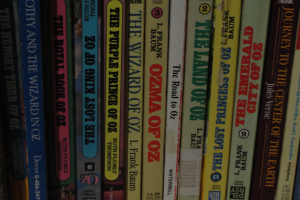
A world I grew up loving...Oz!A world I grew up loving…Oz!

I fell in love with fantasy worlds in fifth grade. That year, one very influential teacher held a reading contest, and I won by immersing myself in Frank L. Baum’s Oz books, the chronicles of Narnia, Lloyd Alexander’s Chronicles of Prydain, all of the Mary Poppins books, and just about everything else I could get my hands on from the tiny elementary school library.

My prize: a boxed set of Tolkien’s works–The Hobbit and The Lord of the Rings–which, I am sure, stamped, sealed and certified my enduring love of fantasy.

Decades later, I still think it’s all about the worlds. Even then, I knew the revitalizing power of escaping. I understood there was a real chance of finding my lost self when I delved into a good book.

Who doesn’t love immersing themselves in someplace new? Taking a break from reality? Isn’t that…

View original post 556 more words

Counting with ClichΓ©s (a Poem)

Peas

Counting with ClichΓ©s (a Poem)

  1. When the fair maiden, Belle, laid eyes on the tall, dark, and handsome stranger, Beau, it was love at first sight.
  2. The more they got to know each other, the more the happy couple realized they were two peas in a pod.
  3. Although things were rough at timesβ€”leading to two separationsβ€”the third time was a charm.
  4. Their passion for one another was the one constant to persist through all four seasons.
  5. One day, when Belle found the scent of another woman on her man and questioned him, Beau pleaded the fifth.
  6. Beau was lucky Belle chose to bury the hatchet and not plant him six feet under.
  7. So grateful, Beau sailed all seven seas with Belle; they were in seventh heaven.
  8. The stork delivered several babies, until they decided that eight was enough.
  9. Although they went the whole nine yards for their kids, for every inch they gave, the kids demanded a mile.
  10. Their eldest daughter, Fair, was a perfect ten, but more spoiled than their youngest child.
  11. In every argument, Fair would hold out until the eleventh hour.
  12. Eager to get Fair betrothedβ€”and out of their hairβ€”they invited suitors to meet and greet her with a dozen roses.
  13. The thirteenth suitor, Jinx, finally agreed, but it proved to be an unlucky number.
  14. He literally broke a leg, had to put in his two weeks’ notice at work, and called the engagement off.
  15. The next thing they knew, Fair was fifteen and pregnant.
  16. Needless to say (but I’ll say it anyway), it wasn’t a very sweet sixteen for Fair.
  17. To make matters worse, Fair’s seventeen weeks ultrasound revealed triplets.
  18. Her parents fought with her like cats and dogs; it sounded like the War of Eighteen Twelve.
  19. Fair wanted an abortion, but her parents refused; she cursed them for living in the nineteenth century.
  20. Each of Fair’s brothers and sisters played twenty questions with her.
  21. Fair was one girl who was not hoping to be forever twenty-one.
  22. Then one day, Jinx showed up on her doorstep and proposed with a twenty-two karat diamond ring.
  23. Suddenly, Fair felt not twice, but three times a lady.
  24. The triplets made more work than there were hours in a day, yet Fair loved every minute of it.
  25. Of course, everyone lived happily ever after.

CopyrightΒ Β© 2014 Chris McMullen

Amazon Sales Rankβ€”Why Does It Matter to Customers?

Rank

Obviously, sales rank is important to Amazon. It makes sense to showcase products that are more likely to sell, and those that have been selling frequently have a proven track record. Sales rank factors into bestseller lists, ordering of search results (to some extent), visibility with special features, etc.

Sales rank is also important to authors and publishers. It helps to show how the book is selling.

Perhaps the strange thing is how important sales rank is to customers.

Popularity

Do people like to buy what’s popular? Aren’t there people with their own sense of style, who want something nice of their own that few other people are enjoying? Some clothes are highly popular, yet you still see a large percentage of people who are uniquely attired.

A few times in the past five years Amazon’s sales rank has been down for several hours to a few days. Sales tend to drop off during this period. Usually, no sales rank means that book has never sold. Suddenly, books that usually sell a few copies per day stop selling while the sales rank feature is temporarily disabled. Why? Because having no sales rank versus a rank of 30,000 can have a significant impact on a buying decision.

It’s like many customers are thinking, “If it’s not good enough for everyone else, it’s not good enough for me, either.” This seems to be a prevalent opinion in the well-educated, well-read world, at least as it applies to book-buying decisions.

There are a few customers who will take a chance on a book with a sales rank in the millions, but not many, and certainly not enough to go around for the millions of books that have received this fate.

Not a Constant

It’s funny when a book that spends most of its time with a sales rank in the millions suddenly sells, and sometimes sells a few more copies that same day. The only thing that has changed recently is the sales rank.

However, while a sale does drop the sales rank considerablyβ€”it can drop down to 100,000 from the millionsβ€”very often it doesn’t spark more sales. That’s because sales rank combines sales from the past day, week, and month. When a book that rarely sells suddenly sells, its sales rank drops down near 100,000, but rises very quickly. There is a narrow window of opportunity for customers to discover the book with that low sales rank before it returns to its home country.

In contrast, when a book that normally sells every day stops selling for a while, its sales rank climbs much more slowly.

In this way, the deck has been stacked. Hot sellers have a distinct advantage; slow sellers are inherently disadvantaged.

Fairness

This does make sense in many ways. If a book truly is lousy, its sales rank should skyrocket and that book should become less visible.

In other ways, it can seem unfair. There are tens of millions of books on Amazon. It’s absurd to think that only 100,000 are good and 30,000,000 are lousy.

What about books with a very tiny audience? Even if the book is excellent, sales are limited.

How about books that don’t fall into any standard categories? Even if the book is wonderful, it’s hard to find.

There are a number of reasons that a book can be very good, yet not sell well.

Unfortunately, there are also many books that don’t provide a good customer experience: ridiculously short (just a few pages), very poorly written, major formatting issues, etc.

For many customers, the simple solution is to buy books with a track record of selling wellβ€”i.e. look for a low sales rank.

Indeed, many customers only shop bestseller lists.

This gives big publishers and popular authors a distinct advantage. A large preexisting fan base gives rise to many early sales. At the same time, these books have a history of providing customers with good reading experiences, so this advantage has been earned.

The new author who throws a book out there has a distinct disadvantage. It takes time to get discovered and by the time a few readers have tried it and found it to be very good, the history of slow sales makes it a challenge for the sales rank to rebound.

Premarketing

Many publishers and authors do premarketingβ€”sending out review copies, creating buzz, going on blog toursβ€”hoping to stimulate early sales, knowing how much this can impact the fate of a book.

Abuse

A few people may try to abuse the sales rank factor, but probably in many cases to no avail. For example, Amazon could easily track authors who buy several copies of their own books and factor this into sales rank (if it’s not already done, it could change). If a lousy book does manage to acquire a low sales rank number, the Look Inside and reviews are likely to expose it for what it really is.

Opportunity

You can look at sales rank as a hurdle, in the sense that it takes sales to get sales.

Or you can look at sales rank as an opportunity.

Self-published books aren’t penalized compared to traditionally published books and popular authors. Any book that sells well improves its visibility. A self-published book that sells 20 copies today will compete in visibility with a traditionally published book that sells 20 copies per day.

Daily sales matter much more than weekly or monthly sales. Monthly sales determines how slowly or rapidly sales rank climbs when a book isn’t selling. When a book is selling, it is daily sales that matters.

This means that a traditionally published book that’s sold thousands of copies in the past still needs to sell copies today to compete with a newly released self-published book. In this way, the playing field is surprisingly level.

Sales rank tends to reward books that help themselves. If you write a highly marketable book, have a cover that attracts your target audience, write an effective blurb, have an engaging Look Inside, and the book generally pleases an audience, all this is on your side: It will help your book get discovered and sell when it gets discovered. Every sale helps your sales rank.

If you also do effective marketing, every sale helps even more. The more sales you stimulate through good content and effective marketing, the more sales rank helps you rather than hurts you.

This is why there are many indie authors achieving some measure of success. The opportunity is yours, too.

Reviews

Another way that sales rank matters to customers has to do with reviews.

Many customers look at the number of reviews and the sales rank.

If a book has several reviews, but a large number in the sales rank, the customer may be suspicious. How did the book get so many reviews without selling?

Of course, there may be a simple explanation:

  • Sales rank isn’t a constant. Perhaps the book was a hot seller when it first came out, but has now saturated the market.
  • Maybe the author has done some effective, temporary promotions in the past. A freebie can give out thousands of copies of the book without directly improving sales rank.
  • Advance review copies may have helped to get some early reviews.
  • The book may have been out for several years and sold thousands of copies, but just doesn’t have a great sales rank presently. Checking the publication date can help with this point.

But many customers will wonder if there is another simple explanation:

  • Were the reviews posted by close friends and family members?

Regardless of the actual reason, this perception can limit the sales of a book that has good reviews, but not a sales rank to match.

A Problem for Amazon?

There is one way that Amazon may be shooting itself in the foot with sales rank: It may be limiting growth to some extent. Five years ago, if a paperback book sold, its sales rank dropped down to about 50,000. Now, this number can be closer to 200,000, depending on the season. Why? Because there are more books, and more books that are selling about one copy per day on average or better. The change is even more extreme with Kindle.

The more books that sell well, the more books there are with higher sales rank numbers that are selling better than they seem.

In previous years, a Kindle book with a sales rank of 350,000 wasn’t selling at all. Now, it’s selling occasionally, and 1,000,000 is not selling at all.

The numbers are changing, but the perception doesn’t change with it. People still look at that Kindle book with a sales rank of 350,000 and think, “That book never sells.”

If there are now 200,000 books selling about one book per day on average, it will be hard for the number of books selling about one book per day on average to climb up to 1,000,000 because of this perception. If Amazon wants to have more books selling at least once a day, sales rank is working against this. Amazon wants to sell more books overall. It may be hard to increase the frequency of top sellers. It might not be as hard to “double the tail,” i.e. double the sales frequency of books at the bottom, without disturbing sales at the top.

The Good Old Days

When you stand in a bookstore, you have no idea which books are selling well.

(Okay, the bestseller lists and books that indicate bestseller status on the cover are a couple of exceptions.)

For the most part, when you stand in an aisle looking at a shelf, you have no idea which books have sold recently and which haven’t.

(Okay, if you’re a frequent customer, maybe you can remember the contents of the shelf well.)

You do see several copies of a few books, and only one copy of most books. If there are several copies, is that because it’s a hot seller? Or are there so many copies left because it hasn’t been selling?

Imagine if you saw the sales rank on every book. You pick up a book, see the number 462,165 on it. You drop it like a hot potato. You better go wash your hands with soap and warm water.

Gosh, ten years ago I used to pick a book based on the cover, spine, back cover blurb, and especially how the first chapter began. There was no sales rank. There were no customer reviews (unless you want to count glowing quotes on the first page and back cover).

You

How do you shop for books? Is sales rank important to you?

If you feel that sales rank should be important to customers, you can market this perception to others.

If you feel that sales rank shouldn’t be so important, you can market this perception.

You have the chance to discuss sales rank with others and to debate (professionally and tactfully) the pros and cons of factoring this into a purchase decision.

Publishing Resources

I started this blog to provide free help with writing, publishing, and marketing. You can find many free articles on publishing and marketing by clicking one of the following links:

Chris McMullen, Author of A Detailed Guide to Self-Publishing with Amazon and Other Online Booksellers

Follow me at WordPress, find my author page on Facebook, or connect with me through Twitter.

Meeting the Challenges of Self-Publishing

Half Full

Half Empty

When the cup is half full, it’s a challenge to view it as half full instead of half empty.

So what about a cup that seems like it’s 90% empty? Can you stay positive and view it as 10% full?

Because that’s the way it seems sometimes to the indie author.

There are so many challenges to face. Charles Yallowitz recently listed dozens in his recent post, “Paranoia in Self-Publishing?”

Indie authors ride a roller coaster of hills and valleys. When several bad cards fall in place in a valley, it can really challenge you.

Writing should be the hard part, right? After all, that’s the main job. You’re a writer.

But writing comes easily. You’ve been bitten by the writing bug. Muse, rather. She’s sitting on your shoulder. You have no choice but to write. Sure, you might have to deal with writer’s block, but that’s the least of your problems.

And there are serious writing challenges, like choosing the right tense and person, balancing the show and tell act, finding the best way to present dialog, figuring out what effect your book really has on your target audience and how to pull it off as best you can, and any number of intricacies of the craft. You love writing, though, so these are the kinds of problems you live for.

It’s the publishing industry that makes you feel like you need to be connected or sell out, the editing and formatting that never seems to end, the holy-cow-how-could-I-do-that typo that shows up after you order a dozen review copies, the sales that don’t come, the false need you feel to stimulate reviews, the sales that don’t come after you get reviews, the bad review with just the right words to sting you where it counts, the in-laws and exes who point out the exaggerated disadvantages of self-publishing, and especially when a few of these issues slap you in the face while sales fall off a cliff all in the same never-ending week. So you decided to self-publish, eh?

Half Full

There are positives and there are negatives. There are times when many things are going your way. You don’t realize how much it’s going your way because you see how much better it could be. No matter how good it gets, it could always be better. But when the negatives come by, you don’t miss them.

It’s like Chutes and Ladders. When you’re going along, you think how you could be going up a staircase. When you’re going up a staircase, you think how you could be going up the super long staircase. And there are so many players in this game, some are going up that staircase. When you slide down a chute, you feel like you’re losing the game. But you could be glad that you’re making progress, on average. You could be grateful you didn’t fall down the really long chute and have to start over from the beginning. You could be happy just to be playing the game.

The negatives will test you. When several come together, they will really test you. They beckon you to react emotionally, instinctively. They challenge you to do what you know you should refrain from. They tempt you to put your reputation on the line. They may even make you question your scruples.

But it’s just a long, deep valley on this roller coaster. Statistically, there will be periods where many negatives come together.

It’s also an opportunity. To show what you’re made of. To demonstrate your patience. To be professional. To show your character. To draw motivation. To meet this challenge. To survive. So that the next time you come to a valley, you will have a positive experience to draw from, remembering how you’ve been through this before. So the next time you reach a peak it will taste that much sweeter.

You can do this.

  • Count the good things. You’re a published author, you get to enjoy writing, you’ve sold X books, you’ve had Y good reviews. Make a list of 20 positives. Get your book out, look at the cover, see your name on the cover, browse through the book. You’re a published author. Enjoy the feeling. Remember when you first saw your book?
  • Exercise. Get some of that frustration out while also doing something that feels healthy. You spend too much time sitting at a desk. In stressful situations, you need to exercise and eat healthy foods.
  • Work on a writing project. Outline your next book, write a poem or short story, write a blog post (but don’t publicize problems that may cast you in a negative light), start a new book, edit a book, do something that will make you feel productive and help get your mind off the negativity. Or get away from it all and spend time with family.
  • Do a search online and read about other authors who’ve gone through tough times. Don’t let yourself get talked into making mistakes. Find mistakes that authors have made and learn from them. See that others have gone through worse. Discover what others have done that was unprofessional, and force yourself to go the professional, patient route.
  • Seek support and advice from your connections, but don’t do it publicly in a way that may make you seem unprofessional. Find someone who will give you comfort when you need it. Find someone who will tell it like it is and offer valuable advice when you can handle it.
  • Ask yourself if there is anything helpful that you can draw from the experience. Sometimes the bad provides an opportunity for improvement. Sometimes the bad is just bad and doesn’t offer anything positive. If there is something that may be useful, try to use it to improve. If there is nothing useful, try to put it in the past and move on.
  • Try something new that you’ve been considering that’s free or low-cost and doesn’t involve a large time commitment, like maybe a new marketing strategy that just requires a couple of hours to learn something new. This is not a good time to spend much money or devote considerable time; think low-cost and not much time long-term. It will help get your mind on something else, and it will give you a new source of hope.
  • Make a dartboard with your bad reviews, bad comments, lousy sales rank, or whatever other problems are on your mind. Throw darts at your problems, shred your problems, stomp on your problems. Get it out of your system.
  • Don’t make any quick decisions during these times. Think them through carefully. Get a good night’s sleep before deciding. Patience can be your best ally against stupidity and embarrassment during times like these.
  • Feel creative. Find your passion. Refuel your motivation. If you’ve been working hard, take a break and come back rejuvenated.
  • Do some small good deeds. Help others in some way. Especially, help others anonymously. The gift of giving not only helps others, it might make you feel a little better, too. It takes a special kind of someone to spread goodness during tough times. You could be that someone. You could be a super hero. A disguised super hero. It may give you the inner strength of a super hero.
  • Read a book. Go to another world, live the life of a hero, find a better reality, overcome tougher hardships. Rediscover that writing is about the reading.
  • When you get knocked down, when you get kicked while you’re down, don’t give in to the circumstances. Rise above them. Laugh hysterically. Ask, “Is that all you’ve got?” Tell ’em, “’cause I’m a writer and I could do a whole lot worse than this.”

Publishing Resources

I started this blog to provide free help with writing, publishing, and marketing. You can find many free articles on publishing and marketing by clicking one of the following links:

Chris McMullen, Author of A Detailed Guide to Self-Publishing with Amazon and Other Online Booksellers

Follow me at WordPress, find my author page on Facebook, or connect with me through Twitter.