Effective Book Marketing – Part 1

Thousands of authors are actively promoting their books. A few do this successfully; many do not. A wide variety of marketing tools are available. A few work very well; some are ineffective; and others work well for some books or authors, but not well for others.

How do you know which marketing strategies will be effective for you?

(1) First identify your target audience.

This should be incredibly obvious, yet it’s extremely common to find authors promoting their books in ways that aren’t geared toward their target audience.

Your target audience is NOT anybody with a pair of eyes!

Sure, anybody with eyes can read your book, and you’d love to sell your book to everybody who can read. However, the reality is that the vast majority of people who will read and enjoy your book will be people who frequently read books from the same genre.

Don’t waste your time or money with marketing tools that are likely to yield a tiny percentage of new customers for your book. For example, if you promote a mystery novel in a way that reaches 1000 people, but only 5 of those 1000 people actually read mysteries, 99.5% of your promotion is being wasted.

Identify your specific target audience. A few people outside of your target audience may read your book, but the vast majority of your readers will come from your target audience, so focus on reaching people in your target audience.

People in your target audience are most likely to enjoy the book, give you word-of-mouth sales, and review your book. When you succeed in marketing your book to people outside of your target audience, they are less likely to appreciate and understand the book, spread the word to others, and review your book (and if they do, the audience mismatch might lead to a negative review).

That’s one problem with the KDP Select free promo books: Many people read books outside of their normal genre just because they’re free (and often don’t even read the description, Look Inside, or any reviews to try to learn what the book is about beforehand). When the book doesn’t live up to their (often unrealistic) expectations, this tends to show up in product reviews.

If your book is a romance intended for adults, then your audience is adult romance. Your target audience does not include erotica (otherwise, your audience would be erotic romance, not adult romance), nor does it include teen romance. You might get a few readers from these similar genres, but most readers will be looking specifically for adult romance.

(2) Gear your marketing efforts toward your specific target audience.

Your promotional strategies will be much more effective when your exposure primarily reaches members of your specific target audience. If you have a fantasy novel and leave flyers for your book on the windshields of cars outside of a science fiction convention, you’re wasting your time with a target audience mismatch. Even worse, if you pass flyers out at a mall, only a tiny fraction of the people there will be fantasy readers. (Then there is the issue of solicitation being prohibited at many places.)

Where can you find your target audience? Strive to understand your target audience. Where are they likely to hang out (both online and in person)? What common interests will they have?

You have to be realistic with this question, too. For example, many authors will fall into traps like, “Science fiction readers might play chess.” True, they might. What you really want to know is how many chess players avidly read science fiction? If it’s a small percentage, then it’s not worth your effort to target chess players.

For a science fiction book, you want to find places where you can interact with people both in person and online who are very likely to be science fiction readers. Going to a Star Trek party, attending a science fiction convention, joining a science fiction club, meeting people online at a discussion forum for science fiction, and writing articles about science fiction (and getting them published on blogs or websites with significant science fiction traffic) are examples of how to reach this specific audience.

With enough thought and determination, you can find your target audience. For a self-help book, for example, get involved in community service that relates to the subject. If you’re having trouble thinking of ideas of where to find your target audience, tell people about your book and ask for some suggestions.

Find Part 2 of this article here: https://chrismcmullen.wordpress.com/2013/04/13/effective-book-marketing-part-2/.

Chris McMullen, author of A Detailed Guide to Self-Publishing with Amazon and Other Online Booksellers

Follow me at WordPress, find my author page on Facebook, or connect with me through Twitter.
A Picture’s Worth Ten or a Hundred Thousand Words

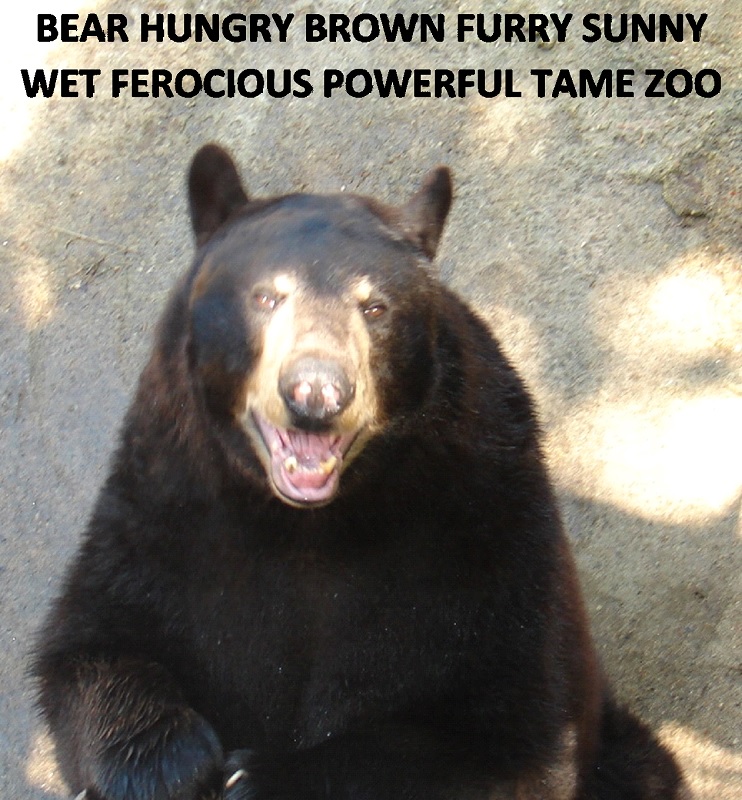
According to the age-old adage, “A picture’s worth a thousand words.” That may be true in terms of how much writing it would take to describe what is shown in a picture.

Bear Words

However, when it comes to file size, this equation doesn’t hold true. Instead, a single picture may equate to tens or hundreds of thousands of words.

Each letter in a word uses one byte of memory. A small, simple JPEG picture that measures about 200 pixels by 200 pixels might have a file size of about 10 to 20 kb, where each kilobyte (kb) is 1000 bytes. A simple JPEG picture that measures 1200 x 1600 pixels might have a file size of hundreds of kb. Higher resolution images or rich formatting may easily drive the file size into megabytes, where each megabyte (Mb) equals 1000 kb or 1,000,000 bytes. (Note: k = kilo = thousand, M = mega = million. You wouldn’t mind earning a M$ from your royalties, for example.)

If a word is about 5 letters long, on average, this means that a simple 200 x 200 JPEG picture takes as much memory as about a few thousand words, a 1200 x 1600 JPEG picture equates to about a hundred thousand words, and higher-resolution or richly formatted pictures are worth nearly a million words.

Why does this matter? This affects both publishers (including self-published authors) and readers of eBooks. First, there is a maximum size on the content file of an eBook – for Kindle, it is 50 Mb, and for Nook, it is 20 Mb. An eBook that features many large, high-resolution, richly formatted pictures is in danger of exceeding this limit.

Secondly, the content file size may affect the list price and royalty. For example, with Amazon’s Kindle, an eBook can only have a list price of 99 cents if the content file size is below 3 Mb and a list price of $1.99 if the content file size is below 10 Mb; otherwise, the minimum list price is $2.99. If you want to sell a Kindle eBook for less than $2.99, you must keep the file size below these thresholds.

Also, Amazon deducts 15 cents per Mb from the list price before applying the royalty percentage for Kindle eBooks on the 70% royalty option. For example, suppose that you have a 10 Mb eBook that you want to sell for $4.99 on the Kindle. The file size deduction is $0.15 x 10 = $1.50, which means that the royalty is ($4.99 – $1.50) x 0.70 = $3.49 x 0.70 = $2.44. If the file size could be reduced to 5 Mb, the royalty would be increased to $2.97. In this example, saving 5 Mb of file size adds 50 cents to the royalty. For every 1000 books sold, this amounts to $500.

The effect of pictures on file size affects both customers and publishers. Customers appreciate pictures, especially if they have a color eReader like the Kindle Fire or Nook Color. They also like the pictures to have high enough resolution to see the image clearly on any device (from a tiny iPhone to an iPad) and to be formatted well. However, including more pictures also affects the price of the eBook, and – another important consideration – the delivery time of the download (the delay is even longer for older eReaders).

There is a trade-off between the benefits of including many high-resolution pictures and the disadvantages this has in terms of list price eligibility, royalty, and delivery time. The publisher is faced with a difficult challenge to balance this properly.

However, there are a few ways to decrease the size of the content file for the eBook. Keep in mind that you don’t want to sacrifice image quality in the content file for a paperback book, so you need to have two separate content files for your book – one for the eBook and another for the paperback.

In Microsoft Word, right-click on any picture in your content file, choose the Format tab at the bottom of the page, select Format Pictures, uncheck the Apply Only To This Picture box, and select a Target Output (if you have an older edition of Word, like 2003, the instructions are a bit different). E-mail resolution (96 ppi – pixels per inch) will give you the minimum possible file size, and is generally suitable for eReaders. I suggest saving your file with different names before and after trying this so that you still have the original.

Paperback books have the opposite problem. If you submit content and cover files to CreateSpace, for example, a common error is that a picture has a DPI (dots per inch) of less than 200. You want high resolution images on your paperback book, where there is a generous maximum content file size of 400 Mb.

Note the distinction between resolution and DPI. The resolution of a picture is based on how many pixels it measures across and high (like 600 x 800, which is common for full-screen images on eReaders), whereas DPI measures how many dots there are per inch on the printed page. The size of the picture in addition to the resolution affect how many pixels will span one inch.

Coincidentally, there are about 930 words in this blog article. So this blog is equivalent to a single picture – or about a tenth or hundredth of one in modern terms. Picture that!

Chris McMullen, self-published author of A Detailed Guide to Self-Publishing with Amazon and Other Online Booksellers (Volume 2 coming in mid-April)

Professional Touches that Make Books Stand out

Design Marks

Small professional touches on the cover, title page, copyright page, and first pages can make a big difference. They may be little design marks, but they help to create a favorable impression.

Self-published books are competing against traditionally published books. Some books appear very much self-published at a glance, others are obviously traditionally published, and there are also many in between – those that use an imprint and look very nice, but not quite.

When we’re buying books, we prefer to find those that look professional. For this reason, all publishers – self or traditional – want their books to look professional.

One way to tell is to carefully examine the cover and Look Inside. Don’t just read the first chapter: If you’re looking for a professional book, look for visual clues before investing time on Chapter 1.

Following are a few examples. I’m not affiliated with any of these authors in any way. I’ve never met or interacted with any of these authors. I haven’t even read these books (well, not yet): I chose them for the professional touches that they illustrate, not because I wanted to recommend the content.

(1) Enchantment by Guy Kawasaki:

http://amzn.com/1591845831

See the gold starburst on the paperback cover. Such a starburst doesn’t need to be an award; it can be any note worth highlighting, although in fiction it’s usually an award. (By the way, although this book was published with Penguin, this author has recently self-published a book with CreateSpace.)

Starburst

Look at the pictures in the Look Inside of the Kindle edition. These are not just the front cover repeated inside, but are sending a unified message with the front cover by using the same butterfly.

Interestingly, the Look Inside for the paperback brings up the “Kindle edition” (or so it says), but when you click on the Kindle edition and then Look Inside, it’s different. The actual Kindle’s Look Inside includes a logo, for example. The logo is another professional touch.

Study the copyright page. Every traditionally published book has a very detailed, professional-looking copyright page. Virtually every self-published book has a minimal (if any) copyright page.

Why? Because self-publishers are thinking (A) customers don’t care about the copyright page and (B) they want to get to Chapter 1 as soon as possible, hoping to hook the reader who begins reading. Think about why traditional publishers don’t similarly minimize their copyright pages. Their copyright pages look very professional.

Customers don’t stop and stare at the traditionally published copyright pages. They pass right over them. It’s not going to be a delay on the potential customer’s route to Chapter 1. However, customers will catch a glimpse of the copyright page as they skip past it.

When customers see the minimal copyright page, it creates the impression that the book is self-published. Not much effort was put into this page (perhaps like the rest of the book?). When they catch a glimpse of the long, detailed, professional-looking copyright pages of traditional publishers, it makes the impression that a professional staff has combed through and prepared the book.

(2) The New Rules of Marketing & PR by David Meerman Scott:

http://amzn.com/1118026985

You’ll find another starburst here; this cover also has matching top and bottom borders. (Note that this book is geared toward businesses.)

Check out the customer images and you’ll find an Amazon Video – a video from the author. There are many ways to use AuthorCentral to help make the book’s Amazon detail page look professional, too.

In the Look Inside, of course the copyright page is again very professional (since it’s published by Wiley). The page numbering, horizontal lines after section headings, and matching gray boxes outlining some short paragraphs are design touches that help the book appear more professional. Note that traditionally published books often have such design marks – which come in a wide variety of styles – but that they don’t overuse them.

(3) The Millionaire Next Door by Thomas J. Stanley and William D. Danko:

http://amzn.com/1563523302

This cover has a corner stripe with text instead of a starburst (but when you Look Inside, there’s a similar cover with a starburst instead of a corner stripe).

It also features a logo on the copyright page.

Topher

(4) Love Medicine by Louise Erdrich:

http://amzn.com/0061787426

Most fictional books that include a starburst do so to indicate an award of some type (whereas a nonfiction book that doesn’t have an award or bestseller rank to advertise might use a starburst just to say something like, “Includes answers”).

If you publish a fictional work and don’t have an award, note a couple of other design marks on this cover: part of a green circle on the bottom right and a quote between brackets at the bottom center. Harper chose to clearly advertise that this was a “newly revised edition” right on the cover.

Notice the logo/picture at the bottom of the title page, which also appears at the top of the copyright page.

Find the flowery artwork border at the top of the family tree pictures. Such artwork can also be used as section breaks (provided that it matches the theme of the book). If so, it should be short – just taking up about one line of text (and often isn’t nearly as wide as the artwork I’m referring to here). For eBooks, a glyph section break should be in gif (not jpeg) format, and should look good against white, sepia, or black backgrounds (it’s very important to check the preview in each format with each background).

(5) Wool by Hugh Howey:

http://amzn.com/1476733953

When you Look Inside, first you find the logo, then you see a cool picture on the next two pages that looks like the “page” is torn. Although this is now published by Simon & Schuster, this author had been featured at CreateSpace.

Banner

Look closely at a variety of traditionally published paperbacks (and, where available, compare with their eBooks). You will sometimes see a couple of lines or other marks on the cover, copyright page, and other pages, or special marks used in a page header or footer, for example. This sample will help you see what’s possible and help to inspire a professional looking design of your own.

Check out traditionally published books in your own genre to see what kinds of design features are common. Some kinds of designs are more popular in some genres and much less common in others. You don’t want your book to seem out of place.

Don’t go overboard and overuse design marks. Don’t make the cover too busy with too many design details. Notice that traditional publishers tend to add occasional touches. An occasional design touch stands out very well – you notice it better this way.

Make sure that no design marks or pictures seem out of place. Any glyphs or images should match the theme of the book.

Chris McMullen, self-published author of A Detailed Guide to Self-Publishing with Amazon and Other Online Booksellers (Volume 2 coming in mid-April)

Fighting Word’s Picture Compression

Microsoft Word has a tendency to compress pictures down to as little as 96 dots per inch (DPI), even when the box is checked telling Word not to do this. That’s great when there is a priority on saving memory, but not desirable when printing for quality.

The first step is to disable automatic picture compression, while realizing that this step – all by itself – is not sufficient. In Word 2010, for example, click the File tab, scroll down below Help to find Options (at first hidden toward the bottom of the list), select Advanced, scroll down to Image Size and Quality, and check the box that says, “Do not compress images in file.” Do this before inserting any images into the file.

Don’t copy and paste pictures into the Word document. Instead, click Insert and then Picture.

Don’t resize or otherwise manipulate the pictures in Word. Instead, edit the images with photo-editing software that doesn’t compress them prior to inserting them into the Word document.

Don’t use Save As to convert the Word document to PDF. Instead, print the file to PDF using a Word-to-PDF converter. For self-publishing, find a PDF converter that allows fonts to be embedded in the file and transparency to be flattened.

Also, check the DPI of the pictures at the source – i.e. the software (e.g. PhotoShop) or device (e.g. camera or scanner) that created the pictures. Using 300 DPI or more produces sufficient print quality images for most applications.

F8

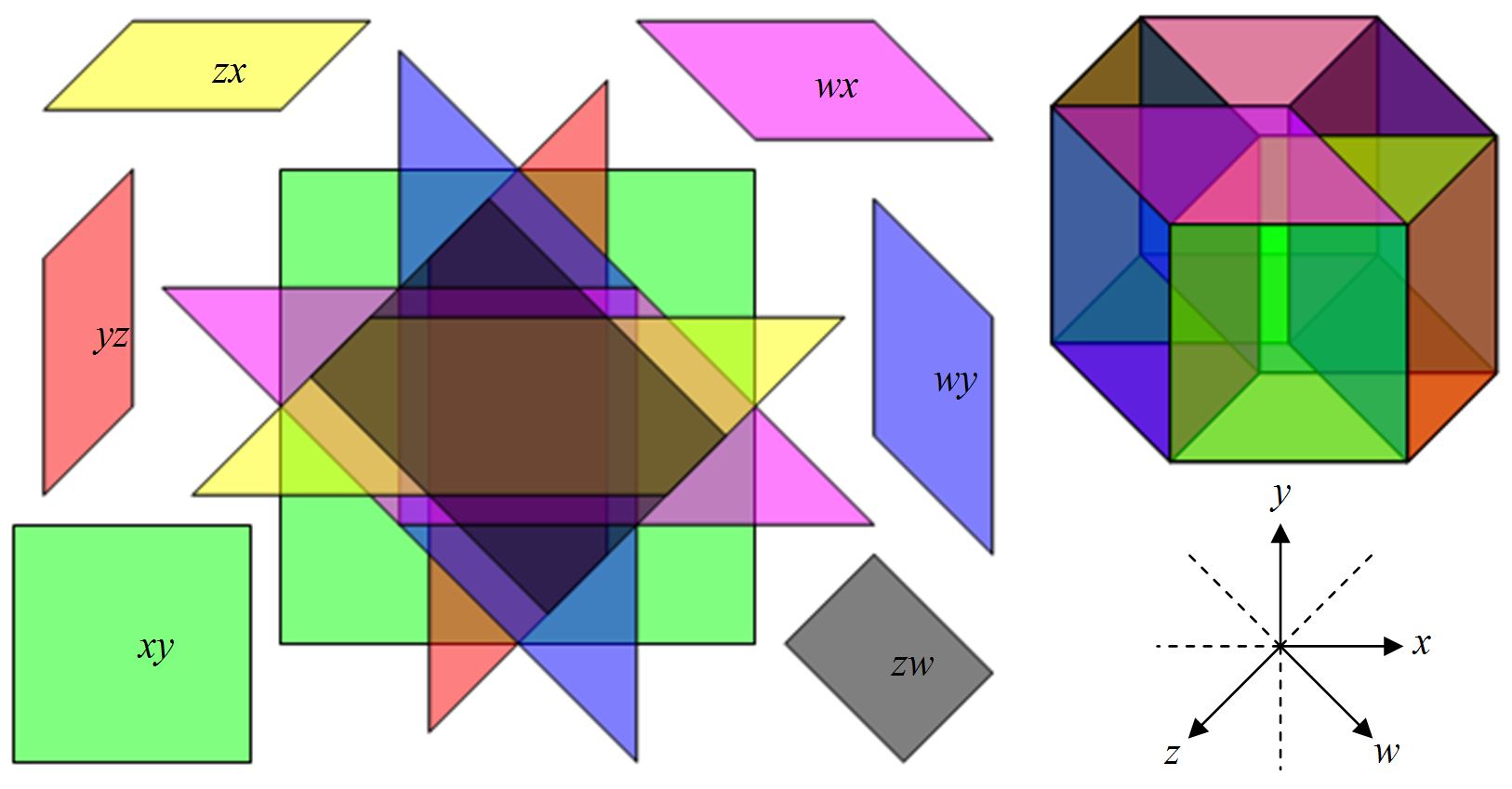
As long as we’re talking about pictures, I may as well include one with a tesseract and a half-dozen planes intersecting in four-dimensional space. If anything else, it may help to make Word’s picture compression seem somewhat less complicated. 🙂

Authors of eBooks have the opposite problem. With eBooks, what counts is the number of pixels along the width and height. In this case, there is a premium on compressing the images in order to minimize the file size of the eBook. To compress the pictures in Word 2010, right-click a picture, go to the Format tab (that appears when a picture is selected), click Compress Pictures, choose 96 DPI (KDP’s recommendation for most eBooks), and uncheck the box that says, “Only to this picture.”

For eBooks, after inserting an image into Word, right-click the image, choose Size and Position, go to the Size tab (in the pop-up window), and set both the width and height to 100% scaling (Word automatically scales images down to a lower percentage when they would otherwise exceed the margin width).

May your pictures come out picture-perfect! 🙂

Copyright (c) Chris McMullen, Author of the Improve Your Math Fluency series of workbooks and self-publishing guides

An Effective Blurb: The Challenge of Writing Just a Few Words

Authors love to write. If you love to jog, running a marathon is easy. If you love to sew, knitting a blanket is fun. If you love to write, completing a novel is a breeze.

Typing tens of thousands of words comes very naturally to writers.

Writing very many words is easy. Writing just a few words is the real challenge.

That is, if you want a small number of words to be effective.

The greatest condensation challenge comes when the self-published author completes the book and must prepare the blurb. Most writers incorrectly view this as having to summarize tens of thousands of words with just a hundred words or so.

But the blurb shouldn’t be a synopsis. The function of the blurb is to entice readers to read the book.

The blurb has the best chance of persuading readers to look inside when it accomplishes the following:

  • Immediately captures the interest of the reader; it has to have a great start.
  • Engages the interest of the reader throughout; every sentence – phrase even – must intrigue the reader.
  • Sends the same message about the genre and content as the title and cover. Buyers want to know exactly what they’re getting; when they see mixed messages, they search for a different book. A target audience mismatch is a related problem: If the title and cover sound like adult romance, but the blurb sounds like teen romance, for example, the readers who are attracted to the book probably won’t buy it.
  • Arouses the reader’s curiosity. Don’t give too much information away; leave questions (implied or explicit) that require the reader to buy the book in order to find the answers.
  • Is well-written. If a hundred words or so have spelling, punctuation, grammar, and other writing mistakes, it doesn’t bode well for tens of thousands of words being well-written. Any mistakes in this short writing sample are deal-breakers.
  • Presents the information concisely. Longer blurbs are less likely to hold the reader’s interest. Bored readers don’t buy books. The longer the reader has to decide about the book, the more likely the reader will find a reason not to look inside. This is especially true in fiction. In nonfiction, there may be some books that have valuable content or features where a longer blurb may help sell the book. However, even in nonfiction, the general rule is that a shorter blurb is better.
  • Provides a clear description. Confused shoppers don’t buy books. Too many characters appearing out of the blue, information that seems ambiguous, words or phrases that don’t make sense to the readers, or anything that isn’t crystal clear to the vast majority of the target audience – these things are likely to blow the sale.
  • Creates an accurate expectation. Readers who are successfully enticed to make the purchase will return the book or provide a bad review if the book fails to live up to unrealistic expectations.
  • Looks appealing. Use block style with linespaces between paragraphs. Nonfiction blurbs that have multiple points to make can use bullets. Such formatting can be done through AuthorCentral.

That’s a tall order! A blurb, which must be short to be effective, has so much to accomplish. It’s quite a challenge to make a small number of words achieve so much.

Yet writing an effective blurb is very important. It can make the difference between very few or very many prospective customers looking inside.

There are three more challenges that fiction authors face when writing the blurb:

  • They tend to write summaries instead of blurbs.
  • They know the story, but often have trouble reading their description from the perspective of a reader who hasn’t read the book.
  • They are often partial to some information in the book which really doesn’t belong in the blurb (for a similar reason, there is often an extra out-of-place object on the cover).

Authors should place their focus elsewhere:

  • What are the main aspects of the book that make it very interesting? Stuff that doesn’t make it sound interesting shouldn’t be in the blurb.
  • What do members of the target audience who haven’t read the book think of the blurb? Feedback is very important. The most effective blurbs often undergo several major revisions.

Look back at the top of this blog article and you’ll see that it started with a few short paragraphs with space between them. When you first see the article, you only see the beginning of it, which – like a blurb – must catch and hold your attention. Evidently, it worked for you, since you reached the end. 🙂

Chris McMullen, self-published author of A Detailed Guide to Self-Publishing with Amazon and Other Online Booksellers (Volume 2 coming in mid-April)

Self-Publishing Success?

A few self-published authors have been highly successful, which shows that indie success is possible. But the odds are very long, as the vast majority of self-published books don’t even sell a copy per day on average.

What have the top indie authors done differently? Is it just dumb luck?

No!

Self-publishing isn’t like buying a lottery ticket where the odds are incredible. With the lottery, every ticket has the same odds. But all self-published books are not all equal.

Not every book has a chance of winning the self-publishing lottery.

The top selling indie authors have some things in common:

(1) They followed good business models. Some authors, like Amanda Hocking, actually researched business strategies in their traditional publishing pursuits.

Most self-published authors do one or both of the following:

  • They get an idea, carry it out, and publish it. Business-minded authors won’t write and publish any idea; they will develop the idea as an integral part of the business strategy.
  • They want to do something significantly different than what is traditional. This is great for authors who want to write as artists and aren’t concerned about lack of success. The problem from a business perspective is that the existing readership has well-defined expectations in each genre and the vast majority of books that they purchase meet those expectations. More of these readers will explore something significantly different if the author first publishes a couple of traditional books and then attempts something new after building an audience.

Some authors genuinely prefer to write as artists, knowing full well that sales might be considerably less than what they may be if they approach writing from a business perspective. There is much to be said for the writing artist. It’s just very challenging to get noticed this way and to establish a large readership.

I’m not saying that you should write for money and not write as an artist. Rather, since highly successful self-published authors follow good business models, let’s follow the logic behind business-minded book development and see where it leads. In the end, I will explain how an author might write as an artist – not for money – and yet benefit from some of the same logic.

A business-minded writer doesn’t just write a book, but develops the book idea as part of a business strategy:

  • Start out considering possible subjects and genres. Of those genres which are a best fit for your writing, which are most popular? What experience or expertise do you have? What needs are there on the market?
  • Research each of these possible book ideas. What books already on the market are most similar to each of these book ideas? Look at their sales ranks. What are the best books like these that don’t have a big-name author or publisher? The business-minded author chooses a book idea with the best potential in a genre or subject that he/she is most qualified to write.
  • Research the top books in the genre similar to the book in mind. Can you compete with the writing in these books? Read these books to learn the unspoken rules of the genre. For example, the business-minded author won’t allow the protagonist to act in a way that will upset much of the potential readership and will create an ending that will please the target audience. The business-minded author develops an idea and writes a book geared toward the largest possible target audience that he/she is likely to attract with his/her writing skills.
  • The business-minded author is thinking about marketing throughout the writing process. This author is seeking input on the cover, title, and blurb for two reasons: to help generate “buzz” about the upcoming book and to see what features please or upset the target audience. (In contrast, too many indie authors disregard important criticism that they receive and focus mostly on feedback that coincides with what they wanted to hear.) They develop a great cover – often hiring a great cover designer – knowing how important this is to marketing. They wrote their blurbs and first chapters to be captivating, knowing how strongly this affects sales.
  • Pinpoint the target audience and discover where to find them and how to reach them. The business-minded author is thinking long and hard what marketing strategies will be most effective for them. Those who have a knack for business tend to be the most diligent, motivated marketers. They also know how to use price, discounts, giveaways, and series to their advantage. Everything from the cover to writing to marketing is part of an overall business strategy.

We’ll return to writing artists at the end.

(2) Most tried diligently to get traditionally published, but didn’t succeed in this until after becoming successful as indies.

Although they didn’t get traditionally published (before they broke through), they were doing all the right things toward achieving this, which helped them develop the skills that they ultimately used to thrive on their own.

  • They tried to improve their writing to get traditionally published.
  • They spent much time studying readerships in an effort to identify their target audience, since publishers are very interested in this.
  • They researched business plans to develop book ideas and write proposals that would help them get traditionally published.
  • They learned about marketing in order to convince publishers that their books would succeed.
  • They attempted to meet people who might help them with their writing careers.

These are all valuable skills that any authors can benefit from, self-published or not. In the last point, they also developed handy contacts.

(3) They were highly motivated to become successful writers. You have to be highly motivated to learn about business strategies when your initial goal is becoming an author. All those rejection letters from traditional publishers fueled their motivation. The best place for those letters is a bedroom ceiling or bathroom wall that you’ll see every morning.

Never give up. Constantly strive to improve.

***

Back to my earlier point: You don’t necessarily have to write for money to be successful.

You can be a writing artist and succeed.

The pure businessman who develops the perfect business strategy to write and market a book is highly motivated to do the marketing, but must find the passion to put into the writing and learn to write well.

The pure writer who writes for art’s sake naturally writes well and puts the passion into the writing, but must find the passion to do the marketing in order to be successful.

There is a limitation from the pure business perspective – i.e. how well can you write, how well can you tell a story?

The limitation for the writing artist is that not all book ideas are good ideas, not all stories have a potential readership.

Almost nobody is a pure business person or pure writing artist.

Determine which side you’re on – those are your strengths. The more you’re willing to improve your weaknesses, the more balanced you’ll become as a self-publisher, which will increase your chances of success.

Chris McMullen, self-published author of A Detailed Guide to Self-Publishing with Amazon and Other Online Booksellers (Volume 2 coming in mid-April)

Grammar Style (Short ‘n’ Fun)

End a sentence with a preposition if you want to.

Commas, use them, frequently, if you like.

Don’t be afraid to use a semicolon; write without fear.

Occasionally, use an -ly adverb when carefully constructing sentences, even though you’re generally supposed to avoid using them unnecessarily.

Is it a hospital or an hospital? a R.S.V.P. or an R.S.V.P.? a @ sign or an @ sign?

I left him lying next to her pronoun because it was you that expected us to confuse them this way.

The object of this sentence is the subject, but that’s okay because the verb “to be” doesn’t take an object.

It is I, not me. Now use me, not I.

Tom looked at Bob. He winked. Tom wasn’t sure if Tom or Bob was supposed to wink. They went to the screenwriter for clarification.

Fragments. Useful. Sometimes.

This sentence was becoming very interesting until (a parenthetical remark appeared out of nowhere).

Hy-phen-ate – add a dash.

Punctuate (your) sentences “most ‘properly’”: Otherwise, your readership will complain; or worse – they might…

Mind your %$&# language!

SCREAM AND SHOUT WITH CAPS!

Squeezeitalltogetherbyremovingthespaces.

mIxInG iT uP: wHaT’s WrOnG wItH tHaT?

Don’t reck’n ’twas s’posed t’nclude s’many ’postrophes ‘n’ c’ntr’ct’ns.

Matter order not does.

Chris McMullen, self-published author of A Detailed Guide to Self-Publishing with Amazon and Other Online Booksellers (Volume 2 coming in mid-April)

Karma for Authors Who Self-Publish

In order to be successful, a self-published author must come up with a good book idea, develop a fine story, write well, edit the manuscript, learn how to format both a paperback and an eBook, and become adept at marketing.

That’s a tall order. Why risk all of that hard work with any possible bad karma?

If you don’t believe in karma, then don’t think karma – think branding. The image that you brand as an author can have a significant impact on sales. Don’t risk bad book karma or negative branding – whatever you prefer to call it.

What do you hope for as an author?

  • Many sales.
  • Frequent reviews.
  • Word-of-mouth referrals.
  • A nice review average.
  • Good and fair comments about your work publicly.
  • Necessary criticism privately.

Authors may not all share the exact same wish list, but these items are probably pretty high up on most writers’ lists.

Now assess your book karma:

Part 1 – You as a reader:

  • How often do you read self-published books (that you discovered yourself)?
  • Do you leave good reviews for books (written by complete strangers) that you like?
  • Which books (written by complete strangers) have you referred to friends, family, acquaintances, or colleagues?
  • What have you done that might help an author you don’t know whose book you enjoyed?
  • Have you ever (publicly) said anything bad about any other self-published books?
  • Have you ever (publicly) said anything bad about self-publishing? eBooks? Amazon? Kindle?
  • What do you say when people you know ask you about buying eBooks, whether you like your Kindle, if self-publishing is a good idea, etc.?

Part 2 – You as a writer:

  • Did you take the time to perfect the editing and formatting of your books?
  • How do you react when you receive criticism about your work (privately or publicly)?
  • Do you ever respond negatively to customer reviews?
  • In what ways have you helped other aspiring authors improve their own work?
  • Have you ever abused the customer review system, tags, likes, etc.?
  • How do you behave at online discussion forums and your other online activities?

Chris McMullen, self-published author of A Detailed Guide to Self-Publishing with Amazon and Other Online Booksellers (Volume 2 coming in mid-April)

Artists Who Love Marketing – an Oxymoron?

Whether you paint a picture, write a book, or invent a new product, if you did this with the creative passion of an artist, it’s only logical for you to be highly motivated to market your work. Yet most artists express a loathing for marketing.

Why? One reason is that marketing sounds like business and salesmanship. Artists enjoy creating their art, and authors love to write. But business and sales often doesn’t easily arouse their interest.

Let me take a detour and explain that marketing creative products – like paintings and books – isn’t about business and salesmanship. Then I will return to my main point – i.e. why artists should naturally be motivated to market their work.

Marketing a creative product is more about discovery and branding an image, and less about business and salesmanship. Books, for example, aren’t sold by persuasion like used cars. In fact, no salesman is even present – this is obvious for eBooks, but even in the store there is usually just a cashier. What bookstore will thrive with a pushy salesman looking over customers’ shoulders in the middle of the aisle?

Similarly, self-promotion doesn’t tend to attract much interest. “Hey, I just wrote a book and it’s the greatest thing ever so you should check it out,” isn’t the way to sell books.

Instead, when you personally interact with people – in person or online – and people “discover” that you are an artist, author, or inventor, for example, they often want to learn more. People like to buy products that were made by people they know – how often do you get such a chance? – provided that they discover it rather than having it thrust upon them.

“What do you do for a living?” “What have you done recently?” “How’s your new book coming along?” There are so many ways for people to learn more about you and discover your work. They could even click on your online profile.

The more people you personally interact with, the more your work may get discovered. This also helps to create “buzz” when you release a new product, which helps to earn early sales and reviews.

Marketing a single artist’s creative product involves branding. Advertising to say, “This is the best thing since sliced bread,” isn’t going to help, and demanding, “You should go buy this product now,” is a waste.

Commercials don’t work because the majority of people do as they’re told or listen to whatever the television tells them. They work because of branding. When people are standing in the grocery store, deciding which product to buy, they don’t remember what the television said was better and they’re not there because the television told them to go shopping – more often than not, they simply recognize a product that they’ve heard before. That is, they remember the brand. People tend to buy products they’ve heard of, and for which they like what the brand symbolizes.

Fortunately, a single artist doesn’t need to pay advertising fees to brand an image. Branding can be done for free. Getting your product, name, and image in front of your target audience helps to establish your brand as an artist or author. The more they see this, the more they are likely to recognize your product, then one day when they are buying a similar product, they may buy yours.

One way to get your target audience to see your brand is to post valuable content online. Posting advertisements about your product, posting content about yourself, and posting links to your other sites won’t likely attract much interest. But posting valuable content for your target audience may attract new customers. If they appreciate the content that you offer, they might click on your profile to learn more about you – and, lo and behold, “discover” your work.

Every time they visit one of your sites, they see your name, your photo, and an image of your product. Someday, when they are buying a similar product, if they recognize and buy your product, the branding was successful.

Where persuasion fails, discovery often works. Where overt (and even paid) advertising is ineffective, free branding is a great help. So don’t think of marketing as business and salesmanship. Think of it as interacting with others on a personal level so that your work can be discovered, and branding an image so that you and your work may be recognized.

Now for my main point: Artists should naturally be motivated to interact with others personally so that their work can be discovered, and should naturally be motivated to attract the attention of their target audience so that they can brand their image (for which, posting valuable content online is just one of many examples).

So why should artists naturally be motivated to market their work?

It’s simple, really: If you have passion for your artwork or book, you should also have the passion to share this work with others. And how do you share your work with others? Marketing! Use your passion for your work to motivate yourself to work diligently to share your work with others through marketing.

Furthermore, when others see the passion that you have for your work firsthand, they are more likely to get interested in your work. (But be careful to show passion and sound confident, but not to be boastful or overconfident.)

Would you rather buy a painting that was made by an artist that was passionate about his/her work, or just kind of threw something together because he/she was bored?

If you meet two artists, and one sounds kind of bored talking about his sculpture, while the other is clearly passionate about his/her work, which sculpture will interest you more?

If you’re passionate about your work and you strongly believe in it, then you should also be passionate about sharing your work with others (not just “getting it out there” – art doesn’t tend to sell itself). If you’re not passionate about marketing your own work, it suggests that you weren’t all that into it or that you feel like something may be wrong with it.

You don’t have to be a salesman to sell your artwork or book. You just have to be passionate about sharing it with others. Marketing through discovery and branding is a natural fit for the artist. It’s just a matter of perspective.

Chris McMullen, self-published author of A Detailed Guide to Self-Publishing with Amazon and Other Online Booksellers

Marketing Isn’t an Afterthought

Unfortunately, most new self-published authors don’t consider marketing until after they have published their books. When sales are dismal, then they see firsthand the importance or marketing. Or they ask other authors on a community forum, “Why isn’t my book selling?” One of the answers will be marketing.

It sure would be nice if we could just throw our books out there and watch them sell like hot cakes. Everyone hopes for this.

But there’s a major problem with this approach: When the book doesn’t sell all by itself, the best marketing opportunities have already passed by. Now it’s too late. So most authors settle for better-late-than-never.

The problem is that after you publish, if you haven’t yet marketed, you’ve lost your chance to create buzz for your book and your lack of sales history will be a challenge to overcome. When you effectively market early sales and build a healthy sales history, this gives you much more exposure on Amazon – e.g. through Customers Also Bought lists and 100 bestseller lists (if you really succeed).

Marketing is something that should begin before the book is published – when the book is still being written:

  • Generate “buzz” for your upcoming book. You want people talking about your book in person and via social media before it’s released. You don’t have to spend money on advertising to achieve this.
  • Let people discover that you’re working on a book. “What have you been up to lately?” People tend not to like advertisements and salesmen, but they like to feel that they’ve discovered new things.
  • When you meet people, let them discover that you’re a writer. People like to buy books from authors they’ve personally interacted with.
  • Show your passion for your work. When others see your passion, it makes them more interested in your work.
  • Get feedback on your cover design. First, you get valuable suggestions and find what puts people off and turns people on. It also helps to create a little buzz.
  • You can also solicit feedback on your title and blurb. Do this in person and online.
  • Carefully let people know on occasion something that’s special about your project – e.g. if you spend an abnormal amount of time writing or doing research, or if you’ve had a few edits from a professional editor.
  • Don’t overdo it. If you talk about your book every time you interact with friends, family, and acquaintances, you’ll get tuned out. Let them inquire about how your project is coming along.
  • Publish a paperback with CreateSpace and use Amazon Advantage to enable preorders. Customers can then order your book before it’s even published.
  • Preorders give your book a headstart in sales rank and help to quickly develop Customers Also Bought associations. A tremendous jumpstart can give you mega-exposure on 100 bestseller lists.
  • Send out advance review copies. Goodreads can help with this. This gives you a chance to earn a few early reviews.
  • Realize that your cover is a valuable marketing tool. A striking image attracts attention, relevant imagery signifies the genre. A memorable cover with one main image makes your book easier to recognize and describe to others.
  • Perfect your blurb and Look Inside before you publish because these can have a profound influence on sales.
  • Perfect your editing, formatting, and storyline before you publish. If people love your book and the writing, they are far more likely to leave good reviews and recommend your book to others by word-of-mouth.
  • Start a blog before you publish your book. This may only help you create a small following, but that’s not the point. The point is when your About the Author section directs readers to your blog, you don’t want them to show up and find an empty blog with one post, two followers, and three likes. Have some content available and gathering started before you publish.
  • Don’t just blog about yourself unless you’re already a celebrity. Try to develop useful content that relates to your book and genre that will attract not only fans, but perhaps others from your intended audience, too.
  • Develop your author websites before you publish so that you can include the links in your books.
  • Get your social media (Facebook, Twitter, etc.) started before you publish. This can help you create buzz for your book and get early sales and reviews. Get your pages setup and have active content before you direct traffic there.
  • Setup fan, book, author, and/or imprint pages at Facebook.
  • However, be careful not to bite off more than you can chew. If you have a blog, Twitter, Facebook, separate accounts for author, book, publisher, fan club, etc., you want to be able to manage everything and keep content up-to-date. Some pages may not need updating (like a simple page for the publisher), but some do – like your blog and Twitter.
  • Choose one author photo that you can use everywhere. This recognition helps you create your brand/image as an author.
  • Develop a logo before you publish so that you can use it on all of your books and websites.
  • Choose an imprint before you publish and develop a website (free, perhaps) to help lend it some credibility.
  • Setup your AuthorCentral Author Page at Amazon. Setup your Goodreads author account.
  • Use your own passion for your book to motivate yourself to market diligently. Believe in your book enough to want to share it with others, to want to market actively so that others will learn about it.

The longer a book sits on Amazon and doesn’t sell well, the greater the history of no sales counts against you. If you suddenly market some new sales, your sales rank still skyrockets quickly because of that lack of history. Market effectively out of the box to build a strong early sales rank. Get your book started off on the right foot.

Publishing Resources

I started this blog to provide free help with writing, publishing, and marketing. You can find many free articles on publishing and marketing by clicking one of the following links:

Chris McMullen, Author of A Detailed Guide to Self-Publishing with Amazon and Other Online Booksellers

Follow me at WordPress, find my author page on Facebook, or connect with me through Twitter.