
Building Credibility as an Author

Trust 2

Have you heard stories about plagiarism, authors behaving badly, review abuse, major formatting problems, or books with spurious typos?

If such stories are circulating, readers may be aware of them, too.

Would those readers grant you credibility simply because your name is in the author field? Or would credibility be something that you must earn?

Let’s imagine that we’re shopping for a book and consider some ways that we might assess an author’s credibility.

Packaging Display

We see the cover, blurb, and Look Inside on the book’s product page.

What does the cover say about the author?

  • Is an appealing cover a sign of an author who likes to do everything right? Does it show that the author believes in the book? Is it a symbol of professionalism?
  • If the cover seems to lack effort, is it a sign that the book is similarly lacking effort?

The answers to these questions are not necessarily, “Yes.” For example, the author might believe the adage that one shouldn’t judge a book by its cover, or might have The Catcher in the Rye in mind as inspiration.

However, the shopper doesn’t know the author’s true motivation; the shopper only sees the result. Cover appeal does make an impression.

What can we learn about the author from reading the blurb and Look Inside?

  • Are typos, formatting issues, or writing mistakes a sign that the author didn’t take the work seriously? If these short writing samples have problems, how does that bode for hundreds of pages?

There may be a reason for it. For example, the author might be a gifted storyteller who just doesn’t have the gift of grammar. Regardless of the reason, doesn’t this impact the author’s credibility?

Contributors

I read a thought-provoking article1 by former publicist Sandra Beckwith last night, which inspired this point.

If the author receives help from an editor or a cover designer, does this lend credibility to the book?

  • Does the presence of an editor suggest higher quality?
  • Do other contributors show that the author is willing to work with others, recognizes his or her limitations, and is serious about perfecting the book?
  • When the author does everything alone, does this suggest that there may be some aspects that are lacking, that the book could be better?

These are all tough questions. I’m not suggesting that the correct answer to each question is necessarily, “Yes.” What I’m wondering is how such things may impact readers.

Public Relations

What can we learn from how an author handles criticism?

  • Does an author lose credibility when he or she comments on a review? I’ve heard from several reviewers who say that they strongly dislike it when an author invades this space. So even if you comment tactfully, this may lose credibility with some shoppers.
  • Let’s go a step further. Suppose that the author comments, sounding defensive. Does this make the author seem needy, immature, or unprofessional?
  • What if you check out an author’s blog, and the author is lashing out at a reviewer there? Although the blog is the author’s own site, it is in the public eye. How does this look to a prospective reader?

The toughest public relations challenge may be cyber-bullying, which poses a serious threat to authors, both indie and traditional. Ionia Martin, an avid book reviewer who often provides helpful advice for authors, suggested in a recent article2 that authors who are unfortunate enough to encounter this should deal with it using intelligence, honesty, and tact.

Perhaps intelligence, honesty, and tact, would go a long way toward building credibility in all of an author’s public relations.

Author Photo

Assuming you’re looking for a book you’d like to read and not for an author you’d like to date, does the author photo matter?

  • Do you need to look like an author in order to be a great writer? Or do you just need to look professional?
  • Or is it the quality of the photo that matters, not so much how the author looks? Do things like lighting, red-eye, blurriness, and pixilation impact the author’s credibility?
  • Does a touch of personality appeal to you? Does too much personality put you off?

These questions might be worth considering, even if they aren’t easy to answer.

Author Biography

What do you look for in an author’s biography?

  • For nonfiction, do you want to see the author’s relevant qualification?
  • For fiction, does it matter to you if the author has a writing degree? Should the author have taken a writing class? Should the author belong to a writing group? Do you want some sign that the author has received feedback or help from others?
  • Perhaps, for fiction, you don’t want to see a resume, but want to learn something about the writer’s relevant life experience or personality.

Not all of these questions may be straightforward. For example, some people have strong opinions about writing classes. I don’t want to open that can of worms, but would rather simply state that opinions on this differ. My concern here is just whether or not this impacts an author’s credibility with some prospective readers.

We probably have different expectations for what should be in a biography, especially for fiction. An effective biography will lend the author credibility with the target audience.

Did you know that CreateSpace has free marketing resources? One of these includes tips for writing an author biography.3

Marketing

When the author interacts with the target audience, both online and in person, the author has a chance to build credibility with prospective readers, but the author also has the opportunity to detract from it.

What do you look for when you meet an author?

  • Do you like to see signs of professionalism? Suppose you visit an author’s blog. Your first impression could be, “Wow, this author really knows what she is doing,” or it could be, “Umm, uh, well…”
  • If the author’s writing samples in a casual setting appeal to you, does that help to create interest in the author’s book? If there are frequent writing mistakes, is that a red flag?
  • Does the author’s character impact your buying decision? How about the author’s personality? Or the author’s writing persona? After all, you’re going to read the book, not go on a date with the author.
  • Do you like to see a few signs of the author’s humanity? Do you want to learn more about the author as a person?

References

1. http://buildbookbuzz.com/author-social-media-persona

2. http://readfulthingsblog.com/2014/01/07/the-legacy-you-leave-a-few-thoughts-on-literary-hate-packs/

3. https://www.createspace.com/en/community/docs/DOC-1871

Resources

I started this blog to provide free help with writing, publishing, and marketing. You can find many free articles by clicking one of the following links:

Chris McMullen, Author of A Detailed Guide to Self-Publishing with Amazon and Other Online Booksellers

Follow me at WordPress, find my author page on Facebook, or connect with me through Twitter.
Marketing a Book Is Like Dating

Date

The Bar

Authors dress their books up with covers and blurbs, and mingle with readers through marketing. Readers are searching for good books, checking out those covers and blurbs, looking for a good catch to take home and bundle up with.

The Pick-up Line

Trying to stand out, authors try to design fantastic covers, promote their books with special deals, or catch interest with a clever strapline. Readers want to be impressed; they won’t fall for a common one-liner. If the line does impress them, they will play hard to get.

The Blind Date

A reader who enjoyed a book sets the book up with a friend. The friend is nervous. If the book doesn’t turn out to be good, he will feel obligated to grind through it so he doesn’t let his friend down. He’s also worried that the book may be too good for him, with more vocabulary and complexity than he’s prepared to handle.

The Courtship

Authors interact with their target audience in person and online through readings, signings, seminars, presentations, blogs, fan pages, podcasts, and interviews. They brand their images over a period of months, hoping to show readers that they are serious about the relationship.

The Kiss

Finally, after weeks of branding, the reader has clicked link to view the book’s product page, read the blurb, and—oh, here it comes, the moment we’ve been waiting for—KISS!—the reader is viewing the Look Inside. It better be a good kiss. If you like it, there are hundreds of more pages where that came from. Come on, kiss this book like you’ve never kissed a book before.

The Commitment

It was a good kiss. The reader invited the book home for the evening. This is the best night ever, a moment the book will treasure for the rest of its life. It’s a dream come true.

The One-Night Stand

What happened? It started with a good kiss. The book went home with the reader. They had a great time. The next thing the book knows, it was returned. The reader is gone. How could this be?

The Dump

Once the reader got home, it discovered that while the book had a handsome face, it was really a scoundrel of a character. Beyond the Look Inside, the book turned into something awful. The book is promptly dumped, confined to sit on a shelf, watch the reader pass by a few times each day, and bear the agony of seeing the reader sit by the fireplace with other books, smiling and laughing gleefully. Life is just unbearable.

The Climax

Just what every book and reader were hoping for, the book was good enough to please the reader, who finally reached the climax of the book. The feeling is just wonderful. For a few minutes. Then the book realizes that this is the end. Well, it was good while it lasted. At least the reader left some change on the nightstand.

The Marriage

Every author dreams about the marriage: Readers who enjoy the first book so much they propose to marry the whole series. It will be a grand wedding.

The Affair

While conversing with a fan, an author learns that she is reading a book in the same genre by a popular author. How could she do a thing like that? What will people think?

The Divorce

It’s that tragic moment when the reader gives up on a series. It was a match made in Heaven. What could possibly have gone wrong?

The Proposal

I started this blog to provide free help with writing, publishing, and marketing. You can find many free articles by clicking one of the following links:

Chris McMullen, Author of A Detailed Guide to Self-Publishing with Amazon and Other Online Booksellers

Follow me at WordPress, find my author page on Facebook, or connect with me through Twitter.

Self-Publishing Experiments

Experiment

With millions of books to choose from, why would anyone choose to buy an experiment?

If the author treats a book like it’s an experiment, the quality of the content, packaging, and marketing will reflect this. Customers will see it.

  • It’s not worth putting a fantastic cover on a book that’s an experiment.
  • It’s not worth perfecting the editing or formatting for an experiment.
  • It’s not worth crafting a most wonderful story for an experiment.
  • It’s not worth marketing an experiment.
  • The author won’t be confident in or passionate about an experiment.

So why bother making an experiment?

If you just want to know if your writing appeals to others, simply share drafts of it or join writing groups.

It’s not Necessary to Experiment First!

Why not? Because there are already millions of books on the market. Researching those, especially successful indie books, will prove far more valuable than any experiment you might do yourself.

  • Sales ranks and reviews can help you gauge which kinds of books are or aren’t popular.
  • Repeated comments in a subgenre can help you learn specific things that many readers do or don’t like.
  • Writing samples in the Look Insides can help you see what kind of writing appeals to readers.
  • Covers of bestselling indie books can help you learn how to attract your target audience and signify your subgenre.
  • Look Insides of bestselling traditionally published books can show you what a nicely formatted book should look like.
  • Product pages of bestsellers can show you how to make the most of your book’s detail page.
  • Author pages and websites of top indie authors can show you a variety of marketing possibilities.
  • A ton of free and low-cost publishing and marketing resources can help you perfect your book.

Study books that have succeeded. That’s experimental data that you have right at your fingertips.

It’s a Mistake to Experiment First!

Why? Because your first impression is very important. A big part of marketing is the author’s brand. It takes time to build credibility as an author.

If your first effort is an experiment, many shoppers who come across your book and were interested in it may remember your book or name in the future. The next time they see one of your books, even though it may be much better, they may pass on it simply from their first experience.

Success in the publishing business is difficult to come by, so start out by putting your best foot forward.

About My Blog

I started this blog to provide free help with writing, publishing, and marketing. You can find many free articles by clicking one of the following links:

Chris McMullen, Author of A Detailed Guide to Self-Publishing with Amazon and Other Online Booksellers

Follow me at WordPress, find my author page on Facebook, or connect with me through Twitter.
Riddle: What Does Every Writer Need to Succeed?

Question

It’s not a pen because you could use a pencil or a computer.

It’s not a medium on which to write because the writing could simply exist in a bard’s mind.

It’s not a brain because that doesn’t distinguish a writer from any other art form.

It’s not lucky underwear because this job is clothing-optional.

It’s not a dictionary or thesaurus; although these come in handy, they aren’t always needed.

It’s not an audience because it is possible to define a new genre and gather a new audience.

It’s not money, as a writer can start out empty-handed and become successful.

It’s not writing instruction; while it does help to be well-versed, it is possible to become fluent through avid reading, for example.

It’s not praise, since although most writers would like it, the road to success is often paved with much criticism.

It’s not criticism because it’s already spurious and not everyone benefits from it.

It’s not an agent or great connection, which may help, as some writers have succeeded without this.

It’s not research, though it can be a big asset, since it can be compensated or trumped by a huge imagination.

It’s not imagination because many writers succeed with small changes to what’s already out there.

It’s not a pet squirrel, yet it’s highly recommended.

It’s simpler than all that, and everyone can have it. It’s passion.

Writing without passion. Is it worth reading? Was it worth writing?

Copyright © 2014 Chris McMullen

Authors, Don’t Write Books; Create a Whole New World

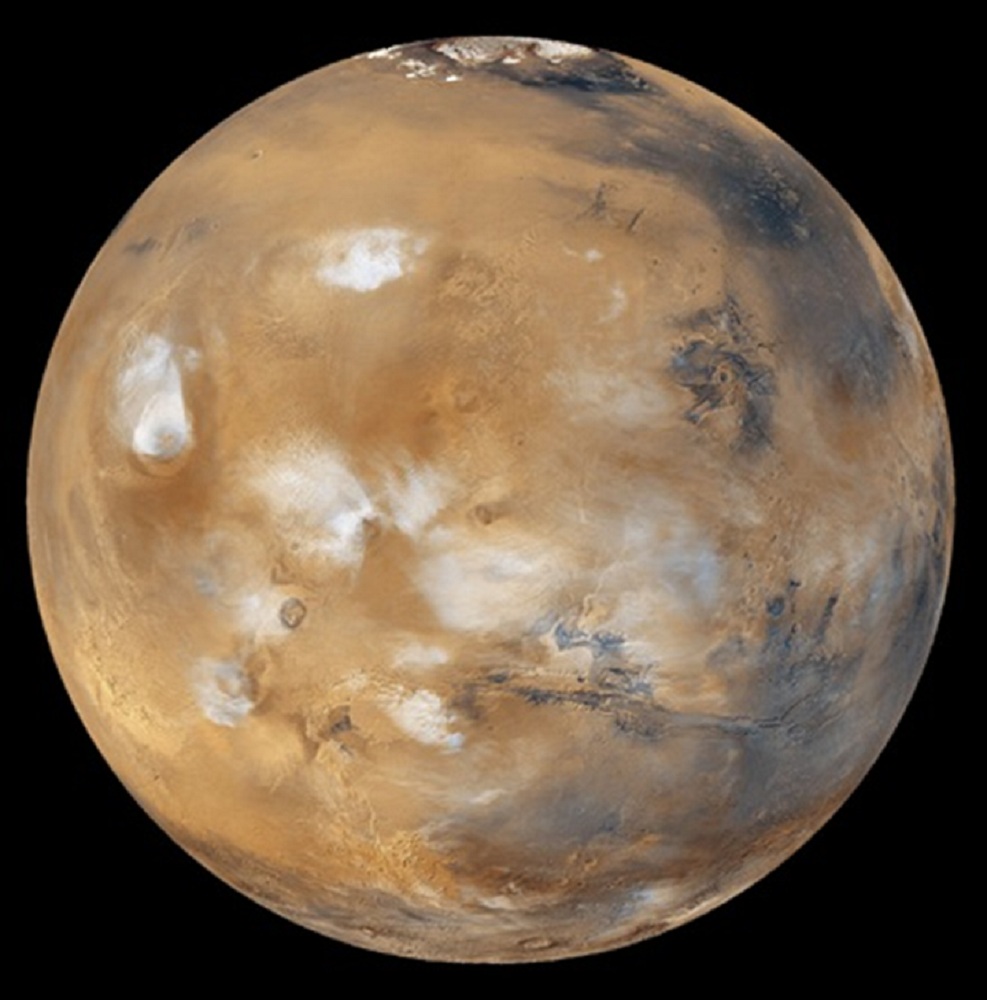
Image of Mars from NASA.

Image of Mars from NASA.

People don’t buy books. People buy the experience that a story provides.

So authors shouldn’t write books, and they shouldn’t market books. Authors should create a whole new world, and they should market the experience of visiting that world.

Don’t think of your book as a book. Think of the story as one part of the world that you created.

Don’t think of how to market your book. Think of how to get people interested in your world.

The world you create is far more than a mere book. It’s the world, not the book, which people want.

How do you do this?

  • Give your world life before your book is published. Spread the word about the world you are creating. Create buzz for it. Reveal the cover, blurb, and sample chapter in advance.
  • Design striking, relevant images for your cover, blog, social media pages, website, bookmarks, business cards, brochures, PR kit, all your online activity, and all your printed materials. These materials come in different sizes, so you need a flexible design. All the products should fit together. They don’t all have to be exactly the same, but it should be immediately obvious that they match. Everything prospective shoppers, readers, and fans see are a visual representation of your book.
  • Supplement your book with additional material. Post free bonus content on your website or an email newsletter to give fans an incentive to stay in touch. This might include maps, character sketches, or short stories or poems, for example. Not everything has to be free. For example, you can sell a short story that relates to your book.
  • The great thing about a series is that the world can last well beyond just one book. It also helps you create anticipation for each book in the series and steadily grow a following. You can make the first e-book permanently free or 99 cents to help lure readers into your world. An omnibus with significant savings can entice readers to buy the whole world all in one shot.
  • Sell, give away, or hold contests for additional products like bookmarks, special editions, t-shirts, buttons, or maps.
  • Create a highly marketable world and it will help attract visitors to your world. Some ideas are more marketable than others. Some writing is more pleasing than others. The packaging—cover, blurb, and Look Inside—are also very important in attracting attention to your world.
  • Find your target audience—especially, people who aren’t already in your following—in person and online, interact with them, and show them the benefits that your world has to offer. You’re not selling a book, but a roundtrip ticket to paradise. Introduce people to your world. Create a video trailer that depicts your world visually.

Self-publishing world

I started this blog to provide free help with writing, publishing, and marketing. You can find many free articles by clicking one of the following links:

Chris McMullen, Author of A Detailed Guide to Self-Publishing with Amazon and Other Online Booksellers

Follow me at WordPress, find my author page on Facebook, or connect with me through Twitter.
New Year’s Resolutions for Writers

Happy 2014

What writing resolutions are you making for 2014? Here is a sample of goals that you might set:

  • A writing quota for books, stories, or articles that you will write. Set a reasonable expectation.
  • Marketing goals might include trying out new ideas, learning new strategies, or devoting more time to this task.
  • If you feel like you worked too hard in 2013, you might want to devote more time to family and find a better balance between writing, marketing, and family time.
  • You might want to devote more time to writing if marketing or other activities are cutting into your writing time.
  • The new year might be a good time to try out a new writing style or genre, or to develop some new characters.
  • Making an effort to get traditionally published, or switching over to self-publishing, are possible goals.
  • You might join a writer’s forum or book club, attend a conference, or get involved with a writing-related group.
  • A new year is always another opportunity to stay positive and deal with stress better.
  • Common resolutions, like exercising more and eating write, are valuable for writers, too, especially as we spend much time sitting at a desk.
  • Perhaps you’d like to read more books in 2014.

What are your writing resolutions for 2014?

Happy New Year!

I started this blog to provide free help with writing, publishing, and marketing. You can find many free articles by clicking one of the following links:

Chris McMullen, Author of A Detailed Guide to Self-Publishing with Amazon and Other Online Booksellers

Follow me at WordPress, find my author page on Facebook, or connect with me through Twitter.
What Are Your Writing Goals?

Goal

How you define success, establish expectations, and prepare a marketing plan depend on your objectives.

So as you plan the new year and make writing resolutions, take a moment to consider your objectives as an author.

Here is a sample of writing goals:

  • To master the craft of writing. Spend more time writing, of course. Also, spend time reading classics and the kind of writing you wish to master. Seek feedback from readers. Search for writing tips.
  • To share your writing with others. Post writing on your blog. Publish a book. Publish poetry, short stories, essays, or articles online or in print. Market your written works to your specific target audience.
  • To support your writing hobby financially. Research which kinds of books you are a good fit to write, where there is a significant demand. Perfect your book to improve your prospects for good reviews and recommendations. Seek a traditional publisher or design a highly marketable cover, blurb, and look inside. Learn how to market your book effectively. Look for related jobs that you may excel at, such as editing or cover design.
  • To have fun. Write in your spare time as a hobby. Enjoy it. Be creative. Devote more time to writing and less time to marketing and other related activities. Find fun and creative ways to do those other activities so you can keep the focus on enjoying your writing. Don’t get caught up in stats or reviews.
  • To leave a legacy for your children. Involve your kids with your books. Make up stories for them at bedtime. Write special stories or poems just for them and publish them privately. Encourage your kids to assemble books and publish those privately. Mention your family in the acknowledgments or dedications section of your book. Specify how royalties will be awarded and distributed in your will, and provide information that will help your heirs understand and manage your books and author platform.
  • To gain accolades. Master the craft of writing and storytelling. Focus on perfecting your book idea and the book itself. Enter contests. Learn from your experience and enter more contests. Create a fan page and include a link to it at the end of your books. Interact with your fans. Attend writing conferences. Build connections among writers, agents, and editors. Develop a very thick skin because there is much criticism on the road to praise.
  • To try out a new genre or writing style. Don’t view it as an experiment. Have fun with it, but also take it seriously. Research what you will be writing thoroughly. Motivate yourself to master the new art. Do your best, as if it’s the only way you will ever write.
  • To share your knowledge or help others. Master the material you wish to share. Master the art of explaining ideas clearly. Master the art of teaching effectively. Research your specific target audience’s learning styles and background level. Perfect your article or book. Post relevant free content on your website. Post relevant content on other websites to reach people who aren’t already in your following. This can be an online article or a YouTube video channel, for example.
  • To get published traditionally. Research books that are highly marketable which are a good fit for you to write. Master the craft of writing your book in a way that will please a specific target audience. Make connections with agents, editors, illustrators, cover designers, and publicists. Receive advice from experienced, successful publicists and agents at the outset of your project. Subscribe to magazines and newspapers that are a good fit for your writing. Read and study those articles for several months, then submit your own articles for publication. Research how to write query letters and book proposals. Find a literary agent. Post your rejection letters where you will see them every morning to fuel your motivated self-diligence. Strive to improve. Never give up.
  • To become instantly rich and popular without any effort. Don’t write at all. Get a full-time job. Be frugal. Spend every spare penny on lottery tickets. Hope. Pray. Don’t be disappointed if it doesn’t pan out.

Publishing help

I started this blog to provide free help with writing, publishing, and marketing. You can find many free articles by clicking one of the following links:

Chris McMullen, Author of A Detailed Guide to Self-Publishing with Amazon and Other Online Booksellers

Follow me at WordPress, find my author page on Facebook, or connect with me through Twitter.
Why Do You Write?

Why


Is your writing fueled by passion?

Is it a hobby that’s much fun?


Do you possess knowledge to share?

Do you give help because you care?


Perhaps you write to entertain.

Maybe you do it to heal pain.


Please don’t say you write for money,

Although sales are sweet as honey.


Are you just a muse’s vessel?

Are you writing to soothe your soul?


Could your books be your legacy?

Could they be art for all to see?


Copyright © 2013 Chris McMullen

What Readers Want

readers want

If you’re a writer, the most effective way to attract readers is to carefully consider what readers want. It really is that simple.

But don’t fall into the common trap of thinking things like, “Most people won’t mind if there are typos,” “I know someone who paid $25 for an e-book, so I can sell mine for $9.99,” or “The content is more important than the cover.”

Don’t think, “What will the reader settle for?” Think, “What does the reader want?”

Fewer customers will settle for it. Many more customers will buy what they want.

I don’t mean that you have to write in the most popular genre. I don’t mean that you have to sell out, compromising your beliefs. I don’t mean that you have to study the bestsellers and copy their techniques.

You do need to think long and hard about what your specific target audience wants if you wish to maximize your sales. Following are specific examples of what I mean:

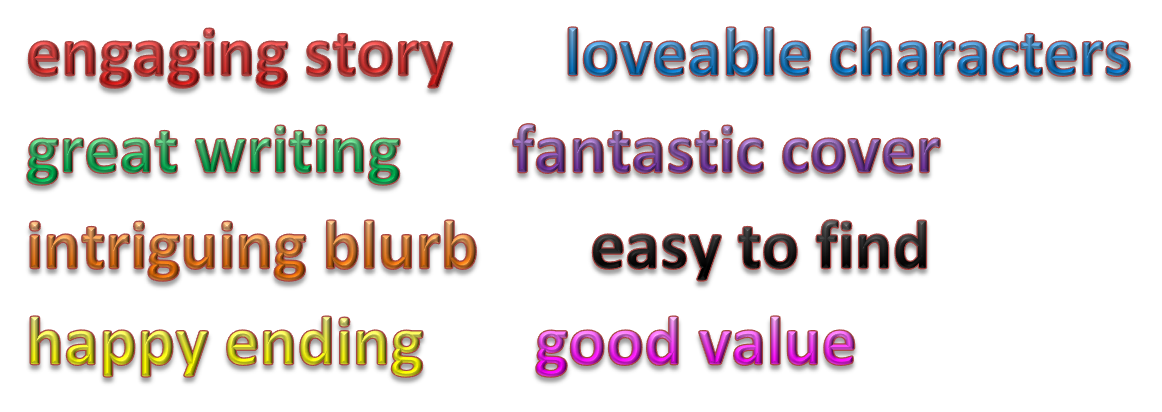
  • Readers want stories that they will enjoy and nonfiction books that will be useful. The storyline or content should be complete, thought out well, engaging throughout, pleasing to the specific target audience, better than average, and within reasonable scope of their expectations (based on the cover, blurb, and category). Readers want to love or despise the main characters, and they want to relate to characters or enjoy a new experience.
  • Genre readers want their expectations for the genre to be met. For example, romance readers want to fall in love, cry over broken hearts, see broken hearts mended, enjoy a happy ending, etc.; in a given romance subgenre, they want just the right amount of explicitness. They don’t want the protagonist to have certain behavior flaws. It pays to research and understand the specific target audience. Readers don’t want stories that violate important rules for the genre.
  • Readers want a clear indication of what they’re getting at a glance. This means that the cover must visually show what your book is about. The precise fiction subgenre or nonfiction subcategory should be obvious from a quick glance at your cover. The cover should also indicate the nature of the content. Why? Because the reader wants to find books quickly. Books that don’t send a clear signal, or which send mixed messages or the wrong signal, won’t get the limited attention that shoppers have to offer.
  • Readers want the blurb to be honest, clear, concise (so they can decide quickly), and pique their interest. If 100 words don’t interest the reader, it wouldn’t be wise to read 100,000 words by the same author.
  • Readers want books to be easy to find. They want to find it in the relevant subcategory (and not find it where it doesn’t belong). They want to find it with relevant keywords (but not find books that shouldn’t show up in the search). They want the cover to depict the content and genre clearly to help them find the book. They want a title that’s easy to remember and spell. They want to see book reviews that help them find good books. They want the author or publisher to go to the trouble of helping them find books they are likely to enjoy. But they don’t want intrusive advertising.
  • Readers want books that are well-written, nicely formatted, and free of spelling, grammar, and other mistakes. They are paying money for a book and they are investing time in the book, so why shouldn’t they expect to receive a professional book in return?
  • Readers want a great value. They don’t just want a low price. They want a great book at a fair price. Some readers shop a higher price range thinking that you get what you pay for. But no matter what the reader pays, the reader expects to receive a great book. Even if the book is free. It’s not worth investing several hours on a book for it not to be professional and good, even if it’s free.
  • Readers want a great story, great characterization, great editing, great writing, great formatting, a great cover, a great blurb, and a great price. Why not? When there are books out there that are great all around, why should any reader settle for less?

Give readers what they really, really want, and your book is apt to find many more readers. Give them something they must settle for, and only some (if any) will choose to settle.

Remember to ask yourself what readers want. Ask yourself this when you’re writing your book, when you’re formatting your book, when you’re pricing your book, when you’re writing your blurb, when you’re deciding on your cover, when you’re marketing, and in your public relations.

For example, there are customers who absolutely do not want you to invade their space in the review section and comment on a review. Since some customers feel very strongly about this, it may be best to give them what they want.

If you were an entrepreneur running a small business, it would serve you well to think about what the customers want.

As an author-preneur, it serves you well to think about what your specific target audience wants.

About My Blog

I started this blog to provide free help with writing, publishing, and marketing. You can find many free articles by clicking one of the following links:

Chris McMullen, Author of A Detailed Guide to Self-Publishing with Amazon and Other Online Booksellers

Follow me at WordPress, find my author page on Facebook, or connect with me through Twitter.

Fortune Cookie for Authors

fortune cookie

A local Chinese restaurant was one of the few places open last night. I found this note in my fortune cookie: “In great attempts it is glorious even to fail.”

Writers often have extraordinary ideas and make extraordinary efforts.

Authors shouldn’t be content with failure. They should work hard to succeed.

But they shouldn’t fear failure. Focus on perfecting the book. Completing the attempt itself is a success and reward of its own.

I had several book ideas beginning in the late 1980’s. I wrote some books. Started other books. Drew thousands of illustrations on the computer. Typed up worksheets. But didn’t publish my first book until 2008.

The idea that finally motivated me to publish was an introduction to the fourth dimension. I put much time, effort, and energy into my book on the fourth dimension for a couple of intense years, then explored my publishing options. Not content with my traditional publishing options, I looked into CreateSpace, and wound up publishing my extensive backlist over the next few years with them.

My book on the fourth dimension1 was my top seller for several months, but is no longer one of my top ten in sales. It had peaked with a sales rank of about 5,000 (it’s a paperback) for a couple of weeks in 2009, but is presently in the hundred thousands.

I had familiarity with publishing, formatting, and editing from several articles that I had published in Physical Review, and I had previously prepared 100-page master’s and doctoral dissertations, which are highly technical books with precise formatting criteria. Even then, formatting, editing, and publishing a book with hundreds of figures plus tables and equations proved to be a monumental task.

It’s not perfect. If I were formatting this book today, I would use a different design and font choice, plus I now know about things like widows, orphans, tricks to perfect vertical spacing, and foliation.

But I remember how much time, thought, and effort went into that book. From that, I would count this book as a success even if it hadn’t sold, and even though I could make it better with what I know now. I can appreciate the attempt itself.

For artists, isn’t the attempt itself what matters most? Make an extraordinary attempt. Do your best to perfect your art. Then no matter what, it’s a success.

I’ve been fortunate to have many publishing successes. The first six months seemed like a disaster, things started out very slowly, and there have been many trials and tribulations along the way. But I persisted.

I could have failed. For six months, it seemed like I had. But I didn’t fear failure. I gave it my best shot. It paid off in the long run. But even if it hadn’t, I’d still have my book on my shelf in my office, and consider the attempt an accomplishment.

Really, there is nothing to lose. If you finish your book and feel that you have perfected it, you’ve already won before you even sell one copy.

Many authors have extraordinary ideas and make valiant attempts. But not every author feels successful. Part of this has to do with perspective: Polishing and publishing a book is quite an accomplishment. Part of this has to do with expectations and patience. And part of it has to do with the book’s marketability.

Don’t undervalue the attempt itself. That’s the art. It can have much value and its value may be independent of sales or praise.

Don’t lose hope and patience. I know firsthand that things can improve considerably even if they start out very slowly. There is no guarantee that things will improve, but they can, so there is hope. All you can do is your best with the things you can control, and if you succeed at that, that’s an accomplishment of its own.

May you see improvement in 2014. 🙂

Perfecting Your Book

I started this blog to provide free help with writing, publishing, and marketing. You can find many free articles by clicking one of the following links:

Author of A Detailed Guide to Self-Publishing with Amazon and Other Online Booksellers

Chris McMullen

Follow me at WordPress, find my author page on Facebook, or connect with me through Twitter.
1. My original book on the fourth dimension is The Visual Guide to Extra Dimensions, Vol. 1 (paperback)

2. My newer book on the fourth dimension is available in Kindle or paperback, and appears in color: A Visual Introduction to the Fourth Dimension