The Multi-Book Strategy

Math

There are several potential benefits to publishing multiple titles, especially if the titles are similar:

  • When customers see that the author has written several different books, it creates the perception that the author is a serious, dedicated writer. When the author only has one book available, the perception is that this is a new author.
  • Customers who enjoy one of your books are likely to try more of your books. There is a big IF involved here—i.e. how likely are customers to enjoy your books? If so, having multiple titles out can earn you repeat business.
  • The books that have been out the longest are likely to have more reviews, which can help lend credibility to your newer books even when they don’t have reviews yet.
  • You can build a fan base among your prior customers and utilize this to help create buzz and initial sales for your new books.
  • When shopping for print books, customers often buy a few books at a time. One reason is that customers may qualify for free shipping this way; but even without this incentive, multi-book shopping is still common for print books. The more books you have available in print, the more customers are likely to buy a few of your books at the same time, especially if you have similar titles. (If you have an omnibus for a series, you can discount it to offer an incentive to buying the entire set up front.)
  • Your own books are likely to show upon on each other’s Customer Also Bought lists. This way, sales of your own books help to inspire same-day or future sales of your other books.
  • If the titles form a series, the further along you are in the series, the less risk readers will see in the time they will invest. When only the first volume is out, there is a greater chance that the series won’t be completed. (If you have two different series out, but neither is finished, this may be a deterrent. Readers may wonder if you don’t tend to finish what you start.)
  • The more books you publish, the more experience you gain, which gives each new book potential for improvement.
  • Working on your next book will keep you from checking your stats too frequently, take your mind off reviews, and give you an incentive not to waste your time.

More and more authors are becoming aware of possible benefits of the multi-book strategy.

This news leads to a few common mistakes:

  • The temptation to hurry. Rushing the writing and rushing to get the books out there, with the hope of multi-book success, may backfire. Delivering quality content is much more likely to earn referrals and good reviews. A lack of quality due to a rushed delivery is much more likely to earn bad reviews and no future business. (You can revise a book to improve it, but you only get one chance to make a good first impression, your reputation is at stake, and bad reviews are there to stay with print books.)
  • The temptation not to market. Authors may hope that the benefits of having multiple books will make up for a lack of marketing. There are two ways to look at this. First, consider that if the books aren’t selling, the lack of reviews and dismal sales ranks will discourage sales even more so. Second, consider that every customer you attract through marketing may buy multiple books in the long run. Therefore, if you plan to write multiple books, you should be more motivated to market because there is more potential gain in the long run.
  • The temptation to create a larger number of shorter works. The problem here is that customers want a good value for their hard-earned money. If customers feel that the content isn’t a good value, they are less likely to provide referrals, repeat business, or good reviews. If they feel that it’s a poor value, bad reviews are more likely. (This is on top of being less likely to buy the book in the first place because it doesn’t seem like a good value, let alone try out a new author.) Just to be clear, I’m not saying you should price your book cheap (most books should avoid the minimum price point—here is another common mistake, but that’s for another day). Rather, I’m saying that providing full-length books may be better than a series of short stories.

The first books you publish help to establish your reputation. You want to start out with a good reputation as a professional author who delivers quality content. You want to give your first books the best possible chance of earning referrals, repeat business, and good reviews.

Satisfying customers is the key to long-term success.

If you have the motivation and diligence to write and publish several books, then you’re obviously interested in long-term success. So take the time now to give your future its best possible chance of success.

If you have the motivation and diligence to write and publish several books, market your books avidly from the beginning in order to derive the greatest possible benefit from your efforts. You have more to gain from marketing in the long run than an author who only writes one book, so you should be more motivated to do this.

On the other hand, there comes a point where the book is excellent, but if you’re too much of a perfectionist, your book may never get finished. The temptation to rush is much more common than to continually delay because there is always something else that could be improved. However, if you’re one of the perfectionists who may take forever to get your book out there, then you have the opposite problem of needing to say that enough is enough, it’s already very, very good. It helps to have pre-readers who can help you judge this (since thinking it’s very good when it’s not good can be a major problem, while thinking it’s not good when it’s already excellent may be an unnecessary delay); however, getting honest feedback is another issue, too.

Chris McMullen, author of A Detailed Guide to Self-Publishing with Amazon and Other Online Booksellers, Vol. 1 (formatting/publishing) and Vol. 2 (packaging/marketing)

Book Reviews, Interviews, Guest Blogs, & Author Support

Cool Books

I see many bloggers doing book reviews, author interviews, guest blogs, and supporting authors in several ways. That’s awesome! 🙂

I’ve been wanting to do such things for some time now, but the main hurdle has been something that I often preach on my blog:

  • Gear your content toward your specific target audience.

If you write a sci-fi book, for example, a blog that attracts sci-fi readers is the best place for a book review or author interview. Much of the content on my blog, in contrast, is of general interest to many different kinds of authors.

As you may have seen in a recent post, I finally thought of a way to help provide a small measure of support for specific authors and books in the context of my usual content. I plan to make more posts of this sort in the future, including:

  • Demonstrating what is marketable about specific books.
  • Illustrating marketing strategies that specific authors are employing.
  • Showing specific book covers that work well.
  • Discussing marketing features that specific author websites are utilizing.
  • Describing specific books, authors, or websites that provide good examples of some marketing, publishing, or formatting concept.

I feel that specific examples can be instructive, and by featuring a specific book or author, I would be supporting fellow authors in a small way.

Note that I will only mention books or authors by name that I feel are doing something well. Although it may be instructive to point out mistakes, I won’t point out any mistakes of specific books. (When I do point out common mistakes, which can be useful, I do it in general terms, not in reference to any specific books or authors. Well, I may point out my own mistakes, but that’s different.)

Another way that I plan to provide a little support to fellow authors is with some new pages. You can see one of the new pages already, called Cool Books (look for it on the index at the top of the page or in the sidebar to the right). It just has a few scary books right now, but I’ll be adding to it as I get the chance (keep in mind that I’m also working on the Read Tuesday stuff).

If you have an author interview or guest blog in mind that coincides with the publishing or marketing content that I often provide on this blog (e.g. you want to discuss your publishing or marketing experience), please feel encouraged to contact me with your proposal. 🙂

Chris McMullen, author of A Detailed Guide to Self-Publishing with Amazon and Other Online Booksellers, Vol. 1 (formatting/publishing) and Vol. 2 (packaging/marketing)

Book Proposals for Indie Authors . . . WHAT?!

Proposal

One of the advantages of self-publishing is that you can spend more time writing your book instead of investing much time and effort writing and sending query letters and book proposals.

However, it is still beneficial to indie authors to learn how to write a book proposal and apply it to their own books.

I don’t mean to actually sit down and write a detailed, lengthy proposal.

I do mean to consider the ingredients, think how you would prepare each part of the proposal, and do the research that it would entail.

Why? Because it can help you with your marketability and marketing.

When you write a book proposal, you’re trying to convince a publisher that your book is marketable. Writing a proposal will help you better understand how to improve your book’s marketability and how to market your book.

Here are some examples:

  • A book proposal requires you to identify your specific target audience. You need to pinpoint your audience, justify it, and research numbers. The publisher wants to know that the audience exists and how large it is. Why do this? When you design your cover, write your blurb, and choose categories and keywords, you will know who you are trying to sell your book to.
  • You need to make lists of current competitive and complimentary titles when you write a proposal. The publisher wants to see proof that books similar to yours can succeed, to know if your book fills a need, and to determine if the market is already saturated. Why does it matter to you? First, you should share these same concerns. Second, checking out similar titles will help you see what kinds of covers attract your target audience and show you what kinds of formatting are common in your genre.
  • Your experience and expertise are important when proposing a new book. Not only that, but you must present these in a way that will show that you’re the best person to write your book. Why bother? If your author biography is effective at convincing customers that you’re well-suited to you write your book, this can be significant.
  • A query letter must catch the editor’s or agent’s interest while also briefly describing your book. So what? Well, doesn’t a blurb basically achieve this? Your blurb shouldn’t read like a query letter; they are two different things with different objectives. However, they do both need to catch attention and briefly describe what to expect. A little practice trying to sell your book with a query letter may help you see your blurb from the perspective of marketability.
  • You must research marketing options and prepare a promotional plan as part of a book proposal. Publishers want to know what you will do to help sell your book (not what you’re willing to do, but what you will do—if you ever write a book proposal, this distinction will be important). Why worry about marketing? Because, unfortunately, books generally don’t sell themselves. It’s better to learn about marketing before you publish your book than afterward. You should do pre-marketing, such as building a following and creating buzz before you publish. You’ll want to have a concrete marketing plan in place when you do publish.
  • A proposal also requires you to prepare an outline, sample chapter, and chapter summaries. If the editor becomes interested in your book, this will help the editor see your project in more concrete terms. Why does it matter? The sample chapter of a book proposal should sell the book to an editor. Similarly, the Look Inside sample of a book must sell the book to a buyer. The outline and chapter summaries can help you see the structure of your book, make connections, and keep things in order. It can also be a useful planning tool to authors who like to plan things out before they write. Authors who write by the seat of their pants might still find it helpful afterwards.

If you go through the trouble of trying to get published and get rejected or change your mind, use the experience of writing the query letter and book proposal to help you with marketability and marketing.

Note that Candace Johnson at Change It Up Editing has a 10-step article in progress on how to write a compelling nonfiction book proposal.

Chris McMullen, author of A Detailed Guide to Self-Publishing with Amazon and Other Online Booksellers, Vol. 1 (formatting/publishing) and Vol. 2 (packaging/marketing)

An Example of Successful Nonfiction Marketability and Marketing

Pageflex Persona [document: PRS0000448_00019]

Today, instead of discussing marketing ideas in general terms, I will provide a specific example.

I think this will be quite useful. This post features a specific nonfiction book, which has many instructive marketability features, and its author, who has done some wonderful things in the way of marketing which are accessible to most authors.

The e-book is currently number #1 in Happiness at Amazon, and was in the top 1000 in paid books in the Kindle store when I checked on it last night. This is a result of the book’s marketability combined with the author’s marketing. I will try to reveal many of the instructive features that have made this book successful, with the hope that doing so may help other authors.

I plan to do a future post on a fiction book, too. I also have one in mind that features a specific website with instructive marketing and publicity features. If these work out well, I’ll consider preparing posts like these more often.

The book I selected is Happiness as a Second Language by Valerie Alexander. This book is available as a paperback, e-book, and audiobook. I happened to discover Valerie’s blog several months ago and immediately bought the book because it strongly appealed to me. (I have several books from my fellow bloggers, and you can bet I’ll be a happy shopper on Read Tuesday.)

I recommend checking out the paperback edition on Amazon. Explore the book’s detail page and the Look Inside. There are specific features that help its marketability. I’ll refer to these; if you see them for yourself, it will be more instructive. The Kindle edition has the much better sales rank presently, but the paperback edition has some nice formatting that I’ll mention in a moment.

What makes this book so marketable?

Several things:

  • The concept: Who doesn’t want to be happier? It’s a hot commodity. But it’s not just happiness: It is teaching happiness like it’s a foreign language (which correlates with experience).
  • Cover appeal: (1) Yellow is a happy color, which fits the theme. I like the ‘A,’ because it sends out good vibes. I feel happy just looking at it. (2) Three color rule: Mostly yellow, contrasting with black and red nicely. (3) Easily readable, yet the font is interesting and seems to fit the theme. A large title is common in nonfiction. (4) Grabs the attention of the target audience quickly. (5) Simple yet effective. Didn’t make the mistake of being too busy.
  • Effective blurb: It’s concise and clear. It comes right out with the best stuff. What’s really nice is that it presents ideas that seem foreign, so you feel like there is a lot of material you can learn, but it also makes everything seem like it might be easy to understand (“happy colors” isn’t technical jargon, but sounds easy to learn and apply).
  • Formatted blurb: Note the occasional use of boldface and italics, which can be done through AuthorCentral.
  • Emotion: Check out Valerie’s bio. She experienced life’s challenges and overcame them with the techniques that she explains in her book. It’s a moving success story. Notice that she just briefly mentioned her low point in her bio, instead of going into detail her. Wise decision, I think.
  • Smile: Her author pic shows a nice smile, which it must, because she’s selling happiness. The photo is appealing, which is important.
  • Professional Look Inside: This is very important. Once the cover and blurb entice the reader, the Look Inside has to close the deal. The copyright page shows that it was published by Goalkeeper Media, Inc. Look at the bottom of the copyright page where it lists people who took the author photo, designed the cover, did the cover layout, and designed the interior; you’ll find similar information in many traditionally published books.
  • Design marks: The design marks on the first page of each chapter and the page headers look professional (I’m referring to the paperback edition). Note that the page header marks are light so as not to call too much attention from the reader (and distract from the reading). If you can find any of the tables or textboxes, they are well-formatted, too (maybe try searching for “Pop Quiz” in the Search Inside feature). Professional touches make a big difference.
  • Editorial reviews: A few of these on your book’s detail page can be helpful.

The book looks professional from cover to cover. This is so important. Combine this with content that appeals to a large target audience a book will have amazing potential.

That’s what readers want. They want books that appear professional from cover to cover and on the product page, where both the content and packaging appeal to them. Isn’t that what you want when you’re shopping for a book?

What did the author do to market this book?

Note that these are all observations that I have made on my own. I did contact Valerie to get her consent before preparing this post, but I have based everything on my own observations.

Like just about everyone else reading this post, Valerie has a blog. I checked out her Speak Happiness blog and the archives date back to January, 2013. I checked her Kindle and paperback product pages, and her publication date is April 30, 2013. Therefore, I see that she started building an online following and creating buzz for her book 3-4 months before she actually published it. Premarketing is very important.

You can see from her blog site that she—like many authors—is also active on Twitter and Facebook. Her headers are effective, too. They help to brand an image from her cover.

She doesn’t just have the social media going, she’s also an active and supportive member of the community. I know this firsthand from my occasional interactions with her on both of our blogs.

Creativity can be put to good use in marketing. Check out the Reader Gallery on her blog site. You see pictures of readers holding her book up. This was a clever idea, and Valerie succeeded in getting participation.

One of the best things, in my humble opinion, that Valerie has done in the way of marketing is to get visibility among her target audience in high-traffic areas. This can be huge. She achieved this by publishing articles that relate to her book’s content. This is a very valuable resource that most authors don’t bother with. There are so many places online and offline that need relevant content that it gives you a chance to succeed in getting an article published and mentioning next to your name, Author of My Book Title.

Valerie published multiple articles with the Huffington Post. You can’t do it if you don’t try. Valerie tried and succeeded, and it greatly helps with exposure.

When I first contacted Valerie to mention that I enjoyed her book, months ago, she had asked very politely if I might be interested in doing a blog interview with her. At the time, I said no. As you know if you follow my blog, I don’t presently do book reviews or blog interviews. But it shows that she was contacting bloggers to help gain exposure. From a recent comment she made on one of my blog posts, I learned that she’s had some recent success with bloggers featuring her book. (Yes, today, months later, I have featured her book. I still don’t do interviews or book reviews so-to-speak, but I am testing out the idea of preparing posts with useful marketing ideas that feature a specific book.)

I think it’s very notable that she didn’t price her e-book at the bare minimum. Her original e-book price was $6.99. I’d say that most of the books in the 99 cent to $2.99 price range (but note that I myself have some for $2.99) should actually be in the $3.99 to $5.99 range instead. Exceptions might be the first book in a series or every book in a really long series, for example. I know some authors with marketable books whose sales actually increased when raising the price from $2.99 to $3.99. Many readers who get frustrated with a 99-cent or $2.99 e-book purchase shop in the $3.99 to $5.99 window, hoping to get what you pay for. (On the other hand, they still want value for their money. A short story can be a hard sell, but pricing a short story in the higher price range might not work out.)

You can create the perception of value. First, the price itself helps to establish this. Next, personal interactions with your target audience add value to your book. If you’re providing quality service like this and you have a marketable book, you don’t have to price at the low end of the spectrum.

Also note that a higher price may actually help your sales rank if you can succeed in generating sales at  the higher price. If a 99-cent e-book sells 100 copies per day, a $5.99 e-book that sells 50 copies per day actually makes more profit for Amazon. So Amazon should (for Amazon’s own benefit), and seems to, factor price into sales rank.

Her relatively higher e-book price also helped her achieve some recent success. Valerie placed multiple ads (BookBub, Book Gorilla, and others) for a special, one-time promotional discount of her e-book. Happiness as a Second Language is presently 99 cents, which is a huge savings. The promotion ends on Halloween, so you still have a chance to take advantage of this if the book happens to interest you. (I wasn’t asked to say this. I enjoyed the book and highly recommend it.)

Valerie is just doing one huge promotion this October, and after that her e-book will be permanently priced at $4.99 (a discount off the original price, but nothing like 99 cents). I’m fond of this strategy. She went all-out to promote the daylights out of her book’s sale. She makes it very clear that it’s a one-time deal, which provides a sense of urgency. After the sale, nobody will be thinking to wait until the next sale.

I really like that she isn’t giving her book away for free, yet she is making highly effective use of a one-time sale. She’s getting ample exposure while still drawing royalties. Unlike freebies, since people are paying for the book, they’re probably actually reading the blurb to make sure it’s something they want and they are more likely to actually read the book once they buy it.

There are a couple of marketing tools that Valerie has used, which many authors don’t. One is a book trailer and another is an audiobook (there is a significant market for audiobooks, especially among truck drivers; if your target audience is in this market, it may be helpful to do).

An important note about Valerie’s book trailer is that she shot the video on her iPhone. You don’t need access to a professional movie studio to do this. If you need a little help, try contacting the film department at the nearest university. There is a good chance that a film student would be interested in earning a little income to help you out.

When I showed Valerie a draft of this post, she mentioned that she sees her shortcomings more than what she may be doing right and compares herself to other authors who seem to be doing everything right. If you feel this way, as many authors do, there is something you can take from this. Even authors who seem to have achieved various degrees of success struggle with doubts, find faults in themselves, and see greener grass on the other side. In a way, this can be good and help to keep you humble. It may be helpful to other authors to realize that even successful authors experience these same issues.

I hope you got something useful out of this article. In the past, I haven’t done interviews or book reviews. This is as close as I’ve come. I feel like I’m providing useful marketing content while also helping another author at the same time. Please let me know how you feel about this, as feedback will help me decide whether or not to try it again in the future.

Let’s offer a big THANK YOU to Valerie for allowing me to feature her book in my post.

Chris McMullen, author of A Detailed Guide to Self-Publishing with Amazon and Other Online Booksellers, Vol. 1 (formatting/publishing) and Vol. 2 (packaging/marketing)

Read Tuesday Progress and Plans

It's going to be HUGE!

It’s going to be HUGE!


What is Read Tuesday?

It’s a Black Friday type of event just for books. This is a great opportunity for readers to shop for books at discounted prices; not just for themselves—books make nice gifts, too. It’s also a great opportunity for authors to participate in a global one-day sales event.

When is Read Tuesday?

In 2013, Read Tuesday will be held on December 10. Mark your calendar.

Is it free?

Authors, self-publishers, and booksellers can participate for free. Everyone is eligible. There are no forms to fill out, no obligations. To participate, a book simply has to have a short-term discount including Read Tuesday, which is lower than the ordinary selling price.

Similarly, there are no special fees, sign-ups, or obligations for readers to participate. Simply buy discounted books on Read Tuesday at your favorite booksellers. Authors may choose to list their books in the Read Tuesday catalog (click here to complete the forms), and many authors will be promoting their books on their blogs and other sites on Read Tuesday.

Many of the participating e-books will be discounted at Kindle. Some e-books will also be available at Smashwords through discount codes (a list of discount codes will be displayed on the Read Tuesday website closer to the day of the event).

Many of the paperbacks will be discounted through CreateSpace discount codes or through authors’ or small publishers’ websites (a list of these discount codes will be displayed as well). If you’re buying multiple paperback books on Read Tuesday, the combined savings will help to offset the shipping charges, especially as the per-book shipping costs less when buying multiple books together.

Read Tuesday is not selling anything. There isn’t anything to subscribe to, either. The only things being sold are books, and that is being handled strictly by publishers, booksellers, and authors, as usual. Read Tuesday is not a middleman.

Where can you learn more?

Check out the official Read Tuesday website: http://readtuesday.com

Follow Read Tuesday on Twitter: @ReadTuesday

Like Read Tuesday on Facebook: https://www.facebook.com/ReadTuesday

Tell your friends. The more interest there is among readers, the more authors will want to sign their books up; and the more authors who show support, the more readers will get interested.

How can you help?

Anyone can help. Just telling other people who enjoy reading books or authors who sell books about the event will go a long way toward making the event a success. Word-of-mouth referrals and recommendations are among the best ways to create buzz for a big event. This will help improve reader interest and author participation, which is a win-win situation for everyone.

Views, clicks, Likes, and Follows of any Read Tuesday posts or pages are very helpful. The more support prospective readers and authors see for the event, the more they are likely to be interested.

If you mention Read Tuesday in a post on Twitter, consider using the hashtag #ReadTuesday.

How is Read Tuesday coming along?

Here is how things have developed:

  • I didn’t get the idea for Read Tuesday until September 21st. So Read Tuesday has only been in the works for about one month.
  • Melissa Stevens designed images that anyone may use for free to support the Read Tuesday event in a positive way. You may have seen various authors and readers display this image on their blogs, websites, social media pages, and elsewhere.
  • The official Read Tuesday website launched on October 5, just three weeks ago. The Twitter and Facebook pages launched at approximately the same time.
  • In the first three weeks, the Read Tuesday website has had over 1,000 views and over 300 followers. More than 250 people have liked Read Tuesday’s Facebook page and there are more than 70 followers on Twitter.
  • Read Tuesday is being advertised on multiple websites (even though it’s not a company and no individual or business is profiting from this investment). Tens of thousands of people have seen an advertisement for Read Tuesday with the targeting directed toward authors and readers.
  • Authors and readers have been talking about Read Tuesday. People have contacted me to inquire about Read Tuesday, telling me that they heard about the event through other people’s (i.e. not mine or Read Tuedsay’s) blog or Facebook pages. I’ve seen Read Tuesday mentioned a number of times on Twitter, too.

What’s next?

Here’s what we’re looking to do presently and in the coming weeks:

  • Continue building buzz for Read Tuesday. Until now, much of the focus has been on spreading the news to authors, encouraging them to sign up or show support. Thank you very much to everyone who has contributed to this. We’re planning to start spreading the news to more readers, too. If you have ideas for posts and articles that may attract readers, please feel free to share them (or to write and post your own article on your blog, publish it, or submit it for consideration to be posted on the Read Tuesday blog—remember, you’re welcome to use the Read Tuesday images for free to support the event in a positive way). If you’d like a blog interview on your blog or website about Read Tuesday, we will try to accommodate requests (if you’d like to get interviewed on a website to talk about Read Tuesday, that would be great support, too).
  • We’d really like to go outside the blogging and social media world (in addition to this, that is) to try to attract readers and authors. If you can think of affordable advertising suggestions that may target this audience in this way, we’ll consider them. There is also the free alternative, which is publishing an article, getting interviewed, or getting the media to write an article about Read Tuesday. I’ve been working on this. If you have suggestions, I’d be happy to hear them. If you have access or connections, please feel free to help. Remember, you’re welcome to write your own article and may use the images for free to help support the event.
  • I’m contacting marketing and publicity contacts that I have. You’re encouraged to do the same, or to connect them to me if you don’t want to approach them about this. Some people have already volunteered to help spread the word in November or early December (I appreciate all the help we get, and a big thank you to anyone who has helped or supported in any way). I’m trying to get exposure with sites that have a lot of traffic or a large readership among authors or readers (any help or connections with this would be great, too). What would you think about an article in the CNN Community? It may get attention in that community even if CNN doesn’t do anything with the news. Any ideas, suggestions, or contacts in the way of publicity would be quite welcome.
  • This week was insanely busy for me, but the coming weeks should at least be sane. 🙂 I’m working on the author and book catalogs. I plan to improve the layout and design (at least, up to the point where the catalog may become too extensive for me to keep up with it, but it isn’t there yet—if it starts to look extensive in the coming weeks and you’re interested in volunteering, I might take you up on the offer). A visually appealing, well-organized catalog may help to improve interest among readers and authors both. You should see some growth and improvement in these catalogs in the coming days.
  • I received a suggestion to describe Read Tuesday somewhere like Indiegogo, which might get the event a little exposure while also helping to raise some advertising funds. Obviously, if every author contributed a small amount, it would raise a lot. But I want Read Tuesday to be free for authors, and my hope is for authors to benefit from the Read Tuesday promotion. I really don’t want other authors starting out in the hole, so I’m quite hesitant to do this. If you can think of sites where we can get similar exposure, but where we won’t be asking for money, those would be really handy suggestions.
  • As we get closer to Read Tuesday, authors may want to promote the Read Tuesday even while simultaneously promoting their own books. The Read Tuesday flag (remember, you can use the Read Tuesday images for free to support the event) may be able to help you market your own books in this way.

Ideas, suggestions, and comments are not only welcome, they’re even encouraged. 🙂

Chris McMullen, Coordinator of the Read Tuesday event

What Motivates Me to Market My Books?

Market Pic

This is what you need to find for yourself—an idea that will motivate you to market your books. You’re unique. I can’t tell you what will motivate you. Consider a variety of alternatives. Try to understand marketing in different terms. Search for a reason that will make you—that’s right, you—market your books.

I’ll offer a few ideas at the end of this post to help get you thinking. In the meantime, I’ll share my story of what motivates me to market my books. Maybe this will help you with your search for a motivational tool.

My story unfolds by showing what is commonly done (that’s what I did, too), instead of what should have been done. After this, I’ll show how I found my motivation to market my books.

We all struggle with this. I did. When I published my first book in 2008, fortunately, I had a few things going for me starting out:

  • A Ph.D. in physics. This expertise was invaluable for my math and science books.
  • Experience formatting lengthy, technical articles for professional publication. I had also been making and formatting worksheets for several years before I ever published my first workbook.
  • Several years of teaching experience. This is helpful for many of my books which aim to provide instruction of some sort.
  • Much passion for writing and teaching.
  • Ten years of sales experience working my way through school; mostly at a department store, but I had even sold second-hand books for a few years. This helped me understand marketing and marketability, but I was initially focused only on the latter.
  • CreateSpace was relatively new in 2008; many authors hadn’t even heard about it yet. There was much less competition. (Note that my books weren’t on Kindle back then, and even now I sell about 8 paperbacks for every e-book, largely because of the nonfiction content I write—many of the books, such as workbooks, aren’t even suitable for Kindle.)

However, at the time, I lacked one very important ingredient: the motivation to market my books.

Most new authors similarly have a few things going for them—probably different things, but your strengths, whatever they may be, can help you succeed. Most new authors also lack the key marketing ingredient. Both marketing and marketability are highly important (noting that you can include having a great idea, good storytelling skills, editing, cover design, effective blurb, and such in marketability).

Many new authors feel the way that I did back in 2008:

  • If a book has merit, it should eventually sell on its own. (Problems: getting discovered; difficult to overcome slow sales rank; hard to get reviews until it sells—and if you have reviews, but no sales rank to support it compared to the publication date, that will make buyers leery.)
  • I didn’t feel comfortable asking people to buy my own books; I didn’t want to toot my own horn. Except for my mom, I didn’t even ask family or friends to buy my books—instead, I sent them free copies. (Problems: initial sales help your sales rank; you need to promote your book to help it get discovered; if you don’t feel strongly enough about your writing to tell others about it, why should they read it?)
  • I didn’t do any pre-marketing. I had no website, no blog, and wasn’t even building buzz for my books. (Problems: pre-marketing helps stimulate early sales and reviews; early sales help to build early customers-also-bought relations; exceptional pre-marketing can land a book on various bestseller lists, which can greatly improve exposure.)

As too many authors do, I just had my books out there, hoping they would survive on their own. I was very fortunate. Some of my books had enough marketability to get discovered and sell on their own (keep in mind, there are many, many more books on the market now in 2013 than there were in 2008—so if I were starting out today, maybe I wouldn’t have had the same good fortune).

Even so, sales were very slow for the first seven months. I published several books starting in July, 2008. One was a “real book,” while the others were stat and log books. I had had the foresight to publish the stat and log books, which related to my hobbies, golf and chess, using worksheets that I had previously made for my own personal use, knowing that this would give me some needed experience in formatting and publishing before I published my main book, which at the time was The Visual Guide to Extra Dimensions, Volume 1. I managed to get these stat and log books and my extra dimensions book ready for publication at the end of the summer of 2008, and that’s when I self-published them.

Sales were dismal from July, 2008 thru February, 2009. That was a long stretch where my conviction to self-publish was strongly tested. Like many other new authors, I got through that by working on my next book, The Visual Guide to Extra Dimensions, Volume 2.

When I released Volume 2 in March, 2009, sales exploded. My two extra dimensions books were ranked around 5,000 for a couple of weeks. Sales slowly dropped, but then I began publishing math workbooks for my Improve Your Math Fluency series that summer, and my overall sales have improved tremendously every year without exception. (My extra dimensions books are no longer among my top-selling books.)

A big factor in my improved sales is that I finally found my motivation to market my books. The three keys to success are:

  • Develop a good book, including the idea and writing—both the big picture and the details.
  • Have marketability that will sell your book when it gets discovered (cover and blurb that attract the right audience, content from cover to cover that will satisfy that audience).
  • Market your book effectively to help it get discovered and branded. This step requires motivation and patience.

Motivation for this third step eluded me for quite some time.

The first part of my marketing motivation came from the big boost in sales that I had in March, 2009. Also, a couple of strangers had contacted me to thank me for writing my books (even more amazing is that I hadn’t provided my contact info, and didn’t have a website or blog—they searched online, found where I taught, and discovered my email address the hard way).

This gave me confidence. Prior to this, I had felt tentative. Afterwards, I felt confident that I could write content that would please a significant audience and create marketability that was good enough to attract that audience.

Think about this. My books hadn’t changed. From July, 2008 thru March, 2009, the first volume of my extra dimensions book was exactly the same. What changed was my confidence. Confidence is something that you can change internally. You don’t need to wait for external factors to build your confidence.

When you’re tentative, you’re much less likely to get the sales that you want to gain the confidence you’re looking for. When you’re tentative, you’re also less likely to put the effort into the book’s marketability to give your book its best chance for success.

If you can start out with confidence (but not overconfidence), this can make a huge difference when you’re getting your book ready to publish and when you release your book.

Confidence was just the beginning, though.

As I gained confidence in my books, I became curious about the marketing aspect. The more I thought about it and researched it, the more I realized that marketing wasn’t quite what I had made it out to be. Over time, I gained a new perspective:

  • Marketing doesn’t have to be done through advertising, and may even be more effective if it’s indirect. People get interested in your book when they discover that you’re an author; you don’t have to volunteer it. In person, you can wait for people to ask what you’ve been up to; online, you can simply mention your book in your profile.
  • One of the most important parts of marketing is branding. It’s about getting the title, name, or cover seen and remembered by the target audience. I don’t buy a certain brand of toilet paper because the television told me which brand to buy. Oh, but I do buy a brand of toilet paper that I recognize through branding. You want people to think, “I’ve seen this before,” when they see your book, weeks or months from now when they’re shopping for books.
  • People are more likely to develop a strong interest in your book when they interact with you personally and see your passion for your book. Interacting with your target audience is a valuable personal experience that we small-time authors can provide. Reading a book by an author you’ve actually met: Isn’t that a wonderful thing?
  • If you don’t feel strongly enough about your own book to market it, why should anyone want to read it? Are you saying that it isn’t good enough to share? If you don’t know if it’s good, is it because you didn’t put enough effort into it? If you feel that it’s good enough to publish, then you have to feel comfortable sharing it. You have to work on your perspective.
  • Publishers spend months creating buzz for books. They send out several advance review copies. Other authors, including many indie authors, put a lot of effort into marketing their books. There are millions of books to choose from. The books that are marketed effectively are much more likely to be discovered.

I approached this scientifically (after all, I am a physicist). I did research on marketing. I did some marketing experiments. My curiosity about marketing helped motivate me somewhat. I gained some needed marketing experience this way.

But neither confidence nor curiosity were my chief marketing motivators. They helped me along, but they weren’t enough.

My main motivator came when I realized how many other indie authors there are, and how challenging it is to self-publish. On top of coming up with a great idea and writing your book, which seems like it should be the hard part, you also need to:

  • Be good at writing and storytelling.
  • Serve as your own editor.
  • Format your own book.
  • Design your own cover.
  • Illustrate your book.
  • Market your book.

It’s a challenge just to be a good author. It’s more than just a challenge to be a good author, editor, formatter, cover designer, illustrator, promoter, publicist, and public relations specialist. You shouldn’t have to be a pro-of-all-trades (not just a jack-of-all-trades) to self-publish a book successfully. But you either need to be, or invest money where you aren’t (with the risk that you may not recover it).

I strongly support the indie publishing concept. Self-publishing offers so much:

  • Freedom in writing (not unlimited, but now you aren’t forced to give into an editor’s demands).
  • Greater per-book royalties (and you deserve it since you’re much more than just an author).
  • Instant acceptance (no need for query letters, book proposals, rejection letters, or contractual negotiations).
  • Quick to market (skip several months of contacting an agent, writing letters and proposals instead of more books, and a lengthy delay waiting for the publisher to get your book ready).
  • No exclusivity (anyone can publish; no gatekeepers are deciding what is worthy).
  • Access to Amazon, Nook, Kobo, Smashwords, and more (the door is wide open). I strongly support the big companies who’ve provided such amazing opportunities to indies.

The more marketable and more effectively marketed books tend to rise to the top, and the less marketable and more poorly marketed books tend to fall to the bottom.

My big motivator came when I realized that I could have a significant, positive impact on many other indie authors and the image of indie publishing. This is something bigger and far worthier than my own books.

It’s not just me, of course. I see many other authors and even small publishers helping indie authors and supporting a positive image for indie publishing. (This helps to provide balance against those who speak negatively, those who fear indie publishing, and bullies and snobs and such.)

One indie author is tiny and vulnerable. Together we can thrive.

By the way, this is the spirit behind Read Tuesday—a Black Friday type of even just for books. It’s a great opportunity for indie authors and readers.

My WordPress blog is geared toward helping indie authors in various ways, especially marketing. It’s not about selling my books. I put ample information up here to provide free help to anyone willing to seek it, and I have organized my posts in an index to make it easy to find. There is a ton of free information here (feel free to recommend the free content). My hope is that it will help others.

It’s not just the how-to part. I also try to help with motivation and putting things in a perspective that may be useful to humble writing artists who are passionate about their books, but who may not yet have the mindset they need to effectively market their books.

This is my marketing motivator:

  • I’m motivated to market my books to show by example things that other authors can be doing and to share my experience with others. I’m not searching for secrets that I can keep to myself; I’m looking for ideas that may help other authors.

As I said, I see many other authors sharing tips that they have learned. I see many other authors helping new authors out. Indie authors are coming together, and we have much strength through this.

Recall what it’s like to be a kid. There are bullies, there are good influences, and there are bad influences. Just think what a positive difference it makes when an older kid takes a genuine interest in a younger kid and serves as a positive influence, like a big brother or sister. Or even when a group of kids the same age band together and support one another in positive ways, keeping one another on track, and helping to motivate one another. Great things can come of this. Indie publishing isn’t so different.

What motivates you to market your books? That’s the million-dollar question. Most likely, money isn’t the answer. The best motivator for you is something you’ll have to work out for yourself. There are many possibilities. Following are a few examples:

  • Are you sharing something valuable to others? This could be how to lead a healthy lifestyle, help learning a foreign language, or a novel that will help preteens deal with peer pressures.
  • Will your book improve people’s lives through entertainment? It may be a fantasy world that people will fall in love with, an adventure that people want to experience but couldn’t in real life, or a travel guide that will help tourists make the most of their vacations.
  • Do you have a story that needs to be told? Maybe it will draw out emotions from readers, give people hope, illustrate the strength of the human spirit, or help others in similar situations.
  • Does your book support a noble cause? Perhaps the royalties are donated to charity, the book promotes a worthy cause, or spreads awareness about how to prevent one of life’s problems.
  • Have others told you that you couldn’t succeed as an author? If you’ve ever been told that you’ll never be a successful author, that your writing isn’t suitable to publish, that self-published books don’t stand a chance, or if you’ve received several letters of rejection from publishers, you may be able to use this to help motivate you. Where there is a strong resolve, there is a way to overcome the naysayers.

You must first sell your book to yourself and convince yourself that marketing your book effectively is beneficial to others before you will be properly motivated to help your book get discovered.

Chris McMullen, author of A Detailed Guide to Self-Publishing with Amazon and Other Online Booksellers, Vol. 1 (formatting/publishing) and Vol. 2 (packaging/marketing); but you can find an abundance of free material on my WordPress blog. 🙂

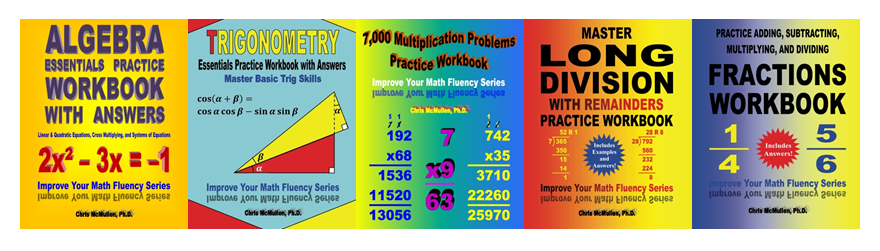
Facebook Twitter WordPress Triangle: Double Posting OOPS!

Double

You should feed your WordPress blog into Facebook and Twitter, as I explained in a previous post.

However, you have to beware of possible double posting.

However, you have to beware of possible double posting.

(You see: It’s annoying, isn’t it?)

In Twitter, there is an option to link it to Facebook, and vice-versa.

So if your WordPress blog feeds into Twitter and Facebook and if also Twitter is reading/writing everything you post at Facebook, you may find that your posts are getting doubled up at one or the other.

I confess that I had accidentally done this at Twitter with Read Tuesday—a Black Friday type of event just for books. Oops! Should be single posting there now, though.

Publishing Resources

I started this blog to provide free help with writing, publishing, and marketing. You can find many free articles on publishing and marketing by clicking one of the following links:

Chris McMullen, Author of A Detailed Guide to Self-Publishing with Amazon and Other Online Booksellers

Follow me at WordPress, find my author page on Facebook, or connect with me through Twitter.

A Writer’s Health

Heart

Writers have several health hazards to contend with:

  • Anxiety. Will they love it? Will they hate it? Why have my sales stopped? Will that bad review kill my sales? Should I have posted that comment? Did I spend too much on my cover?
  • Indigestion. Stress is a factor for common digestive problems such as irritable bowel syndrome (IBS). Diet is important for good digestion, so writers need to work a good eating plan into their busy schedules.
  • Heart health. All that time sitting down at the computer writing needs to be balanced with some exercise.
  • Vision. Reading and writing several hours each day can cause eye strain.

Stress is a big problem. It’s easy to get, hard to get rid of, and can have a big impact on your health. Stress is a factor in many common chronic health conditions like asthma and IBS.

It’s easy to say, but hard to do. But to help reduce stress, you need to not let things get to you. You also need to avoid things that can increase anxiety like checking sales reports avidly, checking reviews frequently, responding to reviews, or setting unreasonable expectations. Find things that you can do or people you can interact with which make you feel more comfortable.

Regular exercise is important for your health, and may even help you release some stress. At the very least, exercise for a few minutes multiple times each day. Force yourself to get up from the computer periodically and take an exercise break. Surely, you can spare a few minutes here and there.

There are probably times where you are stuck in your writing—great times to get up, stretch your muscles, and move your arms and legs around with some exercises. When you find yourself just checking one more thing online when you really don’t need to, or checking stats that you had just checked a few minutes ago, force yourself to get up and exercise for a few minutes.

Something like an elliptical is handy because you can move both your arms and legs actively for a few minutes. If you have asthma, exercise in spurts instead of lengthy workouts if longer workouts are more likely to trigger your symptoms. Even if you don’t have asthma, working out more frequently for shorter periods might be easier to fit into your schedule. There may be health benefits from longer workouts, but shorter workouts are better than nothing.

Swimming is another great way to exercise your limbs, if you have access to a pool. But you don’t need to invest in an elliptical or swimming pool to exercise. All you need to do is invest some time. After incorporating regular exercise into your schedule, you might just find that you feel better in more ways than one.

If you have digestive problems like acid reflux or IBS, you need to watch what you eat, as certain foods are more likely to trigger your symptoms. In addition, minimizing stress and exercising may help with these conditions, too.

It may benefit your heart to avoid long periods of sitting down, and to get up, stretch your muscles, and move around for a few minutes in between. It may also benefit your vision to rest your eyes, avoiding long durations where you stare at a computer monitor.

I’m not a medical doctor. If you want medical advice, consult with a medical professional. However, if you have a math or physics emergency, I do have doctorate in physics. 🙂

Chris McMullen, author of A Detailed Guide to Self-Publishing with Amazon and Other Online Booksellers, Vol. 1 (formatting/publishing) and Vol. 2 (packaging/marketing)

more, More, MORE; will it ever be enough?

More Pic


You start out with some sales.

So happy to sell your first book.

Something to show for your hard work.


Then you realize it’s not like you dreamed.

You had fantasized about a bestseller.

Now that seems ridiculously far-fetched.


Maybe it’s your cover. Could it be the blurb?

Or does it need an edit? What’s the problem?

See if some revisions will do the trick.


You’re excited when sales improve.

Until you realize it wasn’t all that much.

Your dreams remain a long way off.


Aha! Marketing must be the answer.

You scour the internet for information,

Learning everything you possibly can.


Sales improve after trying these ideas out.

That must have been the key.

Except that it’s still not enough.


Then you get a new idea. Write another book.

The sales will feed off each other.

Why hadn’t you thought of this before?


Your new book helps. As does the next.

Pretty soon you have several books out.

Sales are so much better now.


But it still isn’t enough. You want more.

You crave it. You can taste it. You need it.

Why? You don’t know. You just do.


Afterword:


I think it’s important to compare yourself to your former self (and not just in terms of numbers).

Don’t worry about how many books other authors are selling.

Some books rarely sell, some sell like hot cakes.

Trying to grow your numbers is a good goal to strive for, as long as you don’t go overboard.

As you learn more and gain experience, and as you have more books out, this should help your numbers grow.

Improvement will give you a temporary euphoria.

Then you get accustomed to it and expect better.

When the numbers drop, as they surely will, you’ll feel depressed.

Sales fluctuate. It’s a fact of life. Strive for long-term growth. Try to ignore short-term drops.

There are seasonal and many other effects, which guarantee some drops.

Try not to let your sales dictate your happiness. Otherwise, you’ll be unhappy much of the time.

Try not to fall into the MORE trap, which doesn’t just plague book sales, but plagues many aspects of life, such as finances.

More can’t really make you happy. You seem happy about it at first. But you can’t always get more. Do you want to be unhappy all those times that you can’t have more?

But more can be a healthy goal, in moderation.

You can use this goal to strive for improvement, and to stay motivated.

Just try not to let it consume you. Then more becomes a huge problem.

Remember, you can measure “more” in other ways besides numbers—better quality, for example.

The last things you want to do are lose your passion for your hobby, forget your roots, or feel like you sold out… all to get more, More, MORE.

If you focus on more, it will never be enough.


Chris McMullen, author of A Detailed Guide to Self-Publishing with Amazon and Other Online Booksellers, Vol. 1 (formatting/publishing) and Vol. 2 (packaging/marketing)

Facebook and Twitter Options at WordPress (and Why You Should Use Them)

Two Audiences Pic

If you don’t already feed your WordPress blog into Facebook and Twitter, you should. People who don’t blog here who may want to read your article (because someone was kind enough to share it with them, or because they discovered a link to it somewhere) may not want to create a WordPress account in order to subscribe to your blog. Facebook and Twitter provide two popular alternatives.

Even if you don’t currently use Facebook or Twitter, you should take a moment to open accounts there and to also create a Facebook page. (The how-to part of all these suggestions is described later in this article.) Don’t worry about not having friends or followers there yet. Feeding your blog into Facebook and Twitter is a handy way to get started there without having to do any work. Then you’ll feel that you’re actually using those services, and stop worrying about not using them. Once you have a healthy following there, then you might get the motivation to utilize them by doing more than just feeding WordPress posts to them. In the meantime, it’s a good way to get the ball rolling with little effort on your part, but it will be very handy for potential followers who prefer Facebook or Twitter.

You should also make it easy for people to find other ways to get your blog feed. You can include an email option at the end of every post, put a Follow me on Twitter or Like Me on Facebook option on your sidebar, add a Follow Blog by Email widget, and include links to subscribe to your RSS feed. The more options you provide, the easier it will be for people who aren’t WordPress bloggers to follow your blog.

Of course, they really should sign up for a WordPress account, even if they have no intention of blogging. It’s a great ambiance, the interaction and connections are wonderful, and there is a wealth of amazing material to read or look at for free. I like it better than any magazine. If you can convince somebody of this, that’s great for WordPress and for that person, too.

However, we know that some people are reluctant to sign up for a new account at a site that’s new to them. So make it easy for them to follow you.

How to get started at Facebook and Twitter.

If you don’t have Facebook or Twitter, it will just take you a minute to set up accounts there, add your author photo, and setup your profile. You should also add a header, probably like the one you have at WordPress, although the aspect ratio will be somewhat different.

You should also have an author page at Facebook, to keep separate from your friends and family page. People will be able to Like your author page, too. The name of the page will be different from your Facebook name. From your Facebook home, find the Create a Page option on the bottom-left. For an author page, click Artist, Band, or Public Figure; one of the options is author. (You can also make a page for your book by selecting Entertainment.)

When you want to do something as an author rather than with your personal account, login to Facebook, click on your Facebook page (see the list on the left-hand side), and look for a message at the top of the screen that shows how you are posting. There is a place to click to change this. You’ll need to get into the habit of checking how you’re posting, liking, or commenting before you do it.

How to feed your WordPress blog into Facebook and Twitter:

Find your Settings. There is more than one way to get there. One way is to click the My Blogs tab at the top of the page you see when you login (you also see it when in your Reader or viewing your Stats), then click the button that tells you the number of posts. Now look for Settings near the bottom of the list on the left-hand side.

Now choose Sharing. On Facebook and Twitter, click the Add New buttons. This will give you the option to login and agree to feed your WordPress blog into your Facebook and Twitter accounts. For Facebook, be sure to do this with your author page instead of your personal page (see the previous note regarding how to select how you post, like, or comment at Facebook).

This will feed your posts into your Facebook and Twitter accounts (once you click the Save button below).

You can also add Google+, LinkedIn, Tumblr, and Path. There is yet another Google+ option below.

Further down, there are several other buttons that you can add, such as PInterest and StumbleUpon. You can choose from this list even if you don’t have accounts there. PInterest isn’t for you to use. It’s for anyone who uses PInterest to Pin things they like. So if you would like someone who uses PInterest to have the option of Pinning something you posted, you should add this button, even if you don’t use PInterest. The email and print buttons may be convenient for people who aren’t into social media connections at all.

Explore all the options at the bottom, like the button style and where these options will appear on your blog.

How to add Facebook and Twitter options to your sidebar

In the same place where you found Settings in the previous instructions, look for Appearance and select Widgets.

Look for the Facebook Like Box widget. Drag it over to your sidebar. Click the little triangle in the blue bar, if necessary, to open up the options. Add a title. Go to your Facebook author page and copy/paste the url from your browser (up at the top, including the http:// part) into the url field. If you don’t have any friends yet, reduce the height to 100 pixels (if you enter a value less than this, it will revert to the default); if you have faces to show from your author page, you may want a higher pixel count for the height. The standard sidebar is 200 pixels wide (if you have a dual sidebar, the one on the left may be more like 150).

If I visit your blog, I’ll try to remember to check if you have an easy way for me to check out your Facebook author page, and if I like it, I’ll Like it, too. 🙂

Look for the Twitter Timeline widget (the old Twitter widget is expiring soon, so don’t select that one if you see it). Enter a title. You’ll need to login to Twitter (in another window) to get a widget id. At Twitter, go to edit your profile (look at the top-right), then click Widgets. Create a new widget. Save it when you finish selecting your options, then look for the long number called your widget id in your address bar (it’s in the url at the top of your browser). Copy and paste this into the widget id field at WordPress.

Open up your blog’s homepage and refresh the page to see how it looks. If you need to make changes, refresh the page again when you finish to see how your revision looks.

How to setup other follow options

Go to your WordPress blog’s widgets (see the previous instructions). Drag the Follow Blog (whereas the Follow button is for WordPress.com users) button over to your sidebar. This will let non-WordPress users subscribe to your blog by email.

You can also add the RSS Links widget to provide links to your blog’s RSS feeds. Many professional authors only have this option; but we can benefit by offering the convenience of several different options.

The RSS feed for your WordPress blog is simply your blog’s url plus /feed/ (for example, mine is https://chrismcmullen.wordpress.com/feed/). You can use this to feed your WordPress blog into your AuthorCentral page at Amazon.com (but in the UK, you must feed Twitter there instead) or into GoodReads (go to your author account there to do this), for example.

How would you like to participate in a Black Friday type of sales event designed specifically for books? Check out Read Tuesday. It’s going to be HUGE!

Chris McMullen, author of A Detailed Guide to Self-Publishing with Amazon and Other Online Booksellers, Vol. 1 (formatting/publishing) and Vol. 2 (packaging/marketing)