Common Blurb Mistakes

For online bookstores, the cover, title, blurb, and sample are the book’s only salesmen at the point-of-sale. A great blurb can help motivate purchases, whereas a lousy blurb tends to deter them.

(1) Summarizing the book.

The blurb’s number one priority is to create interest in the book, not to summarize it. Summaries often don’t sound interesting and provide too much information.

(2) Giving too much information away.

An effective blurb arouses the reader’s curiosity. Rather than answering all of the reader’s questions about the book, ask some questions – either explicitly or implicitly. A customer who wants to know something about the story has to read it to find out, unless the blurb answers the question.

However, nonfiction books should make the content clear.

(3) Building suspense.

Customers tend to be impatient. If the blurb (or sample) starts out slow, some customers will walk away without reaching the main part of the blurb. Start out by creating interest to capture the reader’s attention.

(4) Sending mixed messages.

The title, cover, blurb, and sample should send a unified message regarding the genre and content. The message should be clear in each component. Confused buyers look for other products that aren’t confusing. If the cover looks like fantasy, but the blurb sounds like science fiction, for example, then the audience that is drawn to the book won’t buy the book.

(5) Spelling and grammar mistakes.

If the hundred or so words in the blurb have any spelling or grammar mistakes, the tens of thousands of words in the book itself must be plagued with editing problems. At least, this is what potential customers will expect.

(6) Too long.

Buyers tend to have short attention spans. If a buyer becomes bored while reading the blurb, the buyer will check out a different book. The longer the blurb, the more difficult it is to hold the buyer’s attention throughout.

A long blurb also looks intimidating to some readers. There are customers who immediately return to the previous page when a blurb looks too long. This depends in part on the target audience, and is a bigger concern for fiction than for nonfiction.

(7) Overselling.

If the blurb makes the book sound far better than it actually is, the blurb will backfire as soon as customer reviews reflect this disparity. Also, when a book sounds too good, many customers will be skeptical.

(8) Bragging.

Boasting tends to deter sales. Avoid comments like, “This Book is much better than That Book.” However, stating that a book is similar to a well-known book or movie – without making it sound better – can help potential buyers understand what to expect. Compare this comment with the previous one: “This Book is similar to That Book,” or, “This Book is a cross between Book A and Book B.”

(9) Telling readers what to think.

If a book is funny, for example, there is no reason to come right out and say this. Let customers form their own opinions. Most people don’t like to be told what to think. Saying that the book is a comedy may be helpful, whereas saying, “You will laugh your pants off,” tells readers what they will do.

(10) Poor formatting.

Insert a linespace to separate paragraphs. Break large paragraphs into smaller ones. Don’t use returns to force text onto a new line in mid-sentence. Don’t format each sentence on a separate line (unless using bullets). Boldface, italics, linebreaks, and bullets are available through AuthorCentral for Amazon book descriptions.

(11) Not giving readers a good idea of what to expect.

While it’s important not to reveal too much information, it’s also necessary to provide a general idea of what type of book to expect. Nonfiction should also make the content clear. The blurb should attract the right target audience for the book. Otherwise, customers are likely to express negative feedback in customer reviews.

(12) Lack of feedback.

Share the blurb with several people from the book’s intended target audience prior to publishing. Discover how they react to the blurb – especially, what they do and don’t like about it.

Chris McMullen, self-published author of A Detailed Guide to Self-Publishing with Amazon and Other Online Booksellers (Volume 2 now available)

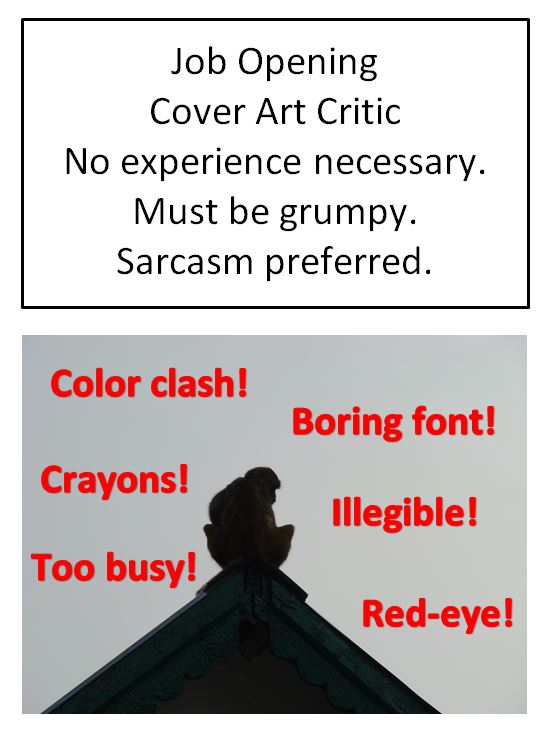
Cover Art Critics

Cover Critics

The self-publishing revolution has brought forth a generation of cover art critics. It seems that there are many more cover art critics than there are art critics.

To be fair, they also criticize traditionally published covers, and a few of the best covers out there are actually on self-published books. However, the reality is that the vast majority of lousy covers are on self-published books.

Anyone can be a cover art critic. No talent for cover design is needed to form an opinion.

But that’s the point. Don’t create a cover to satisfy the critics. Instead, create a cover that will please potential readers. Back to the point: All potential readers are cover art critics! Complaints that are common among the cover art critics tend to deter sales because many readers feel the same way.

Here are some common complaints:

(1) Can’t tell what the book is about!

(2) Text is illegible!

(3) Colors don’t work well together!

(4) People look deformed!

(5) Used crayons or colored pencils!

(6) Photo-bombing image!

(7) Used Comic Sans for font!

(8) Aspect ratio is distorted!

(9) Illustrator’s name appears on a lousy cover!

(10) Image appears blurry or pixelated!

(11) Cover is too busy!

(12) Fonts are boring!

(13) Hard to read fonts!

(14) Wrong words emphasized in title!

(15) Three different fonts used!

(16) Images have nothing in common!

(17) Settled for image that doesn’t quite work!

(18) Doesn’t look good both full-size and as thumbnail!

(19) Red-eye!

(20) Typo in title!

(21) Poor drawing skills!

(22) Poor photography skills!

People do judge books by their covers. As they should! At least to the extent that buying a book where the author or publisher didn’t put much effort into the cover is a risk: If little effort was put into the cover, there isn’t any reason to expect that greater effort was put into writing, editing, and formatting.

The cover is a marketing tool. Customers do browse for books in search results and click on thumbnails that interest them. Trying to avoid common cover design mistakes may pay off. It’s challenging to design a perfect cover, and any cover – no matter how good – can still be criticized. It’s much easier to find fault in a cover than to make a cover without fault. (No wonder there are more cover art critics than there are great covers.) But the cover is very important, so striving to design a great cover is worth the effort.

Chris McMullen, self-published author of A Detailed Guide to Self-Publishing with Amazon and Other Online Booksellers (Volume 2 now available)

Rush, Rush, Rush to Self-Publish!

Day 0:

Think, think, think. Think. Think… think.

Idea!

Day 1:

Type, type, type. Type. Type. Type, type, type.

Day 14:

Type, type, type.

Day 30:

Writer’s block.

Day 35:

Type, type, type.

Day 60:

T. Y. P. E.

Day 90:

Ta-da!

Day 91:

Proofread, proofread, proofread.

Day 92:

P. R. O. O. F. R. E. A. D.

Day 100:

Research publishing options.

Day 101:

Decide to self-publish.

Sign up for an account.

Day 102:

Learn about formatting.

Day 103:

Format, format, format.

Day 104:

F. O. R. M. A. T.

Day 110:

Upload.

Day 111:

Check digital proof.

Day 112:

Ask for help on the community forum.

Day 113:

Implement formatting changes.

Day 114:

Re-upload.

Day 115:

Publish!

Day 116:

Celebrate!

Day 117:

Encounter Look Inside issues.

Day 118:

Post question on community help forum.

Day 119:

Reformat.

Day 120:

Republish.

Day 121:

Find book way down in search results.

Day 122:

Still no sales rank.

Day 123:

No activity.

Day 130:

Request feedback on community help forum.

Day 131:

Look for cover designer and editor.

Day 191:

Republish.

Day 200:

Sales still infrequent.

Day 201:

Look into marketing.

Day 210:

Why was I in such a rush to publish my book?

* * *

If only there were a better way, like:

  • Researching the book idea before writing.
  • Perfecting the craft of writing.
  • Reading bestsellers in the genre to learn what works.
  • Checking out covers of top sellers in the genre to see what readers expect.
  • Reading blurbs of best sellers in the genre to learn how to draw interest.
  • Getting the book edited before publishing.
  • Seeking feedback on the cover and blurb before publishing.
  • Learning how to create buzz for an upcoming book.
  • Learning about marketing before the book is published.
  • Marketing before the book is published.
  • Coming up with an effective promotion plan.
  • More marketing after the book is published.

Chris McMullen, self-published author of A Detailed Guide to Self-Publishing with Amazon and Other Online Booksellers (Volume 2 now available)

Three – the Self-Publisher’s ‘Magic’ Number

In many ways, the number three serves as a ‘magic’ number for self-publishing.

(1) Three words or less.

Bestsellers often have three or fewer words in the title. This makes the title easier to remember, which helps with branding and word-of-mouth referrals.

(2) Three images or less.

The best front cover designs often feature three images or less. This makes the cover more memorable, and helps book browsers quickly see what message the book is sending regarding its genre and content. Busy covers tend to deter sales. Just one striking image that signifies the precise genre and relates to the content is most memorable.

(3) Three seconds to catch attention.

Customers who are browsing for books in search results quickly glance at various covers. Book covers have just a few seconds to catch attention.

(4) The three-color rule for cover design.

Professionally designed covers usually follow the three-color rule. The primary color and secondary color should create marked contrast. An accent color complements either the primary or secondary. The colors come in the approximate ratio 6:3:1.

(5) The rule of thirds.

According to the rule of thirds, an image stands out when it is one-third from the edge, rather than occupying the center. This also helps to leave room for the title and other cover text. Visually, the rule of thirds helps the onlooker to determine which part of the cover is the main feature. With the three-second rule in mind, this is an important tactic. When the main image is placed in the center, it instead divides the book into two equal halves.

(6) The trilogy.

Customers who enjoy a book usually want more. Three books is the tried and true number, such that we’re all familiar with the term ‘trilogy.’ Do you happen to know the terms for series with a different number of books? Most of us don’t, but we all know the term for a three-volume set. Readers like it when each volume of the series provides a satisfying ending of its own, and where each volume is so good that they want more. But after the third book, it becomes a challenge to maintain the original spirit while also utilizing enough creativity.

(7) Three or more contributors.

The self-published author must do all of the writing, editing, formatting, illustrating, marketing, and public relations. Almost all authors need help with at least two of these areas. Most self-published authors should hire an affordable, yet quality, editor for proofreading or formatting and an experienced, inexpensive cover designer. Marketing is another area where authors need help, but where there isn’t an easy way to buy your way out of this necessary and challenging work.

(8) Three R’s of branding.

Authors and books get branded with repetition among the target audience. Branding results in purchases when members of the target audience recognize the book while making a future purchase. It’s most successful when there are many customers both recognizing the book from branding and referring the book to others because they love the book. A prior article discussed the three R’s of branding (actually, this article has a fourth R):

https://chrismcmullen.wordpress.com/2013/03/15/marketing-the-4-rs-of-branding/

(9) Three marketing targets.

Authors can receive early sales of their first book from family, friends, and acquaintances and also use this group to help create buzz. They can draw from their fan base for similar support of their subsequent books. Their ultimate target is new members from the book’s target audience.

An author’s personal social media account helps to reach friends, family, and acquaintances. Fan pages and blog or social media followers of the author’s writing account help to stimulate sales of subsequent releases. Keywords, tags, and hashtags help to reach new members of the book’s target audience, as do personal interactions online and writing articles, for example.

(10) Save novelties for book three.

Most self-published authors want to deviate from traditional bestselling ideas. But this freedom comes at a cost. It’s more challenging to market books that aren’t geared toward a traditional audience. Authors looking to be in the elite group of bestselling authors should seek genres in which they are a good fit to write and for which there is a very large existing audience, such as mystery or romance. Don’t break the unspoken rules (like not providing a satisfying happy ending or giving the protagonist character traits or actions that will upset many readers) and design a cover, title, blurb, and story that these readers will be looking for if you’re hoping to be a top seller.

Once you’ve established yourself and built a following, with your third book you can exercise some creative freedom and break some of these rules. This way, there will already be a large audience willing to try your creative book, whereas trying this with your first book may reach a very narrow audience.

You don’t have to “sell out.” You have the artistic freedom to write as you wish. The question is how you wish to weigh the benefits of doing what you want versus the benefits of selling more books, as there is often a very strong inverse correlation.

(11) Three types of author websites.

An author’s blog features daily or weekly written articles. An author’s website does more than this. It may offer the author’s books and related materials for sale or provide supplemental content, for example. A fan page is geared toward existing fans. The blog and author’s website hope to reach new members of the target audience as well as interest current fans with useful content.

(12) Three author pages.

Authors maintain an author page at Amazon through AuthorCentral. They also establish an author account at GoodReads. A social media fan page, at Facebook or Twitter, for example, is another avenue where customers frequently search for authors.

(13) Three-dollar eBooks.

With KDP paying 70% royalties on eligible eBooks with a list price of $2.99 and up, the three-dollar eBook has become quite common. This may not be the best price, but it’s certainly common.

(14) Three books on the signature line.

An author with very short titles can squeeze up to three books on the signature line of online posts.

Chris McMullen, author of Book One, Book Two, and Book Three. (If only I had had the wisdom of choosing shorter titles in the past, I could illustrate this by example without making up book titles. :-))

(15) Edit three ways.

First, scroll through the book to look for visual formatting issues, like page break problems or inconsistent headers. Next, read the book thoroughly for proofreading. Finally, check all references to page numbers, figures, tables, citations, etc. for nonfiction and check for consistency in character and storyline references and development for fiction. For both, check the page numbering of the table of contents.

(16) Three e-readers.

The original black-and-white e-readers had small screens and allowed only basic formatting. The new color and high definition e-readers have larger, higher-resolution screens. Many readers also use small iPhones. It’s a challenge to make an eBook that has pictures format well on all three devices.

(17) The first three months.

With the Coming Soon, Last 30 Days, and Last 90 Days links at Amazon, books have a brief window of opportunity to thrive and develop their own legs to stand on. Good sales and early reviews that come through effective marketing can get newly released titles better visibility in search results and several associations on Customers Also Bought lists to help them succeed after the first three months.

(18) Three page layout terms.

Self-published authors who publish a paperback may learn about page layout issues known as widows, orphans, and rivers (you can find good images for this with Google, for example).

Three cheers for self-publishing! 🙂

Chris McMullen, self-published author of A Detailed Guide to Self-Publishing with Amazon and Other Online Booksellers (Volume 2 coming soon)

Cost-Benefit Analysis for Marketing Books

When trying to decide if a book marketing strategy is worth doing, consider this in terms of a cost-benefit analysis. What you hope to determine is whether the costs are worth the prospective benefits.

Even if the marketing technique is free, it still costs time. Time is money. You don’t want to spend several hours per week doing marketing work that yields very little in return. So you must factor both money and time into the costs.

Benefits very often aren’t measured in immediate sales. Marketing that helps new members of your target audience discover your book or which improves or furthers your branding efforts has value, too. Some sales from continued branding efforts may not come for months.

There are also other possible costs (besides money and time) and benefits (besides sales, discovery, and branding).

For example, a marketing strategy that places books into the hands of people outside of your target audience might be more likely to draw negative reviews, since these readers may not really appreciate and understand the genre. Similarly, giving your book away for free might draw a negative review from a customer who didn’t take time to read the description and therefore didn’t get what was expected. A few negative reviews help to provide balance and sometimes have a positive effect on sales, but too many negative reviews can deter sales.

On the other hand, some marketing strategies may be likely to result in positive reviews and word-of-mouth recommendations. The more customers who read your book and like it, the more good reviews and word-of-mouth sales you may receive. When the readers are in your target audience or are bloggers who frequently review books in your genre on their blogs, for example, this improves these prospects.

Another thing to factor into cost-benefit analysis is the quality of the product and packaging. The packaging includes the title, blurb, Look Inside, and customer reviews. The better the packaging looks, the more this will help to magnify the benefits of effective marketing; the worse the packaging looks, the fewer benefits any marketing will reap. Similarly, a better book is more likely to receive good reviews and recommendations, while a poor book that receives many low-star reviews will inhibit sales.

Even a seemingly small thing like the title can impact this. A title that’s short and easy to remember is more likely to earn word-of-mouth sales. Just imagine this: “Oh, that reminds me of a great book that I read once. Oh, too bad I can’t remember the title of it.”

Realize that some marketing strategies may be reaching the same members of your target audience. Very often this is okay because it takes repetition for branding to become effective, but it’s still something to consider.

When you’re thinking about costs, you should be thinking:

  • How much money will you need to spend on this marketing strategy?
  • How much time will you need to spend doing this marketing?
    • What impact will this have on your author image? Anything you might do to brand yourself with a negative image can be a hefty cost.
    • Might this cause people to buy the book without realizing what they’re getting? For a free book promotion, for example, this could be the case. If so, these customers are more likely to express frustration if the book doesn’t meet their (sometimes unreasonable) expectations.
    • Is there any reason for customers to feel that the book is unprofessional? Poor editing, formatting, or storyline, for example, may result in bad reviews.

For benefits, you can’t calculate how many sales you will derive. Many of the sales may not be realized for several months. Instead, you should be thinking:

  • How many new members of my target audience will this reach? Don’t waste your time with marketing efforts that aren’t geared toward your target audience.
  • Will the interaction be personal or impersonal? Will it be engaging, or momentary? Personal, engaging interactions make a much stronger, lasting impression. Impersonal and momentary interactions are only worthwhile in very large numbers.
  • Does this come across as self-promotion, advertising, or salesmanship, or does this work like discovery and branding? Most people have an aversion to the former, but respond well to the latter.
  • Is this likely to generate thoughtful reviews from members of your target audience or bloggers in your genre?
  • Are you putting the book in the hands of highly social people in your target audience who may, if they like the book, spread the word in person or on Facebook or Twitter?
  • How strongly do you believe in your book? The better your book is cover to cover, the more it enhances these benefits through possible reviews and recommendations.
  • Have you written a series where the book is good enough to induce purchases in subsequent volumes? If so, prospective sales of the later volumes can significantly enhance the benefits.

Example 1. Should you invest in professional cover design?

Costs: How much will you pay for the service? Divide the financial cost by the per-book royalty to see how many copies you must sell just to break even. How much time will you invest looking for a designer and then interacting with the designer throughout the process?

Benefits: How much will the cover improve over what you could do yourself? Will you sell most of your books in person or at Amazon? Your cover is far more important at Amazon. Will the cover attract your target audience? How well will the cover stand out among other thumbnails in your genre? Are the blurb and Look Inside effective enough to seal the deal? Will the book live up to the expectations? Is there a large market for your book idea? You can search for other books similar to yours and see how well they are selling.

Example 2. Should you invest in bookmarks?

Costs: How much will you pay for the bookmarks? How much time will you invest looking for a company to make them, developing a design, and distributing them?

Benefits: Will they be appealing enough for people to use them? If they look like advertisements, no; if they only mention your title and name, but mostly have appealing images, yes. Will they be distributed primarily among new members of your target audience? Seeking feedback on the bookmark design may be helpful.

Example 3. Should you give your book away for free?

Costs: Every book that you give away is a royalty that you won’t earn. If you give away paperbacks, it also costs you money to print the books.

Benefits: Are most of the recipients in your target audience? What are your prospects for word-of-mouth sales? Do you have other books that may interest the customers if they enjoy your book? Giving away the first book of a series may help to sell subsequent books in the series, provided that the first book is very good.

Example 4. Should you write an article that relates to the content of your book?

Costs: How much time will it take to research magazines, newspapers, and websites that are a good fit for your target audience? How long will it take to write the article? How much time will you spend on submissions? What are the prospects for having your article accepted? If you have relevant expertise and experience with the subject matter, this greatly improves your chances. Also, there are very many websites online. Finally, in the worst-case scenario, you can always post the article on your own blog or other website.

Benefits: What is the circulation of the magazine or newspaper, or the frequency of site views of the website? What percentage of this audience is a good fit for your book? Will your name and the title of your book be visible at the bottom of your article? This helps with discovery and branding.

* * *

For each marketing strategy that you consider, make two lists – one for costs and another for benefits. Is this geared mainly toward your target audience? That should be one of your main questions. Remember that discovery and branding among your target audience are very helpful long-term benefits. Another main question is: Will this seem more like advertising or discovery? A marketing strategy is worth adopting when benefits outweigh the costs (and not just slightly).

Let me mention one more important benefit. For many authors, this may outweigh many of the other benefits. It’s not just about sales, is it? Many of us write for other reasons besides money. Even if we didn’t write for money, we still appreciate those royalty checks. (You might ask, if you’re not in it for the money, why not give it away for free? Maybe we want our work to be valued. If we give it away for free, many people who may have read our books might feel that if it’s free, it isn’t worth reading.)

If money isn’t your only motivation, there are some other benefits to consider. There is the benefit of sharing your work with others, telling your story, having your work appreciated, spreading knowledge, etc. But if you think about it, these really amount to the same thing as sales: The more books you sell, the more your work is shared with others, the more knowledge you spread, etc.

What I had in mind is a benefit that doesn’t correlate with sales. That’s the benefit of the marketing endeavor itself. For example, blogging is something that all writers should do even if a cost-benefit analysis says that it’s not worth doing. As writers, blogging is a useful creative outlet. We can explore new techniques, try a different voice, develop a new character, receive feedback, reduce stress by getting stuff off our chests (but beware that what you say could negatively impact your author branding), etc. There are many positive benefits of blogging that make it worthwhile even if this effort doesn’t result in a single new sale.

Another example is performing community service. If you write a self-help book, you may be able to get discovered by members of your target audience through your involvement in related community service. Even if this doesn’t make sense from a cost-benefit analysis in terms of sales, though, there are many other benefits of community service that may make it worthwhile.

For other marketing strategies, you might also consider if there are valuable benefits other than just sales that may make it outweigh the costs.

Don’t market for the sales. Be passionate about your writing and market to share your passion. Don’t market just to share your passion. Be passionate about the marketing strategy itself – e.g. be passionate about blogging, writing an article, or doing a book reading. When others indirectly see your passion, it has a positive impact on sales (but don’t be boastful, overconfident, or talk about your book too frequently, as these things deter sales).

Chris McMullen, author of A Detailed Guide to Self-Publishing with Amazon and Other Online Booksellers

Follow me at WordPress, find my author page on Facebook, or connect with me through Twitter.

Effective Book Marketing – Part 3

(5) Strive to generate word-of-mouth sales.

Word-of-mouth sales are among the best sales that your book can get, yet are also the most challenging to achieve. There are a few things that you can do to help garnish these valuable sales.

Try to create buzz for your upcoming book. Don’t simply publish the book and wait to see how little it gets noticed. Instead, strive to get people talking about your book prior to its release:

  • Solicit feedback on your cover, title, and blurb. Post these on your blog and Facebook, requesting comments. Show these in person. Have these with you and show them to people (especially, those in your target audience). You get valuable feedback and might help to create a little buzz at the same time.
  • Don’t keep your book writing a secret. People ask, “What have you been up to lately?” Let them know how your book is coming along. This is more effective when they inquire about your book, and less effective when you volunteer it. You’ll get tuned out if you’re always talking about your book.
  • Join a critique group, see if a book club is interested in your draft (if you’re already a member, this is far more likely), start a focus group, and find people who can read your book (in whole or in part) and offer feedback. The more people who know about your book, the greater the chances that some people will like it and talk about its upcoming release. You want people to be saying, “Did you know that So-n-so wrote a romance novel and it’s coming out this June?” You can’t tell people what to say, but you can create the opportunities.
  • Send out advance review copies. Search for bloggers who have a following among your target audience who occasionally review books and see if they would be interested in reading a free copy of your book for possible review on their blog (if you’ve already been a long-time, active follower, that may help). You can also search for book review websites. Keep in mind that the most popular bloggers and sites will already have numerous requests.
  • Arrange for book readings and signings. Develop a one-sentence strapline that will help generate interest in your book. When you interact with people (in general) or do a book reading, this is the thought that you want to leave them with.
  • Seek local press coverage from the media. Prepare a professional press release package. Local newspapers may have column inches to fill and like to feature local authors. Similarly, local radio shows may have minutes to fill; even try local television stations. Start local, then look for media that specifically relates to your target audience; when they’re trying to catch the same target audience, featuring you may be a good fit. Even if they can’t cover you on the air, they may be willing to post a brief note about you on their major website.

Realize that your book is a marketing tool in itself:

  • An eye-catching cover helps to attract interest in your book.
  • A cover, title, and blurb that send a unified message about the genre and content help to catch members from your target audience.
  • A cover that features one image and a title with two to three words are easy to remember and help with your branding efforts. This also makes your book easier to describe, which helps with buzz and word-of-mouth sales.
  • An effective, well-written blurb and captivating, well-written and well-formatted Look Inside help to sell your book. This is your only salesperson at the point-of-sale online.
  • The quality of the book significantly impacts your prospects for word-of-mouth sales. Editing or formatting mistakes detract from this. Memorable characters and great stories that evoke strong emotions for fiction, and helpful and clear explanations for nonfiction, improve your chances. These things similarly affect customer reviews.

(6) Be diligent, consistent, and persistent in your marketing efforts.

It can take a year of diligent marketing before your marketing efforts are fully realized. Trying for a short period and giving up prematurely is a common mistake. We like to see instant satisfaction, but marketing just doesn’t work that way. There aren’t any shortcuts. You can’t just throw money at it (like paying for advertisements) to reap instant rewards.

Be patient. Branding and discovery take time. People won’t rush out to buy your book the second they hear about it. It may take months until readers from your target audience have come across you and your book enough times for branding to take effect. Then it can take additional weeks before they’re shopping for their next book. It may take months to read your book. So it can easily be a year before they recommend it to others.

If you stop marketing prematurely, your branding effort will be incomplete.

Many marketing strategies actually have indirect benefits. So even if they don’t reap immediate sales, all of your marketing strategies that specifically reach your target audience may have long-term benefits. Don’t give up.

(7) Choose strategies based on a cost-benefit analysis.

Most authors decide which marketing strategies to adopt based on what’s easiest for them to do, what they feel most comfortable doing, what they perceive is popular among other authors, what they’ve heard other authors recommend, and especially what does or doesn’t seem to be providing immediate results.

What you really want to know is which marketing strategies will be most effective for your unique book.

Decide which strategies to employ based on a cost-benefit analysis.

Even if the marketing tool is free, it still costs you time. Therefore, every marketing strategy that you apply has cost, whether in money, time, or both.

Ideally, you want to reap the most rewards with the least cost. For each marketing strategy that you consider, make a list of the probable costs and benefits (and remember, time is money, so the time that you must invest is a cost, too).

Click here to view an article on cost-benefit analysis: https://chrismcmullen.wordpress.com/2013/04/16/cost-benefit-analysis-for-marketing-books/.

Chris McMullen, author of A Detailed Guide to Self-Publishing with Amazon and Other Online Booksellers

Follow me at WordPress, find my author page on Facebook, or connect with me through Twitter.
Effective Book Marketing – Part 2

If you missed Part 1, you can find it here:

https://chrismcmullen.wordpress.com/2013/04/12/effective-book-marketing-part-1/

(3) Promote your book indirectly through discovery and branding.

Consider these questions for a moment:

  • When you’re walking down the sidewalk, do you like it when someone stops you to give you a sales pitch?
  • Suppose that an acquaintance tells you that you should come to his shop and buy a product first thing every time that you meet him. Would you appreciate this?
  • Do you believe it when somebody tells you that their product is the best ever?
  • If a stranger tells you out of the blue that you should buy a particular product, will you go to the store and purchase it?
  • Don’t you love it when a televised movie breaks to commercials just before the climax?

Most people have an aversion to advertising and salesmanship. You won’t sell many books through self-promotion and direct advertising of an unknown book by an unknown author with an unknown publisher.

Bragging also tends to be ineffective. It’s important to show confidence and passion for your own work, without coming across as boastful.

If you post online just to promote your new book, most people will ignore it. If you frequently advertise your book, most people will tune you out.

Now consider these questions:

  • When you see people wearing outfits that you like, do you ever ask where they bought them?
  • Suppose that you’re having a conversation with an acquaintance. You ask what he does and learn that he’s a singer who has just released a new CD. Would you be interested in buying a song from someone you’ve actually met?
  • If you’re buying a product in the store, do you ever choose one that you’ve heard of over one that you don’t recognize?
  • Do you enjoy seeing an artist’s passion for her work?

When people discover that you’ve written a book (rather than have you thrust this information upon them) they are much more likely to develop interest in it. If people recognize your book, your cover, your author photo, or your name from your indirect branding efforts (not from direct advertising or salesmanship), they are more likely to buy your book. When people see that you are passionate about your book, but not boastful, this tends to increase their interest in it.

The indirect techniques of discovery and branding tend to be far more effective than self-promotion or direct advertising.

Interact with your target audience in such a way that if they enjoy the interaction, they can discover that you’re an author and inquire about your book. Gear your marketing efforts toward increasing your visibility among your target audience in order to brand your book.

Personal interactions tend to be more effective. People like to read books by authors they’ve actually met. Mingle with your target audience. Let them discover that you’re an author, rather than volunteering this information. If you ask what they do for a living, they might ask the same of you, for example.

Of course, there is a limit to how many people you can interact with in person, so you must also interact with your target audience online. If they enjoy their interaction with you, they may check out your online profile and discover that you’ve written a book.

Where relevant, some authors end their posts with Your Name, Author of Your Book (in an online forum, it’s best if you have a very short title – two to three words). Don’t list several books and services at the bottom of your post, since this will look like your post is mostly about advertising and sales.

Branding entails more than just getting your book and name out there. Your image is at stake. Brand your book or your name in a negative way and it can greatly deter sales. You want to come across as professional, confident (but not boastful), trustworthy, credible as an author in your genre, respectful of others, knowledgeable, and as a model for how authors should behave.

Never behave defensively, avoid complaining, don’t say bad things about any customers or reviewers, refrain from asking for reviews, and so on.

(4) Attract a following by providing valuable content.

Blogging about yourself and tweeting about your book, for example, aren’t likely to attract new readers. You can provide more information about yourself on a fan page, but this just entertains a few of your current fans – it doesn’t gain you new readers. A fan page might help you spread the word of subsequent books. But what you really want to do is attract new customers.

What you want to do is provide valuable content that may attract your target audience. Get valuable content where your target audience is likely to see it.

When you blog, provide helpful nonfiction material that relates to your book (without duplicating the content). Blog because you’re passionate about the subject and wish to share it with others (don’t blog because you’re trying to sell books), and your articles are likely to be more valuable. When you tweet, focus on using the limited space to offer useful information to your target audience – often through a link (that doesn’t go to your own book or websites). Use tags and hashtags to help reach your target audience.

No more than 10% of your posts should be about you or your book. If people appreciate the content that you provide, they may check out your profile and discover that you’ve written a book.

Look for other ways to provide valuable content. Meet bloggers who are a good fit for your target audience: They might feature you on a guest interview (or review your book on their blogs), for example (something you can also do for others). Write an article and try to publish it online (the very large number of websites out there gives you reasonable chances of achieving this in a modest traffic zone), where the website is a good fit for your target audience and your knowledge and expertise. At the bottom of your article, you want it to list Your Name, Author of Your Book.

Passing out flyers generally isn’t effective because they just look like advertisements. Passing out bookmarks is much better because bookmarks serve a function – it has value to the recipient, especially if it doesn’t look like an advertisement for your book (it might feature images from your cover and mention no more than the title and author). Especially, distributing appealing bookmarks among your target audience can be helpful.

In every marketing strategy that you consider, think about the following:

  • Is this mainly reaching my target audience?
  • Does this provide valuable content to my target audience?
  • How will this affect my image as an author?
  • Will people view this as advertising or discovery?
  • Is it helping to establish your brand?

Click here to view part 3: https://chrismcmullen.wordpress.com/2013/04/14/effective-book-marketing-part-3/.

Chris McMullen, author of A Detailed Guide to Self-Publishing with Amazon and Other Online Booksellers

Follow me at WordPress, find my author page on Facebook, or connect with me through Twitter.
Effective Book Marketing – Part 1

Thousands of authors are actively promoting their books. A few do this successfully; many do not. A wide variety of marketing tools are available. A few work very well; some are ineffective; and others work well for some books or authors, but not well for others.

How do you know which marketing strategies will be effective for you?

(1) First identify your target audience.

This should be incredibly obvious, yet it’s extremely common to find authors promoting their books in ways that aren’t geared toward their target audience.

Your target audience is NOT anybody with a pair of eyes!

Sure, anybody with eyes can read your book, and you’d love to sell your book to everybody who can read. However, the reality is that the vast majority of people who will read and enjoy your book will be people who frequently read books from the same genre.

Don’t waste your time or money with marketing tools that are likely to yield a tiny percentage of new customers for your book. For example, if you promote a mystery novel in a way that reaches 1000 people, but only 5 of those 1000 people actually read mysteries, 99.5% of your promotion is being wasted.

Identify your specific target audience. A few people outside of your target audience may read your book, but the vast majority of your readers will come from your target audience, so focus on reaching people in your target audience.

People in your target audience are most likely to enjoy the book, give you word-of-mouth sales, and review your book. When you succeed in marketing your book to people outside of your target audience, they are less likely to appreciate and understand the book, spread the word to others, and review your book (and if they do, the audience mismatch might lead to a negative review).

That’s one problem with the KDP Select free promo books: Many people read books outside of their normal genre just because they’re free (and often don’t even read the description, Look Inside, or any reviews to try to learn what the book is about beforehand). When the book doesn’t live up to their (often unrealistic) expectations, this tends to show up in product reviews.

If your book is a romance intended for adults, then your audience is adult romance. Your target audience does not include erotica (otherwise, your audience would be erotic romance, not adult romance), nor does it include teen romance. You might get a few readers from these similar genres, but most readers will be looking specifically for adult romance.

(2) Gear your marketing efforts toward your specific target audience.

Your promotional strategies will be much more effective when your exposure primarily reaches members of your specific target audience. If you have a fantasy novel and leave flyers for your book on the windshields of cars outside of a science fiction convention, you’re wasting your time with a target audience mismatch. Even worse, if you pass flyers out at a mall, only a tiny fraction of the people there will be fantasy readers. (Then there is the issue of solicitation being prohibited at many places.)

Where can you find your target audience? Strive to understand your target audience. Where are they likely to hang out (both online and in person)? What common interests will they have?

You have to be realistic with this question, too. For example, many authors will fall into traps like, “Science fiction readers might play chess.” True, they might. What you really want to know is how many chess players avidly read science fiction? If it’s a small percentage, then it’s not worth your effort to target chess players.

For a science fiction book, you want to find places where you can interact with people both in person and online who are very likely to be science fiction readers. Going to a Star Trek party, attending a science fiction convention, joining a science fiction club, meeting people online at a discussion forum for science fiction, and writing articles about science fiction (and getting them published on blogs or websites with significant science fiction traffic) are examples of how to reach this specific audience.

With enough thought and determination, you can find your target audience. For a self-help book, for example, get involved in community service that relates to the subject. If you’re having trouble thinking of ideas of where to find your target audience, tell people about your book and ask for some suggestions.

Find Part 2 of this article here: https://chrismcmullen.wordpress.com/2013/04/13/effective-book-marketing-part-2/.

Chris McMullen, author of A Detailed Guide to Self-Publishing with Amazon and Other Online Booksellers

Follow me at WordPress, find my author page on Facebook, or connect with me through Twitter.

A Picture’s Worth Ten or a Hundred Thousand Words

According to the age-old adage, “A picture’s worth a thousand words.” That may be true in terms of how much writing it would take to describe what is shown in a picture.

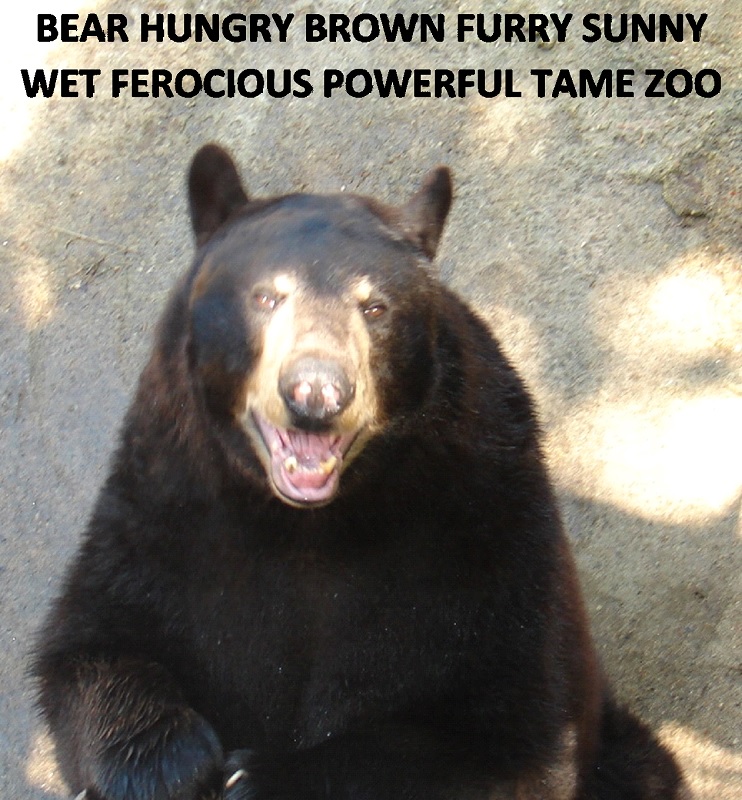
Bear Words

However, when it comes to file size, this equation doesn’t hold true. Instead, a single picture may equate to tens or hundreds of thousands of words.

Each letter in a word uses one byte of memory. A small, simple JPEG picture that measures about 200 pixels by 200 pixels might have a file size of about 10 to 20 kb, where each kilobyte (kb) is 1000 bytes. A simple JPEG picture that measures 1200 x 1600 pixels might have a file size of hundreds of kb. Higher resolution images or rich formatting may easily drive the file size into megabytes, where each megabyte (Mb) equals 1000 kb or 1,000,000 bytes. (Note: k = kilo = thousand, M = mega = million. You wouldn’t mind earning a M$ from your royalties, for example.)

If a word is about 5 letters long, on average, this means that a simple 200 x 200 JPEG picture takes as much memory as about a few thousand words, a 1200 x 1600 JPEG picture equates to about a hundred thousand words, and higher-resolution or richly formatted pictures are worth nearly a million words.

Why does this matter? This affects both publishers (including self-published authors) and readers of eBooks. First, there is a maximum size on the content file of an eBook – for Kindle, it is 50 Mb, and for Nook, it is 20 Mb. An eBook that features many large, high-resolution, richly formatted pictures is in danger of exceeding this limit.

Secondly, the content file size may affect the list price and royalty. For example, with Amazon’s Kindle, an eBook can only have a list price of 99 cents if the content file size is below 3 Mb and a list price of $1.99 if the content file size is below 10 Mb; otherwise, the minimum list price is $2.99. If you want to sell a Kindle eBook for less than $2.99, you must keep the file size below these thresholds.

Also, Amazon deducts 15 cents per Mb from the list price before applying the royalty percentage for Kindle eBooks on the 70% royalty option. For example, suppose that you have a 10 Mb eBook that you want to sell for $4.99 on the Kindle. The file size deduction is $0.15 x 10 = $1.50, which means that the royalty is ($4.99 – $1.50) x 0.70 = $3.49 x 0.70 = $2.44. If the file size could be reduced to 5 Mb, the royalty would be increased to $2.97. In this example, saving 5 Mb of file size adds 50 cents to the royalty. For every 1000 books sold, this amounts to $500.

The effect of pictures on file size affects both customers and publishers. Customers appreciate pictures, especially if they have a color eReader like the Kindle Fire or Nook Color. They also like the pictures to have high enough resolution to see the image clearly on any device (from a tiny iPhone to an iPad) and to be formatted well. However, including more pictures also affects the price of the eBook, and – another important consideration – the delivery time of the download (the delay is even longer for older eReaders).

There is a trade-off between the benefits of including many high-resolution pictures and the disadvantages this has in terms of list price eligibility, royalty, and delivery time. The publisher is faced with a difficult challenge to balance this properly.

However, there are a few ways to decrease the size of the content file for the eBook. Keep in mind that you don’t want to sacrifice image quality in the content file for a paperback book, so you need to have two separate content files for your book – one for the eBook and another for the paperback.

In Microsoft Word, right-click on any picture in your content file, choose the Format tab at the bottom of the page, select Format Pictures, uncheck the Apply Only To This Picture box, and select a Target Output (if you have an older edition of Word, like 2003, the instructions are a bit different). E-mail resolution (96 ppi – pixels per inch) will give you the minimum possible file size, and is generally suitable for eReaders. I suggest saving your file with different names before and after trying this so that you still have the original.

Paperback books have the opposite problem. If you submit content and cover files to CreateSpace, for example, a common error is that a picture has a DPI (dots per inch) of less than 200. You want high resolution images on your paperback book, where there is a generous maximum content file size of 400 Mb.

Note the distinction between resolution and DPI. The resolution of a picture is based on how many pixels it measures across and high (like 600 x 800, which is common for full-screen images on eReaders), whereas DPI measures how many dots there are per inch on the printed page. The size of the picture in addition to the resolution affect how many pixels will span one inch.

Coincidentally, there are about 930 words in this blog article. So this blog is equivalent to a single picture – or about a tenth or hundredth of one in modern terms. Picture that!

Chris McMullen, self-published author of A Detailed Guide to Self-Publishing with Amazon and Other Online Booksellers (Volume 2 coming in mid-April)

Professional Touches that Make Books Stand out

Design Marks

Small professional touches on the cover, title page, copyright page, and first pages can make a big difference. They may be little design marks, but they help to create a favorable impression.

Self-published books are competing against traditionally published books. Some books appear very much self-published at a glance, others are obviously traditionally published, and there are also many in between – those that use an imprint and look very nice, but not quite.

When we’re buying books, we prefer to find those that look professional. For this reason, all publishers – self or traditional – want their books to look professional.

One way to tell is to carefully examine the cover and Look Inside. Don’t just read the first chapter: If you’re looking for a professional book, look for visual clues before investing time on Chapter 1.

Following are a few examples. I’m not affiliated with any of these authors in any way. I’ve never met or interacted with any of these authors. I haven’t even read these books (well, not yet): I chose them for the professional touches that they illustrate, not because I wanted to recommend the content.

(1) Enchantment by Guy Kawasaki:

http://amzn.com/1591845831

See the gold starburst on the paperback cover. Such a starburst doesn’t need to be an award; it can be any note worth highlighting, although in fiction it’s usually an award. (By the way, although this book was published with Penguin, this author has recently self-published a book with CreateSpace.)

Starburst

Look at the pictures in the Look Inside of the Kindle edition. These are not just the front cover repeated inside, but are sending a unified message with the front cover by using the same butterfly.

Interestingly, the Look Inside for the paperback brings up the “Kindle edition” (or so it says), but when you click on the Kindle edition and then Look Inside, it’s different. The actual Kindle’s Look Inside includes a logo, for example. The logo is another professional touch.

Study the copyright page. Every traditionally published book has a very detailed, professional-looking copyright page. Virtually every self-published book has a minimal (if any) copyright page.

Why? Because self-publishers are thinking (A) customers don’t care about the copyright page and (B) they want to get to Chapter 1 as soon as possible, hoping to hook the reader who begins reading. Think about why traditional publishers don’t similarly minimize their copyright pages. Their copyright pages look very professional.

Customers don’t stop and stare at the traditionally published copyright pages. They pass right over them. It’s not going to be a delay on the potential customer’s route to Chapter 1. However, customers will catch a glimpse of the copyright page as they skip past it.

When customers see the minimal copyright page, it creates the impression that the book is self-published. Not much effort was put into this page (perhaps like the rest of the book?). When they catch a glimpse of the long, detailed, professional-looking copyright pages of traditional publishers, it makes the impression that a professional staff has combed through and prepared the book.

(2) The New Rules of Marketing & PR by David Meerman Scott:

http://amzn.com/1118026985

You’ll find another starburst here; this cover also has matching top and bottom borders. (Note that this book is geared toward businesses.)

Check out the customer images and you’ll find an Amazon Video – a video from the author. There are many ways to use AuthorCentral to help make the book’s Amazon detail page look professional, too.

In the Look Inside, of course the copyright page is again very professional (since it’s published by Wiley). The page numbering, horizontal lines after section headings, and matching gray boxes outlining some short paragraphs are design touches that help the book appear more professional. Note that traditionally published books often have such design marks – which come in a wide variety of styles – but that they don’t overuse them.

(3) The Millionaire Next Door by Thomas J. Stanley and William D. Danko:

http://amzn.com/1563523302

This cover has a corner stripe with text instead of a starburst (but when you Look Inside, there’s a similar cover with a starburst instead of a corner stripe).

It also features a logo on the copyright page.

Topher

(4) Love Medicine by Louise Erdrich:

http://amzn.com/0061787426

Most fictional books that include a starburst do so to indicate an award of some type (whereas a nonfiction book that doesn’t have an award or bestseller rank to advertise might use a starburst just to say something like, “Includes answers”).

If you publish a fictional work and don’t have an award, note a couple of other design marks on this cover: part of a green circle on the bottom right and a quote between brackets at the bottom center. Harper chose to clearly advertise that this was a “newly revised edition” right on the cover.

Notice the logo/picture at the bottom of the title page, which also appears at the top of the copyright page.

Find the flowery artwork border at the top of the family tree pictures. Such artwork can also be used as section breaks (provided that it matches the theme of the book). If so, it should be short – just taking up about one line of text (and often isn’t nearly as wide as the artwork I’m referring to here). For eBooks, a glyph section break should be in gif (not jpeg) format, and should look good against white, sepia, or black backgrounds (it’s very important to check the preview in each format with each background).

(5) Wool by Hugh Howey:

http://amzn.com/1476733953

When you Look Inside, first you find the logo, then you see a cool picture on the next two pages that looks like the “page” is torn. Although this is now published by Simon & Schuster, this author had been featured at CreateSpace.

Banner

Look closely at a variety of traditionally published paperbacks (and, where available, compare with their eBooks). You will sometimes see a couple of lines or other marks on the cover, copyright page, and other pages, or special marks used in a page header or footer, for example. This sample will help you see what’s possible and help to inspire a professional looking design of your own.

Check out traditionally published books in your own genre to see what kinds of design features are common. Some kinds of designs are more popular in some genres and much less common in others. You don’t want your book to seem out of place.

Don’t go overboard and overuse design marks. Don’t make the cover too busy with too many design details. Notice that traditional publishers tend to add occasional touches. An occasional design touch stands out very well – you notice it better this way.

Make sure that no design marks or pictures seem out of place. Any glyphs or images should match the theme of the book.

Chris McMullen, self-published author of A Detailed Guide to Self-Publishing with Amazon and Other Online Booksellers (Volume 2 coming in mid-April)