What Readers Want

readers want

If you’re a writer, the most effective way to attract readers is to carefully consider what readers want. It really is that simple.

But don’t fall into the common trap of thinking things like, “Most people won’t mind if there are typos,” “I know someone who paid $25 for an e-book, so I can sell mine for $9.99,” or “The content is more important than the cover.”

Don’t think, “What will the reader settle for?” Think, “What does the reader want?”

Fewer customers will settle for it. Many more customers will buy what they want.

I don’t mean that you have to write in the most popular genre. I don’t mean that you have to sell out, compromising your beliefs. I don’t mean that you have to study the bestsellers and copy their techniques.

You do need to think long and hard about what your specific target audience wants if you wish to maximize your sales. Following are specific examples of what I mean:

  • Readers want stories that they will enjoy and nonfiction books that will be useful. The storyline or content should be complete, thought out well, engaging throughout, pleasing to the specific target audience, better than average, and within reasonable scope of their expectations (based on the cover, blurb, and category). Readers want to love or despise the main characters, and they want to relate to characters or enjoy a new experience.
  • Genre readers want their expectations for the genre to be met. For example, romance readers want to fall in love, cry over broken hearts, see broken hearts mended, enjoy a happy ending, etc.; in a given romance subgenre, they want just the right amount of explicitness. They don’t want the protagonist to have certain behavior flaws. It pays to research and understand the specific target audience. Readers don’t want stories that violate important rules for the genre.
  • Readers want a clear indication of what they’re getting at a glance. This means that the cover must visually show what your book is about. The precise fiction subgenre or nonfiction subcategory should be obvious from a quick glance at your cover. The cover should also indicate the nature of the content. Why? Because the reader wants to find books quickly. Books that don’t send a clear signal, or which send mixed messages or the wrong signal, won’t get the limited attention that shoppers have to offer.
  • Readers want the blurb to be honest, clear, concise (so they can decide quickly), and pique their interest. If 100 words don’t interest the reader, it wouldn’t be wise to read 100,000 words by the same author.
  • Readers want books to be easy to find. They want to find it in the relevant subcategory (and not find it where it doesn’t belong). They want to find it with relevant keywords (but not find books that shouldn’t show up in the search). They want the cover to depict the content and genre clearly to help them find the book. They want a title that’s easy to remember and spell. They want to see book reviews that help them find good books. They want the author or publisher to go to the trouble of helping them find books they are likely to enjoy. But they don’t want intrusive advertising.
  • Readers want books that are well-written, nicely formatted, and free of spelling, grammar, and other mistakes. They are paying money for a book and they are investing time in the book, so why shouldn’t they expect to receive a professional book in return?
  • Readers want a great value. They don’t just want a low price. They want a great book at a fair price. Some readers shop a higher price range thinking that you get what you pay for. But no matter what the reader pays, the reader expects to receive a great book. Even if the book is free. It’s not worth investing several hours on a book for it not to be professional and good, even if it’s free.
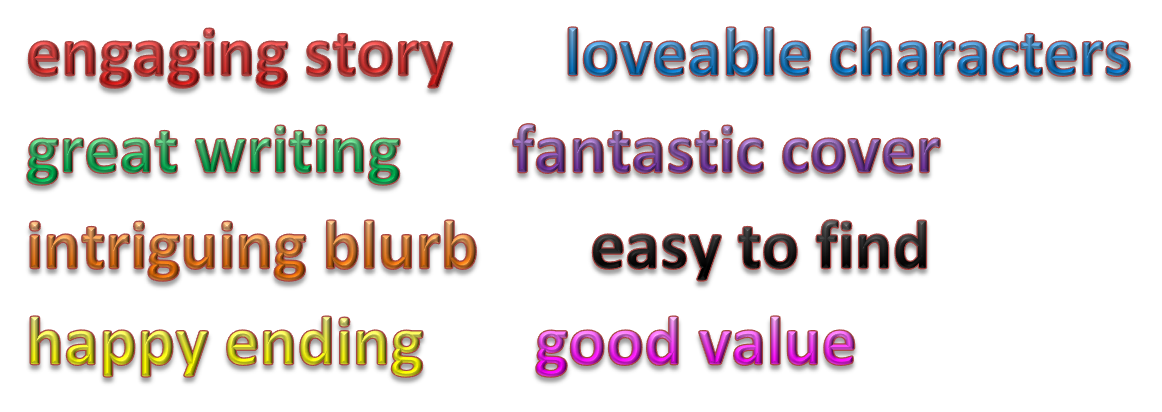
  • Readers want a great story, great characterization, great editing, great writing, great formatting, a great cover, a great blurb, and a great price. Why not? When there are books out there that are great all around, why should any reader settle for less?

Give readers what they really, really want, and your book is apt to find many more readers. Give them something they must settle for, and only some (if any) will choose to settle.

Remember to ask yourself what readers want. Ask yourself this when you’re writing your book, when you’re formatting your book, when you’re pricing your book, when you’re writing your blurb, when you’re deciding on your cover, when you’re marketing, and in your public relations.

For example, there are customers who absolutely do not want you to invade their space in the review section and comment on a review. Since some customers feel very strongly about this, it may be best to give them what they want.

If you were an entrepreneur running a small business, it would serve you well to think about what the customers want.

As an author-preneur, it serves you well to think about what your specific target audience wants.

About My Blog

I started this blog to provide free help with writing, publishing, and marketing. You can find many free articles by clicking one of the following links:

Chris McMullen, Author of A Detailed Guide to Self-Publishing with Amazon and Other Online Booksellers

Follow me at WordPress, find my author page on Facebook, or connect with me through Twitter.

Authors: Pretend You’re the Customer

You

Try to put yourself in the shoppers’ shoes. See their perspective.

Search for your book on Amazon. (When it’s first published, the ‘Last 30 Days’ filter on the left, once you’re searching in Books—not All Departments—will help you find it with a wise choice of keywords.)

Study this page of search results. Look at the thumbnails, titles, subtitles, authors, publication dates, and review tallies. For customers browsing on Amazon, this is how they will first see your book. How does your thumbnail look among these others? Try different searches that pull up your book.

They Aren’t the Competition

Realize that these are complimentary titles, not competing titles. Only a fool would view the other titles as obstacles to selling his or her book. (Unfortunately, there are some fools out there.) Rather, these similar books are opportunities for sales. Books tend to sell together as teams much more than solos. It’s usually not the case, “Which one do I buy?” but, “Which books will I buy?” and weeks after the purchase, “Where can I get more like those?” Those Customers Also Bought lists are valuable marketing tools.

Fools who succeed in thwarting the sales of similar titles often shoot themselves in the feet because fewer sales for that team means fewer sales for each title on that team. You don’t get to pick your team; similar titles form their own teams.

Well, you do have control over the packaging. The way to get on a different team is to study a variety of books similar to yours. Look at the covers, blurbs, biographies, product pages, reviews, look insides, and sales ranks. Your packaging needs to be a good fit for your book’s content, but it can also put you on a better-selling team (however, wearing the uniform of a hot team while not having content to match will be a disaster).

What Are You Looking For?

As an author, you love your book, you’re focused on your book, and you’re focused on sales. When you shop for books, you tend to be selective and critical.

Put yourself in the mindset of the shopper:

  • Does your thumbnail appeal to you? Is it easily readable? Do the key words stand out? Do any parts of the cover bother you, even slightly? Pretend you know nothing about the book: Does the cover depict the right content?
  • Does the blurb grab your interest and engage it throughout? Do the words flow well? Does anything bother you?
  • Check out the look inside. How does the cover look on your pc monitor in this large size? Is it pixelated? Do you see any problems here that you don’t see in the thumbnail? Does the front matter, including the copyright page, look professional? (Compare with a variety of other books.) Does the beginning grab your attention? How do the words flow?
  • Also check out your photo and biography. Imagine you don’t know yourself. Do these make a good impression? Does anything bother you?
  • Consider the book as a whole. Will it meet the readers’ expectations? Will it seem like a good value? Will it please the target audience? Is it likely to produce word-of-mouth recommendations?

You should do this every few months. Sometimes you catch a few typos when you haven’t read something for a while. Sometimes your future self can be a little more objective or critical looking back at your former work.

Objectivity

No matter what, though, it’s still your book. While you need to look at it, and need to try your best to be objective, you can’t look at it with the same perspective as a customer.

You really need feedback from other people. Friends and family can give you some, though that won’t likely be completely objective either. However, someone may offer you some helpful suggestions or show you something useful that you hadn’t realized. Try to find people who can be objective to look at your thumbnail, cover, blurb, look inside, and product page. Have them search for your book and see how your thumbnail compares to others. Have them read a few other blurbs and compare those with yours.

Honest feedback can be quite valuable. It can also be self-contradictory. It won’t all be helpful. You’re faced with the task of determining what is worth changing and what isn’t, with the problem of being biased toward things that reinforce what you’d like to hear. However, if you hear the same thing repeatedly, you should be thinking that many customers are apt to feel the same way.

About Me

I’m Chris McMullen. I have a Ph.D. in physics, but don’t let that scare you. I love to read and write. If you just look around my blog or at the books I’ve published, you’ll see that I love to write. I’ve come to understand and appreciate the marketing aspect, too. I didn’t like it when I first started publishing, back when I naively thought marketing meant salesmanship and advertising. Now that I realize that marketing is more about branding, showing that you’re a person and not a name, and letting your target audience discover your passion—and more meaningful and subtle things like these—I’ve come to enjoy it. I hope to reveal the enjoyable and fascinating side of marketing—the parts that aren’t so obvious—to other authors. Focus on this side of marketing, and you may find yourself more motivated to do it, the process more rewarding, and hopefully better long-term results.

Follow me at WordPress, find my author page on Facebook, or connect with me through Twitter.

I started this blog to provide free help with writing, publishing, and marketing. You can find many free articles by clicking one of the following links:

Author of A Detailed Guide to Self-Publishing with Amazon and Other Online Booksellers

Breaking the Genre Boundaries

Genre

A New Genre

People like to try new things. They’re looking for something new.

At local restaurants, though they know the menu by heart, diners hope to find a new dish. Listening to the radio, people hope to hear a new tune. Shopping for clothes, customers want to see a new style.

Do people really want to keep reading the same kinds of books? The truth is, readers are hoping to discover something new. All the different genres came about from brave authors who tried something different and succeeded.

Ah, but people won’t try anything just because it’s new. It must not only be fresh, it must also be very good, appealing, and easy to find.

Traditional publishers like to see books that are fairly similar to what is already established. They want to find new ways of doing much of the same. They know which books have a history of success. They know there is an audience for those books.

Indie authors have the freedom to try something wildly different. Fortunately, there are readers who are looking for out-of-the-book writing. The trick is to help those readers find the ground-breaking novels.

These are the hurdles you must overcome:

  • Which category will you choose?
  • How will your book signify its genre?
  • How will people discover your book?

The Category Problem

If you write a book that defines a new genre, none of the standard genres will quite fit. The next best thing may lead to disappointment. For example, if it’s not quite romance, but you list your book as contemporary romance, suddenly many loyal contemporary romance fans will pin their contemporary romance expectations on your book.

You can try to explain this in the blurb, but then you may lose some sales from customers who are thinking, “Oh that’s not what I was expecting.” If you don’t make this clear in the blurb, you may get some reviews that criticize your book for not being as expected.

No category is perfect, but you must choose some category. You just have to go with the closest match. Choose a genre where the readers are most likely to appreciate your new genre. Make it clear in the blurb that your book isn’t the same old thing, but try to do it in a way that will catch the interest of readers who may be looking for something new.

It would be ideal if Amazon had a special category for books that are exploring brand new genres. I bet this would be a popular category for readers if it had the right name. For example, eBay has special categories for Strange and Bizarre. The trick is to combine name appeal with product appeal. If a bunch of standard items are listed as Bizarre, for example, people will stop browsing that category.

Amazon lumps things that don’t fit into Other and Everything Else. This just doesn’t have the appeal of Strange or Bizarre. It’s the island of misfit products that nobody will ever discover.

You can’t change the categories. (But you can send Amazon a suggestion to make a new book category like Fresh New Genres. With enough requests that show Amazon the potential of doing this, maybe it will happen someday.) All you can do is make the best use of what’s available.

Or we indies can get together and create a website for misfit books. There are many authors who write outside the standard genres. If we could succeed in spreading the word, we may be able to attract readers and authors to our website, making it easier to match readers who would like to try something fresh with authors who are writing different kinds of novels. What do you think? Or just get on Google, and you might find there are already some websites (or Facebook groups) that do this.

The Marketability Problem

Highly effective covers tend to clearly signify the correct genre. Readers who are looking specifically for detective novels, for example, know what the covers of detective novels typically look like, so these are the kinds of covers they will be looking for when they shop.

But how do you signify a genre that doesn’t yet exist? How do you design a cover that will attract readers?

If the cover is indicative of a standard genre, you run into the problem of shoppers expecting one thing, but getting something different. Nonetheless, this may be the way to go. That is, design a cover that attracts the audience who is most likely to try your book out, then in the blurb show that your book is different, but in a good way.

An alternative is to create a cover that is different, but do it in such a way that it may catch plenty of attention. This is a much tougher challenge. It’s not just the difficulty of creating an eye-catching cover. There is the additional challenge of appealing to your target audience. Your cover basically needs to imply, “This is a brand new genre, and it’s worth checking out.” It’s a tough message to get across effectively on a thumbnail image.

In between these two ideas, you can design a cover that’s similar to the category that you select, but just different enough to show visually that your book isn’t quite the same old stuff.

Realize that authors who write standard stories in standard genres have great difficulty designing highly effective covers. You’re trying to do something far more difficult if your book doesn’t fit into a standard genre.

It’s possible for a short subtitle to help, but even this is a challenge.

The Marketing Advantage

Marketing will be your best friend. This is your opportunity to meet people in your target audience and help them discover your book firsthand. You’re interacting with these people, so you have a chance to get them interested in your book idea without having to worry about them finding your book in a category that doesn’t exist.

Emphasize what makes your book special. That’s why you wrote the book, right? You saw some problem with traditional stories and found a way to improve upon them.

Get prospective readers interested in the things that make your book unique. When it comes to categories and packaging, your book is a misfit and those differences count against you. But when it comes to marketing, your book is special and the differences are on your side. Play your cards right.

Breaking Publishing Boundaries

I’m Chris McMullen, an indie author. All indie authors are breaking boundaries. We’re part of a publishing revolution.

I have a Ph.D. in physics, but don’t let that scare you. I love to read and write. If you just look around my blog or at the books I’ve published, you’ll see that I love to write. I’ve come to understand and appreciate the marketing aspect, too. I didn’t like it when I first started publishing, back when I naively thought marketing meant salesmanship and advertising. Now that I realize that marketing is more about branding, showing that you’re a person and not a name, and letting your target audience discover your passion—and more meaningful and subtle things like these—I’ve come to enjoy it. I hope to reveal the enjoyable and fascinating side of marketing—the parts that aren’t so obvious—to other authors. Focus on this side of marketing, and you may find yourself more motivated to do it, the process more rewarding, and hopefully better long-term results.

Follow me at WordPress, find my author page on Facebook, or connect with me through Twitter.

I started this blog to provide free help with writing, publishing, and marketing. You can find many free articles by clicking one of the following links:

Author of A Detailed Guide to Self-Publishing with Amazon and Other Online Booksellers

“Pretty Good for Being Self-Published”—Insult?

Insult

There are many comments out there about self-publishing, both good and bad.

Let’s look at a particular back-handed compliment: “Your book is pretty good for a self-published author.”

Halfway through this remark you feel flattered. As you prepare to express a simple thank you, your cheeks turn red, your blood boils, and you think to yourself, “Hey, what are you trying to imply?”

It’s like a husband telling his wife that she did pretty good for a girl (a great line if you want an excuse to sleep on the sofa).

On the one hand, a self-published author is challenged with many tasks: writing, editing, formatting, cover design, marketing, etc. It’s no easy task for one person to master all of this, or even to perfect a complete book after paying for some services. An indie book that’s well-written and has a good storyline, but has a few extra typos and good-though-not-perfect formatting is a pretty good book. If one of the big publishers had picked this book up, it might have only a couple of typos and perfect formatting. So wouldn’t it be fair to say that it’s pretty good for being self-published?

Now we switch hands. If you read a book, it’s either pretty good or it isn’t. A customer shouldn’t expect to make allowances and settle for something less. If the customer sees an issue and deems it to be minor, it’s still a pretty good book; if the customer sees an issue and views it as a problem, it’s not a pretty good book. Ultimately, it’s each customer’s opinion that matters. After investing money on a product plus the time to use it, you have expectations for what to receive in exchange for your investment. The value of the product depends on the quality of the product in relation to the investment. (Making allowances for where the product came from is purely psychological on the part of the customer. If you try two colas blindfolded, you might be surprised at which one you prefer.)

Of course, it would have been less hostile to say, “I really enjoyed your book. Would you mind if I offered a minor suggestion?”

You can see the cup as half full: “It’s a pretty good book.”

Or you can see the cup as half empty: “For being self-published.”

Really, the choice is yours.

By the nature of the statement, the person is obviously biased toward traditional publishing. If you get someone who favors traditional publishing to call your self-published book “pretty good,” maybe you should smile about this instead of getting frustrated about it.

Another thing you can do is use it as motivation. If you already have a pretty good book, some extra motivation might lead to a really nice future. 🙂

The last thing you want to do is look unprofessional. Don’t let a remark like this lure you into looking amateurish. Building a reputation takes time and patience, but it can be lost as quickly as losing your temper.

There is plenty of negativity out there. Find the good in it. Find some motivation in it. Learn to cope with it. Learn to stay away from it as much as you can.

There is plenty of positivity out there, too. Seek this. It’s easy to find, especially if you look for it.

* * *

Follow me at WordPress, like my author page on Facebook, or connect with me through Twitter.

I started this blog to provide free help with writing, publishing, and marketing. You can find many free articles by clicking one of the following links:

Chris McMullen, author of A Detailed Guide to Self-Publishing with Amazon and Other Online Booksellers

A Different Kind of Book Marketing

New

Authors are trying to market their books. Yet this is only a fraction of the book marketing that occurs daily:

  • Many publishers, bookstores, and literary agents are trying to brand the notion that traditionally published books are much better. And why not? Many feel that it’s in their interest to reinforce this perception.
  • Many editors are striving to advertise common editing mistakes and the need to correct them. Indeed, editing is important. Exactly what is good enough?
  • Many cover designers wish to reinforce the importance of a good cover and to negate the saying, “Don’t judge a book by its cover.” But will the benefits outweigh the costs?
  • Publicity consultants, e-book formatters, PR services, advertising agencies, professional review specialists, font licensers, contract attorneys… So many individuals and businesses have products to help you with your book. Which ones do you really need? You may need some, and it’s a tough call to make.

Do you see frequent remarks online pointing out problems with self-published books? That’s exactly what many businesses and individuals want. Some of the people pointing this out don’t have anything to gain by it; others believe that they do. The indies who point this out are shooting themselves in their feet; the overall perception of indie books does have an impact on sales.

Those in the traditional publishing industry, or who are closely tied to it, may also be shooting themselves in their feet when they blast indie books. For example, when they paint a picture of e-book formatting problems, it may deter sales of e-readers and e-books to some extent, affecting traditionally published e-book sales, too.

There are some indie books with formatting, editing, cover, or writing issues. The worst offenders aren’t selling much; they aren’t even discovered much in search results, since the bestsellers tend to be much easier to find. We know about them from customers who bought them by mistake and learned their lesson from not reading the blurb and checking the Look Inside (probably a more common occurrence with freebies), and it’s been reinforced by many people who, for whatever reason, like to point this out.

Nearly everyone in the book industry would benefit, whether they realize it or not, from painting a positive image of the best books, rather than focusing on negatives. Just knowing there are problems out there weighs on a reader’s mind. People like to shop for products where the experience seems positive. Indies, especially, should point out features of quality indie books. Marketing to help spread news of the best books helps everyone.

Just like authors need to market their books, editors need to market their services. The better way to go about this is to focus on the benefits of good editing, rather than describing the problems with poorly edited books. Here’s the difference: Painting a positive picture of books helps a little to stimulate book sales overall, whereas a negative picture deters book sales a little. The better books sell, the more demand there will be for editing and other services.

Similarly, cover designers should focus on the benefits of hiring a graphic artist, instead of pointing out the problems with lousy covers.

Authors shouldn’t just be marketing their own books, they should also paint a positive picture of books, e-books, Amazon, Barnes & Noble, CreateSpace, Ingram Spark, Lightning Source, Kindle, traditional publishing, self-publishing, editing, cover design, and all things books.

Create a positive world that will attract and please book lovers of all kinds. This will maximize sales and services all around.

There isn’t a true distinction between traditional and self-publishing. Many traditionally published authors also self-publish; it’s becoming increasingly popular. What? Are they awesome at the same time as they are lousy? That’s ridiculous!

What counts, ultimately, to any reader, is how positive the reading experience is. A traditionally published book that provides a reader with a not-so good experience isn’t better than an indie book that wows the reader. Perhaps traditionally published books, on average, tend to impress readers more often. (Maybe not. Many indie books might be read mostly by their target audience with great pleasure, while some traditionally published books might be read by many readers outside their target audience. A personal marketing experience and fewer sales might, just might, on average result in a better reading experience. The pleasure of meeting and interacting with a small-time author has its benefits.)

But that’s not the point. The point is for everyone to sell more books by focusing on providing the best possible reading experience, and not for everyone to sell fewer books by focusing on the negatives.

Books that provide better reading experiences are inherently going to sell more. Advertising the negatives isn’t really helping anyone; books with those negatives tend to deter their own sales, as soon as word spreads. Rather, giving attention to those negatives is just hurting everyone, including those at the top.

The book industry is changing. Many publishers, bookstores, and agents don’t like it. Many fear it.

What they need to do is adapt; not complain about it.

The book industry is becoming inclusive. It used to be exclusive.

Publishers might still be inclined to play the exclusivity card. The proper way to try this is to market the benefits of publishing traditionally, not by marketing the negatives of self-publishing. Again, a positive experience for buyers helps everyone overall. This actually affects big businesses much more than it affects the small guys. If everyone loses 5% as a result of painting a negative picture, this hardly impacts the indie author at all, but 5% is huge for a big business.

There are benefits to publishing traditionally. Each author and book is unique. Some will benefit by publishing traditionally, others won’t.

Publishers could adapt toward inclusivity (and to be fair, some are moving toward this in small ways).

Amazon played the inclusivity card in a huge way: With CreateSpace and Kindle Direct Publishing (KDP), everyone can now publish a book.

Smashwords played the inclusivity card. Several other companies have, too.

This seems to be working well for them.

Imagine winding back the clock. What if Barnes & Noble or one of the big five publishers had played the inclusivity card before Amazon did? How might things be different today?

Maybe it’s not too late. Maybe there is a way for big businesses to become more inclusive without sacrificing too much quality. There may even be a demand for it. There are authors who would like something in between traditional and self-publishing, where you could get some benefits of both.

We can’t control what the big companies do.

We can be grateful for the opportunities that companies like Amazon, CreateSpace, Ingram Spark, Smashwords, and many others have provided.

And most of all, we can remember to market a positive image for books in general in addition to marketing our own books and services, realizing how creating a positive reading experience for buyers may have a significant impact on book sales overall.

Love books? Check out Read Tuesday, a Black Friday event just for books (all authors can sign up for free): website, Facebook page, Twitter

Chris McMullen, author of A Detailed Guide to Self-Publishing with Amazon and Other Online Booksellers, Volume 1 (formatting/publishing) and Volume 2 (packaging/marketing), Facebook page, Twitter

The Transition from Newbie Indie to Complete Author Package

Complete

The newbie indie author typically launches with a humble beginning:

  • One book on the market.
  • First attempt at formatting.
  • Just friend and family support.
  • Could use some editing help.
  • Not sure how to promote the book.
  • Very tentative about any marketing.

The professional indie author has a complete package:

  • Multiple books available.
  • Several customer reviews.
  • Substantial fan base and following.
  • Extensive online platform includes blog, website, and social media.
  • Knows many formatting and publishing tips.
  • A variety of connections provide valuable support.
  • Experienced with several marketing strategies.
  • Shows confidence to setup promotional events.

It’s easy for a newbie author to encounter a professional author and feel overwhelmed.

Yet every author starts out new.

(You can do research and start out wiser, and you can start to build a following before you publish… but no matter what, the author you are on your debut doesn’t compare to the author you are when you become wiser, more knowledgeable, and more experienced.)

Here’s the thing: Every newbie has the opportunity to evolve into a professional author with a complete package.

It’s easy, really; much easier than you think:

  • Time is on your side. Improve a little here and a little there, and over the course of time, you’ll have a complete package. Time also gives you experience. Learn what you can.
  • You need initiative. If you’re negative and tend to convince yourself that this won’t pay off, that won’t be worthwhile, and you’ll never be able to do that, then you’re right: It won’t. There are so many opportunities out there for those who are patient, show initiative, and don’t give up.

Most marketing strategies don’t pay quick dividends.

This doesn’t mean that they’re not worthwhile. Many free and low-cost strategies pay long-term dividends that make them worthwhile.

Here’s the difference:

  • When you spend a couple of years diligently branding your image on a variety of online platforms and in person, you can eventually build a name for yourself. When only do this short-term, you aren’t noticed or are quickly forgotten.
  • When you post content relevant to your target audience for several months, eventually you attract a healthy following as word spreads about your gold mine. Early on, there isn’t as much material and you haven’t been around long enough to get discovered.
  • When you only use one online medium, only people who favor that one online platform can find you. When you have a blog, Twitter, Facebook, Google+, LinkedIn, etc., you’re visible to everybody and you also look like a more complete author.
  • When you’ve been posting for a couple of years, you look like an established author who has been around. When your content is relatively new, you’re still struggling to get discovered and build your following.
  • When your blog is new, you have a basic blog with a few posts. Over time, you can have several pages on your website with valuable content geared toward your target audience, and your website evolves as you come across and try out new features.
  • When you’ve interacted with other authors for a couple of years, you learn many useful formatting, publishing, and marketing tips. This helps you improve over time.
  • Researching marketing strategies and trying them out takes time. The more effort you put into this, the more knowledgeable and experienced you become.
  • After a few years, you will have more books out, a larger fan base, a bigger following, more reviews, more connections, more experience, more knowledge, more wisdom… you’re more of an author than you were.

Success doesn’t happen overnight. It takes hard work, motivation, initiative, a thick skin, a good support system, and much patience.

You don’t write a whole novel overnight. (I hope!) You don’t do all of your marketing overnight, either.

It’s a choice you can make. Do you want long-term success and to thrive as an author? Or not?

There are many opportunities out there. Grab them.

  • Have you signed up for free exposure through Read Tuesday? You still can.
  • Did you take up Green Embers’ gracious offer for free indie advertising? It’s not too late.
  • Are you contacting bloggers for possible guest posts, interviews, or book reviews? You can’t do it if you don’t try. Check out the Story Reading Ape, for example.
  • Which local bookstores and libraries have you approached? Put together a press release kit, grab a few copies of your book, and give it a shot.
  • Check out complete authors to see what they’re doing, that you aren’t trying. Take the word “can’t” out of your vocabulary. Figure out how you can. Don’t expect immediate dividends. Strive for a complete package a couple of years from now. Be patient, work hard, and let time be on your side.

The difference between an author who develops a complete, professional package and one who doesn’t is very often as simple as showing initiative. It’s not really a secret, and it’s easy enough for anyone to do it.

Love books? Check out Read Tuesday, a Black Friday event just for books (all authors can sign up for free): website, Facebook page, Twitter

Check out the CNN iReport for Read Tuesday. You can help support Read Tuesday by voting on it, commenting, and sharing the iReport on Facebook or Twitter. Click here to see the iReport. Tell your friends and maybe we can get additional national exposure for Read Tuesday. Any help will be much appreciative. Here is another example where a simple thing like initiative can make a huge difference.

Chris McMullen, author of A Detailed Guide to Self-Publishing with Amazon and Other Online Booksellers, Volume 1 (formatting/publishing) and Volume 2 (packaging/marketing), Facebook page, Twitter

A Look at a Successful Fiction Marketer

Charles Yallowitz

In this post, we will learn valuable marketing and marketability tips by looking at a successful fiction author. In addition to writing a highly marketable book, today’s author is also active with a variety of effective marketing strategies.

Sword and sorcery author Charles Yallowitz has a popular fantasy series called The Legends of Windemere. If you’re a WordPress blogger, you may know Charles, as he is an active and highly supportive blogger in our community. Even if you’re familiar with Charles and his series, hopefully you will still find some helpful tips about marketability and marketing in this post.

Beginning of a Hero

Prodigy of Rainbow Tower

Allure of the Gypsies


Let’s begin by taking a close look at the book covers for The Legends of Windemere:

  • The covers look like they are part of the same series. This is an important part of series branding. Once readers become familiar with the series, you want them to instantly recognize the brand when they come across new books in the series. The series name looks exactly the same, even in the same position, in each volume; and so does the name. The title has a cool style, consistent with each volume: Look at the first and last letters.
  • Volume 1, Beginning of a Hero, clearly signifies the genre. This is a vital ingredient of a highly marketable book. A fantastic cover won’t sell a book that lacks marketable content, but can really help a book that has marketable content. It’s a sword and sorcery novel, and there you see the protagonist with a sword on the cover. More than that, the artwork looks like it was done well, and the cover will appeal to the target audience (teenagers who read sword and sorcery fantasy novels).
  • If you have a person on your book cover, an important, but often overlooked, key is the facial expression. You definitely don’t want a blank stare, but even a subtle effect where the expression doesn’t seem to fit the scene can deter sales. The first volume shows a look of intensity on the protagonist’s face.
  • The most important cover is the one on the first book of the series, but the others are very important, too. The first one helps to draw readers into the series, but the subsequent covers can impact whether or not readers continue in the series. Volumes 2 and 3 have dynamic covers. It’s hard to pull off the effect of movement well, but these covers do it. You can see the gypsy dancing in Volume 3.
  • It’s not easy to follow the three color rule (primary 60%, secondary 30%, accent 10%) when drawing people and scenery, yet each of these covers is pretty effective at mainly using only a few colors. Although the color scheme changes from one volume to the next, the style and structure are preserved wonderfully.

Of course, there is more to marketability than just the cover:

  • The blurbs are concise, which works especially well in fiction. You want the blurb to reinforce the cover by revealing the same genre and content (you want the reader thinking, “Yeah, that’s what I was looking for,” and not, “Oops, that’s not what I expected”). You want to give just enough to create interest, and make the reader look inside to find more.
  • I read Volume 1, so I know firsthand that the storyline and characterization are highly marketable. These books are rich in great ideas. A highly marketable book must deliver something that readers will very much enjoy. For sword and sorcery readers, this storyline and these characters are a great fit. This no doubt creates many recommendations and reviews, especially valuable word-of-mouth referrals.
  • A marketable cover (that signifies the genre), a concise blurb (that signifies the same genre), and a variety of reviews help to get readers to Look Inside. These books have all three. The reviews partly reflect the story’s marketability and the author’s marketing skills (for one, the more effective your marketing is, the more readers you will get; for another, personal interactions and showing your humanity may help to elicit reviews, on top of the effect of your story).

I’ve interacted with Charles here at WordPress rather frequently, and I encounter his marketing here and at other sites. I have seen that he is very active with marketing, and utilizes a variety of effective marketing strategies. He clearly works hard at it, and he shows that hard work can pay off:

  • Charles uses his blog quite effectively, which isn’t as easy to do in fiction. One of his keys is variety. His poems are excellent, and they are a short sample that can create interest in his writing; weekly goal posts show that he is organized and provide a feel of a professional author; he does post about his own books, but these are supplemented by much other content; updates on his writing offer something for fans, yet also include questions to help engage his blogging audience; and some posts reveal a touch of his personality, family life, or humanity (you become more than just an author when readers recognize you’re a person, too, and of good character). Any one of these topics by itself would make his blog much less effective; this particular variety works very well for him.
  • If you’ve encountered Charles in the blogging or social media realm, you know that he is highly interactive. It’s amazing how much interaction he provides on his own posts, on other people’s posts, and on multiple sites; and very often his responses are almost immediate. He interacts with all bloggers, big and small. When you’re a tiny fish in a big sea and a big fish takes time to interact with you, it makes you feel special.
  • He is also very active with the Community Storyboard. Several authors make regular contributions to this interesting blog (you should check it out, if you’re not already familiar with it).
  • Charles is amazingly supportive of his fellow authors. It’s a great reputation to have because when he releases a new book or does a cover reveal, many authors whom he has helped are happy to reciprocate. It’s not just a matter of reciprocation: He interacts avidly and shows that he cares, and this helps to build engaging, supportive relationships. Another benefit of building connections is that you can receive valuable tips and marketing advice.
  • Blogging is just one aspect of the much larger marketing picture. Charles feeds his WordPress posts into Twitter and Facebook, and is also active at Facebook. He uses social media effectively, not just posting content, promoting his books, interacting, and building a following there, but also by joining and being an active participant in several Facebook groups (this is a valuable resource). He doesn’t stop with Facebook and Twitter. I’ve also encountered him at Google+, LinkedIn, Goodreads, and Pinterest. He is highly visible and connected this way.
  • Visibility is important. Charles posts regularly to social media and Facebook groups in addition to his blog. He is highly active with this, which helps him brand his image and give him exposure. He appears as a professional author (of course, he is, but some authors who are don’t create the same perception, but appear invisible in the background) by engaging in this activity. Readers are apt to be familiar with his name and covers from seeing them frequently. It’s not just about posting regularly, but also about searching for the right groups so you become visible with your specific target audience.
  • Author interviews and guest blogs are important, too. I’ve seen several guest blogs and author interviews featuring Charles, and I also see these on his site for other authors. As I mentioned previously, he is very supportive of other authors. Take the time to find bloggers that are a good fit for your content, and learn how to interact with them and approach them to make polite and effective requests. These can be very helpful in gaining exposure for your book.
  • Charles runs occasional promotions for his series. If you have a highly marketable series, your main concern is generating exposure among your target audience. You can give the first book of the series away for free periodically in order to get more readers interested in your series. A short-term sale can help to draw readers in. Charles has used some paid advertising sites effectively, including Askdavid.com, Goodkindles, Novelspot, Bookpinning, Indie Author Anonymous, and Indie Author News (click here to learn more). The key is to have a highly marketable book from cover to cover and to gear your promotions toward your specific target audience.
  • Getting onto any of Amazon’s top 100 lists can really help to improve your exposure. Charles shows that creating a highly marketable book and working hard to market your book effectively can help you land your book on these very helpful lists.

Charles uses a touch of humor, and does so effectively. He uses it occasionally in his marketing (I see it on his blog, for example) and also in his novels (he mentioned that his can help with character depth—but, of course, must be done in moderation, and only when it fits the character; some characters shouldn’t show humor).

So I thought it would be fitting to mention a little humor, coming from Charles himself. “I thought I lost my cellphone and went looking for it. I was carrying the house phone, so I decided to call my cellphone to find it. Well, I had my cellphone in my hand and called it anyway.”

Charles will be participating in Read Tuesday, a Black Friday type of event just for books on December 10. All authors are welcome to participate (it’s free).

Check out Charles Yallowitz’s Legends of Windemere series at Amazon:

  1. Beginning of a Hero
  2. Prodigy of Rainbow Tower
  3. Allure of the Gypsies

Connect with Charles Yallowitz:

Love books? Check out Read Tuesday, a Black Friday event just for books (all authors can sign up for free): website, Facebook page, Twitter

Chris McMullen, author of A Detailed Guide to Self-Publishing with Amazon and Other Online Booksellers, Volume 1 (formatting/publishing) and Volume 2 (packaging/marketing), Facebook page, Twitter

Suggestions for Promoting Your Book (on Read Tuesday)

Promote

Read Tuesday—a huge book sale on December 10—is an opportunity for all authors to promote their books.

As opposed to promoting your own short-term sale all by yourself, with Read Tuesday you can be part of a large coordinated effort among hundreds of authors.

There are a few ways that Read Tuesday can help you promote your books:

  • You can add your book to the Read Tuesday catalog for free. You just need to agree to discount your book on Tuesday, December 10 and let us know that you will be participating. Find the link to learn more toward the end of this post.
  • We’re promoting the event. Hundreds of authors and readers are already spreading the word about Read Tuesday in many forms, in person and online. We also have a few advertisements running on different sites, targeting book lovers. Some popular authors (like M. Louisa Locke and Jessica James) are participating, which helps lend credibility to the event and draw in more readers.
  • Promoting that your book is participating in Read Tuesday may help you generate more interest than merely promoting your own book.
  • We will announce sale prices, discounts, discount codes, availability, and book extras for the big event. There is no charge to include your book’s information in these announcements.

In addition to adding your book to the book catalog, your author photo to the author catalog, and your sale information (look for a post in the next couple of days about this on the Read Tuesday website; we haven’t started collecting sale price information yet, but will soon), following are suggestions for what else you might do to help promote your books:

  • Green Embers has 38 free advertising slots for indie authors from December 1 thru December 9. (You don’t even have to participate in Read Tuesday to take advantage of this free offer.) This is an amazing offer. All you have to do is click here to sign up. Where else will you get free advertising?
  • Write about your book’s participation in Read Tuesday on your blog, Facebook, Twitter, etc. This will help you create interest in your book among your fans, followers, and anyone who stumbles across your author sites. Mention that your book will be on sale, describe what Read Tuesday is, tell what you’re looking forward to, and help to create buzz for your book and the event. Promoting the event along with your book may help to create more interest in your promotion.
  • You’re free to use any of the Read Tuesday images (these were designed by artist Melissa Stevens) in a positive way. You can add one to your sidebar, include the image with your posts, etc. You’re welcome to link to the Read Tuesday website to refer interested readers or authors for more information.
  • Find other authors who are participating in Read Tuesday—look for authors who show signs of past success and authors with books similar to yours—and check out their blogs and social media pages to see ways that they are promoting their books. This will help you generate ideas for how to promote your books.
  • There are many ways to spread the news of your book’s promotion and your book’s participation in Read Tuesday to your target audience. You can share this with any of your interactions with your target audience in person or online. Search for Facebook groups relevant to your genre or category. Consider placing a low-cost advertisement (find a list of services in this post). Ask other authors for ideas. If you have suggestions, feel free to include them in the comments section.
  • Browse the Read Tuesday catalog for books that interest you or other books similar to yours. Instead of just promoting only your book, consider promoting a variety of books that interest you, or multiple books in a given genre (including yours, of course), for example. This might help you create additional interest. Reach out to other authors; you might be able to get together and help promote one another’s books.

For information regarding how to put your book on sale, read this post.

Check out the Read Tuesday sample catalog:

How do authors sign up?

We’ll be collecting discount information soon, and we’ll be promoting sale prices, discount codes, and availability information closer to Read Tuesday, on December 10, 2013.

Read Tuesday: It’s going to be HUGE!

Give the gift of reading this holiday season.

Love books? Check out Read Tuesday, a Black Friday event just for books (all authors can sign up for free): website, Facebook page, Twitter

Chris McMullen, author of A Detailed Guide to Self-Publishing with Amazon and Other Online Booksellers, Volume 1 (formatting/publishing) and Volume 2 (packaging/marketing), Facebook page, Twitter

A Chance for Indies to Show Them

Show


What can indie authors do?

We have a chance to show what we can do.


With every book we publish, we show our individual talents.

When we band together, we display the power of teamwork.


Not all indies are participating in Read Tuesday,

Though all are welcome and joining is free and easy.


Yet Read Tuesday, a Black Friday event for book lovers on December 10,

Has a chance to show what indies can do when we unite.


It’s not just a great day to buy books at great savings,

To spread the joy of reading and promote literacy.


It’s something more; an opportunity for indies to do something grand,

To promote an event worthy of its own day.


Department stores created Black Friday and Cyber Monday,

But indies have come together to produce Read Tuesday.


Readers have a chance to demonstrate their support for all good books,

Not just those books with a particular stamp on their covers.


Read Tuesday won’t be like any other Tuesday;

It will be a Tuesday with many opportunities.


Book lovers can find great discounts on books,

Authors can find a free resource to help promote their books.


May you have a wonderful Read Tuesday. 🙂

Love books? Check out Read Tuesday, a Black Friday event just for books (all authors can sign up for free): website, Facebook page, Twitter


Chris McMullen, author of A Detailed Guide to Self-Publishing with Amazon and Other Online Booksellers, Volume 1 (formatting/publishing) and Volume 2 (packaging/marketing), Facebook page, Twitter

Turning Pro: Taking Indie Authorship to the Next Level

Pro

You would like to start out looking like a pro.

Many wise authors strive for this:

  • Searching for similar titles to see what may be highly marketable.
  • Asking experienced authors, editors, publicists, and small publishers for advice.
  • Doing research on writing, formatting, publishing, and marketing.
  • Trying to build a following before publishing.
  • Joining a writing group to improve as a writer.
  • Receiving ample feedback from the target audience.
  • Hiring a cover designer and editor.
  • Building buzz prior to a book’s release.
  • Writing a press release and distributing it to the media.

These are great things to do, and they can help immensely.

Yet, no matter how hard you try to nail your first book, you always improve and grow as an author:

  • After establishing yourself as an author, you have a fan base to work with and toward.
  • You find yourself reading a book, wondering why you didn’t think of that, or something you see triggers a design idea for your book.
  • A reader provides a helpful suggestion that you hadn’t considered.
  • You come across publishing tips you wish you’d known previously.
  • Once you have enough books out, you may start thinking more and more about becoming a small publisher.
  • New connections may open new possibilities for your books.

Unless your book is free or you donate 100% of the proceeds to charity, then technically you’re a professional author. But that’s not what I mean by professional. Rather, there comes a point in every writer’s career where you feel that you’ve made the transition from amateurish to professional. When you’re more experienced, wiser, and your writing has matured, you realize you’ve made some transition. This probably doesn’t happen just once, but several times over the course of writing.

Another thing I don’t mean is any distinction between indie and traditional authors. More and more traditional authors are also indie publishing, often with a pen name, which really blurs any line you might want to draw between them. It’s not how you publish that matters most to a reader, but how professional the book is. There are different degrees of professionalism even within traditionally published books.

As you grow as an author and strive to become more professional, here are some of the things you might consider:

  • ISBN options. When you start out, it’s hard to invest more than about $10 in an ISBN option. As your sales grow, you start to consider buying a block of ISBN’s. For example, in the US Bowker offers 10 for $250 or 100 for $575. As you start to think of developing a serious imprint and expanding your distribution options, this might fit your needs.
  • Professional websites. You may want something that looks more like a website and less like a blog. You might want your own domain name. You may add a site for your book and another for your imprint. At Facebook, you may add an author page or book page. If you create a Facebook page (i.e. more than just a Facebook account), it will have a Like option, and if you feed your WordPress blog into Facebook (but beware of this issue), those Facebook page Likes add to your follower tally (so do Twitter Follows if you feed your blog into Twitter). From your Facebook home, find the Create a Page option on the bottom-left. For an author page, click Artist, Band, or Public Figure; one of the options is author. (You can also make a page for your book by selecting Entertainment.)
  • Professional help. As your sales grow, you might consider investing more on cover design or editing, or even interior design. Although I’ve enjoyed designing my books, I’ve found a cover designer and had covers made for my most recent books and works in progress. I like the new covers much better, so I’m very pleased with this decision. I’ve also purchased illustrations and designs for book interiors.
  • Advertising. It’s difficult to invest in advertising when you’re starting out. There is a huge risk that you won’t recover your investment. You wish you could throw a little money out there to relieve you of the need to market your books, but it doesn’t work out that way. But once you’ve achieved some degree of success, you can better gauge your book’s marketability, you know you will have some initial support, and your current royalties can help cover your investment. You may be looking for ways that an advertisement can complement your marketing, such as a paid advertisement for a one-day book promotion.
  • Giving back. When you start out, you need a lot of help. As you gain experience, you have more knowledge to share and need less help. You might pay it forward, helping new authors through blog posts or who approach you with questions (whereas most people don’t like unsolicited advice). As you become more efficient with your own marketing, you might help a little to promote up-and-coming new authors whose work you like.

I’m presently collaborating on a publishing project with other authors to create a new series of math and writing workbooks. There is a creative element that will hopefully help engage children in learning fundamental skills. We’re getting professional covers for the series and professional illustrations for the interiors. We have a logo. We’ll use an imprint and purchase ISBN’s. We’ll be setting up a website. Our goal is to create a professional series of math and writing workbooks that meet the needs of students, parents, homeschoolers, and teachers.

Maybe a traditional publisher would like to have this series. But we’re indie all the way. 🙂

We’re hoping to launch the series in the spring or summer of 2014.

Chris McMullen, author of A Detailed Guide to Self-Publishing with Amazon and Other Online Booksellers, Volume 1 (formatting/publishing) and Volume 2 (packaging/marketing), Facebook page, Twitter