Why Was Your AMS Ad Stopped?

Stopped

AMS AD STOPPED

Advertisements for KDP Select books placed through Amazon Marketing Services (AMS) can now be stopped by Amazon.

Why are some KDP ad campaigns stopping?

Due to low relevance.

Low relevance can mean more than one thing.

The most common explanation is that the click-to-views ratio is very small, probably small compared to 1 in 1000 (or 0.1%). If you’re getting 4000 views per click, for example, your AMS ad is likely to be stopped due to low relevance.

That’s not the only possible explanation, but the click-to-views ratio is the simplest way for Amazon to measure the relevance of your ad. If only 1 out of 4000 people who see your ad clicks on it, your ad evidently isn’t very relevant to the people who see it. In contrast, if 1 out of 300 people who see an ad click on it, that ad is more relevant to the people who see it.

There are other ways to determine relevance, such as comparing the list of targeted products to the categories and keywords of the book.

Most of the factors that affect relevance also impact the click-to-views ratio, so this probably is a very good indicator.

Why does Amazon care?

  • Authors only pay for clicks, not views. So Amazon is losing money on ads with very low click-to-view ratios.
  • The advertisements will lose their effectiveness if many ads have low relevance, as people will start ignoring them out of habit. (Don’t worry: Amazon is preventing this by stopping ads that show low relevance.)
  • A few authors have indubitably abused the system by intentionally targeting products with low relevance. (Yes, I can think of examples, but I won’t share them. Let’s not add to the abuse.)

HOW TO IMPROVE RELEVANCE

If your AMS ad was stopped due to low relevance, you can start a new KDP ad campaign for the same book.

You’ll want to improve the relevance for your ad so that your next ad doesn’t get stopped.

Here are ways to improve your ad’s relevance:

  • If you originally targeted by interest, switch to product targeting instead.
  • If you originally targeted by product, select a shorter list of more relevant products. Spend more time researching a product list.
  • If your cover may not instantly reveal the book’s genre or content, a cover that better attracts your target audience may impact your relevance.

Better targeting is usually the cure to improved relevance.

Write happy, be happy. 🙂

Chris McMullen

Copyright © 2015

Chris McMullen, Author of A Detailed Guide to Self-Publishing with Amazon and Other Online Booksellers

  • Volume 1 on formatting and publishing
  • Volume 2 on marketability and marketing
  • 4-in-1 Boxed set includes both volumes and more

Follow me at WordPress, find my author page on Facebook, or connect with me through Twitter.

Comments

Click here to jump to the comments section:

https://chrismcmullen.wordpress.com/2015/05/11/why-was-your-ams-ad-stopped/#comments

Where are all the Children’s Books?

Image from ShutterStock

Image from ShutterStock

THE CHILDREN’S MARKET

There are currently 1,314,394 books listed on Amazon.com in children’s.

Over a million children’s books. At first, that sounds like a lot. But it’s really not so much.

  • There are 28,000,000 paperbacks listed on Amazon, but only 700,000 of these are children’s books. That’s a mere 2.5%.
  • There are 9,000,000 hardcover books; 300,000 are children’s books. 3.3%.
  • There are 3,300,000 e-books listed in the Kindle Store; 230,000 of these are children’s. That’s nearly 7%.
  • There are 900,000 Kindle Unlimited e-books; 89,000 of these are children’s. 10%.

Let’s look at the 230,000 Kindle children’s e-books, for example:

  • 82,000 are classified under literature and fiction. That’s about one-third. That leaves only 150,000 for the other categories.
  • 34,000 are sci-fi and fantasy.
  • 32,000 are in animals. (Most of these also appear in a second category.)
  • 32,000 relate to growing up and the facts of life.
  • 26,000 are action and adventure.
  • 14,500 are fairy tales.

Maybe it’s more instructive to look at what’s missing:

  • Just 1167 are categorized as humor. It seems like there should be more competition here.
  • Just 7788 are under science and nature, which covers many subcategories.
  • Just 7265 fall under education and reference, and 3000 of those are foreign language. A mere 587 of these are math books.
  • Just 3460 are classified as early learning, like basic concepts and beginning readers.
  • Just 3285 cover history.

If you try searching for keywords on Amazon, the holes are even more apparent. The following searches were done under children’s books in the Kindle Store.

  • 524 matches show up for Common Core, the new national curriculum (adopted by most states). This curriculum teaches skills differently than the current generation of parents learned the material. Thus, many parents are looking for resources to help. But there are few books on it. Many of the top matches don’t seem like they would help directly with it. There are only 61 results for Common Core math, and that 61 gets divided into a host of different topics within math.
  • 26 matches show up for homophones, and many of those aren’t focused on this topic.
  • 57 matches show up for writing prompts. None of the covers on page 1 seems geared toward kids. (To be fair, there are some better matches in paperbacks. Basically, the same book could be published in both print and Kindle, just including blank lines for composition in the print edition.)
  • 150 matches show up for recycling. Isn’t green the big thing? Where are the books?
  • If you publish poetry for kids, you get lost in a sea of 4500 other children’s poetry books. But if you write one of every kind of poem you can think of to introduce kids to the different kinds of poems, and present this as a form of learning or teaching poetry, you suddenly narrowed your market tremendously. Only 66 are listed under teaching poetry.
  • Similarly, there are 11,000 matches for short stories, but only 190 matches for reading comprehension. If you take your children’s short story collection and add multiple choice (for example) questions after each story, with an answer key in the back, suddenly your collection becomes dual purpose, with possibly better exposure in the second niche market.

CRACKING THE CHILDREN’S MARKET

My daughter often demands a certain kind of book, and when I search for it, there are very few matches. This happens quite frequently.

And when I try to narrow the results by clicking on the Kindle Unlimited filter, there are sometimes just a few to choose from.

Part of the children’s market is saturated, but there are also many opportunities.

The trick is to search for books within the children’s market to find popular search results and popular topics for which there aren’t many search results, or, as is often the case, where most of the top matches don’t seem too relevant to the search. Don’t just look at how many books are in the category, but also look at sales ranks of the top matches and how many books show up under particular keyword combinations.

The children’s market isn’t easy to crack, but there is much long-term potential for those who break through.

Although there are many challenges, there are ways to help overcome them:

  • There are some highly popular brands like Dr. Seuss, Disney, and Scholastic, and popular characters like Dora, Spongebob, and Barbie. But many of these get filtered out customers search specifically for Kindle Unlimited books (and there is a filter, i.e. a simple link that you can press, when shopping to see just Kindle Unlimited results). And as you publish more books, you begin to develop your own brand. Not everyone prefers the most popular brands.
  • Many parents prefer print books and many children’s authors find the most success with print. But there is still a significant number of parents who let their kids spend some time on Kindle, and there is much less competition in Kindle, and even less in Kindle Unlimited. The wise course is to publish both print and e-book editions to help reach both markets.
  • Editing is arguably more important in the children’s market as parents and teachers are the ones buying the books. Since children are learning to read, or learning to read at a higher level, naturally parents and teachers want to ensure that children are learning to read well, which means that the book must be virtually free of spelling, grammar, and punctuation errors. On the other hand, children’s books are often shorter and easier to read, which makes the editing easier to manage.
  • Your newly published book won’t show up at the top of search results, but if you first research the children’s market well, you can publish in a niche that is both in demand and has limited competition, and a wise choice of keywords will help with exposure. For example, there are nearly 14,000 children’s books in romance and 2900 in vampires, but only 393 in vampire romance. (I’m not saying this is a wise topic for children’s books; I’m just illustrating how to choose keywords wisely.) You want keywords specific to your book (usually, consisting of 2 or more words between commas, as single-word keywords tend to pull up way too many results; but you will want a couple of highly relevant single-word keywords in the mix, too), which are popular searches on Amazon. Just visit Amazon, browse children’s books, and start typing keywords to gauge which ones are popular enough to be searched for. You can always change your keywords at any time.
  • The real keys are writing several similar books, publishing quality content that parents will want their kids to read, and learning effective marketing strategies. Involve parents and educators in the developmental stages, running ideas by teachers at various stages and recruiting parents as beta readers. This will not only better help you understand your audience’s specific and possibly diverse needs, but it will also help you with word-of-mouth marketing when you involve people personally and take some of their advice. Personal interactions can have a powerful influence: You want to meet parents, librarians, and educators in person and let them discover your book and your passion for it.

Amazon KDP has a new free tool to help with formatting children’s books for Kindle:

https://chrismcmullen.wordpress.com/2014/09/04/how-to-use-the-new-kindle-kids-book-creator-tutorial

SURVEY

If you haven’t already done so, please participate in a survey on how people read books. The more participation we get, the more meaningful the results will be.

Here is one question, for your convenience. (If you’ve already answered this before, please don’t answer it a second time.)

You can find more questions here:

https://chrismcmullen.wordpress.com/surveys

Chris McMullen

Copyright © 2015

Chris McMullen, Author of A Detailed Guide to Self-Publishing with Amazon and Other Online Booksellers

  • Volume 1 on formatting and publishing
  • Volume 2 on marketability and marketing
  • 4-in-1 Boxed set includes both volumes and more

Follow me at WordPress, find my author page on Facebook, or connect with me through Twitter.

Comments

Click here to jump to the comments section:

https://chrismcmullen.wordpress.com/2015/03/29/where-are-all-the-childrens-books/#comments

Did you know? Amazon has Several Publishing Options. Not just KDP.

Image from ShutterStock

Image from ShutterStock

PUBLISHING WITH AMAZON

There are at least a half dozen different ways to publish a book with Amazon.

Most people think of Kindle Direct Publishing, but that’s just one of many options:

  • Amazon has multiple imprints, such as 47 North. However, like most major traditional publishers, Amazon Publishing does not accept unsolicited manuscript submissions.
  • Another way to publish with Amazon as your “publisher” is through the new Kindle Scout program. This option is based on reader voting, not solely on an editor’s decision.
  • For those who would like to write fan fiction, there is Kindle Worlds.
  • Kindle Singles is a competitive publishing option for certain kinds of shorter Kindle e-books.
  • Anyone can self-publish with Amazon using Kindle Direct Publishing.
  • You can also self-publish a paperback book with Amazon using CreateSpace.
  • The Audiobook Creation Exchange (ACX) lets you publish an audiobook that will be available through Amazon.

AMAZON IMPRINTS

Amazon Publishing includes multiple imprints. However, they don’t currently accept unsolicited submissions.

  • Montlake Romance for romance novels.
  • Thomas & Mercer for mysteries, thrillers, and suspense.
  • 47 North for science fiction, fantasy, and horror.
  • Skyscape for teen and young adult.
  • Amazon Publishing for nonfiction, memoirs, and general fiction.
  • Lake Union Publishing for contemporary and historical fiction, memoirs, and popular nonfiction.
  • Two Lions for children’s picture books, chapter books, and novels.
  • Little A for literary fiction.
  • Jet City Comics for comics and graphic novels.
  • Grand Harbor Press for personal growth and self-help.
  • Waterfall Crest for Christian nonfiction and fiction.
  • Story Front for short fiction.
  • Amazon Encore for rediscovered works.
  • AmazonCrossing for translated works.

You can learn more at Amazon Publishing here:

https://www.apub.com

KINDLE SCOUT

Unlike Amazon Publishing, Kindle Scout is open to submissions from US authors. Categories currently include:

  • Science fiction and fantasy
  • Romance
  • Mysteries, thrillers, and suspense
  • Action and adventure
  • Literature and contemporary fiction

You submit a complete copy-edited, never-before-published manuscript with at least 50,000 words. Readers will nominate books based on the first 3000 words (and the cover, title, description, and your biography). Nominations help you earn consideration, but having the most nominations by itself doesn’t guarantee acceptance. They stress that they are looking for professional, copy-edited manuscripts. If accepted, they pay a $1500 advance and 50% royalty (less than KDP’s 70% royalty, but perhaps the stamp of approval will help authors make up the difference).

You can learn more about Kindle Scout here:

https://kindlescout.amazon.com

KINDLE WORLDS

You can publish fan fiction through Kindle Worlds.

Learn about Kindle Worlds here:

https://kindleworlds.amazon.com

Once there, click See All Worlds and How It Works. Make sure that you adhere to the content guidelines and rules, otherwise you’ll have wasted your time and effort.

KINDLE SINGLES

You can publish a shorter e-book, with 5,000 to 30,000 words, with Kindle Singles, if it is “exceptional ideas–well researched, well argued, and well illustrated.”

This is a competitive process, and you submit your idea much like submitting to a traditional publisher or agent. In addition to an exceptional idea, they may also be considering the marketing aspect, much like a traditional publisher would, and why you should be the one to write book. (If someone else has better qualifications to fulfill that role, what’s to prevent them from asking a more qualified candidate to write a similar book? Nothing, really. You can copyright the words, but not the general idea that you’re trying to get published.)

KINDLE DIRECT PUBLISHING

Anyone can self-publish an e-book on Amazon with Kindle Direct Publishing (KDP):

https://kdp.amazon.com

Read Amazon’s free guide, available in PDF form, before you publish. Also, preview your book carefully on each device before you publish.

https://kdp.amazon.com/help?topicId=A2MB3WT2D0PTNK

Click on the Kindle Tips link at the top of my website for more free help.

CREATESPACE

Anyone can also self-publish a paperback book on Amazon with CreateSpace:

https://www.createspace.com

If you’re writing your book in Word, click on the Microsoft Word Tutorials link at the top of my website for free formatting help (e.g. with page numbers and headers).

AUDIOBOOK CREATION EXCHANGE

Learn more about creating an audiobook with the Audiobook Creation Exchange (ACX):

https://www.acx.com

Chris McMullen

Copyright © Chris McMullen, Author of A Detailed Guide to Self-Publishing with Amazon and Other Online Booksellers

  • Volume 1 on formatting and publishing
  • Volume 2 on marketability and marketing
  • 4-in-1 Boxed set includes both volumes and more
Research & its Value for all Authors

Image from Shutterstock

Image from Shutterstock

RESEARCH FOR AUTHORS

Every author can benefit from research in multiple ways.

Research isn’t just for nonfiction authors. It’s not just for the content of the book.

There are many kinds of research relevant for authors, including:

  • Researching the mechanics of grammar or style, or the art of storytelling, for example.
  • Researching historical, geographic, language, or other elements relevant to your plot.
  • Researching how people react to names, places, and ideas you’re thinking about using in your book.
  • Researching how beta readers react to your story.
  • Researching the potential market for your book concept.
  • Researching reader expectations for your genre.
  • Researching helpful marketing strategies.
  • Researching publication tips, like writing the blurb or designing the cover.
  • And, of course, researching content for nonfiction, educational books, or historical fiction.

Here are some examples of how research can help:

  • Any kind of research can be a helpful marketing point.
  • It demonstrates your motivation to write your book well.
  • Character sketches, idea bubbles, maps, etc. make for nice bonus material on your website.
  • Writing-related research helps show readers that a great deal of work goes into preparing a book.
  • It helps you develop a professional image as an author.
  • Research helps strengthen your author biography.
  • It gives you useful content to post on your blog or author website.
  • Bits and pieces of research here and there can help you build buzz or create a content-rich website.

Many of the things writers already do and take for granted can be presented as a form of research. And when presented as research, they can make a favorable impression upon potential readers.

PERCEPTION

The last fantasy and sci-fi novels that I read were immediately followed by about the author sections, and in each case the author section each author mentioned a great deal of research that had gone into preparing the book.

In one case (Jeff Wheeler’s Legends of Muirwood), even though it was a fantasy novel, I was intrigued to learn that the basis for much of the magic in the book related to Medieval Europe. It wasn’t just random. Most chapters of the book begin with a fictional “quote,” while the author’s note at the back begins by describing the author’s passion for collecting quotes.

In the other case, (Bob Mayer’s Area 51 series) the author had blended actual events with fiction. The author also demonstrated how the military component has authenticity and described his obsession with mythology.

Reading about how these authors had done their homework just after I finished reading their books:

  • It made me more eager to check out the next book in the series.
  • It made it easier for me to recommend their books to others.
  • It left a favorable impression just as I was about to head over and review the book.

Does your book involve other cities? Don’t you have to research the layout of the city? Don’t you have to research the culture, lingo, and accents?

Does your book involve a military component? Don’t you have to research the military? Don’t you have to research the technology?

How do readers know if your book is realistic? Showing that you did your homework helps. It can also help inspire reader interest.

Showing that you’ve done your research also helps to create a positive perception about you and your book. It helps you build a strong brand as an author.

Marketing that perception helps you play to your strengths. Have you done anything to master the art of writing or storytelling? Do you have firsthand experience regarding the setting of your book? Do you have any expertise relevant to any of the subjects involved of your book? If you do, it may pique a reader’s interest.

MARKETABILITY

Some research can help you make your book more marketable:

  • Keyword research. Visit Amazon.com and start typing keywords into the search field. You’ll see popular searches. Note that the results are different depending on whether you search within all departments, books, the Kindle store, a category, or a subcategory, for example. Results are also different for searches on Kindle devices. You should try a variety of possibilities. You want keywords that are specific (to help you stand out better), popular (so they get searched for), and highly relevant for your book (so you don’t get overlooked in search results).
  • What to write. Search for books that you might be a good fit to write. See what’s selling, what’s not. See if the market’s already flooded, or if there is a need that you can fill.
  • Packaging ideas. When you search for similar books, you come across a variety of covers and blurbs. These can help you get ideas (but don’t be a copycat), and can help you gauge what customers expect to see (though there isn’t just one kind of cover that signifies a particular genre). Follow other authors and you can learn some of their marketing ideas.
  • Content expectations. Read similar books to learn what readers are accustomed to in your subgenre (that doesn’t necessarily mean you have to do the same; but there are some features that most readers of a subgenre strongly want, so that can be helpful to know).

MY RESEARCH

I publish nonfiction, including math and science books. My background is physics, which I teach. I do all sorts of research for my books.

But, as you may know, I also have a sci-fi series that I’m working on. I’m in the beginning stages, and as I come across publishing decisions that I must make—like research—I’m sharing these experiences on my blog (with all the other kinds of posts that ordinarily write here). The image that I included with this post gives a subtle visual clue (though it will be set in modern times).

I’m doing much research to help write my series, such as:

  • Researching actual scientific data that may relate to extraterrestrial visitations of earth (in the past or present). Puma Punku in Bolivia, for example, has some fascinating finds. Most of such “evidence” isn’t necessarily “conclusive,” but can seem compelling and I find it fascinating. I want to know what my audience might know, and I want to make possible connections (after all, it’s fiction) that seem both deep and plausible.
  • Researching differences between writing fiction and nonfiction. I’ve been writing nonfiction avidly; obviously, fiction is quite different. I read a ton of fiction, especially sci-fi, fantasy, and classics, which will help. But writing isn’t quite the same as reading. For example, if there is a fight in my novel, I’ll need to describe the fight scene. (Fantasy author Charles Yallowitz gave me a great suggestion for this: Research some choreography.)
  • Researching sci-fi books in my subgenre that my readers are likely to be familiar with. I’ve already read some, but I’ve found several others. It’s kind of cool that the series that I’m writing is helping to fuel my own reading list.
  • And much more. I’ll save much of my research, including the details. It’s not just for writing the series, but much of it also figures into my marketing plans. You’ll see if you follow along.

CHANCE TO WIN 4-BOOKS-IN-1 ON SELF-PUBLISHING

You can win my 4-books-in-1 paperback book on Self-Publishing with Amazon.

This is an Amazon Giveaway hosted by Amazon. If you win, Amazon will fulfill the order and ship your prize directly to you. Click the following link for your chance to win. Every 300th entrant will win. Up to two winners.

https://giveaway.amazon.com/p/3f7daee9a66b9548

NO PURCHASE NECESSARY. Ends the earlier of Mar 25, 2015 11:59 PM PDT, or when all prizes are claimed. See the Official Rules at http://amzn.to/GArules.

READING SURVEY

If you haven’t already done so, please participate in a survey on how people read books. The more participation we get, the more meaningful the results will be.

Here is one question, for your convenience. (If you’ve already answered this before, please don’t answer it a second time.)

You can find more questions here:

https://chrismcmullen.wordpress.com/surveys

Chris McMullen

Copyright © 2015

Chris McMullen, Author of A Detailed Guide to Self-Publishing with Amazon and Other Online Booksellers

  • Volume 1 on formatting and publishing
  • Volume 2 on marketability and marketing
  • 4-in-1 Boxed set includes both volumes and more

Follow me at WordPress, find my author page on Facebook, or connect with me through Twitter.

Comments

Click here to jump to the comments section:

https://chrismcmullen.wordpress.com/2015/03/21/research-its-value-for-all-authors/#comments

Advertising Books with AMS, BookBub, ENT, GR, FB, Twitter & More

Images from Shutterstock

Images from Shutterstock

ADVERTISING BOOKS

Millions of books are on the market, with a few thousand released each day.

Striving to get your book discovered, advertising is one option.

It may not be the best option for you. But if you’re thinking about placing an advertisement for your book, you want to advertise in the right place and you want to get the most out of it.

But there are so many places to advertise:

  • Right on Amazon with AMS (if your book is enrolled in KDP Select).
  • Through social media with Facebook, Twitter, etc.
  • On websites geared toward readers, such as Goodreads.
  • E-book promotion websites, like BookBub, Ereader News Today, Book Gorilla, and a host of others. See the end of this article for a more comprehensive list.
  • Websites related to the interests of your specific target audience.
  • Contacting bloggers, going on blog tours, social media groups, and so on.
  • Local newspapers, local radio stations, magazines, online magazines, etc.
  • Offline advertising with flyers, bookmarks, business cards, etc.
  • With contests or giveaways.
  • Running a blog or building a content-rich website.
  • & many more.

WHICH IS MOST EFFECTIVE?

Wouldn’t you love to know?

Author Nicholas Rossis has taken the initiative to find out. How? By asking authors to complete a simple 3-question survey.

If you’ve ever placed an advertisement for a book, please visit the following page to share your book advertising experience:

http://nicholasrossis.me/2015/03/02/take-the-3-question-ad-results-survey

Please help. We need more authors to complete the survey for the results to be meaningful.

It’s quick. It’s easy. And when you finish, please encourage other authors to take the survey, too.

Once there is enough participation, Nicholas Rossis will share the results with helpful analysis.

That will help us answer the important question, “Which advertising service should you use?”

BOOK ADVERTISING ADVICE

Here is my advice for getting the most out of your book advertisements:

  • If you write a series, once you have multiple volumes out, you have a distinct advantage as one sale can lead to multiple sales. If you have multiple similar books, you have a similar advantage. If you only have one book out, advertising may help to build a small fan base and establish your brand, but might be more effective after you deliver more quality content to the market. In that case, you might invest more of your current time toward writing.
  • If you have a complete online author platform and if you use free marketing strategies, that will help supplement your advertising efforts and the combined traffic may be more effective than driving traffic from just one source.
  • Start out with free and very low cost book marketing and advertising strategies. Gain experience with paid advertising by beginning with affordable options. This minimizes your risk, helps you assess your prospects for advertising, and helps you learn how to advertise effectively before investing larger sums of money. Advertise wisely.
  • Interact with other authors. Learn what they have tried in the way of advertising, including what worked and what didn’t. Research your advertising options before trying them out. However, realize that every book and author is unique, so what’s true for others may not be true for you.
  • Long-term planning and thinking is far more likely to lead to success. Put your priorities on (1) writing quality content, (2) targeting a viable audience, and (3) packaging your book wisely in terms of cover design and blurb. Devote a little time toward (4) slowly developing a complete author platform, (5) learning new marketing strategies and trying them out, (6) interacting with other authors, and (7) slowly growing a fan base, but put most of your time into writing until you have a few similar books out.
  • Throwing money at advertising isn’t a substitute for learning how to market your book effectively and developing your brand as an author.
  • The more your cover attracts your specific target audience and the better it visually signifies the precise subgenre or subject, the more potential your advertising will have. The better your blurb and Look Inside sell your book, the more effective your advertising will be.
  • Advertising options with more specific targeting will be more effective, all other things being equal.
  • Driving traffic to your book’s product page isn’t your only advertising option. For example, at Goodreads you can place an advertisement to drive traffic to a giveaway or to help get your book added to more to-read lists. At Twitter or Facebook, you can place an advertisement to help grow a following or drive social media engagement. If you run an Amazon Giveaway for a print book, this can help you attract a following at Twitter. These other options may not be as good as driving traffic directly to your book’s product page, especially if your main focus is on immediate sales, but they may have some relevance depending on your goals.
  • Short-term discounts and freebies help you promote a sale price, rather than simply announcing your book. These tools can be effective if you promote the discount effectively; they also help to provide a sense of urgency to the customer. However, price by itself doesn’t sell books. To get the most out of a discount, you must research websites and blogs that can help you spread the word about your sale price to your target audience. This includes e-book promotion websites like BookBub, E-reader News Today, Book Gorilla, and more, as well as blogs and even other kinds of websites on topics that may interest your readers (like a sport that relates to your book).
  • Branding, marketing, and advertising take time and patience. People don’t run to the store after they see a commercial on television. Rather, months later when they’re shopping for a product, they tend to prefer a product they’ve heard of before. Similarly, many people who see your ad won’t run over and buy it immediately. Branding, through occasional repetition among your target audience over a period of months, can help readers recognize your book months down the line when shopping for a book like yours.

LIST OF E-BOOK PROMOTION WEBSITES

There are several e-book promotion websites that can help you spread the word about a temporary price reduction:

Tip: Type the names of a few of these sites together into a Google search to help pull up comprehensive lists.

READING SURVEY

If you haven’t already done so, please participate in a survey on how people read books. The more participation we get, the more meaningful the results will be.

Here is one question, for your convenience. (If you’ve already answered this before, please don’t answer it a second time.)

You can find more questions here:

https://chrismcmullen.wordpress.com/surveys

Chris McMullen

Copyright © 2015

Chris McMullen, Author of A Detailed Guide to Self-Publishing with Amazon and Other Online Booksellers

  • Volume 1 on formatting and publishing
  • Volume 2 on marketability and marketing
  • 4-in-1 Boxed set includes both volumes and more
Follow me at WordPress, find my author page on Facebook, or connect with me through Twitter.

Comments

Click here to jump to the comments section:

https://chrismcmullen.wordpress.com/2015/03/14/advertising-books-with-ams-bookbub-ent-gr-fb-twitter-more/#comments

Advertising on Amazon w/ AMS via KDP—Is it Worth it?

Images from Shutterstock

Images from Shutterstock

MY EXPERIENCE WITH ADVERTISING ON AMAZON

The new option for KDP Select authors to advertise their Kindle e-books with Amazon Marketing Services (AMS) is intriguing.

I have now run 14 different ads through AMS. I’ve also studied the results that several other authors have posted.

Today, I’m sharing some of my preliminary results and offering my thoughts on this critical question:

IS IT WORTH IT?

I’ll also mention a couple of alternative uses of this tool.

CONTENTS

  1. Initial Return on Investment
  2. Estimating Short-term ROI
  3. Your Safe CPC Bid
  4. Advertising Results
  5. Possible Side Benefits
  6. Long-term ROI
  7. Countdown Deals and Freebies
  8. Creative Uses of Book Advertisements

1. INITIAL RETURN ON INVESTMENT

The short-term return on investment (ROI) depends on these factors:

  • your average cost-per-click (CPC) bid
  • the royalty you earn for each sale
  • your sales-per-click (SPC) conversion rate
  • possible side benefits, like selling similar books, like selling print copies, or like getting more Kindle Unlimited downloads

You already know your royalty when you place your ad.

You can cap your average CPC by setting a modest bid.

But you won’t know your SPC conversion rate until you’ve invested money in an ad.

From running 14 different ads, I see firsthand that it’s reasonable to attain an SPC conversion rate of 4 to 10%.

A few other authors, including one who shared a screenshot, have shown that it’s possible to achieve an SPC of 10 to 20%. My feeling is that 20% will be quite rare.

On the other side, I’ve seen data for SPC’s of 1% or less.

Your SPC conversion rate depends on:

  • how well your product page (cover, blurb, Look Inside, reviews) sells your book
  • how well you target your advertisement to your specific audience
  • how well what your ad conveys (visually in the tiny thumbnail, along with the first words of the title) matches what shoppers discover on your product page
  • whether or not there is an audience for your book

The third point can have a huge impact. If customers glance at your tiny thumbnail and expect one thing, but find something different on your product page, this will kill your SPC.

The second point you can control through a wise choice of product targeting (not necessarily books). What matters most for your SPC is how well the target audiences of the selected products fit your book. But you must weigh this with how frequently you wish to make impressions: If the targeting is too precise, your ad might struggle to get impressions.

2. ESTIMATING SHORT-TERM ROI

There is a formula to calculate your short-term ROI:

(s.t ROI %) = (royalty) x (SPC %) / (ave. CPC)

EXAMPLE 1: Your book earns a royalty of $4.20. Your average CPC bid is 25 cents. Your SPC is 5%.

Your short-term ROI = $4.20 x 5% / $0.25 = 84%.

This example has a high royalty, a modest bid, and a decent SPC.

EXAMPLE 2: Your book earns a royalty of $2.10. Your average CPC bid is 25 cents. Your SPC is 5%.

Your short-term ROI = $2.10 x 5% / $0.25 = 42%.

If you earn a lower royalty, you either need to have a high SPC or bid lower to make up for it.

EXAMPLE 3: Your book earns a royalty of 34 cents. Your average CPC bid is 10 cents. Your SPC is 10%.

Your short-term ROI = $0.34 x 10% / $0.10 = 34%.

Here we have an excellent SPC and a lower bid, but that 34-cent royalty is the killer.

The lower your royalty or the lower your SPC, the lower you should bid.

3. YOUR SAFE CPC BID

Let’s spin this formula around and look at it from another angle:

(safe CPC bid) = (royalty) x (SPC %) / 100%

This tells you the maximum CPC bid you should place if you want your short-term ROI to break even. You need to have some prior experience to properly estimate your SPC %.

EXAMPLE 4: Your book earns a royalty of $2.10. Your SPC is 5%.

Your safe CPC bid = $2.10 x 5% / 100% = $0.105

In this example, a bid of 10 cents is safe (provided that your SPC turns out to be what you expect).

Not getting enough impressions? So what. With a safe CPC, you’re not losing anything (again, assuming your SPC is reliable; that’s a big IF, but you can monitor your ad and pause or terminate it at any time). This basically works out to free publicity, with possible long-term benefits.

4. ADVERTISING RESULTS

I’m not going to bore you with complete data from all 14 of my ads. I’ll share what I believe may be helpful.

My original ads had click-through-rates (ctr) of about 0.1% to 0.2%. After becoming more experienced with product targeting, my most recent ads have ctr’s of 0.4% to 0.9%. My last two ads are 0.85% and 0.90%.

The ctr doesn’t matter directly, since you pay for clicks, not impressions. Your impressions are free. However, better targeting will make your ad more cost-effective, so your ability to improve your ctr is one step toward getting the most out of your ad. It’s not uncommon for online advertising to yield a ctr of 0.1%. Most of my ads have done much better than 0.1%. That’s a plus for AMS, though of course it will vary by genre and by book. Not all books will achieve a ctr higher than 0.1%. But the potential is clearly there.

Several of my ads have a sales-to-clicks (SPC) ratio of 4%. My highest is 11%. I’ve heard from a few other authors who’ve done better (upwards of 20%); one shared a screenshot. I’ve also heard from authors who’ve done worse (1% or lower). SPC conversion rate is highly sensitive to targeting and packaging. Some books won’t get 1%. But 4% to 10% (or more) is attainable.

One reason my SPC may be under 10% is that my books tend to sell more often in print than in Kindle, and my print sales actually improved during the ad. Thus my short-term ROI may be better than it seems.

My recent average CPC bids have ranged from 25 to 35 cents. A week or more ago, these were around 50 cents. I’ve heard from other authors who also see their average CPC’s coming down. The value does depend strongly on genre or subject, as well as targeting. But in general, it seems to be coming down. This is expected, as there was a bidding frenzy in the early weeks, and it’s probably fizzled out to some extent. The bids may continue to come down, a nice reward for those who have exercised patience.

Remember, Amazon’s recommended CPC bid is 5 cents. I predict a day will come when that 5-cent bid can generate a decent impression rate, or at least a 10-cent bid.

Here are the numbers for a couple of my most recent ads (for educational books; one is in a pen name, yet the CPC and SPC are very similar):

  • 21,365 impressions / 181 clicks / $0.28 average CPC bid / 7 sales / 0.85% ctr / 3.87% SPC
  • 47,499 impressions / 174 clicks / $0.35 average CPC bid / 7 sales / 0.37% ctr / 4.02% SPC

One of these books sells for $5.99, so the short-term ROI is around 60%. The other sells for $2.99, so the short-term ROI is around 30%.

But maybe I just bid too high. If my average CPC bid had been 15 cents, my ROI’s would have been much higher (assuming I could achieve similar results with a lower bid).

However, I observed some strong side benefits during the ad campaigns, which I discuss next. My short-term ROI would actually exceed 100% if these factors are attributed to the ads.

5. POSSIBLE SIDE BENEFITS

Print Sales

One of my books, which ordinarily sells better in print than Kindle, saw paperback sales double during the month of February. This wasn’t just double January, but double months from 2014, too.

When I first started running KDP ad campaigns, I saw a bump in print sales of a few of the advertised books. Only one saw print sales double, but a few saw them improve.

I don’t think it will be typical of advertised books to sell more in print. This clearly favors books that ordinarily sell more often in print.

Similar Books

Another thing that I noticed was that for several advertised books, similar books saw an increase in sales.

In the best case, I saw sales of a closely related title double in February compared to previous months. This was the most extreme case, but I saw significant improvement in many titles where a similar book had been advertised.

If these two factors are due to the ads, then my short-term ROI’s on these ads actually exceed 100%. I need more data to be sure, but it’s encouraging.

Series

I don’t have a sequential series like many fiction authors have, but I have interacted with series authors who have seen sequential volumes sell much better after advertising the first in the series.

It helps to already have a measure of your progression ratios. For example, R2 = Vol. 2 sales / Vol. 1 sales, R3 = Vol. 3 sales / Vol. 2 sales, and so on.

Suppose R2 = 50%, R3 = 40%, and R4 = 25%. Then for every 100 copies of Volume 1 you sell, you should expect to sell 50 copies of Volume 2, 20 copies of Volume 3, and 5 copies of Volume 4. (For example, 100 x R2 x R3 x R4 tells you how many copies of Volume 4 you should sell, on average, for every 100 sales of Volume 1.)

If you have good measures of your R’s, you can actually calculate how much you can afford to lose advertising Volume 1 and still come out ahead overall. (If you’re thinking about making Volume 1 perma-free, there is a similar calculation that you’d like to apply.)

Kindle Unlimited

Another possible side benefit is that the ad might result in more Kindle Unlimited downloads. (Your book must be enrolled in KDP Select in order to be eligible for an AMS ad campaign.)

This helps your sales rank, and if they are read to 10%, they also show up as borrows.

6. LONG-TERM ROI

Even if your short-term ROI is a loss, your book advertisement may still be profitable.

It’s harder to predict and measure long-term benefits. If you can break even short-term, or at least only suffer a small percentage loss, then you have good prospects for reaping long-term rewards. If you suffer a large short-term loss, then you’re putting pressure on those long-term benefits just to break even.

However, there may be situations where you have other goals, like just getting readers as a new author, branding an image, going all out for a hot promotion, supplementing other marketing, etc. In those cases, it may be worth a short-term loss for possible long-term gain.

Possible long-term benefits include:

  • creating brand recognition (this is how advertising really works: people tend to buy products they recognize; most people don’t run out to the store when they see an ad, but after enough repetition, months later they tend to favor a product they’ve heard of before)
  • future sales from readers who want to read more of your work
  • improved exposure through sales spurts, customers-also-bought list expansion, improved sales rank, etc.

If you’re taking a big short-term loss, this can get stressful. It’s hard to count on possible benefits. You hope to see actual sales.

It may be easier if you currently earn good monthly royalties. If you only invest a small percentage of your average monthly royalties on paid advertising, this lessens the impact of your advertising risk. When you’re a new author investing more than you’re initially making, the risk seems much more significant.

7. COUNTDOWN DEALS AND FREEBIES

An interesting possibility is running an AMS advertisement to help promote a Countdown Deal or KDP Select free promo.

Two downsides of the freebie are that you don’t earn any royalties during the promo and “sales” won’t show on your KDP ad report, so you won’t know if any of your “sales” came from the ad or not.

However, it’s not uncommon for authors to pay for advertising to help promote their freebies. For example, this is common with BookBub. So for those who already do this, running a KDP ad for a freebie is just another possible way to bring exposure to freebies. Obviously, your immediate ROI will be 0%. This is a big risk, but a possible way to bring exposure.

Freebies and Countdown Deals are sort of hit or miss. I tried a couple of Countdown Deals coupled with advertisements. I didn’t do any external promotion. (That’s not recommended; I was just testing this out.)

Two of my advertised Countdown Deals turned out to be duds; just slight improvements to sales when advertised at regular price. But one of my advertised Countdown Deals was extraordinary, bringing 20 times as many sales during this week compared to advertising at regular price. In this case, the added sales easily made up for the lower royalty of the promotional price.

Why did two show a slight increase and the other explode? Great question! I think it helps to get lucky; a few initial sales help to get the ball rolling. Once sales rank takes off, if it does, things can really get rolling with an advertised hot promotion.

But if the ball doesn’t get rolling, your promotion just sits there and fizzles out before it starts.

So my recommendation is to market your promotion externally, and just use AMS as one of multiple means of bringing exposure to your promotion. Use BookBub, E-reader News Today, Book Gorilla, or other means of externally bringing attention to your promotion, and consider combining AMS with this. (Or advertise externally and then at regular price, just after the ad finished, perhaps AMS can help you capitalize on some added sales at regular price.)

CREATIVE USES OF BOOK ADVERTISEMENTS

Measure Your Book’s Marketability

I recommend running an ad just to measure your SPC conversion rate. Divide your sales by your clicks. If this is about 1% or less, it suggests that your product page (or targeting) have substantial room for improvement. It could be the cover, blurb, Look Inside, or book idea, for example. If your SPC is 10% or higher, it shows that your book has great potential for sales, and should motivate you to work hard at your marketing, knowing that you have good prospects for selling books if you can just drive (relevant) traffic to your product page. When only 1 out of 100 customers who reach your product page buys your book, it’s a lot harder to be motivated to market.

Test the Market

I saw another author run two short-term ads with very specific targeting in order to gauge the popularity of similar, but different products. The author was deciding between two book ideas. This was a creative way to use these ads.

Chris McMullen

Copyright © 2015

Chris McMullen, Author of A Detailed Guide to Self-Publishing with Amazon and Other Online Booksellers

  • Volume 1 on formatting and publishing
  • Volume 2 on marketability and marketing
  • 4-in-1 Boxed set includes both volumes and more
Suggestions for Improving Our Reading Survey

Image from Shutterstock

Image from Shutterstock

READING SURVEY FEEDBACK

Our survey on how people read books have received much attention. We’ve had over 100 referrals today from Facebook and LinkedIn, and it’s been a week since the survey started.

I’ve also received some valuable feedback on how the survey could be improved.

My plan is to create a new and better survey, while continuing to let the original run, too. This way, we won’t lose the original data. It won’t be consolidated either. The new survey will start over. I’ll go into the original survey and add the new survey to it, so anyone finding the original can also take the new one.

The purpose of this post is to give you a chance to provide helpful feedback, comments, and suggestions before the new survey goes live. (Doh! Why didn’t I do that the first time?)

I will consider all feedback, but may not be able to accommodate all requests (especially on occasions where two people offer contradictory suggestions), though I will try in most cases.

Multiple Answers

One suggestion was that some questions should allow for multiple answers.

Here’s a sample poll. You should be able to select two or more answers. I’ll make the new survey questions work like this, where relevant.

Cookies

I set up the poll to block by cookies. It’s not perfect, but helps to prevent multiple voting by the same person that might skew the results. Do you have any strong opinions on this?

1. Which of the following methods do you use to read Kindle e-books?

  • Kindle Fire
  • Kindle Paperwhite
  • Other Kindle device
  • iPhone
  • iPad
  • Kindle for PC reading app
  • Kindle for Mac reading app
  • Android device
  • Other option not listed above
  • I don’t read Kindle e-books

Would you like to see additional options? If so, which ones?

Suggestions so far include Kindle app for iPhone, Kindle app for Android, and Kindle Keyboard.

Maybe it’s worth knowing both the main preference and seeing all devices used, but that would take two separate questions.

I’ll change this to allow for multiple selections (with no limit).

2. Which of the following methods do you prefer for reading?

  • E-book (any type of digital book)
  • Paperback (any type of softcover)
  • Hardbound (any kind of hard cover)
  • Audio book

The questions asks which you prefer. But I could change the question to ask which of these you read, allowing for multiple answers. If I leave the question unchanged, I think it should only allow for one answer. Maybe it’s worth knowing both the preference and seeing all that are used, though that would take two questions. Another idea is asking which methods would you not use.

Would you prefer the original question, or to change it?

3. Where do you prefer to buy your e-books?

  • Amazon’s Kindle
  • Barnes & Noble’s Nook
  • Apple
  • Kobo
  • Google
  • I don’t read e-books

Would you like to see additional options? If so, which ones?

Suggestions so far include Smashwords, Google, and Gutenberg.

I’ll change this to allow for multiple selections (with no limit).

4. How many e-books do you let your kids read per month (on average)?

  • 0
  • 1-2
  • 3-4
  • 5+

I can add an option for, “I don’t have kids.”

One issue is that it may depend on age… Another issue is that you might babysit or otherwise have an opportunity to let kids read e-books even if you’re not a parent… And what if the kids are grown up?

Would you like me to change the question, add more choices, refine the answers, or anything else?

5. How many books do you read per month (on average)?

  • 0
  • 1
  • 2
  • 3
  • 4
  • 5+

Would you like me to change the question or add more answer choices?

6. Do you have Kindle Unlimited?

  • yes
  • no

Any suggestions here, like adding a Scribd option?

7. Do you read books by indie authors or small publishers?

  • Always
  • More often than not
  • About half the time
  • Fewer than half the books
  • Never
  • I’m not sure

Any suggestions?

Offline Feedback

One criticism was that this survey only reaches people who go online. This might be quite relevant for the questions regarding print books.

That’s a tough one. If you have any ideas regarding this challenge, please share them.

Other Questions?

Are there other questions that you’d like to see on the survey?

I tried to restrict the number of questions. My feeling was that if I asked too many questions, it may deter participation. I can include more questions, though. If you have suggestions, please share them.

One possibility is where to shop for print books: chain bookstore, indie bookstore, Amazon, BN.com, The Book Depository, the library, etc. If you like this question or have suggestions for more answers, please let me know.

Original Survey

Here is the original survey:

https://chrismcmullen.wordpress.com/2015/02/21/survey-about-reading-habits-how-do-you-read/

Here are the preliminary results for the original survey:

https://chrismcmullen.wordpress.com/2015/02/22/how-do-people-read-books-survey-results/

Here is a survey page on my blog. You’ll be able to find both the new and original questions here at any time (well, obviously, not until I add the new ones):

https://chrismcmullen.wordpress.com/surveys/

Chris McMullen

Copyright © 2015

Chris McMullen, Author of A Detailed Guide to Self-Publishing with Amazon and Other Online Booksellers

  • Volume 1 on formatting and publishing
  • Volume 2 on marketability and marketing
  • 4-in-1 Boxed set includes both volumes and more
Follow me at WordPress, find my author page on Facebook, or connect with me through Twitter.

Comments

Click here to jump to the comments section:

https://chrismcmullen.wordpress.com/2015/02/28/suggestions-for-improving-our-reading-survey/#comments

My Experience with Amazon & Goodreads Giveaways

Image from Shutterstock

Image from Shutterstock

BOOK CONTESTS

Amazon has a new giveaway option for physical products, like print books. Scroll down toward the bottom of the product page to find this option.

Update: KDP authors can now run Amazon Giveaways for e-books, too.

Goodreads also has an option for authors to give away free books.

I’ve run several Goodreads giveaways and I’ve also run four Amazon Giveaways to give free print books away.

Here is how the two giveaway programs compare:

Note: As of October, 2019, the Amazon Giveaway program has been canceled. However, Goodreads Giveaways are still available.

COST

Goodreads giveaways win when it comes to the author’s cost:

  • At Goodreads, you can order author copies directly then ship them yourself with the cheapest shipping method available (economical if you restrict the winners to your own country). If you live in the US, you can also ship to US addresses via media mail. (It may be even more economical to drop-ship directly to the customer, rather than order author copies to your home first. However, ordering author copies lets you inspect the books first.)
  • At Amazon, you pay full retail price for the books plus standard shipping charges. You must pay up front when the contest begins. Although you will earn a royalty, it will still cost much more than a Goodreads giveaway, in general.

TRUST

Both Amazon and Goodreads are trusted by customers.

Although Amazon actually owns Goodreads, Amazon is the more recognizable brand. Readers who have Goodreads accounts trust Goodreads, but it’s harder to drive readers who don’t use Goodreads to sign up.

Also, Amazon ships the books directly to winners, and Amazon has a good customer service policy in case there are any issues (like damage during shipping or a defective book).

Therefore, I give Amazon a slight advantage in the trust department.

TIME

Amazon again has a small advantage with regard to time:

  • The big thing is that Amazon ships the book directly to the winner (with standard shipping) as soon as the winner is declared, which is pretty good delivery time.
  • Also at Amazon, entrants find out immediately upon entry whether or not they win. There is no delay. With Goodreads, you can enter a giveaway today and it might not end for weeks, by which time you’ve forgotten about it.
  • Amazon approved each of my giveaways within a couple of hours; Goodreads usually takes a day or more.
  • Amazon giveaways run for one week or less; most of my giveaways were over in a few hours. You can run a short-term Goodreads giveaway, but it will cost you traffic. Amazon giveaways can generate good traffic in one day (but see my Promotion note below). I usually run my Goodreads giveaways for a month to generate as much traffic as I can.
  • If you want to give out books in a hurry, you can choose an Amazon giveaway to award winners on a first-come, first-serve basis. (However, my recommendation is to use the Lucky winner option, where 1 in 50 or 1 in 100 will win. In my experience, the books still go out quickly. See my Promotion note below.)

AUDIENCE

There is a big difference between the audience for Amazon giveaways and the audience for Goodreads giveaways.

Readers enter Goodreads giveaways. They love to read books. They search for books that they are interested in.

A much broader audience enters Amazon giveaways. There is a good chance that many of the people who enter Amazon giveaways aren’t specifically looking for your book. They might just be hoping to win something cool from Amazon, and your book is one of many products giving them that chance.

This means there is a greater chance that your book won’t be read, that the reader won’t be familiar with your genre, etc. (That’s if you use the #AmazonGiveaway hashtag. If instead you promote exclusively on your own, you can control the targeting better. But then popular is reduced to what you can achieve on your own.)

TARGETING (BIG FACTOR*)

Goodreads lets you target giveaways by entering keywords. (Tip: First search the Goodreads giveaways to see which keywords are in use and how popular they are. Try to find popular keywords in use at Goodreads giveaways which are a good fit for your book.)

Amazon doesn’t let you target your giveaway. If you tweet your Amazon giveaway with the hashtag #AmazonGiveaway, everybody looking for free Amazon merchandise will see your contest. Some won’t be readers; some won’t be readers in your genre. Everyone at Goodreads is a reader, and with all the Goodreads giveaways to choose from, most will be readers. (However, instead of using the #AmazonGiveaway hashtag, you could promote on your own, though that will diminish the popularity of the contest, unless you have a great marketing base or plan.)

TRAFFIC

Amazon giveaways generate a lot of traffic in a short period of time IF you tweet your giveaway using the #AmazonGiveaway hashtag.

I ran a couple of giveaways where every 100th entrant would win, where I gave away 5 books. Most of my contests were over (or nearly so) within a few hours. That means 500 people saw the book in a span of a few hours.

Goodreads giveaways can also generate good traffic, but it takes time. You get the most traffic on the first and last days of the giveaway, but all the days in the middle add up, too. If you run a giveaway for a whole month, you can get 1000 or so entries, depending on how wisely you select your keywords and how popular your book is.

POPULARITY

Amazon giveaways seem to be popular. For one, Amazon is huge. You can win products at Amazon, shipped to you directly from Amazon. How cool is that?

There are some cool products in the Amazon giveaways. I saw one for a guitar. Great prizes put people in good moods.

Also, the Amazon giveaway is new, so it has people curious.

Goodreads giveaways are also popular among Goodreads members. And since the Amazon giveaway is new, people are still learning about it.

Both kinds of giveaways are pretty popular right now.

EXPERIENCE

Customer experience in these giveaways is good in both cases.

Obviously, Amazon is well-known, well-trusted, and has a great satisfaction guarantee.

But Goodreads members love their giveaways, too.

A nice thing about the Goodreads giveaway is that you can ship the book to the winner directly, allowing you to inspect it firsthand and pack it nicely so you know that the winner receives a great copy of your book (no defects, no damage—if you pack very well).

REVIEWS

Goodreads encourages winners to review books. Goodreads also selects winners who are more likely to be a good fit for your book or who are more likely to review books that they win.

Not every Goodreads winner posts a review, however. If you give away 5 books, you might get a couple of reviews. There are no guarantees, though.

Goodreads winners are more likely to post a review or rating at Goodreads. Very often, they don’t also post the review at Amazon, but it does happen once in a while.

You might think that Amazon giveaway winners would be more likely to post a review at Amazon. But the audience for these giveaways isn’t restricted to just readers, and the contest isn’t targeted, so it might not work out that way.

FOLLOWERS

You can require people who enter your contest to follow you on Twitter. If they already follow you, they can still enter the contest. (Note that you can also waive the Twitter requirement.)

I tried this on a couple of giveaways. With every 100th entrant winning and 5 books to giveaway, I had a few hundred extra followers on Twitter in a few hours.

Wow! I thought that Twitter option would discourage entries, but it didn’t seem much different from my other giveaways.

You’re not “buying” followers. You’re saying, “Since you’re interest in this book, perhaps you’d be interested in following the author of this book.” And they can simply unfollow you afterward, if they wish, so really there aren’t any strings attached.

Since they are willing to win your book, they must have some interest in that genre or content, right? (Well, some people just want to win something.) So many of these followers are indeed relevant to your audience. Unlike all the promises you see of people who can give you hundreds of followers, this contest can actually attract Twitter followers who have some interest in books like yours. However, since the contest isn’t targeted, they probably aren’t as relevant as, say, Goodreads winners would be.

Here’s another way to look at the optional Twitter follow requirement. The people who are actually willing to follow you on Twitter are probably, on average, somewhat more interested in your book.

People who enter Goodreads giveaways are unlikely to follow you on Twitter. But they are likely to add your book to their to-read lists, which helps make your book appear more popular at Goodreads. Also, having added your book, they’re more likely to bump into it again in the future.

CONVENIENCE

Both giveaways are convenient for customers to enter. They just need to have an account at the respective site (though presently Amazon giveaways are only open to US customers). If you’re driving traffic to your giveaway, people who don’t have a Goodreads account already need to sign up for one. They’re more likely to already have an Amazon account. Though very many readers do have Goodreads accounts.

Amazon is quite convenient for the author: Set it up in a few minutes and you’re done; Amazon takes care of the rest, except for promotion. However, if you simply tweet your promotion with the #AmazonGiveaway hashtag, in my experience, that is fairly effective for the first few hours.

Goodreads requires obtaining author copies and mailing them yourself (or drop-shipping). It can also be inconvenient, if something comes up in your life at about the same time as the giveaway ends.

PROMOTION

You have to promote the Amazon giveaway. However, if you have Twitter, you can tweet the link to your Amazon giveaway (you receive it in an email an hour or two, usually, after your giveaway is approved) with the hashtag #AmazonGiveaway. If successful, you can get good exposure through that hashtag for a few hours.

The truth is that you can sign up for Twitter for the first time, run a giveaway with 1 winner out of 100, include the option for entrants to follow you on Twitter, and by giving away a few books, you can have a few hundred followers a few hours later (depending on how successful your giveaway goes).

At Goodreads, you just need to select keywords wisely to get decent exposure for your giveaway.

In both cases, you can get added exposure for your contest on your blog, through Twitter of Facebook, by getting bloggers in your genre to mention your contest, and so on. (In fact, if you want to target your Amazon giveaway, one way is to promote it yourself instead of using the #AmazonGiveaway hashtag.)

QUALITY

At Amazon, there is no way to check the book beforehand to ensure that the book isn’t defective. However, Amazon has a great customer satisfaction policy.

At Goodreads, you can choose to order author copies from the publisher, inspect them firsthand, and ship them yourself. If you pack them very well, you’ll have peace of mind that the book will arrive in excellent condition.

INTERNATIONAL

Presently, only US residents (50 states + DC) can enter Amazon giveaways.

If you want to reach UK or Australian readers, Goodreads allows this. However, if you live in the US and allow international entries, shipping can get pretty expensive (and then there is the possible issue of a gift tax, depending…). Or if your book is available at The Book Depository (probably the case if you use CreateSpace’s expanded distribution), you might be able to ship your book internationally for free (though you’ll have to pay the retail price, and it may be higher than Amazon’s list price); and you won’t be able to inspect the books firsthand.

SALES RANK

I wasn’t expecting the Amazon giveaways to impact my sales rank, but I ran four different giveaways and the sales ranks improved considerably soon after the giveaway was promoted.

You have to buy the books directly from Amazon when you initiate the contest. So maybe this impacts your sales rank. (If so, this luxury might not last forever.)

Another possibility is that customers who didn’t win the book went to go buy a copy.

Whatever the reason, you can’t expect a huge impact from this. For one, sales rank tends to quickly settle back where it had been. For another, it’s not a cost-effective thing to do if this is your main goal: You’re paying retail price plus shipping. However, if you’re running the contest for other goals and you happen to get a small boost in sales rank, think of it as a nice surprise.

SALES

Giveaways can net a few sales. There could be short-term sales from people who didn’t win. What you really hope for is branding and long-term sales from recommendations. That is, you hope the winners will actually read your book, and then you hope they’ll like it enough to recommend it. It’s a risk, and it’s a hope. Successful contests help with branding and recommendations.

Amazon giveaways may be more likely to generate an occasional short-term sale. Here’s why: When you enter an Amazon giveaway, you find out immediately whether or not you win. If you really want the product, but you lose, the logical thing to do is check it out, perhaps add it to your cart or even buy it now. But other people will just go enter a different contest instead; it depends on how much they really wanted that product.

Goodreads members can do the same thing with Goodreads giveaways, except that often you don’t find out if you win until days or weeks later. Amazon makes the decision immediately.

WIN A FREE BOOK!

When I published this post, it appears that there is still another copy of my self-publishing guide available to win through an Amazon giveaway. If you haven’t entered this contest yet, here’s your chance to be a winner. Good luck! NO PURCHASE NECESSARY. Ends the earlier of DATE / TIME, or when all prizes are claimed. See Official Rules: https://amzn.to/GArules.

https://giveaway.amazon.com/p/e45070404d91f90a

Chris McMullen

Copyright © Chris McMullen, Author of A Detailed Guide to Self-Publishing with Amazon and Other Online Booksellers

  • Volume 1 on formatting and publishing
  • Volume 2 on marketability and marketing
  • 4-in-1 Boxed set includes both volumes and more

Giveaway Directly from Amazon.com? Now You Can.

Giveaway SP Vol 1

No purchase necessary. See official rules: http://amzn.to/GArules


NEW AMAZON.COM GIVEAWAYS

Now you can give away free physical products, like printed books, directly from Amazon.com.

Note: As of October, 2019, the Amazon Giveaway program has been canceled. However, Goodreads Giveaways are still available.

Amazon hosts the contest:

  • Amazon hosts the giveaway.
  • Amazon determines the winners.
  • Amazon ships brand new products directly to customers.

How does it work?

  • Find the US product page for a physical product available directly from Amazon.com.
  • Update: If you publish through KDP, you can now run giveaways for Kindle ebooks.
  • Scroll down to the bottom of the page. Look for Set up an Amazon Giveaway. Click the gray Set up a Giveaway button.
  • Select Lucky Number or First-Come, First-Served. A Lucky Number giveaway will last longer.
  • Select the number of winners. For a Lucky Number giveaway, also select a number for which entrants (like every 25th entry) will win the contest.
  • You may add your Twitter account and require entrants to follow you on Twitter. This is optional.
  • Click the yellow Next button.
  • Complete the welcome page. If you used the Twitter option, the image will automatically be your Twitter photo. Otherwise, you’ll be able to add your photo on the welcome page.
  • Proceed to checkout. You pay for the books plus estimated shipping charges. Read the terms carefully.
  • The giveaway will expire one week later. Only residents in the 50 US states and DC can enter the contest.
  • Amazon ships the products directly to the winners via standard shipping (3-5 days).

You’ll receive a link to your giveaway by email, separate from your payment confirmation email.

PROMOTE YOUR AMAZON GIVEAWAYS

Here are some things to consider when you promote your Amazon giveaway:

  • Use the words, “Enter for a chance to win.” Don’t say, “Enter to win.” The word “chance” is important. You don’t want to get into legal trouble because your contest was misleading.
  • Include an abbreviated version of the official rules and a link to the official rules. This is required in some states. Amazon suggests including the text, “NO PURCHASE NECESSARY. Ends the earlier of DATE / TIME, or when all prizes are claimed. See Official Rules.” Then link to the official rules at http://amzn.to/GArules.
  • Of course, you also want to mention the product that you’re giving away (your book, for example, if you’re an author) and link to your Amazon giveaway.
  • When you tweet about your promotion, include the hashtag #AmazonGiveaway.
  • Promote your giveaway through your blog, your Facebook author page, Twitter, your website, an email newsletter, getting bloggers to promote your contest, or finding sites that promote contests, giveaways, or free products. There will probably be new sites and blogs growing to promote Amazon giveaways, with some specific to books.

Click the following link to see Amazon’s frequently asked questions for giveaways:

http://www.amazon.com/gp/giveaway/faqs/ref=aga_hm_faqs

SOME COOL AMAZON GIVEAWAYS

Here is a chance to win a guitar. How cool is that? (Realize the contest could be over by the time you get there.)

http://t.co/MYRRfKMGXS

Here is a chance to win a Little Golden Book for Disney’s Frozen (realize the contest could be over by the time you get there):

https://t.co/4v0mqPam6v

Here is a chance to win a rice cooker (realize the contest could be over by the time you get there):

https://t.co/zcRJQaAg4h

I have two books in Amazon giveaways.

One is for a chance to win my algebra workbook:

https://giveaway.amazon.com/p/e58cd7d0b2157396

The other is for a chance to win A Detailed Guide to Self-Publishing with Amazon, Volume 1 (realize the contest could be over by the time you get there):

https://giveaway.amazon.com/p/e45070404d91f90a

Author Julie Harper has an Amazon giveaway for one of her cursive handwriting workbooks (realize the contest could be over by the time you get there):

https://giveaway.amazon.com/p/95f8dbd9350ae3df

FIND MORE AMAZON GIVEAWAYS

Visit the Twitter hashtag page for #AmazonGiveaway:

https://twitter.com/search?q=%23AmazonGiveaway

Follow @amazongiveaway on Twitter.

Chris McMullen

Copyright © 2015

Chris McMullen, Author of A Detailed Guide to Self-Publishing with Amazon and Other Online Booksellers

  • Volume 1 on formatting and publishing
  • Volume 2 on marketability and marketing
  • 4-in-1 Boxed set includes both volumes and more

Follow me at WordPress, find my author page on Facebook, or connect with me through Twitter.

Comments

Click here to jump to the comments section:

https://chrismcmullen.wordpress.com/2015/02/25/giveaway-directly-from-amazon-com-now-you-can/#comments

How do people read books? (Survey Results)

Survey Results 2

HOW PEOPLE READ BOOKS

I recently posted a survey about reading habits.

Today, I’m sharing the preliminary results.

The survey is still open. If you haven’t already taken the survey, please scroll down to the bottom of this post.

The survey will remain open indefinitely. You can come back to check on the survey results at any time.

Find the most up-to-date results by scrolling down to the survey questions and clicking View Results.

I also have the survey posted on a Survey tab at my blog:

https://chrismcmullen.wordpress.com/surveys/

It would help to have more data. Much more data. But we have a start.

The more people who take the survey, the more meaningful the data will become.

WHICH BOOK FORMAT DO READERS PREFER?

Reading Method

Interestingly, there was almost an even split between e-books and paperbacks:

  • E-book 46%
  • Paperback 40%
  • Hardbound 12%
  • Audio 2%

This split can vary significantly by genre, but I think it shows that if you only sell your book in one format, you’re really limiting your potential customer base.

The audio book market might look like a slim slice of the pie, but there is also less competition within that market.

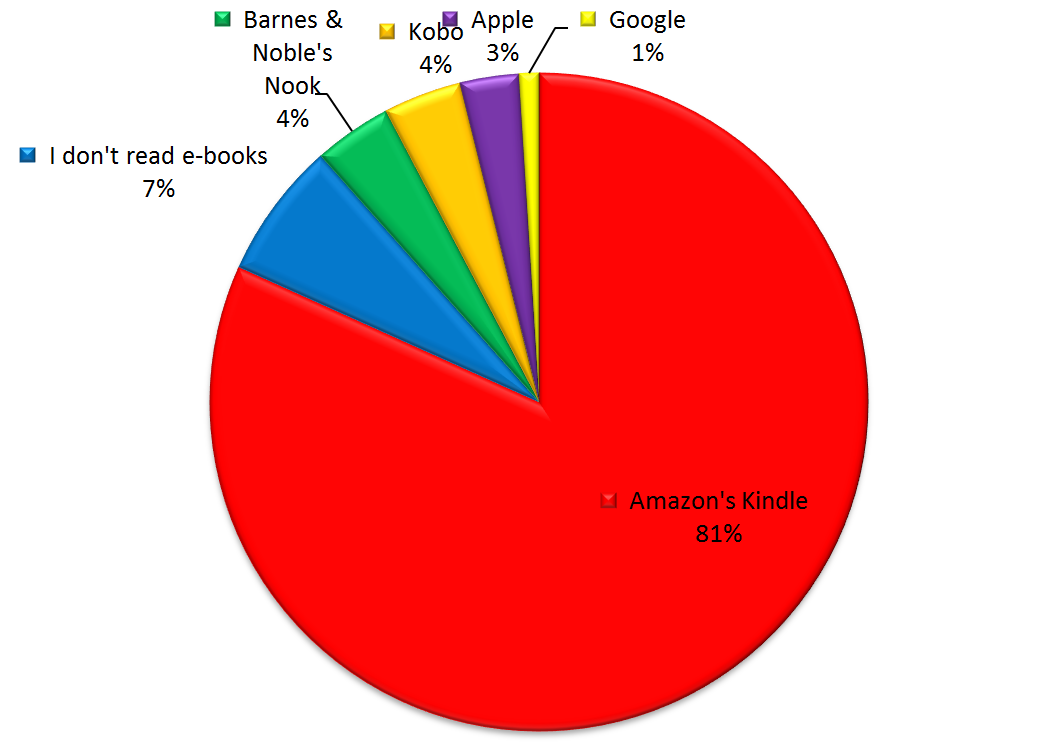
WHERE DO READERS BUY E-BOOKS?

Reading Source

It shouldn’t be a surprise that the majority vote went to Kindle:

  • Amazon’s Kindle 81%
  • I don’t read e-books 7%
  • Barnes & Noble’s Nook 4%
  • Kobo 4%
  • Apple 3%
  • Google 1%

These numbers may change somewhat with greater participation, but I think we can expect Kindle to remain the popular favorite.

It makes you wonder how much you stand to gain by opting out of KDP Select. However, there is also less competition outside of Select, which helps authors who publish elsewhere.

Also, I must apologize for leaving out an option for Other. Smashwords, for example, generates some indie sales.

Some customers buy books in multiple formats, and unfortunately the survey didn’t allow readers to select two or more answers.

Another notable statistic is that 7% don’t read e-books. But remember, 54% of readers prefer a different format over the e-book. The print market is quite significant.

HOW DO PEOPLE READ KINDLE E-BOOKS?

Reading Kindle

It’s all over the place! There is no clear favorite.

In addition, many customers read Kindle e-books more than one way, but the survey only allowed for one answer.

  • Kindle Fire 15%
  • Kindle Paperwhite 15%
  • iPad 14%
  • I don’t read Kindle e-books 14%
  • Other Kindle device 12%
  • Android device 13%
  • Kindle for PC reading app 9%
  • Other option not listed 4%
  • iPhone 3%
  • Kindle for Mac reading app 1%

This shows that it’s worth making sure that your book formats well across all devices. If you only format a Kindle e-book with one device in mind, it probably won’t be a good fit for most readers.

Note that 14% of those polled don’t read Kindle e-books.

HOW MANY BOOKS DO PEOPLE READ?

Reading Frequency

The people who participated in the survey are readers. None selected zero.

Of course, that’s not typical of the population as a whole.

  • 5+ books per month 45%
  • 3 books per month 20%
  • 2 books per month 14%
  • 1 book per month 11%
  • 4 books per month 10%

More than half of those surveyed read 4 or more books per month.

Remember, though, most of the people who have taken the survey already like to read. If we can get more exposure for this survey, this may change significantly.

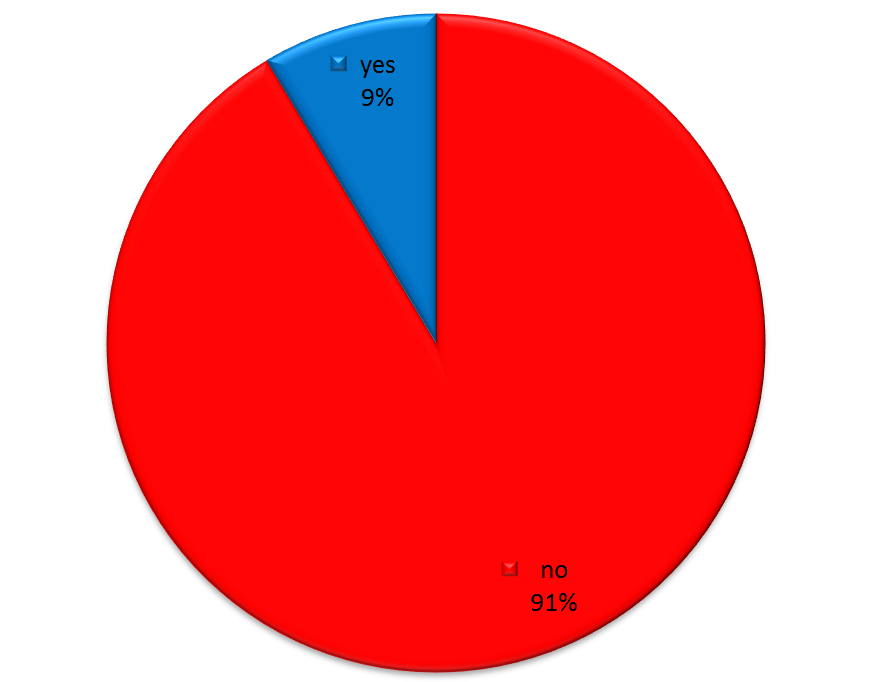
HOW MANY READERS HAVE KINDLE UNLIMITED?

Reading KU

At this stage, 91% of those surveyed do not subscribe to Kindle Unlimited.

What surprises me is that 45% of those surveyed read 5 or more books per month.

There are a few ways to interpret this:

  • Some avid readers are buying 99-cent books, so even though they read 5+ books per month, it doesn’t make sense for most of them to spend $9.99.
  • Some avid readers would love to sign up for Kindle Unlimited, but the books they really want to read aren’t in the program.
  • Some avid readers prefer to purchase their e-books, to keep them forever, rather than borrow up to 10 books at a time through a library.
  • Some avid readers prefer another subscription service, like Scribd.
  • Some avid readers aren’t eligible for the available payment options.
  • Some avid readers are upset about some aspect of Kindle Unlimited.
  • Some avid readers haven’t made up their mind about Kindle Unlimited yet.
  • Some avid readers haven’t heard of Kindle Unlimited.
  • Some avid readers don’t want to make the commitment needed to joint Kindle Unlimited.
  • A combination of the above.
  • We need more people to take the survey to get a better indication of the stats.

It seems that there are a lot of excuses one could have to not to sign up. So maybe 9% isn’t as small compared to 45% who read 5+ books per month as it first seems.

HOW MANY READERS SUPPORT INDIE BOOKS?

Reading Indie

This includes indie authors and indie publishers.

  • Read indie books less than half the time 33%
  • Read indie books about half the time 31%
  • Read indie books more than half the time 23%
  • Always read indie books 7%
  • Not sure 6%
  • Never read indie books 0%

There are people who never read indie books. They just hadn’t taken this survey yet.

Overall, there appears to be good support for indie books.

The leading answer (narrowly leading) reads indie books less than half the time, yet still does read indie books.

Nearly one-third of those surveyed read indie books about half the time.

61% read indie books about half the time or more than half.

We can see that some people aren’t sure if they’re reading indie books. Partly, it might not be easy to recognize all the major imprints, or it might not be well-known where the small publisher versus indie publisher line crosses. Or some customers just might not pay attention to how the book is published (maybe they don’t really care).

DO PARENTS LET THEIR KIDS READ E-BOOKS?

Reading Kids

How many e-books do parents let their kids read per month?

The two main answers are “not at all” and “frequently”:

  • 0 per month 48%
  • 5+ per month 32%
  • 1-2 per month 15%
  • 3-4 per month 5%

The predominant answer is a resounding NO! Some people feel strongly about not letting their kids spend too much time in the digital world (on top of video games, televisions, apps…).

It seems that children’s authors definitely need to make print editions available.

However, nearly one-third let their kids read 5+ books per month via Kindle. So there is a significant Kindle children’s market, too.

Obviously, things may vary somewhat depending on the kind of book.

Again, 32% seem to be a good fit for Kindle Unlimited, yet only 9% of those surveyed subscribe to Kindle Unlimited. If parents read a few books per month themselves and their kids read 5+ books, then wow, it seems like Kindle Unlimited would be a bargain. But maybe parents aren’t finding the books they’d like their kids to read in Kindle Unlimited; and we have that list of factors that I gave previously.

(At least one person answered zero because she didn’t have kids presently, but someone else may have answered based on hypothetical kids.)

WRITTEN FEEDBACK

Several readers described their personal reading habits in the comments section of my survey post.

If you’d like to read some of those comments, you can find that post here:

https://chrismcmullen.wordpress.com/2015/02/21/survey-about-reading-habits-how-do-you-read/

SURVEY QUESTIONS

The more readers who take this survey, the better the results will be.

Thank you for your time. Thank you for sharing the survey.

New Questions, added 3/8/15:

Original Questions:

Chris McMullen

Copyright © 2015

Chris McMullen, Author of A Detailed Guide to Self-Publishing with Amazon and Other Online Booksellers

  • Volume 1 on formatting and publishing
  • Volume 2 on marketability and marketing
  • 4-in-1 Boxed set includes both volumes and more
Follow me at WordPress, find my author page on Facebook, or connect with me through Twitter.

Comments

Click here to jump to the comments section:

https://chrismcmullen.wordpress.com/2015/02/22/how-do-people-read-books-survey-results/#comments