Survey about Reading Habits (How do YOU Read?)

Image from Shutterstock

Image from Shutterstock

READING SURVEY

How do you prefer to read books?

How often do you read?

Authors, would you like to know your readers’ habits?

Readers, would you please participate in a quick survey?

I’ll leave the survey up indefinitely, so anyone who finds it can take it. Just look at the top of my blog anytime you wish to find it (look for the Surveys button).

Here are the original survey questions:

You’ll see the results after you answer each question. Select the best answer.

Please take the survey.

And tell your friends.

And spread the word.

Authors everywhere will LOVE you for it. 🙂

After you vote, you can even share a specific question with Facebook and Twitter. Or you can share the post itself (with all questions included).

Copyright © 2015 Chris McMullen

What Should You Write about? (Topic & Genre)

Images from Shutterstock

Images from Shutterstock

WHAT SHOULD YOU WRITE ABOUT?

When you decide to write a book, you’re faced with important decisions:

  • Which genre should you choose? Which subgenre?
  • What topic should you write about within that subgenre?
  • What features will your story have?

But there are other important considerations that go along with these, which are often overlooked:

  • Is there an audience for what I really want to write about?
  • Could I attract more readers by writing about something slightly different?
  • What are my marketing assets?

You’re not the only person who will read your book, right? At least you hope not!

So if you only write what you want to read, doesn’t that seem somewhat selfish?

You’re a reader, too, of course, which may help you, as a writer, develop a style and feel for how to write.

The challenge is to find the right balance.

CONSIDERATIONS FOR GENRE & TOPIC

Here are factors to consider when choosing your genre and topic:

  • Familiarity: Which kinds of books have you read? The more experience you have with the subgenre, the more you’ll be aware of readers’ expectations.
  • Ability: In which subgenres are you best equipped to write? Look at this both in terms of ability and marketing.
  • Knowledge: On which relevant topics, relevant for your subgenre, are you knowledgeable? Marketing is a factor here, too.
  • Research: You should do research for your work of fiction, and this can be very handy when it comes to marketing.
  • Assessment: What are your strengths and weaknesses when it comes to writing? when it comes to relevant content knowledge?
  • Goals: What are your writing goals? Authors with vastly different goals should approach this decision somewhat differently.
  • Receptiveness: How receptive will the target audience be to you as a new author? If self-publishing, you also want an audience that will be receptive to indie books.

One of my coming posts will be on the topic of researching your fiction book, with specific ideas for how to take advantage of this in your marketing. (Stay tuned.)

There are many advantages to thinking about marketing in the beginning, and not as an afterthought.

I’m not saying that you should write for money.

I am saying that you should think about how you will attract readers when you’re beginning your project, not after it’s done.

What if you could be helping to create interest in your book while you’re still writing it? That can pay big dividends when you’re ready to launch your book.

What if you could make a small change to your approach to writing that may greatly enhance your readership? If you knew this, would you consider it?

You can merge your marketing with your writing in small ways, without really imposing a business sense on the art of writing. In coming posts on the subject of fiction writing, I’ll reveal ways to do this.

WRITING GOALS

Writers can have a variety of goals when they proceed to write a book:

  • Write leisurely as a hobby.
  • Write to earn good money.
  • Write to hone the craft of writing.
  • Write to experiment with a new form of writing.
  • Write to please a specific audience.
  • Write to prove themselves.
  • Write to get published.
  • Write to become famous.
  • Write to land a movie deal.

Chances are that you have more than one goal from this list. If so, you’ll have to decide how they weigh in importance to you.

(You may also have a goal that isn’t on my list.)

What you should write about obviously depends, in part, on your goals.

EXAMPLE

You may recall that in a previous post I announced that I would be writing a work of fiction. (Although I’ve written and published several nonfiction books, this will be my first novel.)

Not only that, but I will periodically blog about the decisions that I make as I come across them.

I’m presently deciding what to write about, so today I will use my current project as an example.

Writing is both an art and a craft, and that’s the way I view it when I sit down to write. But as I hope to show you, it’s possible to also consider marketing to some extent early on in the writing process, without sacrificing the artistic feeling for business. And these little considerations along the way can really help you share your passion with readers effectively down the road.

Choosing the Genre

I read many sci-fi and fantasy books. I’m familiar with these genres as a reader.

Both have significant target audiences, and a healthy percentage of that has shown willingness to support indie authors and even new authors. (I’m far from a new author, but I am new to publishing fiction.)

I plan to write a series, and this appears to be quite doable in these genres.

My background in physics lends itself more naturally to science fiction.

I also have specific plans for how to tie my research on the subject into marketing.

So my first fictional work will be a science fiction novel. Which will turn into a series.

(Each volume will be a full-length book with a complete story.)

Choosing the Topic

I want the story to plausibly obey the known laws of physics. As a physicist, I’m not willing to sacrifice this point.

After much thought, I’ve decided that the best way to do this is for the story to be set here on earth.

One of my goals is for the reader to feel like the story could really happen. Tomorrow. I want it to seem so real it’s compelling. You could be part of this story.

I have a very specific topic in mind, but I don’t want to reveal too much at this point.

As you write your story, you want to start creating interest in your book, but you don’t want to give too much away. It’s a tough balancing act.

For now, I will just say that the book will be set in the present day, and it will involve aliens to some extent.

Strengths & Weaknesses

I count my background in physics as relevant to science fiction, so I feel that can be a marketing strength.

So is my familiarity with both the genre and the content that I have in mind. I also have specific research plans.

Two of the story’s strengths will include curiosity and suspense. The topic will feature things many of us would love to know more about, so curiosity will be a natural ingredient. My intention is for the plot to eventually reveal something really big. Like, “That’s huge!” and “I can’t believe it!” So there will also be suspense.

One of my writing challenges will be that I’ve become accustomed to writing nonfiction for some time, while fiction is a somewhat different craft. For one, fiction includes a much wider variety of adjectives and verbs, and strong emotional elements that often don’t appear in nonfiction writing. I’m quite familiar with reading fiction, and I’ve studied the craft of writing fiction—and I have written shorter pieces of fiction in the past. These things should help, but when I start the writing, these are some of the challenges that I’ll face.

Target Audience

I find that it’s helpful to know who my audience is when I’m writing the book. And of course this will be helpful for the marketing, too. And the marketing should begin when you start writing the book, not after it’s published.

One of my target audiences is the slice of sci-fi readers interested in a present-day story that takes place on earth, which involves aliens.

But I also have a significant secondary audience: UFO enthusiasts and people who are curious about the possible existence of other forms of intelligent life in our universe. There are millions of people in this secondary group, as shown in the popular t.v. series Ancient Aliens which first appeared on the History channel.

Marketing Potential

This is a story that I will really enjoy writing, which is important.

But one thing that increases my motivation to write this story is the potential to share it with others.

One step involves researching the subgenre to check that there is a target audience for your story. Doing this also helps you learn the expectations of your target audience so you can better meet their needs.

Another step is seeing how your background or experience may be relevant when it comes to marketing.

And research. Research for your fiction book can serve as a valuable marketing tool. I’ve already identified material that I will read, watch, and study that will help me perfect the content. More than that, this research will also be helpful when it comes to marketing. One of my coming posts will show you specific ways that you can do research for your novel and use it as an effective marketing tool.

Also, I will write an entire series. (Each volume will be a self-contained, full-length novel.) In genres where series can work well, series carry some marketing benefits. There are a few disadvantages, too, and some challenges, but if you can pull off the series well, the pros can outweigh the cons.

Chris McMullen

Copyright © 2015

Chris McMullen, Author of A Detailed Guide to Self-Publishing with Amazon and Other Online Booksellers

  • Volume 1 on formatting and publishing
  • Volume 2 on marketability and marketing
  • 4-in-1 Boxed set includes both volumes and more

Follow me at WordPress, find my author page on Facebook, or connect with me through Twitter.

Comments

Click here to jump to the comments section:

https://chrismcmullen.wordpress.com/2015/02/16/what-should-you-write-about-topic-genre/#comments

Tracking Views at Amazon—Finally..?

Image from ShutterStock.

Image from ShutterStock.

TRACKING VIEWS AT AMAZON

Don’t you wish that you could see how many people are viewing your book’s product page at Amazon?

Then you’d be able to see how good your blurb and Look Inside are at closing the deal, or how well a promotion is working.

Well, now you can get tracking data at Amazon.

Amazon marketing services is now available for books enrolled in KDP Select.

For as little as a $100 budget and bids of 2 cents, you can advertise your book on Amazon.

Visit your Bookshelf and click the link under the KDP Select column called Promote and Advertise.

When I did created an advertisement this morning, I received an approval email that said:

  • “Please allow 1 day for clicks/impressions to appear…”
  • “…and 2-3 days for detail page views to appear.”

IMPRESSIONS AT AMAZON

This will show how many impressions are made all together. That’s the number of times that your ad is shown to potential customers.

You don’t pay for impressions that don’t result in clicks. You only pay when someone clicks on your ad.

But every impression helps with branding and discovery.

CLICKS TO YOUR BOOK

Divide your budget by your bid. That’s the minimum number of clicks that you’ll get if your entire budget is used up. (If it’s not used up and you’d like it to be next time, either increase the duration or try a higher bid.)

For example, a $100 budget and 2-cent bid will give you 5000 clicks if the entire budget is used up. (First convert 2 cents to $0.02. Then divide.)

But you’ll get even more impressions. You might get tens of thousands of impressions or more for your $100.

AMAZON CLICK-THROUGH RATE

Compare your clicks to impressions to compute your click-through rate. That is, what percentage of the time do people who see your ad click on it to view your product page?

click-through rate = ( clicks / impressions ) x 100%

The smaller your click-through rate, the less effective your cover is at attracting the audience who is seeing your ad. The problem is either that the cover doesn’t appeal to your audience, or you’re not targeting your ad to your specific audience effectively.

VIEWS AND CLOSING RATE

Amazon will evidently also show how many people are viewing your detail page. This is valuable info that many authors have requested in the past, but never had access to. Now there is a way to get this data.

Compare your sales to views to compute your closing rate. This shows how good your blurb and Look Inside are at sealing the deal once traffic arrives at your product page.

closing rate = ( sales / views ) x 100%

The smaller your closing rate, the less effective your blurb and Look Inside are at selling your book.

TARGETING CUSTOMERS

Amazon Marketing Services offers two ways to target traffic:

  • target by product
  • target by interest

When you choose interest, select the category that’s the best fit for your book. The choices are fairly broad, so unfortunately you’ll also catch some people in the category who aren’t in your subcategory, but the targeting does help to deliver your ad to a narrower audience.

When you choose product, you can find similar books (or relevant products) and target your ad to customers who view those products (or perhaps who have used those products in the past). You can choose multiple products.

BOOK DATA AT AMAZON

KDP Select authors can place an advertisement and, in addition to any benefits of the ad itself, receive valuable sales information regarding their books.

It may be helpful for planning your next book.

It might help establish whether something you’ve changed recently is helping or hurting.

It might help you see how well a promotion is doing.

It’s valuable data that we didn’t have before.

Once you run more than one ad at different times, you have some basis for comparison.

However, this tool may be more effective in the beginning, while it’s still new to customers and other authors.

AMAZON MARKETING SERVICES

Advertising isn’t a band-aid for a book that doesn’t sell on its own.

Advertising isn’t a substitute for learning how to market a book effectively.

Advertising is more helpful for authors who have multiple books out and already have some positive marketing experience.

Advertising is better when you supplement it with free marketing strategies.

Advertising is more effective when it’s targeted well.

Advertising is more effective when your cover is visually attractive to your specific target audience, and when it reveals the genre or subject very clearly.

Advertising may riskier when you have few reviews.

Advertising directly on Amazon.com is potentially much more effective than marketing on Facebook, Twitter, or Goodreads. Instead of asking people to stop whatever they’re doing with their social media and hop on over to Amazon, now you’re showing your ad to people who are already shopping at Amazon.

Advertising can help you brand a name.

Advertising does carry a risk. Weigh the benefits and risks carefully. The worst-case scenario is that you’re out $100 with little to show for it. Can you afford that risk? What are you doing to supplement the advertising to help minimize this risk?

Chris McMullen

Copyright © 2015

Chris McMullen, Author of A Detailed Guide to Self-Publishing with Amazon and Other Online Booksellers

  • Volume 1 on formatting and publishing
  • Volume 2 on marketability and marketing
  • 4-in-1 Boxed set includes both volumes and more

Follow me at WordPress, find my author page on Facebook, or connect with me through Twitter.

Comments

Click here to jump to the comments section:

https://chrismcmullen.wordpress.com/2015/01/29/tracking-views-at-amazon-finally/#comments

Advertise Your Book on Amazon—New Opportunity

Background image from ShutterStock.

Background image from ShutterStock.

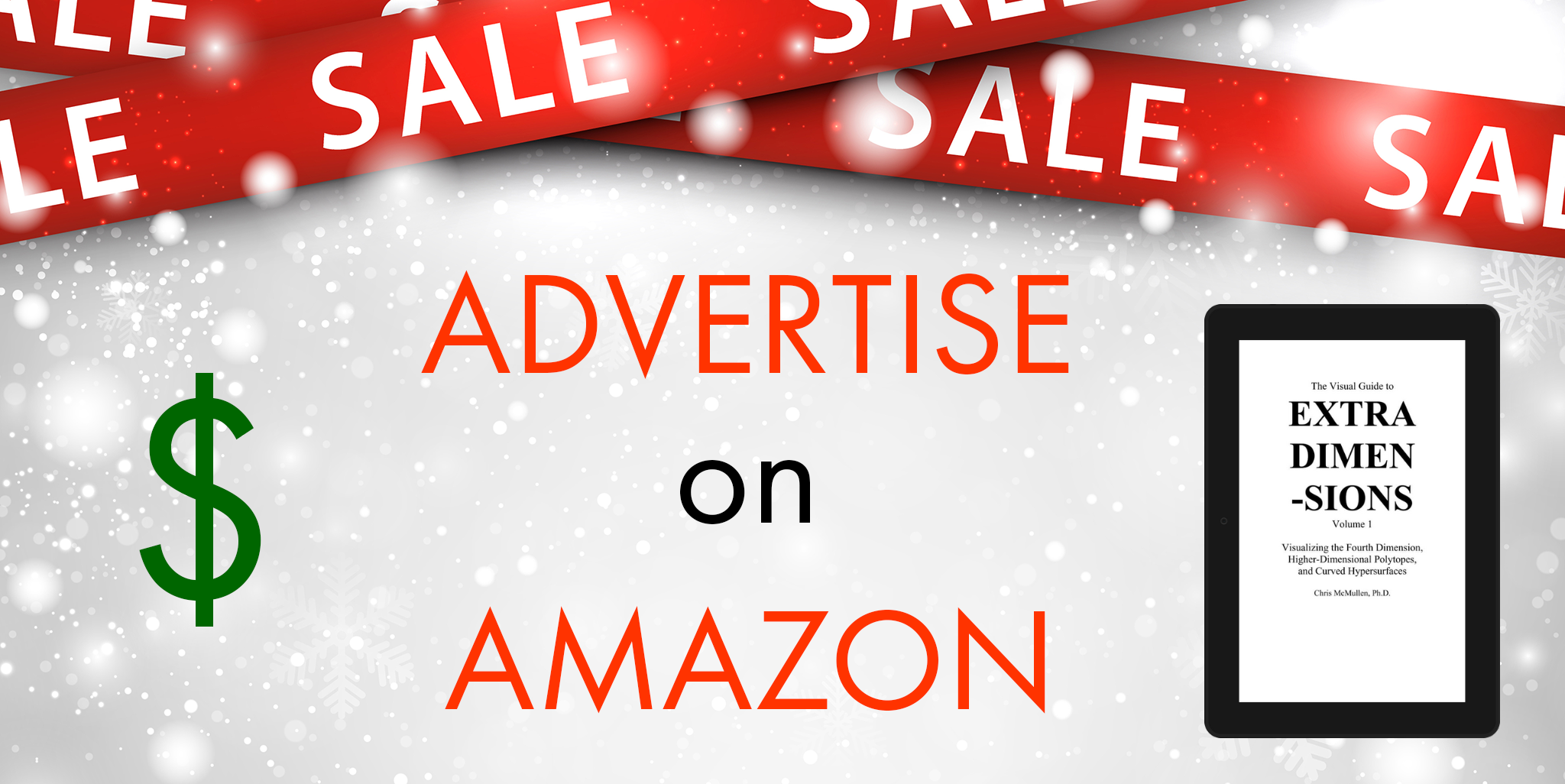
ADVERTISE ON AMAZON

There is a new opportunity available to advertise your book on Amazon.

https://kdp.amazon.com/help?topicId=A2DJUTY13KIH2C

How would you like to advertise your book directly on Amazon.com?

That would be cool, huh?

What if you could do this on a modest budget?

Even better!

Well, now you can:

  • minimum campaign budget is $100
  • minimum bid is 2 cents
  • pay per click

But there’s a catch:

It’s only open to KDP Select authors.

I think it’s a nice benefit for enrolling in KDP Select, on top of current benefits like Kindle Unlimited.

So if you bid 2 cents, a campaign budget of $100 can net you 5000 clicks.

Higher bids are more likely to result in advertisements being shown and result in clicks. But then you get fewer clicks for your money, also.

I like that the charge is per click. You’re not charged when people see your ad, but don’t click on it.

This helps with branding. However many clicks you get, even more people who didn’t click on your ad saw it, which helps you brand your image.

Another nice feature:

targeting

Amazon will let you target your advertisement to a specific genre, for example. This helps your ad reach a specific target audience.

Compared to advertising on Goodreads, Twitter, or Facebook, advertising on Amazon doesn’t drive traffic to leave one site and visit another. These customers are already on Amazon. That’s cool!

BOOK ADVERTISING

Advertising expenses often don’t produce immediate results for book sales. Unlike paper towels, there are millions of other books to choose from.

Some of the most effective book marketing you can do is free. If you make the most of your free marketing potential, advertising will supplement this.

The more books you have out, the more potential paid advertising has. Then someone who clicks on your ad might buy several of your books instead of just one.

But with a minimum bid of 2 cents and campaign budget of $100, advertising on Amazon isn’t too expensive of a risk. Nobody wants to throw $100 away though. (If you do, feel free to borrow my trash can.)

It’s even more important to have a compelling cover that conveys your genre clearly. This will help you get clicks with your ad.

And it’s even more important to have a great blurb and Look Inside. This will help you close the deal once you get the traffic.

And it’s even more important to have a great book, as good as you can make it. This will give you your best chances when it comes to reviews and recommendations.

Another thing that might be worth doing is waiting until you have several reviews before you advertise. You’d hate for one of your first reviews to be a real stinker shortly after paying for an advertisement.

Last tip: Consider putting your book on sale with a Countdown Deal. Then you have something more compelling than just a link to your book.

HOW TO DO IT

The book you wish to advertise must be enrolled in KDP Select.

Visit your KDP Bookshelf.

Click the Promote and Advertise link under the KDP Select column.

Click the Create an Ad Campaign button.

This will take you to Amazon Marketing Services, but it will say Return to Kindle Direct Publishing at the top of the page.

Select one of your books.

Target your ad by product or by interest.

  • By interest lets you choose one broad category. Unfortunately, it doesn’t appear to let you select a subcategory.
  • By product lets you target similar books or products on Amazon. Note that if your book already appears on the first page of the Customers Also Bought list, people viewing those books are already seeing your book. That doesn’t mean you shouldn’t include those books, especially if they’re highly relevant; the additional ad might make the difference. It’s just something to consider.

You can select multiple interests or products (but not both interests and products). I would select several similar products, but I would only select one interest.

The remaining steps should be straightforward.

If you try it, good luck. 🙂

Chris McMullen

Copyright © 2015

Chris McMullen, Author of A Detailed Guide to Self-Publishing with Amazon and Other Online Booksellers

  • Volume 1 on formatting and publishing
  • Volume 2 on marketability and marketing
  • 4-in-1 Boxed set includes both volumes and more

Follow me at WordPress, find my author page on Facebook, or connect with me through Twitter.

Comments

Click here to jump to the comments section:

https://chrismcmullen.wordpress.com/2015/01/29/advertise-your-book-on-amazon-new-opportunity/#comments

Which of My Books are on Sale for Read Tuesday?

Untitled

BOOK SALE

As you may know, I’m the founder of Read Tuesday—a Black Friday type of event for book lovers on December 9, 2014—and I’m also one of the many participating authors.

Visit the Read Tuesday catalog to explore the variety of books that are on sale. The catalog includes both print and digital, Amazon and Smashwords, fiction and nonfiction, adult and children, and a nice variety of subjects and genres. Find the full catalog here:

http://readtuesday.com/2014/12/09/reading-is-what-readtuesday-is-all-about-black-friday-type-of-dec-9-book-sale

Really, this post is about Read Tuesday and the many amazing books on sale for the event. But I want to show authors that they could promote their own books while promoting the event, so in that spirit, I will describe which of my books are on sale for Read Tuesday.

My self-publishing 4-books-in-1 boxed set is participating. The Kindle edition is temporarily reduced to $2.99 (compare to $17, the price of buying each volume separately). The Kindle edition is ridiculously priced less than the cost of Volume 1. The paperback edition is down to $19.99 (compared to the individual cost of $37). Buy the paperback at Amazon first and get the Kindle edition free through MatchBook (give the paperback as a gift and keep the Kindle edition for yourself). Or buy the paperback edition at CreateSpace at https://www.createspace.com/5099591 and save 40% (on top of what you already save) with discount code LARLUWFM (valid only at CreateSpace).

Click the image to view at Amazon.

My arithmetic boxed set is also on sale (get 4 books for the price of 1).

Click the picture to view at Amazon.

I have several FREE MatchBook offers, which are great for gifting. Buy the print edition first at Amazon, then get the Kindle edition of the same book FREE. Why is this great for gifting? Because you can give the print book as a gift and keep the FREE Kindle edition for yourself. (Why doesn’t Amazon advertise this? It’s perfect for the holidays.)

There are many authors participating. See all the FREE MatchBook offers participating through Read Tuesday here:

http://readtuesday.com/matchbook

If you prefer print books, you can save 40% off my algebra, astronomy, chemistry, and word scramble books at CreateSpace. (Word scramble puzzle books make for great gifts.) You can find the discount codes at the link below (along with many other great offers):

http://readtuesday.com/createspace

Even better, you have the chance to get free print books. For example, enter the Goodreads giveaway for my 4-in-1 self-publishing set. I also have free review copies to give away for my algebra workbook. Other authors also have giveaways or review copies to give away. Find all the free print book offers here:

http://readtuesday.com/free-print-books

But again, it’s not about my books. It’s about the spirit of reading. There are many authors participating, and a great variety of books to choose from. Check out the Read Tuesday catalog:

http://readtuesday.com/2014/12/09/reading-is-what-readtuesday-is-all-about-black-friday-type-of-dec-9-book-sale

Happy Read Tuesday! 🙂

Chris McMullen, author of Self-Publishing with Amazon (Boxed Set: 4 Books in 1)

Offline Book Marketing

Juror 1389

OFFLINE MARKETING

A new indie author’s best asset may be offline marketing.

Many new indie authors either (A) don’t market at all or (B) only market online because that seems easier. With many thousands of authors marketing online, it’s hard to stand out, and the top online marketers have already built up huge followings.

There are great opportunities offline. There is less competition for discovery offline, which gives you greater chances of success.

Plus, there is a huge benefit that’s on your side when you market offline.

It’s more personal.

Personal interactions, especially where the prospective readers enjoy that interaction, are more likely to:

  • Check out your book.
  • Review your book.
  • Recommend your book to others (if they enjoy it).
  • Ignore critical reviews on your Amazon product page (so if you run into bad luck with your first few reviews, this is your best chance of stimulating sales despite those reviews). The shopper has interacted with you personally, while those reviewers are unknown sources.

There are many different things that you can do with offline marketing.

Each book is unique, and so is each author. There isn’t a one-size-fits-all offline marketing strategy. Explore your options. Try a variety of strategies out. Get a feel for what appears to work best for you.

BOOK MARKETING TIPS

Here, I will describe a variety of offline book marketing ideas, and I will use a real author as an example.

I bet you’ll find a few useful tips with strong potential that you hadn’t thought of before.

G.T. Trickle, author of Juror 1389, has done some amazing things in the way of offline book marketing. I will highlight some of these amazing things to serve as examples and inspiration. If you’d like to learn more about G.T. Trickle, please see below.

I will also show examples of specific challenges that G.T. Trickle faced in her offline marketing and how she dealt with these challenges. Strengthen your will and you, too, will find a way.

Tip #1: Improve your sphere of influence.

Wouldn’t it be great to have other people helping to spread the word about your book?

Well, you can recruit help without begging for people to advertise your book for you.

The first step is to choose beta readers wisely. Think about it: They’re reading your early draft, sharing their ideas, developing a vested interest in your book. They become intimately acquainted with your book and want to see your book succeed.

If you’re just using friends for beta readers, you may be greatly diminishing your potential sphere of influence.

G.T. Trickle contacted book clubs with courteous requests for beta readers. She also searched for beta readers among social groups (like churches or community groups) and other people who had influence among readers in her target audience. Imagine people who might recommend your book to dozens or hundreds of other readers in person. That could be huge!

You actually prefer to have strangers in your selection of beta readers. For one, friends share a similar sphere of influence as you do, so strangers help you get beyond your friends and family. For another, strangers can give you that brutally honest criticism that you really need (and you have to prepare to cope with it so you don’t ruin this potential help).

You get a second benefit from beta readers who are involved in clubs or organizations. You can offer their groups a discount. Pass out business cards, bookmarks, or brochures with info regarding how to contact you and order directly at a discount. If they’re local, they also save on shipping. One advantage of selling directly is that you may be able to entice the reader to attend a book signing, which helps to populate an event.

G.T. Trickle didn’t call them beta readers. She created the 1389 Project Team (for her book, Juror 1389). The readers feel like they are part of a team, really involved in the project, rather invested in the project. They want your book to succeed. G.T. identified one team member with a large sphere of influence, and designated this person the 1389 Ambassador. The “ambassador” received a magnet featuring the book cover and “1389 Ambassador” on it, and the ambassador placed this magnet on a golf cart. This magnet suddenly became a conversation piece, as people asked the ambassador about the magnet.

Another great way to improve your sphere of influence is to create an IndieGoGo or Kickstarter campaign. It’s not just about raising funds for your book, but about raising awareness and creating buzz for your book. The packages you offer can include free copies for people who again feel invested in your book’s success, and who may therefore recommend your book to others (if they like your book).

When your book launches, identify people with influence among readers in your target audience and consider giving free copies of your book to them.

For children’s or educational authors, try to get input from teachers, educators, homeschool teachers, and librarians beginning at the developmental stages. They can be valuable in your sphere of influence.

Tip #2: Take advantage of the setting and other unique features of your book.

Where is your book set? If it’s a real location, people who live there (or who would like to visit that locale) may be interested in your book.

In G.T. Trickle’s book, a huge retirement community in Florida was featured in the book. G.T. Capitalized on this as a marketing opportunity. She made arrangements to make an appearance at the rec center. The rec center didn’t actually permit back-of-the-room sales (most venues do), which presented a unique challenge. To combat this, G.T. visited the local Barnes & Noble. The manager verified that Juror 1389 could be ordered in the store through Ingram, and G.T. also spoke to the manager about a possible signing and stocking copies. It’s hard to get into chain bookstores, but some managers make exceptions, but the main thing you want from a chain store is support. Show them that you’re professional and at a minimum strive to foster a supportive attitude from the management and staff in case customers visit the store to order your book. G.T. was targeting retired seniors, many of whom prefer to buy or order in a store rather than Amazon, so this was important.

A book can actually feature multiple locales in its plot, which helps to expand your marketing opportunities. In a locale featured in your book, approach local bookstores and other businesses for possible support. Small local stores are more likely to stock your book. Research how to prepare a press release kit. Start small and local to develop experience and confidence. Some stores will buy your books outright, others prefer consignment. You might be able to sell your book for a discount of 40 to 55% off the list price, or leave them at consignment for 35 to 40% off the list price. It’s a negotiation. You also need to discuss returns, and what happens to lost books left on consignment?

If your book features a real city, this opens the door for a creative marketing opportunity. For example, G.T. Trickle created a promotion based on businesses that a character, Dorsie, visited during her book. G.T. recruited local businesses to display Dorsie was here! posters in town. This is a good selling point for businesses, too, so it’s mutually beneficial. Readers would find the signs in participating businesses. They could get a small freebie (or a discount works, too) by identifying what Dorsie ordered at the business in the novel. Small local businesses tend to be supportive, and like you, they’re looking for creative marketing opportunities. This strategy has the added benefit of helping readers “meet” the character and really immerse themselves in the story.

It’s not just the setting. Where you live is also an asset. Go for local support from bookstores, other stores that may sell books, and local press (small newspapers and radio stations).

Tip #3: Identify your specific target audience.

Your book may have a few specific target audiences. For example, the book may be for mystery readers, but the plot may revolve around a popular sport, which gives you two different audiences to target right off the bat. For a book that involves golf, for example, golf course pro shops and golf stores may be willing to stock your book. Every book has one target audience in terms of genre, but may also have additional target audiences in terms of topic or subject. You want to market your book to all of the specific audiences which are a good fit for your book.

G.T. Trickle knows her specific target audiences well. She identified them and found many opportunities to reach them through offline marketing. She was targeting anyone who followed the Casey Anthony trial, seniors, people who reside in the book’s settings, and local readers, for example. There are several sizable audiences here, and each one can be targeted differently.

She created a 1389 Reader Trivia Contest (the 1389 because the book is called Juror 1389), which required people to read the novel to enter and which was relevant for a specific community in the target audience. Seniors enjoy entering contests (one of G.T.’s target audiences), so this enticed direct sales at offline marketing events.

Another creative marketing opportunity that G.T. Trickle capitalized on was a 1389 pizza night at a local pizza parlor, where she was able to offer free beer to anyone bringing in a book for a signing. That’s an imaginative way to help populate a signing (and to get people to buy the book for the signing).

Tip #4: Press includes more opportunities than you might realize.

You should research how to write a press release and prepare a press release kit. You should contact local newspapers and radio stations. You should think of various angles that can make you or your book newsworthy.

But you should also think outside the box.

G.T. Trickle sought coverage in newsletters from clubs and organizations relevant to her specific target audience. Now look back at Tip #1. If you have a beta reader (I mean Project Team member) who might feel invested in your book simply from being included in the process and who also has influence in a club or organization relevant to your target audience, this improves your chances of getting featured in a valuable newsletter. For those clubs or organizations where you don’t have beta readers, a free copy of your book as part of a press release kit may be enough to garner support.

There may also be magazines or minor television stations that are a good fit for your book. There are many online opportunities, too, among bloggers, online magazines, book reviewers, indie journals, etc.

Tip #5: Strive to create successful events.

You can have a reading or signing, book launch, or other event. Local bookstores, other stores, and libraries may offer some support, but you can also recruit help from coffee shops, restaurants, or theaters (who may benefit from the customers you bring in by selling drinks, for example), and there may also be public places like parks (great for a zombie race), but you may need to check with the city or county first.

You can’t just show up as a no-name author and expect people who don’t know you to show up. Getting the support from other people as described in Tip #1 is a good way to find people to help populate a few events and to help recruit others to attend. But you don’t just want a few people to show up to an event, and you can’t expect the same group to show up to all your events. Friends, family, acquaintances, and coworkers can help a little, but you really want some strangers who are genuinely in your target audience to show up. The busier your event is, the better impression it will make on those who attend (and pulling in strangers who inquire about what’s going on), and the more people who didn’t already know about your book who show up, the more effective the event will be. You need to focus on how to draw in strangers from your target audience as well as how to recruit attendance and people with influence to help recruit attendance. You really need to build good connections in your community and to have good personal interactions.

Your project team and other people who can help expand your sphere of influence (recall Tip #1) can help you hold a successful book launch. G.T. Trickle worked very hard to assemble her project team and build connections for a wide sphere of influence, and she also contacted local press with a press release kit. The result was a festive book launch with the press attending.

Tip #6: Seek duplication.

When you interact with people in your target audience, they see your message once.

What you really want is to duplicate your message, but not by repeating your message yourself.

You’d really like to have other people sharing your message.

This helps to brand an image for your book or for you as an author.

People are more likely to buy a product they recognize.

People are more likely to trust recommendations from people they know.

The way to help with duplication is to recruit support from other people. Tip #1 is particularly helpful with your project team. But you can also get valuable help from local press, people with influence to whom you send free copies, online bloggers and reviewers, etc.

Tip #7: Add the personal touch.

You want to interact with people in person.

Personal interactions may be your biggest marketing asset as a new indie author.

The personal touch shows that you’re a human. It helps to generate interest in your book. It helps to generate interest in you, which can translate to interest in your book.

People who interact with you personally and who enjoy that interaction are more likely to check out your book, buy your book, review your book, or recommend your book to others. They’re also more likely to ignore any critical reviews on your product page.

Think discovery, not advertisement. What I mean is, if you walk into a room, don’t say, “Hey, I’m an author and I just wrote a book,” but spark up an interesting conversation and try to get someone to ask you, “What do you do for a living?” That’s a golden opportunity to mention your book.

Appear confident, but balance this with humility. It’s a difficult balance to achieve, but can be quite effective when done well.

Tip #8: Print bookmarks.

You could make business cards, brochures, posters, bumper stickers, and a host of other promotional items.

One of the more effective promotional tools for authors is the bookmark.

Why? Because readers are more likely to actually use a bookmark, but are far more likely to throw your business card in a junk drawer.

Business cards are nice, too, as they fit in a wallet. If you can find people willing to put your business card in their wallet, go for it. But you can acquire many more business cards than will fit in a wallet, in which case that bookmark may actually get used.

The bookmark should be visually appealing and while it should feature your book and online marketing platform, it should also not seem like an advertisement.

Overnight Prints, Vista Print, iPrint, and a host of other sites print promotional items fit for authors. Some of these have nice holiday pricing right now, too.

Posters can come in handy if you can get support from local businesses.

But you want to give something to everyone you mention your book to, so they can easily find your book and learn more about it.

Tip #9: Sell directly, too.

If you can achieve consistent sales on Amazon.com, that will be huge.

But that’s not easy to do when you’re starting out. And even if you do get consistent sales from strangers at Amazon.com early on, it will still help to supplement this by reaching readers offline.

Selling directly won’t impact your Amazon sales rank directly, but enhancing your readership may give your more online and offline sales in the future.

Selling directly does give you the chance to earn a higher royalty, and it also allows you to offer a discount while still earning a good (possibly still higher than Amazon) royalty. That discount can help to attract customers, and customers buying in person also save on shipping.

Buy more copies than you need and buy well in advance. In the worst-case scenario, you may need to exchange defective copies, and you may need replacements for replacements. Better safe than sorry. You can find horror stories on the internet from authors who’ve booked successful events, but who hadn’t ordered extra copies or placed their orders far enough in advance.

Another benefit of selling directly is that you can sign the book.

Yet another benefit is that you can offer a discount to clubs, groups, or organizations (return yet again to Tip #1).

Tip #10. Seek feedback on your offline marketing.

You become a better marketer through experience and feedback.

So don’t be afraid to ask for feedback.

When you approach your first few local stores, ask for advice on your approach and pitch before moving onto the next store.

In general, people like to give advice. You also need to be wise about which advice to take.

Also seek advice from people who know or respect who attend your events.

Tip #11. The book itself includes marketing.

In offline marketing, you need the front cover, spine, and back cover to make an excellent visual impression.

People will see your book stacked up at your event. It needs to attract your target audience.

People will pick it up and check it out. It needs to look appealing inside. The front matter and beginning of the first chapter need to sell your book. The back cover blurb needs to compel readers to look inside.

The better your story, the more likely people are to recommend it to others. Not just the story, but also the way it’s told.

Selling print copies gives you added benefits. One of these benefits is that people will see your book on coffee tables, in planes, on trains, on buses, at airport terminals, and anywhere else somebody might be reading your book. The better your cover, the more likely people will ask someone about your book, and the better your story, the more likely you’ll get valuable recommendations.

CHECK OUT G.T. TRICKLE

G.T. Trickle is the author of Juror 1389.

She has largely focused on direct sales and bookstores, though of course her book is also available from Amazon.com, BN.com, and other online stores.

Check out her website here: www.gttrickle.com.

Check out her book at Amazon here: http://amzn.com/0990541606.

Read Tuesday

Imagine a Black Friday type of event just for book lovers.

You don’t have to imagine it. It’s called Read Tuesday: www.readtuesday.com.

Chris McMullen

Copyright © 2014 Chris McMullen, Author of A Detailed Guide to Self-Publishing with Amazon and Other Online Booksellers

  • Volume 1 on formatting and publishing
  • Volume 2 on marketability and marketing
  • Boxed set now available for Kindle and in print (limited time offer: Kindle boxed set currently 80% off the price of buying separately)

Follow me at WordPress, find my author page on Facebook, or connect with me through Twitter.

Comments

Click here to jump to the comments section:

https://chrismcmullen.wordpress.com/2014/12/07/offline-book-marketing/#comments


Great Time for Authors to Shop for Promotional Supplies

Author Michelle Proulx’s cool bumper sticker.

CYBER MONDAY

Black Friday. Cyber Monday. It’s a great time to enjoy holiday savings.

But not just for t.v.’s, clothes, and gifts.

Authors can find great deals on promotional supplies, too.

It’s a great time to order bookmarks, posters, business cards—even domain names.

Look for great deals at Vista Print, for example.

Don’t get so busy shopping for gifts that you forget to look for great deals on author supplies.

I discovered author Michelle Proulx’s bumper sticker recently and thought it was pretty cool.

Michelle is currently running a successful IndieGoGo campaign, which includes this bookmark in the Swag Bag option.

http://michelleproulx.com/2014/11/29/perk-spotlight-imminent-danger-bumper-sticker

The featured book, Imminent Danger, is a great read. If you enjoy space opera, look for its re-release: It will be worth the wait.

Read Tuesday

Imagine a Black Friday type of event just for book lovers.

You don’t have to imagine it. It’s called Read Tuesday, and it’s free: www.readtuesday.com.

Chris McMullen

Copyright © 2014 Chris McMullen, Author of A Detailed Guide to Self-Publishing with Amazon and Other Online Booksellers

  • Volume 1 on formatting and publishing
  • Volume 2 on marketability and marketing
  • Boxed set (of 4 books for the price of 2) now available for both Kindle and paperback

Follow me at WordPress, find my author page on Facebook, or connect with me through Twitter.

Marketing the Wrong Element of Your Book

Marketing Images

THEMES & TOPICS

The big challenge of book marketing is finding what works for you.

It’s often not just what you do, but how you do it.

The difference between a successful or unsuccessful marketing technique may lie in something incredibly simple.

Like which element of your book you mention.

You do mention your book in all your marketing.

Online, at the very least, you show the title of your book or a picture of the cover.

In person, you also mention the title of your book.

Online, you include a link to your product page.

In person, you pass out a business card—or even better, a bookmark.

But the title of the book may not be enough to really show potential readers if your book really is a good fit for them.

And a lengthy description is too much to give in passing.

What you need is very brief clarification.

But not the genre. That’s not enough.

You say something like, “It’s a mystery.”

No, that’s not enough.

But your description won’t work either. That’s way too long. (Until they finally arrive at your product page.)

I know, every newbie author would be thinking, “I want every mystery lover to read my book.”

Or, more realistically, “I don’t want to lose out on a possible sale from any mystery lovers.”

You don’t want to clarify that it’s set in Brooklyn in the 1800’s because anyone who doesn’t care for Brooklyn or the 1800’s will pass it up.

Newsflash: Once they check out the Look Inside, if they really don’t like Brooklyn or the 1800’s, it’s not going to matter that you got the customer all the way to your product page.

Instead, you’re losing traffic from your specific target audience—those mystery readers (and non-mystery readers) who really would like to read a book set in Brooklyn in the 1800’s.

Those readers hear, “It’s a mystery,” and think to themselves, “So are thousands of other books.”

If instead they hear, “It’s a mystery set in Brooklyn in the 1800’s,” those who would like such a book think, “Hey, that’s a mystery that I might really enjoy.”

Think through the various elements of your book. Talk it out with others who are familiar with your book.

Which aspects of your book may attract specific target audiences?

It could be the theme (a historical novel that takes place in the Civil War), topic (a spy novel about submarines), setting (a city that many people have visited or would like to imagine living in), an era (a time period like the Renaissance), character traits (a protagonist dealing with a particular medical condition), or a number of other qualities.

What can people relate to? What might draw interest in your book? What could serve as a helpful conversation piece?

Check out the following article on Just Publishing, which describes this and nine other common book marketing mistakes:

https://justpublishingadvice.com/11-mistakes-new-self-published-authors-make/

Chris McMullen

Copyright © 2014 Chris McMullen, Author of A Detailed Guide to Self-Publishing with Amazon and Other Online Booksellers

  • Volume 1 on formatting and publishing
  • Volume 2 on marketability and marketing
  • Boxed set (of 4 books) now available for Kindle pre-order

Follow me at WordPress, find my author page on Facebook, or connect with me through Twitter.

Comments

Click here to jump to the comments section:

https://chrismcmullen.wordpress.com/2014/11/16/read-more/#comments

Authors: Don’t Be Afraid to Strike Out

Strike Out

AUTHOR SUCCESS

Sometimes, the only difference between an author who becomes highly successful and thousands who struggle to get discovered is this:

The author who became highly successful wasn’t afraid to strike out swinging.

Many authors don’t try to find an agent or traditional publisher. They’re afraid to strike out.

Many authors who do try to find an agent or traditional publisher give up after a few rejections. Having struck out a few times, they’d rather not strike out again.

Many authors don’t try to get their books stocked in local bookstores. They might strike out.

Many authors don’t try to get the press to cover their stories. The answer could be NO.

Many authors give up after self-publishing a couple of books. Striking out is no fun.

Many authors are afraid to seek advice from successful authors.

Many authors ignore big opportunities and focus only on the smallest ones.

But you can’t hit a grand slam if you don’t step up to the plate.

Chances are that you will strike out a lot.

But the solution isn’t to give up.

If you don’t like striking out, work on your approach so that the next time you have a better shot.

It may not be as simple as asking.

There is a little more to it than that.

You have to learn to ask the right way.

For example, there are better and worse ways to prepare a press release kit or a query letter.

Keep working on your story idea and pitch until you nail them.

And experience is a big factor.

You have to strike out several times to gain that experience.

Do your research, as that helps much, too.

You can learn much from others who’ve stepped to the plate many times and finally learned how to get on base.

Work hard to improve as an author.

Work hard writing as that hard work can go a long way.

That hard work and experience give you a solid foundation to stand on.

Build connections.

Seek advice.

Start with small things to build confidence, but don’t stop with the small things.

Visualize the successful outcome you wish to achieve and work toward it.

Remind yourself that you CAN do it.

Odds are in your favor when you play the long game.

ASK FOR IT

A little over a year ago, I had this idea for a Black Friday just for books.

I mentioned it on my blog and received much initial support, but it was just an idea and there were only a couple of months to the big event.

I asked for help.

Authors generously helped spread the word and signed up.

I sought help with a press release and publicity and received much support.

I took a few chances, asking for really BIG opportunities for exposure or help.

One of these came through this year.

The simple fact is that if you don’t ask, you don’t receive.

I’ve had the chance to meet and interact with hundreds (surely, thousands) of self-published authors.

A surprising number of those I’ve met have achieved some nice levels of success.

Most of the highly successful authors whom I’ve met are not afraid to strike out.

They’ve gone to the plate many times and struck out many times, but finally learned how to make contact.

Don’t be afraid to strike out.

Read Tuesday

Imagine a Black Friday type of event just for book lovers.

You don’t have to imagine it. It’s called Read Tuesday, and it’s free: www.readtuesday.com.

Please support the Read Tuesday Thunderclap. This will help spread awareness on the morning of Read Tuesday (December 9, 2014). It’s easy to help:

  • Visit http://thndr.it/1CkO2Bg.
  • Click Facebook, Twitter, or Tumblr and sign in.
  • Customize the message. (Optional.)
  • Agree to the terms. All that will happen is that the Thunderclap post about Read Tuesday will go out the morning of December 9.
  • (The warning message simply means that Facebook, Twitter, or Tumblr need your permission to post the Thunderclap message on December 9. This is the only post that Thunderclap will make.)

Chris McMullen

Copyright © 2014 Chris McMullen, Author of A Detailed Guide to Self-Publishing with Amazon and Other Online Booksellers

  • Volume 1 on formatting and publishing
  • Volume 2 on marketability and marketing
  • Boxed set (of 4 books) now available for Kindle pre-order

Follow me at WordPress, find my author page on Facebook, or connect with me through Twitter.

Comments

Click here to jump to the comments section:

https://chrismcmullen.wordpress.com/2014/11/10/authors-dont-be-afraid-to-strike-out/#comments

Do Beautiful Authors Have an Advantage?

Bag

AUTHOR PHOTOS

Customers don’t just see your books—they see you, too.

  • You have your author photo right on your Amazon product page. (If you don’t, it’s noticeably missing.)
  • Your face also appears on your blog, Goodreads page, and other online pages.
  • You appear in the book on the about the author page.
  • Your photo is also part of your press release kit.
  • You may also show up on promotional and marketing materials.
  • Your image may appear alongside any articles that you publish.
  • YOU are most certainly seen in all of your personal marketing endeavors, which can be some of the most effective marketing that you do. (Good luck hiding there. Or if you ignore these opportunities, even worse.)

You want to be seen.

Really, you do. Your author photo on your Amazon detail page offers proof of your humanity. It can help convince customers that you are

  • professional
  • humble
  • confident
  • thoughtful
  • playful
  • family-oriented
  • ALIVE!

When you add yourself to the shopping experience, whether in a photo or in the flesh, you make the reading experience more personal.

PHOTOGENIC

Not all authors feel that they are photogenic.

Some authors are intimidated by how they perceive society’s evident standard of what it means to be beautiful.

Many authors tend to be shy.

There are authors who feel that their images would detract from sales more than they might help.

Lucky authors who happen to not fall far from cover model status—do they have a distinct advantage over the other end of the spectrum?

Or maybe they don’t have to look like cover models, but just have to fit into some idea of how an author should look—or how the author of a certain kind of book should look. Does that provide a marked advantage?

Is it about the LOOK?

Or is it about the BOOK?

The look or the book: Come on, now, the book is far more important, right?

Yet that look sure can come into play.

NOT A DATE

Readers, hopefully, are looking for a good book—not a good date.

It’s the content of the book that matters most.

You buy a book and read it because the words show potential.

Not because the author’s picture shows potential.

Because the story shows potential.

Not because the storyteller has the right look.

You’re not dating the person. You’re dating the book.

READERS

But don’t readers already realize this?

They are readers. This isn’t the whole of society. Avid readers are just a slice of society.

Of all society, wouldn’t it make sense for the people who love and crave books to most appreciate and look for inner beauty, versus outer beauty?

Wouldn’t readers favor the words over the look?

Wouldn’t they explore the biography more than the author photo?

Wouldn’t they check out the author’s social sites to help judge character, rather than appearance?

COVER MODELS

Unfortunately, look may matter to readers.

One thing we know is that many customers do judge books by their covers.

Fantastic covers help to attract attention.

Lousy covers receive less attention.

Does this mean that the LOOK trumps the BOOK?

PRECIOUS WORDS

Or maybe these are apples and oranges.

A good-looking cover may be a sign that the author wanted to perfect all the details.

That the content inside the book was worthy of extra effort on the cover.

That the words and story inside eagerly need to be shared.

The reader will carry this book around, too. The cover has to meet some standards.

But the reader won’t carry the author photo around (unless, of course, it appears on the cover).

Maybe the same customers who judge book covers don’t also judge author photos.

OPINIONS

What do you think?

Do you think the author’s appearance matters to readers?

Is beauty an asset for authors?

WORD

I have a little word of the day for you.

Pulchritudinous—physical beauty (of a person).

What do you think? Not such a beautiful word?

Read Tuesday

Imagine a Black Friday type of event just for book lovers.

You don’t have to imagine it. It’s called Read Tuesday, and it’s free: www.readtuesday.com.

Please support the Read Tuesday Thunderclap. This will help spread awareness on the morning of Read Tuesday (December 9, 2014). It’s easy to help:

  • Visit http://thndr.it/1CkO2Bg.
  • Click Facebook, Twitter, or Tumblr and sign in.
  • Customize the message. (Optional.)
  • Agree to the terms. All that will happen is that the Thunderclap post about Read Tuesday will go out the morning of December 9.
  • (The warning message simply means that Facebook, Twitter, or Tumblr need your permission to post the Thunderclap message on December 9. This is the only post that Thunderclap will make.)

Chris McMullen

Copyright © 2014 Chris McMullen, Author of A Detailed Guide to Self-Publishing with Amazon and Other Online Booksellers

  • Volume 1 on formatting and publishing
  • Volume 2 on marketability and marketing
  • Boxed set (of 4 books) now available for Kindle pre-order

Follow me at WordPress, find my author page on Facebook, or connect with me through Twitter.

Comments

Click here to jump to the comments section:

https://chrismcmullen.wordpress.com/2014/11/07/do-beautiful-authors-have-an-advantage/#comments