Publishing a Boxed Set

Omnibus

BOXED SET

A new trend in self-publishing is to create a boxed set.

The appeal is to offer added content at improved value:

  • More books for the buck.
  • Could include bonus content, too.

The hope is to gain more than you lose by offering the set at a reduced price:

  • Sell more books. Lose the risk of customers buying just one book.
  • Lure more readers. The boxed set value may attract new customers.
  • Gift potential, too. Boxed sets can make for nice gifts. (You could even add a decorative holiday bow to the thumbnail for the holidays.)

There are risks:

  • You might not reap the benefits that you’re hoping for.
  • The sales ranks of the individual volumes may plummet if the boxed set takes off.
  • If you already have many reviews and stable sales ranks with the individual volumes, realize that you’re basically starting over with the boxed set.
  • The file size of the boxed set may be huge, adding download time for customers and a delivery charge for authors.

(It sure would help if Amazon would create a boxed set option for series. Amazon could create a discount option for customers who buy the entire series. This would alleviate the need to create a special boxed set edition. This way, the individual sales ranks wouldn’t tank at the expense of the boxed set. Customers may also find it convenient to have separate books instead of one mammoth file. Perhaps more authors and readers need to send requests to KDP support.)

FORMATTING

If you want to create a boxed set, you’ll have to format it.

In print, it won’t be easy to create a boxed set with an actual box. You probably won’t find a print-on-demand service that offers this option. You can order author copies of individual volumes, box them up yourself, and sell them at Amazon through Advantage. But then you need to design and order boxes, which cost money, and Advantage takes a significant commission from the sale. It may not be economical to try this.

Lightning Source offers (or at least they did—you might want to submit an inquiry) a boxed set option, but they simply shrinkwrap your books together—there isn’t an actual box.

An alternative is to combine all the volumes into one mammoth paperback. This won’t be feasible if you have an epic fantasy where each volume already has several hundred pages.

At CreateSpace, for example, you can have up to 828 pages on white paper (less in cream), but only in selected trim sizes. 7″ x 10″ or 7.5″ x 9.25″ accommodate up to 828 pages (or 740 pages if you choose cream). If you have a color interior, it’s even less (480 in most trim sizes).

You may want to increase the page size. For example, if your individual volumes are 5″ x 8″, you can reduce the overall page count for the omnibus by using a significantly larger trim size.

But if you choose the largest trim size, 8.5″ x 11″, you can only go up to 630 pages.

Here are some things you can play with to help reduce the overall page count:

  • Smaller font size. (Or different font style.)
  • Narrower margins.
  • Increased trim size. (But note the maximum page count for the trim size.)
  • Less leading (space between lines).
  • Consolidate front and back matter, especially material that’s repeated.
  • Reformat the page header or page numbers, and the space between these and the body text, to make more room for the body text.
  • Remove any repeated images. Reduce the size of images.

Note: If you have manual hyphens or if you made manual adjustments to correct for widows and orphans, this will all need to be redone if you change the font, margins, trim size, leading, etc.

But you can take this too far. You don’t want to louse up the reading experience just to make your boxed set fit into a single mammoth printed book.

You can, however, experiment with these features and see if any combination will provide the right balance, fairly preserving the reading experience while also helping it fit.

Another thing you’ll have to do is renumber the pages for a single-volume boxed set. This gets more tedious if each volume has an index (in which case you must also decide if you want to consolidate your indices into a single index for the boxed set). Also, if you have page references (e.g. “See page 364”) you’ll need to update those. For most fiction, where an omnibus is quite common, this isn’t likely to be an issue.

Page count isn’t an issue for an e-book omnibus. But if you have many images, the maximum file size and delivery charges may come into play. Kindle’s maximum file size has been quite generously extended (650 MB).

Basically, for an e-book, you simply need to combine your books together into a single volume. There is really just one feature that you need to add: an active table of contents to take the reader directly to each volume. (This is in addition to the table of contents for each individual volume.)

Read Tuesday

Imagine a Black Friday type of event just for book lovers.

You don’t have to imagine it. It’s called Read Tuesday, and it’s free: www.readtuesday.com.

Please support the Read Tuesday Thunderclap. This will help spread awareness on the morning of Read Tuesday (December 9, 2014). It’s easy to help:

  • Visit http://thndr.it/1CkO2Bg.
  • Click Facebook, Twitter, or Tumblr and sign in.
  • Customize the message. (Optional.)
  • Agree to the terms. All that will happen is that the Thunderclap post about Read Tuesday will go out the morning of December 9.
  • (The warning message simply means that Facebook, Twitter, or Tumblr need your permission to post the Thunderclap message on December 9. This is the only post that Thunderclap will make.)

Halloween Reading

Looking for some spooky books to read this Halloween month?

https://chrismcmullen.wordpress.com/scary-books

Chris McMullen

Copyright © 2014 Chris McMullen, Author of A Detailed Guide to Self-Publishing with Amazon and Other Online Booksellers

  • Volume 1 on formatting and publishing
  • Volume 2 on marketability and marketing
  • Boxed set (of 4 books) now available for Kindle pre-order

Follow me at WordPress, find my author page on Facebook, or connect with me through Twitter.

Comments

Click here to jump to the comments section:

https://chrismcmullen.wordpress.com/2014/10/26/publishing-a-boxed-set/#comments

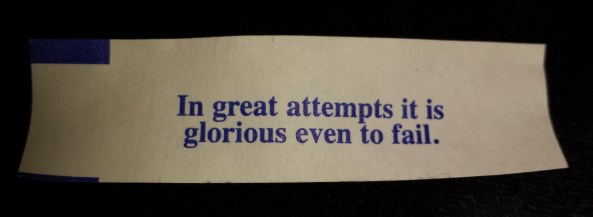
Durned if You Do, Durned if You Don’t

fortune cookie

YOU CAN’T WIN

No matter what you do, your book will never be good enough.

Editing:

  • If you don’t get your book proofread well, the critics can be brutal.
  • But even if you iron out every spelling and grammar issue, people can still complain about editing. Show more, tell less. Language is too plain and simple. Language is too complex. The point of view changes where it shouldn’t have.
  • And even if your book is masterfully edited, you can still get a sour grapes review that claims that it’s poorly edited. For if the book just has a few reviews and one mentions editing issues, most customers will believe this at point-blank. Unfortunately, it’s often the case, so such sabotage can easily be effective. Your book is vulnerable. (But not defenseless.)
  • No matter how well-written a book is, there will still be readers who don’t appreciate the style. You can’t please everybody, so it will always be wrong to some.

Formatting:

  • If your book has formatting issues, this can deter sales.
  • You learn about justification, you master page numbering and headers, you do your best to format like traditionally published books that you see. Then critics point out how foolish you were for not hyphenating to reduce gaps in justified text, not removing widows and orphans, not having the same number of lines on every page.
  • Or you can spend big $$$ on professional formatting. Now the naysayers will tell you how little money the average self-published book (or even traditionally published book) makes. You might discover that even a most beautifully formatted book doesn’t always sell.
  • No matter how well a book is formatted, there will still be people who feel it’s wrong. Many prefer full-justified; others prefer left alignment. With a printed book, how can you please both?
  • Then there are people who have an agenda. There are book formatters who wish to drum up more business by making subtle points seem critical toward sales. There are authors who are well-versed in the subtleties of formatting who feel frustrated that poorly formatted books sometimes sell very well. There may even be traditional publishers who see a declining market share who wish to emphasize the importance of formatting and editing in order to dissuade people from buying self-published books.

Content:

  • If your book has storyline or characterization issues, this can lead to negative feedback and lack of word-of-mouth recommendations.
  • But no matter how amazing the story is, there will be some who will suggest various (and even contradictory) ways that your story could be better. You can’t please everyone.
  • If you write a single-volume fantasy novel, some will fault you for not going into more depth on the world and its rules. But if you write an epic fantasy, others will fault you for going into way too much depth.

Cover:

  • If your book cover attracts the wrong audience, that can cost you much potential traffic.
  • If your book cover doesn’t appeal to the audience, that can cost you much potential traffic.
  • If your book cover has appeal and depicts the content appropriately, critics will still penalize you for issues like choosing the wrong font, including the word “by,” using too many colors, making the background too busy, arranging your images in a collage, or countless other cover design ‘mistakes.’
  • Then if you spend good $$$ on a fantastic cover, anyone who is out to get you can simply write a review that says something like, “Since the cover is so amazing, I had high expectations for this book, BUT…” Hey, it can be an outright lie. There is no fact-checking when it comes to reviews. Everything is an opinion (even when it’s black and white).

Design:

  • If your book has an unappealing or inappropriate design, this can cost valuable sales.
  • If your book has a fairly good design, it may still suffer in subtle ways—text too close to the margin or spine, kerning not quite right on a few letter pairs.
  • You might add a decorative border to appeal to kids. Then someone will fault you for not making a different border on every page; someone else would fault you for not having matching borders; someone will fault you for not making it in color; if you make it color, someone will complain about price.
  • The cover, design, formatting, and editing are important, but let’s not forget that the story itself is the most important part. No matter how great the design is, it just takes one complaint about the story to undo all the benefits of a great design.

THE CRITICS

The problem is that there will always be critics.

The critics have the upper hand.

No matter how wonderful your book is, any critic can easily find some fault in it.

Most critics are genuine readers who just aren’t happy. No book can please all of the people who read it. People simply have varied tastes.

A few critics are frustrated writers, editors hoping to market the importance of editing so they can drum up more business, designers hoping to do the same, unethical authors hoping to elevate themselves by slamming the competition (this strategy will backfire for them, e.g. by dragging their own sales down with fewer customers-also-bought recommendations), editors of traditional publishers who feel threatened by competing titles, people who are simply jealous of the author, and even review police who simply want to bait authors to cross the line.

Remember, the vast majority of critics are genuine readers.

Most of the criticism that actually identifies something specific has merit.

Those with an agenda have the upper hand, so it’s not worth the battle.

Definitely, don’t respond to any review where the reviewer may have an agenda through a public comment.

It’s too easy for the reviewer to make the author look bad. It doesn’t matter what you say, there is a 99.999% chance that you will lose. You have a reputation to uphold. Some customers will think you’re unprofessional simply because you chose to comment on the review.

It’s easy for the reviewer to solicit an emotional or defensive response from you, which will really make you look bad.

Your comment itself lends credibility to the review. If the review didn’t have any merit, you wouldn’t need to address it, right? (I know, that’s not the way you feel about it when it happens. It can burn inside, and not go away for weeks.)

Here’s what’s very common. You think: I’ll just make one innocent comment and leave it at that. What’s the harm in that?

Here’s the problem: The reviewer will respond to your comment and ask you a question. Now you have no choice but to respond again. Suddenly, what you intended to be a single comment turns into a discussion. The last thing you want on your (quite public!) product page is a discussion with a reviewer who posted a bad review.

You can’t play the critics’ game. The critics have the ball. They have the home field advantage (even on your product page). They have control.

But you’re not helpless.

YOU CAN WIN

The first thing to realize is how much you need the critics.

You don’t just need praise. If all you have is praise for your books, that will do nothing but arouse instant suspicion.

You need balance, whether you like it or not. Customers expect it. There should be bad with the good.

The second thing to realize is that you can fight the critics by not giving in to temptation.

Show them (and more importantly, all the traffic on your product page) how professional you are by not engaging with the critics emotionally or defensively.

A third thing to realize is that your book and product page are dynamic.

You can always make a revision to the content and note this in the product description.

But you don’t want to make a revision based on every bit of criticism you receive. There may be customers who actually prefer it the way it was, who simply didn’t voice their opinions.

So the best course is to wait a few weeks and see if the criticism actually has any impact on sales. Sometimes, it actually helps sales. Often, it has no effect whatsoever. (Even when there seems to be a correlation, it often turns out to be coincidence—e.g. your book might have just come off the Last 30 Days list at the same time.)

Sometimes, you just need to add clarification to your product description.

A customer might have made a mistake, assuming your book was something that it wasn’t. If so, simply clarifying this in the product description may negate any effect of that particular review.

Another thing to realize is that things are often much better than they seem. Your book is your baby; you take the criticism quite personally. But the criticism usually isn’t directed at you; it’s directed at your book.

Not everyone has the same tastes. That reviewer is letting people with similar tastes know not to try your book. And that helps! People with dissimilar tastes may still appreciate your book.

If the criticism has merit, consider making a revision. If not, just let it go.

You also have a secret weapon: It’s called marketing.

Personal interactions can often make a huge impact with potential readers. These can have a greater impact than what some stranger says on your product page.

Personal interactions help to generate sales, help the reader approach your book with a favorable frame of mind (i.e. looking forward to it, instead of wondering if anything is wrong with it), and are more likely to result in reviews and recommendations.

PERFECTION

There is no such thing as a perfect book. Simply put, it can’t be perfect for everyone.

Sometimes, authors spend way too much time and money trying to over-perfect their books in various ways.

Here are the most important elements of any book:

  • Story appeals to the target audience.
  • Language appeals to the target audience. (Right vocabulary; flows well.)
  • Target audience can understand well without being distracted by too many hiccups.

The opposite problem—authors who don’t find and patch holes in the story, who don’t write in a way that appeals to the audience, who make many spelling or grammar mistakes, etc.—can be a huge sales deterrent. I’m not addressing the minimum effort here; I’m addressing the issue of over-perfecting.

Who needs perfect editing? An editor who reads your book. An author who writes well who reads your book. A reader who has a well-above average command of language. Others will be tolerant to various degrees as long as you meet the three points above as those points relate to them.

Who needs perfect formatting? A typographer who reads your book. An editor who reads your book. An author who has learned about formatting who reads your book. A reader who is much pickier than the average reader. Others will be tolerant to some degree. Subtle points they won’t notice any more than you did. It’s possible that they will have a nagging feeling that something isn’t quite right without knowing what that is, which may distract them from the story. It doesn’t take perfect design to avoid this; it just needs enough appeal.

Who needs perfect reviews? NOBODY! Virtually every customer who sees a stockpile of nothing but five-star praise will dismiss the book out of immediate suspicion. Customers expect varied and even wild and crazy reviews. They will see if those reviews seem relevant to them. A review that ruins your book for one customer has no impact on another customer. Rather, if they dismiss the criticism because it doesn’t matter to them, they are more likely to give your book a chance. In this way, any bad review can actually stimulate a sale.

Don’t forget who your target audience is:

  • Do you expect to sell many copies on Amazon.com? Do you want support from indie authors and their friends, family, and acquaintances?
  • Do you expect to sell most of your books through bookstores? (You need to do much research and have excellent planning for this.)

In the former case, it may be an advantage to use the free CreateSpace ISBN. If you want support from customers who support self-publishing, you want it to be clear that your book is self-published.

If you spend big $$$ trying to look professional, it might work, but it might backfire. Using your own imprint, you might lose support from millions of readers who support self-publishing. What are you gaining in return? Are you hoping to appeal to people who prefer excellent editing and typography? People who much prefer this are far more likely to read books from the big publishers, or small publishers who’ve branded an image for themselves with regard to delivering quality. They are less likely to take a chance on an unheard-of imprint. You need excellent bookstore potential, research, and planning—and you need long-term goals, like branding an image for yourself as a small publisher who delivers high quality—to make this strategy work for you.

But if you have big plans to sell to bookstores and libraries (not just hopes and dreams, but well-researched plans on how to make it happen), then professionalism can make a significant difference.

It really pays to know who your specific target audience is and what that audience will prefer.

Even if your audience supports self-publishing, they still have expectations. They’re investing money (or at least much time) to read your book. You have to deliver content and quality worthy of that investment.

HOW TO WIN

You don’t measure this through reviews. Though the first time a stranger says something nice about your book, print it out and paste it to your wall. Use it as a reminder that you’re doing something right.

You don’t measure this through sales. Though the trick to sales is to find ways to consistently grow them. If you can grow your sales annually, you can reach any goal in time.

So how do you win?

First, you win by not giving up.

You win by looking professional, even when the chips are down.

You win by writing more books.

You win by learning and growing as a writer.

You win by thriving on your strengths and by shoring up your weaknesses.

You win by caring about your readers, yourself, and your community of writers.

You win by building and growing a fan base.

You win by creating a brand for yourself as an author with a website, author page, and social media.

You win by helping fellow authors.

You win by reading other self-published books—and supporting those that meet your standards through recommendations.

You win by branding a good image for self-publishing.

You win by being part of a community of writers who thrive together.

You win by being the best you can be, and accepting that you are who you are.

You win by writing because you love to write.

You win when you can SMILE despite all the challenges that authors face.

You’re a winner! Congratulations! 🙂

Read Tuesday

Imagine a Black Friday type of event just for book lovers.

You don’t have to imagine it. It’s called Read Tuesday, and it’s free: www.readtuesday.com.

Please support the Read Tuesday Thunderclap. This will help spread awareness on the morning of Read Tuesday (December 9, 2014). It’s easy to help:

  • Visit http://thndr.it/1CkO2Bg.
  • Click Facebook, Twitter, or Tumblr and sign in.
  • Customize the message. (Optional.)
  • Agree to the terms. All that will happen is that the Thunderclap post about Read Tuesday will go out the morning of December 9.
  • (The warning message simply means that Facebook, Twitter, or Tumblr need your permission to post the Thunderclap message on December 9. This is the only post that Thunderclap will make.)

Halloween Reading

Looking for some spooky books to read this Halloween month?

https://chrismcmullen.wordpress.com/scary-books

Chris McMullen

Copyright © 2014 Chris McMullen, Author of A Detailed Guide to Self-Publishing with Amazon and Other Online Booksellers

  • Volume 1 on formatting and publishing
  • Volume 2 on marketability and marketing
  • Boxed set (of 4 books) now available for Kindle pre-order

Follow me at WordPress, find my author page on Facebook, or connect with me through Twitter.

Comments

Click here to jump to the comments section:

https://chrismcmullen.wordpress.com/2014/10/19/durned-if-you-do-durned-if-you-dont/#comments

One Muse Is not Enough

Muses

So you found a muse. Good for you.

She’ll help you string ideas together,

But one’s not enough. Sad, but true!

Writing’s not the only storm you’ll weather.

With the story, your muse is great,

But editing is a different beast.

Your muse won’t help; you’re filled with hate

‘Til a new muse makes this worry your least.

A poor cover won’t sell your book.

So next you must summon a design muse

To help achieve just the right look.

But you will still need yet another ruse.

Your story muse won’t craft your blurb;

This requires a muse of another kind.

So important to find the perfect verb.

Without this muse you’d be in a bad bind.

When you must design the book’s inside,

Not one of these muses will help. No fun!

Muse five joins the publishing ride.

Your book’s design’s now beautifully done.

Still nobody will read a word:

You lack the most important muse of all.

Marketing muse helps you get heard.

Without her help your sales would surely stall.

You’ve one more problem to solve yet.

It’s the toughest challenge that you will face:

All six muses play hard to get;

You can never find two in the same place.

Copyright © 2014 Chris McMullen

One-Word Reviews at Amazon Now?

Reviews 1 Word

I saw a one-word review at Amazon today. So I’m guessing the 20-word minimum has been removed.

You might recall a couple of months ago that Amazon was testing out both ratings and reviews on print books. Those ratings disappeared after a few weeks, so perhaps the compromise was to remove the minimum word count.

The review forms have changed (but there is a tiny ‘here’ link below them that you can click if you prefer the old way).

My guess is that Amazon is trying to encourage more genuine customers to leave reviews. So now there is no ‘imposing’ 20-word minimum.

(In reality, what had been preventing a customer from writing the same word 20 times consecutively?)

We’re short on time now, so give me a one-word summary of the last book you read. 😉

So Your Friend Is an Author…

Judge

Amazing, Isn’t It?

Yes. It is.

How many authors do you actually know?

Now your friend is one.

The key word there is friend.

This was your friend before. Becoming an author doesn’t change that.

Sure, you can tease your friend about this, if your relationship ordinarily involves teasing.

But your friendship is based on more than just teasing:

  • You support one another. Even if one of you writes a book.
  • You’re honest with one another. Even if you think the book isn’t quite, well, you know.
  • You know each other well. How to get on one another’s nerves. How to put things gently. So you can figure out the right way to share honest feedback.
  • You motivate one another. So in addition to honest feedback, you’ll provide encouragement, motivation, and direction.

Your friend wrote a book. That’s a huge accomplishment. Treat it as such.

There are some things you should know about writers:

  • Writing is a lonely process. Literally: Alone with the computer, writing. Marketing can be lonely, too. This same author, all alone, is reading reviews, which sometimes tear down the author’s hard work. Friends can remind that author that he or she isn’t alone. They can help the author handle criticism, and prevent the author from doing anything rash.
  • Once in a while, the author needs to be dragged outdoors into the real world, kicking and screaming. But if you try this when the author’s muse has just shown up after a long absence, it could prove to be a fatal mistake. You have to judge how vigorous the kicking and screaming is.
  • Writers can be a little eccentric at times. Your friend has some personality. You’ll be occasionally entertained. What’s not to like about this?

There are many ways that you can support an author (and still be honest and scrupulous):

  • Read the book, especially if it’s a kind of book that you’d normally be interested in. But if it’s not your kind of book, you can still support the author without reading it.
  • Help spread the word, especially if you’ve read the book and enjoyed it. But even a “Hey, my friend, Joe, just wrote a mystery” mention is valuable advertising for your friend. Most authors feel uncomfortable with the necessity of promoting their own books (even if they do this, they often feel uncomfortable doing so). Readers, also, sometimes put more stock in what someone else says about the book than the author’s own self-promotion. Gee, if only that author had some wonderful friends who could help spread the news… Hint, hint.
  • Do you know someone who read the author’s book? Ask that person to write an honest review. Authors need reviews, but asking for reviews of your own book… can look unprofessional (and again, authors can feel uncomfortable doing that). But an author’s friend, taking the initiative to do this (i.e. the author didn’t ask you to ask for reviews)… you could be that secret helping hand. You’d be like a superhero with a secret identity.
  • Follow the author’s blog, tweets, and Facebook posts. Encourage the author to keep separate Facebook pages for personal and authorship (e.g. there are author and book pages at Facebook). You should follow both. Expect to get tired of hearing about your author’s book. Don’t feel obligated to read and comment on every one of the author’s book-related posts. Your name is there. You participate occasionally. This means a lot.
  • If you have your own blog or website… just imagine if you mention the author’s book. Don’t even tell the author. Let him or her happen to come across it someday. “Wow! When did you do that? That’s so cool!”
  • Check out your friend’s product page at Amazon. Vote on reviews. Offer some feedback to the author on the cover, description, and Look Inside.
  • Visit local libraries and bookstores. Ask them why they don’t have this most amazing book right there on the shelf.
  • Attend a signing or reading. Encourage your author friend to do these. If you don’t feel like attending yourself, you can still help spread the word and encourage other people to attend.

Your friend spent months finding a little extra time each week, typing tens of thousands of words, massaging those words into a book. That’s no small achievement.

Your friend has considered agents, publishing houses, and self-publishing. There is no easy answer, no clear road to success. It’s a challenge.

Your friend is navigating the deep waters of marketing. It’s a strange world, but necessary to share the book with others. It’s daunting.

A little support from a friend would go a long way.

Mix that with some patience and understanding.

Remind the author that there is a real world here, which the author is part of… which the author needs to physically seem be a part of from time to time.

Remind the author that friendship works both ways. You have needs, too. It’s not just all about the author.

Throw in a little teasing, perhaps.

If your friendship survives authorship, it’s mean to last forever.

Copyright © 2014 Chris McMullen

Chris McMullen, Author of A Detailed Guide to Self-Publishing with Amazon and Other Online Booksellers

Follow me at WordPress, find my author page on Facebook, or connect with me through Twitter.

Comments

Click here to jump to the comments section:

https://chrismcmullen.wordpress.com/2014/06/17/so-your-friend-is-an-author/#comments

You Might Be a Writer if…

Qwerty

You might be a writer if…

  1. Some of your best ideas were originally written on napkins, Kleenex, or toilet paper.
  2. You wake up at three in the morning and sneak out of bed to spend a couple of hours alone with your computer.
  3. When people act like jerks, you appear to handle it maturely, then secretly fashion characters after them to exact your revenge.
  4. You pull over to the side of the road a few times each week to jot down ideas for your book.
  5. A family member interrupts your work to ask you a simple question and you turn into a screaming lunatic.
  6. The most fulfilling conversations you have are between you and your imaginary muse.
  7. When your lucky underwear really stinks, friends know you’ve been fortunate not to get any bad reviews for several weeks.
  8. You log into your publishing account while you’re eating lunch to check on your royalties.
  9. In the middle of the night, you wake up sweating with an irrational fear that some discovered your secret pen name.
  10. You routinely turn down invitations to parties in favor of working on your book.

Copyright © 2014 Chris McMullen

What Determines If a Book Is Good?

good

What determines if a book is good?

The answer is a 7-letter word.

Unlike many conventional puzzles, plurals ending with -s are allowed.

The answer is not E-D-I-T-O-R-S. Although they may be able to help make a book better and they might be qualified to judge writing on many levels, whether or not a book is good doesn’t ultimately depend on the opinions of editors. There are, in fact, highly successful books that many editors don’t think highly of.

The answer is not R-O-Y-A-L-T-Y. A good book doesn’t need to be widely popular; a good book can provide value to a small audience. There isn’t a magic number of sales or royalties to determine if a book is good or bad.

The answer is not R-E-V-I-E-W-S. Even the most highly esteemed books receive critical reviews. So just receiving good reviews doesn’t make a book good, and receiving bad reviews doesn’t make a book bad. The number of reviews doesn’t make it or break it, either, as this depends strongly on the number of sales. The average star rating is not a good indicator, as opinions and systems for reviewing can vary wildly from one person to the next.

The answer is not P-U-B-L-I-S-H-E-R. Aside from the fact that this word has too many letters and the reality that for decades publishers have prevented many book ideas from ever being read, publishers don’t ultimately determine whether or not a book is good. In fact, there are many popular stories of publishers who have turned down books that later turned out to be amazingly successful.

The answer is not A-U-T-H-O-R-S.  Well, this depends in part on how you want to define a ‘good’ book. The author determines whether or not the book is good enough to share with others. The author also determines whether or not the book is successful; what one author considers a success, another might deem a failure. We’re not talking success versus failure, or how the author feels about his or her own book. A ‘good’ book should provide value to more than just its author.

The answer I have in mind is R-E-A-D-E-R-S. But not in terms of the total number of reviews or the average star rating; the answer is readers, not reviews.

Publishers think in terms of sales, investment, risk, net profit, and cost-benefit analysis. They don’t determine if a book is good; they strive to determine what will make them money. And they sometimes make mistakes with their predictions.

Different editors think in terms of writing style, storyline, plot, characterization, grammar, spelling, punctuation, etc. And each editor has his or her own set of opinions, and knowledge of various ‘rules.’ It’s possible for a writer to adopt a writing style or method of storytelling, for example, that creatively blows the ordinary rules right out of the water, while also producing a really good book. Ignoring the rules certainly doesn’t make a book good; and following any usual rules or guidelines, in itself, doesn’t distinguish good books from bad ones. (However, as you know if you read my blog, I do stress the importance of editing.)

Royalties and sales reflect how wide your paying readership is and how successful your book is business-wise. But what if tens of thousands of people read a book because you’re a very popular author, but later feel strongly that it didn’t live up to their expectations? All those sales don’t necessarily imply that the book was good. And what about the book that has a really small readership, but where most of the readers loved the book. Isn’t this book good?

What I Don’t Mean

I’m not saying that bad reviews indicate that a book is bad. Most readers don’t review books at all; surely, their opinions count, too.

I’m not saying that good reviews necessarily make a book good.

Again, I mean readers, not reviews. And I don’t mean all readers. No book pleases everyone, so it’s not possible for everyone to love a book.

What I Do Mean

If complete strangers discover a book and feel that it was worth the read—that if they had time machines at their disposal, they wouldn’t choose to go back in time and not read the book—then to these readers, the book was good.

If some wish they hadn’t read the book, this doesn’t make the book bad. Every book that’s had thousands of readers has some that strongly dislike the book.

Good, Better, Best

I don’t think it’s helpful to try to rank books. It’s kind of like comparing apples to oranges. If you love apples, can you fault the orange for trying not to fit the apple mold? Even if two books fall into the same subgenre, like romantic comedy, different authors and readers vary in their perception of just what a romantic comedy should be. So two different romantic comedies aren’t two kinds of apples, one is a lemon and the other is a lime. Two different books aren’t supposed to be the same; they were intended by their authors to be different.

What I feel is more important is the notion of improvement. I’m a fan of the compare-yourself-to-your-former-self concept. If we can all achieve this, surely the world will be a better place. If an author learns ways to improve, the author can make his or her book better.

Another factor is doing your best with the time and resources you have available. Strive to do your best each time, and as you learn and grow as an author, strive to become better. If you feel strongly that you should have done something different, then your book could have been better than it was.

Bad

When the author feels that he or she should have done better, that the book really wasn’t fit to be published, the author is judging that his or her book isn’t good. When no readers will ever feel that the book is worth reading, they are judging that it wasn’t fit to publish. (If there is a narrow audience who just hasn’t discovered the book yet, that’s different.)

A books that was written for the wrong reasons, which is lacking in effort, which no reader will enjoy, had ample potential to be something much better.

Publishing Resources

I started this blog to provide free help with writing, publishing, and marketing. You can find many free articles on publishing and marketing by clicking one of the following links:

Chris McMullen, Author of A Detailed Guide to Self-Publishing with Amazon and Other Online Booksellers

Follow me at WordPress, find my author page on Facebook, or connect with me through Twitter.

What I Learned from Reading Fiction

Fiction

  1. Everything will be okay in the end, no matter how awful it seems right now.
  2. Things will get worse before they get better. Much worse.
  3. Don’t try to be a favorite; you know the underdog is going to win.
  4. Mr. Right is right under your nose; you just don’t realize it.
  5. There is a fairy tale ending for you, but it will be hell getting there.
  6. When you finally reach a state of happiness, brace yourself for the sequel.
  7. Live the life of a protagonist. You’ll have a happy ending and the life will be very rewarding.
  8. You can make life easy by being a major antagonist; you just won’t have a happy ending.
  9. The safest bet is to live life like a narrator; you get to see all the action, and you must survive to tell about it.
  10. If you’re not tall, dark, and handsome, don’t live life like you’re in a romance novel.
  11. Imagination can be a million times more exciting than reality.
  12. Reality is a million times safer than fiction.
  13. Make life more exciting by imagining you’re in a novel.
  14. Don’t trust anyone. Ever.
  15. Anything can happen to anybody at anytime.
  16. The more incredible the odds, the more likely things will work out.
  17. Be very afraid of the dark. Don’t go out at night. Don’t do anything.
  18. Good always triumphs over evil, but evil never gives up.
  19. Stay away from fiction writers: They must be totally insane.
  20. How to write better.

Copyright © 2014 Chris McMullen

Don’t Just Throw Your Book Out There (Why not?)

Cross Your Fingers

The Temptation

Joe’s muse inspired him with a great idea for a book. Thus, Joe sat down at his computer for several months, typing up his story. Now he’s ready to publish it.

Sure, he’d love to have a fantastic cover, excellent editing, and effective marketing. However, Joe is self-publishing, has no budget, doesn’t have artistic or photography skills, and doesn’t know anything about marketing.

Like many authors, Joe doesn’t feel a need to perfect these things. For one, he doesn’t see how he can afford to hire anyone. For another, he has no idea if his book would sell; he’d loathe to waste months more time and money he doesn’t have only to see a trickle of sales.

It occurs to Joe that he could publish the book as it is now and the cover, editing, and marketing can wait until later. If the book sells well, then he can afford these things, and then he won’t even need the marketing; and if the book doesn’t sell, he will be glad he didn’t waste more time and money.

Putting the book out there will give Joe some initial feedback, help him build a fan base, allow him to test the market, and provide some extra income that he can really use.

Everything seems to suggest that Joe should publish as soon as possible. This will also relieve a great deal of stress that had built up while he was writing the book, and which became nearly intolerable when he started to learn the publishing ropes.

The Problem

There are a few important points that Joe hasn’t considered (or perhaps he has considered them, but either ignored them or convinced himself that they don’t matter):

  • Sales rank. It’s really challenging to overcome a slow start. The history of no sales factors strongly into the sales rank (which weighs sales from the past day, week, and month). Sales rank quickly climbs to the millions with no sales, then when the book does sell, it rises quickly. In contrast, when a book sells frequently with its launch, its sales rank climbs much more slowly when it doesn’t sell. It’s much easier to keep sales consistent when they start out well than it is to generate sells after a very slow start.
  • Reviews. If the book needs significant editing, formatting, storyline, character development, or writing help, this may be reflected in critical reviews. You can revise the book later, but any negative reviews are there to stay. With only a few reviews, if any are bad, it can hurt the book’s prospects for sales, which makes it challenging to get new reviews to offset the bad one. Perfecting the book before publishing and marketing it effectively can inspire helpful early reviews.
  • Discovery. There are millions of books out there. People need to discover your book before they can buy it. Early sales, customers also bought lists, reviews, and bestseller lists improve a book’s exposure. Perfecting the content and pre-marketing can greatly help with this.
  • New release. When a book first appears on Amazon, customers are more likely to discover it by using the Last 30 Days or Last 90 Days filters. If your book is in its best condition and effectively marketed prior to publishing, you can take full advantage of this. If instead you wait until you realize that the book isn’t selling, you’ve missed this golden opportunity.
  • Image. You only get one chance to make a first impression. If people check out new releases in your genre and discover your book only to think, “Ugh,” they probably won’t click on it months down the line after it’s been revamped, and they may have already told their friends not to bother with your book. It’s important, yet challenging, to successfully brand the image of the book and author. Strive to brand a positive, professional image from the beginning.
  • Satisfaction. Customers are investing time, and possibly money, to read your book. With this investment comes a set of expectations. Whether your book merits reading, recommendations, or criticism largely depends on how well the experience satisfies customers. A quality book with good packaging improves the chances that the book will be read and that some readers will recommend it to others. A book with problems discourages sales and encourages a disproportionate number of critical reviews.

To make matters worse, Joe is aware of a few famous authors who improved their covers or editing later, and eventually found success. Unfortunately, Joe isn’t thinking of the millions of books that struggled to begin with and never overcame this.

It’s really challenging to succeed as an author when you put your best foot forward in the beginning. Making it even tougher on yourself isn’t the best plan.

Whether you just throw the book out there or fight to get it ready for publication can significantly impact the fate of your book.

The Solution

Authors who don’t have money do have time. We all know that time is money. There is also an abundance of free resources to help authors publish and market their books, along with a community of authors who like to help others.

For those who do have a little money, there are many low-cost services to explore.

It’s not the lack of resources or help that’s the problem, nor the expense. The problem is the choice to get the book out there when it’s not quite ready to succeed.

(I’m not talking about the perfectionist whose book is already extremely well-edited and has a great cover, or who keeps bouncing back and forth between ideas because none of them seem good enough. I’m talking about the majority who know deep down that they really need help with cover design, editing, or marketing, but can’t figure out what to do about it.)

Here are some things you can do to give your book its best chance of success:

  • Get the content publishing-ready. Give customers a quality product that they will enjoy, not something they will have to settle for; some customers won’t settle. You can put extra time into editing and formatting. You can find affordable ways to get many other eyes to read your book.
  • Find a way to get a cover that will attract the target audience. It needs to be visually appealing, but that’s not sufficient. It must signify your precise subgenre and content. This has a significant impact on whether or not people who see your thumbnail will check out your product page or pass. If your target audience favors your thumbnail among others in your subgenre, you have a distinct advantage.
  • Research and master the art of preparing a concise blurb that will inspire interest from your specific target audience. The cover, blurb, and Look Inside are your only salesmen at the point-of-sale. Make these inspire sales, not deter them. Study the product pages of top-selling books in your genre, especially those that are selling well without the benefit of the publisher’s or author’s name.
  • Seek feedback on your cover, blurb, title, Look Inside, and book before you publish. At a minimum, you should recruit friends, family, acquaintances, coworkers, and your online followers and connections. Ideally, you would also get feedback from your specific target audience. This not only helps you perfect your book, it helps you create buzz, too.
  • Setup a blog and social media pages several months before you publish. For one, you’ll have content already there when fans check out the websites listed on your About the Author page. For another, you’ll already have a following when you launch your book. A fraction of your followers will show support with a few reblogs or retweets, some likes, a couple of sales, and maybe even a couple of reviews. You’ll also have valuable connections that may come in handy for author interviews, blog reviews, advice, support, and inspiration (since you’ll see firsthand what others are doing). When readers check out your newly published book, they’ll see that you’ve already established yourself.
  • Generate buzz for your book weeks before its release date. Get people talking about your book online and in person. Feedback and your online following can help with this. Find bloggers and websites with traffic from your specific target audience where you might get reviews, interviews, or publish an article; allow ample time for consideration. Search for Facebook author groups in your genre. Explore free and low-cost advertising options for a short-term promotional sale and learn how to do this effectively. Interact with people in your target audience and let your passion show.
  • Find your target audience, interact online and in person, and make a favorable impression. Let them discover that you’re an author. Seek readings, signings, seminars, conferences, media exposure, websites where they hang out, and other ways to engage your target audience. Personal interactions are an asset to the indie author, who has the time and passion to offer this personal service. Use it.
  • Research effective free and low-cost marketing strategies. Consider which are most likely to help you reach your specific target audience and provide the greatest benefits relative to the costs (which include both time and money). However, also realize that some things that may not lead to many immediate sales may have a significant indirect benefit like helping you look like a complete, professional author.

The better your book is, the more seriously you’ll put effort into the book’s launch and success, and the more confidence you’ll show in your work and marketing.

No Guarantees

There is a risk; there are no guarantees that your book will succeed. Not all book ideas have the potential to sell well. There are some books that don’t sell well, where there isn’t much that could change the fate of the book. A very rare book will succeed with so-so packaging and marketing; the vast majority need effective packaging, marketing, and content.

However, there are very many books that are close, but no cigar, where a little help could go a long way. Maybe the cover or blurb are attracting the wrong audience. Maybe something in the Look Inside is deterring sales. Maybe customers are checking the book out, but are reluctant to try a book with a sales rank in the millions.

Can you remember shopping for a product when you were on the verge of making the purchase, where you were having a tough time deciding? Even a small thing could decide it one way or the other.

If the customer is viewing your product page, that customer is interested. He or she is deciding. The content and packaging will make or break the sale. Your cover, blurb, Look Inside, reviews, author photo, biography, and categories are the only marketing you have at the point-of-sale.

Do you believe that you have a marketable book, that there is a significant audience that will truly enjoy it? Do you think it’s good enough that many people will recommend it to others? Then you have to go for it and give your book its best chance.

Research books similar to yours to see what the prospects are. If there are books like yours selling well, and you can honestly see yours competing with those (make lists of things that those books and your book have going for and against them), then some extra tender-loving care before you publish may make a big difference down the road.

By perfecting your book, you will be happiest with it and so will your readers. You will be proud to share it. You will know it’s a worthy product, regardless of its fate. If you give your book its best chance of succeeding, you won’t have any nagging doubts about what you might have done better.

Disclaimer

Joe is a purely fictional character invented solely for the purpose of illustration. Any resemblance to any actual author is purely coincidental.

Free resources

I started this blog to provide free help with writing, publishing, and marketing. You can find many free articles, by clicking one of the following links:

Chris McMullen, Author of A Detailed Guide to Self-Publishing with Amazon and Other Online Booksellers

Follow me at WordPress, find my author page on Facebook, or connect with me through Twitter.

Marketing a Book Is Like Dating

Date

The Bar

Authors dress their books up with covers and blurbs, and mingle with readers through marketing. Readers are searching for good books, checking out those covers and blurbs, looking for a good catch to take home and bundle up with.

The Pick-up Line

Trying to stand out, authors try to design fantastic covers, promote their books with special deals, or catch interest with a clever strapline. Readers want to be impressed; they won’t fall for a common one-liner. If the line does impress them, they will play hard to get.

The Blind Date

A reader who enjoyed a book sets the book up with a friend. The friend is nervous. If the book doesn’t turn out to be good, he will feel obligated to grind through it so he doesn’t let his friend down. He’s also worried that the book may be too good for him, with more vocabulary and complexity than he’s prepared to handle.

The Courtship

Authors interact with their target audience in person and online through readings, signings, seminars, presentations, blogs, fan pages, podcasts, and interviews. They brand their images over a period of months, hoping to show readers that they are serious about the relationship.

The Kiss

Finally, after weeks of branding, the reader has clicked link to view the book’s product page, read the blurb, and—oh, here it comes, the moment we’ve been waiting for—KISS!—the reader is viewing the Look Inside. It better be a good kiss. If you like it, there are hundreds of more pages where that came from. Come on, kiss this book like you’ve never kissed a book before.

The Commitment

It was a good kiss. The reader invited the book home for the evening. This is the best night ever, a moment the book will treasure for the rest of its life. It’s a dream come true.

The One-Night Stand

What happened? It started with a good kiss. The book went home with the reader. They had a great time. The next thing the book knows, it was returned. The reader is gone. How could this be?

The Dump

Once the reader got home, it discovered that while the book had a handsome face, it was really a scoundrel of a character. Beyond the Look Inside, the book turned into something awful. The book is promptly dumped, confined to sit on a shelf, watch the reader pass by a few times each day, and bear the agony of seeing the reader sit by the fireplace with other books, smiling and laughing gleefully. Life is just unbearable.

The Climax

Just what every book and reader were hoping for, the book was good enough to please the reader, who finally reached the climax of the book. The feeling is just wonderful. For a few minutes. Then the book realizes that this is the end. Well, it was good while it lasted. At least the reader left some change on the nightstand.

The Marriage

Every author dreams about the marriage: Readers who enjoy the first book so much they propose to marry the whole series. It will be a grand wedding.

The Affair

While conversing with a fan, an author learns that she is reading a book in the same genre by a popular author. How could she do a thing like that? What will people think?

The Divorce

It’s that tragic moment when the reader gives up on a series. It was a match made in Heaven. What could possibly have gone wrong?

The Proposal

I started this blog to provide free help with writing, publishing, and marketing. You can find many free articles by clicking one of the following links:

Chris McMullen, Author of A Detailed Guide to Self-Publishing with Amazon and Other Online Booksellers

Follow me at WordPress, find my author page on Facebook, or connect with me through Twitter.