Read is a Four-letter Word

If you read, write, or publish and find yourself somewhat upset, perhaps you can take a little comfort in the realization that ‘read’ is a four-letter word. (And maybe the fact that reading, writing, and publishing are far more enjoyable than many other things you could be doing, even when these activities might frustrate you a bit.)

book

isbn

note

page

read

tale

text

type

word

copy

edit

find

full

left

mark

typo

view

free

give

list

sale

sell

body

line

poem

poet

bold

caps

dash

font

stop

blog

like

link

mail

post

send

stat

byte

file

HTML

open

Word

save

size

Fire

iPad

Kobo

Lulu

Nook

Sony

There are a few notable words that have more than four letters:

criticism

defects

feedback

plagiarism

rejection

returns

reviews

Copyright © 2014 Chris McMullen

Riddle: What Does Every Writer Need to Succeed?

Question

It’s not a pen because you could use a pencil or a computer.

It’s not a medium on which to write because the writing could simply exist in a bard’s mind.

It’s not a brain because that doesn’t distinguish a writer from any other art form.

It’s not lucky underwear because this job is clothing-optional.

It’s not a dictionary or thesaurus; although these come in handy, they aren’t always needed.

It’s not an audience because it is possible to define a new genre and gather a new audience.

It’s not money, as a writer can start out empty-handed and become successful.

It’s not writing instruction; while it does help to be well-versed, it is possible to become fluent through avid reading, for example.

It’s not praise, since although most writers would like it, the road to success is often paved with much criticism.

It’s not criticism because it’s already spurious and not everyone benefits from it.

It’s not an agent or great connection, which may help, as some writers have succeeded without this.

It’s not research, though it can be a big asset, since it can be compensated or trumped by a huge imagination.

It’s not imagination because many writers succeed with small changes to what’s already out there.

It’s not a pet squirrel, yet it’s highly recommended.

It’s simpler than all that, and everyone can have it. It’s passion.

Writing without passion. Is it worth reading? Was it worth writing?

Copyright © 2014 Chris McMullen

The Great Paperback Hangover

Hung Over

Sales of most print books peak in December because paperbacks and hardcovers make for great holiday gifts. Any book that would make a suitable gift tends to see a considerable improvement in sales frequency during December.

Up until Christmas Eve, that is. Then the happiest time of the year for print book sales is followed by the great paperback and hardcover hangover.

People are busy spending time with family, traveling for the holidays, checking out their new presents, and enjoying their vacations to buy books. Besides that, they’re broke from all the holiday shopping they just did. Therefore, few print books sell between December 23 and January 1. Sales may slowly build after that, but probably not like they were in mid-December, except for seasonable books that do well in January, like academic books.

CreateSpace authors are likely to see little activity between December 23 and January 1, and it’s not just from the lack of post-Christmas sales. This has to do with holiday returns.

More sales in December means more returns. It’s even worse since many people who receive gifts return or exchange them, or simply prefer or need the cash instead.

So even if a few books do sell shortly after Christmas, there is a good chance that they will be filled with returned books rather than by printing new ones, in which case no royalty will be reported.

This is a great time to focus on family, spend time writing, and avoid checking your stats for a week or two.

Good News?

However, there may be good news if you sell e-books. While the sale of most print books drop off in late December, the sale of most e-books are on the rise. The effect is probably not as pronounced as it had been in recent years, but some people did receive new e-readers this holiday season and are looking for e-books. The residual of this effect may last as long as the end of February or so, though the most significant impact will likely be seen just thru January.

About My Blog

I started this blog to provide free help with writing, publishing, and marketing. You can find many free articles by clicking one of the following links:

Chris McMullen, Author of A Detailed Guide to Self-Publishing with Amazon and Other Online Booksellers

Follow me at WordPress, find my author page on Facebook, or connect with me through Twitter.

Why Do You Write?

Why


Is your writing fueled by passion?

Is it a hobby that’s much fun?


Do you possess knowledge to share?

Do you give help because you care?


Perhaps you write to entertain.

Maybe you do it to heal pain.


Please don’t say you write for money,

Although sales are sweet as honey.


Are you just a muse’s vessel?

Are you writing to soothe your soul?


Could your books be your legacy?

Could they be art for all to see?


Copyright © 2013 Chris McMullen

Did You Return the Gift of Reading This Christmas?

Gift 2

Have you enjoyed any good books this year?

There is a simple way to repay the favor: Leave a review or refer a friend. Tell other people why you enjoyed the book so they might enjoy it, too. This way, you can share the gift of a great read with others without spending a penny.

Happy holidays!

Chris McMullen

Breaking the Genre Boundaries

Genre

A New Genre

People like to try new things. They’re looking for something new.

At local restaurants, though they know the menu by heart, diners hope to find a new dish. Listening to the radio, people hope to hear a new tune. Shopping for clothes, customers want to see a new style.

Do people really want to keep reading the same kinds of books? The truth is, readers are hoping to discover something new. All the different genres came about from brave authors who tried something different and succeeded.

Ah, but people won’t try anything just because it’s new. It must not only be fresh, it must also be very good, appealing, and easy to find.

Traditional publishers like to see books that are fairly similar to what is already established. They want to find new ways of doing much of the same. They know which books have a history of success. They know there is an audience for those books.

Indie authors have the freedom to try something wildly different. Fortunately, there are readers who are looking for out-of-the-book writing. The trick is to help those readers find the ground-breaking novels.

These are the hurdles you must overcome:

  • Which category will you choose?
  • How will your book signify its genre?
  • How will people discover your book?

The Category Problem

If you write a book that defines a new genre, none of the standard genres will quite fit. The next best thing may lead to disappointment. For example, if it’s not quite romance, but you list your book as contemporary romance, suddenly many loyal contemporary romance fans will pin their contemporary romance expectations on your book.

You can try to explain this in the blurb, but then you may lose some sales from customers who are thinking, “Oh that’s not what I was expecting.” If you don’t make this clear in the blurb, you may get some reviews that criticize your book for not being as expected.

No category is perfect, but you must choose some category. You just have to go with the closest match. Choose a genre where the readers are most likely to appreciate your new genre. Make it clear in the blurb that your book isn’t the same old thing, but try to do it in a way that will catch the interest of readers who may be looking for something new.

It would be ideal if Amazon had a special category for books that are exploring brand new genres. I bet this would be a popular category for readers if it had the right name. For example, eBay has special categories for Strange and Bizarre. The trick is to combine name appeal with product appeal. If a bunch of standard items are listed as Bizarre, for example, people will stop browsing that category.

Amazon lumps things that don’t fit into Other and Everything Else. This just doesn’t have the appeal of Strange or Bizarre. It’s the island of misfit products that nobody will ever discover.

You can’t change the categories. (But you can send Amazon a suggestion to make a new book category like Fresh New Genres. With enough requests that show Amazon the potential of doing this, maybe it will happen someday.) All you can do is make the best use of what’s available.

Or we indies can get together and create a website for misfit books. There are many authors who write outside the standard genres. If we could succeed in spreading the word, we may be able to attract readers and authors to our website, making it easier to match readers who would like to try something fresh with authors who are writing different kinds of novels. What do you think? Or just get on Google, and you might find there are already some websites (or Facebook groups) that do this.

The Marketability Problem

Highly effective covers tend to clearly signify the correct genre. Readers who are looking specifically for detective novels, for example, know what the covers of detective novels typically look like, so these are the kinds of covers they will be looking for when they shop.

But how do you signify a genre that doesn’t yet exist? How do you design a cover that will attract readers?

If the cover is indicative of a standard genre, you run into the problem of shoppers expecting one thing, but getting something different. Nonetheless, this may be the way to go. That is, design a cover that attracts the audience who is most likely to try your book out, then in the blurb show that your book is different, but in a good way.

An alternative is to create a cover that is different, but do it in such a way that it may catch plenty of attention. This is a much tougher challenge. It’s not just the difficulty of creating an eye-catching cover. There is the additional challenge of appealing to your target audience. Your cover basically needs to imply, “This is a brand new genre, and it’s worth checking out.” It’s a tough message to get across effectively on a thumbnail image.

In between these two ideas, you can design a cover that’s similar to the category that you select, but just different enough to show visually that your book isn’t quite the same old stuff.

Realize that authors who write standard stories in standard genres have great difficulty designing highly effective covers. You’re trying to do something far more difficult if your book doesn’t fit into a standard genre.

It’s possible for a short subtitle to help, but even this is a challenge.

The Marketing Advantage

Marketing will be your best friend. This is your opportunity to meet people in your target audience and help them discover your book firsthand. You’re interacting with these people, so you have a chance to get them interested in your book idea without having to worry about them finding your book in a category that doesn’t exist.

Emphasize what makes your book special. That’s why you wrote the book, right? You saw some problem with traditional stories and found a way to improve upon them.

Get prospective readers interested in the things that make your book unique. When it comes to categories and packaging, your book is a misfit and those differences count against you. But when it comes to marketing, your book is special and the differences are on your side. Play your cards right.

Breaking Publishing Boundaries

I’m Chris McMullen, an indie author. All indie authors are breaking boundaries. We’re part of a publishing revolution.

I have a Ph.D. in physics, but don’t let that scare you. I love to read and write. If you just look around my blog or at the books I’ve published, you’ll see that I love to write. I’ve come to understand and appreciate the marketing aspect, too. I didn’t like it when I first started publishing, back when I naively thought marketing meant salesmanship and advertising. Now that I realize that marketing is more about branding, showing that you’re a person and not a name, and letting your target audience discover your passion—and more meaningful and subtle things like these—I’ve come to enjoy it. I hope to reveal the enjoyable and fascinating side of marketing—the parts that aren’t so obvious—to other authors. Focus on this side of marketing, and you may find yourself more motivated to do it, the process more rewarding, and hopefully better long-term results.

Follow me at WordPress, find my author page on Facebook, or connect with me through Twitter.

I started this blog to provide free help with writing, publishing, and marketing. You can find many free articles by clicking one of the following links:

Author of A Detailed Guide to Self-Publishing with Amazon and Other Online Booksellers

How to Enjoy a Book—No, Really

Judge

You think this is obvious, huh?

  • Enjoying a vacation should be automatic, but you encounter tourists who complain frequently.
  • You can mess up a good kiss by using your brain instead of just letting your heart take over.
  • Simply being alive should make us happy, but we humans are kind of funny about that.

We also don’t always enjoy a book the way we should.

How to Enjoy a Book

Reading should be a pleasurable experience. It’s not just the writing that makes a book good or bad. The reader plays a role in this, too.

Here are some tips to truly enjoying a good read:

  • Make the words sound and flow in a way that appeals to you. It’s not what you say, it’s how you say it. The author strung the words together, but it’s up to you to say them (in your mind) in a way that appeals to you.
  • Read the book in an ambiance that will let you enjoy it. Don’t read it where you’ll be distracted. Silence your cell phone, please.
  • Don’t read when you’re in a mood that might spoil a good book, unless you’re willing to commit to the book, letting the book take over and pull you out of reality.
  • Consider the title and blurb carefully. Scrutinize the beginning. Weigh the pros and cons of the reviews. The more wisely you select the book, the more you can trust that you will enjoy it.
  • Check out the author online. Look for signs of passion and professionalism. Interact with the author a little. I enjoy a book much more when I have personally interacted with the author and periodically see signs of the author’s passion and dedication.
  • Sit back and enjoy it. Don’t analyze it. You’re the reader, not a coauthor. Enjoy it the way it is (or toss it out if you can’t); don’t think about how it should have been.
  • Approach it with a positive outlook. Focus on what the book’s strengths have to offer. Don’t look for faults in it, as that puts you in a negative frame of mind.
  • Don’t think about reviewing the book while you’re reading it. That forces you to look for criticism. Enjoy the book while you’re reading it. Don’t think critically until it’s over.

Suppose you go to a movie theatre to see a movie that you’ve long anticipated. You with your friends. You share a big tub of popcorn, get a drink, even splurge on your favorite candy. Your friends pay so you don’t have to sweat the bill. You’re really going to enjoy this movie. It has to really stink up a storm to make you not enjoy it.

Read your book under similar circumstances and you will truly enjoy it.

Help Others Enjoy Books

Recommend a good book that you’ve read to others for whom it would be a good fit. Periodically ask how it’s going. Discuss what you like or mention that something big is coming, without giving any spoilers. If they complain about an issue, highlight a strength of the book that compensates for this and help them focus on that. This improves the reading experience for others.

Are you an author? Occasionally, remind your readers how to truly enjoy a good book.

I’m a Reader Like You

Chris McMullen.

I love to read and write. As a physicist, I tend to analyze things. As a teacher, I tend to think critically: I see a solution and instinctively think, “What’s wrong with this.” This type of thinking is helpful when you’re solving problems or helping students learn. However, if you get into these habits, it can be a challenge to retrain yourself to just enjoy something like a good book.

Follow me at WordPress, find my author page on Facebook, or connect with me through Twitter.

I started this blog to provide free help with writing, publishing, and marketing. You can find many free articles by clicking one of the following links:

Author of A Detailed Guide to Self-Publishing with Amazon and Other Online Booksellers

Huge Kindle e-book Sale as Part of Read Tuesday, 12/10

Huge Sale

Read Tuesday, December 10

My books will be on sale starting Monday, December 9 and ending at 11:00 p.m. PST on Wednesday, December 11 as part of Read Tuesday, a Black Friday type of sale just for books.

Both my Kindle e-books and my paperbacks will be on sale. Most will be 40 to 80% off (one will be free).

Click here to see a list of all my Kindle e-books with links to both Amazon US and Amazon UK (the latter appear at the bottom of the list). This includes my e-books on:

  • self-publishing
  • astronomy
  • chemistry
  • math flash cards

My paperback books will be on sale for 40% off at CreateSpace, an Amazon company. Click here to get discount codes valid at CreateSpace. This includes my books on:

  • self-publishing
  • math fluency (arithmetic, algebra, fractions, trig)
  • astronomy
  • chemistry
  • physics
  • chess log books
  • golf stats

This is just the tip of the iceberg. Hundreds of books by hundreds of authors will be on sale on Read Tuesday.

View a sample of participating books and authors by clicking one of the links below:

Give the gift of reading this holiday season. If you would like to learn more about gifting e-books, click here to read a helpful article by Misha Burnett.

Love books? Check out Read Tuesday, a Black Friday event just for books (all authors can sign up for free) on Tuesday, December 10: website, Facebook page, Twitter

Chris McMullen, author of A Detailed Guide to Self-Publishing with Amazon and Other Online Booksellers, Volume 1 (formatting/publishing) and Volume 2 (packaging/marketing), Facebook page, Twitter

Volumes 1 and 2 will be on sale on December 9 thru 11 as part of Read Tuesday on December 10. These books haven’t been on sale all year, so this is a rare opportunity. The Kindle edition of Vol. 1 will be $1.99 (60% off from $4.99) in the US and 1.99 pounds (37% off from 3.14 pounds) in the UK, while Vol. 2 will be $0.99 (80% off from $4.99) in the US and 0.99 pounds (70% off from 3.25 pounds) in the UK. The paperbacks will also be 40% off ($5.99 instead of $9.99) at CreateSpace:

CreateSpace Discount Codes—Suddenly Better

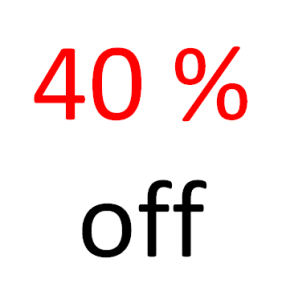
40 off

Amazon.com recently raised the qualifying total of eligible purchases from $25 to $35 in the US for Free Super Saver Shipping.

(Yes, this is significant for CreateSpace discount codes. You’ll see.)

When you reach the bottom of this post, you will find an incredible reward. No peeking!

In the past, many customers who were buying a $10 book would simply add a couple of more books to make the total $25 in order to qualify for free shipping. Now you need another $10 on top of that. Suddenly, for some customers it might be better to just buy one book with shipping than to spend $35 or more.

(Some customers do have Amazon Prime. They get free shipping on eligible purchases regardless of the total. Perhaps the price change will get a few more customers to give Amazon Prime a shot. However, many customers don’t have Amazon Prime. Those who don’t may be reluctant to purchase $35 worth of books all at once.)

So how does this relate to CreateSpace discount codes?

Until now, many customers would rather buy a book at Amazon.com with free shipping than get a discount at CreateSpace because shipping isn’t free at CreateSpace. The new Free Super Saver Shipping requirements change this to some extent.

Customers who would now pay for shipping at Amazon will also pay shipping at CreateSpace. With shipping charges being roughly equal, now a discount code at CreateSpace may entice customers to shop there.

(Another hurdle is that customers must sign up for an account at CreateSpace. That’s true of most shopping sites. They don’t have to publish a book. They just need to enter minimal information to place an order. If the discount is compelling, it will be worth the effort.)

Do you want customers to shop at your CreateSpace eStore? That’s a good question you must ask yourself:

  • The royalty rate is higher: 80% minus the author cost vs. 60% minus the author cost.
  • However, if you offer a discount code, this cuts into your royalty.
  • When customers buy your book at Amazon, it helps your sales rank. CreateSpace eStore sales don’t affect your sales rank.
  • If a customer buys your book through CreateSpace and leaves a review, the review will show as an unverified purchase.
  • Your book is probably on sale at Amazon. You may need to give 5 to 10% off just to compete. It may take 15% or more to entice customers over to your eStore.
  • Discount codes help you reach customers who wouldn’t pay full price. If you can target customers who wouldn’t buy your book at Amazon because of the price, offering them a discount of 20% or more may get you sales that you would ordinarily miss out on. (But if your discount is large, you may earn a smaller royalty than usual.)
  • Offering a discount at your eStore is a good way to create a short-term sale on your paperback. If you run an effective promotion for a short-term sale, you may succeed in gaining exposure. This might lead to more full-price sales at Amazon months down the road. There are some big IF’s here. Things might not work out this way.
  • For books that tend to sell more often as e-books than in print, a discount code may help to stimulate more paperback sales. (Now ask yourself if that’s something you want to do.)

European customers can probably get much better shipping rates by purchasing directly through Amazon.co.uk, Amazon.fr, Amazon.de, Amazon.es, or Amazon.it. They probably won’t be interested in your CreateSpace eStore if they have to pay international shipping charges.

Once you decide you would like to sell some books at your CreateSpace eStore, the next challenge is driving traffic there. Customers are very unlikely to discover it all on their own.

You must market your eStore and provide a link to it. An effective promotion can drive traffic there. One way to do this is to offer a compelling discount and be effective at spreading the word about it.

How do you make discount codes at CreateSpace?

  • Click on a book from your dashboard to open its project homepage.
  • Select ‘Channels’ on the ‘Distribute’ column.
  • Choose ‘Discount Codes’ under CreateSpace eStore.
  • Look for the ‘click here’ link in the paragraph above the table.
  • This will create a new code. Click ‘View Codes’ to see them all.
  • Copy and paste the code into the table (previous window).
  • Choose dollars off or percentage off.

Enter a ridiculous amount, like 99% off, and CS will tell you the maximum discount you can offer. This way, you don’t have to guess or figure it out yourself.

If you want to make a royalty on the sale, don’t choose your maximum discount. The smaller your discount, the greater your royalty.

Here is the formula for computing your eStore royalty:

(List price — discount) x 0.8 — author cost = royalty.

Example: List price = $7.99, author cost = $2.53, discount = 20%.

($7.99 — 20%) x 0.8 — $2.53

= ($7.99 —$1.60) x 0.8 — $2.53

= $6.39 x 0.8 — $2.53

= $5.11 — $2.53

= $2.58.

Make sure you are happy with your royalty. If you want to double-check your math, feel free to use the comments section below.

The link to your CreateSpace eStore will be https://www.createspace.com/titleid, where you must replace “titleid” with the numerical value for your title id (find it on your Member Dashboard). You can alternatively find the url for your eStore by clicking eStore Setup from the Channels page for your book (this will also let you customize your store).

Unfortunately, each book has its own store and you can’t consolidate them. However, you can add a Continue Shopping URL and Continue Shopping Text to let customers go back to your site, where they can conveniently find each of your books. (This reminds me, I haven’t done this yet…)

You can use the same discount code for multiple books. This makes it easy to put several books on sale for 20% off, for example. However, you must add the discount code to each book separately (use copy/paste).

Shipping is cheaper when purchasing multiple books. Encourage customers to buy multiple books at CreateSpace to reduce the per-book shipping charges. If you get together with other authors to create discount codes, promoting all of your discount codes may help to inspire multi-book sales and encourage customers to shop in your eStores.

A customer can use multiple discount codes on the same order, even if purchasing books by different authors. I tested this out. After logging out of my account, I went to two different CreateSpace eStores by different authors, added 3 books of one and 2 books of the other to my cart, and then entered my discount codes (save this until after adding all the books) one at a time. It correctly reduced the price when each code was entered.

(The discount code is only good on the book or books associated with it. John’s discount code won’t work on Sue’s book or vice-versa. But you can buy John’s and Sue’s books together, enter both discount codes, and CreateSpace will automatically discount each book correctly.)

If you decide to deactivate your discount code, return to the table of discount codes, check the box to delete the discount, and save your changes.

(As you probably know, CreateSpace discount codes are only good at CreateSpace. They don’t work at Amazon.)

Oh yeah, I almost forgot. I promised an incredible reward.

This discount is good for 40% off all of my books at CreateSpace from now thru Tuesday, December 10. That’s crazy! Especially, since almost all of my books already have very competitive prices, $6.99 to $9.99, to begin with.

N6BSBJ36

It’s good on my self-publishing books, math workbooks, fourth dimension books, science books, puzzle books, golf books, and chess books.

Why? I’m participating in Read Tuesday—a Black Friday type of event just for book lovers. Hopefully, this amazing deal, 40% off my paperbacks, will help attract a little attention. (I sell half a dozen paperbacks for every e-book. If I ever start publishing fiction, maybe that will change some.)

If you want to use this discount code, you’ll need to find my eStore. Click here to find links to my books at CreateSpace. Enter the code N6BSBJ36 to save 40% when you’re ready to check out. Offer is good now thru Read Tuesday, December 10, 2013.

No limit. Buy as many of my books as you want at these amazing prices. These would make nice gifts. You can also save on per-book shipping charges with larger orders.

It’s not just my books. Many authors will be participating in Read Tuesday on December 10. Check it out.

Don’t call me Crazy Chris. Call it Crazy Read Tuesday.

Love books? Check out Read Tuesday, a Black Friday event just for books (all authors can sign up for free): website, Facebook page, Twitter

Chris McMullen, author of A Detailed Guide to Self-Publishing with Amazon and Other Online Booksellers, Volume 1 (formatting/publishing) and Volume 2 (packaging/marketing), Facebook page, Twitter

The Transition from Newbie Indie to Complete Author Package

Complete

The newbie indie author typically launches with a humble beginning:

  • One book on the market.
  • First attempt at formatting.
  • Just friend and family support.
  • Could use some editing help.
  • Not sure how to promote the book.
  • Very tentative about any marketing.

The professional indie author has a complete package:

  • Multiple books available.
  • Several customer reviews.
  • Substantial fan base and following.
  • Extensive online platform includes blog, website, and social media.
  • Knows many formatting and publishing tips.
  • A variety of connections provide valuable support.
  • Experienced with several marketing strategies.
  • Shows confidence to setup promotional events.

It’s easy for a newbie author to encounter a professional author and feel overwhelmed.

Yet every author starts out new.

(You can do research and start out wiser, and you can start to build a following before you publish… but no matter what, the author you are on your debut doesn’t compare to the author you are when you become wiser, more knowledgeable, and more experienced.)

Here’s the thing: Every newbie has the opportunity to evolve into a professional author with a complete package.

It’s easy, really; much easier than you think:

  • Time is on your side. Improve a little here and a little there, and over the course of time, you’ll have a complete package. Time also gives you experience. Learn what you can.
  • You need initiative. If you’re negative and tend to convince yourself that this won’t pay off, that won’t be worthwhile, and you’ll never be able to do that, then you’re right: It won’t. There are so many opportunities out there for those who are patient, show initiative, and don’t give up.

Most marketing strategies don’t pay quick dividends.

This doesn’t mean that they’re not worthwhile. Many free and low-cost strategies pay long-term dividends that make them worthwhile.

Here’s the difference:

  • When you spend a couple of years diligently branding your image on a variety of online platforms and in person, you can eventually build a name for yourself. When only do this short-term, you aren’t noticed or are quickly forgotten.
  • When you post content relevant to your target audience for several months, eventually you attract a healthy following as word spreads about your gold mine. Early on, there isn’t as much material and you haven’t been around long enough to get discovered.
  • When you only use one online medium, only people who favor that one online platform can find you. When you have a blog, Twitter, Facebook, Google+, LinkedIn, etc., you’re visible to everybody and you also look like a more complete author.
  • When you’ve been posting for a couple of years, you look like an established author who has been around. When your content is relatively new, you’re still struggling to get discovered and build your following.
  • When your blog is new, you have a basic blog with a few posts. Over time, you can have several pages on your website with valuable content geared toward your target audience, and your website evolves as you come across and try out new features.
  • When you’ve interacted with other authors for a couple of years, you learn many useful formatting, publishing, and marketing tips. This helps you improve over time.
  • Researching marketing strategies and trying them out takes time. The more effort you put into this, the more knowledgeable and experienced you become.
  • After a few years, you will have more books out, a larger fan base, a bigger following, more reviews, more connections, more experience, more knowledge, more wisdom… you’re more of an author than you were.

Success doesn’t happen overnight. It takes hard work, motivation, initiative, a thick skin, a good support system, and much patience.

You don’t write a whole novel overnight. (I hope!) You don’t do all of your marketing overnight, either.

It’s a choice you can make. Do you want long-term success and to thrive as an author? Or not?

There are many opportunities out there. Grab them.

  • Have you signed up for free exposure through Read Tuesday? You still can.
  • Did you take up Green Embers’ gracious offer for free indie advertising? It’s not too late.
  • Are you contacting bloggers for possible guest posts, interviews, or book reviews? You can’t do it if you don’t try. Check out the Story Reading Ape, for example.
  • Which local bookstores and libraries have you approached? Put together a press release kit, grab a few copies of your book, and give it a shot.
  • Check out complete authors to see what they’re doing, that you aren’t trying. Take the word “can’t” out of your vocabulary. Figure out how you can. Don’t expect immediate dividends. Strive for a complete package a couple of years from now. Be patient, work hard, and let time be on your side.

The difference between an author who develops a complete, professional package and one who doesn’t is very often as simple as showing initiative. It’s not really a secret, and it’s easy enough for anyone to do it.

Love books? Check out Read Tuesday, a Black Friday event just for books (all authors can sign up for free): website, Facebook page, Twitter

Check out the CNN iReport for Read Tuesday. You can help support Read Tuesday by voting on it, commenting, and sharing the iReport on Facebook or Twitter. Click here to see the iReport. Tell your friends and maybe we can get additional national exposure for Read Tuesday. Any help will be much appreciative. Here is another example where a simple thing like initiative can make a huge difference.

Chris McMullen, author of A Detailed Guide to Self-Publishing with Amazon and Other Online Booksellers, Volume 1 (formatting/publishing) and Volume 2 (packaging/marketing), Facebook page, Twitter