15 Questions & Answers about the new Kindle Unlimited policy effective July 1

Images from ShutterStock.

Images from ShutterStock.

CHANGES TO KINDLE UNLIMITED POLICY

Kindle Unlimited is changing its policy effective July 1, 2015.

Books borrowed through Kindle Unlimited will now be paid by the number of pages read.

Following are 15 questions and answers about this policy change with Kindle Unlimited.

(Of course, this change only affects borrows through Kindle Unlimited. Ordinary sales are unaffected.)

1 How will this change affect Kindle Unlimited readers?

The change doesn’t directly impact readers, but there may be indirect effects.

  • Customers shouldn’t feel guilty about borrowing too many books. Especially, if you read short books or children’s books, it’s easy to feel guilty about reading one or more books a day. This is no longer an issue. Read as many books as you want. Amazon isn’t losing money if you read 30+ books a month on your $9.99 subscription, and all the authors will get paid based on how many pages you read.
  • The other possible impact depends on which books, if any, enter or exit the Kindle Unlimited library. Some authors of shorter books may pull their books out. Some authors of longer books may put theirs back in. There probably won’t be too much change in the first few months. Historically, books in KDP Select have had a 95% renewal rate, so if much more than 5% of the books drop out, that would be a big surprise. What’s more likely is that authors will wait a few months to see how the new program goes.

2 How will Amazon determine how many pages are read?

Amazon will use a KENPC (Kindle edition normalized page count), which will probably differ from the page count listed on the product page.

You won’t know what your book’s KENPC is until July 1. Then you can find it on the Promote and Advertise page from your Bookshelf.

Amazon will count pages read from your book’s start reading location. (Pages that are reread will only count the first time they are read.)

3 Will longer books have an advantage?

Longer books have more pages, so if a customer reads the whole book, it will pay a higher royalty than a short book.

However, it doesn’t really matter whether you write ten 50-page books or one 500-page book. Once a customer reads all of it, you get paid for the same 500 pages.

What Amazon has really done is remove the advantage that some short books used to have.

If authors of short books compare their new royalties to their old royalties, they are likely to see a significant drop.

However, that’s in the past. The current program treats both short and long books on a more equal footing, rather than giving short books a significant advantage.

4 Will illustrated children’s books and photography books have a disadvantage?

Images will count toward a book’s KENPC, so this should help books that have illustrations, photographs, and charts.

How many words one image will be worth is unknown at this point.

5 Which books will do best in the new Kindle Unlimited program?

What really matters most is content engagement.

That is, does the writing compel most readers to continue reading to the end, and then to want to read more of your books after that?

It doesn’t matter how long the book is. Whether you write four 50-page books or one 200-page book, you get paid the same so long as readers read all of the pages.

Rewarding content engagement is a good thing, surely.

6 How will Kindle Unlimited borrows be reported?

You’ll be able to see the number of pages read in your report.

That’s cool. That’s helpful data that we’ve never had before. Knowing how many pages your customers are reading can help you assess how engaging your content is.

A few authors who are on the fence about this policy change are staying in it initially just for this new data.

Will you be able to see both the number of books borrowed and the number of pages read? I hope so, but this is unknown at this point. (Feel free to place a request with KDP.)

7 What if the customer doesn’t finish your book in one month?

Evidently, you’ll get paid for the pages read each month (even if the customer temporarily stops reading your book and begins reading another, finishing your book later).

There is a neat effect here. Suppose you have a 300-page book. Starting in July, every month 100 customers begin reading your book, but read at a rate of 50 pages per month.

You’ll get paid for 5000 pages read in July, 10,000 pages read in August, 15,000 pages read in September, 20,000 pages read in October, 25,000 pages read in November, 30,000 pages read in December, and 30,000 pages read every month after that.

(Obviously, it’s not realistic that the same number of customers will borrow your book each month and all read at the same rate. It also assumes that every customer will read your complete book.)

But this shows the potential for growth that longer books have.

8 Is Amazon’s example of how the royalties will work realistic?

You can find the example here.

In the example, Amazon assumes a $10,000,000 payout and 100,000,000 pages read.

The payout may be closer to $11,000,000. That part seems reasonable, but was reduced to $10,000,000 to get round numbers.

The 100,000,000 pages read is probably not realistic. With that figure, Amazon would pay about 10 cents per page read.

Amazon probably chose these numbers so they could use nice round numbers in the example, not because it was realistic.

When KDP Select was first announced back in December, 2011, Amazon used a $5 royalty in their example, but in the first month KOLL paid less than $2. So it’s not uncommon for Amazon to overestimate in their example. (It probably has good marketing value for them, too.)

9 How will KDP Select All-Star bonuses be paid beginning July 1, 2015?

The top books and top authors will be awarded based on the total number of pages read through Kindle Unlimited, based on the KENPC (see Question 2).

10 Does the 10% mark matter any more?

Nope.

11 What about an omnibus or boxed set?

It used to make sense to not include the boxed set in KDP Select because you make more money when customers borrow them individually. (The boxed set must still be exclusive to Amazon if any of the individual volumes are in Select.)

Now it virtually doesn’t matter. If customers read the whole story, you get paid the same whether they borrow the boxed set or the individual volumes.

12 Will authors start padding their stories to make them longer?

Not if they’re smart!

Will people read pages just because they’re there? (And even if they do, will they want to read your next book?)

Pages are more likely to be read if they’re engaging.

If you can add engaging content, well, that’s not quite padding, is it?

13 Should you write short books or long books?

You should write (A) what’s most likely to sell, (B) what’s most likely to get read, and (C) what you’re a good fit to write.

If you write shorter books, you get paid less per book than if you write longer books, but through Kindle Unlimited, either way, it’s how many pages get read that really matters.

If you write a long book, but little of it gets read, those extra pages don’t help.

If you write a short book that gets fully read quite often, the pages will add up.

What length is more likely to sell and then more likely to engage the customer varies widely depending on the genre, category, and specific target audience.

There is no single size that optimizes success across the board. (Some lengths are also much harder to write well than others.)

14 How much will books make in Kindle Unlimited?

That’s the ten million dollar question! Nobody knows.

Amazon paid $10,800,000 in May, 2015, which led to a KOLL payment of $1.35 per book.

When a Kindle Unlimited customer borrows a book, how many pages does that customer read on average?

That’s the real question. If most of your Kindle Unlimited customers read more pages than that, you’ll probably see an improved per-book royalty. If most of your Kindle Unlimited customers read fewer pages than that, you’ll probably see a diminished per-book royalty.

And if your book is 5 pages long, you’re probably not going to be a happy camper no matter what.

15 Should you drop out of KDP Select?

Amazon will pay out more than $100 million dollars in royalties for KDP Select borrows (both Amazon Prime and Kindle Unlimited combined) in 2015.

That’s a huge share of the 2015 e-book market. If you walk out of KDP Select, your book is missing out on this market.

But if you stay in KDP Select, your book is missing out on the Nook, Kobo, Apple, Smashwords, etc. market.

Which market is better for your book? Good question! It varies from one book to another.

Some authors try out KDP Select for 90 days. If unhappy, they opt out. Occasionally that pays off; sometimes it ends up being worse; sometimes it doesn’t make much difference.

The only way to know is to try.

But if you opt out of KDP Select, your sales rank at Amazon may slide (as some authors have experienced) because those KDP Select borrows will no longer help. (Presently, you have more help than you realize, since you get a bump in rank when customers borrow your book but don’t reach the 10% mark.)

Write happy, be happy. 🙂

Chris McMullen

Copyright © 2015

Chris McMullen, Author of A Detailed Guide to Self-Publishing with Amazon and Other Online Booksellers

  • Volume 1 on formatting and publishing
  • Volume 2 on marketability and marketing
  • 4-in-1 Boxed set includes both volumes and more
  • Kindle Formatting Magic (coming soon)

Follow me at WordPress, find my author page on Facebook, or connect with me through Twitter.

What Did Kindle Unlimited Pay for April, 2015?

KU Trends 3

KINDLE UNLIMITED FOR APRIL, 2015

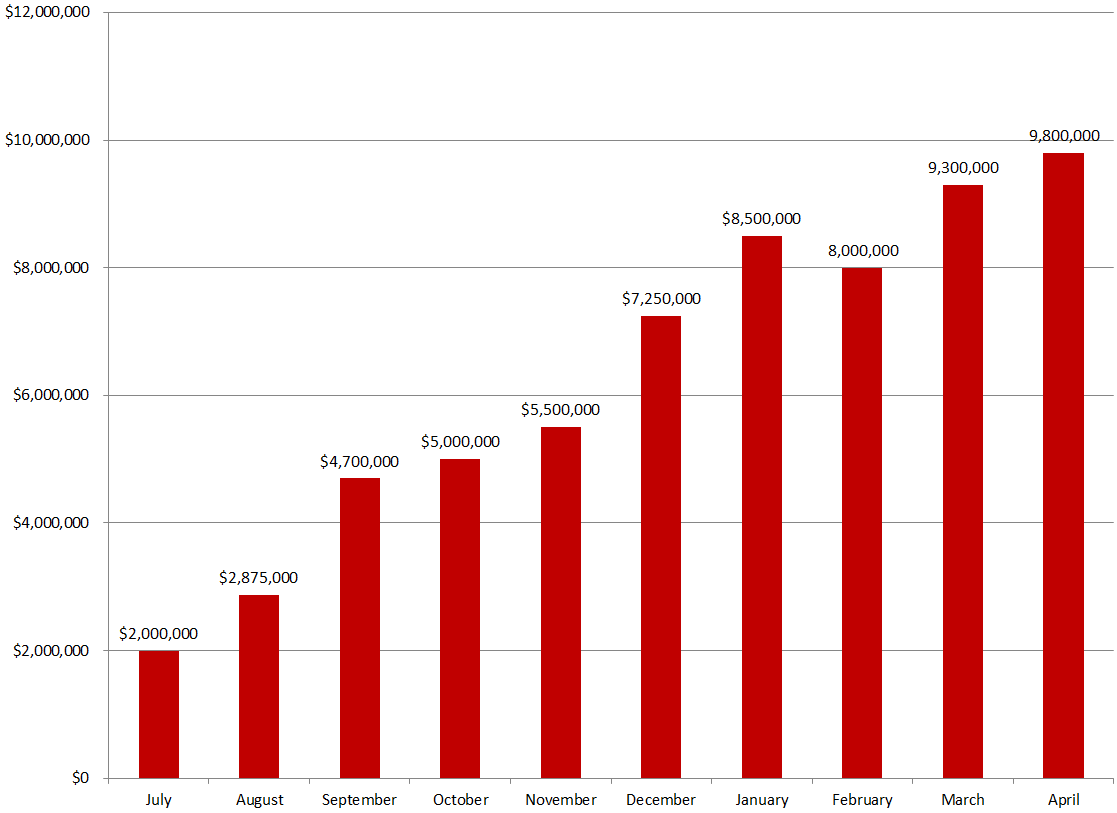
In April, 2015, Kindle Unlimited paid $1.36 per Kindle Unlimited borrow read to 10% (and all Amazon Prime borrows). Looking at the graph above, Kindle Unlimited appears to have leveled off at about $1.40. (But there is a more fascinating number, which I’ll throw out in a few paragraphs.)

$1.40 doesn’t look like much compared to $2 in the days of Amazon Prime only (i.e. no Kindle Unlimited), and if you have a book priced $2.99 or higher, $1.40 is small compared to your royalty for purchases (in most cases).

That’s not the way I look at it. I was getting few borrows when it was Amazon Prime only, and my borrows have shot way up with Kindle Unlimited (without a corresponding sacrifice in sales). I’m earning much more with $1.40 per Kindle Unlimited borrow than I was when I was receiving $2 per Prime borrow.

But the more interesting number, in my opinion, is $9,800,000.

Amazon added a whopping $6,800,000 to their initial commitment of $3,000,000, bringing the KDP Select Global Fund up to nearly $10 million for April, 2015.

KU Trends 3b

The graph above is a good sign for Kindle Unlimited readers and KDP Select authors, in my opinion.

It means that the audience for Kindle Unlimited books has grown substantially and continues to grow.

The KDP Select Global Fund is increasing significantly because there are more Kindle Unlimited subscribers and more books being borrowed and read to 10% through the program.

Amazon paid $9,800,000 in KOLL royalty shares for April, 2015. That money goes to authors who had books enrolled in KDP Select.

Many KDP Select books are benefiting from this increasing payout. Obviously, not all books are, but many are. The potential is there, and many authors are benefiting from it.

The cost is exclusivity. But here’s the question: With the KDP Select Global Fund steadily rising from $2,000,000 to $9,800,000 over the past 9 months, would your book earn more money from Kindle Unlimited than it would from other retailers. It’s always been a tough question that can vary from book to book and author to author (and can only be truly known by trying it both ways), but it seems that the pool for KDP Select books is growing (it’s increased fivefold in 9 months).

Another interesting trend involves the number of books in Kindle Unlimited (about 100,000 of those are from small traditional publishers and are not part of KDP Select):

  • There are 963,814 books in Kindle Unlimited as of May 15, 2015.
  • There were 864,164 books in Kindle Unlimited as of February 17, 2015. This number has risen 12% in 3 months.
  • 43,407 new Kindle Unlimited books have been published in the last 30 days. (That’s about the same figure from February 17.)
  • 87,910 new Kindle e-books have been published in the last 30 days. Nearly 50% are enrolling in KDP Select.
  • There are about 3,000,000 Kindle e-books in all. About one-third are in Kindle Unlimited (whereas about one-half of new releases are opting in).
  • 334,615 of the Kindle Unlimited books are considered short reads (which, by the way, go up to 100 pages). That’s 35%.
  • 13,458 of the books published in Kindle Unlimited in the last 30 days are short reads. That’s 31%. The ratio of short works entering into Kindle Unlimited is actually decreasing, since 31% is less than 35% (contrary to popular myth—we now have proof that it’s not being flooded with short books, but that the percentage of short books in Kindle Unlimited is going down).

Chris McMullen

Copyright © 2015

Chris McMullen, Author of A Detailed Guide to Self-Publishing with Amazon and Other Online Booksellers

  • Volume 1 on formatting and publishing
  • Volume 2 on marketability and marketing
  • 4-in-1 Boxed set includes both volumes and more

Follow me at WordPress, find my author page on Facebook, or connect with me through Twitter.
Comments

Click here to jump to the comments section:

https://chrismcmullen.wordpress.com/2015/05/16/what-did-kindle-unlimited-pay-for-april-2015/#comments

Kindle Unlimited—Amazon Just Paid out $8,500,000 for January, 2015

KOLL GSF Chart

KDP Select Global Fund from July, 2014 thru January, 2015


KDP SELECT GLOBAL FUND

Amazon has raised the KDP Select Global Fund significantly since the launch of Kindle Unlimited.

The monthly KDP Select Global Fund had been around $500,000 in the days of Amazon Prime, which grew to around $1,000,000 when Prime expanded to Europe.

This figure doubled to $2,000,000 with the debut of Kindle Unlimited in July, 2014, which was just a partial month.

It has grown fast since, reaching $8,500,000 in January, 2015:

  • July, 2014: $2,000,000
  • August, 2014: $2,875,000
  • September, 2014: $4,700,000
  • October, 2014: $5,000,000
  • November, 2014: $5,500,000
  • December, 2014: $7,250,000
  • January, 2015: $8,500,000

This suggests to me that the Kindle Unlimited subscriber base has grown tremendously.

Since Amazon is paying $8,500,000 in royalties through Kindle Unlimited for the month of January, 2015, this shows that this is a significant share of the digital market.

Not every book in KDP Select is benefiting from this, but very many are, which is why Amazon quotes a 95% (or higher) renewal rate in KDP Select each month. That is, most authors and publishers in KDP Select have been content enough with the program to continue their books’ enrollment.

KOLL PAYMENTS FOR KINDLE UNLIMITED

In the days when it was just Amazon Prime, the monthly KOLL payment had averaged around $2 per book.

The KOLL payment has dropped significantly compared to those days, but borrows are way up (overall).

If your sales have held steady and you’re seeing those increased borrows, this is a great combination. In this case, the drop in KOLL payments doesn’t matter. There are many authors in KDP Select who are enjoying this.

Some authors’ sales and/or borrows are declining. But if so, it may not have anything to do with Kindle Unlimited. With so many other books being released and so many other authors marketing their books, sales have a natural tendency to drop off at some point, unless you continue to deliver fresh content to the market and implement effective continued marketing of your own. Plus, after January, many books’ sales tend to decrease. It’s a seasonal trend. There are so many factors involved, it’s very hard to pinpoint a single culprit when sales turn south.

I look at two things in a recent announcement from KDP:

  • The 95% renewal rate in KDP Select shows that the vast majority of KDP Select authors are content with the program.
  • This quote: “Total earnings on titles priced $2.99 or greater are growing faster than the overall average. The same is true for titles 150+ pages in length.” It looks like many serious authors with long-term goals are thriving in KDP Select.

KOLL payments have started to level off around $1.40 per book. In January, 2015, KOLL paid $1.38 per book. Here is the trend:

  • July, 2014: $1.81
  • August, 2014: $1.54
  • September, 2014: $1.52
  • October, 2014: $1.33
  • November, 2014: $1.39
  • December, 2014: $1.43
  • January, 2015: $1.38
KOLL Chart

KOLL payments from July, 2014 thru January, 2015


Chris McMullen

Copyright © 2015

Chris McMullen, Author of A Detailed Guide to Self-Publishing with Amazon and Other Online Booksellers

  • Volume 1 on formatting and publishing
  • Volume 2 on marketability and marketing
  • 4-in-1 Boxed set includes both volumes and more

Follow me at WordPress, find my author page on Facebook, or connect with me through Twitter.

Comments

Click here to jump to the comments section:

https://chrismcmullen.wordpress.com/2015/02/16/kindle-unlimited-amazon-just-paid-out-8500000-for-january-2015/#comments

Why Do Detail Page Views Exceed Clicks (KDP Select Ads)?

DPV

WHY DO DPV’S EXCEED CLICKS?

If you place an advertisement through Amazon Marketing Services (which authors can now do through KDP Select, for example), you may notice something odd.

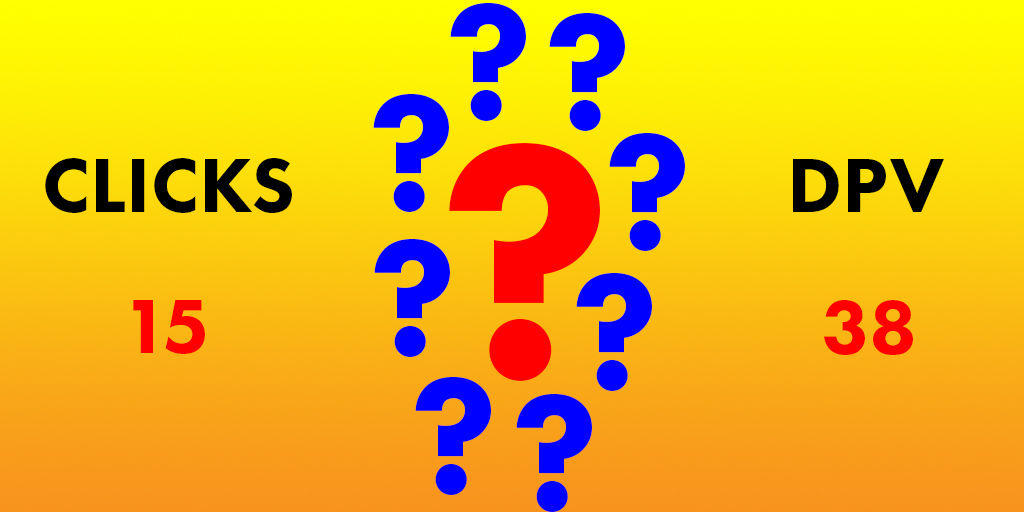
You might see many more detail page views (DPV) than clicks.

What’s the difference between a detail page view and a click?

  • CLICK: A customer clicks on your ad.
  • DETAIL PAGE VIEW (DPV): A customer views your product page after clicking on your ad, without closing the browser.

How can the number of DPV’s exceed the number of clicks?

Suppose that a customer clicks on your ad, visits your product page, checks out another book, and then returns to your product page (all without closing the browser). This will result in 1 click and 2 DPV’s. If the customer leaves your product page and returns again (without closing the browser), there will be a third DPV. And so on.

This is actually pretty common. Here are a few examples.

  • A customer checking out your book may click on one of the books on the customers-also-bought list, then return to your book later.
  • A customer checking out your book may click on one of your other books on your Author Central page, then return to the advertised book later.
  • A customer may click on the back button on the browser to finish checking out the previous page, then go forward to return to your product page.

Is this good or bad?

If you have 2-3 times as many DPV’s as clicks, I think this is a good sign.

It shows a lot of activity on your product page.

Customers are showing their interest.

So if you have a high DPV-to-click ratio, but not a high sales-to-click ratio, it’s worth studying your product page closely and thinking of how to improve it. Those DPV’s suggest that customers are interested, but something isn’t quite closing the deal. Your product page is close, but not quite.

If your DPV-to-click ratio is about 1 to 1, customers aren’t thinking much about it. If your sales-to-clicks ratio is also low, something is making customers want to check out your book, but then they’re giving up on it right away. Maybe the ad isn’t sending the right message. Reconsider your thumbnail and title.

Clicks can exceed DPV’s.

It’s also possible to have more clicks than detail page views:

  • If a customer clicks on your ad, but closes the browser or goes elsewhere before the page fully loads, you’ll get a click, but no DPV. (This click still costs you money.)
  • If a customer clicks on your ad, goes elsewhere before the page fully loads, and revisits your page after 30 minutes, you’ll get a click but not a DPV. (DPV isn’t tracked in this case because the page didn’t fully load initially.) (This click still costs you money.

Repeated clicks don’t count.

It’s nice to know that if a customer repeatedly clicks on your ad, those repeated clicks don’t count as clicks.

So you don’t have to pay extra for them.

So you don’t have to worry about a single customer seeing your ad several times, clicking on your ad each time, and racking up a nice bill for you.

How do I know this?

I emailed KDP support and hit the JACKPOT.

That’s right: the jackpot.

I’ve emailed KDP support dozens of times over the past six years, and this is by far the most thorough, thoughtful, researched, and even enthusiastic response I have ever received.

Yes, I said researched. KDP spent an extra few days researching my question to get it right.

The response included several examples clearly illustrating cases when there could be more DPV’s than clicks, and vice-versa.

Chris McMullen

Copyright © 2015

Chris McMullen, Author of A Detailed Guide to Self-Publishing with Amazon and Other Online Booksellers

  • Volume 1 on formatting and publishing
  • Volume 2 on marketability and marketing
  • 4-in-1 Boxed set includes both volumes and more

Follow me at WordPress, find my author page on Facebook, or connect with me through Twitter.

Comments

Click here to jump to the comments section:

https://chrismcmullen.wordpress.com/2015/02/11/why-do-detail-page-views-exceed-clicks-kdp-select-ads/#comments

How Your KDP Ad on Amazon Might Be Better than You Think

AMS Ad

AMAZON MARKETING SERVICES

I love that Amazon now lets indie authors advertise with Amazon Marketing Services (AMS) through KDP Select.

Think about this: Traditionally published authors can’t find a self-service, low-cost advertising option on Amazon.

But if you’re enrolled in KDP Select, you can.

How cool is that?

Anyway… If you try one of these ads, you might just get 1 click for every 1000 impressions or so, and you might get a few sales for every 100 clicks.

If you also bid high to get more impressions, you might see a small short-term return on investment (ROI).

However, things may be better than they seem—i.e. better than the sales column in your AMS ad report might suggest.

Here are 14 ways that your Amazon ad might be more effective than it seems:

  1. Non-clicked sales. Clicking on your ad isn’t the only way to reach your product page. If a customer sees your name or the title of your book, the customer might search for it later. Or the customer might see the ad on his/her pc or laptop, but get out a Kindle to search for your book (instead of clicking on your ad). Thus, you might get a couple of sales that don’t show up on your ad report.
  2. Kindle Unlimited. Customers who click on your ad might download your book through Kindle Unlimited. These won’t show on the sales column of your ad report.
  3. Audio sales. Customers who click on your ad might see your audio book linked to your Kindle product page. A few customers may prefer the audio format.
  4. Print sales. Customers who click on your ad might see your print book linked to your Kindle product page. Some customers prefer print. (I tend to sell more print books than Kindle books, so this is significant for me.)
  5. Add to cart. The customer was busy buying something else when he/she saw your ad. So after clicking on your ad, if the customer likes your book, the customer might simply add your book to his/her shopping cart and revisit your book several weeks later. If the purchase isn’t made within 14 days, the sale won’t show on your ad report.
  6. Delays. Sales reporting on the ad report can be delayed. First, there can be a payment processing delay of a few days. The ad report itself says that sales reporting may be delayed by 2-3 days. The customer might not buy the book immediately after clicking the ad, too. The ad report will allow a customer 14 days from the click date to make the purchase, and still report the sale on the ad report.
  7. Series. If your ad succeeds in selling the first book of a series, some customers will also purchase the second book, third book, etc. Each sale can potentially be several sales.
  8. Similar books. A customer who clicks on your ad might check out your other books, too. In fact, the customer might buy one of your other books instead of the one you advertised. Or the customer might purchase multiple books.
  9. Multiple books. Authors of multiple similar books have a distinct advantage. One ad might result in multiple sales. But you only see sales of the advertised product in your ad report.
  10. Future sales. A customer who reads your book today might buy more books from you in the future. Including books you haven’t even published yet. When you release your next book, each fan you add today may impact your new release.
  11. Sales rank boost. If your ad succeeds in generating any sales or Kindle Unlimited downloads, this sales rank boost has the potential to generate additional sales.
  12. Branding. Anyone who sees your ad or reads the title has learned that your book exists. The next time they see your book, this improves the chances that they will buy it. Branding has good long-term potential. Even though the thumbnails are small and the ads only show a few words, people are clicking on the ads occasionally, so there is some branding effect in play.
  13. Recommendations. Any customers who buy your book as a result of the ad and who enjoy your book may recommend it to others. This can be a very long-term effect, but if you can get recommendations, they can have a big impact on sales many months down the road.
  14. Feedback. If nothing else, the ad report gives you some data that may be useful. For example, if your sales-to-click ratio is around 1% or less, it’s a good sign that you can improve (A) the marketability of your product page, (B) the targeting of your ad, or (C) your thumbnail or title so that they better attract your target audience through the ad.

Here are a few advertising tips that I’ve learned from my preliminary data from my KDP ad campaigns:

  • Product targeting appears to be much more effective than interest targeting.
  • Try to get into the mind of your target audience. Think of the people most likely to purchase, read, and appreciate your book. Which other books and products are they very likely to be shopping for now?
  • About 50 to 150 highly relevant products can work well, if you select them wisely.
  • It’s not just the popularity of the other product, but also how receptive those readers may be to your book.
  • It may be okay to add a highly relevant movie (on DVD or Prime, for example). This might help you break free of competition for ad placement.
  • It’s presently hard to make impressions with lower bids, say around 10 cents or less. Wise product targeting can help to make impressions.
  • Bid competitiveness is showing a few signs of possibly coming down in some categories. Patience may get your better return on your investment.
  • Here’s a new KDP Select tool that appears to reward higher-priced books. With a $100 budget and pay-per-click, earning a 34-cent royalty on a 99-cent book will have a really tiny short-term ROI. That doesn’t mean this can’t be useful to advertise a lower-priced book, just that doing so carries greater risk and requires much better long-term results to be worth it.

Chris McMullen

Copyright © 2015

Chris McMullen, Author of A Detailed Guide to Self-Publishing with Amazon and Other Online Booksellers

  • Volume 1 on formatting and publishing
  • Volume 2 on marketability and marketing
  • 4-in-1 Boxed set includes both volumes and more

Follow me at WordPress, find my author page on Facebook, or connect with me through Twitter.
Comments

Click here to jump to the comments section:

https://chrismcmullen.wordpress.com/2015/02/08/how-your-kdp-ad-on-amazon-might-be-better-than-you-think/#comments

“$EN$IBLE” ADVERTISING

Sensible Advertising

Images from Shutterstock

SENSIBLE ADVERTISING

Authors can now advertise their Kindle Select books on Amazon.com.

But is it worth it?

The minimum KDP ad campaign budget is $100 and the minimum bid is 2 cents.

You can also advertise on Facebook, Twitter, or Goodreads.

Or you can advertise a promotion with BookBub, E-reader News Today, and a host of similar sites.

Will this be money well spent?

Or would it be better sitting in your pocket?

CONTENTS

  1. Temptations
  2. Advertising Goals
  3. Advertising Budget
  4. Short-term ROI Expectations
  5. Other Considerations

1. TEMPTATIONS

If you try an ad with bidding options, you may find yourself tempted to make potentially foolish decisions.

Here’s what might happen. You might place an ad with a 2-cent bid, but when you check your reports, you might see very little activity.

So you might raise your bid to 5 cents. You might see a little more activity, but still very little.

Then you might try 10 cents.

You want to see something happen, right? This is the age of instant gratification, after all.

So the natural tendency is to keep raising the bid until something happens.

And when it finally does, you might suddenly get thousands of impressions and hundreds of clicks.

And before you realize it, your $100 is all gone.

With little to show for it.

Amazon Marketing Services is new to KDP, so thousands of KDP Select authors are playing with it. Many are bidding higher and higher just to see some activity in their reports.

Also, there may be delays, stalls, or bugs in the reporting. It may not be instant feedback.

Before you make a rash decision, you want to think this through. Try to make a wise and informed decision, with specific goals in mind.

Be patient. Especially with Amazon Marketing Services, since it’s new, if you just wait days or weeks, eventually things will settle down and a lower bid will get you more impressions for your money.

Thus, waiting may get you more bang for your buck. Remember, Amazon recommends a CPC (cost-per-click) bid of 5 cents, so in the long run, lower bids are likely to make many more impressions than they appear to be making right now.

2. ADVERTISING GOALS

The first step is to identify and rank your advertising goals.

Unfortunately, most advertisements do not pay good short-term returns when it comes to books.

So if your primary goal is to make a quick buck, advertising probably isn’t the tool you’re looking for.

You might take a sizable short-term loss when you advertise.

That’s the risk you take, with the hope that other benefits will outweigh the short-term loss.

But the short-term return is also worth figuring when weighing benefits against risks. Look later in this article for help figuring this.

Here are examples of goals that you might have with your ad campaign:

  • branding your book
  • exposure for a new book, series, or author
  • help promote a short-term discount
  • landing on a hot new release or bestseller list
  • initial sales
  • improved sales rank
  • long-term sales, recommendations, reviews
  • establishing a reader base

The hope is that if you take a short-term loss with paid advertising, there will eventually be long-term gains to make up for it.

If paid advertising always returned your initial investment, everyone would do it.

Here are some of the possible long-term benefits:

BRANDING

The ad itself is likely to create impressions. These impressions help with branding.

People who see your book multiple times over a long period are more likely to recognize it. People are more likely to buy products they feel familiar with.

Branding can lead to long-term sales, sometimes several months down the line.

SALES & RECOMMENDATIONS

Advertising tends to bring very many impressions, some clicks, and few sales.

The short-term sales may seem dismal. If so, you hope that branding makes up the difference several months later.

If you have a hot promotion going on, an ad may be somewhat more successful. But then you earn less royalty on the short-term sales.

Some authors actually pay for ads to promote freebies, often hoping to help build buzz for a new book and to generate word-of-mouth recommendations and reviews from early readers.

If your ad is successful at generating sales, long-term if not short-term, eventually those sales can add to your reader base, post reviews (only a tiny percentage though), recommend your book to others, buy more books you’ve written, follow you online and buy your next book, etc.

Every follower you add may potentially buy several of your books (but your book has to really merit this).

3. ADVERTISING BUDGET

How much can you afford to invest in advertising?

You’re obviously limited by the finances you have on-hand.

But even if you have money to invest, you should also ask yourself:

How much do you currently net in monthly royalties?

It’s a lot easier for an author earning $1000 or more per month on royalties to invest 10% of that in advertising than it is for an author earning $50 per month to part with $100.

Spending a fraction of your royalties on advertising is a reasonable investment. You have something substantial to show at the end of the month even if it’s a bust.

Spending more than your monthly royalties on advertising is risky. You might face a net loss, for all your hard work to write the book.

But you’re hoping to advance from low monthly royalties to medium or high monthly royalties, right? You’re hoping that the investment will help you move on up.

So consider my next question.

Do you have compelling reason to expect significant growth in your royalties (aside from the possible benefits of advertising)?

Will you be writing more similar books? If so, are you getting some consistent sales (even if it’s a very low frequency) with your current book?

Are you presently seeing an overall trend of growth in sales over a long period of time?

Ideally, you’d like some sort of evidence to suggest that your future royalties will help cover a possible investment today.

If not, it might be worth starting out with free marketing and publishing more books, to help build consistent sales.

Once you see evidence that future royalties may be enough to warrant your advertising expense, then you’re in a better position to try it.

But there are a few authors who really do their research (comparing similar books in the beginning), who have some marketing experience, etc., and who launch their books with a bang and have the confidence that it’s going to work out. Advertising is a risk, but if you have done your homework and you have such confidence, you must decide if you an afford this risk. The worst-case scenario is that it’s a bust. Can you afford that?

What are your book expenses?

Some authors invest a large sum of money on editing, cover design, formatting, and other publishing expenses.

(Maybe I should have written a post on $en$ible publishing expenses before writing this one…)

It’s tempting to think, “I’ve already spent several hundred dollars, so what’s another $100 on top of that?”

Well, if your book will make a $2 royalty, for example, that’s an extra 50 books that you have to sell to recover your expenses.

Especially, if it’s your first book, knowing that many stand-alone books don’t sell too many copies, that’s making an already big risk even bigger.

If you have more modest expenses, you still must factor them in when setting your advertising budget.

Your goals may factor into this, too.

Some authors invest a lot of money into their books and honestly don’t care about royalties.

A few authors actually donate their royalties to charity. A few don’t need the money, write merely as a hobby, and just want the readers, however they may come.

Most authors want or need those royalties for one reason or another, and so the financial aspect is significant to them.

But if you have unique goals, that can change your perspective on setting an advertising budget. (But at least consider things like living expenses, income, retirement, etc., i.e. make sure that you can afford to invest in advertising.)

Investing a fraction of your net monthly royalty income on advertising is reasonable.

The more consistent your monthly royalties have been and the more compelling reasons you have to expect growth, the better you can afford to invest a higher percentage of your monthly royalties.

4. SHORT-TERM ROI EXPECTATIONS

Short-term return-on-investment (ROI) can sometimes be quite low for book advertising.

For this reason, it really helps if you have other strong goals besides quick sales. You might not get any extra sales from your ad, and if you do, they might be fewer than you’re hoping.

Here are two typical numbers to be aware of:

  • 0.1% ctr (click-through rate). You may average 1000 impressions per click. Some ads do better, some worse, but this is fairly common.
  • 1% closing rate. You may average 100 clicks per sale. This figure can vary quite a bit, but 1% is respectable.

So if you run an ad and it creates 100,000 impressions, for example, you might get 100 clicks and 1 sale (on average).

Ideally, if you’re investing $100 or more, you’d like to create several hundred thousand impressions so that you might receive hundreds of clicks and hopefully a few sales.

The impressions and clicks help you with branding and exposure, so the hope is that these numbers will help in the long run, even if the short-term ROI is quite low.

Or, for authors running hot promotions, trying to climb onto hot new release or bestseller lists, those few extra sales, if they can get them, may make the difference.

With KDP’s ad campaign through Amazon Marketing Services, you only pay for clicks.

In this case, if you aim for a 1% closing rate (sales divided by clicks), with a $100 budget, here is how your short-term ROI relates to your average CPC (cost-per-click) bid:

  • An average 2-cent bid gives an estimated ROI of 50 times your royalty.
  • An average 3-cent bid gives an estimated ROI of 33 times your royalty.
  • An average 4-cent bid gives an estimated ROI of 25 times your royalty.
  • An average 5-cent bid gives an estimated ROI of 20 times your royalty.
  • An average 10-cent bid gives an estimated ROI of 10 times your royalty.
  • An average 20-cent bid gives an estimated ROI of 5 times your royalty.
  • An average 50-cent bid gives an estimated ROI of 2 times your royalty.

So if your book royalty is $2, if you can achieve a 1% closing rate, you could actually break even. Not all books will achieve a 1% closing rate though.

Amazon’s recommended CPC bid is 5 cents. If your average bid is 5 cents, you earn a royalty of $2, and you achieve a 1% closing rate, your estimated short-term ROI would be about $40. That’s a $60 short-term loss, with potential long-term gains. If your ad runs its full course and you get all 2000 clicks, you might make a couple hundred thousand impressions, which may help with branding.

If you earn a higher royalty, like $3 or $4 per book, this allows you to bid somewhat higher, or you can go with the recommended bid with higher hopes for returns.

Especially, if your book normally sells on its own. If not, you’re probably less likely to see that 1% closing rate. Advertising probably isn’t the answer to, “Why isn’t my book selling?”

If you can achieve a higher closing rate, like 3% to 5%, this nets you a higher short-term ROI, or you can afford to bid more. But you won’t know what your average closing rate is until you’ve run ads and have received several hundred clicks. If you get a lower closing rate, like 0.1% to 0.5%, this will give you a much lower short-term ROI.

Bidding higher will probably help your ad make impressions faster and get clicks faster, which means that your ad will be over sooner. You also get fewer clicks overall with higher bids, which means a much lower short-term ROI.

If you have a hot short-term promotion to advertise, it might be worth bidding high enough to make all of your impressions while your book is on sale. But remember, you get fewer clicks and a much lower short-term ROI by doing so. More of your hope is on long-term dividends.

If you earn a small royalty, like 34 or 70 cents, your ROI is much less. Your ad is much more likely to have a dismal short-term ROI. But if you succeed in getting many extra sales, albeit at lower royalties, there could be some long-term benefit. Your lower price won’t necessarily net you significantly more sales, though. You really need to supplement freebies and Countdown Deals by free marketing (e.g. relevant bloggers helping to spread the word) or other directed paid marketing (like BookBub and E-reader News Today) to get the most out of a free or sale price. In this case, a KDP ad campaign should just be one of your promotional strategies.

High bids, like 20 cents and up, are very risky. These eat up your clicks faster and pay much smaller ROI’s. You really need a compelling reason to take this large short-term loss. Maybe if you have a large following, the next book in your series has good prospects of hitting the hot new release or bestseller lists, and you want to go all out for every last sale in case it makes the difference.

5. OTHER CONSIDERATIONS

There are many factors involved in advertising, including:

  • more books: The more similar books you have, the more potential benefit there is. Customers might buy more than one book.
  • current sales: Books that sell on their own are more likely to benefit from advertising. Spending money on ads isn’t likely the magic cure.
  • reviews: Do you have enough to attract readers and to minimize the risk from one bad review?
  • targeting: Advertising tends to be more effective when you reach your specific target audience. On the other hand, if your targeting is too narrow, you might not make a significant number of impressions. It pays to do some research.
  • cover: A cover that clearly signifies the genre and attracts your specific target audience (even in the tiny ad thumbnail) has a distinct advantage.
  • product page: The better your blurb and Look Inside, the better impact these will have on your closing rate.

Monitor your ad. You can pause your ad if things aren’t progressing as desired. You can even terminate your ad, if necessary. If you’re not happy with the results, try editing your ad (though not every option may be editable).

Keep an eye on your product page and on your ad stats. You might see the money vanishing rapidly without results to show for it, for example. If you catch this early on, you can at least try changing your ad up or pausing it, rather than just let your entire budget run its course.

SICK OF AD ARTICLES YET?

I’ve been fascinated with this new option to advertise KDP Select books with Amazon Marketing Services, and so I’ve now written several articles on the subject.

You’re probably sick of reading about it on my blog.

Well, don’t worry.

I have some different topics coming up. 🙂

Though eventually when I have a good statistical sample of data, I’ll probably report it. It will be a while before that day comes, however.

Chris McMullen

Copyright © 2015

Chris McMullen, Author of A Detailed Guide to Self-Publishing with Amazon and Other Online Booksellers

  • Volume 1 on formatting and publishing
  • Volume 2 on marketability and marketing
  • 4-in-1 Boxed set includes both volumes and more

Follow me at WordPress, find my author page on Facebook, or connect with me through Twitter.

Comments

Click here to jump to the comments section:

https://chrismcmullen.wordpress.com/2015/02/03/sensible-advertising/#comments

Tracking Views at Amazon—Finally..?

Image from ShutterStock.

Image from ShutterStock.

TRACKING VIEWS AT AMAZON

Don’t you wish that you could see how many people are viewing your book’s product page at Amazon?

Then you’d be able to see how good your blurb and Look Inside are at closing the deal, or how well a promotion is working.

Well, now you can get tracking data at Amazon.

Amazon marketing services is now available for books enrolled in KDP Select.

For as little as a $100 budget and bids of 2 cents, you can advertise your book on Amazon.

Visit your Bookshelf and click the link under the KDP Select column called Promote and Advertise.

When I did created an advertisement this morning, I received an approval email that said:

  • “Please allow 1 day for clicks/impressions to appear…”
  • “…and 2-3 days for detail page views to appear.”

IMPRESSIONS AT AMAZON

This will show how many impressions are made all together. That’s the number of times that your ad is shown to potential customers.

You don’t pay for impressions that don’t result in clicks. You only pay when someone clicks on your ad.

But every impression helps with branding and discovery.

CLICKS TO YOUR BOOK

Divide your budget by your bid. That’s the minimum number of clicks that you’ll get if your entire budget is used up. (If it’s not used up and you’d like it to be next time, either increase the duration or try a higher bid.)

For example, a $100 budget and 2-cent bid will give you 5000 clicks if the entire budget is used up. (First convert 2 cents to $0.02. Then divide.)

But you’ll get even more impressions. You might get tens of thousands of impressions or more for your $100.

AMAZON CLICK-THROUGH RATE

Compare your clicks to impressions to compute your click-through rate. That is, what percentage of the time do people who see your ad click on it to view your product page?

click-through rate = ( clicks / impressions ) x 100%

The smaller your click-through rate, the less effective your cover is at attracting the audience who is seeing your ad. The problem is either that the cover doesn’t appeal to your audience, or you’re not targeting your ad to your specific audience effectively.

VIEWS AND CLOSING RATE

Amazon will evidently also show how many people are viewing your detail page. This is valuable info that many authors have requested in the past, but never had access to. Now there is a way to get this data.

Compare your sales to views to compute your closing rate. This shows how good your blurb and Look Inside are at sealing the deal once traffic arrives at your product page.

closing rate = ( sales / views ) x 100%

The smaller your closing rate, the less effective your blurb and Look Inside are at selling your book.

TARGETING CUSTOMERS

Amazon Marketing Services offers two ways to target traffic:

  • target by product
  • target by interest

When you choose interest, select the category that’s the best fit for your book. The choices are fairly broad, so unfortunately you’ll also catch some people in the category who aren’t in your subcategory, but the targeting does help to deliver your ad to a narrower audience.

When you choose product, you can find similar books (or relevant products) and target your ad to customers who view those products (or perhaps who have used those products in the past). You can choose multiple products.

BOOK DATA AT AMAZON

KDP Select authors can place an advertisement and, in addition to any benefits of the ad itself, receive valuable sales information regarding their books.

It may be helpful for planning your next book.

It might help establish whether something you’ve changed recently is helping or hurting.

It might help you see how well a promotion is doing.

It’s valuable data that we didn’t have before.

Once you run more than one ad at different times, you have some basis for comparison.

However, this tool may be more effective in the beginning, while it’s still new to customers and other authors.

AMAZON MARKETING SERVICES

Advertising isn’t a band-aid for a book that doesn’t sell on its own.

Advertising isn’t a substitute for learning how to market a book effectively.

Advertising is more helpful for authors who have multiple books out and already have some positive marketing experience.

Advertising is better when you supplement it with free marketing strategies.

Advertising is more effective when it’s targeted well.

Advertising is more effective when your cover is visually attractive to your specific target audience, and when it reveals the genre or subject very clearly.

Advertising may riskier when you have few reviews.

Advertising directly on Amazon.com is potentially much more effective than marketing on Facebook, Twitter, or Goodreads. Instead of asking people to stop whatever they’re doing with their social media and hop on over to Amazon, now you’re showing your ad to people who are already shopping at Amazon.

Advertising can help you brand a name.

Advertising does carry a risk. Weigh the benefits and risks carefully. The worst-case scenario is that you’re out $100 with little to show for it. Can you afford that risk? What are you doing to supplement the advertising to help minimize this risk?

Chris McMullen

Copyright © 2015

Chris McMullen, Author of A Detailed Guide to Self-Publishing with Amazon and Other Online Booksellers

  • Volume 1 on formatting and publishing
  • Volume 2 on marketability and marketing
  • 4-in-1 Boxed set includes both volumes and more

Follow me at WordPress, find my author page on Facebook, or connect with me through Twitter.

Comments

Click here to jump to the comments section:

https://chrismcmullen.wordpress.com/2015/01/29/tracking-views-at-amazon-finally/#comments

Advertise Your Book on Amazon—New Opportunity

Background image from ShutterStock.

Background image from ShutterStock.

ADVERTISE ON AMAZON

There is a new opportunity available to advertise your book on Amazon.

https://kdp.amazon.com/help?topicId=A2DJUTY13KIH2C

How would you like to advertise your book directly on Amazon.com?

That would be cool, huh?

What if you could do this on a modest budget?

Even better!

Well, now you can:

  • minimum campaign budget is $100
  • minimum bid is 2 cents
  • pay per click

But there’s a catch:

It’s only open to KDP Select authors.

I think it’s a nice benefit for enrolling in KDP Select, on top of current benefits like Kindle Unlimited.

So if you bid 2 cents, a campaign budget of $100 can net you 5000 clicks.

Higher bids are more likely to result in advertisements being shown and result in clicks. But then you get fewer clicks for your money, also.

I like that the charge is per click. You’re not charged when people see your ad, but don’t click on it.

This helps with branding. However many clicks you get, even more people who didn’t click on your ad saw it, which helps you brand your image.

Another nice feature:

targeting

Amazon will let you target your advertisement to a specific genre, for example. This helps your ad reach a specific target audience.

Compared to advertising on Goodreads, Twitter, or Facebook, advertising on Amazon doesn’t drive traffic to leave one site and visit another. These customers are already on Amazon. That’s cool!

BOOK ADVERTISING

Advertising expenses often don’t produce immediate results for book sales. Unlike paper towels, there are millions of other books to choose from.

Some of the most effective book marketing you can do is free. If you make the most of your free marketing potential, advertising will supplement this.

The more books you have out, the more potential paid advertising has. Then someone who clicks on your ad might buy several of your books instead of just one.

But with a minimum bid of 2 cents and campaign budget of $100, advertising on Amazon isn’t too expensive of a risk. Nobody wants to throw $100 away though. (If you do, feel free to borrow my trash can.)

It’s even more important to have a compelling cover that conveys your genre clearly. This will help you get clicks with your ad.

And it’s even more important to have a great blurb and Look Inside. This will help you close the deal once you get the traffic.

And it’s even more important to have a great book, as good as you can make it. This will give you your best chances when it comes to reviews and recommendations.

Another thing that might be worth doing is waiting until you have several reviews before you advertise. You’d hate for one of your first reviews to be a real stinker shortly after paying for an advertisement.

Last tip: Consider putting your book on sale with a Countdown Deal. Then you have something more compelling than just a link to your book.

HOW TO DO IT

The book you wish to advertise must be enrolled in KDP Select.

Visit your KDP Bookshelf.

Click the Promote and Advertise link under the KDP Select column.

Click the Create an Ad Campaign button.

This will take you to Amazon Marketing Services, but it will say Return to Kindle Direct Publishing at the top of the page.

Select one of your books.

Target your ad by product or by interest.

  • By interest lets you choose one broad category. Unfortunately, it doesn’t appear to let you select a subcategory.
  • By product lets you target similar books or products on Amazon. Note that if your book already appears on the first page of the Customers Also Bought list, people viewing those books are already seeing your book. That doesn’t mean you shouldn’t include those books, especially if they’re highly relevant; the additional ad might make the difference. It’s just something to consider.

You can select multiple interests or products (but not both interests and products). I would select several similar products, but I would only select one interest.

The remaining steps should be straightforward.

If you try it, good luck. 🙂

Chris McMullen

Copyright © 2015

Chris McMullen, Author of A Detailed Guide to Self-Publishing with Amazon and Other Online Booksellers

  • Volume 1 on formatting and publishing
  • Volume 2 on marketability and marketing
  • 4-in-1 Boxed set includes both volumes and more

Follow me at WordPress, find my author page on Facebook, or connect with me through Twitter.

Comments

Click here to jump to the comments section:

https://chrismcmullen.wordpress.com/2015/01/29/advertise-your-book-on-amazon-new-opportunity/#comments

Kindle Unlimited Myths

Kindle Myths

KINDLE UNLIMITED MYTHS

There are many myths about KDP Select floating around.

We now have several months of data, including data released directly from KDP.

In some cases, these facts debunk popular myths.

Let me begin by answering a question that may be on many authors’ minds, and then I’ll get to the myths vs. facts about Kindle Unlimited.

WHAT DID KINDLE UNLIMITED PAY IN DECEMBER, 2014?

Kindle Unlimited paid $1.43 per download read to 10% in December, 2014.

This brings me to the first myth.

MYTH #1: KINDLE UNLIMITED IS GOING DOWN EVERY MONTH

Actually, it’s gone up a little the past two months.

In October, 2014, it was $1.33. It climbed up to $1.39 in November, 2014, and again to $1.43 in December, 2014.

Despite the extra holiday traffic in December—especially, the after-Christmas traffic with people who received new Kindles—the Kindle Unlimited payments went up.

I think that’s a great sign.

MYTH #2: MANY AUTHORS ARE DROPPING OUT OF KDP SELECT BECAUSE THE ROYALTIES ARE TOO LOW

Amazon released data today (January 15, 2015) that contradicts this myth.

According to Amazon’s announcement, the renewal rate for KDP Select has remained above 95% each month in 2014.

Have you heard that 25%, 50%, or even 70% of KDP Select authors are dropping out of Select? Have you heard that soon there won’t be any good books to read in Kindle Unlimited? Wrong!

Fewer than 5% are dropping out.

This also shows that the vast majority of KDP Select authors are content (at least) with the KOLL payments.

At least, many feel that the benefits of staying in outweigh the cons of leaving, or continue to wait one more month to see which way things are headed.

With another month of the KOLL payments increasing, they’re headed in a positive direction.

MYTH #3: AUTHORS ARE LOSING MONEY WITH KINDLE UNLIMITED

In an announcement released by Amazon today (January 15, 2015):

  • KDP Select authors have seen faster “a la carte sales growth” than both KDP overall and Kindle overall during the five full months of Kindle Unlimited.
  • The total royalties paid to KDP Select authors for the full five months of Kindle Unlimited “more than doubled” in comparison to the same data from 2013.

No wonder there is a 95% renewal rate.

For every author who is losing money with Kindle Unlimited, there are several others whose books are thriving in the program.

MYTH #5: KINDLE UNLIMITED FAVORS 99-CENT E-BOOKS

This myth comes from the notion that 99-cent e-books earn the same Kindle Unlimited royalty as $9.99 e-books. In fact, for a 99-cent e-book, the KOLL payment actually exceeds the list price. Imagine earning $1.43 for a 99-cent book, instead of the usual 34 cents.

The worry is that more authors will put out less effort, writing shorter and shorter books.

But wait! That doesn’t mean that Kindle Unlimited subscribers are suddenly going to start preferring e-books that reflect less effort! Most authors who write shorter e-books will discover that the shorts market isn’t easy to crack.

Here’s the FACT:

According to Amazon’s announcement today, “total earnings on titles priced $2.99 or greater are growing faster than the overall average. The same is true for titles 150+ pages in length.”

Aha! Kindle Unlimited subscribers aren’t diving down for shorter e-books after all. They’re looking for a good value, just as might be expected.

A related worry is that authors of $2.99 and higher e-books will put out of the program, so all that will be left are shorter e-books.

But here’s another FACT: There is a 95% renewal rate. With KDP Select authors seeing the fastest Kindle growth, many will be staying in the program.

MYTH #6: AMAZON DOESN’T CARE IF THE KINDLE UNLIMITED PAYMENTS GO DOWN

Back in the days where there was only Prime, the KDP Global Select Fund was around $1,000,000.

This jumped up to a few million when Kindle Unlimited came out.

In December, 2014, the KDP Global Select Fund started at $3,000,000.

Amazon added another $4,250,000 on top of this.

This brings the December, 2014 KDP Global Select Fund up to $7,250,000.

They more than doubled the three-million dollar starting value.

That’s a lot of money.

Amazon paid a huge sum of money, much more than originally announced.

Amazon did this to raise the KOLL payments up to $1.43 from November.

They could easily have dropped it down to the $1.20’s, not much lower than it had been, and this small difference would have saved Amazon a very large sum of money.

To me, this shows that Amazon wants to retain the authors who’ve remained in KDP Select, by trying to prevent the KOLL payments from dropping too low.

MYTH #7: AMAZON DOESN’T CARE ABOUT AUTHORS

I know, Amazon is first and foremost a business. The number one priority is profit, right?

But the customer is paramount toward long-term profit, and Amazon has proven itself to be focused more on long-term gains than short-term gains (sometimes to the dismay of its investors).

Amazon has also demonstrated itself to be strongly oriented toward customer satisfaction.

Amazon rolled out its red carpet to indie authors who were being rejected time and again. Amazon has thrived from this decision, and continues to do so.

Amazon pays upwards of 70% royalties to indie authors for sales.

Kindle Unlimited is benefiting indie authors. KDP Select authors are seeing faster growth than non-Select Kindle authors. Amazon released data to support this today.

In Amazon’s announcement today, they specifically mentioned great feedback that they have received from authors, and that they are considering this feedback and how to continue to improve Kindle Unlimited for both authors and readers.

Amazon needs the support of both authors and readers to make Kindle Unlimited work.

Amazon just poured $7.25 million into the KDP Global Select Fund for December to raise the KOLL payments to $1.43 per borrow. That’s a big investment in the program.

MYTH #8: AUTHORS ARE LOSING MONEY BY ENROLLING IN KDP SELECT

If your book is priced $2.99 or higher, your royalty is $2 or more (unless you have a huge delivery fee).

Some argue that if a customer borrows your book through Kindle Unlimited and you earn, say, $1.43, you’re losing money because a sale pays $2 or more.

But here’s the thing: The customer who borrowed the book probably wouldn’t have bought the book.

I’m a Kindle Unlimited subscriber myself. In the past month, I turned down several books that I was strongly considering, but which weren’t in Kindle Unlimited. If they had been in Kindle Unlimited, I would have borrowed them. But they weren’t and I passed.

There are now three main markets:

  • Customers who aren’t in Kindle Unlimited who buy Kindle e-books.
  • Customers who subscribe to Kindle Unlimited who borrow Kindle e-books.
  • Customers who buy non-Kindle e-books.

KDP Select authors reach two of these markets.

The Kindle Unlimited market is a huge potential asset for indie authors. Customers might be willing to try a book they normally wouldn’t have read because they incur no additional cost to take a chance on that book.

MYTH #9: KDP SELECT WAS BETTER WHEN IT WAS ONLY AMAZON PRIME

The KOLL payments were higher when it was only Amazon Prime. The KOLL payment was usually $2 or a little more.

But Amazon Prime customers can only borrow one free book per month.

This means that most books didn’t receive many borrows when it was only Prime.

Kindle Unlimited is paying about 30% less, presently, than in the days of only Amazon Prime.

But there are many, many more borrows through Kindle Unlimited than there ever were through Amazon Prime.

Many KDP Select books are benefiting from these additional borrows. Not everyone, of course.

But according to Amazon’s announcement today, KDP Select authors are seeing the fastest growth, and most authors are content or happy enough to renew their enrollment.

MYTH #10: KINDLE UNLIMITED DOESN’T HAVE MANY CUSTOMERS

Amazon just put $7.25 million into the KDP Select Global Fund for December, 2014.

Yet the KOLL payment was $1.43 per download read to 10%.

That’s a very large customer base. There are millions of downloads read to 10% each month.

The KDP Select Global Fund continues to rise, a sign of a growing customer base.

Chris McMullen

Copyright © 2015

Chris McMullen, Author of A Detailed Guide to Self-Publishing with Amazon and Other Online Booksellers

  • Volume 1 on formatting and publishing
  • Volume 2 on marketability and marketing
  • 4-in-1 Boxed set includes both volumes and more

Follow me at WordPress, find my author page on Facebook, or connect with me through Twitter.

Comments

Click here to jump to the comments section:

https://chrismcmullen.wordpress.com/2015/01/16/kindle-unlimited-myths/#comments

The KOLL Payment is up 6 Cents per Borrow

KU Trends 2

KINDLE UNLIMITED, NOVEMBER, 2014

For the first time since the launch of Kindle Unlimited, the KOLL payments have risen.

Only by 6¢ per borrow. But a step in the right direction.

Kindle Unlimited downloads read to 10% (and all Amazon Prime borrows) paid $1.39 per borrow in November, 2014.

KU Trends 2b

Amazon launched several new Kindles this 4th quarter, they were giving away Kindle Unlimited subscriptions early in Black Friday week, and they have an option to gift Kindle Unlimited subscriptions. All these new Kindle Unlimited subscribers will lead to many Kindle Unlimited downloads for the next 2-3 months.

This means there will be many customers reading books via Kindle Unlimited, but it also means that the payout for the KOLL Global Fund probably won’t rise significantly at least until March, 2015.

The question remains: Is it better to be in KDP Select, or out? Personally, I like seeing a large number of subscribers actively reading books in Kindle Unlimited, even if the KOLL payment has decreased somewhat from the days where it was only Amazon Prime. My sales continue to improve slightly overall each month, and the KU downloads are a sweet bonus, even at the lower royalty. Not every book is thriving in the program, but many are.

KINDLE STREET

Like Wall Street, but just for Kindle finances. (I made this up, by the way.)

We don’t care about the dow. We care about the ku.

We invest our books in the ku.

And hope to see a return on our investment.

Chris McMullen

Copyright © 2014 Chris McMullen, Author of A Detailed Guide to Self-Publishing with Amazon and Other Online Booksellers

  • Volume 1 on formatting and publishing
  • Volume 2 on marketability and marketing
  • 4-in-1 Boxed set now available for Kindle and in print (both at special introductory prices)

Follow me at WordPress, find my author page on Facebook, or connect with me through Twitter.

Comments

Click here to jump to the comments section:

https://chrismcmullen.wordpress.com/2014/12/15/the-koll-payment-is-up-6-cents-per-borrow/#comments