
Here is a great way to connect with other readers or writers. It’s presented in the context of Read Tuesday, but you can enjoy it even if Read Tuesday doesn’t interest you. 🙂
8 Ways to Support Author Buddies on a Budget
Great advice, and the first tip is a cool idea. 🙂
Followback Girl

Are you a followback girl?
If they like you, will you like them back?
If they follow you, will you reciprocate?
Are you an automatic follow?
Do you just click the follow button without even a glance?
Do you at least read the description to check them out?
Are you a selective follower?
Will they have to be your cup of tea to earn your follow?
Will your follow mean you’re in their target audience?
Are you criticized either way?
For selective follows: Why don’t you return the favor?
For automatic follows: Why don’t you make it meaningful?
New Electronic Stats Display 8000
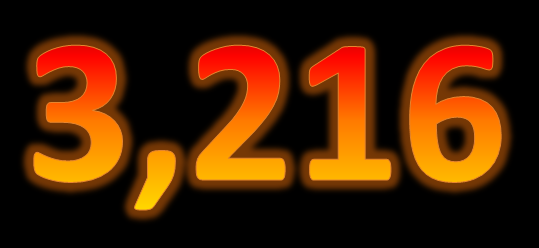
Check out the new Electronic Stats Display 8000:
- Instant real-time display.
- Works 24 hrs/day, 7 days/week.
- Includes international wireless connection.
- Display multiple stats from any website.
- Fully customizable display.
- Programmable sound effects.
- Translate to any of 36 different languages.
- Built-in energy-saving AI circuit.
- Online gaming provides odds and allows user to place bets.
- Available as mounted wall unit or portable handheld device.
- Optional holographic projector produces 3D images up to billboard size.
Features described for fully-loaded luxury model, and are optional upgrades on other models. Offer void everywhere and anywhere else prohibited by law. Please allow six to eight centuries for delivery.
Matte Finish Now Available at CreateSpace

CreateSpace now offers a matte finish cover in addition to the usual glossy cover. To learn more, visit the CreateSpace homepage and look under the login where it says “What’s New?” You’ll see a “Matte Cover Finish” note. Click the “Learn More” link. It will provide some more details, along with an example of when matte may be a good fit.
Glossy seems to be a better fit for my books, but I think I will try matte out at some point. It’s nice to have an option.
CreateSpace and Kindle Direct Publishing have been making changes lately, with free Expanded Distribution and the new Countdown Tool. I’m liking these new changes. 🙂
Chris McMullen, author of A Detailed Guide to Self-Publishing with Amazon and Other Online Booksellers, Vol. 1 (formatting/publishing) and Vol. 2 (packaging/marketing), Facebook page (it’s new), Twitter
Check out Read Tuesday (a Black Friday event just for books): website, Facebook page, Twitter
Changing Your Book Up

If you publish a book, chances are you will encounter a variety of reasons to consider making changes:
- The blurb is quite challenging to write, so we often wonder if we should try to improve it.
- It’s nearly impossible to edit a hundred thousand words and catch every single typo. Even if you edit extremely well, you usually encounter a couple of stragglers somewhere down the line.
- As we’re human, occasionally we make a big oopsie. If so, you want to fix that as quickly as possible.
- Nonfiction material can quickly become outdated. Revisions can help keep it up-to-date.
- Reviews sometimes provide suggestions that have merit. You’re thinking about applying this helpful feedback.
- An idea may occur to you, which you hadn’t thought of before. You’re wondering if it would make your book better.
Depending on the occasion, it might be best to make the change right away or it might be best to wait:
- If you have an embarrassing or significant mistake, you need to take care of that promptly.
- At Kindle, your present edition will remain available while you’re revised edition is in the process of publishing, so you don’t have to worry about losing sales in the meantime. So once your revision is ready, there is no reason to wait.
- At CreateSpace, your book will be unavailable for about 12-24 hours while your file is being reviewed. So if the changes can wait, it would be a good idea to pick a day and time where sales may be relatively slow. Study your sales rank history at AuthorCentral for help planning this, and also consider what marketing you have going on and coming soon. Sometimes your book can be back online in less than 12 hours. However, even if you make a minor change to your interior file, your cover file can get changed for the worse (even if you don’t change your cover), and it can take several days to fully resolve this. Hope for the best, but plan for the worst-case scenario.
- Most things, including your blurb, author photo, biography, and book files probably shouldn’t be changed when sales are going well. If sales start to drop off, that may be a better time to change things up and see if they help or hurt.
I’ve revised several of my books and blurbs in 2013 (and I’m still not finished with it). For me, it has been a year of revisions. I have a few projects that I wanted to complete in 2013, but which I have yet to begin, because I have spent so much time making revisions.
It started with one of my math workbooks. I had a request from a parent that would help one of my math workbooks better meet the needs of parents, so I devoted some time toward this. At about the same time, I also updated a couple of the covers of my math workbooks. Those I was able to improve without making the cover look significantly different. (I have a couple of other math workbooks that I’d like to give a makeover, but I haven’t because I don’t want anyone to accidentally buy the same book twice.)
Next, I made numerous revisions to my conceptual chemistry book. I completely revised thousands of symbols that were originally typeset as equations, realizing that they would format better as text with superscripts and subscripts. This was extremely time-consuming and took several edits. I have about 40 different versions of the eBook file, and dozens more of the paperback editions. I’ve never edited anything this much before, and hope to avoid such extensive editing in the future.
I’ve updated my self-publishing books a few times because every time I make a revision, something new seems to come out. My original (i.e. 2009) self-publishing book needs a major overhaul. I’ve been wanting to do this for a couple of years, but it needs so much work, I generally put it on the backburner and work on something else. I plan to finally do this by the year’s end.
Presently, I’m adding indexes to my new (i.e. 2012/2013) self-publishing books (i.e. Volumes 1 and 2 of the “Detailed Guide”). It’s amazing how much work is involved in making a thorough index. And it’s thorough; it may add another 20 pages (with two columns) to the book. I hope to have the index for Volume 1 finished today or tomorrow. Then I have a list of revisions to make, like mentioning the new Countdown Deal, but this should be quick and painless.
I’ll be combining Volumes 1 and 2 into an omnibus edition. I hope to have it out by Read Tuesday. Then I can get back to the major overhaul of my original self-publishing book.
I have some other minor revisions that I’ve made (correcting a few typos that I’ve discovered here and there), and a couple of covers that have some printing variations that could use a fix.
I’ve changed many of my blurbs extensively this year. In most cases, this had a very significant improvement on sales, often immediately. It’s amazing what boldface, italics, bulleted lists, and splitting a long paragraph up into shorter paragraphs can do.
How about you? Have you had any fun with revisions this year?
Chris McMullen, author of A Detailed Guide to Self-Publishing with Amazon and Other Online Booksellers, Vol. 1 (formatting/publishing) and Vol. 2 (packaging/marketing), Facebook page, Twitter
Check out Read Tuesday (a Black Friday event just for books): website, Facebook page, Twitter
The Publicity Paradox

Do you remember the days when you first applied for a job? Scouring the want ads, preparing resumes and cover letters, going to job interviews.
It seemed like everybody wanted you to have experience. The only problem was that you didn’t have any. You may have thought, “How will I ever get experience if I need experience just to get hired?”
Publicity suffers from a similar seeming paradox: You may feel that publishers, agents, publicists, editors, bookstores, reviewers, and even the media want you to have publicity before they will help you get more publicity. That’s great if you’re a celebrity.
Breaking through as a new author is a challenge. You’re an unknown. There are too many uncertainties. How will people react to your storytelling, characterization, and writing? How good is your idea? How will you handle the pressure? How effectively will your market your book? How well will you follow through with your commitments? How much help do you need? How professional or amateurish are you? How much do you need to learn about writing, editing, formatting, marketing, publicizing, social media, and making connections? And most importantly, how will you go from being a nobody to becoming an author with much publicity? Ah, if you only had that publicity (among your target audience) to begin with, that would help to make the risk so much more worthwhile.
How do you get publicity when you don’t have it to begin with?
If you had publicity, it would lend you credibility as an author; it would lend your book credibility, too.
If you credibility, it would help you gain publicity.
If you could lay an egg, you could make a chicken out of it.
If you could make a chicken, it could lay an egg for you.
It’s like you’re on a deserted island with no chickens or eggs, but you desperately need one or the other.
Baaak! Baak, baak, baaak!
I see a similar hurdle for Read Tuesday, a Black Friday type of event just for books.
If we had authors with more name recognition, it would greatly improve the publicity that we could receive from the media, internal promotions, paid advertisements, etc.
If we had more publicity, it would help us attract authors with greater name recognition.
However, Read Tuesday has a big advantage. There are many indie authors who are experiencing the challenges of marketing their books firsthand who have been very supportive of the Read Tuesday event. This has helped to give Read Tuesday much initial support, and we are fortunate to have the participation of some authors who have achieved some modest levels of success (e.g. top books in their categories at one time, or ranking at around a thousand on Amazon for a limited time in paid sales). We also have a couple of small publishers who will be participating.
(We are fortunate to have every author who has agreed to participate, no matter how big or small—everybody is vital to our success, all participation is valuable, and each author is much appreciated. I wish for every author to have a successful Read Tuesday.)
Read Tuesday also has something to offer. An author with name recognition could gain increased exposure from the Read Tuesday promotional efforts, as the Read Tuesday publicity and promotions would feature this author’s name.
On the other hand, would the author who has risen to the top want to come back down and play with the small fish? Would he or she remember his or her roots? Would he or she support his or her fellow indie authors? Surely, it’s much easier to say what you would do if you get there than it is to do it when you’re sitting at the top.
The thing is, all indies have the same advantage that Read Tuesday has. There is a very large readership that supports indie authors. Why? Because there are hundreds of thousands of indie authors and hundreds of indie publishers, and their friends, family members, acquaintances, and coworkers raise this number to the millions.
Although some people try to paint a poor image of self-publishing, there are millions of people who support it. “This book was published with CreateSpace, was it? My niece published a book through them.” The books that have serious issues aren’t hurting anyone, while the large number of very good indie books and the growing number of successful indie authors show that indie publishing has much potential.
Ultimately, what the reader wants is a professional book. Whether or not the book is traditionally or indie published is secondary. A book that looks professional, pleases the target audience, and is discovered by the target audience can gain much support.
Read Tuesday also has the opportunity to help indie authors promote their own books. The event itself is far more popular than any single participating author. By promoting Read Tuesday in addition to the author’s own book, Read Tuesday has the potential to help authors market their books.
It can be a win-win situation for any author, tiny name or big name. Every author’s participation helps to improve the credibility and success of the event, and the event can help any author promote his or her own book in conjunction with the event.
Back to the publicity paradox. What you have to do to break out of the paradox is start small, work hard, be wise, be patient, market effectively and diligently, keep writing, and spread outward.
You gradually build a following, increase your number of connections, gain a little exposure, and build a little publicity. Continue writing and you’ll have a few books out.
The better your books are from cover to cover, the more they will help you grow your following, connections, exposure, and publicity. The better your marketing efforts, the more they will help you grow your sales.
Eventually, you may achieve some small measure of credibility and publicity. Once you finally get your foot in the door, you have the chance to run with it. Once you have a little credibility, it will help you gain publicity, and once you have a little publicity (with your specific target audience), it will lend you credibility.
Chris McMullen, author of A Detailed Guide to Self-Publishing with Amazon and Other Online Booksellers, Vol. 1 (formatting/publishing) and Vol. 2 (packaging/marketing), Facebook, Twitter
Can You Be Jealous of Your Own Idea?

I’ve been looking at stats… which, of course, is a bad idea, and I advise against it… but it’s much easier to formulate this advice than it is to take it.
Comparing your own stats to what others have done is another bad idea… but it’s only natural to wonder… yet the better thing to do is to compare your current self to your former self.
What I’ve done is somewhat different. I’m not comparing myself to someone else.
Specifically, I’ve been comparing the stats for Read Tuesday to those of my own. (As you may have heard, Read Tuesday will be a Black Friday type of event just for books.) Bear in mind that Read Tuesday was only born about a month ago.
- 850 following Read Tuesday vs. 1200 following Chris McMullen.
- 300 Twitter followers @ReadTuesday vs. 100 @ChrisDMcMullen.
- 550 Facebook page likes of Read Tuesday vs. 17 for Chris McMullen.
So, I’m wondering, is it possible to be jealous of your own idea?
Should I be worried about developing a split personality?
It’s not just the stats, either. Read Tuesday has the professional banner, a nice press room, a cool catalog, more pages, and a great deal of support.
My blog wants to be like Read Tuesday when it grows up. 🙂
Okay, it’s really all in jest; I’m not serious about this.
The support for Read Tuesday has been amazing, and I greatly appreciate it. I suspect that everyone involved in Read Tuesday, including readers and authors, greatly appreciates all the support, too. It’s what motivates me to put my time and effort into it. I feel far more comfortable promoting Read Tuesday than I do promoting my own books, especially since Read Tuesday can benefit a large number of people.
Try not to be jealous of anyone or anything, especially of yourself, and enjoy your weekend. 🙂
Quick Workaround For The New WordPress Reader
I was planning to post an update about this, but I can’t make it any simpler or clearer than Misha has put it. The forum on issues with the new Reader is now 8 pages long (http://en.forums.wordpress.com/topic/reader-changed/page/8?replies=147).

Tired of having to open two different pages to get to blogs that you want to read in the new WordPress reader? Last night I happened upon a way to go directly to the blog without going through the pop-up first.
So far this seems to be working with all the blogs that I’ve tried.
Build an Effective Author Website + Press Release (2-in-1 Post)

Free author resources at the Build Book Buzz website: http://www.buildbookbuzz.com.
Today I will show you a highly instructive example of how to build an effective author website. It’s actually the website for a former publicist, so it’s no surprise that the website excels at attracting the target audience.
We can learn a lot about how to attract our own traffic by studying the many cool features on this website. Also, there is an abundance of free content on this website, like how to prepare and distribute a press release to create book publicity.
In this way, we’ll learn two things at once:
- how to attract your target audience through a website
- how to prepare and distribute a press release
The website is called Build Book Buzz. This is the website that former publicist Sandra Beckwith uses to attract her target audience—authors who need help with book publicity (both traditionally published and indies). She no longer provides book publicity services to authors, but now helps many authors save thousands of $$ by teaching them how to do it themselves.
I will describe various features of her website, showing how they help to attract her target audience. This will be instructive if you check these features out as I describe them. Try to think of ways that you might be able to utilize similar features to attract your target audience.
Here is the link to her website: http://buildbookbuzz.com. Check it out.
Tip #1: The website name is geared toward the content, not the author. You know what the content is about instantly.
Tip #2: The homepage identifies the target audience and attracts their interest immediately. Notice how the website doesn’t mention who is offering this content (i.e. you don’t learn that it’s a former publicist’s website or who the former publicist is) until further down the page.
Tip #3: Nothing is for sale on the homepage. The homepage is geared around free content relevant for the target audience. It doesn’t look like an advertisement for a book, it doesn’t look like a fan page or biographical record, and it doesn’t look like a blog. Valuable free content that will interest the target audience is what will attract your audience to your website.
Sandra does have books and services that she sells, but none of these appear on her homepage. Think about this.
Tip #4: Visual branding. Study the images. The images aren’t the same, but most follow a similar blue, yellow/gold, and white theme, and feature a picture (not always the same) of an open book. Making the images slightly different helps you see that it’s not the same image, so you don’t ignore it. Having them all uniformly styled helps with the visual branding, and shows you that you’re clearly on the same website. Notice that they follow the three-color rule. The cover images look 3D, which helps to make a good visual impression. The information in the booklets is clear from the keywords that stand out in the title.
Tip #5: The homepage offers a free booklet. The content will interest the target audience. The offer appears first at the top to attract interest, and is repeated at the bottom so if you’re sold when you get there, you don’t have to scroll back up to the top.
Tip #6: The free booklet offer is a clever way to build an audience for an email newsletter. This helps to populate an email newsletter database (note that you must provide an unsubscribe option).
This is worth considering:
- How do you get an audience for a newsletter? Offer a free booklet to sign up.
- How do you get your target audience in the email list? Make a booklet that has content relevant for your target audience.
- How do you get your audience to discover your booklet? As part of a content-rich website geared toward your target audience.
Tip #7: I recommend signing up for the email newsletter. (I did.) Why? Two reasons:
- The emails you receive will provide a sample of how to use an email newsletter effectively. Although your content will be much different, there is much to learn here.
- If you have a book that you’re trying to market, this content is relevant to you.
Tip #8: The website is easy to read. There isn’t a busy, distracting background. There is effective use of color with the text.
Tip #9: Free content. See the Tips page (each page can be found by clicking on the index at the top of the website). There are a variety of free PDF files of interest to the target audience. It’s a content-rich website, and much of it is free. This attracts the target audience.
Tip #10: Check out the PDF files on the Tips page. I highly recommend these in particular:
- See the tips for writing a press release (book announcement). These are invaluable. A press release is critical for news publicity, and has a specific formula for its preparation.
- Also see the tips for writing a tip sheet. Like the press release, this is something you need to help create news for your book.
The other tips on the Tips page are also worth exploring.
Tip #11: There is a blog on this website, but it really functions primarily as an author website, and the blog is just one of many components; it’s definitely not a website that was built around a blog. The blog, like the rest of the website, is content rich and free. You can probably find a lot of valuable information here.
Tip #12: Let’s jump ahead to the Press Room page. When you prepare the press release for the news about the publication of your book (if you haven’t already done so, you want to do this), you should add a Press Room page to your website.
Study the two press release examples on this page. They show you how to structure and format a press release. When you study the tips for how to write a press release, you should also re-read these two examples. This page also shows you how to format a Press Room page.
Tip #13: Check out Sandra Beckwith’s e-book, Get Your Book in the News. This is a detailed guide that spells out the formula for how to prepare a press release. I bought a copy, read it, and relied heavily upon it to write my press release for Read Tuesday. I recommend it.
Tip #14: Finally, check out the other pages. There are a couple of books and services offered that aren’t free. Note that there is an abundance of free content, but also some paid content. The paid content is different from the free content. Also, the free content is complete. It’s not a free sample; it’s free content.
There is ample free content, so you don’t feel disappointed or frustrated. If you don’t buy anything, you still feel that the website was highly useful.
The free content is very good. This gives you the sense of trust that you need before moving onto the paid content. The taste of the free content makes you consider the paid content. Note that the paid content also has a satisfaction guarantee.
I recommend that you take advantage of the free content on the Build Book Buzz website. There are a lot of valuable, yet free, resources there.
I was not asked to write this post. I was not asked to promote the Build Book Buzz website or any of its goods or services. I discovered this website, found much of the material useful, and thought it would be handy to share it. I did contact Sandra Beckwith to let her know that I would be writing this post.
I hope you found something useful. 🙂
Sandra Beckwith is a former national award-winning publicist who now teaches authors how to promote and publicize their books. Get free tips and subscribe to her complimentary Build Book Buzz e-zine at http://buildbookbuzz.com. Connect with her on Twitter, Google+, LinkedIn, and Facebook.
Chris McMullen, author of A Detailed Guide to Self-Publishing with Amazon and Other Online Booksellers, Vol. 1 (formatting/publishing) and Vol. 2 (packaging/marketing), Twitter, Facebook
Learn more about Read Tuesday, a Black Friday type of event just for books: website, Twitter, Facebook
 chrismcmullen