What Writers Can Learn from Reading

Reading is a valuable hobby for the writer, as it provides numerous benefits:

  • Periodic reading of classics can help improve writing skills. Grammar, proper word choice, structure, and word flow tend to come a little more naturally. The current read may unconsciously influence the writer’s style a little, but the pros probably outweigh the cons. My dad (with a literature degree) knew someone who couldn’t pass an English test. After my dad recommended that he read some classics, instead of study guides, he actually passed the test next time. This may be an exceptional case, but there are many who advocate the benefits that reading classics has to offer.
  • Reading top sellers in the genre can be a valuable form of research. Think about how the book became popular – especially, if the author didn’t have a big name when the book was first published. Study the storyline, characterization, writing style, organization, and anything that might attract readers. Strive to find out what made the book successful. Don’t copy the same ideas; readers may not respond well to this. Rather, try to find general ideas that can be applied to your own writing, without doing exactly the same thing. For example, don’t create similar characters; instead, discover how the author made those characters so memorable, and learn how to apply it to make your own unique characters just as memorable. Consider what the book doesn’t do. This is important because some of the things that top sellers don’t do may have a tendency to deter sales. Each genre has some unspoken rules that can significantly affect sales and reviews.
  • A writer can see what the latest trends are, especially in the author’s genre. Following the trends may or may not be the best thing, but it’s important to be aware of what’s going on. The expectations of the target audience always merit consideration. If a new release is significantly different than most other new releases, for example, it might be desirable to make this clear in the blurb; maybe it will be a good thing, and maybe not, but readers are more likely not to be upset this way. If for no other reason, a fan might ask an author why he or she didn’t follow a popular trend. The author will look a little foolish if he or she is unaware of the trend.
  • Practice thinking from the reader’s perspective. An author writes a book from his or her own perspective. However, the reader’s perspective (more precisely, the general reaction from the target audience) is ultimately much more valuable to the book’s marketability than the writer’s perspective. Think about what’s important to you when you’re buying and reading books. Try to wear your reading shoes when you analyze your story, writing, characterization, style, formatting, cover, blurb, and even your marketing. The more you read, the more you can relate to this perspective, and the better your chances of looking at your own book critically. It’s no substitute for the valuable resource of external opinions, but it will prove valuable, since ultimately you have to make decisions about your book even if you do receive input or help.
  • See first-hand that even the most popular authors receive criticism. No book pleases every reader. Books with hundreds of reviews have some awful ones, even if the average star rating is very high. Seeing this for yourself may help you better learn to deal with criticism.
  • Become more familiar with the buying process. This can help you with your own marketing. How do you buy books? What keywords do you use in online searches? Do you browse thumbnails? Do covers play an important role when you shop? What effect does the blurb have on you? What kinds of covers appeal to you? Study the blurbs that sell books to you to learn what they did successfully. Do you check out the Look Inside? If so, what do you look for? What price range do you look for? Which reviews tend to influence you? Do you review books? What kinds of marketing tend to influence you? Explore the author’s marketing pages and try to learn some tricks of the trade. There is much that can be learned from the buying process.

Chris McMullen, author of A Detailed Guide to Self-Publishing with Amazon and Other Online Booksellers, Vol. 1 (formatting/publishing) and Vol. 2 (packaging/marketing)

Which Part of the Book Is Best?

Book Play Pic

COVER: I’m the best. Without me, they wouldn’t even check the book out.

STORY: Cover, you’re just the good looks. I’m the brains.

BLURB: Nobody will see your brains until I convince them to look inside.

PRICE: They won’t see how the story turns out until I show them what a great value the book is.

FORMATTING: My excellent design is what makes it such a great value.

CHARACTERIZATION: The memorable characters generate future sales through reviews, recommendations, and referrals. I draw out the reader’s emotions.

EDITING: Those would be bad reviews if not for me!

MARKETING: I created the buzz for this book, and I generated sales and reviews.

COPYRIGHT: You’re all wrong. I’m best.

BLURB: How the deuce are you best? Nobody even reads the stinkin’ copyright page.

Everyone but Copyright laughs.

COPYRIGHT: If not for my copyright statement, everyone would be getting this book for free. And if not for my fictional works disclaimer, we’d be getting our rear ends sued. That’s how!

STORY and CHARACTERIZATION: Get rid of us, and nobody would want the book for free. You wouldn’t be able to pay people to take the book.

CHARACTERIZATION: Besides, there isn’t anyone – living or not – fantastic enough to be confused with a character in this book.

EDITING: You weren’t so fantastic in the first draft.

COVER: I could have sold that first draft.

MARKETING: No, I could have sold it.

STORY: Only because the story is so amazing.

COVER: Who’s going to read the story if nobody checks out the book? Huh? Answer me that.

MARKETING: Not to worry. I have it covered.

COVER: Really? What if I were the ugliest cover anyone ever laid eyes on? Or what if I looked like a perfect cover for a completely different genre? Would you still sell me then? Huh?

STORY: Readers would rather have a great story than a great cover.

COVER: But they will judge how good the story will be based on how great I look. The truth hurts, doesn’t it?

BLURB: Even if the cover is amazing, they won’t check out the book until I capture their interest.

FORMATTING and EDITING: And they would shut the book quickly if not for us.

STORY: Or if I didn’t engage the reader right off the bat. Look, Cover and Blurb, you only have to engage the reader’s interest for a few seconds. I have to entertain the reader for several hours straight.

VOICE: I have you all beat.

PRICE: Who are you?

AUTHOR PAGE: I’m the about the author section.

Everybody but Author Page laughs.

STORY: Nobody even gets to the about the author section until the book is finished. How can you be the best?

AUTHOR PAGE: Because without the author, this book wouldn’t even exist in the first place.

FORMATTING: You’re not the author. You’re just a page about the author.

AUTHOR PAGE: I also generate future sales by sending fans to the blog, social media pages, and fan page.

MARKETING: You can thank yours truly for those pages.

COVER: Much of that marketing features a picture of me. My image makes the book marketable. I’m the brand.

CLIMAX: Excuse me.

BLURB: Yes…?

CLIMAX: I’m what every reader wants. They yearn for me. They read hundreds of pages just to get me. The closer they get, the more they want it. I give them everything their hearts desire. Any reader will tell you that I’m the best part of the book.

STORY: You!? You’re not even a whole page. They read me for several hours, and you just for a few seconds. Why, if not for me, they would never reach the climax.

ENDING: It’s not the climax they’re after. It’s the ending. They want happiness. They want all the loose ends to be tied. I make the readers happy. I make them come back for more in the sequel. I make them recommend the book to others.

COVER: Look! Someone’s coming.

BLURB: Places, everyone!

INTRODUCTION: It’s so nice to meet you.

Chris McMullen, author of A Detailed Guide to Self-Publishing with Amazon and Other Online Booksellers, Vol. 1 (formatting/publishing) and Vol. 2 (packaging/marketing)
The Writer’s Enemy

Authors share a common enemy.

This evil entity can affect every aspect of a book, from the writing to the marketing.

It starts out as just a tiny presence, seemingly innocuous.

Then it grows gradually.

Before the writer realizes it, this enemy becomes ominous.

It creates delays in the writing… hinders investment in cover design and editing… and destroys marketing effectiveness.

What is this evil monster?

It’s doubt.

When you doubt that readers will enjoy the story, it’s really hard to finish it… to put a full effort into it… to edit it well… to invest in a nice cover… to market the book diligently.

When you doubt your ability to market the book, you inhibit your own marketing efforts. Your lack of confidence shows through, creating doubt in the buyer’s mind. If you don’t believe in your book, why should customers?

Believe in your book to keep yourself motivated. Motivated to write, and motivated to market.

Become confident in your ability to write and market. Let your confidence show through. Let your passion for your writing show through in your marketing.

But don’t overdo it. Overconfidence can be a sales killer, and can make it difficult to handle criticism.

A little doubt can serve a useful purpose. But balance it with confidence so it doesn’t grow.

A little doubt can make you research the idea to see if it’s worth pursuing. A little doubt can make you consider an alternative. Make an informed decision and then be confident with it. A little doubt can make you edit yet again. A little doubt can make you compare your cover to those of top sellers. A little doubt can make you research other marketing ideas, just in case there is something better that you might be doing.

If you need to become more confident, you can try to build confidence in steps. A little feedback can help. Start with people who are likely to be supportive, and whose advice is likely to be helpful. Widen your audience, in steps, until you gain the confidence you need. Learn how to deal with criticism. Take a break after you receive it. Consider it another day. If it has merit and is something you are willing to do, implement it; if not, let it go. Be confident with your decision.

Chris McMullen, author of A Detailed Guide to Self-Publishing with Amazon and Other Online Booksellers, Vol. 1 (formatting/publishing) and Vol. 2 (packaging/marketing)

Authors: How about a Mission Statement?

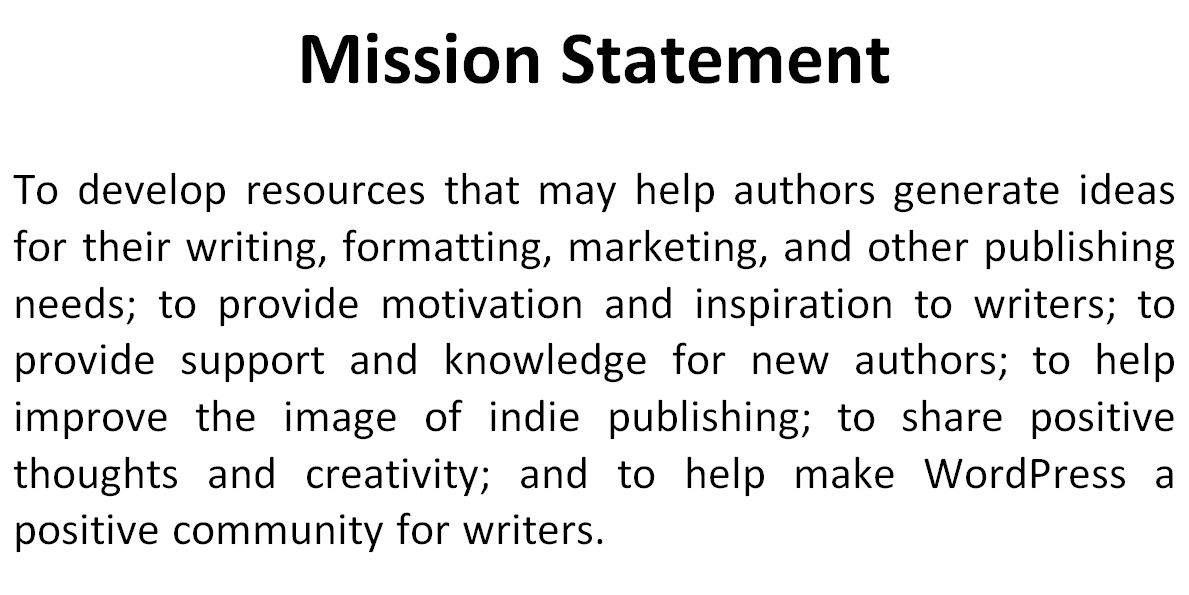
Mission Statement Pic

Companies have mission statements. It’s a short paragraph that says what the company is all about.

Writing is a business. Even if you write for the love of writing, as most writers do, selling books is still a business activity.

So should an author have a mission statement?

Here are a few possible benefits:

  • Seeing and reading it every once in a while can help you focus on your main goals. What really drives you to write? It can help keep you from losing sight of this.
  • You can use it as a motivator. A few aspects of the writing business can occasionally discourage an author. When you’re feeling down, read your mission statement to remind yourself of some pros that may outweigh any cons.
  • Show that you’re human. Fans and potential customers who see your mission statement might notice your passion for what you do – i.e. it’s not about the money. They might see what really drives you.

Search for mission statements that companies write to get a feel for what a mission statement looks like and to help generate some ideas. Obviously, don’t plagiarize their mission statements; write your own statement in your own unique words. Just browse their mission statements to see some options and to get a feel for it.

Think about what really drives you to write. What are you really striving to accomplish through your writing?

What do you do with your mission statement after you write one?

  • At the very least, keep it handy – someplace where you will see it occasionally to remind yourself what your writing is all about.
  • You could add it to your website(s).
  • Should you include it in your books? You can. You could put it in your copyright page, about the author page, or anywhere else – it’s your book. Realize that including the words “Mission Statement” is optional. You probably don’t see mission statements explicitly declared in books unless the publisher chooses to include it somewhere. However, there are many authors or publishers who somewhere in the front or back matter do make some note that could very well be part of a mission statement.

If you publish with your own imprint, so that you look like a real publisher, then you can include a mission statement for the publisher – instead of the author.

Chris McMullen, author of A Detailed Guide to Self-Publishing with Amazon and Other Online Booksellers, Vol. 1 (formatting/publishing) and Vol. 2 (packaging/marketing)

A WordPress Glitch Made Some Of Their Users Highly Concerned

In case you noticed a drastic drop in your followers today, you may want to check this out. 🙂

…Psst… (-: SMILE! :-) …Pass it along…

Smile Pic

SMILE!

Cyberbullying rap, verse or poem…anyone???

All you poets out there… Here’s a call for a poem of support. 🙂

Oliana's avatarTraces of the Soul

li-samsung-7171Now this is a weird request. I waited until the candle vigil ofWorld Suicide Prevention Day,  passed as I wanted to keep that post on my front page.

I am asking if anyone would like to share a jingle, a rap or a short poem on cyberbullying. At my work we are preparing for our regular newsletter each month and the themes vary. September was anxiety and back to school ( which I was even interviewed by the Montreal Gazette!). October is dating (probably touching violence to promote awareness on unhealthy relationships) and November is Cyberbullying. We had a teleconference meeting yesterday and ME being the only one not in that Toronto office opened my mouth…again.

My brainstorming offering was how youths need to be careful not to “click Like or share” too much otherwise it would go viral. So the viral and clicking seemed to interest…

View original post 362 more words

Stop Author Abuse!

Here is a petition to put the GOOD in Goodreads. It’s worth reading the short petition letter, where it talks about authors wanting to add beauty to the world. Wouldn’t the world be a better place if the spite weren’t encouraged, or was at least discouraged? Why can’t people leave 1- or 2-star reviews for books that they read, but didn’t like, without including spitefulness? The big question is whether you, as an author, will unite with other authors and take a small stand against this, by signing the petition, commenting, or reblogging. Will fear of the troll keep you from taking this stand? It’s a challenging question to ask yourself.

BookChick's avatarThe BookChick

http://www.rockofthecoast.com/razor/wp-content/uploads/2012/01/Internet_Troll1.jpgI am making this post as a public service announcement. I just want to encourage all of my fellow readers and bloggers who are Goodreads members to disengage from attacking authors on the site. In the past couple of days, I have seen several Facebook posts by authors of different genres who have mentioned being attacked by readers. ‘Readers’ are one-starring pre-released books or dive bombing every book the author has ever written with one-star reviews. Why? Because these ‘readers’ feel as if the author has made some reprehensible infraction against the world of literature as a whole *eye roll*. I know…dramatic, right? But sadly, it’s true. The internet trolls have now taken up residence on Goodreads. They are pollinating the site with their vitriol against authors and fellow readers who might support the author or their book(s). At some point, we as a community of readers and authors…

View original post 578 more words

Did You See These Funny Reviews Featured on Amazon?

Did you notice the new advertisement for funny reviews at Amazon? On the homepage, there is an ad that says, “You Guys Are Really Funny.” It’s not an external ad; it links to an Amazon page. The page features 10 different products (only the last one is a book). Each has 3 funny customer reviews.

If you haven’t seen these funny reviews, you should check them out:

https://www.amazon.com/gp/feature.html?docId=1001250201

They are pretty hilarious.

Why did Amazon do this?

  • Perhaps to share something funny and put customers in a good mood.
  • Maybe to help try to improve the perception of customer reviews.
  • Possibly to encourage customers to write product reviews – showing that you can be creative and have fun with it.
  • It could be to generate more reviews of products other than books, since 9 out of 10 of the products featured weren’t books.
  • There might not be just one reason. Or it could just be the first point and we shouldn’t overanalyze this.

Regardless of the motive, this advertisement for funny reviews could have any of these effects. None of which would be a bad thing, really.

In the spirit of these reviews, maybe the real reason is to get more guys to buy products on Amazon, hoping the products will help them with the subject of women. 🙂

Chris McMullen, author of A Detailed Guide to Self-Publishing with Amazon and Other Online Booksellers, Vol. 1 (formatting/publishing) and Vol. 2 (packaging/marketing)

Low Reader

Low Reader


Low Reader Pic


Driving through town in my bookmobile,

With pages of graffiti on the sides,

Telling my story for all to read.


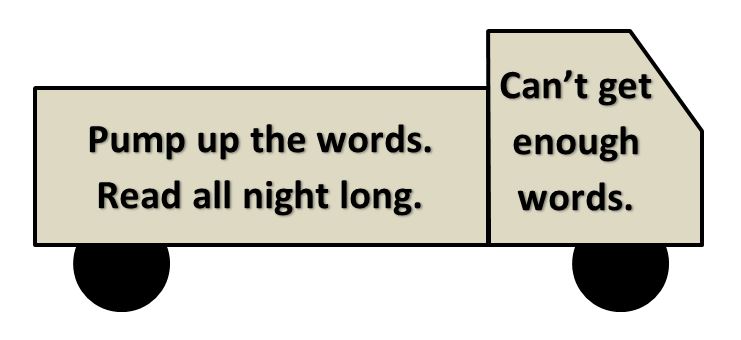
Pump up the words!

Pump up the words!


Big display screen on the back window,

Flashing words in very large letters,

Helping to spread literacy.


How slow can you go?

How slow can you go?


Crawling through town at a snail’s pace,

So everyone can read my bookmobile,

Before the words pass out of sight.


Read all night long.

Read all night long.


The graffiti glows in the dark,

Allowing people to read anytime,

Lighting up the night with words.


Can’t get enough words!

Can’t get enough words!


(c) 2013 Chris McMullen