An easy way to sell more books

Simple & compelling.

Nicholas C. Rossis's avatarNicholas C. Rossis

Effrosyni Moschoudi was the very first one to suggest to me this little trick, and I have since used it with all my books. Now, Jonathan Gunson has written a great post with the same easy way to sell more books, as a comment on a presentation by Goodreads CEO Otis Chandler.

In a survey of Goodreads’ 15 million strong membership, he found that the main driver of eBook purchases was, unsurprisingly, ‘referral by a friend’.  But when a follow-up question was put to readers, another powerful sales strategy for authors emerged.

They were asked:  “What do you want to do when you get to the end of a book?”

The telling response was that 83%wanted tosee what else the author had written.

Here’s the actual slide from Chandler’s presentation:
Goodreads Readers

How Can Authors Take Advantage Of This ‘Show Me More’ Moment?

If most readers finish books and immediately…

View original post 451 more words

Why Was Your AMS Ad Stopped?

Stopped

AMS AD STOPPED

Advertisements for KDP Select books placed through Amazon Marketing Services (AMS) can now be stopped by Amazon.

Why are some KDP ad campaigns stopping?

Due to low relevance.

Low relevance can mean more than one thing.

The most common explanation is that the click-to-views ratio is very small, probably small compared to 1 in 1000 (or 0.1%). If you’re getting 4000 views per click, for example, your AMS ad is likely to be stopped due to low relevance.

That’s not the only possible explanation, but the click-to-views ratio is the simplest way for Amazon to measure the relevance of your ad. If only 1 out of 4000 people who see your ad clicks on it, your ad evidently isn’t very relevant to the people who see it. In contrast, if 1 out of 300 people who see an ad click on it, that ad is more relevant to the people who see it.

There are other ways to determine relevance, such as comparing the list of targeted products to the categories and keywords of the book.

Most of the factors that affect relevance also impact the click-to-views ratio, so this probably is a very good indicator.

Why does Amazon care?

  • Authors only pay for clicks, not views. So Amazon is losing money on ads with very low click-to-view ratios.
  • The advertisements will lose their effectiveness if many ads have low relevance, as people will start ignoring them out of habit. (Don’t worry: Amazon is preventing this by stopping ads that show low relevance.)
  • A few authors have indubitably abused the system by intentionally targeting products with low relevance. (Yes, I can think of examples, but I won’t share them. Let’s not add to the abuse.)

HOW TO IMPROVE RELEVANCE

If your AMS ad was stopped due to low relevance, you can start a new KDP ad campaign for the same book.

You’ll want to improve the relevance for your ad so that your next ad doesn’t get stopped.

Here are ways to improve your ad’s relevance:

  • If you originally targeted by interest, switch to product targeting instead.
  • If you originally targeted by product, select a shorter list of more relevant products. Spend more time researching a product list.
  • If your cover may not instantly reveal the book’s genre or content, a cover that better attracts your target audience may impact your relevance.

Better targeting is usually the cure to improved relevance.

Write happy, be happy. 🙂

Chris McMullen

Copyright © 2015

Chris McMullen, Author of A Detailed Guide to Self-Publishing with Amazon and Other Online Booksellers

  • Volume 1 on formatting and publishing
  • Volume 2 on marketability and marketing
  • 4-in-1 Boxed set includes both volumes and more

Follow me at WordPress, find my author page on Facebook, or connect with me through Twitter.

Comments

Click here to jump to the comments section:

https://chrismcmullen.wordpress.com/2015/05/11/why-was-your-ams-ad-stopped/#comments

How to Claim a Pen Name at Author Central

Pen Name

Image from ShutterStock


AUTHOR CENTRAL PEN NAME

Do you write under a pseudonym?

Do you write under a pen name in addition to your own name?

Do you write under multiple pseudonyms?

But, of course, you still want to setup an Amazon author page via Author Central.

Don’t worry. You can manage a pen name at Author Central.

You can associate up to three different names with a single Author Central account.

Here is how to claim books under a second name after you’ve already claimed books under one name:

  • Log into Author Central (of course!).
  • Click on the Books tab.
  • Proceed to claim a book that you’ve written.
  • Search until you find the book under your second name.
  • Claim the book.
  • Author Central should recognize the different name and prompt you.
  • Click the option to add the pen name.
  • Enter your pen name.
  • When you see your name, click This is Mine (to the right).

Once your pen name is added to your Author Central account, the next step is to deal with your dual personality. Hee hee. 🙂

Here is how to switch between multiple names associated with a single Author Central account:

  • Log into Author Central (I call this step Doh!).
  • Click on your name (whichever of the names it is) in the top right corner.
  • This will show your list of pen names.
  • Click on one of your pen names.
  • Now you can choose any of the tabs over to the left.
  • When you want to switch pen names, just click on the name in the top right corner to select a different pen name.

Write happy, be happy. 🙂

Chris McMullen

Copyright © 2015

Chris McMullen, Author of A Detailed Guide to Self-Publishing with Amazon and Other Online Booksellers

  • Volume 1 on formatting and publishing
  • Volume 2 on marketability and marketing
  • 4-in-1 Boxed set includes both volumes and more

Follow me at WordPress, find my author page on Facebook, or connect with me through Twitter.

Comments

Click here to jump to the comments section:

https://chrismcmullen.wordpress.com/2015/05/10/how-to-claim-a-pen-name-at-author-central/#comments

Put a Video Trailer on Amazon’s Author Central

Author Central

AUTHOR VIDEO

I created an author video and uploaded it to Amazon’s Author Central today. If interested, you can check it out on my author page:

https://amazon.com/author/chrismcmullen

It’s incredibly simple: You just make a video, upload it to Author Central, and wait up to 24 hours for the video to be processed and approved (mine showed up on Amazon in less than an hour).

On the background, you can see a white dry erase board installed in a spare bedroom. I used a Sony camcorder (surprisingly small and inexpensive, compared to 20 years ago), which recorded the video in MP4 format. If you have a smartphone, you might be able to use that instead. Or maybe you can borrow a recording device from someone. Many computers even come with basic video editing software, in case you need to edit the video or add effects. (Though sometimes keeping it simple works best.)

I mounted the camcorder on a tripod, adjusted the angle, level, and zoom. When I was done, it was easy to transfer onto my computer and then upload to Amazon.

For me, the ‘hard’ part was the ‘simple’ things that I had never thought about before:

  • It’s allergy season, so I was trying desperately all morning not to rub my eyes and make them any redder.
  • Unlike writing a book, you have to give a little thought to your appearance.
  • Lighting, reflection, shadows. Sunlight entering through windows, overhead lights, not too bright, not too dark, reflection from lights on the dry erase board. It takes some thought, patience, and effort to combat these issues.
  • Noise pollution. If you’re writing, noises disrupt your concentration and train of thought. But if you’re filming a video, you have to do another take. Even if you wait until the house is empty, the phone or doorbell will surely ring, or a garbage truck will stop by.
  • Then you have to figure out what you’re going to do or say. I got all my props together (books, since it’s my author video), placed them nearby with bookmarks in key pages, turned my Kindles on and opened books (just before pressing record), and wrote some words on the dry erase board in the background.
  • I found myself a little camera shy at first. Surprisingly, for me it’s easier to stand in front of 80 students than it is to stand in front of the camera. (Normally, I find it difficult to be among large groups of people, yet somehow I love to be in a large class and teach.)

Unfortunately, Amazon doesn’t let authors post book trailers on the product pages. But you can post an author video (or book trailer) on your author page.

The author video doesn’t show up on your product page. But if a customer clicks on your author profile from your product page, in order to pull up your author page, your author video will show up on your author page.

(Evidently, Amazon can ‘invite’ an author to post a book trailer on a product page. Good luck receiving an invitation. The next best thing, which requires no invitation, is to post a video on your author page.)

Do you have an author video on Amazon? If so, please post a link to your Amazon author page so that we may check it out.

I actually installed the dry erase board and invested in the camcorder so that I could create books with instructional videos. The free Kindle Textbook Creator tool allows you to embed videos in your Kindle e-books. I’m going to try it out with some math and science e-books. You may see a post about embedding video in an e-book in the near future.

Write happy, be happy. 🙂

Chris McMullen

Copyright © 2015

Chris McMullen, Author of A Detailed Guide to Self-Publishing with Amazon and Other Online Booksellers

  • Volume 1 on formatting and publishing
  • Volume 2 on marketability and marketing
  • 4-in-1 Boxed set includes both volumes and more

Follow me at WordPress, find my author page on Facebook, or connect with me through Twitter.

Comments

Click here to jump to the comments section:

https://chrismcmullen.wordpress.com/2015/05/05/put-a-video-trailer-on-amazons-author-central/#comments

How the hashtag do #Authors use Twitter? #pubtips

Images from ShutterStock.

Images from ShutterStock.

TWITTER FOR AUTHORS

Almost all authors know about Twitter.

Few authors feel that they really know how to use it.

Some authors believe that Twitter isn’t as effective for book marketing as it once was.

Other authors believe Twitter isn’t for them.

Yet many authors do use Twitter quite effectively.

One important note is that there isn’t just one way to use Twitter.

So you can find the right combination of tips to fit your needs and personality.

Twitter Tip #1: Make the Most of Hashtags

What you want is a hashtag that your target audience actually checks out. Otherwise, your hashtag is wasted.

This takes some research. But the research is worth it because once you find an effective, relevant hashtag, you can use it not just for your current tweet, but for hundreds of related tweets in the future.

Many authors simply throw a hashtag sign (#) in front of any relevant word that seems to come to mind: #romance #mystery #book #kindle #actionpacked.

That’s just guesswork. Are readers in your target audience actually searching for tweets with those hashtags?

Find a variety of relevant potential hashtags and check them out. Look at the tweets that you find there. Is the content that you see there likely to draw in an audience? Next consider the Twitter users who made those tweets. If the best content is coming mostly from the same source, there is no reason for people to search for that hashtag: They can simply follow that one user and get all the best content that way. But if good content is coming from multiple sources, it would be easier to get that content by searching the hashtag than paying close attention to every tweet coming from a few different users.

But even if there is great content there, it’s possible nobody in your audience is actually searching for that hashtag. A little trial and error on your part may help you find gauge the effectiveness of a hashtag, as you can monitor your tweet engagement (you also need the kind of tweets likely to generate that activity).

If there is good content, but it’s drowned out by poor content, that’s a problem, too. It takes time to find a great set of hashtags, but it’s worth it if you do. (But keep in mind that those might not remain effective forever.)

Find authors with books similar to yours who appear to be using Twitter effectively. Check out the hashtags that they’ve used.

Note the #pubtips hashtag that I used for this post (publishing tips). I first learned about this hashtag when I saw Amazon KDP use it in a tweet with a publishing tip. Check it out here (you can learn a lot, as it’s packed with publishing tips):

https://twitter.com/hashtag/pubtips

You can even help inspire readers to regularly search for a particular hashtag. For example, you might get together with several other authors in the same genre, and come up with an idea for semi-weekly tweets likely to attract those readers. You might be able to get readers in the habit of checking out tweets in a particular hashtag. You have to put on your creative hat, and think of what kinds of tweets would draw in your audience. Something simple that you and others could do, which readers would appreciate.

Twitter Tip #2: Don’t Overdo the Hashtags

Two hashtags per tweet is a good rule of thumb.

#Nobody #will #read #a #tweet #that #looks #like #this #########!

Twitter Tip #3: Find Twitter All-Stars

Find and follow authors (both in and out of your genre) who appear to be using Twitter effectively.

You can learn a great deal about Twitter just watching from the sidelines for a couple of months. But you have to get good seats.

Beware that not everyone with a huge following is using Twitter effectively.

So look beyond the follower count. Also pay attention to engagement, as well as you can judge it from your perspective. If the content happens to engage you, especially when you were just checking it out to see how it’s done, you definitely want to pay close attention to those tweets.

Here are some things to consider:

  • Do they include links? Are the links in the beginning? at the end? somewhere else? What kinds of links are they?
  • Do they include images? How often do the tweets include images? What kinds of images? Is there text in the images? (Even pay attention to size, color schemes, and font styles.) What aspect ratio do they use? pixel count? (Right-click on an image to check out its properties.)
  • Which hashtags do they use? How many hashtags do they include in a typical tweet? Are any of these hashtags relevant for any of your tweets? In what context is each hashtag used?
  • How often do they tweet? How often do they retweet? How often do they self-promote? (If ever.) Do they ever draw up a new tweet to help promote someone else rather than simply retweet? If so, in which situations. Do they ever click the Twitter share button to tweet about relevant articles that they discover online?
  • How do they make effective use of that very limited character count? What kinds of words are they using, and where are they putting them?
  • Observe Twitter etiquette with regard to tweet frequency, direct messages, retweets, thank you’s, etc.

Twitter Tip #4: Get Started

You don’t have to turn into a Twitter pro overnight.

The first step is just to get started with something. Otherwise you’ll never get there. It will continue to be a nagging feeling that maybe you could (or should) be using Twitter more than you are now.

I’m not one of the Twitter pros yet. (When you find one, you’ll know the difference.) But I’ve taken the plunge, I’ve grown a following, I’ve followed many authors, I’ve done a ton of research on how to use Twitter (haven’t yet applied it all, but I’m getting there)… and that’s the way marketing works. You keep trying to improve and learn and try new things, and some of it will pan out. I started out with a simple WordPress blog a couple of years ago, and now I have a respectable following and average about 300-400 views per day. It functions as a content-rich website now, with most of my traffic coming from search engines, but it didn’t start out that way.

So if you want Twitter, or your blog, or any other aspect of marketing to work for you, the first thing is to take that first step and get it started.

Remember, you don’t have to build Rome in a day. You can take small steps and still eventually get there:

  • If you haven’t already done so, sign up for Twitter and setup your profile.
  • You can feed your WordPress blog posts (or Facebook posts) into Twitter. This will help give you some content at Twitter to help attract an initial following. It also helps connect an author who prefers WordPress or Facebook, for example, to potential followers who prefer Twitter. Let people follow you from their favorite platform. (But watch out for possible double or triple posts. For example, don’t both feed WordPress into Twitter and Twitter into WordPress—just do one or the other.)
  • When you come across an article that’s relevant for your audience, use the Twitter share button to tweet it. This will give you something different to share on Twitter.
  • Follow authors who appear to use Twitter effectively. This may help you learn some handy tips and build up the confidence to take a bigger plunge.
  • Then you can gradually start to apply various tips that you’ve learned.

Twitter Tip #5: Search for Twitter Help

This is the information age. Take advantage of it.

Use a search engine to find helpful Twitter tips for authors.

Here are a few to help you get started:

Check out the comments for my blog post. You might find some valuable tips there. If you have any Twitter tips, feel free to share them in the comments.

If you leave a comment with a tip, please include your Twitter handle (@you) so people can check out how you use Twitter.

Twitter Tip #6: Use Twitter Analytics

Measure tweet engagement, check out follower demographics, and more.

Using Twitter actually gets you an abundance of information (that can help you market better as well as better understand your audience).

And it’s free:

https://analytics.twitter.com/about

Write happy, be happy. 🙂

Chris McMullen

Copyright © 2015

Chris McMullen, Author of A Detailed Guide to Self-Publishing with Amazon and Other Online Booksellers

  • Volume 1 on formatting and publishing
  • Volume 2 on marketability and marketing
  • 4-in-1 Boxed set includes both volumes and more

Follow me at WordPress, find my author page on Facebook, or connect with me through Twitter.

Comments

Click here to jump to the comments section:

https://chrismcmullen.wordpress.com/2015/05/05/how-the-hashtag-do-authors-use-twitter-pubtips/#comments

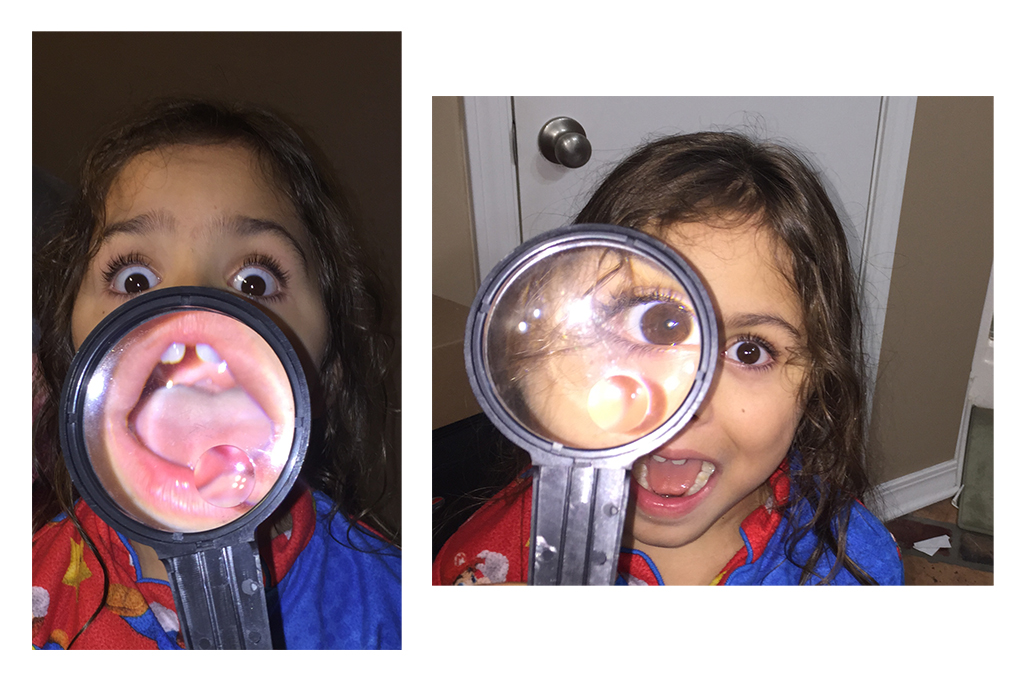
Oh, What Big Eyes You Have (make reading fun)

Big Eyes Mouth

GET KIDS TO READ

As you can see, my daughter had some fun with a magnifying glass and a camera.

Which gave me an idea…

Wouldn’t this be a cool, interactive way to involve kids in stories.

Obviously, this story would be about Little Red Riding Hood and The Big Bad Wolf.

Use the magnifying glass to make Big Eyes, a Big Mouth, and Big Ears.

It wouldn’t be a bad thing to get more kids to enjoy reading.

More than that, this is a marketing opportunity for children’s authors.

I don’t mean Little Red Riding Hood. I mean the idea of making the storytelling fun and interactive. Not necessarily with a magnifying glass.

Surely, you can think of some other prop relevant for your story.

When you interact with kids in person, that fun moment that you create may help to get the kids—or more importantly, their parents—interested in your brand of authorship.

Online, your cool idea for making storytelling may help your marketing. You can post cool pics (with permission, of course) showing your idea. You can market the idea of helping to make reading fun, while indirectly benefiting your book and your brand as author. Or you might create a viral Facebook post or YouTube video.

Or just mentioning the prop and its use for your story might prove to be a valuable merchandising tip.

It’s all about inspiring more kids to enjoy reading. But if you’re a children’s author and can benefit from helping to achieve this, there is a possible bonus in there.

Write happy, be happy. 🙂

Chris McMullen

Copyright © 2015

Chris McMullen, Author of A Detailed Guide to Self-Publishing with Amazon and Other Online Booksellers

  • Volume 1 on formatting and publishing
  • Volume 2 on marketability and marketing
  • 4-in-1 Boxed set includes both volumes and more

Follow me at WordPress, find my author page on Facebook, or connect with me through Twitter.

Dos and Don’ts on Writing a Book Blurb

Great tips for such an important part of your book’s merchandising.

Nicholas C. Rossis's avatarNicholas C. Rossis

From the blog of Nicholas C. Rossis, author of science fiction, the Pearseus epic fantasy series and children's books Image: Rightreading.com

The inspiration for this post came from a little gem I found on the Passive Guy’s Newsletter (if you aren’t already a subscriber, what are you waiting for? It’s free!). After some heavy editing, it ended up as this post.

The original post came from the Self Publishing Review, if you wish to see it in its entirety.

Writing a Book Blurb

By far, the weakest part of many self-published books is the synopsis. Writing a decent blurb is an art form totally separate from writing a book.

Authors, myself included, often feel this is their least favorite part of the process. It can make you feel icky writing superlatives about your own book. At the same time, too many superlatives can literally be icky (“A work of genius” comes to mind). A good blurb needs to strike a balance between being informative, but not too informative, salesy, but not…

View original post 417 more words