What’s the Status of Read Tuesday?

Read Tuesday

If you want to learn more about Read Tuesday – a book sales event like Black Friday or Cyber Monday – click on the link below.

https://chrismcmullen.wordpress.com/2013/09/21/red_tuesday_idea_for_boosting_book_sales/

If you’ve been following along, you know that we have a website, http://www.readtuesday.com, which isn’t ready yet. I’ve been preparing some content so that it won’t be utterly empty when the website goes live. We’re still working on the images. As soon as I have images, I will share them with you. As soon as the images and website are ready, we can hit the ground running. I have some ideas for the running part, but I don’t want to leak them until we have a website to point to and some images to begin our branding.

Mostly, this post was to let you know, in case you’ve been waiting patiently, that Read Tuesday hasn’t vanished. It’s coming. We just need a couple more days to get things going. Your patience is much appreciated.

However, if you have ideas for content for the website, or if you’d like to submit possible content for the website, please feel free to do so. You can leave a comment below, or if you click on my gravatar to the right (in the sidebar; the Gravatar is the small photo below the About.me photo), you can find my contact info. (If you have an About.me account, you can also contact me through that; the Gravatar, which shows a similar photo, doesn’t require this.)

Ideas, comments, suggestions, requests, and the like are both welcome and encouraged. 🙂

What would you like to see on our Read Tuesday website?

Read Tuesday

As it may help anyone who participates on Read Tuesday, I would like you to think of the Read Tuesday website as our website, rather than my website. So I encourage your suggestions, comments, ideas, concerns, feedback, etc. 🙂

Reminder: The Read Tuesday concept is our effort to provide readers with a Black Friday or Cyber Monday type of sales event specifically for books. You can learn more about it through the link below.

https://chrismcmullen.wordpress.com/2013/09/21/red_tuesday_idea_for_boosting_book_sales/

I’ll list some of my thoughts here, and invite you to add yours in the comments section.

  • The Read Tuesday banner, once it is ready.
  • A description of the Read Tuesday concept.
  • A separate list of quotes from authors and readers who are looking forward to the event. If you’d like to contribute, all you need to do is give me your quote, whether you’re speaking as an author or reader, how you’d like your name or nickname to appear, what I should put for your location (or leave blank, if you wish), and if you would like me to include, say, your author website. You can contact me by email from my about me page, or leave a comment (whatever you prefer). I intend to sprinkle some throughout the website, and have one page dedicated to it if there are enough.
  • A Like button for Facebook, a Follow button for Twitter, etc. once those pages are setup.
  • A page with information for readers and a page with information for prospective authors.
  • Contact info.

Can you think of other content? What other kinds of images? Other types of pages?

If you have any requests for the style or structure of the website, those suggestions are encouraged, too.

I could try to make a page of participating authors, with names and maybe photos. But if the list gets really long…

I could also try to make a catalog of participating books (perhaps not to be released until closer to the event date). But again, if it gets very long… If anyone can think of a way to make it very easy to add and update, please turn on the lights. 🙂

Of course, all authors can promote their own books through the Read Tuesday event by mentioning their own books while simultaneously spreading word of the program. Similarly, authors can get together in groups (by subgenre, for example, but not necessarily) and make sub-catalogs, featuring their books that will be in the program. Such smaller catalogs could prove more beneficial than a master catalog.

Moody Sales

Moody PicAh, the beginning of the month;

Such a pleasant time for sales.

You can hear the buzz of customers

And the chirruping of registers.


Nothing tops the rush hour,

When sales are just ecstatic.

The lines are seemingly endless,

The products quickly vanish.


But then it slows down so much;

Sales shed tears from their sadness.

Where did everybody go?

Why have you all abandoned us?


Sales always wonder if the end has come

During extensive periods of loneliness.

Is that the end of life as they know it?

Will they never feel energized again?


When sales rebound, they jump for joy;

Happier than ever, they smile quite broadly.

They knew the buyers would return.

The experience is so rejuvenating.


Then that time of the month comes;

Inevitable, yet sales dread it so.

Those few days where sales are dismal.

You can count on it like clockwork.


Copyright (c) 2013 Chris McMullen

Read Tuesday: Have Website, Need Slogan

Read Tuesday

I changed it to Read Tuesday because http://www.readtuesday.com was available. I also purchased the domain so we now have a website for it. Don’t rush over there; it’s empty as of yet. 🙂

I asked an artist to work on the images. But it’s still not too late to share your ideas and help shape things. We’ll include “Read Tuesday” and the date (December 10, 2013) with the images. I’d like a set of images that include a slogan of sorts. TamrahJo provided a suggestion for some text. Does anyone else have ideas? We could really use slogan, phrase, or other short text ideas.

Regarding the catalog idea, I’m thinking we may not want to release it, if we make one, until much closer to the event date. Just like stores don’t want you to know exactly what will be on sale and for how much too far in advance.

There is an opportunity for someone who loves Twitter or Facebook to take one of these on or get involved with it. If you run one of these, you can have your name on the about me section, and you have the opportunity to interact with people through the Red Tuesday concept. I’ll do it if needed, but I know some of you have a knack for these, so I’ll give you the chance. I have other ideas beyond social media, but Twitter and Facebook pages are probably something we want to get up and running very soon.

Once we have the images ready to go, we’ll want to build buzz for it and start promoting it. Remember, if you write a post or article about Read Tuesday, you’re able to promote your own book while promoting the program simultaneously (at a minimum, you’re going to mention that your own book, Whatever the Title Is, will be in the program, and your audience may look forward to it).

You have a chance to help shape this event. If you have ideas, you are encouraged to share them. Ideas are greatly appreciated. 🙂

Red Tuesday: Initial Brainstorm

Red Tuesday Pic

The idea behind Red Tuesday is for authors to get together and provide a book-oriented version of Black Friday and Cyber Monday. You can learn more about the idea here:

https://chrismcmullen.wordpress.com/2013/09/21/red_tuesday_idea_for_boosting_book_sales/

The purpose of this post is to brainstorm the ideas that we’ll need to get started. Most of this should be done in the comments section below. We’ll need more brainstorming sessions as we go. Here we should focus on just getting things underway.

Red Tuesday is an opportunity for otherwise ‘independent’ authors (we largely behave this way when we sit down to write and when we market, even those of us who are traditionally published) to organize together and form something special – without, hopefully, too much more work than we would do just to have our own separate promotions. Here at WordPress, there is a strong sense of community among authors and artists. If we participate and harness this community feeling, we may all benefit from Red Tuesday.

It’s not about one person succeeding from the work of many others, and it’s not about one person being in charge. It’s about several people collaborating together. The beauty of the marketing involved is that every author can promote his or her own books while simultaneously promoting Red Tuesday.

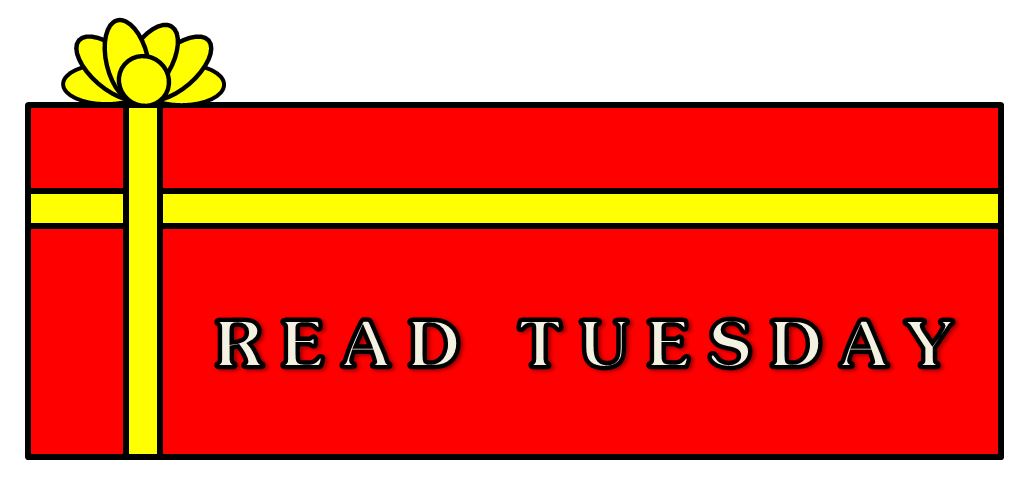
BRANDING IMAGE: We want to brand the concept of Red Tuesday. Therefore, we need an image that we can use to help brand this visually. We want to include this image on all of our marketing materials for Red Tuesday. The more people see this image, the better.

We want to use the same image over and over, but we’ll need it to come in a few different forms. We’ll need a couple of headers for blogs or social media, an image to insert into our posts, a sidebar image, a thumbnail image, a logo, and anything else we think of. Essentially, we’ll need a variation of the same image in various aspect ratios.

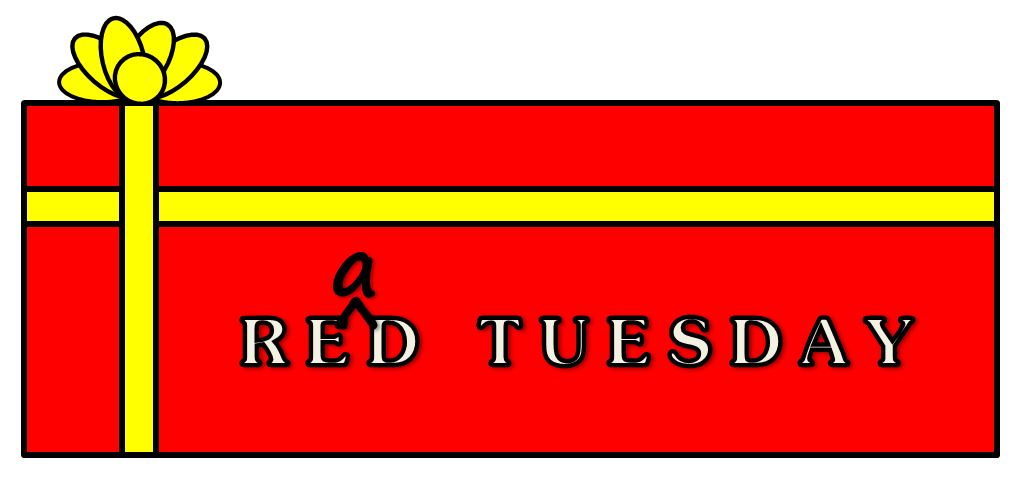
TamrahJo drafted a good concept (see below). It will be easy to produce the image in a variety of shapes and sizes, it’s really suggestive about the idea of gifting books, it matches the color of the event (red), it fits with the holiday theme, and it has a cute play on the color and verb homophones. I made a similar image for this post (above).

http://wp.me/aZNrI-WF

What we need is an improvement on our efforts (or a better idea, if anyone has one). If you can make a better present, bow, font, etc.

Whatever image we use, we will need permission for every author who participates to use the image for their Red Tuesday marketing (except for possibly putting in a restriction to prevent anyone from abusing the idea). This means that any images or text used must grant this permission, also.

Again, we’ll need the images to come in an assortment of sizes, suitable for various purposes. It may also be desirable for some of the images to include text (a slogan, for example), but others to exclude it.

BRANDING TEXT: We’ll need a slogan, catch-phrase, strapline, marketing line, blurb, and/or whatever other short text may be useful to help us brand the concept of Red Tuesday successfully. Again, we’ll need permission for every participating author to use the ideas that we decide to go with. TamrahJo included a suggestion for some text in the draft of the branding image (along with font effects).

WEBSITE: Unfortunately, it appears that the ‘redtuesday’ domain has already been taken as a .com site. We could throw in a hyphen, but then anyone who misses the little hyphen will go elsewhere. Perhaps we could add the word ‘books’ to the end of it.

We should have one website setup that’s geared to tell customers all about Red Tuesday. This is a link that we’d want to include with all of our promotional materials.

I don’t mind springing for the domain name. I could put together something basic, or add basic materials that others prepare. But if there are any volunteers with web skills, maybe that could lead to something better. I guess we could start with a WordPress template, or I could get something from GoDaddy, for example.

To begin with, we want to include our Red Tuesday branding image and a description of the program. What else could we put here?

Perhaps catalogs (including subcatalogs) listing books by genre (or subgenre) that will be discounted on Red Tuesday. (We could also highlight a few books that have very deep discounts – good examples that may help to draw interest.) Depending on how many books wind up in the program, this could be an extensive catalog. We want to make it easy for customers to sort through it, appealing to look at, and easy to update as new authors join in. If there is an easy way to do this, maybe where authors can add their own books yet the formatting still looks nice, it would be nice to find it. It will probably take some volunteer efforts to put this together, but hopefully we can think of some automated services to help do much of the work…

Maybe an extensive catalog isn’t worth the effort. Being buried in a long list – if the list becomes long – probably isn’t the most helpful marketing tool. What will be helpful is when authors individually promote their own books while simultaneously promoting Red Tuesday.

(We could also have a humble page that gives credit to any volunteers who provide valuable services.)

What else should we have on the website? For now, we just want to get it started with the minimum, and we can add to it as we go along.

We want a different hub to direct interested authors rather than the website designed for customers (though some authors, like me, will be shopping for books on Red Tuesday, too). Our blogs can help with this. Remember, you’re welcome to create your own posts about Red Tuesday (reblogging isn’t the only way to spread the word, though you’re also welcome to reblog Red Tuesday posts).

MORE: There are other things we’ll need soon, but these are a few things that we’ll need right away. Can you think of anything else that we’ll need immediately? If so, please bring these up in the comments.

COMMUNITY: Through our involvement in Red Tuesday, we can be part of something much bigger than ourselves. The magic word is participation. Please share and discuss your ideas in the comments section below. Brainstorming isn’t about one person coming up with ideas, but about many people bouncing ideas off of one another and discussing them to see where it leads.

Chris McMullen, author of A Detailed Guide to Self-Publishing with Amazon and Other Online Booksellers, Vol. 1 (formatting/publishing) and Vol. 2 (packaging/marketing)

Red Tuesday: Idea for Boosting * Your * 4th Quarter Book Sales

Fourth Quarter Pic

This idea came to me this morning. It has the potential to help you sell many books in the fourth quarter. It’s a simple idea; it’s free; and it will be easy. It just involves a little marketing, but, as you know, marketing is exactly the kind of work that can move books.

I’m not talking about marketing for a few sales. I see potential for a great deal of exposure.

THE PROBLEM: Black Friday and Cyber Monday are huge days for holiday shopping among retailers. However, booksellers probably won’t reduce the price of your book any more than usual, they probably won’t advertise your book as part of the sale, and you might even sell fewer books than normal because all of the customers are too busy buying electronics, toys, tools, and clothing.

You can discount your book significantly on these days and promote your sale to help stimulate some traffic during this time, but it probably won’t be any more effective than promoting your book this way on any other day of the year. In fact, it may be better to do this on some other day where you’re readers aren’t too busy shopping for other items.

THE IDEA: Thousands of authors participate in special one-day pricing of incredible discounts. We’ll call it Red Tuesday (a homophone with the past tense of what you do with a book). Actually, we’ll do it again just after Christmas, when everyone just got a new e-reader and still has holiday money to spend. We’ll call this one White Thursday (a play on “write,” perhaps).

It’s simple, really: Each author promotes his or her own discount while simultaneously promoting the huge event. You don’t do any more work than normal, but by being part of a huge group of authors involved in this, you can gain the enhanced publicity of the event as a whole.

For example, you would write, “Title of My Book will be 80% off as part of the Super Incredible Red Tuesday Extravaganza.” Take a moment to briefly describe what Red Tuesday is all about in addition to promoting your book. Link to the event page as well as to your book. Think of all the content you could post on your blog and social media regarding Red Tuesday, where you will also mention your own book’s participation in the event. Red Tuesday helps you with your marketing.

One author is really tiny. Together as a community, we can thrive.

All we need to do is spread the word and get super-mega-incredible participation among authors.

If we can get significant participation, it will open up many marketing opportunities that may otherwise elude us. Imagine the growth and buzz building up so large that the media takes notice. I have a list of other ideas below, and more will come. Together, we can help Red Tuesday go viral.

ELIGIBILITY: You just need to be an author who is willing to significantly discount your book on Red Tuesday and/or White Thursday. All authors are welcome, regardless of how you published, what you write, etc. (You don’t have to worry about your book being listed in an electronic catalog with an adult content book because we could always make separate catalogs for different kinds of books. At this point, there is no guarantee that there will be a catalog; that’s just one of the ideas below.)

If your book is already 99 cents, pretty much the only way to discount it is to make it free. However, many authors might want to just drop their prices, but not make them free. Why not allow for both? Any catalogs could easily come in separate editions for discounted titles and freebies. We could also feature the deepest discounts at the top to help catch interest in the program.

I have several e-books priced between $2.99 to $5.99. I’m thinking to drop all of the prices to 99 cents (except where the file size is so large that it prevents the e-book from being priced this low).

I also sell several paperbacks. These could be reduced, too. Or I could make a significant percent-off discount code for my CreateSpace eStore. Or I could sell them from my website at 50% off and take payments through PayPal.

The important thing is to make the book on sale during the promotion for a significant discount.

EXPRESS YOUR INTEREST: If you’re interested in this, please post a comment below to let us know. If there doesn’t appear to be interest, this idea will just slowly die out. The idea can only succeed through your participation. Please share the idea to help spread the news, so that we can find more authors who are willing to participate.

If there is plenty of initial interest, then we’ll move onto the next step and Red Tuesday may become a reality and a success.

We’re still in the planning stages. So if you have ideas, suggestions, comments, or concerns, this is a good time to express them. Nothing is set in stone yet.

There is no cost. You’re only commitment is to significantly lower your price for Red Tuesday and/or White Thursday. Any other work will strictly be voluntary. It would be wise for you to promote your discount and the event in order to help you get the most out of it.

MORE INFORMATION: As long as there continues to be significant interest, I’ll post information about Red Tuesday here on my blog. Please feel free to help spread the news – directly, by reblogging, or by creating your own posts about Red Tuesday.

If there is significant interest, I’ll send out a sign-up post on my blog, whereby authors can sign up. If you have a better idea for how to get authors to sign up besides just using the comments section of a sign-up post, please share your idea.

If several authors sign up, I will put up regular posts with information, ideas, suggestions, etc. here on my blog. Again, feel free to help spread this information.

DATES: In 2013, Black Friday is November 29 and Cyber Monday is December 2. Everyone is now exhausted from shopping. So my thought is to wait until Tuesday, December 10 to celebrate Red Tuesday. Then we’ll have White Thursday on January 3. (I liked White Wednesday better, but it falls on January 2, just a day after New Year’s.)

IDEAS: First we need to brand the concept of Red Tuesday. We’ll want to have a small number of images that we can all use with our blog posts and other Red Tuesday promotions. I can announce a contest to submit images for consideration. Then we’ll use the winning image to brand our image. Everyone should use this image with all of their Red Tuesday promotional materials.

We’ll also want to brand White Thursday (which will come about a month later). But we want White Thursday to be a surprise. We don’t want readers skipping Red Tuesday, knowing that White Thursday will come later. We want to generate huge exposure twice, not once. We’ll need a different image for White Thursday.

Some kind of catchy slogan, jingle, strapline, or something of this sort would be nice, too. I can solicit suggestions in a separate post.

Soon we’ll need to build a great deal of buzz and generate plenty of author participation. We can post and reblog about Red Tuesday to spread the word. Assuming this takes off, I’ll make a post in a couple of days with more ideas of how to help create buzz for this special day.

If we succeed in creating ample buzz for Red Tuesday, this may create additional marketing opportunities. Write an article about it and try to publish it in a relevant high-traffic zone. (Your article won’t go to waste because you can always post it to your bog if it doesn’t get used anywhere else.) We can try to get writers with a large following to write about Red Tuesday, and we can aim for a little media attention.

We can make a webpage specifically for the Red Tuesday event and everyone can link to it in all of their posts. If we’re able to make any electronic catalogs of books (volunteers can make this possible), we’ll post them on the event page and circulate them in others, too.

If many authors do a few small things in the way of promoting Red Tuesday, it will really add up. We all have different areas of expertise. If you’re a video whiz, for example, you can post a trailer on YouTube about Red Tuesday, and the rest of us can help get people to check it out. Remember, any marketing that you do voluntarily to promote Red Tuesday will also help you with your own book as a part of your promotion.

As we approach Red Tuesday, our marketing campaign should go nuts. Everyone should be posting and promoting in anticipation, and especially on Red Tuesday itself.

It’s very important to reduce your price in time, allowing for probable delays (which can be several hours or more – and may be longer if there is widespread participation) to get your book’s price reduced in time for the big event. Better early than late.

GREAT FOR READERS: Red Tuesday doesn’t just have the potential to benefit authors. It can greatly benefit readers, too. Red Tuesday would be a great day to stock up on books by all your favorite participating authors. It’s also a great day to buy books as gifts. There is ample reason for authors and readers alike to spread the word and make Red Tuesday a huge hit.

Sure, some readers will see Red Tuesday coming and try to hold off of buying books until Red Tuesday comes around. There will still be readers buying books before then. If your sales rank does slide somewhat going into Red Tuesday, just think what a potential avalanche of sales on Red Tuesday could do for it. The better you promote your discount and Red Tuesday and the more marketable your book, the better your chances of having a successful Red Tuesday.

NO GUARANTEES: There is no guarantee that this will improve your exposure or increase your sales. However, if participation is widespread, there is much potential for numerous authors to receive a marked boost in both exposure and sales. The more marketable your book (i.e. good content, appealing cover, effective blurb, well-formatted and -edited, attractive storyline and characterization, and good readability), the better the prospects for you to benefit from the promotion. Also, the more active participation we receive and the more effective we are, collectively, at marketing the event, the better the chances of success.

FINAL WORD: Ideas, comments, suggestions, and concerns are not only welcome, they are strongly encouraged. 🙂

We can be part of something much bigger than ourselves. The magic word is participation.

Chris McMullen, author of A Detailed Guide to Self-Publishing with Amazon and Other Online Booksellers, Vol. 1 (formatting/publishing) and Vol. 2 (packaging/marketing)
Can a Book have too Many Buying Options?

Options Pic

Once you decide to buy a book, you have several decisions to make:

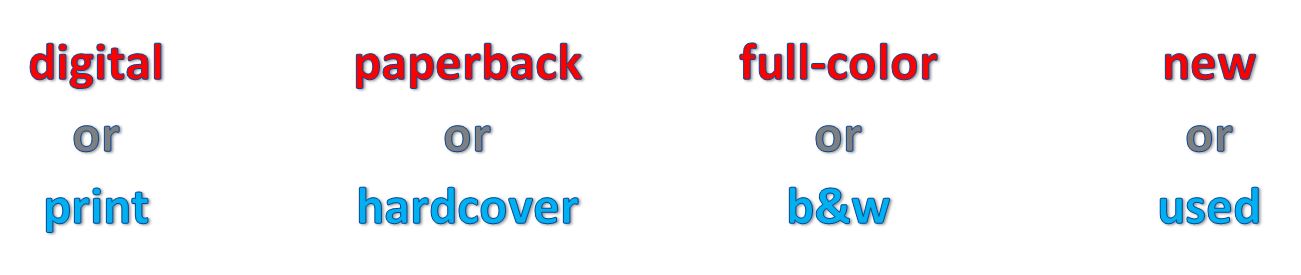
  • online or in store
  • which bookseller
  • digital or print
  • if print: paperback, hardcover, spiralbound, etc.
  • if print: color vs. black and white
  • new or used
  • if new: direct from the bookseller or from a third party
  • if third-party: which third-party seller to choose from
  • if third-party: signed by the author or not
  • if used: collectible or not
  • which edition to buy
  • if out of stock: whether to order it or not
  • if in-store: whether to add a bookmark
  • if online: whether to add other books
  • cash, check, credit card, or debit card
  • if card: credit or debit
  • if credit: Visa, Mastercard, Discover, American Express, etc.
  • if credit or debit card: which bank
  • “Would you like to open a new credit card for this purchase?”
  • At least you usually don’t have to decide between paper and plastic anymore. 🙂

Options are a good thing, right? The more options there are, the better chance you have of getting what you want.

But from a selling perspective, having more options available presents a problem.

The benefit is that additional options may bring additional customers, since some customers may not buy the product at all if the option they want isn’t there.

The disadvantage is that additional options increase the chances of buyer indecision. Some customers walk away from a sale because of buyer indecision.

Suppose, for example, that you’re buying shoes. If there is only one type of shoe that you like and you can only pay cash, you will either take it or leave it. If you like the shoe enough and have the cash on hand, you won’t be worried about other options.

But what if the shoe comes in two colors – pink and blue? Maybe you like them both, but insist on only buying one pair. Now you must decide which one you like better. You might do something else in the meantime, giving yourself time to think it over – while also giving the impulse to shop time to cool off, so you might not buy any shoes at all. Or maybe you decide you like pink best, only to discover that pink is out of stock, but you refuse to buy blue because your heart was set on pink.

Back to books, the question the author or publisher has to ask is whether or not additional options will improve sales by attracting extra customers more than they will deter sales through buyer indecision.

Impulse shopping also plays into this. Extra buying decisions increase the duration of the buying process. The longer it takes, the more likely the sale will be interrupted and the more likely the impulse to buy will wear off before the sale is over.

The option to make both paperback and e-book is probably worthwhile for most books that can be formatted well both ways. For a book that sells predominantly as an e-book, the presence of the paperback still presents many benefits:

  • The e-book price shows as a discount off the paperback list price.
  • You can catch some mistakes when editing a paperback that you miss when editing an e-book.
  • You’re eligible for Kindle’s new MatchBook program.
  • Paperbacks come in handy for readings, signings, review copies, etc.
  • It helps to convince some people that you’re a ‘real’ author.

Some other options, however, may not be worth doing.

Suppose your book would look great in color. When you go to publish the paperback, you may find that the book would be much cheaper in black and white. This tempts you to publish the book both in color and in black and white editions. The problem with this is that the buyer is faced with a decision: Save money with black and white, or enjoy the book in color.

If the book really needs to be in color, don’t make a black and white edition; but if it would be just fine in black and white, don’t make a color edition. Or if you do make a color edition, make it a special edition that you sell directly or give away in a contest; but don’t add it to your product page. (I have the experience of publishing a book both ways, and if I could do it over, I would just choose one way.)

You face a similar dilemma with hardcover and paperback.

There are two more important points about creating different editions of a book. One is sales rank. Each edition of the book has a separate sales rank. When the book is only available in one edition, every purchase helps the same sales rank.

The other point has to do with customer books reviews. If one edition is more likely to generate negative reviews, that option can adversely affect the other editions – if the different editions are all linked together on the same product page.

Chris McMullen, author of A Detailed Guide to Self-Publishing with Amazon and Other Online Booksellers, Vol. 1 (formatting/publishing) and Vol. 2 (packaging/marketing)
Target Your Audience

Target Pic

Yeah, I know. As a consumer, the feeling that businesses may be targeting you may not be the most wonderful feeling; and the picture probably doesn’t help with this. Yet the phrase is useful to anyone who is selling a product or service, to remind them of the importance of marketing the product or service to the people who are most likely to want it.

Think of it this way: Businesses are trying to help people discover products and services which may be a good fit for their individual preferences. This is accomplished by marketing toward a specific target audience – perhaps not the friendliest phrase for a specific group of people who share common interests, like dirt bike riders or Trekkies.

Imagine standing outside of a football stadium trying to sell used golf balls to fans who are buying tickets. Sure, some of the football players will be golfers. But don’t you think you’d have better luck selling golf balls at a golf course? Even if you meet a football fan who plays golf, his mind will surely be on football, and he will probably be irritated to have you try to switch his mindset so he can discuss golf business with you right before the big game.

Even if the marketing is free, it still costs time and effort. And there are many more things that one can do to market a product than any human being can do in a single day. So you must choose wisely.

Marketing is much more likely to be effective when it’s geared toward a specific target audience, which is a good fit for the product.

Recall the football fan who might be irritated to discuss golf when his mind is on football. This point is important for customer satisfaction.

Suppose you succeed in selling a product to many people who fall outside of the target audience. These customers are less likely to be pleased with the product, which can affect reviews, referrals, and recommendations – i.e. it can lead to a little negative marketing. These customers don’t understand the nature of the product as well as the target audience, and therefore may not have realistic expectations for what the product should actually do.

As an example, this is often the case with free e-books. Readers outside the genre are tempted to buy the book because it looks like a good deal. Since the e-book is free, they may not feel the need to invest time and effort reading the blurb or checking out the Look Inside. These readers are less likely to know what is typical of the genre. They might also be trying the genre out, only to discover that they really don’t like it. Therefore, these readers from outside the genre are more likely to be disappointed with the book, which could lead to bad reviews.

When the author invests in the time or money to promote the freebie to the specific target audience, then many of the free e-books also go to members of the target audience, which helps to balance the freebies downloaded by other readers.

So if you just market a product to a general audience, thinking that the audience is so large that even a tiny percentage is significant, there may be possible negative effects to take into consideration.

Whenever possible, market the product toward the specific target audience. This can have a big impact on the cost-benefit analysis.

The first step is to identify the specific target audience. Think about who is most likely to use the product. Is there a gender preference? Which age group? What common interests will they share?

The common interests are especially important. Be as specific as possible – e.g. baseball is more specific than sports, and contemporary romance is more precise than romance which isn’t as vague as fiction.

Avoid being hypothetical like, “Chess players might be interested in graphic arts.” They might be, but you’re more likely to reach chess players through their interest in chess, since many won’t be in the market for graphic arts.

The goal isn’t to widen the audience as much as possible. Targeting an audience that is far wider than the people who are most likely to use the product makes marketing less efficient. Many companies, such as small book publishers, achieve success with a narrow audience – such as niche marketing. A very narrow audience can lead to good results if you succeed in reaching a large percentage of the audience. Marketing efficiency is very important, especially if you don’t have a huge supply of money to invest – like many indie authors and musicians.

Sometimes, you can widen the audience. For example, suppose that you wrote a mystery that strongly relates to basketball. In this case, you can target mystery readers and basketball players, as both may have a strong interest in the book.

In contrast, if a book is partly mystery and partly fantasy, trying to reach both mystery and fantasy readers may backfire: The mystery readers might not like the fantasy, and vice-versa. It’s better to market the book one way or the other, focus on the primary component, and try not to sell the secondary component. Some genres do mix well, like romantic suspense, which is already an established category.

Once you establish who the target audience consists of, the challenge is to reach them. Base this on the commonalities that they share.

  • Where are they likely to shop – both physical stores and online? Which departments?
  • Where will their common interests take them? Hobbies, sports, activities, entertainment, vacations, clubs, organizations, etc.
  • What do they read? What do they do online? Magazines, newspapers, websites, etc.

The more you know about the specific target audience, the better your chances of marketing success.

Start out by thinking about it and discussing your ideas with others. Focus groups can help, and so can customer surveys (but be careful what you ask, and show tact). Meeting and interacting with customers gives you firsthand information.

As you consider various marketing strategies, think about how each strategy may or may not be able to reach the specific target audience effectively. Following are some examples. You just have to think long and hard about this, as every situation is unique.

  • If you’re selling something instructive (how-to guide, software, nonfiction, learning resources, etc.), you could write and publish helpful articles, develop a blog, provide help in an online forum, give a workshop or seminar, etc. But focus on attracting the specific target audience.
  • Common interests among the target audience can help you meet them at clubs, organizations, presentations, etc.
  • Send a press release kit to local papers, radio stations, and television networks that have sections or shows which are a good fit for your target audience. Look for magazines and websites that match your target audience and try to get visibility there.
  • Research how to use social media to target a specific audience. For example, on Twitter, use relevant hashtags.
  • Develop a website (or blog, or both) with content that is likely to attract the target audience.
  • Build relationships with potentially useful contacts, with your target audience in mind.

Remember that most people don’t like advertisements. Advertising works better for companies with much money to invest, which can sell a large number of products, and where there aren’t too many competitors. Free marketing tends to be much more effective for smaller businesses or individuals, and this is even more important when there are thousands of competitors – which is the case for authors, for example. Low-cost advertising in products that may actually be used by the target audience – like pens or bookmarks – can benefit those with fewer resources.

In the latter case, provide helpful content that attracts the specific target audience, try to be visible yet unobtrusive, and make it easy for the audience to discover your product without looking like an advertisement.

An important aspect of marketing is branding – getting the target audience to recognize the name of the product or business, and perhaps associate it with some quality (like luxury, creativity, or inexpensive). Advertising that does work does so through the branding effect. But marketing that isn’t advertising can also be highly successful at branding – perhaps even more so, since it doesn’t intrude like an advertisement.

Individuals and small businesses can benefit by interacting with the target audience in person – online, too, but in person can be highly effective. It can be a treat to meet the owner, author, or inventor, for example, in person. This is a valuable resource available to the “small guy.” Start locally and work your way outward. Take advantage of the fact that local newspapers, radio stations, and television networks are looking for local stories.

Chris McMullen, author of A Detailed Guide to Self-Publishing with Amazon and Other Online Booksellers, Vol. 1 (formatting/publishing) and Vol. 2 (packaging/marketing)

Book Marketing: The Power of Perception

Perception is a very powerful marketing tool. Are you using it to your advantage?

Think about a moment where you’ve just heard about a new product. Perhaps a friend told you about it. Maybe you heard about it on the radio. You might have seen it in a store.

You probably didn’t use the product first and then form an opinion of it. Nope. Most likely, you developed an immediate perception about the product. You might investigate the product further before making the purchase, but that first impression is very important. If you had a poor impression, you may not even consider the product again. If it made an excellent impression, you tend to look for things that reinforce this – i.e. you see it in a better light.

Don’t just try to brand the book’s title or your name. Strive to brand a perception about your book.

The first step is to think about how you want your book to be perceived. It must be something that most readers will agree with once they read the book; otherwise, marketing the perception will be ineffective in the long run. In what way is your book distinguished, which will appeal to readers?

Here are some dos:

  • Keep it simple. People can remember a few words; a long sentence will likely be forgotten. One to three words that paint the perception can be branded effectively.
  • The perception should be highly relevant to the target audience. This way, the branding helps to attract the readers who are most likely to want the book.
  • Think about the selling points of your book, but just pick one. What distinguishing feature might appeal to customers?
  • If a popular book helps to paint the perception efficiently, you may be able to do this in a positive, tactful way – e.g. “like Harry Potter in space” (notice that it doesn’t say anything negative about the other book). Only try this if there is another book that’s a great fit to help you quickly paint the proper perception, and if the book is also well-known.

Now for a few don’ts:

  • The perception must be accurate, otherwise it will backfire. You don’t want readers expecting one thing, when in fact they will get another.
  • It can’t be “the best book ever.” This doesn’t say anything specific about the book, so it won’t attract the target audience. It also tends to generate the negative reaction, “Yeah, right!”
  • Don’t try to top popular books or movies, like “better than Star Wars,” or “the best mystery ever.” If the expectations don’t seem reasonable, buyers won’t invest in the book. Definitely, don’t put anyone’s favorite books or movies down. If you try to advertise that your book is better, it will create a mindset among some readers to try to prove you wrong.
  • Limit yourself to one quick phrase. Don’t try to market two or more perceptions. It’s much easier to brand one simple perception.

There are many possibilities: audience specific (a clean romance), a distinguished character (Gollum or Darth Vader), an attractive idea (a children’s series that teaches decision-making skills), a unique feature (like the twist-a-plot idea), a cool concept (imagine what it would be like to…), an improvement (a workbook and textbook integrated into one), or even exceptional preparation (“Judy spent three years doing the research for this book,” or “Bob had three different editors work on the manuscript” – but note that these two examples don’t attract a specific audience)… and the list goes on.

How do you paint the perception?

  • It helps if a glance at the cover reinforces the perception that you’re trying to paint.
  • Similarly, the title, blurb, and Look Inside need to reinforce this perception.
  • Mention it with your title on all of your online and offline marketing materials: end of posts, just after your book link, social media, bookmarks, advertising, press release kit, etc.
  • Use your phrase (it’s a strapline) in your personal marketing endeavors – mention it at readings, signings, interviews, blog tours, conversations, presentations, and whenever you have the opportunity to discuss your book.
  • Strive to paint this perception when trying to generate buzz for an upcoming book.
  • When you enlist others to help with your marketing – e.g. to create buzz or to help spread the word for a promotion – see if this perception can be included.

Perception is a difficult thing for a lone author to judge. External input is valuable for trying to make such predictions. Ask people what they perceive about your book? Run the perception that you’d like to paint by them and see how they react to it.

Some things are beyond your control. This includes reviews, recommendations, and referrals – which can be good or bad. You can get lucky and a complete stranger who enjoys your book may spread the word to many others, and you can get unlucky and someone can strive to paint a negative perception. You can’t control this. But there are a couple of things that you can do:

  • The better your book and the more effective your marketing, the more reviews, referrals, and recommendations you will get. The more you receive, the less effect the negatives will have and the more likely you are to have some helpful advocates among your fans.
  • Be wise, courteous, respectful, and professional in your interactions with readers, blog reviewers, sending out advance review copies, and all of your public relations.

Chris McMullen, author of A Detailed Guide to Self-Publishing with Amazon and Other Online Booksellers, Vol. 1 (formatting/publishing) and Vol. 2 (packaging/marketing)
Marketing: “Why Isn’t It Working?”

Almost all authors love to write. This makes writing the book the easy part.

When authors finish their books, they are often surprised to learn that there is much more work to do. Marketing tends to come as the greatest surprise. Marketing is the hard part.

Marketing is a challenge to most authors, and most authors don’t share the same passion for marketing that they do for writing.

New authors ask two very common questions about sales. The first is, “Why isn’t my book selling?” The answer to this, of course, largely involves marketing. (The other part of the answer involves the book itself – good idea, well-written, well thought-out, nicely formatted, etc. Well, you could lump these things into marketability.)

The second question is, “I’m marketing like crazy. Why isn’t it working?”

Following are several factors that impact marketing effectiveness.

(1) Is the book worth reading? Is the idea good enough to sell (both the big picture and the details)? Is the book readable, both in terms of storyline and characterization (for fiction) or content (for nonfiction), and the writing (style, flow, punctuation, grammar, and spelling) itself?

If the book isn’t worth reading (to the vast majority of the target audience), marketing should be a waste of time. Writing groups, focus groups, and good editors can help to gauge this. If the book isn’t worth reading, presently, it may still have the potential to reach this point. In this case, the first step of marketing is to make the book marketable.

(2) Is there an audience for this book? It doesn’t have to be a huge audience; it’s possible to succeed in reaching a niche audience. But there has to be an audience for the book. An idea that people just won’t or don’t read is very tough to sell. Writing and focus groups can help to judge this, as can researching what is already on the market and how well it does or doesn’t sell.

It’s not necessary to write to the widest possible audience, but the writing must address an actual audience.

A common mistake is to combine multiple genres together, hoping that this will widen the audience. Unfortunately, this tends to narrow the audience. The author is thinking, “Anyone who likes science fiction, mystery, or westerns may buy this book. That triples the audience.” What most readers are thinking is something along the lines of, “I was looking for a western, but I really didn’t want to read science fiction.”

If there isn’t an audience for the book, marketing won’t help. Before invest time in marketing, ensure that the book is worth marketing. The ideal time to research this is prior to writing the book.

For an author who isn’t sure, trying may be better than nothing; but if marketing doesn’t help, this could be the reason.

(3) Will the packaging attract the target audience? The cover, title, blurb, categories, and Look Inside must make it clear what to expect. Otherwise, the marketing will attract an audience that doesn’t buy the book. Marketing can’t help if the people who check out the book don’t buy it.

A very common mistake is a target audience mismatch. The cover might attract romance readers, who check out the book and decide it’s really a mystery, for example (or the cover might attract contemporary romance readers, when it’s really a historical romance – just as bad).

The cover has to clearly fit the genre. This is incredibly important, yet it’s also very common. If the cover doesn’t clearly fit the genre, it won’t attract the right audience. It shouldn’t just fit the genre, it should fit the precise subgenre. Research top-selling books in the subgenre to see what readers in the target audience are looking for when they browse for books.

The cover must not only fit the genre, it must also be appealing. It needs to attract the target audience. Furthermore, it must look professional (not just appealing) – it has to look like it’s worth buying. It should look like much effort was put into the book.

The title, blurb, categories, and Look Inside all need to send a unified message. If most of these scream that the book is a mystery, but one makes it look like the book is fantasy, for example, this will confuse the buyer. Confused buyers don’t make purchases.

(4) Will the blurb and Look Inside close the deal? While the cover and title must attract the target audience, the blurb and Look Inside must convince the shopper to buy now. The blurb and Look Inside are the only salespeople at the point of sale for online shopping. Marketing doesn’t help when the blurb and Look Inside don’t generate sales from the lookie-lous.

Excellent marketing can direct traffic to the book’s product page. An excellent blurb and Look Inside increase the percentage of sales that result from these window shoppers. Both points are critical to success (i.e. getting people to check it out and closing the deal).

A blurb is not a synopsis. A synopsis gives away too much plot. Readers who feel that they know what will happen don’t feel compelled to buy the book. A great blurb doesn’t give much away, but does succeed in drawing in the reader’s curiosity. A good blurb doesn’t start out slow and build up because most shoppers won’t exercise enough patience to read past the slow part. (Why should they? They have hundreds of books to check out. If the blurb bores them, that doesn’t bode well for the book.) The style, flow, and readability of the blurb are also very important. For fiction, it’s better to err on the side of a shorter blurb. For nonfiction, any relevant qualifications are helpful.

Don’t forget critical details, like the target age group for children’s books (research this – omitting it doesn’t boost sales by widening the audience, it reduces them by introducing doubt). What would the reader like to know that would help generate the sale? (If it’s not likely to help the sale, don’t include it.)

Wise customers check out the Look Inside before investing in a book. The Look Inside can easily make or break the deal. If it doesn’t make the deal, it’s killing the book’s marketability.

The Look Inside must look professional (formatting, writing, front matter, etc.). The customer is about to spend money – but not if it doesn’t look worth buying.

The beginning must grab the customer’s attention and run with it. Make the customer curious. Let the action begin. The words should flow well. If the reader gets drawn into the story, the book will sell.

Readers will buy books with slow beginnings, lengthy forewords, and excess front matter when they are already familiar with the author – i.e. they know from experience that the book will be worth reading.

Most readers will not buy books with slow starts from unknown authors. It’s a big risk to take. There are so many books to choose from, why not pick one that’s more likely to reward the buyer? If the Look Inside doesn’t impress the reader, it doesn’t bode well for the rest of the book. Put the best stuff here.

Sales killers also include frequent spelling, grammar, or punctuation mistakes, poor sentence structure, writing that doesn’t flow well, point of view problems, or unappealing writing style, for example, in the Look Inside. Don’t let the Look Inside kill sales; make it generate sales. This is critical, as it can make the difference between few or many sales. Marketing won’t make up for mistakes in the Look Inside.

(5) Is the book worth recommending? If the book isn’t worth recommending, it will struggle to generate customer reviews, bloggers may be reluctant to review it, the media won’t want to touch it, and any reviews that it does get might explain why it wasn’t worth recommending. A book that isn’t worth recommending isn’t worth marketing. (Marketing is basically the author’s – tactful, if done well – way of recommending it, right?)

The most valuable sales of all are word-of-mouth sales from customers to their family members, friends, acquaintances, and coworkers (not the author’s friends – the customer’s friends). Such sales are very difficult to come by, yet can have a major impact on the book’s success (or lack thereof).

Customer book reviews, blogging reviews, social media shares, and so on can also have a significant impact on a book’s success.

What makes a book worth recommending? It must be highly readable. The storyline (or nonfiction content) must appeal to the target audience. The characterization must be excellent. It must be professional from cover to cover (otherwise, it reflects poorly on the reader to recommend it). If the book moves the reader emotionally (in a positive way), that’s a huge plus.

Comment: The first five points are critical toward marketing success, but so far there hasn’t been any mention of actual marketing techniques. The marketing strategies themselves are not the only things that strongly affect marketing effectiveness. The product’s marketability is equally important.

(6) Are you using social media effectively? The proper use of Twitter, Facebook, and other social media sites is counterintuitive to many authors.

Advertising to the effect of, “Buy this book for…,” on social media is ineffective for most authors. Even just announcing, “I wrote a book called…,” may be ineffective.

People who check their social media accounts are bombarded with numerous messages because they have several acquaintances and also follow their favorite celebrities. So they will visually filter through it.

What will they filter out? Anything that looks like an advertisement! People don’t like advertisements. Do they come home, looking forward to which commercials are on t.v.? Do they like it when commercials interrupt songs on the radio? Do they like pop-up windows that advertise products? NO!

People tend to tune out posts that look like advertisements. They also tend to tune out authors who post repeatedly about their books, even if they aren’t advertisements.

Social media and blogging aren’t about generating many instant sales from people who see advertisements. They are about branding an image (professionally), letting people discover the author’s book, providing content that will gradually draw in the target audience, interacting with other authors and fans, making connections, and widening the author’s exposure gradually.

Think discovery rather than overt advertising. If a man walks into a room and says, “Hey! I just wrote a mystery. You should buy it,” people probably won’t. (Does it seem like the kind of thing a professional author would do?)

If instead a man walks into a room, interacts with people, and makes a good impression, eventually someone will ask what he does for a living. When they discover that he’s an author, rather than having this information thrust upon them, they are far more likely to check his book out.

The same concept can be applied online. Consider an author who is on a website that’s a good fit for the target audience. If the author makes a good impression, people are more likely to click on the author’s profile and discover the author’s book (along with the fact that the person is an author).

The first step with social media is to become an active (but not overactive!), welcome participant in a setting where many people in the target audience can be reached. Ideally, this should start one or more years prior to publishing. When an author suddenly shows up just to market the book, it doesn’t make a good impression.

See how other authors use the social media site successfully before starting to use it as a marketing tool. Also study how some authors misuse it. Learn about hashtags before using them at Twitter. Find author fanpages at Facebook to get ideas for making one.

A personal Facebook account (this isn’t a fanpage) can help to create a little buzz and possibly get an early boost from friends, family, acquaintances, and coworkers – but if they aren’t in the target audience, don’t expect too much help here.

Once a fanpage has grown, it can help to create buzz for a new book. It must provide valuable content in order to draw the audience in the first place. The website for it should be visible in the author’s books. An email group can serve a similar purpose – but people won’t subscribe to advertisements.

Fewer than 10% of the posts on social media should be geared toward promoting the book directly. This reduces the chances of being tuned out.

Remember, building connections and interacting with other authors and fans is a very important part of social media.

For example, most bloggers are bombarded with numerous review requests. Suppose an author has already made a connection with a blogger in the target audience who sometimes reviews books. They have been mutual followers and actively communicating for months. Will this author have an edge when it comes to making a polite review request (that follows the blogger’s posted instructions)? The author may have even already reviewed the other blogger’s book.

(7) Are you blogging effectively? Effective use of blogging shares many common traits with effective use of social media. It’s largely about connections and interactions, and not about direct advertising or immediate sales.

But blogging does have a different feel. When blogging, authors tend to provide more content, which has many benefits. It provides extra writing practice. Extra practice means a chance to find a voice and a style, to try out new forms of writing, or to develop a character. (But lengthy fiction may have trouble finding an audience in the blogging world.)

There are more benefits than just practice. A popular post may be searched for and discovered through a search engine. Writing a post can help relieve stress or receive needed support. The sense of community can make this a place of comfort for the author.

A blog can gradually draw in members of the target audience by providing valuable content. Excellent content may not get many views at first. It takes quality and time, which means care and patience from the author. Don’t give up.

Since blogging is a writing sample, punctuation, spelling, grammar, style, etc. are important. Mistakes can deter potential buyers or followers.

It’s also important to appear professional: People who discover the blog are potential customers. Unprofessional behavior can deter sales.

(8) Are you branding successfully? Successful branding is very important part of an effective marketing campaign. Most marketing efforts’ dominant effect is branding.

A big part of social media and blogging is to help with an author’s branding. Although it may not result in immediate sales, and the connection between the sales and the social media may not be obvious, successful branding is very important.

All of an author’s exposure (not just social media and blogging) contribute to the author’s branding.

The brand is one or more of the following: the book, the book cover, the author’s name, the author’s photo, a distinctive character (like Sherlock Holmes), the title, the series title, etc.

Commercials don’t succeed because people see a product on t.v. and immediately run out to the store. Rather, they succeed through branding. When people buy paper towels, they usually go with a brand they’ve heard of before. That’s branding.

The more the target audience sees a book (and associates positive qualities with the book’s brand), the more likely audience members are to recognize the book.

When a customer is shopping for a book in that genre, if the customer sees the book and recognizes it, it’s due to branding. The customer thinks, “I remember seeing this before and it seemed interesting at the time.” Branding helps to sell books.

As the brand becomes more well-known, it becomes better than just recognition. Perhaps a customer has bought one book and loved it. Now the customer searches for the author’s name. This is a higher level of branding.

Maybe a customer has seen this author’s name on several books in the genre. The author is looking increasingly well-known through branding.

Successful branding doesn’t bring instant sales, but it brings very important sales. Branding requires patience. A customer might see the book today, three months from now, and six months from now. After that, it might be weeks before the customer is shopping for a book in that genre. Then several months after first seeing the book, it may generate a sale.

This is why marketing requires patience. It can take one to two years of active, diligent marketing for the efforts to really pay off. (Even then, points one thru five are critical.) Once branding starts to pay dividends, word-of-mouth sales can really grow (assuming the book is likely to generate them).

Branding is also about exposure. If a book meets the first five points above, then the more people who discover and read the book, the more people are likely to refer it to others.

Freebies can generate exposure. But if the freebie doesn’t satisfy the first five points above, it probably won’t help. Also, price doesn’t sell books. Just making it free may not result in many actual readers (although it may result in many downloads – though this isn’t even guaranteed – many don’t result in actual reads).

To get actual readers, the author must successfully promote the freebie (that’s where part of the 10% of the social media or blog posts can be helpful; a little advertising may have potential, or sites that list freebies may help). Promoting a temporary sale rather than a freebie can also generate exposure.

(9) Did you wait too long to begin marketing? Marketing begins with pre-marketing – i.e. marketing strategies employed before the book is ever released.

Start out by creating buzz for the book. Build a following before publishing. Occasionally let fans and acquaintances know how the book is progressing – to try to create interest. A focus group among fans or potential fans can help with this. Do a cover reveal. Ask for input on the cover and title (separately) – this gives you useful feedback while creating buzz, too.

Strive to generate sales right out of the box. Get the book to reviewers months in advance of its release to help time blogging, media, or other reviews with the book’s debut. Setup preorders for a paperback with Amazon Advantage. Throw a book launch party. Do an advance reading (build a local following first and promote this effectively). Send out advance review copies to people in the target audience.

As with much of life and marketing, where there is a will, there is a way. Some creativity can help, too – not just generating interest, but getting motivated. (Example: Arrange and promote a zombie race, then follow it with a reading – if marketing a zombie book, of course.)

(10) Are you reaching your target audience? Blind marketing won’t net many sales. Yet there are authors who promote their books in front of audiences that don’t primarily consist of their target audience. This tends to make such marketing ineffective.

The target audience isn’t anyone with eyes. Think long and hard about who the target audience is. Specifically, where can these people be found? Meet and interact with the target audience in person and online. Direct branding efforts toward the target audience. Post content online that is likely to attract the target audience.

If only a small percentage of the people who see the branding efforts are in the target audience, this severely limits the potential of the branding.

The target audience is a specific group of people who are most likely to buy the book when it is discovered. Gear all marketing toward this specific audience. Strive to build a following among this audience.

Interacting personally among the target audience, making a good impression, charming them, and letting them discover the book (rather than overtly advertising it) significantly improves the prospects for sales, reviews, and recommendations. Making a concerted effort to find the target audience (and look and feel like the author belongs there – instead of seeming like the author is just there to sell a book) in person (online counts, too, but in person is the best) can be a very valuable tool.

People like to buy books by authors they have actually met, especially when they feel that the author is a professional and they enjoyed the interaction. This valuable resource is available to every author.

(11) Do the benefits outweigh the costs? Before investing money or time (that’s valuable, too!) in advertising or any other form of marketing, consider both the benefits and the costs. Realize that some of the benefits, like branding, may be quite valuable, even though they may not pay immediate dividends (or may be difficult to predict).

Paid advertising often isn’t cost-effective with regard to book sales. There may be an exception when investing to promote a temporary sale, for example, with wide visibility among the target audience.

Long-term branding is more likely to pay off than advertising efforts intended to generate immediate sales.

(12) Are you impatient, or looking for a shortcut? Marketing is work, and it requires patience.

Marketing isn’t about a finding a shortcut. It’s not about instant sales. It’s not just about making money (authors who feel this way betray their marketing efforts – prospective customers see right through them).

Marketing is about building and establishing a brand, growing a following and fan base, and interacting with other authors and fans. It takes wisdom, commitment, effort, patience, and belief.

Good things can come in time to those who earn them and wait.

Another important marketing point is future works: It’s not just about one book. The first book attracts notice and slowly develops an author’s reputation. Subsequent books market to the existing fan base in addition to new customers. Multiple books allow for add-on sales.

A readership can grow significantly over the course of time, especially as the author writes more books. Some marketing strategies – like generating buzz or a book signing – become easier once a readership has formed.

Don’t think big money, quickly, with little work. Think long-term success.

But writing subsequent books is not a substitute for marketing. Many authors get frustrated with marketing and avoid it, concentrating on what they like better – writing. However, selling a set of books successfully still requires effective marketing. Books don’t sell themselves. It takes marketing to get people to read books.

(13) Are you properly motivated, passionate, and genuine? It’s unrealistic to expect anyone else to buy a book if the author doesn’t believe in it. The author must convince himself or herself that the book is worth buying before trying to sell it to others. If the book is worth reading, it’s worth marketing.

The author who is passionate about the book must translate this passion into the marketing. It’s not about being a salesman (coming across like one may very well backfire!). It’s about helping the target audience discover a book that’s a good fit.

It’s about sharing. Think of marketing as helping to share a book that’s worth reading. It’s about sharing it with the target audience.

People can see through half-hearted attempts. Think about marketing until understanding it in terms that make it seem very much worth doing. To help people find a book that they will enjoy.

Get motivated to market the book. Make a concerted effort. Make a long-term commitment to marketing (it’s okay to abandon one thing that doesn’t seem to be working to explore another form of marketing – but realize that many forms of marketing don’t pay quick dividends).

Consider This: A few extra weeks or months spent improving the marketability (cover, blurb, Look Inside, editing, formatting, etc.) of a book that has great potential (this part is very important) could pay huge dividends long-term.

If the book hits the market a few months sooner, it starts to generate sales sooner. But if the book would generate a higher frequency of sales by waiting a few months, it may generate many more sales in the long run. It’s not just a matter of how many more books may be sold in one month. For how many years will this book be on the market? How many other books will be available (since the success of one book may improve the sales of the others)?

Does the book have enough potential to warrant the extra work or expense? That’s the million-dollar question. To some extent, research can help.

Do you have enough motivation to market your book effectively and diligently over a long period (and to pre-market your book, too)? The commitment is very important.

How much do you believe in your book? If you really believe in it, why not go all out? In the worst case, you won’t have doubts about whether or not you should have put more effort into its marketability.

4,000 Words: Wow. This post is as long as many short stories. I suppose I could have published it as an e-book. But I think it looks better here on my blog. 🙂

Chris McMullen, author of A Detailed Guide to Self-Publishing with Amazon and Other Online Booksellers, Vol. 1 (formatting/publishing) and Vol. 2 (packaging/marketing)