WordPress Bloggers: December is the Best Time to Check Your Stats


ANNUAL BLOG STATS

If you have a WordPress blog, you’re probably used to checking your daily stats.

There are also weekly, monthly, and yearly stats.

December is the best time of year to check your annual stats because the current year is almost complete.

The yearly stats offer some insight that you don’t really see in the daily or weekly stats.

Visit your WordPress stats right now (in another window) if you wish to follow along as I suggest what you might look for.

I have WordPress open on a browser on my PC. Already logged in, I click the (W) My Sites link near the top left corner of the screen.

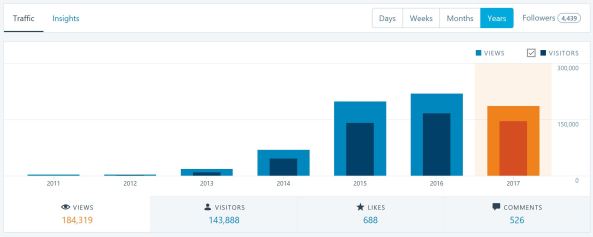
Next I select Stats on the left. Then I change from Days to Years near the top right.

My screen presently says Traffic (the alternative is Insights).

Following are some things that you can learn from your annual stats.

SEARCH ENGINGE TRAFFIC

If you get regular search engine traffic, you’re more likely to see significant frequencies for a few search terms. When you look at daily stats, most of the search terms that led to your blog are hidden. But when you add this up for the whole year, you might see a few search terms with multiple hits. It takes about 1000 views on average to get one search term that isn’t hidden, so if you get tens of thousands of views per year, there is a chance of seeing some search terms here, and if you get 100,000 views per year, you might see something significant. (But if most of your views don’t come from search engines, you’ll need more views.)

The most popular search term to reach my blog turns out to be “Amazon.” I see that 35 people reached my blog after searching for “Amazon.” Plus all the times that happened, but the search term was hidden. With 69,477 unknown search terms, it probably happened many more than 35 times.

Even if you only see a search term listed once, it may still be helpful. One of the search terms on my list had a typo. I searched my website for that typo and discovered that same typo in one of my articles. My first inclination was to correct the typo, but then I thought: Wait a minute, somebody accidentally discovered my website because of that typo. So I let that one go. (I wouldn’t make a typo on purpose, of course, but if something good came out of one of my mistakes, I’ll take it.)

HELPFUL POSTS

In December, your yearly stats show you which were the most popular posts and pages for the year. When you check your daily or weekly stats, the top-performing posts and pages can vary. At the end of the year, this can help you assess which of your posts are popular over a long period of time.

Some of my most popular posts for 2017 were written 2-3 years ago. When I write an article, it gets a lot of traffic for a few days, but then the traffic usually drops off. But once in a while, the article starts to gain traffic through search engines. Such articles can remain popular for a long period of time. Your yearly stats can help you find articles that receive regular search engine traffic. If you know which of your posts are more successful long-term, it can help you have more success in the future. Spend some time thinking about why those posts are attracting more search engine traffic than your other posts. There is a valuable lesson to learn here.

WHERE IS EVERYONE COMING FROM?

Check your referrers. In 2017, I had over 150,000 views come from search engines. Over 90% of my blog traffic comes from search engines. If you write helpful, unique content-rich articles, you can net a lot of search engine traffic, which can really help your blog grow long-term.

If you feed your WordPress blog into Twitter and Facebook, you may also see significant traffic coming from your other social media followings. (Note: If you do feed your WordPress blog into both Twitter and Facebook, don’t also feed your Twitter and Facebook posts into one another or back into WordPress—or you run the risk of seeing double or triple posts on at least one social media outlet.) A couple thousand visitors reached my blog through Facebook, but not as many reached my blog from Twitter.

How many people are reading your posts in the WordPress Reader? This stat shows you how many of your followers are reading your posts in the Reader. If you allow people to follow your blog via email (which I do), then not all of your followers will read your posts in the Reader.

Who are your most helpful rebloggers? I owe a huge THANK YOU to TheStoryReadingApeBlog, whose reblogs have generated much traffic to my articles. If you’re an author or blogger, you should follow the StoryReadingApe (a different Chris), who is an amazing supporter of authors and bloggers. If you’re an author, check out the StoryReadingApe’s submission guidelines. I have many other helpful rebloggers (too many to mention everyone, and I apologize if your blog didn’t make my list), many of which are also author supporters: The list includes NicholasRossis, Smorgasboard, Don Massenzio, Kim’s Author Support Blog, and many others.

There’s something similar that can be as effective as a reblog. Sometimes, another blogger writes an article that refers to your post. If that author’s article generates much traffic, and especially if it happens to arouse interest in your website, you can get some helpful traffic this way. As an example, check out the following article by Derek Murphy at Creativindie.com: “How much does the average author earn publishing their book” (it’s an interesting article, by the way). If you read that article, you will see that he quotes an article from my blog (he contacted me in advance of posting the article by the way). I actually received hundreds of visitors to my website from that one article. So I owe another huge THANK YOU to Derek Murphy for that.

When I clicked the View All link at the bottom of Referrers, I discovered a very long list of the many ways that visitors reach my blog. It’s both fascinating and helpful to read that list. I actually had significant traffic reach my blog from the KDP community forum, Kindle Boards, Goodreads, and many other author support forums. (I don’t participate in discussions at Goodreads, and have hardly ever used Kindle Boards, but I was fortunate enough that a few of my articles were referenced during authors’ discussions. It’s cool that some authors know about my blog, and found it helpful enough to mention while talking to other authors.)

CLICKETY CLICK

Do people click on links on your blog? The yearly stats show you which links are getting clicked on the most.

Thousands of people click on a link to Amazon.com on my site.  Of course, there are many reasons for this. I’ve written several articles about various features on Amazon, and sometimes link to a specific page on Amazon that has information about that feature or contains a download for a free Amazon tool. Remember, several people reach my website after searching for “Amazon” in a search engine. They probably reached one of my articles about an Amazon feature or tool, and then clicked on a link in that article to check the feature or tool out at Amazon. But a few visitors may click on a link to one of my books or my Amazon author page. And I’ve had a few guest posts that featured other authors, so hopefully a few of those clicks take readers to their books and their author pages.

Regarding reblogs, under Clicks you can find out how effective your own reblogs of other bloggers are. Or if you reference other websites in your posts, you can see how many of your visitors and followers check out those websites.

INSIGHTS

Now switch from Traffic to Insights, near the top left (but not in the left sidebar). You can find more information here.

Check out your Tags & Categories. This is basically how your blog looks from the outside (perhaps to search engines). Those are the topics you have written about most frequently this year, based on the tags and categories that you’ve used. Is this how you want your blog to be categorized? If not, it might impact how you use tags and categories from now on.

Also check out Comments by Authors. These are the valuable people who have given life to your blog, making your articles interactive, and who have evidently enjoyed communicating with you and/or were really interested in your posts (or in you, perhaps). I owe a huge THANK YOU to Don Massenzio, Chris the StoryReadingApe, Kim’s Author Support Blog, Alicia Butcher Ehrhardt, Nicholas Rossis, Dr. Stone, and countless others (sorry I don’t have space to mention everyone).

Do you let people follow you by email? If so, check out your Follower Totals. This shows how many of your followers follow you by email.

You can get another interesting stat by dividing your total number of Views by the total number of Visitors. This ratio shows you how many pages the average visitor reads on your blog. Do people tend to read one article and leave, or do they tend to stay around and read more articles? Are your articles so helpful that people often read several of them after discovering your blog?

MAYBE YOUR STATS ARE BETTER THAN IT SEEMS

You may have hidden stats.

I do.

I show the full article right on the home page so that nobody has to click a Read More link.

This is convenient for visitors. They can read several full articles, and when they do, I only get credit with a single view (just my homepage).

Some bloggers who have changed their blogs to force readers to click a Read More button have seen an increase in their recorded blog views—but they are almost certainly losing traffic at the same time. The increased frequency of views can be misleading.

I realize that some people don’t like that Read More link. I try to do my visitors a favor, knowing that I myself don’t like to have to click those links (sh: I sometimes X out the site instead).

But that results in hidden traffic. I actually have many more views than are recorded. If someone visits my homepage and reads 5 full articles, I get credited with 1 view instead of 5 (because they don’t have to click anything to read those articles).

Now if I changed my site to force those readers to click a Read More link, when one person visits my homepage, they would have to click (at least) 5 different links to read 5 articles, and I would get credited with 5 views instead of 1.

I would see increased “traffic” according to my daily views. BUT I would be losing traffic—because some visitors won’t bother to click that Read More link.

If 1 out of 3 visitors who would have read 5 articles directly from my homepage walks away, I would get 11 clicks (5 + 5 + 1) from 3 visitors using Read More links, whereas currently I would only get 3 clicks for 3 visitors. Comparing 11 clicks to 3 clicks, it seems like there is more traffic when you use that Read More link. But what really happened is there were 3 visitors each way: When 3 visitors led to 11 recorded views, 11 articles were read, compared to the case when 3 visitors led to 3 recorded views but 15 articles were read. You see, I want to be read more (with hidden views), then to have more recorded views (but actually get read less).

But I prefer to have 3 visitors give me 3 clicks (rather than 11) when all 3 visitors read 5 articles on my homepage (that would make 15 views, with 12 of the views hidden—that is, not recorded).

I don’t want to lose that visitor who walked away because they didn’t want to have to click to Read More. So I’ll take fewer recorded views to have more people read my content.

That’s a personal choice, and not necessarily the best one. If your goal is to get as many recorded views as possible, the Read More link may help with your goal.

There is another advantage of that Read More link: You know your content is really compelling, or at least the beginning of your article did a good job at creating interest, if a lot of people are clicking to Read More.

If you add that Read More link and your views go down, you need to work on the beginning of your articles. There is some helpful information to gain here.

Personally, I get enough views, the number of recorded views doesn’t matter to me. I don’t want a Read More link to discourage one person from reading an article, and I don’t want a Read More link to cause a visitor to not want to return to my site. (Again, I would probably have more recorded views using the Read More link, and it would “seem” like there is more traffic using that feature when there really isn’t. The difference is that the Read More link removes the “hidden” views.)

There are other ways that you may have hidden stats.

For example, if you include a Follow by Email option without a Read More link, your email followers can read your full articles without actually visiting your website. Again, I offer this option out of convenience to my followers. I’m happy to have people read my articles by email (as long as the email came from me—I don’t support plagiarism, of course). I don’t need them to come to my blog to read my articles.

WHAT COOL SEARCH TERMS DID PEOPLE USE TO REACH YOUR BLOG?

I found some good ones on my list. One of my favorites is “funny paragraphs.” Imagine someone entered “funny paragraphs” into Google (or Bing or Yahoo or whatever) and found one of my articles. That wasn’t planned, but it’s a happy coincidence.

Write happy, be happy. 🙂

Chris McMullen

Copyright © 2017

Author of A Detailed Guide to Self-Publishing with Amazon and Other Online Booksellers

  • Volume 1 on formatting and publishing
  • Volume 2 on marketability and marketing
  • 4-in-1 Boxed set includes both volumes and more
  • Kindle Formatting Magic (coming soon)

Follow me at WordPress, find my author page on Facebook, or connect with me through Twitter.
Comments

Click here to jump to the comments section.

Kindle Unlimited Per-Page Rate Continues to Rise (November, 2017)

KINDLE UNLIMITED PER-PAGE RATE, NOVEMBER, 2017

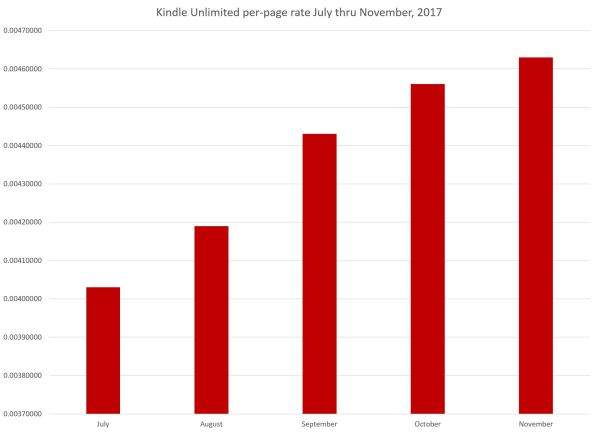
Through July, 2017, the Kindle Unlimited per-page rate had been spiraling downward.

But Amazon introduced KENPC v3.0 before it could drop below $0.004 per page.

The per-page rate has steadily climbed since.

  • November: $0.00463 per page
  • October: $0.00456 per page
  • September: $0.00443 per page
  • August: $0.00419 per page
  • July: $0.00403 per page

The KDP Select Global Fund also hit a new record high.

  • November: $19.8 million
  • October: $19.7 million
  • September: $19.5 million
  • August: $19.4 million
  • July: $19.0 million
  • June: $18.0 million

It’s nice to see the per-page rate rising alongside the KDP Select Global Fund.

However, at some point the per-page rate will reach a plateau, whereas the KDP Select Global Fund has risen steadily for years.

I remember the days when the KDP Select Global Fund was below $10M. I remember the people who claimed that $10M would just be the gravy to entice authors into KDP Select, and that it would surely drop once it got settled. But it’s since doubled, continuing to rise.

I also remember every time the Kindle Unlimited rate dropped to near $0.004 per page several people crying the end of the world, that it would drop below $o.004 and never return. But yet again it has bounced back.

The Kindle Unlimited per-page rate is a bit of a roller coaster ride with peaks and valleys. After it peaks and drops a bit, try not to panic. 🙂

Overall, the KDP Select per-page rate has experienced relative stability between $0.004 and $0.005 (occasionally rising slightly over $0.005).

Copyright © 2017

Chris McMullen

Amazon Reviews Now Require a $50 Minimum Customer Spend

NEW $50 MINIMUM FOR AMAZON CUSTOMER REVIEWS

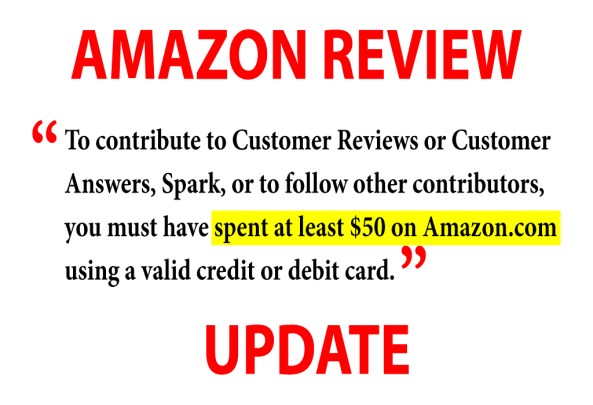
Customers used to be able to write a review at Amazon as long as they had made a purchase.

Amazon now requires customers to spend a minimum of $50 using a valid credit/debit card before they can write a customer review.

https://www.amazon.com/gp/help/customer/display.html?nodeId=201929730

This is one of several steps that Amazon has made over the years in an effort to improve the customer review system.

Amazon strives for organic customer reviews.

Organic reviews are the best reviews you can get.

For years, Amazon has effectively blocked reviews that are posted by friends and family of authors.

Verified purchase reviews now have an advantage over non-verified reviews when it comes to visibility on Amazon.

Amazon uses machine learning to help determine how prominently a review will display on a product page.

This new $50 minimum customer spend is another of many steps in the right direction.

Amazon’s customer review system has never been (and may never be) perfect, but Amazon is working to make it better.

Remember the days when you walked into a bookstore, and the only reviews you saw were glowing reviews on the back cover and front matter?

Write happy, be happy. 🙂

Chris McMullen

Copyright © 2017

Author of A Detailed Guide to Self-Publishing with Amazon and Other Online Booksellers

  • Volume 1 on formatting and publishing
  • Volume 2 on marketability and marketing
  • 4-in-1 Boxed set includes both volumes and more
  • Kindle Formatting Magic (coming soon)

Follow me at WordPress, find my author page on Facebook, or connect with me through Twitter.
How to Crop a Circle (PhotoShop Tutorial)

HOW DO YOU CROP A CIRCLE IN PHOTOSHOP?

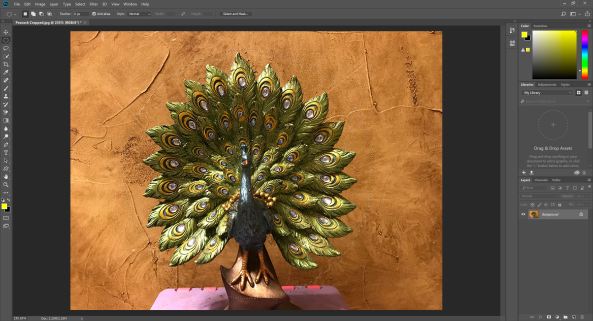
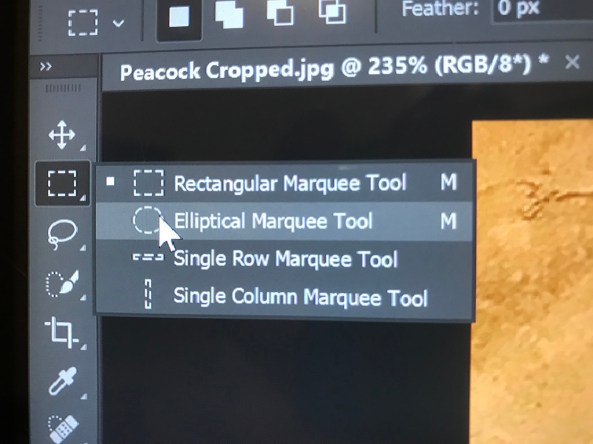
The first step is to select the Marquee Tool on the PhotoShop toolbar.

In all the versions of PhotoShop that I’ve used, this toolbar appears on the left side of the screen.

The Marquee Tool is the second button on the toolbar.

The two most common options are the Rectangular Marquee Tool and the Elliptical Marquee Tool.

We’ll first try a rectangular crop, since that’s more common. Don’t worry, we’ll apply a circular crop soon.

Select the Rectangular Marquee Tool.

Left-click at one point in the picture that you would like to be one of the four corners of the rectangle.

As you drag your cursor, a dotted rectangle will appear.

It will tell you the width and height of the rectangle as you drag.

When you are happy with your rectangular selection, let go of the mouse button.

If you make a mistake and wish to try again, press Ctrl + Alt + Z. Each time you press Ctrl + Alt + Z, PhotoShop goes back one step.

Once you’re happy with your selection…

Select Image at the top menu (the one that starts File, Edit, Image, Layer, etc.).

Choose Crop.

Remember, you can press Ctrl + Alt + Z repeatedly to undo one step at a time.

Now we’ll make a circle crop instead.

Grab the Marquee Tool again from the left toolbar.

This time, choose the Elliptical Marquee Tool.

First just visualize in your mind the circle (or oval) that you wish to make.

To get the circle in the neighborhood of where I want it to be…

I focus on the point that will be the top left corner of the circle, and then I pick a spot even higher and further left than that.

(It may take a little trial and error to get good at selecting the initial point for your circle or oval. It may not work as you intuitively expect.)

Left-click on this point and drag the Elliptical Marquee Tool. I drag down to the right.

If you want a perfect circle, keep your eye on the width ( W ) and height ( H ) of your ellipse.

Position your mouse just right so that the width and height are equal in order to carve a perfect circle.

Press Ctrl + Alt + Z if you need to undo your selection. You can press this repeatedly to go back multiple steps. (Note that Alt in there. If you only press Ctrl + Z, you can only go back one step, whereas Ctrl + Alt + Z lets you go back multiple steps.)

Once you’re happy with your selection…

You could go to Image and select Crop…

But I prefer to go to Edit and select Cut.

Then I go to File and open a New Document.

I choose the option for the New Document to match the clipboard selection.

Then I go to Edit and select Paste.

This pastes my circular crop into a new file, as shown below.

Sometimes, the Quick Selection Tool on the toolbar can help you make a quick selection.

It’s worth trying, but this tool isn’t always quite as “magical” as one might hope.

For simple shapes where PhotoShop sees the image you want clearly against the background, the Quick Selection Tool can make crops easy.

In that case, once you have it selected properly, you can get it with a quick cut and paste.

However, when that doesn’t work, you can use the Marquee Tool as we have done here, or your can try the Lasso Tool for a freehand selection.

If you need to get into the finer details of Photoshop, you may want to Google how to create paths and masks, for example.

(There is a Crop Tool, but I’m not a big fan of using it to make crops. Though it is handy if you need to rotate the picture and make a rectangular crop.)

PhotoShop happy, be happy. 🙂

Chris McMullen

Copyright © 2017

Author of A Detailed Guide to Self-Publishing with Amazon and Other Online Booksellers

  • Volume 1 on formatting and publishing
  • Volume 2 on marketability and marketing
  • 4-in-1 Boxed set includes both volumes and more
  • Kindle Formatting Magic (coming soon)

Follow me at WordPress, find my author page on Facebook, or connect with me through Twitter.

Goodreads Giveaways: Important Changes Effective January 9, 2018

Image from ShutterStock.

GOODREADS GIVEAWAY CHANGES

Like many authors and publishers, I have used Goodreads giveaways for years to help with discovery, create buzz, and seek honest reviews for newly released books.

I have been a big fan of the Goodreads giveaway, having written a few articles about it on my blog.

I’m still a fan, but there are some important changes coming January 9, 2018:

  • All KDP authors/publishers will be able to offer eBook giveaways. Previously, this was only open to traditional publishers.
  • It will cost a minimum of $119 to run a Goodreads giveaway. That’s in addition to the cost of purchasing and sending physical copies (if you choose to run a contest for print books). Until now, there has been no fee to run a Goodreads giveaway.
  • Entrants will have the book automatically added to their Want-to-Read lists (which friends potentially see through their update feeds).
  • You will gain additional exposure, as Goodreads will notify the author’s followers and anyone who has already added the book to their Want-to-Read list about the new giveaway.
  • Initially, Goodreads giveaways will only be open to residents of the United States. (This restriction applies to entrants, not to authors.)
  • It’s possible to gain premium placement among Goodreads giveaways by paying $599 (instead of $119) for a Premium Giveaway (instead of a Standard Giveaway).
  • You will need to link an Amazon account to your Goodreads account in order to run a Goodreads giveaway. (You can create a new Amazon account if you don’t already have one.)

Are these changes good or bad?

Like most changes to the publishing world, it will be better for some authors than others.

Let’s start with the bad. There are really only two things that I don’t like:

  • It’s no longer free. Having to spend $119 seems a bit pricey. And if you run a print giveaway, it costs even more, as you must pay for author copies plus shipping and packaging.
  • Only residents of the United States may enter the giveaway, at least initially. It’s not a big issue for me, personally, since most of my book traffic comes from the United States, but I have acquaintances in the United Kingdom and Canada who feel left out.

The real question is this:

Will the benefits of a Goodreads giveaway offset the cost?

Keep in mind that with the changes to the Goodreads giveaway program, it’s possible that it will be more effective now than it has been in the past.

How might it be more effective starting January 9, 2018?

  • There might be less competition from other giveaways, making it easier for readers to discover your book. Not as many authors/publishers will be willing to pay the fee.
  • The giveaway might gain more exposure since the book will be automatically added to Want-to-Read lists, and since Goodreads will notify the author’s followers and anyone who has already added the book to their Want-to-Read list that a giveaway is available for the book.

Note also that the cost of the giveaway has not necessarily increased as much as it may seem.

Starting January 9, 2018, you can run a Standard Giveaway for $119. However, if you choose to run an eBook giveaway instead of giving away print books, you will save on the cost of author copies, shipping, and packaging. I’ve actually paid more than $119 for a Goodreads giveaway when it was FREE: I’ve spent over $50 on author copies and over $80 on shipping for several giveaways, which comes to over $130. In those cases, I would have saved money by paying $119 for an eBook giveaway.

The new cost of the Goodreads giveaway encourages authors/publishers to offer more prizes.

You pay the same $119 fee for a Standard Giveaway, regardless of whether you offer a single book as a prize, or several copies of the same book.

If you only give away one book, $119 is a pretty steep price to pay. However, if you offer several copies of your book, the cost per book drops down dramatically.

Like all paid marketing, Goodreads giveaways are more likely to be cost-effective for authors who write compelling books. If you only sell a few books per month, paying $119 for a giveaway will come at a great loss. If your book sells thousands of copies per year, paying $119 is relatively cheap.

Are you upset that you won’t be able to run a free/inexpensive giveaway?

That’s ridiculous! Of course you can.

You can run an Amazon Giveaway directly from your book’s Amazon product page.

You just pay for the selling price of the book. For a print book, you must pay the shipping charges, too. In either case, you will be compensated partly later when you receive your royalty. You can even require entrants to follow you at Amazon. (When you publish a new eBook through KDP, Amazon notifies your Amazon followers of your new release.)

Learn more about the changes to Goodreads giveaways:

  • Click here to see the Goodreads giveaway help page.
  • Click here to read an article by David Wogahn.

Would you like to tell Goodreads how you feel about the new giveaway program?

  • Click here and scroll down to the bottom of the page to find the survey (if it’s still available). Look for “send us feedback” in bold letters.

Write happy, be happy. 🙂

Chris McMullen

Copyright © 2017

Author of A Detailed Guide to Self-Publishing with Amazon and Other Online Booksellers

  • Volume 1 on formatting and publishing
  • Volume 2 on marketability and marketing
  • 4-in-1 Boxed set includes both volumes and more
  • Kindle Formatting Magic (coming soon)

Click here to view my Goodreads author page.

Follow me at WordPress, find my author page on Facebook, or connect with me through Twitter.

What Cool Word Have You Read in a Book Recently?

I was reading The Secret of Spellshadow Manor today by Bella Forrest, when I came across the word

—susurration—

meaning soft murmuring or rustling sounds.

It’s not a word I read or use every day. I enjoy coming across a cool word when it happens once in a while.

I don’t like it when an author goes out of his/her way to use uncommon words. I like the book to read well (for me).

But when the best word to use happens to be uncommon, the ‘best’ word is still the ‘best’ word.

When I don’t recognize the word and the author includes a little clue to help deduce the meaning, I like it even better.

In the case of the book I was reading today, it was great: The book is quite readable, the word felt (to me) like it belonged, and I could tell what it meant from the context.

(If you want to check out Bella Forrest’s—who I expect has never heard of me, and who certainly has no idea that I’m writing this post—novels, I recommend that you start with The Gender Game.)

Please share a cool word that you read in a book recently, including the title and author of the book. Surely, the author deserves a little publicity for helping you enjoy the word.

Write happy, be happy. 🙂

Chris McMullen

Copyright © 2017


NY Published Author Successfully Transitions to Self-Publishing: The Amazing Story of Cheryl Holt

After Writing 24 Books for New York Publishers, Cheryl Holt Adds 24 More by Self-publishing

This amazing, inspiring author success story needs to be shared throughout the indie publishing community.

I was very fortunate to interview Cheryl Holt, who had written 24 books for New York publishers and then successfully transitioned to self-publishing.

You can hear Cheryl’s story straight from her, and there is much that you can learn from her answers to my questions.

(1) What have you done to help market your self-published books? Was this a viable option when you were traditionally published?

When I wrote for the NY companies, I was “just” a paperback romance writer, so I got very little marketing assistance from my publishers. The biggest thing they did for me was to always buy me an ad in a romance trade magazine, Romantic Times, when I had a book released. Otherwise, I was pretty much on my own as far as handling any marketing. So from the very beginning, I had to devise my own marketing strategies, and I’ve continued to use those old tried-and-true ones as well as latching on to new ones that technology has made available.

I market my self-published books in exactly the same way that I marketed my books that were published by the NY companies. My biggest marketing tool, and the one I spend the most time on, is growing my mailing list. I started my mailing list with my very first release, and I constantly work on it. I have sign-up forms posted all over my web site, and I run contests several times a year, where I give away autographed print copies of my novels as the prize. The entrants’ email addresses are added to my mailing list. I work on the list constantly; I work on it everyday. The number one way to sell something (in any field) is through direct marketing to your dedicated customer base. So I keep track of my readers, and when I need to notify readers about a new release, that’s where I start. They’re loyal and voracious, and they’ve been very kind to me in sticking with me through all my career ups and downs. I’m always so grateful to them, and they’re the first to hear about everything that’s happening with me and my books.

There have been changes to my marketing that have come over the years. I have a Facebook fan page, and a Twitter account, but I don’t use them for personal postings. I simply post about my books, what’s coming, and what’s happening. I’ve always had a web page, ever since it became a “thing” that people could have (around 1999). I’m meticulous about keeping it updated. My readers like to know what’s coming next and when it’s coming, so I try to make it easy for them to log on and quickly see what’s happening. If you’d like to take a peek, the URL is www.cherylholt.com.

When I have a book coming, (in the month before the release date) I do a ton of promo to get myself noticed. I do blog tours at the big romance reader sites, I run contest giveaways, I do interviews, I buy banner ads, I buy spot ads, I do reader promotion at reader sites. I’ve even hosted Facebook parties with lots of guest authors and prize giveaways.

The main problem for self-published authors is that we’re being buried by a wave of content that’s swept over all of us. So it’s a hundred times harder to get noticed than it was ten years ago. There are so many books out there now, and even with my name recognition and dedicated fan base, it’s an enormous and exhausting challenge to get people to notice that I have a book coming.

For example, this was the first year since 2005 that I didn’t produce a book trailer for my new series. The web is so overloaded with video content that it’s just about impossible to justify the expense of creating a book trailer. Even with expanded distribution by a video company, any video is thrown into a sea of millions of other videos. So I’ve stopped doing them.

But otherwise, each and every year, I do more promo. It’s a constant battle to stay ahead of the game, and that hasn’t changed with self-publishing. I’m doing more and different types of promo, and I’m using more intense marketing than ever before.

(2) What advice would you offer new authors who are just learning the self-publishing ropes?

My biggest advice would be to read all about self-publishing and to learn as much as you can about it before you jump into it. And once you get going, keep reading and keep learning. The publishing industry—both on the NY end of it and in the self-publishing world—is changing so fast, and you have to keep up, or you’ll get crushed in the wave of what’s happening.

I heartily advise people to join a writer’s group (both a local one and a national one). At the local one, you can hang with other writers once a month and listen to how they’re working and adapting to this strange, new world we’re in. There are also big national groups you can join in various genres, such as Romance Writers of America or Sisters in Crime. You’ll get a monthly newsletter that contains articles about markets, trends, and changes.

If you can afford it, try to attend a big national writer’s conference. They’re always held once a year. Take all the classes and chat with other writers so you can absorb some of what they’ve figured out.

There are publishing companies, such as Writer’s Digest Books, that publish tons of “how to” books about writing, publishing, and book marketing, particularly e-book, self-published marketing. Start buying them and reading them.

Go out on the web and find some good blog sites (how about Chris McMullen’s blog?!) and other sites where authors provide guidance and advice. If you’re a tech dummy, as I am, find companies that can help you figure out how to format and publish on your own. I always use BookBaby to format and distribute my novels. I met them in the vendor’s room at a national writer’s conference, when I was first trying to figure out how I could start publishing my own books. I had no idea how to do that, and it seemed really complicated. I’m not much of a computer person, and all the processes seemed beyond my ability to figure out. At one on-line site, I was told to read their 85-page formatting manual before I tried to post anything! It was all so bewildering.

When I talked to the Book Baby book rep, he said, “We can do all that for you.” I about fainted. It had never occurred to me that there were companies out there that could provide exactly the sort of services I needed.

There are all kinds of companies now that help authors get their books published. When I first started writing novels, the web wasn’t a “thing” yet. I lived in a little town in rural Oregon, and I staggered around for years, trying to figure out how to start. It’s so much easier now to get information. Join a writer’s group! Attend regularly! Find several good blog sites, read them religiously, and absorb every bit of advice that’s offered! Read books about marketing and trends! Do some research and find companies that can help you. Read, read, read. Learn, learn, learn.

That’s always the best advice. Learn—and get smarter and better.

(3) When you made the switch from writing for NY publishers to self-publishing, what changes (if any) did you make to your writing?

I started writing manuscripts in the late 1990s, and my first books were published in 2000. For a decade, I wrote for various NY publishers, and I was a genre paperback writer. When I started out, paperbacks were really long. I’m dating myself, but do you remember books like SHOGUN? They were massive in length. So my first novels were really long, but “book length” was a factor that changed significantly in the decade that I wrote for those NY companies. And that’s precipitated the biggest changes to my current writing.

Book length is measured by word count, and my early novels were around 110,000 words. But starting about 2004, the price of paper shot up dramatically, so the NY publishers responded by shortening the length of books that they published. This caused a significant abbreviation of the size of novels, but it also caused authors to adopt major stylistic changes in our writing as we had to be able to tell much more story in a much shorter span of pages. Authors had to cut descriptive prose and tell the story using more dialogue. This brought us fast, fleet stories that were much easier (quicker) to read, but for many readers, they’ve gotten much less satisfying.

My early paperbacks were around 110,000 words, and when I finished writing for those NY companies a decade later, my books had to be between 80,000 and 85,000 words. That’s a considerable drop in book length, which brought about significant changes stylistically, so my early NY-published books are very different from the later ones.

I liked writing longer novels, and my biggest NY sales came in the beginning of my career when books were much longer and I was able to write long, emotional stories. I’m great at using emotion and drama, and I feel like I’m better at a longer length—and that my readers enjoy a deeper, more satisfying emotional story. So I’ve gone back to writing long books. With my self-publishing of e-books, I don’t have to worry about the price of paper or of page length. I’m typically writing books that are 120,000 words now, and my readers seem to really enjoy the longer length. I’m able to give them a “bigger”, more involved story with more in-depth characters and interesting plots.

My longest books, the ones I’ve published on my own, have been my biggest sellers in my career.

Cheryl Holt’s Story: The Transition from NY Publishers to Self-publishing

BookBaby author Cheryl Holt made a name for herself, as well as a respectable living, writing historical romance novels, first for a dedicated paperback publisher, then for several big mass market publishers. Her books did well, though Holt often had to come to terms with market forces beyond her control, that didn’t light her creative fire.

Holt had started writing as a young mother in her 40s. At home with small children, she wanted something to do, something that earned some money. She landed on novel writing. “I was clueless about how the money worked, or how the business worked,” she admits. Inspired by stars like John Grisham, she drew on her legal training to craft her first books. Her forays into suspense didn’t pan out, so she decided to look elsewhere.

“The romance companies back then used to find their new talent among moms who were at home and writing to earn a bit of extra money. They were essentially paperback mills who ran romance book clubs. They bought straight from the writer. ‘I’ll sell these romances,’ I told myself, ‘then I’ll go back.’”

Her seventh manuscript, a Regency-era romance, finally sold. Holt didn’t go back, but dug in, writing and editing steamy tales in the car, at soccer practices and swim lessons, whenever she had a few spare moments. She discovered something she never suspected: She could write really, really good love stories.

At the time, romances ran longer and readers devoured elaborate storylines. “When I was starting and reading, historical romances were just massive,” Holt recalls. “They had wild love stories, when the heroine was, say, taken to harem after being kidnapped by pirates. I’m not a particularly romantic person, but I got hooked on them. Romance readers have certain things they love, but I didn’t know what they were. I had no preconceived notions. Readers loved that.”

Holt’s unconventional takes on the genre led to her selling book after book to publishers. One of her early books sold out nationwide due to a hot cover that connected with fans, and soon she built herself a sizeable following. As tastes changed, Holt learned the hard way to adapt. By 2000, erotic romance was the rage, and Holt wrote what publishers asked for. But her readers longed for the sweeping romantic tales that had launched her career.

“Books were getting shorter, more erotic,” Holt says. “It was leaning toward pornographic really fast. I wasn’t into that. My sales were starting to fall. My hardcore fans kept asking why everything was vampires and erotica, instead of real love stories.”

Then 2008 hit, the economic downturn that kicked the legs out from under many mass publishers. Holt had a deal in place, but her publisher faced a daunting reality: the overwhelming majority of bookstores closed as the economy faltered, stores where her publishers had banked on selling Holt’s work. “They wrote me off as a loss,” she sighs.

Holt found herself unemployed, with a family and a mortgage in Los Angeles, one of many workers in their 50s looking for a job, any job. She was so discouraged, she thought she’d never bother with writing again, though writing had been her profession for years. “The recession cut a swath through the ranks of paperback writers,” she says. “I took it personally. The universe was telling me to go get a real job, but there were no jobs.”

Time passed, however, and Holt noticed that fans were still out there, hoping for new reads from their favorite authors. Kindle came onto the scene, and Holt began to reconsider. “I asked myself if I should start over. I was good. I was popular, but the companies didn’t really care. We writers were a dime a dozen in their eyes. There was no chance to go back that way.”

Self-publishing beckoned. The project management and production side of things still seemed daunting, however. Then, at a romance conference, she ran into some people from BookBaby, who helped her see how simple publishing her work independently could be.

After writing 24 novels for publishers, Holt has put out 24 of her own, letting her own interests and fan response determine when and how she publishes her work. An example: She gave her readers all three books in a trilogy at once, where a traditional publisher would have doled the books out over several years.

Like love, an independent career is not as easy as it seems at first. It takes work. Holt still struggles to find the right supporting team, and income isn’t what it once was during paperback publishing’s heyday. But Holt is glad she’s still able to write and reach readers, now on her own terms. “It’s a blessing to be on my own. My best sellers are ones that the publishers rejected,” she laughs. “My Lord Trent trilogy, for example, have been best-selling books of all.”

You can find out more about BookBaby and their recent Independent Authors Conference.

More about Novelist Cheryl Holt

CHERYL HOLT is a New York Times, USA Today, and Amazon “Top 100” bestselling author who has published forty-eight novels.

She’s also a lawyer and mom, and at age forty, with two babies at home, she started a new career as a commercial fiction writer. She’d hoped to be a suspense novelist, but couldn’t sell any of her manuscripts, so she ended up taking a detour into romance where she was stunned to discover that she has a knack for writing some of the world’s greatest love stories.

Her books have been released to wide acclaim, and she has won or been nominated for many national awards. She is considered to be one of the masters of the romance genre. For many years, she was hailed as “The Queen of Erotic Romance”, and she’s also revered as “The International Queen of Villains.” She is particularly proud to have been named “Best Storyteller of the Year” by the trade magazine Romantic Times BOOK Reviews.

She lives and writes in Hollywood, California, and she loves to hear from fans.

Visit her website at www.cherylholt.com.

Follower her on Facebook.

Check out her latest series:

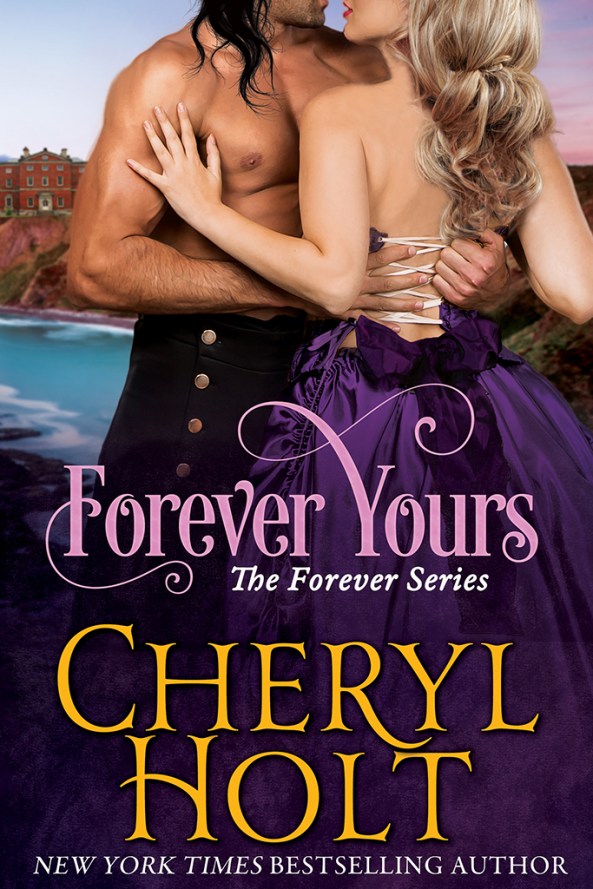
Forever Yours by Cheryl Holt

Write happy, be happy. 🙂

Chris McMullen

Copyright © 2017

Author of A Detailed Guide to Self-Publishing with Amazon and Other Online Booksellers

  • Volume 1 on formatting and publishing
  • Volume 2 on marketability and marketing
  • 4-in-1 Boxed set includes both volumes and more
  • Kindle Formatting Magic (coming soon)

Click here to view my Goodreads author page.

Follow me at WordPress, find my author page on Facebook, or connect with me through Twitter.

Optimistic Authorship

THE OPTIMISTIC AUTHOR

You can approach your writing with optimism or pessimism—your choice.

(Though complaints, worries, and frustrations may become more of a habit and less of a conscious decision.)

Optimism can be an asset to your authorship.

When you believe that your book will be successful, you are more likely to:

  • motivate yourself to work hard
  • stay focused while writing
  • do the necessary research
  • proofread carefully
  • put time and effort into cover design and formatting
  • put a small investment in cover design or editing
  • make a full effort to market your book
  • find a way to harness your creativity in your marketing

On the other hand, if you are pessimistic about the outcome of your book, you are less likely to put in the work needed to help make your book successful.

Thus, your outlook may pull a pivotal role in the success or failure of your book launch.

Once you start getting sales, if sales are slower than you expected, optimism can carry you through the slow times. If you are optimistic that you can improve your sales, you are more likely to try new marketing ideas and eventually discover strategies that work for you. You will be more likely to write additional books—and put the proper effort into those, too—if you remain optimistic that your writing will take off (and it sometimes takes multiple good books to gain traction). But if you are pessimistic, it’s easy to give up without really putting the effort into it.

The optimistic author will find the good in a bad review, while the pessimistic author will see something bad in a good review. The optimistic author appreciates the neutral review, whereas the pessimistic author is upset that it wasn’t a five-star review.

When a potential customer visits the optimistic author’s social media sites and blog, the customer has a positive experience.

When a potential customer sees complaints and frustration in the author’s social interactions, the customer is seeing publicized negativity.

Write happy, be happy. 🙂

Chris McMullen

Copyright © 2017

Click here to view my Goodreads author page.

Author of A Detailed Guide to Self-Publishing with Amazon and Other Online Booksellers

  • Volume 1 on formatting and publishing
  • Volume 2 on marketability and marketing
  • 4-in-1 Boxed set includes both volumes and more
  • Kindle Formatting Magic (coming soon)

Follow me at WordPress, find my author page on Facebook, or connect with me through Twitter.
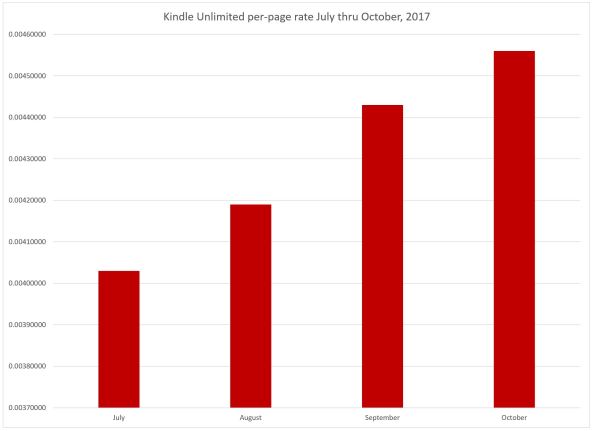
Kindle Unlimited: October, 2017 Marks Steady Improvement

KINDLE UNLIMITED PER-PAGE RATE, OCTOBER, 2017

The Kindle Unlimited per-page has continued to increase ever since the inception of KENPC v3.0.

  • October: $0.00456 per page
  • September: $0.00443 per page
  • August: $0.00419 per page
  • July: $0.00403 per page

The KDP Select Global Fund has increased steadily over a much longer period (just a couple of years back, it was half as much).

  • October: $19.7 million
  • September: $19.5 million
  • August: $19.4 million
  • July: $19.0 million
  • June: $18.0 million

Copyright © 2017

Chris McMullen

Book Marketing by the Numbers

Two Valuable Book Marketing Statistics

Consider the following two numbers:

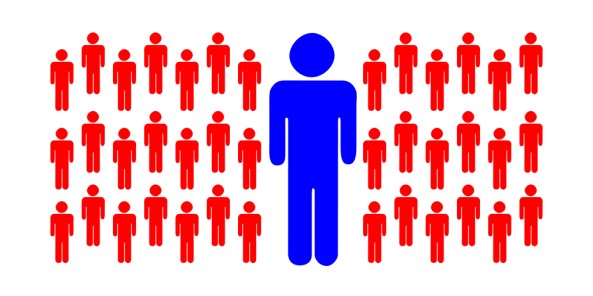
  • 1 out of 1000. That’s a rough estimate of how many strangers will click on a typical link to an Amazon product page.
  • 1 out 40. That’s a rough estimate of how many strangers who visit a product page for a book will purchase the book.

First, we’ll discuss these rates, and then we’ll discuss them in relation to book marketing.

Click-through Rate

The first figure, 1 out of 1000, is called a click-through rate (ctr).

A ctr of 0.1% (which equates to 1 out of 1000) is typical of internet advertising.

I’ve placed over 100 ads for a variety of books under multiple pen names on Amazon itself using Amazon Marketing Services (AMS), and most of my ctr’s fall in the range 0.05% to 0.2% (varying from 1 in 2000 to 1 in 500).

Some books get better ctr’s than others. Here are a few factors that affect the ctr:

  • compelling book cover (if the cover is seen with the link, this can be a strong factor)
  • effective title (conveys content clearly, reinforces cover, concise, and/or catchy)
  • effective branding (recognition of the author name, title, or series, for example)
  • audience targeting (the book appears to be highly relevant to the people who see the link)

Conversion Rate

The conversion rate is the percentage of people who purchase a product after visiting the Amazon product page.

A conversion rate of 2% to 4% (1 out of 50 to 1 out of 25) is relatively common. However, the conversion rate can vary considerably. A few books command conversion rates of 10% (1 out of 10) or more, but there are also a significant number of books with conversion rates well below 1% (1 out of 100).

Some books’ Amazon product pages get better conversion rates than others. Here are a few factors that affect the conversion rate:

  • compelling book cover (draws visual interest)
  • compelling description (arouses curiosity, creates suspense, promises desirable information, and/or reads well)
  • compelling Look Inside (professional appearance, fantastic start to the story, reads well)
  • audience targeting (the description and Look Inside reinforce expectations created by the cover or the information available with the link that brought the customers to the product page)
  • other factors such as customer reviews, author photo, author biography, etc.

Illuminating Example

Consider a book where the author does no marketing whatsoever: The only people discovering the book are shopping on Amazon. In this extreme example, the author didn’t even tell a friend or family member about the book.

The book does get discovered. Maybe the cover and title show up in an occasional keyword search, or maybe a customer discovers it browsing in a subcategory (perhaps using a Last 90 Days search filter). Once the book sells enough, it may also be visible on other books’ customers-also-bought lists.

Let’s suppose that the book sells 1 copy per day on average. Obviously, this number can be much more or much less, but the math is very simple with 1, so it’s a good place to start.

Let’s also go with the rough averages: 1 out of 1000 people who see the cover and title on Amazon click on the link to visit the product page, and 1 out 40 of the people who visit the product page purchase the book.

Wow! With these “rough” averages, there are 40,000 people visiting that book’s product page every day.

But only 1 out of 40,000 who saw the book cover and title actually purchased the book. Another wow!

This number isn’t far-fetched. It’s actually pretty common.

I have much experience advertising books on Amazon through AMS (over 100 ads on a variety of books in multiple pen names), and have discussed advertising statistics with several other authors. Many of the ads show in keyword search results, and others ads show on other books’ product pages. Advertising increases the overall number of impressions (the number of times that customers see the cover and title), but the ctr’s and conversion rates are typical of ordinary customer searches. A ctr of 0.1% (1 out of 1000) and a conversion rate of 2% to 4% (1 out of 50 to 1 out of 25) are rather common.

(I have over 25 ads that individually made over 1,000,000 impressions, so I have plenty of my own data to analyze, but I also interact with many different authors and discuss advertising with some of them.)

There is significant traffic on Amazon. There are millions and millions of customers. And they are seeing covers and titles of many different products. Obviously, the top sellers are seen millions of times per day, but even products that sell once a week are seen roughly 10,000 times per day.

Here is another way to look at this number: For every sale that you get from a complete stranger, roughly 40,000 people saw your cover and title, and roughly 40 people visited your product page. (But it’s a rough estimate. Maybe 100 people visited your product page.)

How to Improve Your Sales

There are two ways to go about this:

  • Work hard to get more impressions (to get more people to see your cover and title).
  • Make your product page more compelling (cover, description, Look Inside, beginning of story, author photo, author biography, etc.).

The first point is saying, if you can get 400,000 impressions per day on average instead of 40,000 impressions per day, you can sell 10 times as many books.

The second point is saying, if you can get 1 out 10,000 people who see your cover and title to buy your book instead of 1 out of 100,000 people, you can sell 10 times as many books.

Really, you want to do both things. If you can make your product page more compelling, it will make all of your book marketing more effective. It’s too common for a book’s Amazon product page to have some kind of deterrent such that only 1 out 100,000 (or worse!) customers who see the cover and title purchase the book. It just takes a few too many typos in the description or first chapter, or a cover or description that is bland, or a description that doesn’t set clear expectations to significantly deter sales.

One little detail can persuade customers to walk away. It takes strong appeal all around to command a killer success rate of 1 out 10,000 or less (customers who see your cover and title and then purchase your book), and this is quite rare. (This figure combines both the ctr and conversion rate together.)

Book marketing is important, too. It starts out slow because you can’t get tens of thousands of people to discover your book every day when you first begin to market your book. You have to start a blog with content that people may search for in the future, set up social media and interact online, find your target audience both online and offline, publish additional books, and look for other ways to get your cover and title out there (local newspaper, guest post on a blog, write an article for a website, podcast, local radio, conference, seminar, etc.) so that you can gradually grow the number of people who discover your book each day.

Another way that book marketing is important is that it can improve your conversion rate. When you have a positive interaction with your target audience (online or in person), those potential customers are more likely to purchase your book, review your book, or ignore reviews already showing on your product page.

On Amazon, only 1 out of 40,000 complete strangers who see your book may purchase it.

When you create positive interactions with your target audience in person, you might sell books to 1 out of 10 potential customers (or better), if you succeed in coming across as knowledgeable, or if you succeed in creating interest in your book or yourself.

When you create positive interactions with your target audience online, it’s probably not as effective as interacting in person, but you can reach many more people online, and online interactions are probably much more effective than marketing to complete strangers on Amazon.

Branding. Branding. Branding.

If 40,000 see your cover and title today, but only 1 of those people actually purchases your book, all is not lost. There is still branding.

39,999 other people who saw your cover, read your title, and saw your author name are potentially “branded” to some degree. These represent potential sales at a future date.

Branding is a very important part of book marketing (and all forms of advertising and marketing).

Your book cover is a visual brand. Your book title is another brand. Even your author name is a brand.

A brand is anything that customers come to recognize through repetition. In general, very few people purchase a product when they first discover it. Most people make a purchase after branding has occurred.

When you see a commercial on t.v., do you hop in the car, drive straight to the store, and purchase the product? If you watch t.v. for a few hours, you probably don’t buy the 100 different products that you saw the same day, right?

But when most people are purchasing a product, whether it’s a toothbrush or toilet paper, they usually prefer a “brand” that they recognize.

Branding is another reason that you should look for effective ways to market your book long-term.

The best brand is one that customers recommend to other people. When you write a book that is so compelling (or a nonfiction book where the information is so helpful), for example, that it generates significant offline recommendations (in addition to online reviews), this can really help your sales soar.

Three Kinds of Marketing Traffic

It’s important to realize that there are three kinds of traffic relevant to book marketing:

  • Shoppers at Amazon.com who happen to see your cover and title (in keyword searches, in subcategory searches, customers-also-bought lists, or ads placed with AMS, for example).
  • People who discover your book off Amazon (blog posts, social media, advertisements, Goodreads, business cards, and any of your other online or offline marketing endeavors).
  • When customers recommend your book to their friends, family members, coworkers, or acquaintances. It takes an exceptional book to garner significant recommendations, but books that achieve this can have their sales really take off.

If your book isn’t selling well enough to strangers at Amazon, your alternative is to try to get people to discover your book elsewhere (both online and offline). Ideally, you want both types of traffic to be significant.

Amazon Measures Your Click-through and Conversion Rates

The algorithm at Amazon knows which books are more likely to lead to clicks and purchases.

Suppose book A and book B are very similar, and suppose that the algorithm knows that 1 out of 500 customers who see book A’s cover will click on it, but 1 out of 2000 customers who see book B’s cover will click on it. Or suppose that 1 out of 20 people who visit book A’s product page will purchase it, but 1 out of 80 people who visit book B’s product page will purchase it.

Which book do you think is likely to display more prominently in customer searches (all else being equal)?

This is one more reason to make your product page as compelling as possible. Improve your cover, iron out your description, perfect your Look Inside, and write a quality book that exceeds the customers’ expectations. If you can improve your ctr and conversion rate, not only will you get more sales from the traffic you already have, but you might also get much more traffic.

Improved sales can also get additional exposure through customers-also-bought lists. Amazon’s system tends to reward authors who scrupulously help themselves (by making a more compelling product page, publishing a compelling book, or who generate sales through their own marketing).

You Should Also Measure Your Ctr and Conversion Rate

Amazon’s algorithm knows what your ctr and conversion rate are.

You should figure these rates out, too.

Once you see where you stand, you will have a better idea for how much room you have to improve them.

For example, if you knew that 200 people clicked on a link to your book, but only 1 person purchased your book, you would know that your conversion rate is very low (0.5% in this example).

How are you going to figure these rates out? Amazon doesn’t tell you in your reports, right?

Actually, there is a way. If you advertise a book with Amazon Marketing Services (AMS), the report for your ad campaign will show you the number of impressions, the number of clicks, and the estimated sales for the ad. If you publish a Kindle e-book with Kindle Direct Publishing (KDP), you can advertise on AMS via KDP. (Your book no longer has to be in KDP Select in order to take advantage of this.)

Note that advertising carries a risk. The royalties that you earn from your ad might amount to much less than the cost of the ad. Monitor your ad report daily so that you can pause or terminate your campaign if it doesn’t seem to be performing well enough. Although there is a minimum budget of $100 to advertise with AMS, you’re not obligated to spend your entire budget: You can pause or terminate your ad campaign at any time. However, note there are sometimes reporting delays, such that the ad report may continue to accumulate impressions and clicks for a few days after you stop your ad campaign.

If you can afford it, ideally you would like to hundreds of clicks to obtain meaningful results. Note that this data may come at a significant cost, especially if you place a high bid for your ad. For example, if you bid $0.25 per click, it may cost up to $50 to obtain 200 clicks worth of data.

To determine your ctr, divide the number of clicks by the number of impressions. To express this as a percentage, multiply by 100%. For example, if your ad has 100,000 impressions and 120 clicks, your ctr is 0.12%.

Another way to look at it is to divide the number of impressions by the number of clicks. In my example, you would get 833, meaning that on average 1 out of 833 people who saw the book cover and title clicked on the link to visit the Amazon product page.

To estimate your closing rate, you must first estimate the number of sales. The AMS report instead shows your sales as a dollar amount. If you didn’t adjust your list price during your ad campaign, divide the sales amount by your list price to estimate the number of sales. For example, if your list price is $2.99 and your sales column shows $14.95, you had approximately 5 sales during the ad campaign.

To estimate your closing rate, divide the number of sales by the number of clicks. To express this as a percentage, multiply by 100%. In my example, there were 5 sales and 120 clicks, so the closing rate is 4.2%.

Another way to look at it is to divide the number of clicks by the number of sales. In my example, you would get 24, meaning that on average 1 out of 24 people who visited the Amazon product page proceeded to purchase the book.

I like to combine the ctr and closing rate together. Specifically, divide the number of impressions by the estimated number of sales. In my example, there were 100,000 impressions and 5 sales, which means that 1 out 20,000 strangers who saw the ad ultimately purchased the book.

A killer conversion rate (number of sales divided by clicks times 100) is 10% or more. It happens occasionally, but it is quite rare. However, such books tend to sell very well on their own. A conversion rate of 10% or more is something to strive toward. If your conversion rate is 2% or less, your product page has significant room for improvement. Your product page isn’t as effective as it could be. Give your cover, description, Look Inside, and first chapter a close inspection.

Click this link to learn more about advertising on Amazon.

Imagine a mere 1 out of 1000 people who reached the bottom of this article proceeding to click the above helpful link. Well, hopefully the ctr will be better than that for my blog. 😉

Chris McMullen

Copyright © 2017

Click here to view my Amazon author page.

Click here to view my Goodreads author page.

Author of A Detailed Guide to Self-Publishing with Amazon and Other Online Booksellers

  • Volume 1 on formatting and publishing
  • Volume 2 on marketability and marketing
  • 4-in-1 Boxed set includes both volumes and more
  • Kindle Formatting Magic (coming soon)

Follow me at WordPress, find my author page on Facebook, or connect with me through Twitter.