There are 27 million paperback books on Amazon.com, 9 million hardcovers, and 3 million Kindle e-books.
But there are only 180,000 audio books on Amazon.com. The audio book market has much better odds.
You can publish an audio book even through self-publishing. Amazon lets you publish an audio book through the Audiobook Creation Exchange (ACX), which makes your audio book available on:
There is a market for audio books. Many truck drivers enjoy listening to audio books on long trips. They’re great for anyone taking a long trip (even kids). But they’re not just for trips. Anytime you’d just like to relax and enjoy having a book read to you. Or you could even read and listen together (check out Amazon’s Whispersync—you need an unabridged audio book with a nearly perfect sync rate for your book to be eligible for this feature). And there are yet other reasons that many audio book customers enjoy listening to books.
HOW DOES IT WORK?
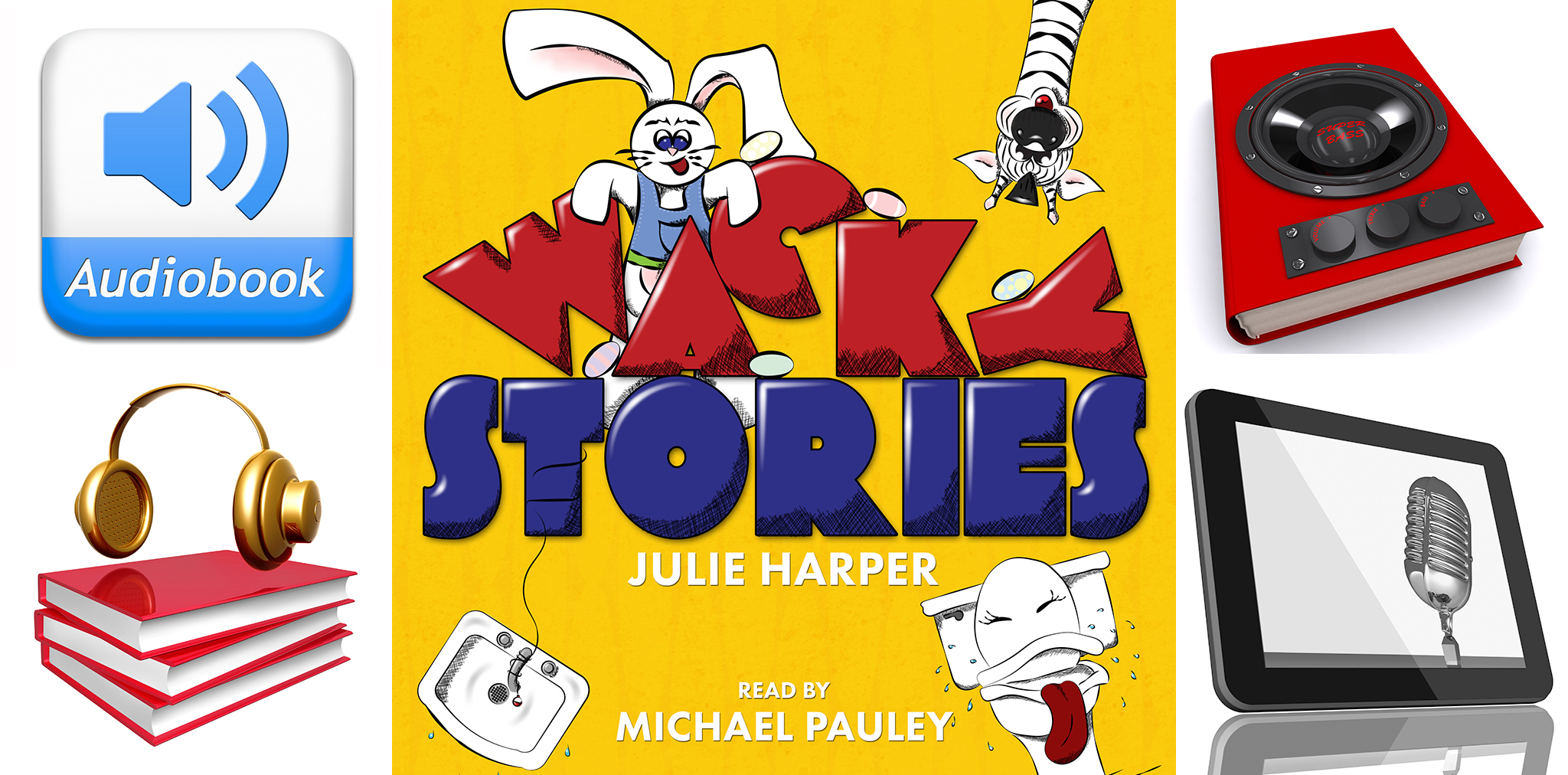
I recently got involved in the audio book development process. Author Julie Harper wanted to create an audio book for her new Wacky Stories collection. I was fortunate to be able to get involved in the process and get a firsthand look. The experience was amazing, so much that now I’m thinking of which of my books might be a good fit for this.
You start out by visiting the Audiobook Creation Exchange (ACX):
Log in with your Amazon account. (Wondering which one? Well, you should only have one. You can use the same account as a customer, at KDP, and even at Author Central. But if you didn’t, well, I guess you have to choose.)
Then you need to find a book that you’ve already published and is already available at Amazon. (For example, you can find this option from Projects > Open for Auditions > Assert more titles.) The title of your audio book will be the same as the title of the edition already published (in print or Kindle).
You can hire a narrator, try to sell the audio rights to your book, or narrate your own story (you’ll need sufficient equipment or access to a studio). Julie took the option to find and hire a narrator for her Wacky Stories, and it worked out far better than we were expecting.
Find a narrator by holding an audition at ACX. You need to provide a small excerpt from your book to serve as the audition script. Julie uploaded the first story of her Wacky Stories book for the audition. It’s a children’s story with animal noises (like “Moooo” and “cock-a-doodle-doo”). The narrators seemed to have some fun with this in the auditions. It was pretty cool listening to their performances.
The financial aspect of hiring a narrator includes two options:
Offer 50% of your audio book royalties, paying nothing up front.
Offer a fixed fee, payable upon completion of your audio book and before your audio book is available for sale.
There is no guarantee that you’ll sell any books. So if you wish to offer 50% royalties instead of a fixed fee, it may help if you can provide compelling reasons to believe that your audio book will sell. Note that the narrators will see your current Amazon.com sales rank when they find your book, so if your sales rank is in the millions, 50% of the audio book royalties may not sound like much. If your Kindle or print edition is currently a hot seller with many reviews, these are worth mentioning in the Additional Comments field. If you have a large following online, quote these numbers, too.
Julie selected the option to pay a fixed fee up front instead of 50% royalties. This is less risky for the narrator (but instead places the risk with the author). Julie’s Wacky Stories book is short enough (the reading time is 33 minutes) that it didn’t cost too much to produce the audio book. If you have a long book that would translate to several hours of reading time, a flat rate can get pretty expensive. You pay per finished hour (PFH). You offer a range of PFH’s when you make your audition available. Once you receive auditions, you can make a specific offer and negotiate the terms of the contract.
ACX pays a 40% royalty on the audio book list price if you distribute your audio book only through Amazon, Audible, and iTunes. ACX sets the list price. If you offered 50% of your audio book royalties to the narrator, you’ll effectively receive 20% royalties on your audio book sales. (If you know of other audio book distributors and have plans for significant sales through other outlets, in order to widen your distribution beyond Amazon, Audible, and iTunes, the royalty would be 25% instead of 40%.)
AUDITIONS AND PRODUCTION
I was able to listen to the auditions for Julie Harper’s Wacky Stories audio book, and was really impressed with the performances.
Julie made her audition available late in the evening. There were already 3 performances for that audition later the same evening.
And they were all amazing. Any of the narrators would have worked very well. They were actually better than we had imagined. This made Julie’s decision very difficult.
She selected Michael Pauley as the narrator, and was quite pleased with the production. I’ve listened to the Wacky Stories audio book, and I love Michael Pauley’s narration.
You can check out a free sample here (it’s fun to listen to):
At Amazon: http://amzn.com/B00W5PJIVU (Under the image of the cover, click the play button between Listen and Play Sample).
Once you offer a contract and it’s accepted, the narrator produces a sample chapter, and once you’re satisfied with that, the narrator completes the entire audio book (the deadlines for each are specified in the contract when you make your offer).
Be sure to set aside time in your own schedule when you begin the process. You’ll need time to listen to the audio book carefully when you receive it.
Once you’re happy with the audio book, you submit payment to the narrator directly (e.g. with PayPal; that’s between you and the narrator, and something you should work out in advance). Unless you picked the option to split the audio book royalties 50/50.
The narrator tells ACX when payment is received. Then it takes a few weeks for your audio book to become available at Amazon, Audible.com, and iTunes.
Michael Pauley
Michael Pauley narrated Julie Harper’s Wacky Stories audio book.
HOW TO CREATE AN INFINITE FEEDBACK LOOP IN PHOTOSHOP
In photography, you can display a camera’s image on a monitor and point the camera at the monitor to create an infinite feedback loop.
Image from ShutterStock.
There is a simple way to create this effect in PhotoShop.
Let me illustrate this by showing how I created the image for this post.
I began with a simple image in PhotoShop, consisting of a background image, a foreground image, a tablet, and a line of text.
Images from ShutterStock.
I saved this as a PhotoShop file in PSD format and then created a PNG image of it as well.
Next, I opened the PNG file and resized it to match the screen size of the tablet.
In my version of PhotoShop (I have the Creative Cloud), I used Select > All and Edit > Copy to copy the image, and then I switched windows to my PSD file. I used Edit > Paste to insert the PNG image into the PSD file, and positioned it to fit on the screen.
Images from ShutterStock.
My original image was 1024 pixels wide. The tablet’s screen size in the original image is 340 pixels wide. The ratio is 0.332.
Multiply 340 by 0.332 to get 113. The next PNG image needs to be scaled to 113 pixels wide. Copy and paste that image into the PSD file to add another loop to the picture.
Images from ShutterStock.
Repeat these steps (multiplying by the same ratio; in my example, the ratio is 0.332) until you can’t tell with your eye that the feedback loop isn’t ‘infinite.’
There are currently 1,314,394 books listed on Amazon.com in children’s.
Over a million children’s books. At first, that sounds like a lot. But it’s really not so much.
There are 28,000,000 paperbacks listed on Amazon, but only 700,000 of these are children’s books. That’s a mere 2.5%.
There are 9,000,000 hardcover books; 300,000 are children’s books. 3.3%.
There are 3,300,000 e-books listed in the Kindle Store; 230,000 of these are children’s. That’s nearly 7%.
There are 900,000 Kindle Unlimited e-books; 89,000 of these are children’s. 10%.
Let’s look at the 230,000 Kindle children’s e-books, for example:
82,000 are classified under literature and fiction. That’s about one-third. That leaves only 150,000 for the other categories.
34,000 are sci-fi and fantasy.
32,000 are in animals. (Most of these also appear in a second category.)
32,000 relate to growing up and the facts of life.
26,000 are action and adventure.
14,500 are fairy tales.
Maybe it’s more instructive to look at what’s missing:
Just 1167 are categorized as humor. It seems like there should be more competition here.
Just 7788 are under science and nature, which covers many subcategories.
Just 7265 fall under education and reference, and 3000 of those are foreign language. A mere 587 of these are math books.
Just 3460 are classified as early learning, like basic concepts and beginning readers.
Just 3285 cover history.
If you try searching for keywords on Amazon, the holes are even more apparent. The following searches were done under children’s books in the Kindle Store.
524 matches show up for Common Core, the new national curriculum (adopted by most states). This curriculum teaches skills differently than the current generation of parents learned the material. Thus, many parents are looking for resources to help. But there are few books on it. Many of the top matches don’t seem like they would help directly with it. There are only 61 results for Common Core math, and that 61 gets divided into a host of different topics within math.
26 matches show up for homophones, and many of those aren’t focused on this topic.
57 matches show up for writing prompts. None of the covers on page 1 seems geared toward kids. (To be fair, there are some better matches in paperbacks. Basically, the same book could be published in both print and Kindle, just including blank lines for composition in the print edition.)
150 matches show up for recycling. Isn’t green the big thing? Where are the books?
If you publish poetry for kids, you get lost in a sea of 4500 other children’s poetry books. But if you write one of every kind of poem you can think of to introduce kids to the different kinds of poems, and present this as a form of learning or teaching poetry, you suddenly narrowed your market tremendously. Only 66 are listed under teaching poetry.
Similarly, there are 11,000 matches for short stories, but only 190 matches for reading comprehension. If you take your children’s short story collection and add multiple choice (for example) questions after each story, with an answer key in the back, suddenly your collection becomes dual purpose, with possibly better exposure in the second niche market.
CRACKING THE CHILDREN’S MARKET
My daughter often demands a certain kind of book, and when I search for it, there are very few matches. This happens quite frequently.
And when I try to narrow the results by clicking on the Kindle Unlimited filter, there are sometimes just a few to choose from.
Part of the children’s market is saturated, but there are also many opportunities.
The trick is to search for books within the children’s market to find popular search results and popular topics for which there aren’t many search results, or, as is often the case, where most of the top matches don’t seem too relevant to the search. Don’t just look at how many books are in the category, but also look at sales ranks of the top matches and how many books show up under particular keyword combinations.
The children’s market isn’t easy to crack, but there is much long-term potential for those who break through.
Although there are many challenges, there are ways to help overcome them:
There are some highly popular brands like Dr. Seuss, Disney, and Scholastic, and popular characters like Dora, Spongebob, and Barbie. But many of these get filtered out customers search specifically for Kindle Unlimited books (and there is a filter, i.e. a simple link that you can press, when shopping to see just Kindle Unlimited results). And as you publish more books, you begin to develop your own brand. Not everyone prefers the most popular brands.
Many parents prefer print books and many children’s authors find the most success with print. But there is still a significant number of parents who let their kids spend some time on Kindle, and there is much less competition in Kindle, and even less in Kindle Unlimited. The wise course is to publish both print and e-book editions to help reach both markets.
Editing is arguably more important in the children’s market as parents and teachers are the ones buying the books. Since children are learning to read, or learning to read at a higher level, naturally parents and teachers want to ensure that children are learning to read well, which means that the book must be virtually free of spelling, grammar, and punctuation errors. On the other hand, children’s books are often shorter and easier to read, which makes the editing easier to manage.
Your newly published book won’t show up at the top of search results, but if you first research the children’s market well, you can publish in a niche that is both in demand and has limited competition, and a wise choice of keywords will help with exposure. For example, there are nearly 14,000 children’s books in romance and 2900 in vampires, but only 393 in vampire romance. (I’m not saying this is a wise topic for children’s books; I’m just illustrating how to choose keywords wisely.) You want keywords specific to your book (usually, consisting of 2 or more words between commas, as single-word keywords tend to pull up way too many results; but you will want a couple of highly relevant single-word keywords in the mix, too), which are popular searches on Amazon. Just visit Amazon, browse children’s books, and start typing keywords to gauge which ones are popular enough to be searched for. You can always change your keywords at any time.
The real keys are writing several similar books, publishing quality content that parents will want their kids to read, and learning effective marketing strategies. Involve parents and educators in the developmental stages, running ideas by teachers at various stages and recruiting parents as beta readers. This will not only better help you understand your audience’s specific and possibly diverse needs, but it will also help you with word-of-mouth marketing when you involve people personally and take some of their advice. Personal interactions can have a powerful influence: You want to meet parents, librarians, and educators in person and let them discover your book and your passion for it.
Amazon KDP has a new free tool to help with formatting children’s books for Kindle:
If you haven’t already done so, please participate in a survey on how people read books. The more participation we get, the more meaningful the results will be.
Here is one question, for your convenience. (If you’ve already answered this before, please don’t answer it a second time.)
There are at least a half dozen different ways to publish a book with Amazon.
Most people think of Kindle Direct Publishing, but that’s just one of many options:
Amazon has multiple imprints, such as 47 North. However, like most major traditional publishers, Amazon Publishing does not accept unsolicited manuscript submissions.
Another way to publish with Amazon as your “publisher” is through the new Kindle Scout program. This option is based on reader voting, not solely on an editor’s decision.
For those who would like to write fan fiction, there is Kindle Worlds.
Kindle Singles is a competitive publishing option for certain kinds of shorter Kindle e-books.
Anyone can self-publish with Amazon using Kindle Direct Publishing.
You can also self-publish a paperback book with Amazon using CreateSpace.
The Audiobook Creation Exchange (ACX) lets you publish an audiobook that will be available through Amazon.
AMAZON IMPRINTS
Amazon Publishing includes multiple imprints. However, they don’t currently accept unsolicited submissions.
Montlake Romance for romance novels.
Thomas & Mercer for mysteries, thrillers, and suspense.
47 North for science fiction, fantasy, and horror.
Skyscape for teen and young adult.
Amazon Publishing for nonfiction, memoirs, and general fiction.
Lake Union Publishing for contemporary and historical fiction, memoirs, and popular nonfiction.
Two Lions for children’s picture books, chapter books, and novels.
Little A for literary fiction.
Jet City Comics for comics and graphic novels.
Grand Harbor Press for personal growth and self-help.
Waterfall Crest for Christian nonfiction and fiction.
Unlike Amazon Publishing, Kindle Scout is open to submissions from US authors. Categories currently include:
Science fiction and fantasy
Romance
Mysteries, thrillers, and suspense
Action and adventure
Literature and contemporary fiction
You submit a complete copy-edited, never-before-published manuscript with at least 50,000 words. Readers will nominate books based on the first 3000 words (and the cover, title, description, and your biography). Nominations help you earn consideration, but having the most nominations by itself doesn’t guarantee acceptance. They stress that they are looking for professional, copy-edited manuscripts. If accepted, they pay a $1500 advance and 50% royalty (less than KDP’s 70% royalty, but perhaps the stamp of approval will help authors make up the difference).
Once there, click See All Worlds and How It Works. Make sure that you adhere to the content guidelines and rules, otherwise you’ll have wasted your time and effort.
KINDLE SINGLES
You can publish a shorter e-book, with 5,000 to 30,000 words, with Kindle Singles, if it is “exceptional ideas–well researched, well argued, and well illustrated.”
This is a competitive process, and you submit your idea much like submitting to a traditional publisher or agent. In addition to an exceptional idea, they may also be considering the marketing aspect, much like a traditional publisher would, and why you should be the one to write book. (If someone else has better qualifications to fulfill that role, what’s to prevent them from asking a more qualified candidate to write a similar book? Nothing, really. You can copyright the words, but not the general idea that you’re trying to get published.)
KINDLE DIRECT PUBLISHING
Anyone can self-publish an e-book on Amazon with Kindle Direct Publishing (KDP):
If you’re writing your book in Word, click on the Microsoft Word Tutorials link at the top of my website for free formatting help (e.g. with page numbers and headers).
AUDIOBOOK CREATION EXCHANGE
Learn more about creating an audiobook with the Audiobook Creation Exchange (ACX):
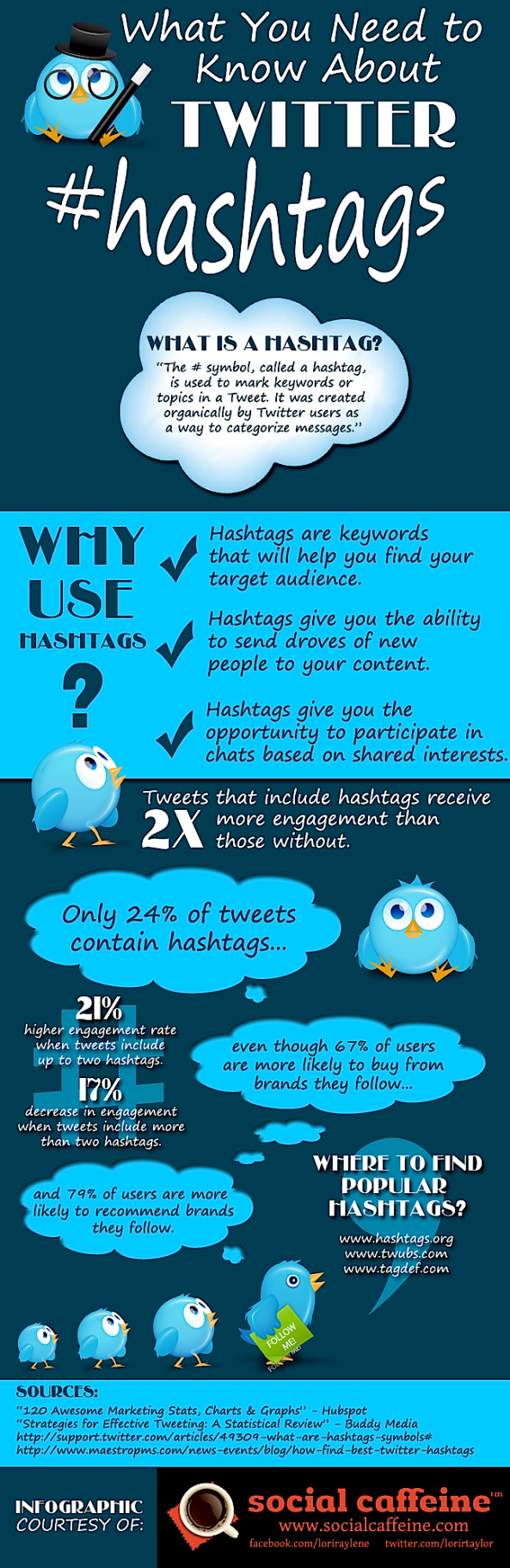
#Fridayreads: One of the most popular literary hashtags of all time on twitter. It even generated a global trend at one period of a time, it is still one of the best ways to find out about good books.
#Nook: Gives the latest posts according to Nook published books.
#epub, #ePub : Specifically for independently published authors, this hashtag platform promotes eBooks published on Smashwords, Kobo, iTunes, Nook, etc.
#Amazon: Considered the mother of all tweets. Here you can find everything Amazon related, most particularly books.
#AmazonKindle: Same as the one above, but more useful for sale of Kindle Devices and eBooks.
This is a guest post by the talented Veronica May, an experienced editor and blogger at A-Writer. She has written for multiple online publications, where she strives to share her knowledge and opinions. Her main focus is covering a variety of topics in the field of education.
Although her post focuses on writing in general, I found her excellent points equally valuable to bloggers and authors alike. Enjoy!
8 Uncommon Habits That Make You A More Professional Writer
We may all write the same content and even the same topic, but what separates us from others is the approach we use to convey that message. What makes a writer good at his work has a lot to do with how they express themselves and very little with what they are expressing. Most of the topics you are going to read about have been written. They are already out there. All…
Every author can benefit from research in multiple ways.
Research isn’t just for nonfiction authors. It’s not just for the content of the book.
There are many kinds of research relevant for authors, including:
Researching the mechanics of grammar or style, or the art of storytelling, for example.
Researching historical, geographic, language, or other elements relevant to your plot.
Researching how people react to names, places, and ideas you’re thinking about using in your book.
Researching how beta readers react to your story.
Researching the potential market for your book concept.
Researching reader expectations for your genre.
Researching helpful marketing strategies.
Researching publication tips, like writing the blurb or designing the cover.
And, of course, researching content for nonfiction, educational books, or historical fiction.
Here are some examples of how research can help:
Any kind of research can be a helpful marketing point.
It demonstrates your motivation to write your book well.
Character sketches, idea bubbles, maps, etc. make for nice bonus material on your website.
Writing-related research helps show readers that a great deal of work goes into preparing a book.
It helps you develop a professional image as an author.
Research helps strengthen your author biography.
It gives you useful content to post on your blog or author website.
Bits and pieces of research here and there can help you build buzz or create a content-rich website.
Many of the things writers already do and take for granted can be presented as a form of research. And when presented as research, they can make a favorable impression upon potential readers.
PERCEPTION
The last fantasy and sci-fi novels that I read were immediately followed by about the author sections, and in each case the author section each author mentioned a great deal of research that had gone into preparing the book.
In one case (Jeff Wheeler’s Legends of Muirwood), even though it was a fantasy novel, I was intrigued to learn that the basis for much of the magic in the book related to Medieval Europe. It wasn’t just random. Most chapters of the book begin with a fictional “quote,” while the author’s note at the back begins by describing the author’s passion for collecting quotes.
In the other case, (Bob Mayer’s Area 51 series) the author had blended actual events with fiction. The author also demonstrated how the military component has authenticity and described his obsession with mythology.
Reading about how these authors had done their homework just after I finished reading their books:
It made me more eager to check out the next book in the series.
It made it easier for me to recommend their books to others.
It left a favorable impression just as I was about to head over and review the book.
Does your book involve other cities? Don’t you have to research the layout of the city? Don’t you have to research the culture, lingo, and accents?
Does your book involve a military component? Don’t you have to research the military? Don’t you have to research the technology?
How do readers know if your book is realistic? Showing that you did your homework helps. It can also help inspire reader interest.
Showing that you’ve done your research also helps to create a positive perception about you and your book. It helps you build a strong brand as an author.
Marketing that perception helps you play to your strengths. Have you done anything to master the art of writing or storytelling? Do you have firsthand experience regarding the setting of your book? Do you have any expertise relevant to any of the subjects involved of your book? If you do, it may pique a reader’s interest.
MARKETABILITY
Some research can help you make your book more marketable:
Keyword research. Visit Amazon.com and start typing keywords into the search field. You’ll see popular searches. Note that the results are different depending on whether you search within all departments, books, the Kindle store, a category, or a subcategory, for example. Results are also different for searches on Kindle devices. You should try a variety of possibilities. You want keywords that are specific (to help you stand out better), popular (so they get searched for), and highly relevant for your book (so you don’t get overlooked in search results).
What to write. Search for books that you might be a good fit to write. See what’s selling, what’s not. See if the market’s already flooded, or if there is a need that you can fill.
Packaging ideas. When you search for similar books, you come across a variety of covers and blurbs. These can help you get ideas (but don’t be a copycat), and can help you gauge what customers expect to see (though there isn’t just one kind of cover that signifies a particular genre). Follow other authors and you can learn some of their marketing ideas.
Content expectations. Read similar books to learn what readers are accustomed to in your subgenre (that doesn’t necessarily mean you have to do the same; but there are some features that most readers of a subgenre strongly want, so that can be helpful to know).
MY RESEARCH
I publish nonfiction, including math and science books. My background is physics, which I teach. I do all sorts of research for my books.
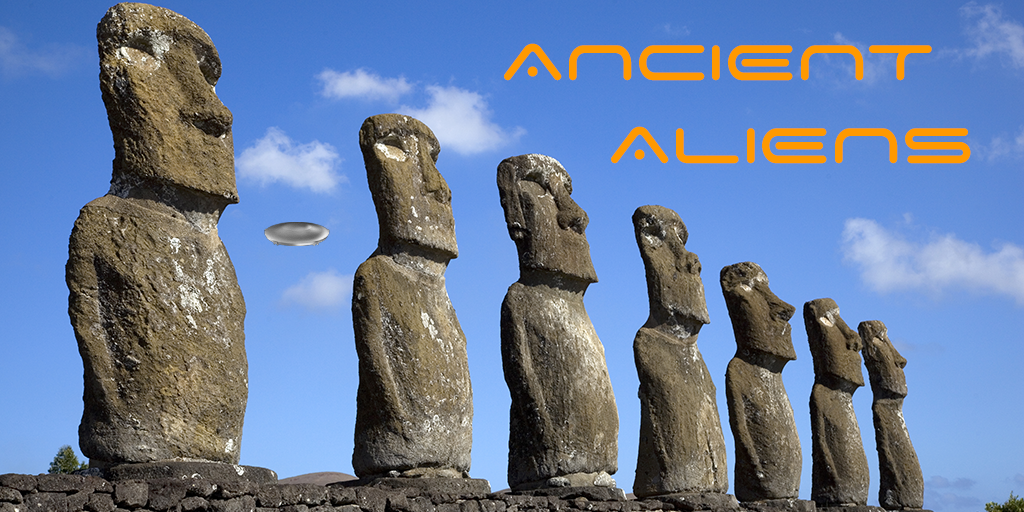
But, as you may know, I also have a sci-fi series that I’m working on. I’m in the beginning stages, and as I come across publishing decisions that I must make—like research—I’m sharing these experiences on my blog (with all the other kinds of posts that ordinarily write here). The image that I included with this post gives a subtle visual clue (though it will be set in modern times).
I’m doing much research to help write my series, such as:
Researching actual scientific data that may relate to extraterrestrial visitations of earth (in the past or present). Puma Punku in Bolivia, for example, has some fascinating finds. Most of such “evidence” isn’t necessarily “conclusive,” but can seem compelling and I find it fascinating. I want to know what my audience might know, and I want to make possible connections (after all, it’s fiction) that seem both deep and plausible.
Researching differences between writing fiction and nonfiction. I’ve been writing nonfiction avidly; obviously, fiction is quite different. I read a ton of fiction, especially sci-fi, fantasy, and classics, which will help. But writing isn’t quite the same as reading. For example, if there is a fight in my novel, I’ll need to describe the fight scene. (Fantasy author Charles Yallowitz gave me a great suggestion for this: Research some choreography.)
Researching sci-fi books in my subgenre that my readers are likely to be familiar with. I’ve already read some, but I’ve found several others. It’s kind of cool that the series that I’m writing is helping to fuel my own reading list.
And much more. I’ll save much of my research, including the details. It’s not just for writing the series, but much of it also figures into my marketing plans. You’ll see if you follow along.
CHANCE TO WIN 4-BOOKS-IN-1 ON SELF-PUBLISHING
You can win my 4-books-in-1 paperback book on Self-Publishing with Amazon.
This is an Amazon Giveaway hosted by Amazon. If you win, Amazon will fulfill the order and ship your prize directly to you. Click the following link for your chance to win. Every 300th entrant will win. Up to two winners.
NO PURCHASE NECESSARY. Ends the earlier of Mar 25, 2015 11:59 PM PDT, or when all prizes are claimed. See the Official Rules at http://amzn.to/GArules.
READING SURVEY
If you haven’t already done so, please participate in a survey on how people read books. The more participation we get, the more meaningful the results will be.
Here is one question, for your convenience. (If you’ve already answered this before, please don’t answer it a second time.)
This is one of the perennial questions authors face, even long after first making the decision. Once you choose, you question your decision, and wonder if the grass is greener on the other side.
But that first decision is important. More important than you realize at the time.
It seems intuitive that if self-publishing doesn’t work out, you can try traditional publishing later. Or vice-versa.
You can, but there are some complications that you don’t tend to realize at the time of that critical decision.
So before we discuss the pros and cons, and consider which option may be the best fit for your needs, let’s examine some of those complications.
SWITCHING: NOT SO FAST
Many authors self-publish first because that path seems easier to take. Then later, if their books aren’t selling, they wonder if they should switch to traditional publishing.
But there’s something they should know before the decide the first time:
First Rights vs. Reprint Rights
Traditional publishers and literary agents prefer first rights.
That is, they prefer to publish books that have never been published before.
Once you self-publish, you can no longer sell the first rights to your book.
Now you’re selling reprint rights, which are much harder to sell.
If your self-published book isn’t selling, why would a publisher want to invest in it? You need to convince a publisher that your book will sell. That’s nearly impossible when a simple search on Amazon shows the publisher that your book isn’t selling.
Even if your self-published book is selling, it has to really sell like hot cakes to interest a traditional publisher in reprint rights. And if that’s the case, why would you stop self-publishing? If you can sell thousands of books per week, you might interest a publisher in picking up your title. But why on earth would you do that if you can sell in large volume all on your own?
If you have moderate sales, that’s not attractive for reprint rights. Maybe those are all the sales you’ll get. The publisher has missed out on the initial splash. Why pick up the leftovers?
Switching from traditional to self-publishing carries its own challenge.
In this case, the difficulty lies in getting the rights to your book. The details lie in your contract. If and when rights do revert back to you, that doesn’t mean you’ll receive a copy of an editable file with all the editing and formatting built into it. Rather, you’ll probably start over with the formatting. And you’ll probably need a new cover.
BUT YOU CAN SWITCH: HERE’S HOW
There are a couple of ways that you can make the switch successfully.
The trick is to realize this before you first make the decision about whether to self-publish or publish traditionally.
Shop your book to an agent or publisher first.
This may even have its advantages if you’re already leaning heavily toward self-publishing.
If your book doesn’t wind up getting published traditionally, you’ll be able to self-publish instead. What’s the rush? If instead you self-publish first, you’ll lose your chance to sell the first rights to a publisher, which makes it hard to switch to traditional publishing.
Therefore, if traditional publishing is important to you or is something you’re strongly considering, you might explore agents or publishers first, and then self-publish if either you don’t find an agent or publisher or if you land a deal, but don’t like the terms.
While you’re shopping your book proposal around, you can write more books and get your online author platform going. This way, if after several months you decide to switch to self-publishing, you’ll be much better prepared to do it. Plus, the process of writing query letters and book proposals and thinking about the business side of your book will help you when it comes time to preparing your book description, back cover text, biography, marketing, etc.
You learn some valuable skills in the process. It may be worth going through even if you had been leaning toward self-publishing.
Write multiple books and use a pen name.
The alternative is to self-publish one book in one name, and if you decide you want to explore the traditional publishing route, write a different book in a different name.
There are actually many authors who do both—self-publish and traditionally publish.
Even if you do land a publishing deal, most authors write many more books than they can get published traditionally, so self-publishing offers a way to publish all of your books.
You get the best of both worlds by creating two brands as an author—one brand as a self-publisher, and another as a traditional publisher.
You’ll probably find it easier to market your self-published book using your own name (or a nick name).
SHOULD YOU SELF- OR TRADITIONALLY PUBLISH?
The main differences are:
Do you have a book that’s particularly well-suited for library use or bookstore purchases?
If so, if you can get your book traditionally published, there is better library and bookstore potential.
It’s not about hoping that it will sell in bookstores.
It’s about knowing that your book will thrive in that environment. If you have a great marketing plan for sending customers into bookstores across the nation, that will help a lot. Certain kinds of books sell this way.
Your book won’t wind up on an endcap. It won’t appear on the top shelf with the front cover facing the customer. It won’t have a dozen copies on the shelf.
Your book will have limited visibility. It will be buried among many others on some shelf. It will have a limited shelf life unless you succeed in driving sales in bookstores.
Certain kinds of books attract library use. Again, if you have a great marketing plan for how to send people across the nation to their local libraries to inquire about your book, that’s a huge plus.
Otherwise, what is a publisher really doing for you? Many publishers don’t do many of the things that authors hope they will do.
Unless you’re already a bestselling author or celebrity. And if you are, I can’t believe you’re over at my humble blog reading this article. 🙂
Even if you have a book well-suited for sales to bookstores or libraries, you need to convince a publisher or agent of this. If not, you can still sell books to libraries and bookstores as a self-published author. Distribution isn’t as easy, especially on a very wide scale, but there are self-published authors who’ve done their homework on this and who do sell many copies this way, especially to local and regional stores (not necessarily bookstores).
However, note that bookstore distribution isn’t guaranteed even with a traditional publisher.
Are you an author of a textbook or other academic resource?
There are advantages of publishing textbooks and educational resources through major textbook publishers.
For example, if you can get classes around the country to adopt your textbook, that can be huge for sales—especially if they are fundamental courses that most students take. Many textbooks are peer-reviewed and heavily researched, which appeals to teachers. Most instructors adopt textbooks that are traditionally published. It’s much easier to get a traditionally published textbook adopted by a college bookstore.
Whether or not you can land the deal is another question. Textbook publishers will likely scrutinize your resume. The strength of your resume, and current position, may weigh much higher than your content knowledge and communication skills.
Supplemental materials can sell quite well even if they are self-published. Your resume is more likely to impress a customer at Amazon than an editor for a publishing house (where all the proposals come from professors).
Do you have a scholarly or more literary fictional work?
This gets a little tricky because publishers want to publish books that are most likely to sell.
But publishers also need well-written scholarly and literary works to help build their brands and show customers that they have quality material to deliver.
No matter how you publish, many literary pieces may find sales hard to come by, but you might find your market more easily with traditional publishing.
Still, landing the publishing deal and finding readers in the more scholarly, literary market can be tough.
Do you have a resume that will appeal to a traditional publisher or literary agent?
Are you a celebrity? Celebrity status can help to land a publishing deal. But if you have a huge following, that can help you as a self-publisher, too.
Are you a nonfiction author with an impressive resume? That may appeal to traditional publishers. Though again, that resume can be a marketing asset even as a self-publisher.
Are you the perfect person to carry out your book idea? If you can convince a publisher that you have a book idea that will really take off, and you’re the perfect person to write that book, this can help you get published.
But:
Do you have a great book idea, but you might not be the best person to carry it out?
Then here is what may happen.
You might submit your book proposal to a publisher.
The publisher thinks, “That’s a great idea. But we need someone with relevant expertise to write this book.”
Guess what’s going to happen? Your proposal gets rejected.
Then a couple of years later, you see a book in the bookstore very similar to your proposal, written by someone with expertise on that subject.
No, it’s not plagiarism. They didn’t copy your book word for word. They took the overall idea, which you can’t copyright, and did something similar. Not so similar as to get sued for plagiarism. They probably changed your idea and made it even better.
Do you have some other goal or need besides reaching readers and selling books?
Maybe you just want to see your book on a bookshelf in a bookstore or library.
Maybe you just want to see a major imprint’s name on the spine of your book.
Maybe you want the status of being published traditionally.
Maybe you want to experience the feeling of getting accepted through a process that has a huge rejection rate.
These are reasons to favor traditional publishing, even if sales might be better otherwise.
Or…
Maybe you want to write a unique book that’s not likely to have much of an audience.
Maybe you have a time-sensitive topic that needs to reach the market quickly.
Maybe you have an idea for a series of books that you intend to publish once every month or two.
These are reasons to favor self-publishing.
IN A FEW WAYS, SELF- AND TRADITIONAL PUBLISHING IS THE SAME
A few things are equally tough no matter how you publish:
There is no easy path.
Traditional publishing requires learning about query letters, book proposals, and possibly approaching an agent. It takes much patience, persistence, and many queries. You must think about the business side of writing, as this interests the publisher. There is a lot of extra work that you must do besides just writing.
Self-publishing isn’t an easy alternative. Sure, you don’t have to worry about rejection letters. But do you actually want to sell books? If so, you need a marketable idea, you need to research your genre, you need to learn about your audience, you need to edit, you need to format, you need to design a cover, you need to package your book, you need to learn about marketing, etc.
No matter what, it takes self-motivated diligence to succeed as a writer. Neither self- nor traditional publishing offer an easy way to do it.
Marketing is your responsibility.
No matter how you publish, marketing is up to you, and it generally takes good marketing to sell books.
Publishers invest most of their marketing budget in bestselling authors and celebrities, i.e. books that they feel are most likely to sell.
Many new authors have the unrealistic expectation that publishers will market their books for them. You might benefit a little, but in general it’s largely up to you.
If you want to improve your chances of getting a second book published, you need to help your first published book sell very well.
Personal interactions can be a new author’s best asset. Nobody else can do this for you.
A writer’s life comes with challenges.
If you explore the traditional published route, you’re likely to receive many rejection letters.
No matter how you publish, your book will eventually receive public criticism in the form of reviews.
Criticism is a challenge that all authors face. You can run, but you can’t hide.
Earning good money from royalties won’t be easy.
It’s hard to sell books whether your self-publish or traditionally publish.
Even if you breakthrough and land a publishing contract, most authors still make much less from book royalties than most people realize.
However, you can get a decent advance (say, $1000 to $5000) if you land a publishing deal. You might not earn anything beyond that, but at least you have a chance to earn something up front.
With self-publishing, you can earn up to 70% royalties (via Kindle), compared to a typical 5 to 15% for traditionally publishing. A traditionally published book sometimes commands a higher price point, but self-publishing royalties can be lucrative. Either way, the challenge is to sell books. If your book doesn’t sell, it really doesn’t matter what your royalty percentage is.
Self-publishing pays you as your books sell. There is no advance. And there is no guarantee of sales.
IN WHICH CASE DO YOU HAVE A BETTER CHANCE OF SUCCESS?
Except for the special cases I noted previously that may favor traditional publishing…
Your best chance of succeeding as an author is:
to self-publish multiple similar books with a very long-term plan and marketable ideas
to self-publish multiple similar books and also traditionally publish under a pen name
If you happen to win the traditional publishing lottery, selling hundreds of thousands of your first book so that you become one of the very rare bestsellers that will gain premium bookstore exposure and publisher marketing, then traditional publishing can be very lucrative.
Or if you plan to only write one or two books and then quit… This greatly limits your chances of success no matter how you publish. You might get the most out of it by traditionally publishing.
But most authors who get traditionally published will be midlist authors, in which case it will take a lot of books to generate a lot of sales. And self-publishing is best-suited for publishing several books. You can publish some traditionally and others with self-publishing, or you can self-publish all of them, but your best chances of succeeding as an author are to include self-publishing at least as part of your long-term plan.
The key is that no matter what you need to:
think very long-term
have self-motivated diligence
be very patient
do your research before you write
be willing to learn and apply marketing strategies
produce quality content
But if you’re willing to write several similar books, figure out what your audience wants, gradually develop a professional author platform, focus on long-term publishing goals, and learn how to market your book, such self-motivated diligence naturally lends itself to self-publishing and gives you a healthy long-term edge. Things may start out very slowly, but there is much potential for the author who does his or her homework, produces quality content, and write several similar books.
These same skills can help with traditional publishing, too. But you may find it difficult to get all of your book ideas traditionally published, so even if you publish traditionally, you probably want to self-publish on the side, too (probably under different names).
CHANCE TO WIN 4-BOOKS-IN-1 ON SELF-PUBLISHING
You can win my 4-books-in-1 paperback book on Self-Publishing with Amazon.
This is an Amazon Giveaway hosted by Amazon. If you win, Amazon will fulfill the order and ship your prize directly to you. Click the following link for your chance to win. Every 300th entrant will win. Up to two winners.
NO PURCHASE NECESSARY. Ends the earlier of Mar 25, 2015 11:59 PM PDT, or when all prizes are claimed. See the Official Rules at http://amzn.to/GArules.
READING SURVEY
If you haven’t already done so, please participate in a survey on how people read books. The more participation we get, the more meaningful the results will be.
Here is one question, for your convenience. (If you’ve already answered this before, please don’t answer it a second time.)











 chrismcmullen