Pros & Cons of Publishing with Adobe

Creative Cloud

Publishing Software

Microsoft Word is easy to recommend as publishing software for a few good reasons:

  • It’s accessible. Many writers already have Word. If not, it’s fairly inexpensive and easy to find. If price is a factor, Open Office is an alternative.
  • It’s convenient. Most writers already have familiarity with how to use some of Word’s functions. It’s also fairly intuitive. When it’s not, a Google search or a question in the CreateSpace or Kindle community forum will usually help out.
  • It’s functional. It’s possible to make a very nicely formatted print book. You can set the leading, inside and outside margins, add different styles of headers and page numbers, adjust the kerning, and even deal with widows. Not everything is easy, like using section breaks to change the header style or preventing Word from compressing images, but the potential is there and it’s relatively painless once you master the tricks.
  • It’s Kindle-friendly. Using Word’s style functions, it’s possible to make a Word document that converts very well to Kindle format. KDP continues to improve this.

Adobe is considered to be more professional for publishing print books, formatting images, and converting to PDF (note that PDF isn’t very e-book friendly, while Word is, although Adobe does have software features oriented toward making e-books). It’s not that you can’t learn how to format a Word document that looks professional, but more that once you master Adobe’s features, some of the formatting features become easier to perfect in Adobe InDesign. Most book designers who are equally fluent in both Word and InDesign prefer InDesign.

Here are some of the advantages of using Adobe:

  • Acrobat XI provides many options for conversion to PDF, such as flattening transparency, selecting output resolution, and embedding fonts. Most free or low-cost Word-to-PDF converters don’t have as many options to choose from. Very often, the free and low-cost converters provide a quality conversion, but when it doesn’t work, there isn’t much you can do but look for an alternative. Sometimes, you settle for PDF output that’s not quite what you desire because you didn’t have the options you needed.
  • Acrobat XI allows you to do some editing of your PDF, which is sometimes more convenient than returning to the original source file.
  • InDesign includes many professional book formatting features, namely page layout and typography. Many of these features are more convenient in InDesign once you master how to implement them.
  • PhotoShop is professional image-editing software, great for using photos to design covers or make illustrations. Word likes to compress images unless you take pains to avoid this, while Adobe’s products make it easy to achieve high resolution.
  • Illustrator is great for drawing, illustrating, and formatting text and images together.

Adobe does come with some drawbacks:

  • There is a steep learning curve. Many of the basic features aren’t as intuitive as Word, and most writers have no experience with Adobe until they purchase it. You can get help with Adobe software, though it’s probably somewhat easier to get help with Microsoft Word simply because more people use it.
  • Some of Adobe’s software is fairly expensive compared to Microsoft Word and especially compared to Open Office. However, there is now a monthly payment option that provides instant access to just about everything.
  • You must decide among your options. Do you need PhotoShop or Illustrator for your images? Do you just need Acrobat XI to convert to PDF and edit that, or do you need InDesign to prepare your books? But if you go with the Creative Cloud, then you don’t have to decide—you get all of this and more.

There are other software programs besides Word, Open Office, and Adobe. For example, Serif Page Plus is a fairly affordable alternative.

Creative Cloud

For years, I had considered purchasing InDesign, Acrobat XI, PhotoShop, or Illustrator. But the cost was more than I wanted to invest up front, I didn’t like having to choose between programs, and until you try it out, you’re not confident that it will be worth the investment. So I continued to postpone my purchase. In the meantime, Microsoft Word was fulfilling all of my needs.

I didn’t realize that you can download a free trial of Adobe’s products. If you’re thinking about using one of these programs, you can actually try it out for a limited time and see if you like it.

A new purchasing option came about that drew my interest. You no longer need to buy the program up front. An alternative is to buy a monthly subscription. For about $20 per month with a one-year commitment, you can purchase a subscription to use one of these programs. Or for about $50 per month, you can opt for the Creative Cloud, which gives you access to all of the software programs that I’ve described, plus more. This also allows you to keep your software constantly up-to-date.

In the long run, i.e. after a few years, it may cost more than buying just the programs you need (or maybe not, since you otherwise may have invested money in updates). But what attracted me was that I didn’t need a large upfront investment to get started. For $50, I was immediately able to start using Acrobat XI, InDesign, PhotoShop, Illustrator, TypeKit, and more. And I downloaded all of these on the first day and started exploring them avidly.

For me, this made very expensive software quite accessible. It starts to add up after several months (it’s like paying an extra cable t.v. bill), but for me it was worth it.

I wish I’d seen this option a few years ago. There were times where I would only have needed these software programs for a couple of months. I could have bought a temporary subscription (the price is higher if you don’t commit to a full year), and then not renewed it for a year or so until I next needed them.

But that’s not the case now. I’m using all of these programs avidly and will continue to do so.

That’s the big factor:

  • What are your needs? If you’ll be using these programs regularly, then it’s probably worth it. If you might just use them occasionally, the commitment may not be a good value. In that case, you might try the free download to better assess the value, or you might take the higher-priced short-term subscription to fill your temporary needs and then stop using it.
  • If you’re publishing multiple books a year, you’ll probably be using the software more. If you reach a point where you earn $1000 or more per month from net royalties, then investing 5% into professional software may be a reasonable expense. If instead you’re making like $100 per month, half your earnings are going into the software (then factor in the IRS and not much is left, although you will have substantial expenses to deduct).

One thing I like is how the Creative Cloud makes professional publishing software accessible to the self-publisher without a large upfront cost.

I was surprised when I was shopping for guides on Amazon for how to best utilize the software. I had purchased the Creative Cloud directly from Adobe. When I was shopping for guides, I discovered that I could have supported Amazon with my purchase (it was the same price at the time).

What was shocking was that Creative Cloud had 35 reviews with an average of two stars (**). The top four most helpful reviews on the product page were all one-star (*) reviews.

Wait a minute. Adobe is the best publishing software, right? So why does it have all these one-star reviews?

This became apparent when I started reading the reviews. There was a great pricing debate going on. Many people who had purchased the products at full price in the past were displeased that they hadn’t been grandfathered into the Creative Cloud. Maybe I would have been upset, too.

But still. As an author, I know it’s no fun to receive low-star reviews, let alone a string of reviews that don’t say anything at all about the content of the book.

Adobe is a large company, not an indie author, but still. People, like you and I, worked on Adobe’s software. Imagine how they feel to see all those one- and two-star reviews of their hard work. Reviews that don’t describe how well the software works, but mostly focus on the pricing model. Again, I understand those reviewers’ frustration. But those reviews didn’t seem fair, and they didn’t help me as a customer to decide whether or not to make the purchase.

Fortunately, I had already made the purchase from Adobe, so those reviews didn’t have the opportunity to scare me away. Personally, the Creative Cloud is a good fit for my needs, as I’m making extensive use of it, and I’m very pleased with my purchase.

Is it the right choice for you? Maybe, maybe not. If you have Word and already have some experience with it, that’s a convenient option, too. Would you use the Adobe software often enough to get your money’s worth, and would it make a difference for you compared to Word? Those may be the questions to consider.

About Me

Chris McMullen, author of A Detailed Guide to Self-Publishing with Amazon and Other Online Booksellers

  • Volume 1 on formatting and publishing
  • Volume 2 on marketability and marketing

Follow me at WordPress, find my author page on Facebook, or connect with me through Twitter.

Better

Better

The Good and the Bad

Better can be a great concept:

  • Trying to do better leads to improvement.
  • Not satisfied with how things are, it can be a great motivator.

Yet the concept of better does have drawbacks:

  • Other people may feel jealous of someone who seems to be better.
  • A feeling of superiority can lead to a variety of social consequences.

A Better Balance

The trick is to try to derive the benefits of the idea of doing better while avoiding the drawbacks.

I will apply this specifically to books and authors so that we have a concrete example in mind.

Striving to write a better book, focus on these positives:

  • Use this goal to motivate your writing.
  • Do research that will help with your book.
  • Seek feedback that may help you improve.
  • Think of how your book may benefit readers.
  • When dealing with criticism, remind yourself of the extra efforts that you made.

but avoid these negatives:

  • Feeling that your book is better than others. It probably is in some ways, but can’t be better in every way; so in some ways, it will be worse. Not every author has the same priorities: Maybe richer, more in-depth characterization appeals to you, and this makes your book better to readers who appreciate this, but it doesn’t make your book better to all readers. Maybe realism appeals to you, which makes your book better for readers who want that, but for those who want a fantastic world different from reality, it’s not better. Maybe your story is better, but the way the words are strung together isn’t. Different books are better for different readers. No book is best. Find one book that thousands love, and you’ll find that hundreds hate it.
  • Claiming that your book is better than another book. It may seem tempting to say, “If you liked ___, you’ll love ___,” but this can cause problems. First, this creates unrealistic expectations. Second, you don’t want to insult another book’s loyal fan base. It can be helpful to mention another book to give an idea of what to expect, but if you do this, do it in such a way that it in no conceivable way makes your book sound better than the other book.
  • Feeling that you’re a better author. Maybe you spent more time studying the craft of writing, but others may make up for this through life experience or imagination. Maybe you have done years of research, while others have a gift for knowing how to please an audience. You may be better in some ways, but you can’t be better in every way.

It is definitely worth trying to do better. This pursuit leads to better books, which creates more enjoyable reading experiences.

Trying to write a book that is better, in various ways, than other books you’ve read is good. Other readers are likely to appreciate this. But not all readers will agree.

Trying to improve over what you’ve seen other authors do, in various ways, is good. But you won’t be better in every way.

Comparing yourself to others can lead to jealousy, if other books seem to be selling better or receiving better reviews. Comparing yourself to others can lead to an air of superiority if your book seems to be above average. Either way, thee comparisons can create big problems.

There is one person you should compare yourself to. That’s you. Try to improve over your former self. That’s a noble ambition, it will make the world a better place, and you have no reason to feel jealous or superior when you’re comparing yourself to yourself.

About Me

I started this blog to provide free help with writing, publishing, and marketing. You can find many free articles on publishing and marketing by clicking one of the following links:

Chris McMullen, Author of A Detailed Guide to Self-Publishing with Amazon and Other Online Booksellers

Why They Write

Here is a great variety of answers from several authors and bloggers to the question, “Why do you write.” Check it out.

Charles Yallowitz's avatarLegends of Windemere

Kenshin Himura (How I feel) Kenshin Himura

Sorry!  I totally forgot that I was going to list people’s answers and reasons to Monday’s question.  Please check out the blogs and published works of everyone:

“I’m on board with most of that but I write poetry and know there is no money in that.” The Mirror Obscura

“I love writing because I’m totally addicted to it since the day when I started reading “anything” so seriously” Insight

“For me as a total readerholic and mental escape artist all my life, the writing came late, but now that particular joy of creating worlds, people, dragons, scenarios – whatever – can’t be matched by anything else that I’ve ever done.” Jo Robinson

“I think the reason evolves over time. I began writing as a way to express myself in a healing way. But then I began writing poetry. Poetry is a great self-expression for me and I…

View original post 852 more words

Indie Publishing Is Dynamic

Updated

Introduction

Traditional publishing has its benefits, but so does indie publishing.

However, those benefits are meaningless if you don’t take advantage of them.

One of the great advantages of indie publishing is the opportunity to swiftly respond to the many changes that arise throughout a book’s life, and to give a book an extended lifetime that far exceeds typical shelf life.

How’s the Weather?

Even in the publishing industry, the weather is unpredictable.

Many factors come up, including those that are beyond your control.

  • Kindle changes the way that series books are displayed in search results.
  • Just as you begin your big promotion, one of your first reviews stings like a bumblebee.
  • The subject of your nonfiction book experiences a major change just months after it’s published. Now it’s outdated.
  • Amazon discontinues the 4-for-3 program, starts discounting paperbacks, or stops putting them on sale.
  • One of the main subcategories that you selected is suddenly eliminated.
  • Someone raises a valid complaint about an issue that you failed to anticipate.
  • Readers convince you that you needed more editing help than you realized.

As an indie author, there is much you can’t control, but there is much you can respond to swiftly.

Product Page

Many features on your product page are dynamic:

  • The cover. Just upload a new one!
  • The blurb. Easy to revise. You can even format it through Author Central.
  • The keywords. Wise choices improve discoverability. Hardly selling? Change them up.
  • The categories. Be careful, though. If you’ve built up good visibility, a change could cost you.
  • The reviews. You can rarely change them, but it’s dynamic in that there is always the potential for a customer to leave a new review. (It works both ways. If things are good now, a bad one can spoil it. If the last review stings, in time a new one may be favorable.)
  • The editorial reviews. Get a great review quote from a relevant source and it can spice up your product page.
  • The biography. In addition to trying to find what works, if you leave this unchanged, it can become outdated.
  • The author photo. Strive to look the part.
  • The page count. You could add content. For a Kindle, adding a paperback makes this more accurate.
  • The customers-also-bought lists. The more effective your marketing, the more sales will help with this.
  • The list price. Having doubts? There’s one way to find out.
  • The sale price. Amazon often changes the sale price of print books. You can’t count on the selling price (but for CreateSpace print books, you’re paid based on the list price).
  • The recent blog posts on your Author Central page. Amazon displays the three most recent posts.
  • The book itself. Republishing is so simple, we could interrupt this blog with an auto insurance commercial.
  • And much more. Expanded distribution adds third-party sellers. More print sales leads to a few used books for sale. Author Central and Shelfari offer book extras. There are customer discussions, which are (and should be) quite rare except for popular authors.

But Not Everything

A few things are static:

  • The title. Choose wisely. Changing the title requires republishing a new book.
  • The author name and ISBN are fixed, too, unless you republish.
  • Customer reviews. A bad review is a permanent public record, so do your best to perfect your book from the beginning.
  • The publication date. (Though there was a period recently where republishing a Kindle changed this date.)
  • If you comment on a review, as soon as the reviewer or anyone else replies to your comment, if you change your mind and delete your comment, it will say, “Deleted by the author.” Amazon means the author of the comment, but everyone will assume it’s the author of the book.
  • Print books remain on your Author Central page forever. (A Kindle book, along with reviews of the Kindle edition, can be removed by unpublishing. But if you republish later, those reviews may reappear, although you may appeal to Author Central.)

What Does It Mean?

It means two things:

  1. You’re not stuck with things the way they are now.
  2. Don’t get too comfortable with things the way they are.

Here are some examples of how you can benefit from a dynamic publishing environment:

  • Monitor your three most recent blog posts. At any time, a customer can look at your Author Central page. What will this combination of posts look like to a customer?
  • Advance review copies can help to get a few early, honest reviews. If you’re planning a big early promotion, this can help to offset the possible misfortune of an unexpected critical review from one of your first customers.
  • On the other hand, if you get several glowing reviews, nothing critical is balancing them, and your book hasn’t yet established a healthy sales rank, this may seem suspicious to customers.
  • Making the blurb more clear or revising your book may render a review less relevant. This offers a little protection against the foolish person out to sabotage a book: The comment motivates you to improve the book or even the blurb, and now you suddenly have a better product (or packaging) on the market. Turn a negative into a positive.
  • Sales super slow? Try changing things up with a new blurb, cover, keyword, category, author photo, biography, or list price.
  • That strong urge you feel to respond to a review may have consequences that affect your book for it’s entire life. Some mistakes aren’t easy to fix. If instead you revise the blurb to address an issue raised in the review, if you later realize that doing so was a mistake, you can revise your blurb.
  • Adding quality books to the market similar to those you’ve already published helps your customers-also-bought lists help you.
  • When Kindle adds new features, like the recent Countdown Deal, you can take advantage of them immediately.
  • Updating the content of your book is easy. Just republish.
  • Keep writing and marketing. Even if things are going well now, you never know. The best way to prepare for the unknown future of your book is to write similar books and spend some time marketing effectively.
  • Got a couple of bad reviews? (1) If there are valid points, update your book. (2) Drive traffic to your product page through effective marketing. This helps you get some sales even when the product page isn’t appealing much through discovery on Amazon.

Beyond the Product Page

Marketing is also dynamic. For example, social media used to be the craze. It’s still effective for some kinds of marketing, but not nearly as effective in general. A current trend is a content-rich website. It’s also good to try new things because doing what everyone else is doing isn’t always most effective for you.

Don’t rely on Amazon to sell your book. Even if you get 95% of your sales from Amazon, you should look beyond Amazon for help.

  • Amazon tends to help books that help themselves through effective marketing. The work you do to drive traffic to your product page helps.
  • Traffic that you direct to your product page can help you jumpstart sales when you first publish and can help keep sales going if your visibility in search results plummets or if you receive a couple of bad reviews (if you’re personally interacting, those customers may trust what they learned from you more than what a stranger posts in a review).
  • Getting your books stocked in small, local bookstores, selling from your own website, etc.—every added sales outlet helps you with branding, discovery, and improves the chances of selling books through some outlet if your Amazon sales suddenly drop.

Finally, don’t forget that authors are dynamic, too. You’re gaining experience as a writer and marketer. All writers continue to grow, no matter how seasoned they may be now.

About Me

I started this blog to provide free help with writing, publishing, and marketing. You can find many free articles on publishing and marketing by clicking one of the following links:

Chris McMullen, Author of A Detailed Guide to Self-Publishing with Amazon and Other Online Booksellers

Marketing Children’s Books

Childrens Books

What Do I Know About This?

Children, tweens, and teens make up a significant portion of the target audience for dozens of books that I’ve published.

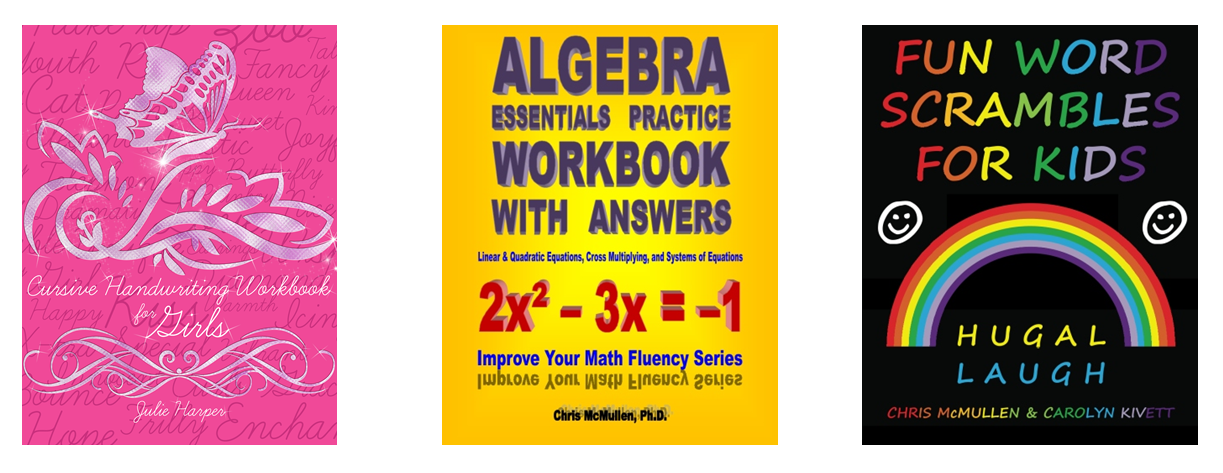
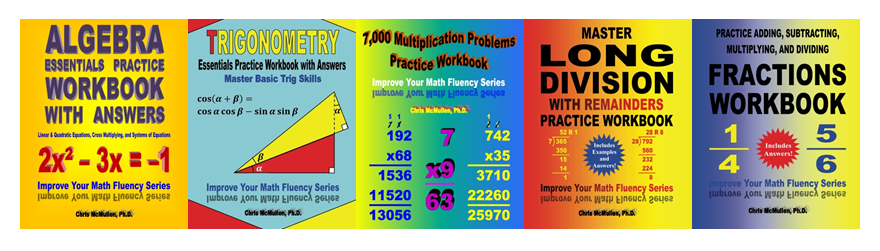
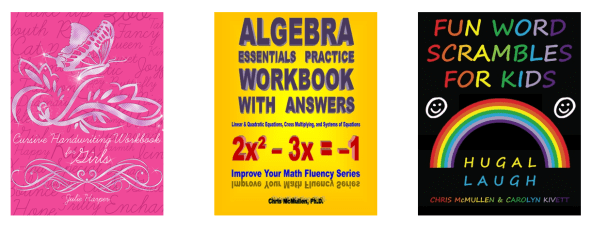
This includes my Improve Your Math Fluency series of workbooks (arithmetic, algebra, and trigonometry), my chemistry and astronomy books, projects where I’ve collaborated with other children’s authors, and books that I’ve published under a pen name.

(My audience isn’t just children, though. Many adults buy the same books. Most of my books have a grown-up look to them so that the same books can appeal to both audiences.)

I have implemented the marketing tips that I share below.

Math

Who Is the Target Audience?

Ultimately, you write a children’s book for the kids. If the kids who read the book don’t benefit from the book, it will be very difficult to achieve lasting success.

But the kids may not be involved in—or even present during—the purchase. Parents and educators are more likely to make the purchase.

Both the packaging (cover and blurb) and content must appeal to parents and educators, or the book won’t sell.

The book needs to appeal to the target age group, their parents, and the educators of this grade level in order to have a fighting chance.

You must target a very narrow age group or grade, such as Ages 9-11, preteens, or grade 4.

You would love to sell your book to everyone from age 0 to 115, but if you market your book this way, it may not sell to anybody.

Consider the parent or teacher who is shopping for the book. For example, a parent may be shopping for a book for a child who reads at the second-grade level. This parent doesn’t want to buy a book that has a kindergarten reading level because that would be too easy, and doesn’t want to buy a book with a fourth grade reading level as it would be too hard.

The parent also wants the content of the book to fit the interests and perhaps relevant curriculum standards for this grade level. The material must also be parent- and teacher-approved.

Many authors avoid mentioning the age or grade level, but this is a big mistake. The worry is that specifying grade 4, for example, will eliminate a great percentage of the shoppers. And there may be children in grade 2 who can handle the material, or children in grade 6 who are still reading at the level of grade 4 or who would benefit from additional practice with the easier material. Specifying grade 4 might lose those sales, right? But it’s just the opposite!

What parent is going to buy 50 books to find the one that’s the right level? None! Parents and teachers need to know exactly what they’re getting. Specifying an age group or grade level (not broadly, like grades 1-6) helps much more than it hurts. If the parent can’t determine the grade level, from the perspective of the parent, chances are that it’s not the right level, so it’s not a good gamble. When the level is clear, the guesswork is removed.

Some parents will say, “Oh, that’s the wrong level,” and that’s okay. First, they weren’t going to buy the book anyway if the level hadn’t been clear. Second, if they did, they would be unhappy with the purchase, which leads to a return or a bad review. What you gain by specifying the level are several customers who say, “Hey, that’s the level I’m looking for.” Catching the interest of 10% of the people who check out the book is better than having 99% of the people who check out the book pass on it because the level is unclear.

There are a few exceptions. For example, if you write a book on arithmetic facts or tracing the alphabet, parents know by the topic whether or not the child is in the right age group. But if your book is about math, reading, science, history, or fiction, for example, there are many books on each of these subjects in many different grade levels, so you must make this very clear.

Here’s a tip: Use the words “and up.” For example, kindergarten and up, or grades 4 and up. This is less restrictive.

Level

The Challenges

One difficulty is designing a cover that appeals to both the children in the target age group and their parents or teachers. Cover design is already challenging when there is just one target audience. It’s even tougher for children’s books because it must appeal to two audiences to result in a single sale.

Traditional publishers often indicate the grade level on the cover, such as a large “2nd” in the corner. (Note that Amazon has a new feature that hides the top right corner of the cover until the buyer looks inside.)

Similarly, the content must appeal to children, parents, and educators.

With self-publishing, it’s up to the author to determine the grade level. The writing has to match the grade level that you specify, the content has to match this level, and everything must be age-appropriate. It’s not easy to get this right, but one mistake can greatly deter sales. You can search online to find tools to help give your book a readability score.

The better approach is to talk with local teachers of the approximate grade level, ask for their opinion, and find out what standards they use to determine readability. For example, if there is a particular software program that can help you pinpoint the reading level that is more likely to be recognized in your state or country, then that’s the program you want to use.

Another thing parents and educators have on their minds is the author’s qualifications. This may be a relevant degree or teaching experience, for example, but not necessarily. A degree and educational experience may be more relevant for nonfiction. But even for fiction, parents and teachers want their children to read text and content that is free of mistakes. How will children learn to read and write well if they read books that have mistakes? It’s important to write well and iron out the blurb and content as well as possible.

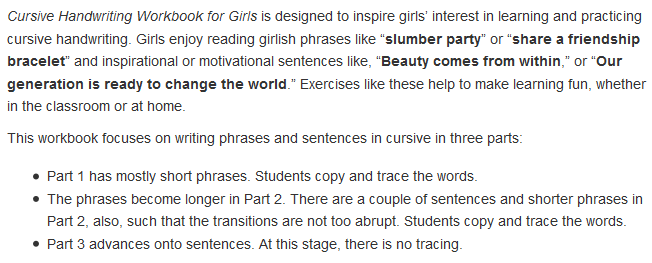
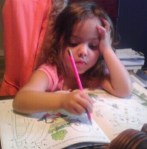
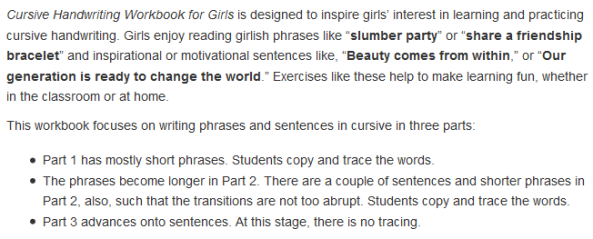
K-12 educators are strongly oriented toward a curriculum, which follows state or national standards. You want to determine how your book fits, or doesn’t fit, into the curriculum. If you’re hoping to have your book used in a classroom setting, teachers will surely be thinking about how it ties into the curriculum. Your book doesn’t necessarily need to tie into the curriculum, though. For example, many schools are dropping cursive handwriting from the curriculum, yet parents buy cursive handwriting books because they still want their children to learn these skills. How you go about marketing your book depends on whether or not it fits into a school’s curriculum.

Formatting is generally more complicated for children’s books, especially if there are pictures. In many ways, it is easier to format text. For full-page picture books, the text and images must fit together, and full-page images must be designed to bleed past the page edges for paperback books. Full-page pictures with text are challenging in e-book design since an e-book may be read on a tiny cell phone screen or a large iPad: Text needs to be clear either way. The screen may have color, or may be black-and-white, but sometimes two colors that contrast well together don’t look different in grayscale, so ideally the images should look good both in color and grayscale. Image size and memory are two more challenges for e-books that have pictures.

New children’s authors generally find it difficult to get discovered by their target audiences, but it is doable. Ultimately, it takes great content, but it also requires effective marketing, patience, and developing an author platform that includes several similar books.

One more challenge is the perception of value. Beginning-level books, especially, often have very few words, so it may not seem, to the reader, that much work is involved in making the book, unless there are really intricate pictures (when, in fact, it takes a great deal of effort to write a book at the appropriate grade level, and to format most children’s books; but the shopper may just be thinking about the word count). Paperbacks and hardcovers printed in color may be quite expensive, and Kindle e-books with pictures may have a high memory. This means that the price may be higher than you or the customer would like. One possibility is combining multiple books together into a single book to help create the perception of better value, but it doesn’t always work out (if the page count is high for a full-color book, or if the images take much memory in an e-book, a larger volume may still turn out not to seem economical). Chapter books, consisting mostly of text, have an advantage when it comes to pricing reasonably.

It’s important to be aware of the challenges as you plan your book, write your book, design your cover, prepare your blurb, and establish the grade level.
Writing

Blurb Tips

Parents and educators are most likely to read the blurb. If you write to a teen audience, this improve the chances that the “child” will be reading the blurb. Younger kids may also read the blurb, but even if they do, they probably won’t buy your book unless their parents also read your blurb.

So you want to have the parent and educator in mind while preparing the blurb. But the child is important, too.

It’s important to establish the specific grade level, target age group, or reading level. Parents and teachers don’t want to take a chance; they want to know the proper level.

Note that grade levels can vary considerably by country. For example, it may be more appropriate to identify the key stage for UK children’s books. Also note that Amazon uses the same product description for all countries, so if your primary audience resides in the USA, for example, it’s probably not worth indicating the appropriate level in the UK (also, spelling and wording would be different there).

A parent isn’t just looking for the grade level, but to see that the material is age-appropriate, the reading level is a good fit, the content is what the parent or child is looking for, the material will engage the child, etc. Think about the best features that your book offers. These should be clear from reading the blurb (but not explicit for a fiction blurb).

Concise blurbs are often more effective. A fiction blurb should grab interest quickly and arouse curiosity. A long blurb runs the risk of boring the shopper or giving away too much. You want the buyer to look inside.

A nonfiction blurb can be longer, if separated into block paragraphs. Use bullets to highlight key points. You can format blank lines, bullets, italics, boldface, and underline by signing up for Author Central.
Blurb Girls

Category and Keyword Tips

Unfortunately, the BISAC categories that you select when you publish your book are different from the categories that you find on Amazon. You must choose the closest match.

Tip: There is a “secret” to getting into special categories. A hard-to-find page in the Kindle help pages (check it out even if you publish a print book) reveals how to use keywords to get your book listed in certain categories:

https://kdp.amazon.com/help?topicId=A200PDGPEIQX41

Once there, click on one of the categories (such as Children’s or Teen & Young Adult) to pull up a table. The table lists the keywords that you need to use to get your book into a specific category.

In particular, to get listed in a specific age group, you must use one of these keywords:

  • Baby to 2 years old: Keyword = baby.
  • Ages 3 to 5: Keyword = preschool.
  • Ages 6 to 8: Keyword = Ages 6 to 8.
  • Ages 9 to 12: Keyword = preteen.

It doesn’t say, but if your audience is teens, it seems logical to include “teen” as a keyword (without the quotes, of course).

Kindle Direct Publishing (KDP) allows you to choose two categories, but CreateSpace only lets you pick one. Well, that’s not quite true:

Tip: Contact CreateSpace after your book appears on Amazon and politely request that it be added to a second browse category. Browse through the categories on Amazon, and when you find the best second category, copy the browse path (e.g. Books › Children’s Books › Fairy Tales, Folk Tales & Myths › Collections) into your email to CreateSpace.

In the past,  I have been advised that the BISAC category must be within Children’s in order to add a second category under Teen.

Rank 2

Getting into the Classroom

Just enabling a distribution channel that’s available to academia probably won’t generate many sales to schools. It’s worth having access to such a channel. For one, you can then say that your book is indeed available through that route if the topic comes up in a conversation. But you’ll probably have to market personally to generate sales among educators.

Well, I have had multiple sales of 25 to 200 books directly from Amazon. It doesn’t happen often, but it has happened periodically with me. Teachers are looking for material that they can use in the classroom, and some do have a budget for additional classroom resources. If your product page appeals to teachers, there is potential. This is like winning the lottery. You can’t plan for it. You can make your content and packaging as appealing as possible, and if you get lucky, enjoy it. If not, well, you should have realized it was unlikely. If you do get bulk orders this way, it’s likely to be rare unless you’re motivating these sales through personal interactions.

I’ve also had upwards of 150 copies of a book purchased in bulk through the Expanded Distribution. That academic outlet is open, but, in my experience, is quite rare.

The more likely way to get a book adopted for classroom use is to personally interact with teachers. You may have to suffer many rejections along the way. First, you have to have content that’s an excellent fit into the teacher’s curriculum. Then the teacher may already be quite happy with the materials already on-hand or accessible online. The teacher may not have a budget. The teacher just might not like your book. The grade level might not match up as well as you’d hoped. There are many reasons that your book might not get adopted. However, there are books that appeal to teachers, and if you happen to have one of those, taking time to personally interact with teachers may pay large dividends.

If the teacher wants to adopt your book in the classroom, it could be ordered directly from Amazon, it could be ordered through the Expanded Distribution (though not all teachers may know how to go about this), or if you publish with CreateSpace you can create a discount code and direct the teacher to your eStore. The per-book shipping is pretty reasonable for large orders, and a sufficient discount may be enticing. If the teacher is investing his or her own money, rather than placing an order from the school through the school’s budget, the optimal solution is for you to order author copies and sell those at a discount in person. You probably can’t sell author copies if the school is purchasing the books through school funds (since auditors will examine records, hoping to prevent schools from overpaying for products through personal transactions of this sort); in this case, Amazon, Ingram, or your eStore are best.

It’s still worth interacting with teachers even if the chances of your book being adopted for classroom use are very slim:

  • Teachers can help you judge the reading level of your text and the grade level of the content of your book.
  • Teachers can help you determine whether or not your book fits into the current curriculum.
  • Teachers may give you good ideas that you hadn’t thought of.
  • If the teacher likes your book, he or she could recommend it to parents, other teachers, etc.
  • The teacher may be able to help you arrange a local reading of your book to children and their parents at the school or a library (you may need to go through a fingerprinting process with the local police to ensure safety).

Most teachers are very busy people, and if you catch them at the end of the day, they’ve been dealing with kids all day long. Keep this in mind. If you show up seeming like a salesperson, you may not receive the warmest reception.

Don’t forget librarians: They can also help you judge the reading level of your book. They may even be willing to order copies of your book through Baker & Taylor to stock. Or you might be able to volunteer to read your book to children.

Another great opportunity comes with specialty bookstores that specifically stock educational materials. It’s like a teacher resource store, filled with educational workbooks, supplemental books, and all kinds of classroom materials, from dry erase boards to highlighters. If you can find any of these in your region, you may be able to sell them author copies at 40% to 55% off the list price (or on consignment).
20131102_090534

Opportunities Beyond the Classroom

You may have better success among parents or home school teachers. For one, they may not be as tied to the standard curriculum.

One way to meet parents is through local readings at a school or library.

There may be another opportunity. Many parents are looking for after-school help. This could include tutoring or additional practice for students who are struggling. But it also includes advanced sessions for students who are breezing through school.

I know a local parent who used to offer advanced math lessons in the evenings. She was very good at helping advanced students learn math ahead of the curriculum. Parents observed this, news spread quickly, and her after-school program was in-demand.

You can try to find parents or home school teachers willing to use your books. You can also create your own after-school program (or perhaps even an online course) where your book is part of the required reading. There are many opportunities if you have good content, personal marketing skills, the ability to think outside the box, and the motivation to do the work.
20140118_184900

Personal Interactions

Authors intuitively search for marketing strategies that involve little time or interaction, hoping to reach a large audience with little or no effort.

This is why so much money is squandered on ineffective advertisements, promotions, and hiring people to do the marketing for the author.

But personal interactions have the potential to be far more effective.

For one, it’s easier to get people interested in you—a living, breathing, interacting person—than a book that just sits there.

For another, parents and teachers will judge your character and personality. They can ask you questions to learn things that aren’t evident in your blurb, but which matter to them.

People who meet and interact with the author—and who enjoy this interaction—are more likely to check out the product page, buy the book if it’s a good fit for them, and leave a review if the book was helpful or entertaining.

20131102_104248

Marketing Children’s Books Online

You can’t interact directly with your target audience because you’re an adult. But you can interact with parents and educators.

It’s hard to find your target audience through social media, discussion forums, a blog, etc.

But you may be able to help your target audience find you. It may involve some work, but if you pull it off, it might be the most effective marketing that you do.

One way is to post an article in a high-traffic area. The article must be relevant to your target audience and your book. The end of the article needs to state Your Name, author of Your Book.

Another way is to create content for your own website or blog that will appeal to your target audience. Most authors who attempt this become quickly discouraged, and so never realize the full potential.

The problem is that if you write one article today, or a few articles this week, you can pour hours into the writing, yet even if the content is incredibly valuable to your target audience, it might get only a handful of views when it’s first posted, and then may not be viewed at all after that. It’s really tough to post more articles when the initial results are so dismal.

It can take months and several content-rich articles before a content-rich website begins to show its effectiveness.

A blog receives initial traffic from followers, reblogs, and the reader. But it can also receive continued traffic through search engines.

Your goal is to get regular search engine traffic. These are people who search for keywords on the internet, then find your article in the search results.

For this to be effective, the articles must be highly relevant for your book, and the keyword searches must be highly relevant for the articles. You don’t want to write about something so popular that your article will be virtually invisible, but you do want the keywords to be searched for with some frequency. It can take several articles before you hit the magic combination that pulls in traffic from search engines.

If you can direct dozens of people to your blog from search engines every day, this adds up to thousands or tens of thousands of people in your target audience discovering your book (assuming you mention or show your book somewhere on your website or at the end of your article, with a link to it). Presently, I have over 100 views of articles on this blog every day, on average, with at least 70% of the traffic coming from search engines. It didn’t start out that way. In the beginning weeks, I had just a handful of views of any post, with none of it coming from search engines.

The potential is there. You can’t realize it if you don’t try.

Wacky Sentences

Feedback Is Vital

How do you know if your book is good? Get it into the hands of your target audience.

You need beta-readers. (Don’t make your first customers beta-test your book. Then critical feedback comes in the form of a permanent review.)

Find out what children in the target audience like and dislike. What do the parents think?

Ask teachers, too. Their feedback can help you establish the grade level and see how your book fits with the standard curriculum.
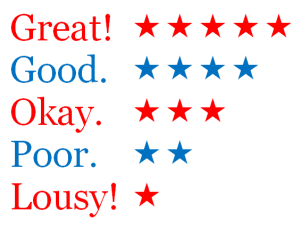
Reviews 3

Who Are You?

When people discover your book, that’s what they’re wondering.

Are you qualified to write this book? Do you have relevant expertise or experience? These are things you want to highlight in your biography if you have the qualifications that parents and teachers are looking for.

You’re not just selling your book, but partly yourself, too. Ultimately, you’re trying to create a brand as the author of a children’s book or series.

Your author photo should portray the look of someone who could write a children’s book.

Author Picture 4 Cropped Small

More Than Just an Author

Chris McMullen, more than just the author of A Detailed Guide to Self-Publishing with Amazon and Other Online Booksellers

  • Volume 1 on formatting and publishing
  • Volume 2 on marketability and marketing

Follow me at WordPress, find my author page on Facebook, or connect with me through Twitter.

AUTHORS – When was the last time you?

What a great reminder list. There are several things here that we should be keeping up with.

Chris The Story Reading Ape's avatarChris The Story Reading Ape's Blog

Said THANK YOU to a reviewer and clicked the LIKE button under their review?

like-button2The means to do both is provided by Goodreads and Amazon!

Authors often complain about the lack of reviews for their Bestselling Stories, but how many of you interact with readers who DO leave their reviews?

Having received thank you’s and/or messages from authors about my short, simplistic and unprofessional (but honest) reviews myself, I know how nice it feels (and I deal with authors on a daily basis!).

It may encourage them to read at least one more of your books!

Likewise, when Amazon sends me an email to notify me that someone has advised that my review helped them, (they had clicked the LIKE button under it), it pleases me and it’s not always, or only, the author who does so.

fightAVOID making comments or taking up arms against unfavourable reviews – read

View original post 487 more words

Great Time to Be a Muse

Muse

Are you looking for a job?

Competing against the mob?

It’s a great time to be a muse.

You’re sure to be put to good use.

Writers everywhere need you.

On their knees and begging, too.

Please, oh please, tell me what to write.

I promise to stay up all night.

The job comes with some great perks.

It’s fine if you have some quirks.

You can come and go as you please.

Redo it from scratch. Be a tease.

You’ll be free and won’t need tools.

There are just two simple rules.

The first rule is you must inspire.

Next, don’t let the writer retire.

Copyright © 2014 Chris McMullen

How to Kill Your Book Sales

Kill Sales

The Problem

Sales are going along steadily. Then you get a sudden urge to limit your income.

  • Maybe your spouse is spending too much money, and this will provide a valuable lesson.
  • Perhaps you’re worried about paying too much in taxes.
  • It might be that you want to eliminate the headache of what to do with all that extra cash.

Whatever the reason—and I bet it’s a good one—you want to kill your sales.

If you’re an author or publisher, you came to the right place to learn how to do it.

Following are several possible solutions.

(1) Naked Cover

No, not naked people, a naked cover. (Though if you wrote a book on conservative Christian values, naked people on your cover might work, too.)

What’s a naked cover? It’s a plain white cover with the title and author name written on a tiny font so that you can barely see them—like the one below.

Thirty years from now naked covers will become the new trend, and you’ll be complaining, “Hey! That was my idea!”

Naked Cover

(2) Toga Party

Edit your book so that customers think, “That’s Greek to me.” Literally: Pay a translation service to rewrite your book in Greek, then upload the Greek file in place of the English one.

However, if a large portion of your target audience actually speaks Greek, maybe you should try Egyptian hieroglyphics instead.

(3) Pure Jibberish

Change your blurb so that it’s completely unintelligible. For example, you might rewrite it in Morse code, using burps and hiccups in place of dits and dahs. For example, it might start out something like this:

Burp hiccup hiccup. Burp burp burp burp. Hiccup burp hiccup hiccup.

Hiccup burp burp. Burp burp. Hiccup burp burp.

Hiccup burp hiccup hiccup. Hiccup hiccup hiccup. Burp burp hiccup.

Hiccup burp burp burp. Hiccup hiccup hiccup. Hiccup! Burp burp burp burp. Burp! Burp hiccup burp?

On the downside, your blurb might make perfect sense to drunk or buzzed shoppers. But there is always the hope that they will return their books after they recover from their hangovers.

(4) Insult to Injury

Insult your reviewers. Of course, you have to sign on with an account where you use your real name so that everyone knows that you are, indeed, the author.

Unfortunately, you can’t just drop F-bombs in the comments. Otherwise, Amazon may remove your comments and this will lose its effectiveness.

No, you must be clever. Insult your customers in such a way that they feel, “Why, I never!” But do it in such a way that your comments don’t appear to violate the review guidelines.

Perhaps something like, “Thank you for taking the time to leave that glowing, five-star review. I’m surprised that someone with a pea-sized brain was able to comprehend my literary genius.”

Some people don’t read the comments, so you have to go all out. Comment on every review, from one to five stars. Leave 300 or so comments after each review. When customers see that each review has hundreds of comments, that may draw their interest.

Go to every customer discussion forum you can, make it crystal clear who you are and how to find your book, and insult the daylights out of everybody there. That will attract more interest in your reviews, and, hopefully, add hundreds of one-star reviews to your product page.

Though some customers may feel pity for you and buy your book anyway.

(5) Haywire

Create a formatting nightmare as follows:

  • Place your cursor in the middle of a paragraph and encourage your toddler to play with the keyboard for a few minutes.
  • Indent your paragraphs from the right side.
  • Align your text so that it’s ragged left. (See the image below.)
  • Rotate an occasional page 90 degrees. Don’t worry if part of the text gets cut off.
  • Double space every other page.
  • Use italics, boldface, underline, and strikethrough (all four at once) on an entire chapter. Preferably Chapter 1, so it shows on the Look Inside.
  • Add dialog tags to every word of dialog. For example: John said, “Good,” then said, “morning,” and added, “Jane.” Then John said, “How,” to which he added, “are,” and finally, “you?” Jane began her reply, “I’m,” and ended it with, “miserable.”
  • Insert a random watermark, like the word REJECTED, onto every page of the book. (Find an example below.)
  • Hold down the Shift key and press Enter after every heading so it expands to fill the margins.
  • Cut your pictures in half horizontally. Paste the top half on one page and the bottom half on the following page.
  • Vomit on the floor, take a high-resolution picture of it, scan the image, and insert it in your book immediately following the copyright page. (If you receive an invitation to post that page of your book on the wall of an art museum… well, then, maybe your book was just destined to sell after all. Stop fighting fate.)

Kill Sales 2

Rejected


Good Luck!

Sorry, satisfaction is not guaranteed. You should have read the fine print before you initiated action.

(Of course, if you want to be boring, you could just hit the button to unpublish your book, but that would be like cheating. Show some ingenuity!)

Copyright © 2014 Chris McMullen

Authors, What Are You Selling?

Selling

The Question

Aren’t you selling more than just a book? much more?

If all you’re selling is a book, that’s a big problem for you: It’s easy to find books. The library has thousands. You can find thousands in bookstores, millions on Amazon, and hundreds at yard sales.

It takes more—much more—than just a book to make it worth reading.

  • What more are you offering than just a book?
  • Who is likely to benefit from what your book offers?

You want to identify the benefits your book offers, the people most likely to appreciate those benefits, and figure out how to match those people (your target audience) with your book.

Well, duh!

But many authors either aren’t doing this, or aren’t taking full advantage of this seemingly simple logic.

Features vs. Benefits

People don’t buy anything.

People don’t buy features.

People may buy benefits (if those benefits are a good fit for them and they perceive the benefits as a good value).

Example: Someone asks you, “Was self-publishing your book easy to do?”

  • Nothing special: “The writing was fun, but the editing and formatting were nightmares.” You missed a golden opportunity here to introduce a benefit.
  • Features: “It was because I really enjoyed the writing, which took two years, and I hired an editor for the tedious part.” This highlights two features: Ample time spent on the writing and having your book edited.
  • Benefits: “I really enjoyed the months that I spent studying swordsmanship and how to describe it in fiction, and I hired an editor to make sure it reads very well.” First, if you’re really into swords and sorcery, this sounds authentic. Second, people don’t care for the editor (that’s a feature), but they may appreciate that it will read well (that’s the benefit).

You might be thinking, “Well, if you mentioned the editor, it should be obvious that the book should read well.” But not necessarily. For one, there are different types of editors. Some customers might interpret mention of the editor to mean that there are no spelling mistakes, but that doesn’t mean that it will read well.

And not everyone will make the connection. Sales people have better success when they describe benefits than when they list features, especially when they describe specific ways that a product will benefit each individual.

Example:

  • Nothing special: “This television measures 27 inches diagonally.” Everyone is thinking, “So do many other televisions.”
  • Feature: “This television comes with picture-in-picture.” Many customers are thinking, “Well, I don’t need that. I’d rather save money.”
  • Benefit: “With picture-in-picture built-in, your husband won’t have to change the channel during your soap opera to check the score of the game every few minutes.” Now if this applies to you, you may be starting to consider the benefit that this feature offers. You might not have considered this benefit just from the feature itself. You might have interpreted the feature to mean you could watch two shows at once, which you didn’t intend to do.

Just-a-Book Marketing

If all you have to offer is a book, then it should be satisfactory to just:

  • Tell people that you have a book. That should do it, right? Maybe tell the genre, too. But a romance novel is still one of thousands. What makes it special?
  • Keep mentioning the title so that people can remember it. But if they do remember, why should they read it?
  • Show people the cover so they can see it. But if they do see it, why should they care to find out what’s inside it?
  • Advertise that it’s on sale. But people don’t buy prices. They need a reason to want the book before price helps to create value.

Branding is important, and branding does involve getting your target audience to see your cover, your title, and your name multiple times over a long period so that they recognize it.

But branding is more effective when they associate some benefit with your book.

When you hear Sony, do you think high quality? When you hear Costco, do you think large quantities and good savings? When you hear Disneyland, do you think your kids would be happy to go there? When you hear McDonald’s, do you expect fast service and low prices? When you hear Bounty, do you think absorbent?

You want to associate some benefit with your brand. Then, when your target audience is shopping for a book in your genre and remembers your book, they will have some positive quality to associate with it.

They might not buy your book just because they recognize it. But if they recognize it and a benefit comes to mind, this greatly improves your chances for a sale.

But it’s not just about the book. It’s about you, too.

More-than-a-Book Marketing

There are two ways to offer more than just a book:

  • Mention a specific benefit that your book offers.
  • Remember that the author is an important part of the book and marketing.

This second point can make a big impact on marketing effectiveness. We’ll get to this in the next section.

Your product description is a valuable marketing tool. Think about the important benefits that your book offers your target audience. These benefits should be clear from reading your blurb, but fiction is a little tricky because the benefits generally must be implicit.

The author’s biography provides a chance to show how the author is qualified to write the book. For nonfiction, this is often a relevant degree or experience. For fiction, if you have a writing degree, you should play your card, but if not, you may still have relevant experience. Have you traveled to the place where part of your book is set? Have you spent a significant amount of time learning or studying a relevant skill, like forensics for a crime novel?

Instead of trying to brand just your book’s title, you might develop a concise phrase to serve as a hook. Use this to create interest in your book and to associate your book with a positive quality. Anywhere you mention your book’s title, you could include the hook next to it, such as at the end of blog posts, emails, or on business cards. You can even mention it in person, at readings, signings, or anytime you get the opportunity to interact with your target audience and the subject of your book comes up.

Example: Instead of just mentioning the title, A See-Through Relationship, you could also include the hook, “What if you fell in love with a ghost?”

It’s not easy to come up with a clever, appropriate, effective, very short hook, but it can really be worth it if you pull it off. It’s definitely worth spending time thinking about this.

I bet you recognize some company slogans. The hook works for authors much the same way.

When you have the chance to describe your book, online or in person, you want to make the benefits of your book clear. The better you know your target audience’s interests, the better you can show them how your book may benefit each individual.

The Author

It’s challenging to get people interested in your book.

Imagine you’re at a cocktail party, but it’s not an ordinary cocktail party. 90% of the people in attendance are sci-fi enthusiasts, and you have a science fiction book.

Suppose you set your book on a table in the center of the room and leave. I bet a few people will pick up the book, if the cover has good appeal, and check it out. But it’s just a book, and people didn’t attend a cocktail party looking for a book. They went to the party to meet people.

If instead you leave your book at home, but this time you stay at the party, there is a good chance that you will meet many people and get people interested in you.

You have a pulse. You move around. You talk. You interact. Unlike your book.

It’s easier to get people interested in you, the author, than it is to get people interested in your book.

Once people become interested in you, let them naturally discover that you’re an author, and their interest in you may translate into interest in your book.

By discover, I mean waiting for, “So what have you done lately?” instead of volunteering, “I just published a new book.” Wait for the prompt.

Use this to your advantage: Interact with your target audience, both in person and online.

You have a personality; your book doesn’t. You can interact with people; your book just sits there.

People in the target audience who personally interact with an author are more likely to check out a book, buy it, and leave a review than some random stranger who happens across it.

Online, a large number of people can come across your book. But to most of them, it’s just a book they see while passing through.

On your product page, your description may help to show the benefits, but first you need them to find your product page.

In person, your interactions can help to get people interested in your book through their interest in you, and then you can show them the benefits personally. Now you’re selling more than just a book.

You can also provide the personal touch online. You can also let people see that you’re more than just a name; you can help them discover the person behind the book.

More Than Just an Author

Chris McMullen, more than just the author of A Detailed Guide to Self-Publishing with Amazon and Other Online Booksellers

Follow me at WordPress, find my author page on Facebook, or connect with me through Twitter.
Puzzle: Four-Letter Word for Contradiction

Contradictory

It’s been a while since I’ve made a puzzle post.

This puzzle is a four-letter word for contradiction.

No, it’s not one of those kinds of four-letter words.

Yuck! Now I have to wipe that foul language off my blog.

(Just teasing.)

Here comes a hint.

Believe it or not, the people below are all talking about the same thing:

John: I know exactly what I’m doing.

Ivan: Everyone knows you’re making the biggest mistake of your life except for you.

Jean: I made that mistake before, and I want you to benefit from my wisdom.

Geovanni: You’re doing the wrong thing, but sometimes we need to learn for ourselves.

Yohan: Maybe it’s not as bad as it seems after all.

Jonka: Don’t worry. It will all work out in the end.

In fact, these could all be the same person thinking about similar circumstances at different times.

Remember, we’re looking for a four-letter word for contradiction.

Spoiler alert.

Ready or not.

Here comes the answer.

It’s something we can all relate to. It’s called life.

🙂

Love

Is

For

Everyone

Listening

Involves

Focused

Ears

Living

Independently

Frustrates

Elders

Lost

Individuals

Found

Everywhere

Copyright © 2014 Chris McMullen