Book Royalty Fantasy Fun

Fantasy

Prior to publishing, every author has the opportunity to entertain fantasies about book royalties.

Only a few authors get to experience the fantasy after publishing, yet every author can enjoy the dream beforehand.

Let’s have some fun with this.

If your wildest dreams could come true, would you:

  • Pay off your mortgage? Look for a new home?
  • Shop for a new car? Buy a yacht? Try on new jewelry?
  • Settle your student loan? Get out of debt?
  • Help out charity? Share with family or friends?
  • Start a new business? Play the stock market.
  • Blow all your cash before you realize how much you have to pay in taxes? Whoops!
  • Think of something creative you could do with mega royalties, like making a fancy gold-plated edition of your book.

This is the one occasion where every author should love math. It’s fun to play with the numbers in the months leading up to publication.

Dream about a bestseller.

  • Every time you check your sales reports, the numbers change, even though you just checked it a minute ago—heck, you just hit the refresh button repeatedly and the number of sales goes up. Cool, huh?
  • Imagine that you could sell 1 book every 10 seconds. That’s 6 books per minute, 360 books per hour, 8,640 books per day, 259,200 books per month, 3 million books if you can keep it up for a whole year. Now we’re properly in fantasy land.
  • At $2 per book (that’s 70% of a $2.99 e-book or a 20% royalty for a $9.95 paperback), you’d be making $12 per minute, $720 per hour, $17,280 per day, half a million dollars per month, and 6 million dollars per year.
  • Everybody will know your name, they will recognize you walking through the mall. Everyone will ask for your autograph. You’ll hire someone to handle all your interview requests. Isn’t life so grand?

Let’s be a little more modest:

  • 1000 books per day would be pretty awesome, right? At a modest $2 royalty, that would yield $2,000 per day or $60,000 per month. Not a bad month, eh?
  • 100 books per day is much more plausible; that’s just 4 sales per hour, one sale every 15 minutes. A $2 royalty would net $6,000 per month. Maybe your book is worth more. Suppose you set the price at $9.99 for an e-book and draw a royalty of $7. Sell 100 books a day and you earn $21,000 for the month. You could start shopping for that car…
  • 10 books per day seems like nothing, doesn’t it? That’s not even one sale every two hours. You’d have to earn a royalty of $3.33 in order to make $1000 per month.
  • 1 book per day is pretty modest, yet there are millions of books that don’t achieve this. You’d have to earn a royalty of $3.33 in order to make $100 per month.

A 99-cent e-book earning a 35-cent royalty requires many, many sales to make your dreams come true:

  • 1000 books per day is still pretty good: $350 isn’t bad for one day’s sales. You’d sell 30,000 books per month to earn $10,500.
  • 100 books per day works out to $1,050 per month.
  • 10 books per day comes to $105 per month.
  • 1 book per day can buy you two Happy Meals for the entire month. That’s about it.

While it’s fun to fantasize about being a bestseller, the reality is that most books sell fewer than one copy per day on average.

But you don’t have to sell loads of books to live the dream:

  • Just writing a book is a remarkable feat.
  • Becoming a published author—hurray!
  • Seeing your name in print—three cheers for you!
  • Your first sale to a stranger—way to go!
  • Got a favorable review—so cool!
  • Asked for your autograph—a Kodak moment!
  • Thanked by a stranger in the grocery store for writing your book—do I see tears?

Writing because it makes your life better and may make other people’s lives better… that’s priceless. 🙂

Publishing Resources

I started this blog to provide free help with writing, publishing, and marketing. You can find many free articles on publishing and marketing by clicking one of the following links:

Chris McMullen, Author of A Detailed Guide to Self-Publishing with Amazon and Other Online Booksellers

Follow me at WordPress, find my author page on Facebook, or connect with me through Twitter.

Sh.

Sh

Wave.

sh Point.

shsh Nudge.

shshsh Mime.

shshshsh Sign.

shshshshsh Draw.

shshshshshsh Write.

shshshshsh Tiptoe.

shshshsh Wink.

shshsh Smile.

shsh Bow.

sh Curtsy.

Hug.

.

Copyright © 2014 Chris McMullen

Kindle e-book Prices and Royalties

Prices

What Is the Best Kindle Price?

That’s the million-dollar question. The answer also varies from book to book.

A recent article from TechCrunch points out that the $9-10 price range is the most profitable list price for e-books in the United States, evaluating sales data for all books—i.e. it includes both traditionally and indie published e-books. Click here to check it. It’s short and makes some informative points for both US and UK pricing.

However, the article doesn’t make a few points that may be particularly significant for indie authors:

  • Thousands of traditionally published e-books are priced at $9.99 and sell frequently because the authors are quite popular. Think about it: If a hardcover is selling dozens of copies per day at $35 or if a trade paperback is selling frequently at $25, then $9.99 is an enticing e-book price.
  • Many e-books that would be priced between $10 and $20 are selling at $9.99 because the publisher actually makes a greater royalty with a $9.99 list price. Kindle offers a 70% royalty on books with a list price of $9.99, so the royalty on a $9.99 e-book can be as high as $6.99 (it will be somewhat lower due to the 15 cents per Mb delivery fee). A Kindle e-book priced at $19.99 draws the same royalty of $6.99 because the royalty rate is 35%. Think about it: Would you rather sell your book at $9.99 or $19.99 if either way the royalty will be $6.99? Therefore, the $9-$10 price range is selling many, many more e-books than other price ranges above and below this—it’s kind of like ten price ranges in the same slot.
  • Technical nonfiction—especially, textbooks—tends to sell for higher prices.

I’m not advocating cheap e-book prices. I’m just warning that e-book prices of $7.99 to $9.99 might not turn out to be as profitable as this article might suggest for newbie fiction authors.

Low Prices

The article also shows that many e-books sell at low prices. One reason is that there are tens of thousands of books selling for free, 99 cents, $1.99, and $2.99. These are very popular price points, especially among indie authors. New authors often feel that they have a better chance to get discovered with a more enticing price. Others use this strategically, hoping that readers will get hooked and check out the author’s other books.

There is something important to note about low prices:

  • Kindle e-books priced 99 cents to $2.98 earn a 35% royalty. A 99-cent e-book earns a royalty of 34 cents and a $1.99 e-book earns a royalty of 69 cents.
  • A Kindle e-book priced at $2.99 which qualifies (public domain books, for example, do not) for the 70% royalty and has a small delivery fee earn royalties of up to $2.09.
  • In this case, you would have to sell 6 times as many e-books at 99 cents as you would at $2.99 or you’re losing profits.
  • Similarly, you would have to sell 3 times as many e-books at $1.99 as you would at $2.99 just to break even.
  • Amazon seems to have made recent changes to the sales rank algorithm to factor in list price. This would make sense, as Amazon would prefer to sell 100 books at $2.99 than 100 books at 99 cents.
  • Books enrolled in KDP Select can benefit from Countdown Deals. Books priced under $2.99 aren’t eligible for Countdown Deals.

Perception

Most authors expect to sell more books at lower prices and fewer books at higher prices, but it doesn’t always work out that way. Many customers believe that you get what you pay for, and this perception affects the economics of e-book sales. Even if you do sell more e-books at a lower price, you might make more profit at a higher price (since you draw less royalty per sale at the lower price).

Some authors have actually raised their prices from $1.99 to $299 or $2.99 to $3.99, for example, and started selling books at a higher frequency. This doesn’t happen for all books, but it does happen for some.

It depends in part on the value that your book provides, how it appeals to the target audience, and on the buying habits of your specific subgenre or subcategory.

There are many customers who have been disappointed with e-books that they purchased for 99 cents to $2.99, who now shop for e-books priced from $3.99 to $6.99.

Another factor is marketing. If you market your book effectively and reach potential readers on a personal level, they may be willing to spend more money on your book.

Suggestions

Here are some things to consider when deciding on the price of your Kindle e-book:

  • Research books that are very similar to yours, including top sellers. Buyers will know what the typical price range is. If your book seems underpriced, they might wonder what’s wrong with it, and if it seems overpriced, it might not seem to be worth the money.
  • Consider the length of your e-book and the value it provides. Customers like to feel that they are receiving good value for their money.
  • Most e-book buyers want to save at least 50% off the print price.
  • Some buyers will also purchase both print and e-book editions through MatchBook. If you use MatchBook, set your list price high enough that the MatchBook price may seem like a compelling option.
  • A boxed set may help to create the perception of value. The $5.99 to $9.99 price point may be more profitable for a boxed set than for a single volume by a new fiction author. Ideally, the individual volumes would be priced so as to help the boxed set seem like a good value.
  • Technical nonfiction books that provide significant content are generally worth more to buyers.
  • If you succeed in selling multiple print books per day priced $20 or higher, you have much better prospects for selling e-books at a $9.99 list price.
  • Authors who will be signing up for Kindle Select have an incentive to price their e-books between $2.99 and $9.99 in order to take advantage of the Kindle Countdown Deal. This allows you to create a short-term sale to help stimulate sales.
  • Amazon’s algorithm for sales rank may currently factor in the list price. Only Amazon knows for sure, but some authors have expressed recently that this seems to be the case now, and this is consistent with my observations, too.
  • If you have several similar books for sale, a compelling price on one book may help to generate interest in your other books.
  • If you have a series, offering the first book cheap may help to hook readers in the series.
  • How professional does the book look, in terms of both content and formatting? A higher price does command higher expectations.
  • What is the demand for your book? If the content is very specialized, this may warrant a somewhat higher price.
  • What are your specific objectives? Is your goal to draw the most royalty? Is your goal to maximize your readership? Is your goal to get on a bestseller list? When a higher price may draw a greater net profit, if you’re more focused on sales than royalties, then a lower price may fit your objectives better.

Publishing Resources

I started this blog to provide free help with writing, publishing, and marketing. You can find many free articles on publishing and marketing by clicking one of the following links:

Chris McMullen, Author of A Detailed Guide to Self-Publishing with Amazon and Other Online Booksellers

Follow me at WordPress, find my author page on Facebook, or connect with me through Twitter.

You Might Be a Writer if…

Qwerty

You might be a writer if…

  1. Some of your best ideas were originally written on napkins, Kleenex, or toilet paper.
  2. You wake up at three in the morning and sneak out of bed to spend a couple of hours alone with your computer.
  3. When people act like jerks, you appear to handle it maturely, then secretly fashion characters after them to exact your revenge.
  4. You pull over to the side of the road a few times each week to jot down ideas for your book.
  5. A family member interrupts your work to ask you a simple question and you turn into a screaming lunatic.
  6. The most fulfilling conversations you have are between you and your imaginary muse.
  7. When your lucky underwear really stinks, friends know you’ve been fortunate not to get any bad reviews for several weeks.
  8. You log into your publishing account while you’re eating lunch to check on your royalties.
  9. In the middle of the night, you wake up sweating with an irrational fear that some discovered your secret pen name.
  10. You routinely turn down invitations to parties in favor of working on your book.

Copyright © 2014 Chris McMullen

Snow on Palm Trees

20140124_081524

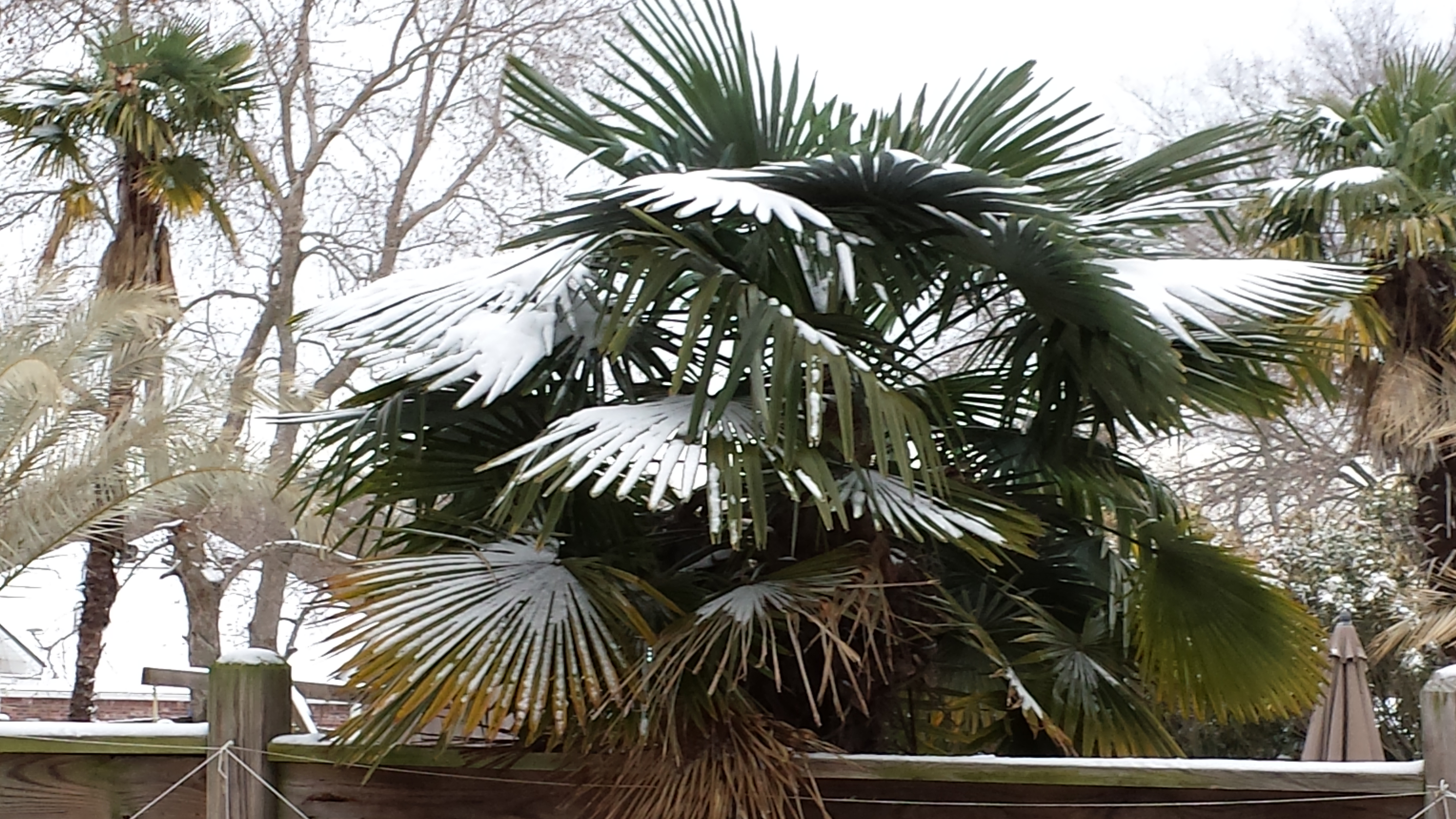
It rarely snows here in Louisiana. Two days ago, it was fairly warm and my daughter said that she wished it would snow. She had watched Frozen a couple of weeks ago, so she was hoping to make a snowman. I tried to explain that it might be years before she gets to see snow. Wrong. Just two days! What do fathers know? (Not much, apparently.)

Seeing snow on palm trees and magnolias is a strange sight. I also finally got to see what the weather app on my phone looks like when it snows. Rain is pretty cool: It shows droplets; initially, one rolls down the screen. Snow has a great start on the app: At first, you see some pretty snowflakes on the screen, but, unfortunately, the screen then clears up except for a narrow strip of snow at the bottom.

20140124_081443

20140124_081721

Authors: You’re not Alone

Alone

Alone

It’s easy to feel alone:

  • You sit down and write your book all by yourself.
  • If you self-publish, you do it yourself.
  • Marketing is up to you.

Indie ≠ Alone

It’s really indie publishing, not self-publishing.

  • Indie = independent. Independent means you’re the boss, you make the decisions, you have freedom, etc. Independence doesn’t mean you have to do it yourself. Choose not to be alone, if you wish.

Where Is Everyone?

Get connected:

  • Meet fellow authors. Interact with them. Read about their experiences. Discuss your publishing experience.
  • Ask for help. Others have worn your shoes. Advice is easy to give. Search for ideas. Post a question.
  • There are many free, helpful, positive, interactive author communities on the internet. You just have to look.
  • Need professional help? There are many editing, formatting, and illustration services available by many editors, designers, small publishers, and businesses. You can find affordable and reliable service if you search thoroughly. The more you interact in the author world, the more likely you are to know someone you can trust to recommend a service.

Struggling?

You’re not the only one:

  • Writer’s block is a common affliction. Search online for some creative ideas for getting past it.
  • Many other authors have been frustrated with the exact same formatting challenges. Post a question on a publishing forum.
  • Did sales take a nosedive, or never even start? You’re not the first and won’t be the last. Get advice on your cover, blurb, front matter, and first chapter.
  • Get slammed with a bad review? Ouch! Unfortunately, most authors can relate. Experienced authors can help you deal with it, and avoid making matters worse.
  • Need a shoulder to cry or lean on? Reach out. There are authors everywhere; many are happy to lend a shoulder.
  • No clue how to market? Everyone has been there before. The internet is loaded with marketing suggestions.
  • Struggling with your blurb? Check out some top-selling blurbs. Seek feedback on your draft.
  • Want feedback on your writing? Join a writer’s forum. Put on a thick skin before you leave the house.
  • Cyberbullying got you down? Check out this post. You can find some great ideas and a valuable resource there.
  • Almost get run over by an elephant on your way to a book signing? That’s probably happened to someone else, too. Share your story.

Choice

You can choose not to be alone. It really is that simple. 🙂

There are millions of writers. You’re not alone.

Once you have some experience, be a positive influence to others; show your support, share your wisdom, and offer your encouragement.

Misfits

Feel like a misfit? Many authors do. Get together and form a band of misfit writers.

You might discover that you’re not a misfit after all—that you fit right in. 🙂

Read one of the many novels where the misfit protagonist saves the world.

Publishing Resources

I started this blog to provide free help with writing, publishing, and marketing. You can find many free articles on publishing and marketing by clicking one of the following links:

Chris McMullen, Author of A Detailed Guide to Self-Publishing with Amazon and Other Online Booksellers

Follow me at WordPress, find my author page on Facebook, or connect with me through Twitter.

Book Marketing Assignment: What Do Your Customers See?

Eye

Concept: The Customer’s Perspective

It’s a very handy perspective to see your book the way prospective customers see it. They are judging your book, deciding whether to buy it, never buy it, or think about it for a while. The more insight you can gain into this, the better you can perfect the marketability of your book.

Challenge: A Different Perspective

The customers and the author view the book through much different perspectives:

  • Customers are deciding if the book interests them. The author has a crush on the book, whereas customers aren’t sure if they even want to shake hands with the book, let alone take it out on a date or propose to it.
  • Customers have no idea what the book is about until they see the cover, read the blurb, and check it out. The author already knows what the book is about; the author even knows the story and ending.
  • Customers want to learn about the genre and content. The author already knows these precisely.
  • Customers stumble along the sentences of the blurb and Look Inside as they are written, noticing any typos or formatting issues. The author tends to read what he or she meant to write, not seeing what’s actually there (making it easy to miss typos). It’s difficult for the author to consider how each sentence might be misinterpreted.
  • Customers are comparing the book to similar books, noticing any differences with what they are accustomed to reading. Authors should be thinking this way, too, when preparing their product pages, but, unfortunately, usually aren’t thinking this way.

Assignment: What Your Customers See

Months after publishing, it’s worthwhile to rediscover your book. You’re no longer feeling that strong urge to publish it; you’re no longer overwhelmed with all the work that must be done to publish the book. You’ve forgotten parts of your blurb, which gives you a chance to see it with fresh eyes.

Here is your book marketing assignment:

  1. Search for your book on Amazon. See how it looks on a page of thumbnails. Imagine not knowing anything about your book. Would you be able to guess the genre and content instantly? Is the title easy to read in the thumbnail? If this were someone else’s cover, what criticism would you offer?
  2. Read your blurb as if you’ve just discovered it. Sound it out slowly, listening to it one syllable at a time. Check carefully for any typos. Does the beginning of your blurb grab your interest? Does the blurb engage you throughout? Does it arouse your curiosity to want to look inside? Are there any sentences or phrases that customers might find confusing, or could just be more clear? Do you see any words, clichés, phrases, or ideas that may upset or confuse your target audience? Is there any punctuation that you’re unsure about?
  3. Examine the biography on your author page the same way. Look at your author photo. Does it seem professional? Do you look credible as the author of your book?
  4. Look inside your book. Scroll back to see your enlarged cover. Read through your title page, copyright page, and front matter carefully; take breaks every couple of paragraphs. Note any formatting issues, no matter how subtle, that might have a little room for improvement; also note any editing issues. Does the front matter make a good impression? You want to roll out the red carpet to welcome the reader, not have the reader pull on a grimy doorknob, press against a splintered door, and walk down a dark, damp hallway.
  5. Read the sample chapters. Does it start out engaging the reader’s interest and hold it throughout? Does the beginning fit the target audience’s expectations for the genre and content? Look carefully for any formatting or editing mistakes. Imagine this is somebody else’s book and you’re determined to show that person how many mistakes there are. If the sample doesn’t make you want to buy your own book, perhaps there is some room for improvement; think of how you might make it more compelling.
  6. Check out other books in the genre or category that appear to be successful. How do those covers, blurbs, and sample chapters compare to your book? Look for ideas that could help you improve your book’s product page. What makes those books marketable? What might your book be lacking?
  7. Ask others to examine your book’s product page and encourage honest feedback.

Publishing Resources

I started this blog to provide free help with writing, publishing, and marketing. You can find many free articles on publishing and marketing by clicking one of the following links:

Chris McMullen, Author of A Detailed Guide to Self-Publishing with Amazon and Other Online Booksellers

Follow me at WordPress, find my author page on Facebook, or connect with me through Twitter.
What Determines If a Book Is Good?

good

What determines if a book is good?

The answer is a 7-letter word.

Unlike many conventional puzzles, plurals ending with -s are allowed.

The answer is not E-D-I-T-O-R-S. Although they may be able to help make a book better and they might be qualified to judge writing on many levels, whether or not a book is good doesn’t ultimately depend on the opinions of editors. There are, in fact, highly successful books that many editors don’t think highly of.

The answer is not R-O-Y-A-L-T-Y. A good book doesn’t need to be widely popular; a good book can provide value to a small audience. There isn’t a magic number of sales or royalties to determine if a book is good or bad.

The answer is not R-E-V-I-E-W-S. Even the most highly esteemed books receive critical reviews. So just receiving good reviews doesn’t make a book good, and receiving bad reviews doesn’t make a book bad. The number of reviews doesn’t make it or break it, either, as this depends strongly on the number of sales. The average star rating is not a good indicator, as opinions and systems for reviewing can vary wildly from one person to the next.

The answer is not P-U-B-L-I-S-H-E-R. Aside from the fact that this word has too many letters and the reality that for decades publishers have prevented many book ideas from ever being read, publishers don’t ultimately determine whether or not a book is good. In fact, there are many popular stories of publishers who have turned down books that later turned out to be amazingly successful.

The answer is not A-U-T-H-O-R-S.  Well, this depends in part on how you want to define a ‘good’ book. The author determines whether or not the book is good enough to share with others. The author also determines whether or not the book is successful; what one author considers a success, another might deem a failure. We’re not talking success versus failure, or how the author feels about his or her own book. A ‘good’ book should provide value to more than just its author.

The answer I have in mind is R-E-A-D-E-R-S. But not in terms of the total number of reviews or the average star rating; the answer is readers, not reviews.

Publishers think in terms of sales, investment, risk, net profit, and cost-benefit analysis. They don’t determine if a book is good; they strive to determine what will make them money. And they sometimes make mistakes with their predictions.

Different editors think in terms of writing style, storyline, plot, characterization, grammar, spelling, punctuation, etc. And each editor has his or her own set of opinions, and knowledge of various ‘rules.’ It’s possible for a writer to adopt a writing style or method of storytelling, for example, that creatively blows the ordinary rules right out of the water, while also producing a really good book. Ignoring the rules certainly doesn’t make a book good; and following any usual rules or guidelines, in itself, doesn’t distinguish good books from bad ones. (However, as you know if you read my blog, I do stress the importance of editing.)

Royalties and sales reflect how wide your paying readership is and how successful your book is business-wise. But what if tens of thousands of people read a book because you’re a very popular author, but later feel strongly that it didn’t live up to their expectations? All those sales don’t necessarily imply that the book was good. And what about the book that has a really small readership, but where most of the readers loved the book. Isn’t this book good?

What I Don’t Mean

I’m not saying that bad reviews indicate that a book is bad. Most readers don’t review books at all; surely, their opinions count, too.

I’m not saying that good reviews necessarily make a book good.

Again, I mean readers, not reviews. And I don’t mean all readers. No book pleases everyone, so it’s not possible for everyone to love a book.

What I Do Mean

If complete strangers discover a book and feel that it was worth the read—that if they had time machines at their disposal, they wouldn’t choose to go back in time and not read the book—then to these readers, the book was good.

If some wish they hadn’t read the book, this doesn’t make the book bad. Every book that’s had thousands of readers has some that strongly dislike the book.

Good, Better, Best

I don’t think it’s helpful to try to rank books. It’s kind of like comparing apples to oranges. If you love apples, can you fault the orange for trying not to fit the apple mold? Even if two books fall into the same subgenre, like romantic comedy, different authors and readers vary in their perception of just what a romantic comedy should be. So two different romantic comedies aren’t two kinds of apples, one is a lemon and the other is a lime. Two different books aren’t supposed to be the same; they were intended by their authors to be different.

What I feel is more important is the notion of improvement. I’m a fan of the compare-yourself-to-your-former-self concept. If we can all achieve this, surely the world will be a better place. If an author learns ways to improve, the author can make his or her book better.

Another factor is doing your best with the time and resources you have available. Strive to do your best each time, and as you learn and grow as an author, strive to become better. If you feel strongly that you should have done something different, then your book could have been better than it was.

Bad

When the author feels that he or she should have done better, that the book really wasn’t fit to be published, the author is judging that his or her book isn’t good. When no readers will ever feel that the book is worth reading, they are judging that it wasn’t fit to publish. (If there is a narrow audience who just hasn’t discovered the book yet, that’s different.)

A books that was written for the wrong reasons, which is lacking in effort, which no reader will enjoy, had ample potential to be something much better.

Publishing Resources

I started this blog to provide free help with writing, publishing, and marketing. You can find many free articles on publishing and marketing by clicking one of the following links:

Chris McMullen, Author of A Detailed Guide to Self-Publishing with Amazon and Other Online Booksellers

Follow me at WordPress, find my author page on Facebook, or connect with me through Twitter.

Indies Supporting Indies

Support 2

There was a great blog article on CreateSpace today by Richard Ridley called “Supporting Indie Authors.” Richard has a great take on this; it’s worth a look.

Indie authors have two images to brand:

  1. Your own branding: author name, title, cover, author photo, series, characters.
  2. The image of indies: a more positive indie image helps all indie authors.

Supporting positive successes of other indie authors helps all indie authors through branding. Spreading news about negative issues hurts it. Blind support isn’t good: If you recommend books with serious problems, it has a negative impact. Focus on the positives and share the news about worthy successes, as this helps indies in general.

There are also two strong local impacts to consider:

  1. Similar titles often feed off one another. When one succeeds, similar books tend to sell better also, through Customers Also Bought lists, for example. However, when a foolish author does the opposite of supporting other indie authors, trashing a competitor’s work (which is against Amazon’s review guidelines), it tends to backfire by dragging down the potential help of similar books (and creates negative branding for authors). Customers don’t usually buy the one book they think is best, but over time buy many similar titles, and Amazon often advertises those similar titles to customers.
  2. Among the authors you interact with frequently, a success among one often helps the other authors in the group. People see the authors who frequently converse together. These authors often have much overlap in their followings.

Support comes in a wide variety of forms. I’m not just thinking about sales, reblogs, and blog reviews, but things like providing helpful feedback and suggestions, sharing knowledge and ideas, offering encouragement at a time of need, word-of-mouth referrals when you happen to interact with another author’s target audience, and posts and comments that foster a positive ambiance in the community.

Chris McMullen, Author of A Detailed Guide to Self-Publishing with Amazon and Other Online Booksellers

Follow me at WordPress, find my author page on Facebook, or connect with me through Twitter.