Free Books with Goodreads Giveaways

One way for authors to help create some buzz for their upcoming or newly released books is through the Goodreads giveaway program.

It’s also an opportunity for readers to potentially receive free books that interest them.

http://www.goodreads.com/

You have to have a physical book in order to enter it into the giveaway program. You can make a paperback through CreateSpace, for example. You must supply both the books and pay the shipping and handling. Package your books carefully and spring for delivery confirmation (so you can show, if needed, that you did fulfill your end of the bargain).

If you elect to enter the program, be sure to read the terms and conditions (you can find them from your author dashboard at Goodreads).

You can give just one copy away, but if you’re hoping to receive some reviews, it’s probably worth giving away 5 to 10 copies. Let your giveaway run for about a month to help generate some interest in your book.

Winners are encouraged to leave reviews, but reviews aren’t guaranteed. Reviews may be good, bad, or neutral. Authors may hope that reviewers will be in a good mood because they received a free book, and most will probably appreciate winning the contest, but of course all reviews won’t always be good. They may be more likely to post the review on Goodreads than Amazon, but some people are likely to do both. Keep in mind that if they do post the review on Amazon, it won’t show as a verified purchase (although, with Amazon owning Goodreads now, it seems like they could do this if they wanted – it sure would be a nice feature).

I’m presently trying this out. I entered volume 2 of my self-publishing book into the giveaway. There are 10 copies available (and so far, only 43 people have entered the giveaway – thus, presently the odds are very good). If you enter the giveaway, but don’t win one of the free books, contact me after the giveaway ends if you’d still like a free book (assuming I don’t receive hundreds of requests – I wish I had that kind of popularity, but I don’t – I’ll be happy to oblige).

http://www.goodreads.com/book/show/17863881-a-detailed-guide-to-self-publishing-with-amazon-and-other-online-booksel

Check out other books that are enrolled in the giveaway program.

http://www.goodreads.com/giveaway

Click on a tag to narrow the search results, or use the search field (just above the list of tags) to enter a tag that interests you.

Here is a short sample of giveaways:

Amaze Every Customer Every Time

Shep Hyken

http://www.goodreads.com/book/show/17723505-amaze-every-customer-every-time

Cursive Handwriting Workbook for Girls

Julie Harper

http://www.goodreads.com/book/show/18233806-cursive-handwriting-workbook-for-girls

The Magdalene Mystery

Christine Sunderland

http://www.goodreads.com/book/show/18128152-the-magdalene-mystery

I Was a Teenage Mad Scientist

Derek J. Goodman

http://www.goodreads.com/book/show/18196669-i-was-a-teenage-mad-scientist

Bankrupting Physics

Alexander Unzicker and Sheilla Jones

http://www.goodreads.com/book/show/16059515-bankrupting-physics

One thing I noticed as I searched through the giveaways was that some of the descriptions state that they are for Advance Review Copies, Autographed Copies, or Signed Copies, for example. In my giveaway, I’m just giving away an ordinary copy.

Chris McMullen, self-published author of A Detailed Guide to Self-Publishing with Amazon and Other Online Booksellers

Challenging How Big the Author’s Name Should Be

Name Pic

The consensus among critics is that the author’s name should be relatively small (compared to the title) unless you’re famous.

Why? There are two popular reasons for this:

  1. The marketing view says that if the author’s name appears too large on the cover, it will distract the shopper’s attention from more important keywords in the title. If you’re famous, then it’s important to throw your name out there because your name has sales value.
  2. The critical view feels that the author’s name should take on a humble role on the cover (i.e. out of the way) if the author doesn’t have name recognition.

But is this correct?

Maybe not.

There are a couple of reasons to reconsider this point:

  1. Do you primarily expect to sell books to family, friends, acquaintances, coworkers, social media followers, and people you interact with personally through marketing? If so, then you do have name recognition with your target audience. Make your name larger for their benefit and disregard the potential critics. Why not?
  2. Are you branding your name in your marketing efforts? If you are effective at this, then you want your name to be easily visible (but perhaps not dominating) on the thumbnail image of your cover. Potential customers who recognize your name from your marketing endeavors who see your name in the thumbnail may check out your book.
  3. Part of marketing is about creating a perception. If you’re thinking big, then you want to create a big name for yourself. If you’re going all out to try to make it big, then starting out with a big name on your cover might be a good fit. Make that big name for yourself and prove the cover critics wrong.
  4. If you’re a nonfiction author with a title (Dr., Ph.D., M.D., etc.), you may want your qualifications to be visible in the thumbnail image. However, if you don’t have a relevant title and aren’t well-known in your field, it may be better to place emphasis on a few important keywords instead of your name.

What is your personality? What fits you? A big name? A small name?

Chris McMullen, self-published author of A Detailed Guide to Self-Publishing with Amazon

Amazon, Disneyland, and Branding

 DrMac-Aug2013-disneyland 239

Amazon and Disneyland are two huge, successful businesses that specialize in selling entertainment.

I love them both, but for different reasons.

Amazon has branded itself as a giant, which fits the name of the company. When I go to Amazon, I expect great selection coupled with low prices. I also expect quick shipping. Amazon has also branded itself as being a supporter of the small guy – i.e. small businesses and indie authors.

This last point works multiple ways. Third-party sellers and customer resale help to bring low prices to the customer through competition, and customers have the opportunity to support indie authors and small businesses. Amazon features indie success stories on their homepage.

Indie books and small business products also greatly enhance the selection of books and other products on their website.  Finally, most customers know indie authors (or are indies themselves), so there is inherently much support for this concept.

I love Amazon for giving the small guy such an amazing opportunity.

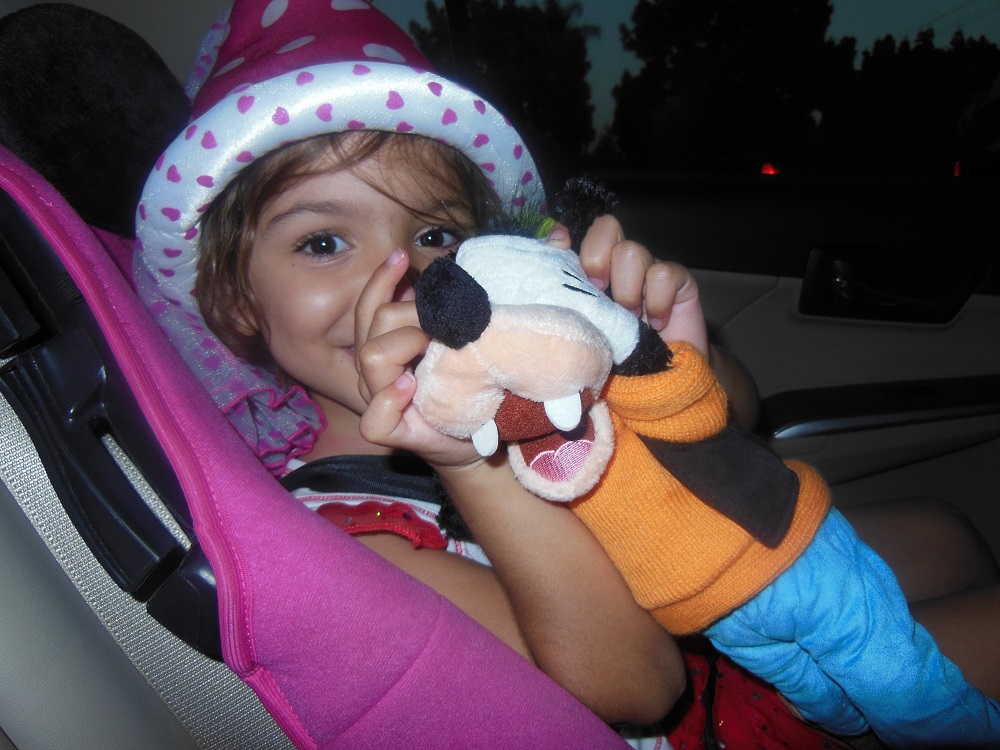
Disneyland has branded itself as a bringer of happiness, which fits its slogan, “The happiest place on earth.” My daughter doesn’t know the slogan, but she associates Disneyland with happiness: She was bouncing up and down, smiling in the car for a couple of hours on the way there.

The employees who interact with customers at Disneyland are obviously trained to place much emphasis on bringing a happy experience to customers. Another thing that’s very important is also subtle: Disneyland pays incredible attention to detail. There is evidently a high priority on cleanliness on their grounds. The service and ambiance are such a high priority in order to brand the happiness image that these details are vital to their success. Goofy came over and patted my daughter on her head during the parade – that’s a wow-factor.

I love Disneyland for attempting to make many people’s lives happier, even if just temporarily.

Of course, Amazon and Disneyland are huge companies which are geared toward making money. Aren’t all businesses striving to make money? The question is what goods and services they provide for the money, and whether or not it’s a good value.

Amazon supports the small guy in its aim to make money and Disneyland provides happiness in its aim to make money. Provided that the cost is reasonable, these seem like highly respectable ways – in my humble opinion – to go about making money.

These are positive images to brand.

Amazon and Disneyland aren’t perfect. Who is?

Personally, I would like to see Amazon become a little more like Disneyland. Wouldn’t it be awesome if Amazon were, say, “The happiest place online”? At least, a few steps in this direction would make for a nice improvement.

But, alas, in customer reviews, customer comments, and discussion forums, we sometimes see unhappiness. We sometimes see highly spiteful remarks (even though spitefulness is supposed to be a violation of the terms and conditions of use) or even cyberbullying.

This is odd, as it seems to contradict some of Amazon’s branding efforts. When I contact Amazon as a customer or author, they usually provide excellent customer service. If they’re so oriented toward great customer service, why not go all out and provide a great customer ambiance in the review and discussion forums, too? Why provide a rotten ambiance there, but great service by phone or email? It seems totally incongruent. So there is one way in which Amazon could improve, in my estimation.

Even as they are, I still love Amazon and Disneyland.

We can learn from their successful branding:

  • How do you want to be branded? You need this in the planning stages.
  • How do you want your product to be branded? Work toward this.
  • An image that people are likely to support on a wide scale (like supporting the small guy), which fits with your product or service, has much potential.
  • An image that people crave (like happiness), which fits with your product or service, has much potential.
  • Choose a title that fits this image.
  • Mickey Mouse is a simple image, easy to recognize, great for branding. (You can’t copy this image. Duh! But you can learn from the effectiveness of this simplicity.)
  • Pay attention to detail.
  • The product, service, marketing, blog, and even your daily personal interactions matter. Send a unified message that supports your branding.
  • Consistently brand the same image. Avoid changing the main title or picture. Choose these wisely in the beginning.

Chris McMullen, self-published author of A Detailed Guide to Self-Publishing with Amazon

Social Media Checks

Let me start with an employment-related fact and then discuss how this relates to author branding.

More employers are doing social media background checks and are turning down candidates based on what they find.

This doesn’t mean that people should avoid social media all together. Rather, it means that social media must be treated as a sample of professionalism. Companies that specialize in social media background checks actually have access to messages that aren’t made public, comments, and more. Scary; but it is what it is.

When a social media background check reveals unprofessional conduct (e.g. signs of not getting along well with others, negative comments about former employers) or evidence that contradicts the resume, these red flags are likely to deter employers from hiring.

However, when a social media profile looks professional and displays excellent communication skills, this tends to be an asset. Creativity and a touch of personality may help, too.

Readers do various sorts of social media background checks, too.

Many shoppers will glance at the customer book reviews. If they see authors making negative comments about former readers, this falls under the “bad-mouthing former employers” category. It doesn’t look professional.

Potential customers read blogs, tweets, Facebook author pages, etc. A shopper who discovers the book on Amazon probably isn’t going to do an extensive background check, but may explore the reviews and author page. Nobody is likely to read all of an author’s social media messages.

However, many potential customers will discover the book through one of these methods. It might be a blog, could be a tweet, etc. Perceived unprofessional conduct (e.g. bad-mouthing) may deter sales. Professional posts with excellent communication skills that show creativity and a touch of personality are more apt to boost sales.

What a potential customer sees when checking one form of social media and how this customer reacts is not much different from what a prospective employer would look for in a job candidate.

Remember, although readers probably aren’t going out of their way to do background checks on authors, potential readers are discovering authors through their marketing endeavors. What the potential reader sees in this discovery process serves as a “background check.” Is it a red flag that may deter sales, or is it something that is more likely to inspire sales? Think author branding.

References:

1. http://www.worksavelive.com/turned-down-for-a-job-check-your-facebook-profile/

2. http://jobs.aol.com/articles/2012/04/18/one-in-three-employers-reject-applicants-based-on-facebook-posts/

Chris McMullen, self-published author of A Detailed Guide to Self-Publishing with Amazon and Other Online Booksellers
 

How to Find and Hire a Cover Artist

This Love

Cover image copyright 2013 Melissa Stevens.

www.theillustratedauthor.net

There are many talented cover designers out there. How do you find a good one at an affordable price?

The first step is to find a variety of cover designers to choose from. One way is to simply use a search engine. Another is to browse for book covers you like; some of the professionally designed indie covers and small publisher covers will feature more affordable designers. Interact with the indie author community here at WordPress and over the course of a few months, you’ll discover a variety of cover designers.

Charles Yallowitz offered a creative suggestion: Contact a local art department. You may find an art student with graphic design experience looking for such an opportunity.

Another option is cover design help through CreateSpace or crowdSPRING, for example. Personal interaction with a single artist provides many benefits, but finding a variety of talent in one place has its own advantage.

https://www.crowdspring.com

Finding several designers is easy. The challenge is picking the right one for your book and your budget.

You can find premade covers for $10 and up, but chances are that this approach will result in a cover that doesn’t quite fit your book – and ‘not quite’ can make a significant difference. It doesn’t hurt to browse them, though; maybe you’ll get lucky. Or, if it just needs a small change to fit your cover, perhaps the designer will be willing to revise it for a small fee; it doesn’t hurt to ask.

It’s possible to find custom cover design for under $100, but many professionally designed covers run from $300 to $1500 (and up). Although I’ve made most of my covers myself, this year I have invested in a few covers at around the $300 price point.

I hired Melissa Stevens to design a few covers, and was very pleased both with the process and the results.

CHWG RR

Cover image copyright 2013 Melissa Stevens.

www.theillustratedauthor.net

Here are some ideas to help you narrow your search:

  • Visit the cover designer’s website. How professional is it?
  • Explore the artist’s portfolio. Do any of the images or techniques seem to be a good fit for your cover?
  • Check the designer’s previous covers out. Do any of these grab your attention? Do they follow the ‘rules’ of cover design (a good cover may break a rule, but as the author, you need some means of judging)?
  • Find some of these covers on Amazon. If the book is new, look at the sales rank; if the book isn’t new, the reviews may be more revealing of its prior sales rank (since this can change significantly over time). How much do you feel that the cover may have stimulated sales, if at all?
  • Note that books published by top publishers usually only mention the cover designer in small print on the back cover and on the copyright page, and not on the front cover.
  • What do your friends, family, and acquaintances think about the artist’s portfolio and previous covers?

When you’re ready to contact a potential cover designer, you should be prepared to exchange a few emails. This interaction will help you gauge the artist’s character, expertise, interest in your book, patience, etc. Here are some points to consider (first check the artist’s website, which may answer some of these questions for you):

  • Inquire about the artist’s background and experience (unless this information is posted on the website).
  • What techniques does the artist use? Graphic design usually looks much more professional on a cover; even though colored pencils, chalk, or paint can look good hanging on a wall, it usually makes a cover look amateurish.
  • Ask if the artist will use any clipart or stock images, and, if so, ask about copyright issues. You’d hate to invest money in cover design and then get sued for copyright infringement over any of the images used.
  • What use of the cover design will you be granted? This should be stated on the contract. If you have multiple editions (paperback, eBook), you want to clarify this. You probably want to post your cover on your website, may want to solicit feedback about it on your blog, etc. Generally, posting your cover on your websites should be good advertising for the designer, but you want to get permission first.
  • Will the artist display the cover on the artist’s website? This may not generate sales for you, but helps your branding slightly. When the artist features your cover on his/her website, it demonstrates the artist is proud of the cover.
  • You want to know to what extent you will be involved in the process. You may have a vision; even if not, you may still want to suggest revisions throughout the design. Realize that it takes a lot of work to design a cover, and much more work to make multiple revisions. Thus, many artists place a limit on the number of changes you can make for the price paid, and charge extra for additional revisions. You want to have this clarified up front.
  • Before you sign the contract, you’d like to have some idea of what you’re going to get. Perhaps the designer can describe his/her vision for your cover. Even better, request a partial mock-up showing something.
  • How long will the design take? The wise thing is for you to provide ample time for the cover to be made. I don’t believe in rushing art. Personally, I would prefer for the artist to put the idea on hold until the perfect idea comes.
  • How will the payments be arranged? It may be a good compromise for the author to pay a deposit up front and the rest when the cover is delivered; half and half is common. This way, the artist is compensated for his/her time, work, and effort even if the author changes his/her mind (which happens). You want the contract to include a provision for opting out; probably, the deposit (which may be half) will be nonrefundable, but if you’re dissatisfied with the result, you can walk away and not pay the remainder.
  • Note that some cover designers offer contracts and expect a hefty deposit, but not all designers do. This may depend in part on the process. If the designer does much of the work by hand, he/she is more likely to present a contract and expect a hefty deposit; but if the designer works mostly with stock images, he/she may be less formal.
  • You can try to negotiate a little. An artist might take a chance that once you fall in love with one cover, you might use the same artist for many covers. Instead of price, you might ask for something else, like a matching website banner. What I recommend is asking if you can receive a few of the images from the cover to help decorate the inside of your book, or maybe getting a few simple designs to help with the interior décor; such touches can help make the interior of your book (especially, the Look Inside) make a good impression, too. However, some illustrators won’t negotiate on price; but it may not hurt to try.
  • Of course, if you have any legal questions about the contract, you should consult with an attorney.

Get feedback from family, friends, acquaintances, and especially members of your target audience at various stages of the cover design. This will help you receive valuable feedback so that you can suggest possible revisions while at the same time helping to create a little buzz for your upcoming book.

Communication is very important. The artist is trying to carry out your vision, but can’t see inside your head. You must communicate your ideas clearly with the artist. Don’t be afraid to voice your opinion. Be honest. If there is something you don’t like, say so. Don’t fear hurting the artist’s feelings. (Well, have some tact. Don’t say, “That stinks.” Try something like, “I was hoping that image could look a little more…,” or, “I’m not a big fan of that…” Also, take the time to make encouraging and supportive remarks about the elements that you do like.) Communication and honesty are the keys to helping the artist pull of your vision.

There is one more thing to keep in mind: While it’s your cover, the artist wants to be happy with the cover design, too. If the author insists on some cover design element that the artist feels makes the cover look unprofessional, the artist may not want to showcase the cover on his/her website and may not want to have his/her name mentioned as the cover designer.

Finally, behave professionally in your interactions with potential cover designers. Your author image is a very important part of your branding.

From a marketing perspective, the two most important features of your cover are:

  • The cover makes it clear which genre the book belongs to. If your cover design fails to meet this goal, then most of the people who click on your book probably won’t be buying it.
  • The cover grabs the attention of your target audience. Not just making the genre clear, but attracting the target audience’s attention.

It’s also desirable for the title font to be clear in the cover. You can find various ‘rules’ of cover design and mistakes to avoid (for example, in the link below), and see if the ‘final’ cover meets this criteria (if not, at least have a good reason for not doing so).

https://chrismcmullen.wordpress.com/2013/07/06/cover-design-checklist/

For you, the author, there is one very important feature to keep in mind:

  • Ensure that the product is better than what you could have done yourself (unless you happen to have all the skills, but just didn’t want to invest the time).

Let me credit Melissa Stevens for reading my draft of this blog post and offering a few suggestions. She mentioned the importance of honesty from the author, the idea that communication between the author and artist is the key to successful cover design, and the point about cover designers who work primarily with stock images. The cover figures in this post were used by permission of Melissa Stevens.

Chris McMullen, self-published author of A Detailed Guide to Self-Publishing with Amazon and Other Online Booksellers

A Look Inside that Sells

Copyright Design Pic

A fantastic cover grabs the attention of the target audience. A killer blurb arouses the curiosity of the target audience. But it’s the Look Inside that decides whether or not the shopper will buy now or pass on it.

There are two components to a stellar look inside:

  • Formatting, design marks, and imagery that suit the content and impress the reader, without distracting from the reading. Thus, many traditional publishers include designs in the front matter and first page of the chapter, but often have very plain pages where they want readers to focus on reading.
  • A sample, prologue, prelude, and first chapter that grab the interest of the target audience and compel them to keep reading. A slow beginning is for your existing fan base; only they will exercise patience, trusting that the best is yet to come. If you hope to attract browsers, you want to come out with your best stuff. (Of course, if there are spelling, grammatical, or other mistakes in the Look Inside, these often tend to have the opposite effect.)

Spend time studying the Look Insides of top selling books. You can get several great ideas this way. You don’t want to copy those ideas; just use them to see the possibilities and inspire your own design.

Following are a few examples.

Wool by Hugh Howey

http://amzn.com/1476733953

  • I’m looking at the specific book from the link above and checking out the Look Inside of the paperback edition. I encourage you to also check it out and follow along.
  • It starts out with quotes about how awesome the book is. You can do this to by sending out advance review copies. If other authors or book reviewers have good things to say, get permission to use their quotes (there is also a section for editorial reviews at AuthorCentral).
  • One page has just the publisher logo.
  • Note that this author succeeded very well as an indie without Simon & Schuster.
  • The pages with the white-above-black torn image provide a wow factor. The cover wasn’t so hot; but if you Look Inside, now you might be impressed.
  • The copyright page begins with the logo and publisher info.
  • Part of the copyright page comes from stating that the book is a work of fiction and that any similarity to actual people, places, or events is coincidental; and this is separate from the copyright notice and trademark notice.
  • One line specifies the edition. The printer number won’t be relevant for eBooks or print-on-demand books, though. There is also manufacturing info.
  • Most professional books do not have the cover designer mentioned on the front cover. Instead, this information is placed on the copyright page and sometimes in fine print on the back cover.
  • A couple of notices are taking advantage of a marketing opportunity, though not for book sales.
  • Of course, there is the 13-digit ISBN.
  • Note that the copyright page is filled to the brim. Compare the copyright page of a book published by any big publisher to that of the vast majority of indie authors and there is a world of difference. It’s not that people will study your copyright page; it’s that they will see it in passing and it will make an impression – professional or amateurish.

The Night Circus by Erin Morgenstern

http://amzn.com/0307744434

  • Subtle stars decorate the first two pages.
  • Check out the design on the title page.
  • The next two pages are also decorative. You have to check out the designs used in this book to appreciate their effect and to help generate your own ideas.
  • This copyright page is centered.
  • See the matching designs at the beginning of each chapter and with the page numbering.

All-American Girl by Meg Cabot

http://amzn.com/0061479896

  • A sample from the content is placed on the first page to attract the attention of the target audience. If you have a lot of front matter and want to move some good stuff to the beginning, this is one way to do it.
  • Note the font of the first line of the sample.
  • If you have other books, you also can list them in the front matter.
  • The title page matches the cover but in black and white, yet not exactly the same as the cover.
  • The first word of each chapter has a special font.
  • This book begins with a numbered list to try to grab attention.
  • Look at the stars with the chapter header, which match the cover design.

Bombshell by Catherine Coulter

http://amzn.com/0399157336

  • Note that the cover looks like a bomb blast, not a female “bombshell.”
  • I’m looking at the Kindle edition.
  • There is a second image much different from the cover, in black and white.
  • Notice the horizontal black bars for headers.
  • There are logos on the copyright page.
  • Many traditionally published books include Library of Congress info.
  • Observe the Pearson division line at end of the page on this eBook.
  • See the image at the beginning of each chapter.

You can find many other examples of ways to make a professional look inside. Little design touches can make a huge difference (but they need to fit the genre and content – e.g. you don’t want romantic swirls on a suspenseful detective story).

Border Thin JPEG

Here are a couple of other things that you can include on the copyright page, to make up for things like the printer number or Library of Congress info that an indie book may be lacking:

  • Author information, such as your website, blog, a special email that you will check (but not your main email account), social media info, etc. One advantage self-publishing has is more potential for personal interaction with the author.
  • Information and/or website for your editor, cover designer, etc.

Chris McMullen, self-published author of A Detailed Guide to Self-Publishing with Amazon and Other Online Booksellers

Comparing Book Marketing to Movies

Whether you watch a movie in the theatre or on a DVD player, it always begins with a few previews. If you don’t like these, you can try showing up a few minutes late to the movie or fast forwarding through it. (Ugh! But some of those clever DVD players won’t let you hit the skip button. Who’s in control of your own equipment? How do they get away with forced advertising like that? Do they really want you to be frustrated two hours before you go post your movie review online?).

The preview helps to create buzz for a movie.

You’re not going to put a preview at the beginning of your book, though. That’s the valuable Look Inside that will make or break a deal when potential shoppers check it out; advertisements aren’t going to entice sales. But you can offer a short sample at the end of your book: Readers who enjoy your book enough to finish it might appreciate this, as long as the sample is a tiny percentage of the overall content.

You can also make a video preview of a book and post it on your website, YouTube, fan page, AuthorCentral, etc. The preview can help you create buzz for your books.

Another thing you see at the beginning of a movie is the warning not to copy it, charge fees to let others watch it, distribute it, etc. Movies also indicate the title, star actors and actresses, director, producer, etc. in the beginning, and full credits at the end.

The book’s version of this is the copyright page. Movies put an insane amount of creativity and effort into such front matter. They have a clever way of making the opening credits very entertaining. Traditionally published books have very detailed copyright pages, sometimes with design marks; they look very professional.

No reader is thinking, “Let’s check out the copyright page to see what it looks like.” This is why most indie authors underestimate the importance of this page.

Every reader passes by the copyright page and other front matter on the way to the first chapter. Potential customers see this as they explore the Look Inside. The traditionally published book has a very professional looking copyright page, often with a few professional, simple, relevant design images. This shows the reader that the book is professionally done.

Indie books often just have one line indicating the copyright; several indie eBooks have this information in the back matter in order to increase the amount of content shown in the Look Inside. You can make your book truly stand out by having very professional looking front matter. If you have enough content (i.e. more than a novella), you’ll be able to include the copyright page in the front matter and still have plenty of content to show in the Look Inside.

The cover makes the first impression. The blurb makes the second impression. And the Look Inside is the last impression the buyer gets before deciding whether to Buy It or Skip It. Part of this Look Inside is a great beginning in Chapter 1 and part is the impression that the front matter makes.

Many movies get a lot of great marketing from previews in theatres and on DVD’s, movie posters displayed in theatres, word-of-mouth recommendations from the first wave of moviegoers, numerous movie critics, and advertising.

The big difference between books and movies is that if you go down to the theatre, there might be 10 to 20 new release movies to choose from or a couple hundred new release DVD’s to rent. There are many, many more books to choose from.

It takes a lot more money to produce a movie than to publish a book, and there are many more people involved. There are indie movies just like there are indie books, but there are many, many more indie books than movies.

What does this mean?

Advertising isn’t as cost-effective for books as it is for movies. It’s much more challenging to market a book – especially an indie book – compared to a movie. It’s more difficult to create buzz for a book. It’s not as easy to get book critics with a large following to review your book. You can’t just put up a book poster at the bookstore. You have to help your target audience find your book; it won’t just be among a few to choose from.

You can find reviewers. There are many bloggers doing reviews. Find some who reviews books similar to yours, and plan to wait patiently for what may be a very long turnaround.

You can spread the word about your book. Interact with people in your target audience. Memorable personal interactions where you don’t sound like an advertisement can leave a positive impression with members of your target audience. Figure out where to meet your target audience; the answer is quite valuable to you, so this is well worth contemplating.

A movie premier helps to stimulate interest and reviews. The book’s version of this is the advance review copy.

Don’t you hate it when you go to see a movie and the only good parts you had already seen in the preview? That’s why your book’s blurb shouldn’t give parts of the story away. An effective fiction blurb will create interest, arouse the reader’s curiosity, make the genre and content clear, but won’t reveal what’s going to happen. The blurb isn’t a summary. Wanting to know what’s going to happen can cause readers to buy the book and to keep reading once they’ve started.

Movies sometimes start out slow and build up. They can get away with that in the theatre sometimes. You can walk out if it starts out slow, but you’ve already paid for your ticket.

Books by unknown or little-known authors can’t afford to do this. If the book starts out slow, shoppers checking out the Look Inside are likely to pass on the book. The first chapter should create interest among the target audience right off the bat and run with it. Exactly how to do this depends on the genre and the audience; but if the first chapter doesn’t suit the target audience, they will probably shop for another book.

Other differences between books and movies lie in the content itself. You can do anything you want in a book. In a movie, you’re limited by the capabilities of special effects and a fixed budget. Movies automatically show, and telling can be a challenge (especially, conveying abstract ideas). Most writers naturally tell, but have to work on showing more and telling less. You can see everything that goes on in a book from any angle, but in movies a scene is viewed from a certain perspective, so one object may block another and lighting is a major issue.

What determines whether or not you’ll be discussing a movie with friends and possibly recommending it to others? Think about this when you write your book.

When you watch a movie, do you find yourself wondering how you would have written it as a book? When you write a book, do you find yourself wondering how it would look and sound as a movie?

Chris McMullen, self-published author of A Detailed Guide to Self-Publishing with Amazon and Other Online Booksellers

What to Do When Sales S-T-I-N-K

Flop Pic

There are tens of millions of books to choose from. Only the top couple hundred thousand are selling once or more per day on average.

Sometimes, an author pours much time, effort, and passion into a book, but the sales don’t come. It happens. Too often.

Faced with this situation, the author has three options:

  1. Give up. (Wrong answer.)
  2. Try again. (Last resort.)
  3. Change it. (Pick me.)

There have been books that didn’t sell when they were released, but began selling after making some changes. So there is still hope! 🙂

After putting months into a book and possibly already investing some money only to see the book flop when it finally comes out, it’s important not to sink too much more time and money into the same venture: What if it flops again?

Consider changes that have the potential to make a high impact without too much additional time or expense.

What you should consider changing depends on why the book isn’t selling. If you can obtain honest feedback from your target audience, that may help to point you in the right direction.

Give your book a chance first. You can’t expect it to be a hot seller on Day 1. If a few weeks go by and sales are dismal, that’s different than just having a couple of sales during Week 1.

But if you’re not already marketing actively, it’s never too early to start that. (In the future, pre-marketing would be wise.)

If your book isn’t getting noticed:

  • Maybe the cover isn’t grabbing attention. Try a different design. You don’t want to invest a lot of money in the cover of a book that has already flopped once. But you can find some inexpensive options and you can also try changing it yourself. Ask for suggestions, search for stock photos, and browse covers to see what tends to grab your attention.
  • Are the keywords large and easy to read? Does the font seem to fit the content and create a little interest, without being difficult to read? Is the main image very large, and does it stand out well? Research common cover mistakes and ensure that your cover has avoided these.
  • Maybe the title doesn’t create interest. This is easy to change for Kindle eBooks, but requires disabling sales channels and republishing as a new title for print books because the ISBN is linked to the title. Sometimes, a different title and subtitle attract attention better. Ask for feedback on your title and subtitle.
  • The best thing you can do to get your book noticed is learn how to market effectively. Research marketing strategies and try them out. With tens of millions of books to choose from, it takes effective marketing to help customers learn about your book. If you’re already trying to market your book, try some different marketing tactics. Some strategies don’t work for some books and authors. If it’s not working, try something new. Ask for suggestions. But if the packaging or content have serious issues, you need to make some other change in addition to marketing.
  • Try a marketing promotion. For example, you can make your book free for a day if your book is in KDP Select; but just making it free won’t have much effect unless you also promote the freebie (e.g. maybe you can find some blogs relevant to your genre that sometimes announce freebies). Instead of making your book free, you could temporarily reduce the price; but again, that won’t help your book get noticed unless you also promote the sale. If you have traffic from your target audience at a blog, website, or social media, a contest might get some attention. But for a book that has already flopped, I wouldn’t do a promotion without also changing the packaging (see below).

If your book is getting noticed, but isn’t selling, it could be a problem with the packaging – i.e. a target audience mismatch. If the book is attracting the wrong audience, nobody will be buying:

  • A common problem is a cover that attracts the attention of the wrong audience. For example, if the book is science fiction but the cover doesn’t have any imagery to suggest this, whatever audience is attracted to the cover’s images probably won’t be looking for science fiction. It can be more subtle: If the cover looks like a hot and steamy romance, and the book is romance, but isn’t hot and steamy, that’s also a packaging problem. Browse top-selling books in your specific genre that are similar to yours to see what attracts the interest of your target audience. Ask for feedback. Try to find more suitable stock images. Reconsider your color scheme and its relation to your subject and genre. Consider investing a little money for a more effective cover.
  • Change the blurb. If you’re not happy with sales, change the blurb. Change it again and again. Try several times. Solicit feedback. Study other blurbs, especially of successful books from small-time authors and publishers. Remember, your blurb isn’t a summary and shouldn’t give the story away (then buyers feel it isn’t necessary to read it). The blurb’s main function is to attract the interest of the target audience. Arouse their curiosity so that they have to look inside. When sales pick up, that’s when you stop messing with your blurb.
  • Does your title send a unified message along with your cover? For example, if the title sounds like a mystery, but the cover looks like action, this may create buyer confusion. Packaging works best when the title and cover send the same, clear message about which genre the book is and briefly what to expect. Solicit feedback, and ask specifically about this issue.
  • Buyers see several covers in search results. Your book has just a few seconds to attract the interest of buyers in your target audience. A common problem is that the author is partial to an image on the cover because the author knows it relates to the story, but the shopper doesn’t know this. So if there is some image that really doesn’t belong on the cover – i.e. it’s not clear in three seconds that this image fits the genre and subject – then it may be hurting sales. Look, if sales stink now, it can’t hurt to try a different image, right?
  • Don’t underestimate the importance of browse categories. You want your book to be listed in highly relevant categories and nothing else. Find similar books that are selling well to see which categories they are listed in. Change your categories if needed. If Amazon has added extra categories to your book that aren’t a good fit, contact AuthorCentral and ask politely if they could please be removed, explaining that you feel they might create buyer confusion. This happens: A buyer clicks on a book hoping to read a romance, but sees both romance and action in the categories. “That’s not what I was expecting,” says the buyer as she walks away. If sales are slow, something isn’t working, so it doesn’t hurt to make a change and try it out for a few weeks.
  • You might as well explore a different set of keywords while you’re making other changes.

Sometimes, your cover and title grab attention, and your cover, title, and blurb are attracting the right audience, but the book still isn’t selling:

  • Give your Look Inside a close inspection. Does your book have a slow start? Do the opening paragraphs closely correspond with the genre? Are there spelling or grammatical mistakes? Are there formatting issues? Is there so much front matter that it takes a long time to reach the action (if so, try moving some of it to back matter)? Try to find what might be deterring sales from readers who check out the Look Inside. Better yet, strive to polish the Look Inside and revise it so that it attracts interest. Maybe revise the opening chapter so that it grabs interest and is a close match for the genre. Consider adding a few professional touches, like professional looking design marks (check out the Look Insides of several traditionally published books). Solicit feedback on your Look Inside, especially from your target audience.
  • Reconsider the price. Check out the prices of similar books that are selling well. At least, you could test out a new price for a few weeks and see how that goes. If you drop your price, advertise this on your blog, through social media, etc.; the sale may help to create interest. Price is usually not the main factor, unless the book is very short or way overpriced. Many authors change nothing but the price with no improvement. Save dropping the price (except for a temporary sale) for last. I would try everything else first before lowering the price (unless you are way overpriced, like a $9.99 nontechnical Kindle book). If your price is already low, consider raising the price (it might seem counterintuitive, but many people believe that you get what you pay for, and there are stories of authors who have raised their prices from 99 cents to $3.99 and actually started selling more books). Remember, it’s not just the number of sales that matters, but also the royalty. If you drop the price, you can actually sell more books but earn less money. At 99 cents, you have to sell 6 times as many books just to draw the same royalty as a $2.99 list price at KDP (since the royalty rate changes from 35% to 70%, if eligible – and the fees at 70% won’t be much if it qualifies for 99 cents).

Reviews could be a factor. But reviews often don’t have the effect that authors expect:

  • If you have no reviews, or if you have a small number of reviews that includes a bad review, your book might benefit from more reviews. But it might not. Keep in mind that nothing is better than the natural assortment of reviews left voluntarily by actual customers. It takes more sales to generate such reviews, which means effective marketing. You can hope to solicit reviews from advance review copies – free books given upfront to potential reviewers with no strings attached, where it’s clear that any review (good, bad, or ugly) is welcomed (don’t violate the customer review guidelines). A review from a blogger in your genre may be helpful (even if the review isn’t posted on Amazon). Sometimes, time and patience draw a few reviews that make a difference. Other times, you happen to get a couple of rave reviews, and sales don’t pick up at all. It happens.
  • If you have a small number of reviews, and they’re all good, buyers may be suspicious. If you just have good reviews, you have something to be happy about (that’s a problem many authors would love to have); focus on that. Keep marketing, and more sales will eventually draw more reviews. Hopefully, the new reviews will be good, too – because no author likes to receive bad reviews. Even if you don’t have any bad reviews (which would be sweet), once you have enough reviews, there will finally be a healthy assortment of opinions which helps to provide balance.
  • Does any criticism in any of the reviews have merit? For example, a review might complain of a storyline issue, or describe spelling and grammatical mistakes. If so, it might be worth reworking part of the story or finding an affordable editor. You can’t implement every suggestion made by every reviewer; you have to decide what has merit and what’s reasonable to change. Sometimes a critical review helps the author improve the book.
  • Commenting on reviews carries a huge risk. Especially, if you make the mistake of reacting emotionally or making more than one comment. Once you make a comment, the reviewer can simply ask you a question, which draws you into a conversation. Then suddenly there are several comments. If the reviewer becomes upset, the reviewer can get friends and family to leave reviews and make comments. Only the author’s image is at stake – not the reviewer’s image. Strive to look like a professional author; don’t ruin your author image over a review. If you get a review with wrongful criticism that kills sales, don’t do anything for a few days (this gives you time to calm down and think, and to see if sales are, in fact, slowing – if sales keep up, the best thing is to just leave it alone; reviews often have less effect than we expect). If sales died and you feel that there is nothing to lose, if you feel that a tactful comment might have an impact, if there are no sales, you might feel that trying this is better than nothing – but it must be tactful and you need to let go after that (don’t add more comments later). If the comment has no effect on sales and the reviewer doesn’t respond to the comment, go ahead and delete your comment; but if your is not the only comment on the review, don’t delete it – otherwise, there will be a note saying that the comment was deleted by the author (which means poster, as in author of the post, although shoppers may not interpret it this way). Most authors would advise you not to comment; and most others would say that you must be tactful and stop after the first. Besides, most shoppers will read the review, but not check out the comment. The better thing to do is marketing, trying to improve sales through marketing and promotions, try changing the packaging or content, and hoping that after weeks and months, some new reviews will help offset any bad reviews.

When I first published my conceptual chemistry book, sales really took off in the UK – better than in the US. This was really exciting, until I received my first review. It was a bad one. Often, a bad review has little effect; and sometimes a bad review actually improves sales. But when the only review is one or two stars, many customers won’t even look at the book. And when the review is really short and just vaguely states that there are many typos which could easily confuse the reader, it creates a lot of doubt in buyer’s minds. It sounds like the book is plagued with problems. And the review didn’t clarify whether the problems were typos, differences between American and English notation or vocabulary, mistakes in the content, issues with the equations formatting improperly in the Kindle edition, or what. So, of course, most buyers assume the worst. Sales had been frequent prior to this review, and then sales stopped dead. I’ve had other bad reviews, and most of those have actually improved sales. But this one was a doozy. Fortunately, I had several other books that were selling well (one benefit of publishing multiple books), and this book continued to sell in the US (fortunately, the UK review didn’t carry over into the US). Let me clarify that I have two different chemistry books with similar titles; the one with the blue cover is the far better book, and that’s the one I’m referring to here.

This review cut deep. I had already had about 20 versions of the completed file from plenty of editing. It’s not like the book hadn’t gone through many rounds of editing. I was shocked that anyone could think it was plagued with problems. I’ve read many technical works that are, in fact, loaded with mistakes. I also had a reputation for content knowledge and much teaching experience. And I wasn’t quite sure what the reviewer was complaining about, since the review was quite vague.

So here is my experience with such an issue:

  • I debated with myself over this for some time, then decided to try a single tactful comment. After all, sales were suddenly nonexistent. There was still some risk, however, because I had other books and a reputation to uphold. The reviewer didn’t respond (it would have been nice to receive a little clarification – but reviews are primarily there to benefit shoppers, not authors), so I removed my comment. Hindsight shows that this option wasn’t worth exploring in this case.
  • I re-read my book a few times. I did find a handful of silly mistakes in Chapter 2, and a couple of other issues. So I fixed those. Then I had an issue with the equations; I knew that they formatted better on a few electronic devices than others. So I retyped every equation and formatted it as text with subscripts and superscripts, in color, so that there wouldn’t be any problems with the Kindle formatting of equations. This took a great deal of time (every compound mentioned anywhere in the book was written with equation formatting, like H2O), but now I knew the equations would all format nicely. I checked them repeatedly for possible mistakes. (Wish I had thought of this the first time, but I was focused on the paperback first.)
  • I revised the book, calling it a new edition in the copyright page, corrected the mistakes and some other minor issues, and reformatted the equations for the Kindle edition. I revised the blurb to mention that it had been updated and when (since the review is dated, this allows for logical deduction; and I didn’t want to call attention to past problems in the US). This led to a trickle of sales in the UK and a slight improvement in the US.
  • I visited AuthorCentral and reformatted the blurb to include bullets and boldface. This had a small effect, too.
  • Then I added a line near the top of the blurb describing my qualifications. That was the magic answer. Why hadn’t I thought of this before? (Well, I often put any relevant expertise into the blurb, but not often near the top.) Who had more credibility? An author with a degree in the subject or a reviewer who didn’t specify any credentials? Some UK buyers took a chance once I thought of doing this; the US sales improved, too. Eventually, with the sales, a couple of good reviews came, too. The main thing that worked in my case was revamping the blurb and exercising patience (it took weeks before the rebound came).

If things are really bad, you might need a fresh start. You could unpublish and republish later (wait at least 30 days). If you do this, you have to make some dramatic changes (otherwise, you shouldn’t expect any improvement the second time). Keep in mind that I’ve never unpublished and republished a book myself, so I don’t have direct experience with this. But I have seen others do this:

  • Note that your book may remain on AuthorCentral even if you unpublish. If it’s available in print, the reasoning is that some customers may have used copies to sell. So you probably can’t have a print book removed from your AuthorCentral profile. If your book is only available in eBook format, you could ask if this is possible, pointing out that nobody will have a used copy to sell.
  • When you republish, it’s possible for your old reviews to get reattached to the republished book. If this happens to the eBook, contact KDP and explain that you’ve unpublished, revamped the book (explain how), and politely request a fresh start. Keep in mind that the original reviewers may leave new reviews on the new book if they discover it.
  • You can try a new title, cover, and blurb. But if you had any buyers the first time, they might be frustrated to buy what they believe to be a different book that turns out to be the same book again (but if sales had been slow, it’s probably worth the risk and there weren’t too many buyers in the first place). You can also try changing the content, getting the book edited or formatted, and improving the Look Inside.

On the other hand, if sales are good to begin with, don’t fix what isn’t broken. Maybe you are wondering if sales could be great instead of good. But what if you change something and sales go south? It’s not easy to recover when sales slip. So if you’re content with sales, I recommend not changing anything now. If sales slip in the future, consider making your changes then. (Also, if sales are good to begin with, any drastic changes – like a new cover – might fool a previous customer into buying the same book again, which may frustrate the buyer.)

Finally, not every book idea has an audience, and occasionally there may be an audience, but it’s really hard to get the book to that audience. Repackaging and marketing can’t help every book. Some books have ideas that just don’t interest readers. Other books are so highly specialized and only interest a very narrow audience (many specialized books have a significant audience; I’m talking about an extreme case here). Once you have given it your best shot, if sales still don’t come, all you can do is start over. If that’s the case, next time do some research prior to writing your book. Try to find similar books to see if a possible demand exists for your book idea.

Remember, all books that had good intentions surely go to Book Heaven. 🙂

Chris McMullen, self-published author of A Detailed Guide to Self-Publishing with Amazon and Other Online Booksellers (Volume 2, now out, includes several marketing, pre-marketing, and packaging suggestions)

Research: The Author’s Success Tool

Authors can improve their books’ chances of success significantly by doing some research.

This research can take a variety of forms:

(1) Before writing the book, browse through search results to see what similar books are already on the market.

  • Are any of these books selling well? If not, this book may have very limited potential.
  • Is the market already saturated? If there are numerous books in the genre, yet several are selling well (especially, if this includes indie authors), then there may be room for one more. A category that has wide appeal can have numerous books and still not be saturated. But if there is a topic where there are many books, but there is little demand, that is a saturated market.
  • Can you compete with these other books? Are all of the top sellers from big-name authors and publishers? There may already be small-time success among similar titles to give you a little confidence.
  • What are the top-selling books doing right? There is an established audience for these books. Study these books to see what tends to attract this audience.
  • What are the ‘rules’ of the genre? For example, is it necessary for romance novels to have a happy ending, or what kinds of character flaws can the protagonist get away with? In order to have wide appeal, it’s important to understand the interests of the audience.
  • Is there a well-defined browse category for the type of book you’re writing? If there isn’t a category for the book, it will make it very challenging for shoppers to find it.
  • For fiction, study the kinds of plots and characterization that are successful in your genre. Those authors obviously did something right to attract readers.
  • For nonfiction, study the depth and range of the content and the way that the material is presented in successful books in this subject. If you can improve over what’s already been done, this may attract readers.
  • Learn what types of writing may attract readers, like showing more and telling less. Can you see yourself writing with an appealing style?

(2) All authors should do some research while they write:

  • Even fiction requires research. For example, if you’re writing a battle scene, research the weaponry to see what is or isn’t feasible; you can even find suggestions for effective ways to describe a battle scene. In fantasy, although you may defy the laws of physics to some extent, you still need to be consistent, so you must devise a viable set of rules; research can help with this.
  • Research names of characters. See what names are already in use, what meanings a given name may suggest to readers, etc.
  • Check your own storyline and characterization for continuity and possible contradictions. Your readers are likely to notice such issues.
  • Ensure that you’re using the right word, spelling, punctuation, grammar, etc. In this digital age, it’s easy to find an explanation of when to use ‘effect’ or ‘affect,’ including examples of each, or whether the ? or ” should come first. Take a moment to check this. Or, if you’re writing is on fire and you just can’t stop, at least make a small note. For example, you might write <right word?> or <punctuation> in the middle of the paragraph to remind you to check on this later. Then you can search for <’s when it’s time to edit.

(3) Before you make your packaging, research the covers, blurbs, and Look Insides of top-selling books similar to yours.

  • What kinds of covers are readers accustomed to seeing in this genre? These are the types of covers that are attracting this audience. If the cover attracts the wrong audience, nobody will buy the book.
  • Look for important differences in cover design between similar sub-genres. For example, how do contemporary romances, historical romances, teen romances, erotica, etc. look different?
  • What color schemes are successful in this genre? Colors often have specific meanings. For example, a deep blue may be used with financial books to represent trust, while red is popular in romance because it suggests passion.
  • How long are the blurbs? How do the blurbs of top sellers signify the genre and arouse the reader’s curiosity? How much of the story do they give away? Studying effective blurbs can help you improve your own blurb writing.
  • Traditionally published books usually have very professional Look Insides. They often include a few professional touches such as design marks, their copyright pages are very detailed, and they generally are quite appealing to look at structurally. Study these models and learn from them. Also study how the pages are numbered (which have Arabic and Roman numerals?), page headers (e.g. title on the odd pages and chapter names on even pages), how the front matter is organized, chapter breaks (do they include space at the top of the first page?), header styles, etc.

(4) Research can also help when you seek professional help:

  • If you’re looking for a cover designer, visit their websites, check their portfolios, see what other books they’ve designed covers for, see how many of those books are similar to yours, see if the styles or features of the other covers appeal to you and fit with your vision, find those books and see if they list the cover designer on the copyright page. How are the other books that the designer made covers for selling? If those sales ranks are poor, maybe the cover won’t have as much an impact as you’re hoping. Find books with covers you like and see if their cover designers are affordable.
  • Research stock images if you’re designing your own cover. There is so much material out there, try not to settle for an image that isn’t quite right; your potential readers will notice this.
  • If you’re looking for an editor, find books they’ve edited (and verify this) and check if they meet your satisfaction (and try to get a second opinion if this isn’t easy for you to judge). Try to exchange a few written emails and find other samples of the editor’s writing (a blog, for example).

(5) Research can also come in handy when it’s time to make publishing decisions.

  • If you’re looking for a publisher, research the candidates. Check out their webpages, then check out their books – especially, books from an author who has a status similar to yours (i.e. new small-time author, indie author who has already published a few times, etc.). Compare royalties, any services that they provide (which you can verify), etc. The same research can help whether you’re self-publishing or seeking a traditional publisher or agent.
  • When self-publishing, research the browse categories and keywords. Type keywords into Amazon and check the search results. As you start typing, you will see popular keywords show up. You want keywords that are highly relevant for your book, which are reasonably popular, and where your book has the potential to become visible in the search results – all three are very important. Look for top-selling titles similar to yours in the search results to see which keywords they are visible under. When you click on those titles, you can also see which categories they are listed in.

(6) Of course, if you want to become effective with marketing, you must research this, too.

  • The first step is to research the many different things you can do to market your book. There are numerous possibilities. What you hope to learn is what is most likely to be effective for your specific book to reach its specific target audience.
  • You also want to research your target audience. The more you can learn about the kinds of readers for whom your book is a good fit, the easier it will be for you to gear your marketing toward them. Your blog, fan page, and email allow you to interact with readers directly, but beware they probably didn’t show up hoping to be part of a survey; you have to be tactful and indirect and keep such endeavors rare and unobtrusive. You might be able to find information about some audiences by searching online, or discussing this with your colleagues.
  • As you try different things, analyze your sales reports to see if you can find any correlations between improved sales and new marketing techniques that you’re trying out. It definitely benefits you to discover what does or doesn’t seem to be effective.
  • Find top-selling authors – especially, if have recently begun with a status similar to yours – and explore their blogs, social media, etc. to see if you can learn any of the secrets to their success. And have the sense to only try out ideas that seem scrupulous. 🙂

Note that sales rank can vary over time. A book might have a sales rank of 200,000 today because it just sold a copy, whereas it might usually be ranked in the millions. So monitoring rank over the course of a week can be helpful. Also, a book may have been a top seller a couple of years ago, but might be in the millions now. Check the publication date, too.

Chris McMullen, self-published author of A Detailed Guide to Self-Publishing with Amazon and Other Online Booksellers
Hem

Branding Sounds for Authors

Branding Sounds Pic

Authors primarily strive to brand an image (front cover, author photo, or logo) and a few words (short title, author name, or strapline).

It’s important to realize that sounds can be branded, too.

When you say the words “ee eye ee eye oh” aloud, does the song “Old McDonald Had a Farm” come to mind?

http://en.wikipedia.org/wiki/Old_MacDonald_Had_a_Farm

If you say “fee fie foe fum,” chances are that you will think of the story “Jack and the Beanstalk.”

http://en.wikipedia.org/wiki/Jack_and_the_Beanstalk

The greeting “na-nu na-nu” was very well branded in the sitcom, Mork & Mindy, featuring Robin Williams as an alien.

https://en.wikipedia.org/wiki/Mork_%26_Mindy

You may recognize “nyuk nyuk nyuk” from Curly of The Three Stooges.

Those are some sounds from the content. But there are other ways to brand sounds besides coming up with a unique sound that gains wide appeal.

Another way to brand a sound is with a slogan, strapline, title, or subtitle that has a catchy jingle to it.

The books in the Pinkalicious series all end with –icious.

http://amzn.com/0060776390

C I N: “Lynn, Lynn, the city of sin. You never come out the way you went in.” is a book with a title that features a catchy jingle.

http://amzn.com/1451539584

A widely popular book title that rhymes is The Cat in the Hat.

http://amzn.com/039480001X

Especially, with children, the word’s might just be silly, but fun to say, as in Chitty Chitty Bang Bang.

http://amzn.com/B0011EU0NG

Consider the possibility of branding sounds through your characters or in your titles, for example. When branding sounds in the title, you must also consider the target audience; childish noises, for example, probably work better in titles for children’s books than serious adult books.

Chris McMullen, self-published author of A Detailed Guide to Self-Publishing with Amazon and Other Online Booksellers
Hem