Read Tuesday Pictures—Last Call for Opinions

RT Logo 21

A variety of opinions have been expressed on the possible Read Tuesday images that we can use for the website banner, headers for anyone to use on posts about Read Tuesday, and a logo that anyone can use to show support for Read Tuesday. Hopefully, we can make our final selection after this post. If so, then we will make the image in a few different aspect ratios and let you know as soon as they are ready to be used. Then we’ll launch Read Tuesday (culminating in the actual Read Tuesday on December 10).

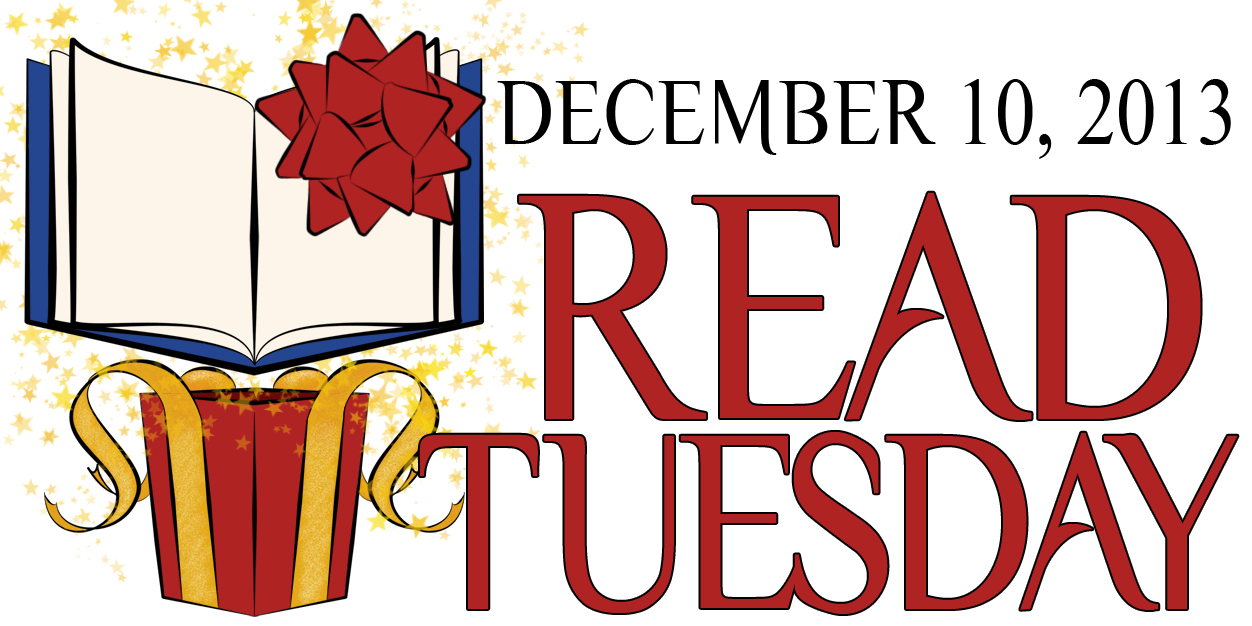
I wonder if the picture above might be a fair compromise of the variety of opinions that we received. One big issue that was expressed was not to obscure the date. Of those with stars, these stars seem to be less obtrusive. A couple of comments suggested going with a cleaner look. While not as clean as having no stars, perhaps this is a fair compromise. There was a vote or two for a red bow, but it seemed that there were more votes for gold bows. It’s a challenge to please everyone, but my hope with the Read Tuesday concept is that it would reflect us a whole more than one individual—after all, Read Tuesday is intended to help many authors and readers, not just one person or small group.

What do you think? Will this image work for you?

The Read Tuesday image was designed by Melissa Stevens (www.theillustratedauthor.net).

You can see the alternatives by clicking on the links below:

https://chrismcmullen.wordpress.com/2013/10/02/read-tuesday-pictures-second-try/

https://chrismcmullen.wordpress.com/2013/10/01/read-tuesday-pictures-need-suggestions/

In case you haven’t heard, Read Tuesday will be a big day for selling and gifting books, like Black Friday, except for books. You can learn more about Read Tuesday (but note that the name has changed) through the link below:

https://chrismcmullen.wordpress.com/2013/09/21/red_tuesday_idea_for_boosting_book_sales/

Chris McMullen

Authors Have Two Audiences—not One

Two Audiences Pic

Marketing is most effective when the content, packaging, and marketing are all geared toward attracting the target audience.

But there’s a catch: There isn’t just one audience; there are two.

One audience consists of the readers who are likely to enjoy your book, but who haven’t read it yet. The second audience includes fans who have already read your book.

This distinction is important.

For example, a fan doesn’t need to see reminders or hints to purchase a book that he or she has already read. A fan who enjoyed the book enough to find your blog or email you would probably enjoy bonus material.

On the other hand, if you catch the interest of people who read your genre who haven’t read your book, you want to give them opportunities to discover your book. Some supplemental material is less likely to interest people who haven’t read your book—especially fiction, maps, images, or poems that are best understood by someone who is familiar with the book.

Fans may be interested in learning more about you on your blog, whereas content relevant for your target audience is more likely to attract new readers to your blog. You could mix in a little of each, or you can put some of this on a fan page.

If you have a series, fans are looking forward to the release of your next book, whereas you want new readers to discover the first volume.

When you promote a temporary sale price, you want new readers to learn about this, while fans might be a little frustrated to see the discount if they paid full price.

When you interact with people in person or online, if you’re able to determine whether or not they have read your book, this can help you. For example, when communicating by email, you can have a signature line that links to your book for people who haven’t read your book, but a signature line that links to a fan page that has supplemental material for fans.

Part of your online platform should be geared toward new readers, while there should also be some place that fans will appreciate.

Think about your dual audience and how it might impact your marketing efforts. For one, marketing pages that you include at the end of the book should be geared toward fans, since, obviously, they have already read your book.

Chris McMullen, author of A Detailed Guide to Self-Publishing with Amazon and Other Online Booksellers, Vol. 1 (formatting/publishing) and Vol. 2 (packaging/marketing)

Read Tuesday Pictures—Second Try

RT Logo 23

Melissa Stevens (www.theillustratedauthor.net) read the opinions expressed in my previous post and offered the images that you see at the top and bottom of this post.

Thank you to everyone who provided feedback on the first round of images. Although it’s impossible to please everyone—especially, when opinions may be contradictory—since we will all be able to use the Read Tuesday images, I would like for everyone to be happy with them.

Let me add my opinions, which I didn’t express in the previous post. In the originals, I favored the stars and the gold bow, and was also concerned about clutter around the date. In this new set, the stars are more concentrated around the bag (to me, it’s as if they just popped out of it). The gold stars don’t seem as obtrusive to the text. I kind of like the red bow if we go with the gold stars.

But Read Tuesday isn’t my event, its our event. So your opinions are just as important. You are encouraged to express them.

In case you haven’t heard, Read Tuesday will be a big day for selling and gifting books, like Black Friday, except for books. You can learn more about Read Tuesday (but note that the name has changed) through the link below:

https://chrismcmullen.wordpress.com/2013/09/21/red_tuesday_idea_for_boosting_book_sales/

Chris McMullen

RT Logo 16

RT Logo 17

RT Logo 18

RT Logo 19

RT Logo 20

RT Logo 21

RT Logo 22

Read Tuesday Pictures—Need Suggestions

RT Logo 15

Artist and cover designer Melissa Stevens (www.theillustratedauthor.net) has put together these drafts for the Read Tuesday image. You can find the alternates at the bottom of this post.

I need your help with this.

  • Do you like this concept?
  • What would you like to change?
  • There are many possibilities, like changing colors, brightening or darkening, adding or removing elements, adding other details. The door is wide open.
  • Which version appeals to you best?
  • Which colors or features do you like best?
  • Which colors or features do you like least?
  • What could we do to make this better?
  • If you would prefer something vastly different, please say what you would like.

Read Tuesday is for everyone, so if you have any opinions, please share them.

In case you haven’t heard, Read Tuesday will be a big day for selling and gifting books, like Black Friday, except for books. You can learn more about Read Tuesday (but note that the name has changed) through the link below:

https://chrismcmullen.wordpress.com/2013/09/21/red_tuesday_idea_for_boosting_book_sales/

Chris McMullen

RT Logo 14

RT Logo 13

RT Logo 12

RT Logo 11

RT Logo 10

RT Logo 9

Draft of Author Sign-Up Form for Read Tuesday

Read Tuesday Curtains

I made a draft of the author sign-up form for Read Tuesday. (In case you haven’t heard about it yet, you can learn more about Read Tuesday—a bookselling event like Black Friday—by clicking on the link below.)

https://chrismcmullen.wordpress.com/2013/09/21/red_tuesday_idea_for_boosting_book_sales/

The draft has ten questions and a note at the top. Some of the questions will be optional, most will be required (which are required should be clear when filling out the form).

Please look the draft over. If you have comments or think of something we should consider adding, please let me know.

We’ll have a separate form to sign up books (rather than authors), and we can also add separate forms for any small publishers or booksellers that may wish to participate in the event.

Remember, it’s just a draft. (So don’t try to complete the form yet.) Once it’s ready, I’ll post a link to the form, and all you’ll have to do to participate is complete the form online and press a magic submit button. Then I can create a database of the answers at anytime.

Click on the link below to open the form. (It’s a PDF file. Be sure to scroll down to the subsequent pages, or you’ll only see the first few questions.)

Author Sign-up for Read Tuesday

In the note at the top, you can see that I gave myself a silly title, just to show you that I’m really unimportant—that’s what titles are for, right? (Read Tuesday is about many authors providing a great program for thousands of readers, not about any one person or group of people.)

Regarding the image above with the red curtains… I got this idea that we might be able to stir up a little pre-launch buzz for Read Tuesday, and I thought closed curtains like you see in a theater just before a big show might be a good idea. However, the primitive method that I used resulted in a highly pixelated image. I put an image on the Read Tuesday website, the Twitter page, and the Facebook fan page, so at least anyone who visits these sites will see that something is in the works. (These sites are otherwise empty.) I was going to suggest that we post this picture on our blogs, and perhaps even create a few posts to try to stir up some pre-launch buzz for the Read Tuesday event (you can see one image on my sidebar to the right), but since it’s rather pixelated, I decided not to suggest this.

Actually, it’s hard to notice the pixelation on the small sidebar image, so adding these red curtains to all our sidebars might not be a bad idea after all. Feel free to add it to yours and to spread the word. You’re welcome to copy the red curtain image (either above or from the sidebar).

In about a week, we should have much nicer images to work with to help brand the Read Tuesday program. When these are available, I will let you know, and that’s when the Read Tuesday sites will launch.

Chris McMullen

Authors: Try Giving Yourself Advice

If another author asked you for advice and you checked out the other author’s book, would suggestions come to your mind? Maybe you would comment on what you do or don’t like about the cover. You might have suggestions for the blurb. If you found something in the Look Inside that put you off, would you mention it?

People generally love to give out advice. That’s why everyone tends to receive a lot of advice, even when it wasn’t sought. People form opinions easily, and many people don’t hesitate to share them.

Even if you don’t share your opinion so freely, you still form opinions. Suppose you’re checking out a book. You’ll know in an instant if you like or dislike the cover, if the blurb attracts your interest or not, and if there is something that you do or don’t like about the book.

But a funny thing about advice is that while people love to give it to others, they often don’t take their own advice.

  • Evidently, you don’t have to have a good track record in your own relationships in order to give dating advice to others.
  • Apparently, you don’t need to have any skill in a sport yourself in order to give tips to others.
  • Clearly, you don’t have to make the best work-related decisions in order to advise others about their career paths.

Here’s my point. If you’re looking at someone else’s cover, you might find yourself wondering, “How can you put that on your book?” But if it’s your own cover, you don’t tend to be as critical. If you’re shopping for a book, you might think to yourself, “That blurb doesn’t try to catch my interest at all.” But when it’s your own blurb, you’re already interested in it. When you pay five bucks for a book, you tend to get disappointed if you catch several typos. But when it’s your own book, you often read what you meant to write instead of what you actually wrote.

There are two things you can learn from this:

  • You need to try to step aside and evaluate your work critically. Take a break from it and try to approach it as if you were seeing it for the first time, and try to evaluate it as if it were someone else’s book.
  • No matter how hard you try, you can’t see your own work as if it were written by someone else. There is no substitute for external opinions. Getting this before you publish is invaluable.

I know a few authors who will think that they judge themselves more harshly than anyone else – i.e. you feel that you are your own toughest critic. Many of us feel that way.

But we’re our toughest critics only in certain aspects. You’re not your own toughest critic in every aspect. You judge yourself harshly only in the areas that you care about most. You give yourself a large allowance in areas that you don’t care much about.

However, those areas that aren’t so important to you might be very important to shoppers. So even if you are your own toughest critic in some regards, honest external feedback – if you can get it – is still very likely to help you find ways to improve your book.

You shouldn’t necessarily change everything based on external feedback. But first you need to know what that feedback is before you can decide whether or not you feel it merits attention.

Have you ever come across books where the cover, blurb, Look Inside, category selection, or something else probably could have benefited from a little advice? Of course, if you send advice to all of those authors and publishers, some of them won’t want it. I’m not telling you to go advise others about how to publish their books. I’m suggesting that we all need to evaluate our own books more critically, and especially to benefit from more external feedback prior to publishing.

We just don’t look at other books the same way that we look at our own. In this regard, books are kind of like kids. Your book is your baby. It’s not like other books, is it?

Chris McMullen, author of A Detailed Guide to Self-Publishing with Amazon and Other Online Booksellers, Vol. 1 (formatting/publishing) and Vol. 2 (packaging/marketing)

What’s the Best Thing about Read Tuesday?

Read Tuesday

Read Tuesday will be a great opportunity for readers to find a wide selection of books with amazing one-day sale prices. It will be a huge event like Black Friday or Cyber Monday.

Although the discounts and selection of books will be incredible, to me that’s not the best thing about Read Tuesday. I am looking forward to a lot of shopping on Read Tuesday, though.

Read Tuesday will also be a great way to buy gifts for people who love to read books and e-books. Customers can gift e-books – or buy print books to wrap up – at great saving in time for the holidays.

Although the savings will be splendid and the books will make nice gifts, to me that’s not the best thing about Tuesday. I am looking forward to gifting books on Read Tuesday, though.

Read Tuesday will also be a great promotional opportunity for authors and small publishers. By participating in the event, authors can promote their own books while simultaneously promoting the Read Tuesday event.

Although the promotional potential for authors and small publishers will be wonderful, to me that’s not the best thing about Read Tuesday either. I am looking forward to participating on Read Tuesday, though.

So what is the best thing about Read Tuesday?

To me, it’s the nature of the event and how it came about.

Stores usually plan sales events. They sell the products. They control the prices. They do the advertising. Black Friday and Cyber Monday are orchestrated by giant businesses.

Most authors and publishers don’t get much out of Black Friday or Cyber Monday. Most customers are buying electronics, toys, tools, and clothes. Hardly any books will have better prices than normal. If there are, they are probably bestsellers.

Read Tuesday is totally different. This event isn’t orchestrated by big businesses. The idea didn’t even originate from a store. It didn’t come from a publisher. It didn’t come from a bestselling author.

Read Tuesday shows that a very large number of independent authors and publishers can get together and coordinate their efforts to create a huge event.

It’s a chance for us to show what we can do when we put our minds to it; what we can do when we get involved. Individually, we may be small, but together we can thrive.

This event can be huge and it can be professional. I feel that this is an important message.

You don’t have to be a big business, a store, a publisher, or a bestselling author to be highly professional. Anyone can choose to be professional. We can choose to make the Read Tuesday event professional and a huge success.

To me, the best thing about Read Tuesday is the opportunity for thousands of authors to get together and show what we can accomplish together.

Chris McMullen, author of A Detailed Guide to Self-Publishing with Amazon and Other Online Booksellers, Vol. 1 (formatting/publishing) and Vol. 2 (packaging/marketing)
Preparing to Launch Read Tuesday

Read Tuesday

In case you haven’t heard yet, the idea behind Red Tuesday is for authors to get together and provide a book-oriented version of Black Friday and Cyber Monday. You can learn more about the idea here:

https://chrismcmullen.wordpress.com/2013/09/21/red_tuesday_idea_for_boosting_book_sales/

As you may know, we’ve been making several preparations for launching the Read Tuesday event:

  • We have an artist who is working on a logo and images of assorted sizes, like various headers and portrait sizes, with and without text.
  • We have a website, http://www.readtuesday.com, but it’s presently empty. We’re making content for the website so that readers, authors, indie bookstores, and small publishers will be able to find helpful information about Read Tuesday.
  • We’re creating forms that can be completed easily and conveniently online, which will help to compile handy information, like a list of participating authors, catalog data for participating books, a list of participating bookstores, or a sign-up for an email newsletter. Presently, we’re testing out Google Docs to see how those forms work from both ends.
  • We have a Twitter account and Facebook page, but, like the website, they aren’t up and running yet. We’re working to get all of these pages ready before we launch. (It’s pretty cool when you Follow a huge company like Amazon and they Follow you back – even if it was automatic, it’s still pretty cool.) If you want, you could find us and follow us, but there isn’t anything there to follow yet. As soon as these pages are up and running, we will share them with you.
  • We’re looking to add accounts at LinkedIn, PInterest, and more. If you have other suggestions, please feel free to share them.
  • We’re putting together a promotional strategy to try to make Read Tuesday a success. We’ll definitely need your help. You can help create buzz. You can show your participation by filling out the forms (once they’re ready). You can participate with your books. You will be able to use the Read Tuesday images (once they’re ready) to help promote your own books while simultaneously helping to create buzz for Read Tuesday.
  • We’re considering a little low-cost advertising. If you have special requests, feel free to share them. Funding is limited, but we will give expressed ideas consideration.
  • We already have several ideas for how to spread awareness for Read Tuesday. We’ll begin sharing these ideas as soon as the website is up and running. Again, if you have any ideas that you’d like to share, please feel encouraged to do so.
  • We’ve only had a couple of suggestions in the way of slogans or marketing text. More suggestions would be welcome.
  • Would there be any interest in flyers, bookmarks, business cards, brochures, or other printed marketing materials? If so, we could make a file for a flyer, for example, and anyone who is interested could print them. We’re not going to sell promotional materials; but if there is interest, we can make files so that anyone who is interested can order their own (from a supplier of your choice). You just have to express your interest.
  • We need ideas for things to include in an email newsletter for Read Tuesday. If you come up with an idea for an article that may be relevant, contributions will be considered. We’ll consider contributions for content on the website as well as for a newsletter.
  • We’re lacking in the video department. Suggestions, ideas, volunteers, etc. would be quite welcome. If you make your own Read Tuesday trailer, for example, you can feature your own books in the video, promoting your own books and Read Tuesday together. Hint, hint. (Once they are ready, you’ll be able to use the Read Tuesday images with this.)

It’s taking time to get all of this ready. We’d like to launch Read Tuesday all at once. So right now, we’re thinking of launching Read Tuesday – the website, social media, sign-up forms, making the images available, etc. – the week of October 6 (on the 6th or even before, if possible, but at least some time that week).

Remember, Read Tuesday is scheduled for Tuesday, December 10. This gives us two full months to get as much participation and to create as much buzz as possible. (Then we’ll have 12 months before the next Read Tuesday – and a little experience – to make the next one even better. Don’t forget about White Wednesday – or maybe the name will change; but we want this to be a “secret” until Read Tuesday is over.)

Can you think of anything else that we should add to the list above?

Read Tuesday isn’t a person. It’s not a business. It’s not a program. It’s not really even an organization. It’s an idea. It’s an event. It largely consists of a great number of independent authors getting together to bring a huge sales event to people who enjoy reading (and gifting) books.

This means you are just as important to Read Tuesday as anyone else. So, Mr. or Mrs. Important Read Tuesday Participant, please feel free to share your Big ideas. 🙂

Chris McMullen, author of A Detailed Guide to Self-Publishing with Amazon and Other Online Booksellers, Vol. 1 (formatting/publishing) and Vol. 2 (packaging/marketing)

How to Reach Your Target Audience (Marketing for Authors)

Attract Pic

Does it seem like your book is one needle in a haystack?

Just tossing another needle into the haystack isn’t the best way to get your book discovered and read. You have to reach your target audience.

How?

There are two ways to reach your target audience:

  • Attract your target audience to you.
  • Find and interact with your target audience.

(1) How to attract your target audience

(1a) What will bring your target audience to you? Valuable content.

Think about what your target audience wants. Such content can attract your target audience to you.

Content may include writing in the form of knowledge or entertainment, images, songs, or video, for example. The most important thing about content is that it must be highly relevant for your specific target audience. (You can supplement your main content with other things, but if you lack content that’s a good fit for most of your target audience, then it won’t serve its purpose.)

It’s easier to develop content for most nonfiction books. Your book provides information or skills, so you can draw in your target audience by supplementing this with additional content.

You can also attract a target audience effectively for fiction, but you have to be more creative and it may require more thought. The better you know your target audience and can gauge their interests, the better you can provide content relevant for them.

There may be a nonfiction topic from your fictional work that’s relevant for your target audience. For example, if the book strongly relates to some sport, people who enjoy that sport may be interested in your book. If your story takes place mostly in one city, people from that city may like your book. If the book involves a particular culture, use this to help reach your target audience.

(1b) How do you use content to attract your target audience?

One way to do this is with an online platform.

Your online platform includes all of your online activities where you provide valuable content that is relevant for your specific target audience.

The main component of your online platform should be a website.

A website that just features your books or describes you isn’t likely to attract your target audience – unless perhaps you’re famous. There has to be valuable content on your website that will draw your potential readers in.

One problem with blog and social media posts is the difficulty in searching through older posts. The structure of a website organized into pages can make it easier to find information.

If the few most recent blog or social media posts aren’t quite what someone is looking for, the person will just pass on it. When someone sees a website with plenty of resources nicely organized, there is a much greater chance that something will be of interest. Also, a nice resource is more likely to be recommended – which helps to spread the word among the target audience.

You can make a blog look very much like a website. If it mostly contains sequential posts, it’s just a blog. If there is also content organized so it’s easy for the target audience to navigate, then it’s much more than a blog.

Content serves two roles for your website. First, it’s something that your target audience wants. Secondly, it can help with SEO rankings.

Just a website by itself is quite limited. The greater your online presence, the greater your marketing net. Your blog, social media, and other online marketing endeavors all work together.

You’re trying to enhance your visibility. You want to become more visible among your target audience. This helps you with your branding. Visibility also helps people find your online platform.

Think of what else you can do online that will help with visibility. Posting content outside of your own online platform can help with this. Guest blogs, book reviews, videos, and interviews can help.

If you write an article relevant for your target audience and get it published in a high traffic area, it will do wonders for your visibility – especially, if the bottom reads, “Your Name, Author of Your Book.”

Getting an article published isn’t as hard as you may think. Consider how many places there are online to publish an article – it’s a very large number, which is in your favor. The most important thing is to make sure that the site is relevant for your specific target audience. The second consideration is the level of traffic.

Some online resources, like fan pages, can help you provide content to previous readers. These readers are very important because if they liked your previous book well enough to find your fan page, they are very likely to be interested in your next book.

(2) How to find your target audience

Finding your target audience can not only help significantly to bring new readers directly, but it can also help you gain visibility online.

Think about the interests of your target audience – the same things that help you develop valuable content – and how you can use these interests to find your target audience.

If your target audience is likely to have a particular hobby, find people who have this hobby. If they are likely to have a common cultural background, you can tap into this resource. Are there conventions that they are likely to attend? Is there a seminar or workshop that you can hold that may attract their interest? Are they likely to be interested in a reading?

You can also meet your target audience online. Look for places where your target audience is likely to hang out online.

It takes some creativity and thought, but if you can find your target audience, this can pay big dividends. Meet and interact with your target audience. People who meet you and who enjoy this interaction are more likely to check out your book or your online platform.

Spend time thinking about who your specific target audience is and how you can use this information both to attract your target audience and to find your target audience.

Chris McMullen, author of A Detailed Guide to Self-Publishing with Amazon and Other Online Booksellers, Vol. 1 (formatting/publishing) and Vol. 2 (packaging/marketing)

What’s the Best Way to Collect Data for Read Tuesday?

Read Tuesday

If you want to learn more about Read Tuesday – a book sales event like Black Friday or Cyber Monday – click on the link below.

https://chrismcmullen.wordpress.com/2013/09/21/red_tuesday_idea_for_boosting_book_sales/

It would be convenient to collect some data for Read Tuesday, such as:

  • Separate lists of authors, small publishers, and bookstores who will be participating in the program organized by subgenre.
  • A catalog of participating books organized by subgenre. (We might want to not release this until closer to the event date.)
  • Email lists or newsletters for interested authors or customers.

So the question is: What’s a simple, efficient way to collect this information? Keep in mind that some of the information may be continuously trickling in for a couple of months, so we’ll want the option to periodically update the catalogs with what we have at any given time. (I guess I could make a new survey every week to accomplish this.)

Would something like Survey Monkey be adequate for this? Has anyone used Survey Monkey to create a survey? Do you have an alternative to suggest? Maybe it doesn’t have to be a “survey,” but could be some kind of form to fill out. Can you think of some other popular, friendly website that would accomplish this.

WordPress has poll and feedback features, but it doesn’t look like it quite meets the criteria. However, if you’ve used these features and believe that they may be a good fit, please share your experience.

What I’d like is something that will store the data until we want to download it, where the data table will come in a simple format like Excel or CSV. It also needs to be easy and friendly for people to enter the information, so a site that people will trust or won’t have to sign up for a special account would be convenient.

Ideas are welcome and encouraged. 🙂

Chris McMullen