Paid Advertising Options for Book Sales

Fourth Quarter Pic

The success of any book depends on a combination of effective marketing and the degree of marketability.

  • Effective marketing strategies help customers in the target audience discover a book.
  • Creating a highly marketable book improves the chances that a customer who discovers the book will purchase the book.

There are numerous free and low-cost marketing ideas out there. Some of these can be quite effective. The great thing about free and low-cost marketing strategies is that there is very little financial risk.

There are also ways to invest money in the marketing. One way to invest money in marketing is through paid advertisements. This is the focus of this article.

What advertising won’t do.

Let me begin by saying what paid advertising won’t do. It doesn’t do the marketing for you.

If you’re tentative about marketing or inexperienced with marketing, paying for advertisements is not a substitution for marketing. You can’t just throw money somewhere to relieve yourself from having to market your book.

So if you were hoping that paid advertising would be the solution to your marketing dilemma, think again. If you’re in this boat, I recommend putting several months of effort into free and low-cost marketing to develop some firsthand marketing experience.

First gain some marketing experience.

If you want paid advertisements to be effective, you will need that marketing experience. There are decisions you must make and things that you need to design where poor marketability decisions will render the advertisement ineffective. You need this marketing experience to help make better advertising choices.

Furthermore, you need to promote the advertisements in some cases, and in any case you need other marketing strategies in place to supplement the advertisements. It will take marketing experience to do this effectively. It will also take connections to help with your promotions. The more time you spend marketing with free and low-cost methods, the more connections you will build through networking in the process. Remind yourself that you’re not just trying to promote your book: You’re also networking and hoping to develop helpful connections (especially, win-win situations, where help runs both ways).

Identify your goals.

What are you hoping for the advertising to accomplish?

If your main goal is to turn a profit, then you need to do a cost-benefit analysis and weigh the risks versus the possible rewards carefully. Figure out how many books you must sell to recover you investment. Try to research data that can help you project how plausible this is.

However, if you are more concerned about initial exposure, but aren’t concerned about recovering your investment quickly, then you should be focusing more on what kind of exposure you might gain from the venture. The risk still matters. The distinction is whether you’re more focused on long-term potential or short-term profit.

What’s your net?

Advertising may lead to an increase in sales. If you have a steady baseline (how many books you sell per day on average), this will help you gauge the effect of your advertising. Specifically, this tells you how many additional sales you are getting per day on average.

What you really want to know is your net profit or loss. Compute your net additional royalty and subtract your advertising expenses.

Keep in mind that sales can fluctuate, increase, or decrease all on their own. There are many complicating factors that you’re likely not to be aware of. The more data you have prior to your advertising campaign, the better you can gauge this statistically.

Advertising doesn’t always lead to an increase in sales. Like any investment, advertising carries risk. The more experience you have with marketing and the better you understand marketability and marketing, the better your advertising prospects; but even then, there are no guarantees.

Some of the benefits are long-term.

Advertising isn’t just about generating short-term sales.

There are many other possible benefits of advertising:

  • Build buzz to hopefully stimulate initial sales, reviews, and word-of-mouth news.
  • Help the target audience discover a new product.
  • Tell people about a short-term sale.
  • Try to boost sales to get onto bestseller lists, which may help to stimulate sales further.
  • Try to stay on bestseller lists once getting there.
  • Brand the title or author name through repetition.
  • Brand the cover by sight through repetition.
  • Get people to associate your book with a distinguished quality.

Commercials very often don’t generate immediate sales. What they tend to do is create a brand name through repetition. Months later, when the customer is buying a product, the customer is most likely to choose a product that sounds familiar. This is called branding. It’s a very important aspect of marketing.

Branding requires patience. It can take many months before a customer has seen your book enough times to recognize it, and then it may take many more months before the customer is in the market for a book like yours.

Advertising can be one part of your branding efforts.

The more people in your target audience hear your book’s name, your name, and see your cover, the more branding occurs.

Advertising can help with this, especially if the ads are targeted to your specific audience. However, advertising shouldn’t be your only attempt at branding. You need to get your cover, title, and name out in front of your target audience through a variety of different resources (a blog, website, social media, blog interviews, blogger reviews, etc.) to improve the chances for the same potential customer to see your book multiple times. This is one more reason that you need to combine free and low-cost marketing with paid advertisements. (You don’t necessarily need to do the paid advertising; that’s optional. You definitely need to do the free and low-cost stuff.)

Advertising books is different from advertising household products.

You’re probably familiar with commercials and other advertisements for household products that you buy in stores or online. What you need to realize is that advertising books is much different.

How many different brands of toilet paper do you need to choose from at the grocery story? You can probably count them on your fingers. You probably recognize a few of these brands from t.v.

Now think about going to buy a book. If you want to buy a mystery, for example, you have to choose from thousands of books. There are many, many more alternatives.

Advertising toilet paper is cost-effective because millions of people will use it and there are only a few brands to choose from. Although millions of people read books, there are also millions of books to choose from.

There are thousands of other authors trying to promote their books. There are also many publishers doing this. Some of the bestselling authors and top publishers invest a considerable sum of money into their advertising campaigns.

All these factors make it a challenge for you to reap a short-term reward from advertisements.

Since advertising is a risk that may result in a loss, the safe thing to do is stick with the many free and low-cost marketing alternatives.

What else can you advertise besides your book?

When you advertise your book, people immediately realize that it’s an advertisement. People generally don’t like advertisements because they are interruptions. For this reason, most people don’t click on advertisements and most people don’t buy the product in the near future. However, the people who see your advertisement and don’t click on it or buy the product may still recognize your book in the future. Advertisements are often more effective through branding than they are in short-term sales.

However, there are other things that you can advertise besides your book. Some of these things may be more effective at generating clicks or sales.

  • Advertise a website rather than the book. If the website has content that will attract the target audience and this is clear in the advertisement, then customers may be more likely to click on it.
  • Advertise a short-term sale. This may help to create a sense of urgency.
  • Advertise a contest. The chance to win something may generate interest. (On the other hand, there are many people who feel that they never win anything, so don’t bother to enter, and there are so many contests that it would be a lot of work to enter them all. Not everyone thinks this way, though, and some people still love contests.)
  • Advertise something that’s free and that your target audience will want to have. There are many possibilities. A free PDF booklet, for example, won’t cost you any money to make, and if it looks nice and has information that your target audience will want, it may draw interest. This can help to get people from your target audience to visit your website and discover your book.
  • Advertise a series. You don’t have to actually advertise a series in the advertisement. You could advertise the first book or the most recent book, and this may help to draw interest in the whole series. If you have a set of books, this makes advertising more economical when you think about the cost per book.
  • Advertise an event, like a workshop or start a special week that relates to your book.

How marketable is your book?

Paid advertisements won’t make up for poor marketability.

A highly marketable book will sell through free and low-cost marketing.

It doesn’t take paid advertisements to sell a highly marketable book; it just takes discovery.

If a book doesn’t have marketability, advertising isn’t likely to help.

Advertising can help a marketable book get discovered and thereby sell more frequently.

See the following link for help assessing your book’s marketability:

https://chrismcmullen.wordpress.com/2013/09/10/marketing-why-isnt-it-working/

In one of my next posts, I’ll discuss some specific advertising options at a few websites that many authors are familiar with.

Chris McMullen, author of A Detailed Guide to Self-Publishing with Amazon and Other Online Booksellers, Vol. 1 (formatting/publishing) and Vol. 2 (packaging/marketing)

Sample Detail Page Recommended by Amazon Rep

I received an email from Amazon’s marketing department from an inquiry I sent. The representative sent me a link to this sample detail page:

http://amzn.com/0385347316

The way it was worded, the link was just to show what an example of a book’s detail page looks like at Amazon, but it was in the context of selling an advertising campaign to direct traffic toward a book’s product page. (This was not what I inquired about, but obviously if you contact a marketing department for a huge company like Amazon, if they respond, they will probably try to sell you one of their services. They are probably pretty good at this, if they work for Amazon.)

I think this product page is interesting, especially in the context in which I encountered it. Can we learn anything from it? That’s the purpose with which I write this post—to see if there is anything that we can learn from it in the way of marketability and marketing. (The rep didn’t specifically say that their campaign had been applied to this book, but maybe there is an inference to draw here.)

  • The cover didn’t impress me. Simplicity of design can be effective, and with nonfiction the cover doesn’t need to be so eye-popping, but there seems to be room for improvement. (The copyright page even notes a special jacket art designer.) There is a lot of text, although this is often done in nonfiction. At least, the title is easy to read in a thumbnail and the cover concept gets through. What I was thinking was, WHY did Amazon’s marketing rep pick THIS cover? (Are they trying to show that their marketing services can help a book sell even if the cover isn’t hot?)
  • Check out the sales rank. When I looked, it was #63 in books, and 1 and 2 in various categories. The author rank also shows right on the author page, varying from 11 to 81 in several categories. The publication date is October 8, 2013, which is just 6 days ago. Keep in mind that we’re looking at the hardcover edition. There were 16 reviews, mostly 5 stars, including a top 500 reviewer (Vine Voice).
  • The main thing that impressed me on the product page and Look Inside is the encyclopedic list of praising quotes for the book. I guess if that many qualified people say a book is good, it has to be.
  • On the Look Inside, the first page that mentions the title has only that, and the second one is fairly plain, too. Most of the interior is fairly plain. The main exception is the use of the HEAL acronym, using a letter from this word sort of as (but not quite) a bullet, and this is content-oriented as each letter has a specific meaning. The title page does have a publisher logo and another design mark between the title and author.
  • If you look at the author page, you see a resume that nonfiction publisher’s are looking for. There are also five author videos there.
  • From the author page, you can click on a link to the author’s blog to see his website. At the top is the option to subscribe to a newsletter—that’s one marketing tactic. Now look at the bottom of the website to find another. You’ll see an offer for a bonus gift, advertised as a $49 value, for free with purchase. The same thing is actually advertised at the top of the page, but in different wording (and it was so large I missed it the first time). One thing I notice about the cover now is that the color scheme seems to fit with the website—not my favorite, but a consistent color scheme for the book, blog, and beyond can help with branding.
  • The content is a hot commodity. Who doesn’t want happiness? And the author’s qualifications fit well with the content.

Of course, if you have mega qualifications and a big publisher picks you up, you have a big advantage. Still, to be successful, buyers still have to choose your book. So what is selling this book?

  • I don’t think it’s the thumbnail image that’s wowing buyers. It’s still getting a lot of attention. At least, the cover doesn’t seem to be deterring sales.
  • The author had a large fan base to begin with, which is clear if you look at his prior publications. Having an existing fan base is a great help when you release a new book that fits the same audience.
  • There is a top 500 reviewer and there are several initial reviews. The publisher and/or author probably made use of advance review copies. Building buzz for a book helps.
  • With nonfiction, qualifications can be highly important, and this author has a relevant resume posted on his author page. This helps a great deal.
  • Since Amazon’s marketing rep pointed me to this page, I’m wondering if their marketing services helped improve this book’s visibility. I’m not suggesting that you should spend big $$$ to advertise your book. The more you spend on advertising, the more books you have to sell just to break even, and there is a greater risk that you won’t even do that. There are many effective free and low-cost marketing ideas that all authors can use. If the book is highly marketable, free and low-cost will likely be effective; and if it’s not so marketable, paid advertising will have a tough time overcoming that.

If you’re hoping to improve your sales, it can be very helpful to research other books’ product pages (and their authors’ websites). You may get useful packaging or marketing ideas that way.

Chris McMullen, author of A Detailed Guide to Self-Publishing with Amazon and Other Online Booksellers, Vol. 1 (formatting/publishing) and Vol. 2 (packaging/marketing)

Which Genre Is Best?

Genre Pic

ROMANCE: Everyone knows I’m the best genre. I give readers the happy ending they crave.

EROTICA: Honey, you’re just a tease. I have what they really want.

SELF-HELP: That’s not quite true. What people really want is a healthy relationship with a warm, breathing body. A romance provides an escape from reality. But with a relationship guide, people can have a better reality.

ADULT: It’s not the relationship part that’s the challenge; it’s the intimacy. I’m the three-letter word that everybody wants, but most people are afraid to talk about.

MYSTERY: Relationships are fueled by passion. What kind of romance are you going to have if you need to read a guide to learn how to do it? People want books to entertain them. I give them a puzzle to solve to engage their interest.

SUSPENSE: If you want to really engage your audience, you need elements of suspense.

COMEDY: What’s more entertaining than humor? Everybody loves a good laugh.

FANTASY: Why not have it both ways? I offer the reader a better reality and I entertain the reader.

SCI-FI: But your reality is too far-fetched to be believable. I do it with a better version of the real universe.

HISTORICAL FICTION: Are you kidding? Jumping through wormholes, extra dimensions, aliens, going back in time… Who are you calling unbelievable? What I do is take events that have actually occurred in reality and make them better.

PUZZLES: You’re living in the past. I give people a way to make the present more fun.

COMICS: Exactly. And I do it in color with pictures.

CURRENT EVENTS: What’s wrong with reality? I show readers that the real universe in the present is really quite fascinating. It turns out that the truth is stranger than fiction.

POLITICAL SCIENCE: Ain’t that the case? And there isn’t a more fascinating current event than politics.

ETHICS: Where have you been? Politics is the reason reality is so screwed up right now. If everyone read me, the world would be a much better place.

HOW-TO: People can read you, but you’re not going to change people. The way to make reality a better place is to read a how-to guide. We have a guide for everything.

TEXTBOOK: Technology makes the world a better place. You can’t do rocket science or brain surgery with a how-to guide. You need a technical book deep in knowledge.

SPIRITUAL: Don’t you see the problems in society caused by having so much technology without the wisdom and spiritual harmony to go along with it? Look at the happy children playing with rocks and sticks, and the unhappy spoiled children with cell phones and video games. What we really need to teach is how to get along with other people, how to believe in ourselves, and how to overcome adversity.

RELIGION: And what would be better than the word of God himself to show you exactly how to do that?

PHILOSOPHY: That would be a lot easier if there weren’t so many gods and religions to choose from.

CHILDREN: The important thing is to get kids reading early. Teach them the fundamentals they need to succeed in life. Give them the gift of reading. If they don’t learn how to read as children, every genre will be out of business.

TEEN: The critical stage is when the child turns into a teenager. Most people want to ignore teens, or just punish them for bad behavior. What we need is to understand the problems of the teenager and help them through this critical stage of their lives. It can have a drastic impact on their adult lives.

SPORTS: That’s where I come in. I give them something they enjoy doing, provide plenty of exercise, keep them too busy to get into trouble, and teach valuable teamwork skills.

POETRY: Really? Then why are so many professional athletes getting into trouble with drugs and legal problems? Let’s face it. No matter what you do, people will have problems. I help people understand the human experience better, and I inspire them through creativity.

DRAMA: Nobody can illustrate the tragedies of life better than I can.

TRAVEL: When life beats you up, you just need to get away from it all. I can take them to the perfect place and help them enjoy it while they’re there.

COOKING: You can’t run away from your problems. Everybody feels better after a good meal.

LEGAL: That’s a good idea. I’m starving. Let’s all have a good meal. Besides, if you think you’re better than I am, I’ll just sue you for it.

Copyright © 2013 Chris McMullen

Readers and Authors, What Constitutes Self-Promotion?

Self Promo

This is an important issue for both readers and authors. Authors know they need to be discovered through marketing, and so readers come across countless attempts by authors to get their books discovered by them.

At the same time, it isn’t easy for readers to navigate through hundreds of thousands of books to discover those few that most interest them. Authors want to be discovered, and readers want to discover books they will enjoy. Successful marketing helps readers find books that are likely to be a good fit for them. This helps readers. In contrast, ineffective marketing can be quite a nuisance, and distracts readers from the opportunity to discover books that are likely to interest them.

The most obvious attempts by authors to get discovered by readers come in the form of spam, where an author repeatedly posts about the book with high frequency. Many authors realize that this is more likely to develop a bad reputation or simply be ignored than it is to succeed. It’s also prohibited on most forums and online platforms if done too frequently.

There is a danger in being branded as an annoying insect if posting too frequently on social media platforms. Borderline spamming might get the title or author name out there for possible branding—“I recognize this book,” or, “This must be a big-name author because I see that name all over the place”—but it’s also likely to be tuned out or to brand a negative image—“I hate that author for spamming the boards all the time,” or, “I think I’ll click that Unfollow button so I can find the posts I like.”

One step down from spamming the board is explicit self-promotion. For example, “Hello, I just wrote a book called Best Book Ever by Self Promoter. Please buy it.”

Some community forums—like the Amazon customer discussions (which attract some authors because they expect to find customers there, but may not be the ideal place to get a book discovered)—don’t allow explicit self-promotion like this. Even where explicit self-promotion is permitted, it’s often frowned upon by various (and sometimes outspoken) community members.

Aside from this, explicit self-promotion has the problems of overt advertising. Most people prefer to avoid commercials. We put up with commercials on television, radio, and magazines for lack of a free alternative (though you can pay for commercial-free alternatives). Except when you need a bathroom break in the middle of a movie, you usually aren’t pleased to have your show interrupted. (If you want to shout “Infomercial,” I’ll grant you a point.)

On the other hand, some level of self-promotion is what authors need to do. Spam and explicit self-promotion to the point that it seems that your post served no other purpose may not be in your best interest even where they are allowed. However, if you want to be discovered, you do need to promote yourself in some way.

Effective marketing requires visibility among your target audience. You need your target audience to see your book cover and read or hear your book’s title and your name for branding to do its work.

Essentially, this is self-promotion. You’re trying to get discovered. You have to tell people about your book for this to happen. Yet spam and too much self-promotion can backfire.

The trick is to get discovered in a way that doesn’t come across as self-promotion.

This begs the question: Exactly what do people perceive as self-promotion? Part of the problem is that everybody doesn’t agree on the answer.

Following are a few suggestions to help judge this:

  • Does it seem like you are present mainly just to promote your book? Or are you providing relevant and meaningful contributions?
  • Does the mention of your book seem out of place? Or are you mentioning your book at your own site, or to establish your expertise or experience as an author, or to provide a reference to relevant content?
  • Does it look like you’re trying to grab everyone’s attention? Or does it seem like you’re just hoping to get discovered by those who enjoy interacting with you. (For example, it could be the distinction between coming right out and telling anyone about your book versus mentioning this when asked or only offering this information in your profile.)
  • Is your book irrelevant for much of the audience? Or does your audience closely coincide with the target audience for your book?

Context is important, too. If you’re running a special one-day sale, you want to get the word out, and people in your target audience may be grateful for the discount. Also, more self-promotion is to be expected on your own turf than otherwise (but posting too much about yourself isn’t as likely to attract an audience as providing meaningful content for your target audience).

Self-promotion isn’t just an issue online. It’s also important when interacting in person.

How do you feel about self-promotion as a reader or as an author? How do you define the line between what’s acceptable and what’s not? Do you think there is a type of self-promotion that needs to be done, but another type of self-promotion that should be avoided? What kinds of marketing do you consider not to be self-promotion?

Well, we’ve reached the end of this post so I better mention my book now. I might as well promote Read Tuesday while I’m at it. 🙂

Chris McMullen, author of A Detailed Guide to Self-Publishing with Amazon and Other Online Booksellers, Vol. 1 (formatting/publishing) and Vol. 2 (packaging/marketing)
Read Tuesday: It’s going to be HUGE!

Your Blog Branding—Is It Working?

If you’re blogging, you’re branding an image and building a following. You might not be marketing a product or service. If not today, maybe someday. Maybe never. And it doesn’t have to be product or service to be marketed. Anyone can market an idea. It doesn’t have to be an idea to sell—it could be a cause to support or an awareness to spread.

My point is that everyone is branding an image, and everyone has something of value to market.

Is it working?

  • I recognize many bloggers just by their Gravatars. That’s a visual brand that you’ve created, which other people recognize.
  • Sometimes, I also remember what your header, photo, or product looks like. Your visual branding efforts have gone a step further.
  • I also recognize many bloggers by name. In this case, your name (or pseudonym or user id) has been branded.
  • For some, I know what to expect in the way of content when I visit your site. You’ve branded more than just your image and name.
  • For others, I know there is something special that I will find at your site. Your branding is distinguished in some way.
  • There are some sites that I really look forward to visiting when I see a new post (and sometimes, when I see you’ve left a comment). You have me hooked.

I’m not in everyone’s target audience, yet I have experienced the branding that occurs here at WordPress.

WordPress is an amazing community:

  • There is much supportive interaction available here.
  • In some ways, it’s better than a magazine, yet it’s FREE and isn’t packed with all those obtrusive advertisements.
  • The ambiance has been, in my experience, very positive.
  • Blogging has many wonderful benefits, like creative expression, trying something out, finding your voice, meeting and interacting with fascinating people, sharing your passion with others, getting your mind off your problems, developing confidence, and so on.
  • You get your very own personal space in the blogging universe, and a lot of freedom with what you choose to do with it.

Consider this:

  • You are branding an image through your blogging.
  • There are many wonderful benefits of blogging.

This gives you a golden opportunity.

If your branding is working here at WordPress, then what you want is more traffic on your blog from your target audience. You want more than a one-time visitor.

Spread the word about the many benefits of blogging to others. This will help increase the blogging traffic (and those people will enjoy the positive benefits of blogging). If they start blogging because of you, chances are they will follow your blog and interact with you here, too.

Include a link to your blog at the back of your book, on your other sites, and on your marketing materials. More than just a link, include a line that might attract visitors to your blog. When you interact with people, mention what a wonderful place your blog is. Market the benefits of blogging. Encourage others to read blogs, even if they don’t want to start their own blogs.

You don’t have to be a writer, artist, businessman, salesman, photographer, or celebrity to enjoy the benefits of blogging. Anyone can do this. Everyone has something that he or she enjoys—like a hobby, special skill, or sport—that he or she can share.

You don’t even have to make your own posts to benefit from blogging. Reading posts right on my Reader is, in some ways, better than a magazine. When I read a magazine, I loathe having to sort through all the advertisements to find and read an article. And the magazine costs money, whereas a blog is free. (Imagine if we tried to publish books that were so loaded with advertisements.)

I must also say that I enjoy several blogs which are amazingly well-written. Very often, the blogs that I read are edited better than books. The words and ideas tend to flow very well, too. Many bloggers also excel at making their blogs visually quite appealing.

And there is good reason for this. It’s easier to edit one post than it is to edit an entire book (even if you post several times per week). If you are marketing something, you want your blog to be impressive.

The WordPress community isn’t just awesome in terms of interaction and support, there is a good deal of wonderful content here, too.

Not all of the content will suit everyone. But the beauty of the Follow button is that you can easily find content that appeals to you in your Reader.

I contend that, for me anyway, WordPress is better than a magazine. Here is yet another reason why. Imagine that you’re sitting in an office, waiting to be called. You could pick up a magazine that many other hands have touched recently. Or you could get out your e-reader, iPhone, tablet, or laptop, and check out posts from your favorite bloggers.

Market the many wonderful benefits of reading blogs and/or starting a blog. Many people may appreciate this once they really get started. Remember, there is much to gain even for people who don’t make their own posts. It might just help you get a little more out of your own branding efforts.

Chris McMullen, author of A Detailed Guide to Self-Publishing with Amazon and Other Online Booksellers, Vol. 1 (formatting/publishing) and Vol. 2 (packaging/marketing)
Have you heard about Read Tuesday? It’s a Black Friday type of event, but specifically for books.

Your Muse and Murphy’s Law

Muse Murphy Pic

Murphy and your muse are surely conspiring with one another. At least, that’s the case with my muse. The evidence is in.

I didn’t have any writing ideas all morning. One minute after driving away from the house, my muse gave me a great idea for a poem. (I’ll probably butcher the idea when I try to write the poem, but that’s beside the point.)

Fortunately, I have a pen in the car. (Learned from experience.) But not paper. (Perhaps I didn’t learn my lesson well enough.) But we writers are resourceful; I have plenty of napkins.

Now I just need to wait for a red light, traffic jam, funeral procession (now there’s a poor soul whose problem is much greater than my own), train, road construction, or one of the many delays that I ordinarily encounter virtually every time I drive anywhere.

But this wasn’t any ordinary drive. I wanted a red light. I just needed a few seconds to scribble down some words.

Green light. Green light. Green light. Ah, finally a red light. Where’s that napkin? Hey, it’s green already!

Meanwhile, my muse is feeding me more and more ideas for the poem. Then I get an idea for my blog. Then I get another idea for my blog. I know if I don’t write these down, it will anger my muse. She doesn’t like to repeat herself.

Where are all the red lights? How is it possible not to get a red light when you want one? I once drove 70 miles, getting every one of several lights red in two different cities. Oh, but that day I had been in a hurry.

I did manage to reach my destination and jot down some notes on a napkin. Then I went into the restaurant, only to think of yet another idea, with my napkin and pen back in the car.

Very funny, muse. We all know that muses have a great sense of humor. They really put the muse in amusement.

Of course, this isn’t the only evidence. We have storage rooms full of it.

Your muse and Murphy’s law: They’re definitely in on it together.

What has your muse done to you lately?

Chris McMullen, author of A Detailed Guide to Self-Publishing with Amazon and Other Online Booksellers, Vol. 1 (formatting/publishing) and Vol. 2 (packaging/marketing)
Suggestions for Invented Pronouns to Replace a Generic “He”

Generic Pronouns Pic

In nonfiction, it would often be convenient for the English language to have a standard, gender-neutral alternative to a generic “he,” “him,” or “himself.”

The point doesn’t arise as often in fiction. If you’re referring to a specific character, then, well, as the author, you ought to know the gender of your character. The issue does come up occasionally in fiction, though.

Back to nonfiction, we often write things like “he or she” or, more compactly, “he/she.” Some readers don’t like the use of the slash—which becomes really interesting when you want to write “and/or” without using the slash. (There are times in nonfiction where you want to make a statement where either the “and” or the “or” may apply specifically to the reader—and since it will be “and” for some readers, but “or” for others, the author must allow for both possibilities.)

One alternative that has been in use for hundreds of years is to use “he” to imply “he or she.” This seems to favor masculinity.

There are authors who do the opposite, using a generic “she.” Why not? It seems fair to me. She would be a fool to disagree, even if she is a he. 🙂

A few authors have taken this a step further, alternating between he and she (either every other pronoun or every other paragraph). However, this can get confusing, especially if some uses of “he” or “she” are actually gender specific.

Did you know that some pronouns have actually been invented for just this purpose? (The idea has been around for at least a hundred years.) Here is a sample:

  • Use an apostrophe. For example, ‘e is “he” or “she,” h’ is “him” or “her,” ‘s is “his” or “hers,” and ‘self is “himself” or “herself.”
  • Add a ‘z.’ For example, “zhe,” “zher,” or “zhim.” One problem with this is that there are some variations among the authors that employ this system (e.g. an ‘m’ may be used for one of the pronouns instead of a ‘z’).
  • Change the vowel to a ‘u.’ For example, “hu,” “hus,” “hum,” and “humself.” This system left everything masculine, but just changed the vowel, which doesn’t quite resolve the problem.

Unfortunately, none have been in practice frequently enough to become adopted as a standard. (At least, not yet.)

You can see a main hurdle—or, rather, you can hear it—if you imagine trying to speak conversationally with someone using the pronouns above. Would you like to pronounce those z’s? Would you sound funny with those u’s? Imagine other people’s surprise if you suddenly spring those pronouns on them mid-sentence.

Another hurdle has been from the editors and publishers. Prior to print-on-demand, the only way for such gender-neutral pronouns to make a large-scale impact in print was for major publishers (not necessarily books—newspapers would have worked just as well) to adopt them. It would have been a huge risk to take, with perhaps a high probability for failure. And even if they had done this on a wide scale, lack of adoption in everyday conversation would still have been a major roadblock.

Why would you need these pronouns in everyday conversation? You don’t have to be formal when conversing with acquaintances, so the use of “they” or “their” will work just fine for “he or she” or “his or her.” Even informal writing often adopts “they” and “their” as the solution to this problem.

The modern publishing concepts of print-on-demand and e-books lend authors the freedom to adopt such pronouns, but, again, it’s a large risk to take. For most books, the audience isn’t likely to be receptive to the use of such pronouns.

If a few big authors bravely decided to adopt them, perhaps that would have a big impact. The small author might find too much risk and not enough reward, except maybe for a rare niche audience.

Gender-neutral pronouns seem to be academically fascinating, but don’t seem likely at this point to take off. Language can change significantly in the long-term, though. So who knows?

Are we like black-and-white television? Will children in the 22nd century say things like, “Can you believe they used ‘he’ to mean ‘he or she’ back then?”

Further Reading

1. Wikipedia: http://en.wikipedia.org/wiki/Gender-specific_and_gender-neutral_pronouns

2. A WordPress blog for this: http://genderneutralpronoun.wordpress.com/

3. An editorial: http://www.progress.org/fold162.htm

4. Wiktionary (rather comprehensive list): http://en.wiktionary.org/wiki/Appendix:List_of_protologisms_by_topic/third_person_singular_gender_neutral_pronouns

5. Huffington Post (Swedish “hen”): http://www.huffingtonpost.com/2013/04/11/swedish-gender-neutral-pronoun-hen-national-encyclopedia_n_3063293.html

Chris McMullen, author of A Detailed Guide to Self-Publishing with Amazon and Other Online Booksellers, Vol. 1 (formatting/publishing) and Vol. 2 (packaging/marketing)

Draft of Author Sign-Up Form for Read Tuesday

Read Tuesday Curtains

I made a draft of the author sign-up form for Read Tuesday. (In case you haven’t heard about it yet, you can learn more about Read Tuesday—a bookselling event like Black Friday—by clicking on the link below.)

https://chrismcmullen.wordpress.com/2013/09/21/red_tuesday_idea_for_boosting_book_sales/

The draft has ten questions and a note at the top. Some of the questions will be optional, most will be required (which are required should be clear when filling out the form).

Please look the draft over. If you have comments or think of something we should consider adding, please let me know.

We’ll have a separate form to sign up books (rather than authors), and we can also add separate forms for any small publishers or booksellers that may wish to participate in the event.

Remember, it’s just a draft. (So don’t try to complete the form yet.) Once it’s ready, I’ll post a link to the form, and all you’ll have to do to participate is complete the form online and press a magic submit button. Then I can create a database of the answers at anytime.

Click on the link below to open the form. (It’s a PDF file. Be sure to scroll down to the subsequent pages, or you’ll only see the first few questions.)

Author Sign-up for Read Tuesday

In the note at the top, you can see that I gave myself a silly title, just to show you that I’m really unimportant—that’s what titles are for, right? (Read Tuesday is about many authors providing a great program for thousands of readers, not about any one person or group of people.)

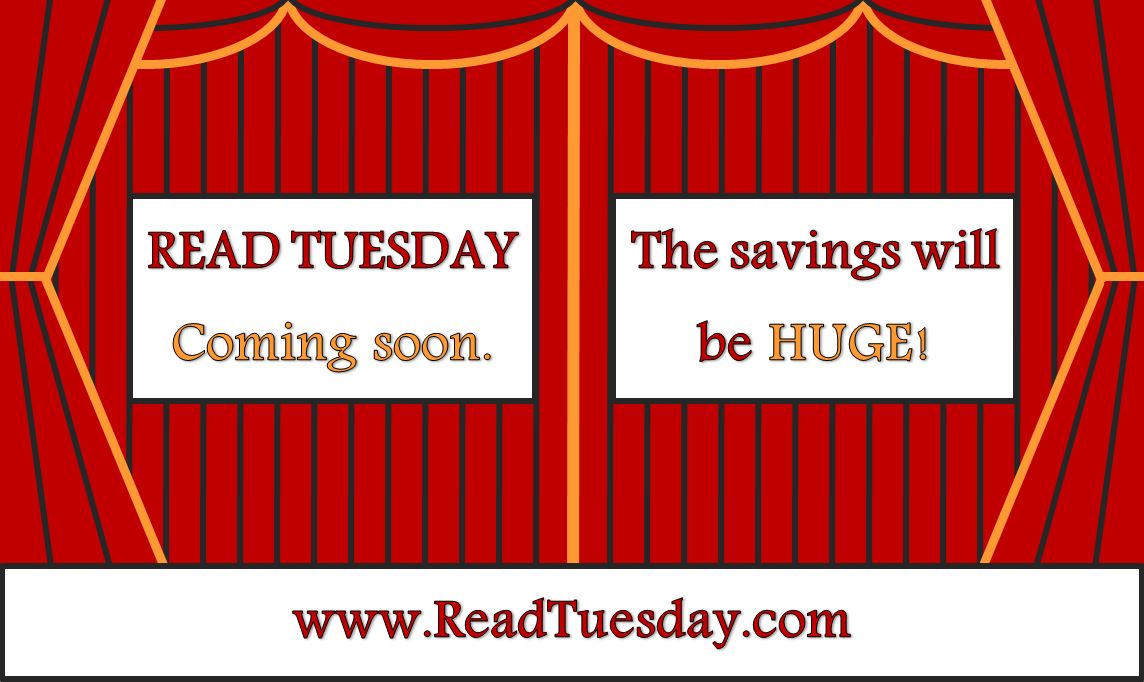
Regarding the image above with the red curtains… I got this idea that we might be able to stir up a little pre-launch buzz for Read Tuesday, and I thought closed curtains like you see in a theater just before a big show might be a good idea. However, the primitive method that I used resulted in a highly pixelated image. I put an image on the Read Tuesday website, the Twitter page, and the Facebook fan page, so at least anyone who visits these sites will see that something is in the works. (These sites are otherwise empty.) I was going to suggest that we post this picture on our blogs, and perhaps even create a few posts to try to stir up some pre-launch buzz for the Read Tuesday event (you can see one image on my sidebar to the right), but since it’s rather pixelated, I decided not to suggest this.

Actually, it’s hard to notice the pixelation on the small sidebar image, so adding these red curtains to all our sidebars might not be a bad idea after all. Feel free to add it to yours and to spread the word. You’re welcome to copy the red curtain image (either above or from the sidebar).

In about a week, we should have much nicer images to work with to help brand the Read Tuesday program. When these are available, I will let you know, and that’s when the Read Tuesday sites will launch.

Chris McMullen

Authors: Try Giving Yourself Advice

If another author asked you for advice and you checked out the other author’s book, would suggestions come to your mind? Maybe you would comment on what you do or don’t like about the cover. You might have suggestions for the blurb. If you found something in the Look Inside that put you off, would you mention it?

People generally love to give out advice. That’s why everyone tends to receive a lot of advice, even when it wasn’t sought. People form opinions easily, and many people don’t hesitate to share them.

Even if you don’t share your opinion so freely, you still form opinions. Suppose you’re checking out a book. You’ll know in an instant if you like or dislike the cover, if the blurb attracts your interest or not, and if there is something that you do or don’t like about the book.

But a funny thing about advice is that while people love to give it to others, they often don’t take their own advice.

  • Evidently, you don’t have to have a good track record in your own relationships in order to give dating advice to others.
  • Apparently, you don’t need to have any skill in a sport yourself in order to give tips to others.
  • Clearly, you don’t have to make the best work-related decisions in order to advise others about their career paths.

Here’s my point. If you’re looking at someone else’s cover, you might find yourself wondering, “How can you put that on your book?” But if it’s your own cover, you don’t tend to be as critical. If you’re shopping for a book, you might think to yourself, “That blurb doesn’t try to catch my interest at all.” But when it’s your own blurb, you’re already interested in it. When you pay five bucks for a book, you tend to get disappointed if you catch several typos. But when it’s your own book, you often read what you meant to write instead of what you actually wrote.

There are two things you can learn from this:

  • You need to try to step aside and evaluate your work critically. Take a break from it and try to approach it as if you were seeing it for the first time, and try to evaluate it as if it were someone else’s book.
  • No matter how hard you try, you can’t see your own work as if it were written by someone else. There is no substitute for external opinions. Getting this before you publish is invaluable.

I know a few authors who will think that they judge themselves more harshly than anyone else – i.e. you feel that you are your own toughest critic. Many of us feel that way.

But we’re our toughest critics only in certain aspects. You’re not your own toughest critic in every aspect. You judge yourself harshly only in the areas that you care about most. You give yourself a large allowance in areas that you don’t care much about.

However, those areas that aren’t so important to you might be very important to shoppers. So even if you are your own toughest critic in some regards, honest external feedback – if you can get it – is still very likely to help you find ways to improve your book.

You shouldn’t necessarily change everything based on external feedback. But first you need to know what that feedback is before you can decide whether or not you feel it merits attention.

Have you ever come across books where the cover, blurb, Look Inside, category selection, or something else probably could have benefited from a little advice? Of course, if you send advice to all of those authors and publishers, some of them won’t want it. I’m not telling you to go advise others about how to publish their books. I’m suggesting that we all need to evaluate our own books more critically, and especially to benefit from more external feedback prior to publishing.

We just don’t look at other books the same way that we look at our own. In this regard, books are kind of like kids. Your book is your baby. It’s not like other books, is it?

Chris McMullen, author of A Detailed Guide to Self-Publishing with Amazon and Other Online Booksellers, Vol. 1 (formatting/publishing) and Vol. 2 (packaging/marketing)

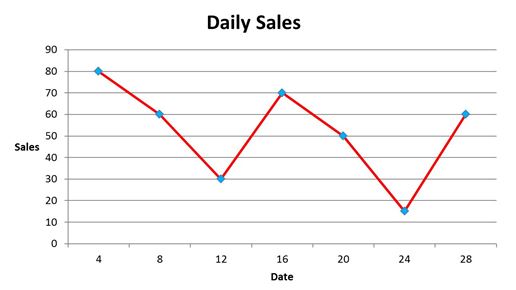
Moody Sales

Moody PicAh, the beginning of the month;

Such a pleasant time for sales.

You can hear the buzz of customers

And the chirruping of registers.


Nothing tops the rush hour,

When sales are just ecstatic.

The lines are seemingly endless,

The products quickly vanish.


But then it slows down so much;

Sales shed tears from their sadness.

Where did everybody go?

Why have you all abandoned us?


Sales always wonder if the end has come

During extensive periods of loneliness.

Is that the end of life as they know it?

Will they never feel energized again?


When sales rebound, they jump for joy;

Happier than ever, they smile quite broadly.

They knew the buyers would return.

The experience is so rejuvenating.


Then that time of the month comes;

Inevitable, yet sales dread it so.

Those few days where sales are dismal.

You can count on it like clockwork.


Copyright (c) 2013 Chris McMullen